
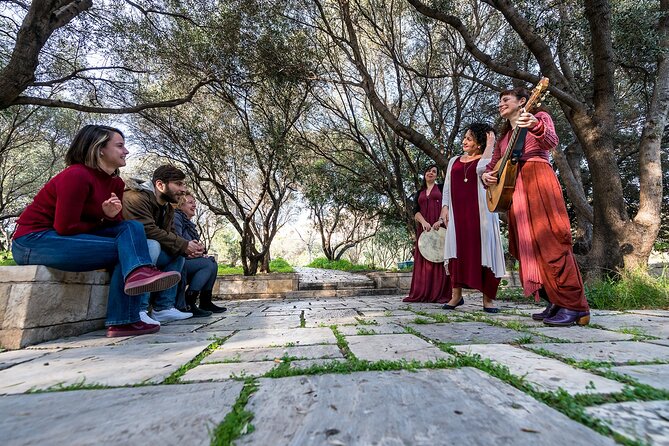
Reviewed · GREEK MYTHOLOGY TOURS
Greek Mythology Storytelling Walk
Greek mythology comes alive on this two-hour walk through Athens. Instead of hearing names and family trees in a book, you follow the gods through the streets of Plaka, along Dionysiou Areopagitou, and up to Pnyx, where Athena’s contest for the city takes center stage. I especially like the live storytelling and the way the route joins famous myths to real ancient places.
I also like that this is a short, focused walk, with no food stop or lengthy museum visit to slow it down. The main consideration is the terrain: this tour is not suitable for people with mobility impairments, and comfortable shoes are essential. A 9:30 departure may also turn into a very small group, or even a private experience, as happened for one booking.
In This Review
- Key points at a glance
- Why Greek myths work so well on foot
- Starting with Zeus in Plaka
- Dionysus along the Acropolis pedestrian way
- Athena and the city’s founding story at Pnyx
- What the storytelling style adds
- Is $53 a fair price?
- Practical advice for a smoother walk
- Who should book this Athens mythology walk?
- Should you book it?
- FAQ
- Where does the Greek Mythology Storytelling Walk begin?
- How do I identify the guide?
- Where does the tour finish?
- How long does the experience last?
- What language is the tour conducted in?
- What places are included in the route?
- Does the tour include Acropolis admission?
- Are food and drinks included?
- Is the walk suitable for children?
- Is the route suitable for people with mobility impairments?
Key points at a glance
- Zeus begins in Plaka: Hear about his birth, his battle with his father, and his affair with Europa in Athens’s oldest district.
- Dionysus gets his proper setting: The god of wine and theater is discussed along a pedestrian street beside two ancient theaters.
- Athena’s story ends at Pnyx: The final stop gives you a close view of the Propylaea, the gateway to the Acropolis.
- Professional English storytelling: The experience is built around performance, not a standard lecture.
- Easy to fit into an Athens visit: The walk lasts two hours and finishes at Pnyx.
- Best for families and mythology fans: It suits all ages except children under three, though the route is not designed for those with mobility limits.
Why Greek myths work so well on foot
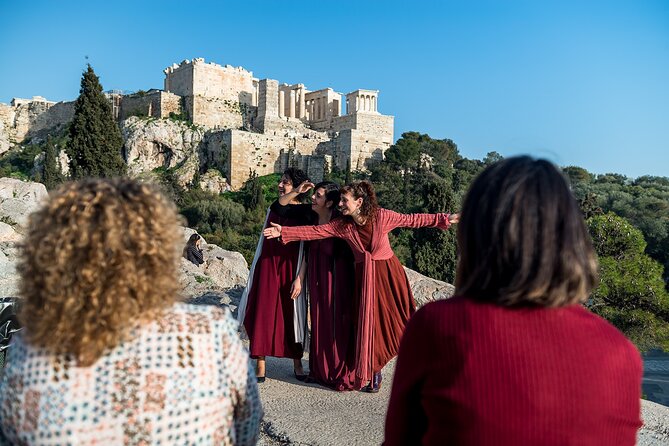
The best part of this experience is the match between story and setting. You are not simply told that Zeus ruled the gods, Dionysus was linked with theater, or Athena gave Athens its name. Each tale is placed in a part of the city that helps it make sense.
That approach matters because Greek mythology can become confusing fast. Zeus has a large family, the gods often compete, and the same figure may appear in stories about love, war, power, or revenge. A live storyteller can shape the pace, explain the connections, and keep the session moving when the stories take strange turns.
The walk covers major areas of ancient Athens without requiring a full archaeological tour. You get mythology, city views, and ancient landmarks in one compact outing. It is a useful choice for a first day in Athens, especially if you want an entertaining introduction before visiting the Acropolis itself.
The tone is meant to be lively. Zeus is presented as a powerful ruler with a turbulent love life, Dionysus arrives with wine and theater, and Athena’s story brings the gods into direct competition. This is not a quiet academic seminar. It is a professional performance delivered while you walk.
More mythology-flavoured Athens days:
- Athens: Mythology of Delphi, Museum and Arachova Guided Tour
★ 4.6 · 4,008 reviews - Athens & Acropolis Highlights: Greek Mythology Small-Group Tour
★ 5.0 · 2,370 reviews - Athens: Acropolis and Mythology Highlights Small Group Tour
★ 4.8 · 2,275 reviews
Starting with Zeus in Plaka
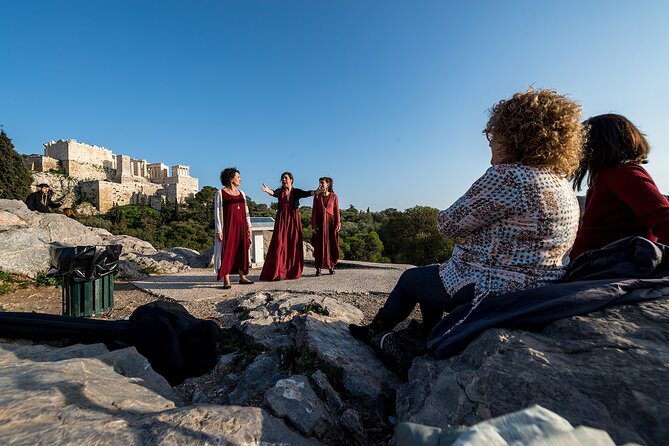
Meet your guide at the corner of Nikis and Kidathineon streets in Plaka. Look for the guide holding an Alternative Athens sign. This is an easy location in the central city, but Plaka has many small streets, so give yourself enough time to find the corner rather than arriving at the last minute.
Plaka is a fitting place to begin. It is often treated as Athens’s visitor center today, filled with souvenir shops and busy pedestrian routes, yet it also includes corners that matter to local residents. The contrast is useful. You see the modern tourist city around you while hearing stories that reach back to the earliest Greek traditions.
The opening section focuses on Zeus. You hear about his birth, his rise against his father, and his affair with Europa. Europa is especially interesting because her name became attached to an entire continent. That detail gives the story a wider reach than a simple tale of romance between a god and a mortal woman.
I like this first stop because it introduces the basic structure of Greek mythology: family conflict, the transfer of power, and gods who behave with very human weaknesses. Zeus may be the ruler of the gods, but his stories are full of desire, rivalry, and poor decisions.
The Plaka section includes about 40 minutes of walking. That is enough time for a substantial story, but it also means you should expect to keep moving. Wear shoes that feel good on uneven city surfaces, and choose clothing that allows you to walk comfortably in Athens’s weather.
Dionysus along the Acropolis pedestrian way
From Plaka, the route continues toward Dionysiou Areopagitou, the pedestrian street around the Acropolis. This is one of the most rewarding parts of the walk from a setting point of view. The route passes the Odeon of Herodes Atticus and another ancient theater, giving Dionysus a natural stage for his story.
Dionysus was associated with wine and theatrical arts. His worship was popular in Greece and later in early Rome, but the Romans eventually grew less comfortable with the excess linked to his rites. That change gives the storyteller room to show a god who was both admired and feared.
This stop helps explain why theater was not just entertainment in the ancient world. Dionysus was tied to performance and celebration, so discussing him beside ancient theaters adds a useful sense of place. You are hearing about a god in an area where theater remains part of the physical setting.
The walk here lasts about 40 minutes. The pedestrian route is a pleasant place to listen, but the Acropolis area can be busy. You may need to keep an eye on the guide and stay close to the group, especially if several tours are passing through. The activity is not designed as a private archaeological visit, so do not expect entry into the Acropolis or either theater.
That limitation is important when judging the $53 price. You are paying for the storytelling performance and the guide, not for admission tickets, food, drinks, or a full Acropolis tour. If you already plan to visit the Acropolis separately, this walk adds a different layer rather than replacing that visit.
Athena and the city’s founding story at Pnyx
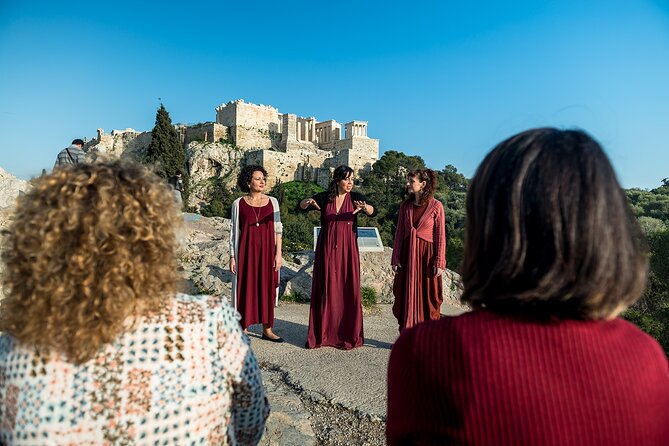
The walk finishes at Pnyx, an ancient meeting area with a close view of the Propylaea, the gateway to the Acropolis. This is the strongest location for the final story because the view brings the Acropolis directly into the conversation.
Here you hear about Athena’s birth and her contest with her uncle Poseidon for the patronage of the city. Athena’s victory explains how Athens received its name. The story also gives you a clear picture of the traits linked with her: wisdom, skill, strategy, and civic identity.
Ending at Pnyx gives the tour a sense of purpose. The earlier stories introduce the gods and their rivalries, while the final one connects a deity to the identity of a city. The close view of the Propylaea also makes this a good place to pause and take in the Acropolis from outside the main entrance.
The Pnyx visit lasts about 40 minutes. You should expect some walking and a stop in an ancient outdoor setting rather than a polished indoor venue. For some people, that is part of the appeal. For anyone who finds uneven ground difficult, it is the main reason to choose another activity.
The tour ends at Pnyx, not back at the starting point. Plan your next activity from there. The route does not include transport, a meal, or a return transfer, so you will need to arrange your own plans after the final story.
More Athens walking tours:
- Athens: Acropolis and Parthenon Guided Walking Tour
★ 4.6 · 5,882 reviews - Greek Food Walking Tour in Athens
★ 5.0 · 4,740 reviews - Acropolis: Acropolis and Parthenon Guided Walking Tour
★ 4.7 · 3,442 reviews - Acropolis monuments & Parthenon Walking Tour with Optional Acropolis Museum
★ 5.0 · 2,678 reviews
What the storytelling style adds
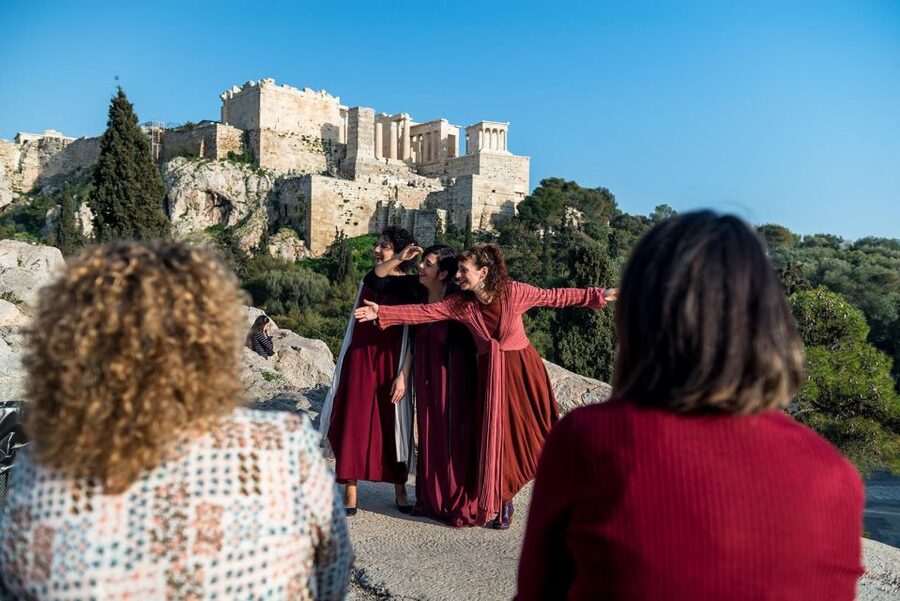
A standard walking tour can give you dates, names, and building descriptions. This experience takes a different route by using professional storytellers. That makes sense for mythology, where the drama often matters as much as the facts.
The format should work well if you enjoy hearing a story performed rather than reading a long explanation. The guide can change tone and pace as the tale moves from divine power to romance, rivalry, or comedy. The available feedback points strongly to this feature. One booking at the 9:30 time had only one participant, turning the experience into a private walk, and the storyteller was described as very entertaining.
That small-group possibility is worth noting, but it is not guaranteed. Group size can change with demand, so you should book for the content and route rather than expecting a private guide.
The experience also works well for families. One booking specifically found it engaging for children, and the activity is described as suitable for all ages except those under three. Children who already enjoy gods, heroes, and dramatic stories may follow it especially well. Still, you know your family best. The walk requires attention, movement, and the ability to stay with the guide for two hours.
Is $53 a fair price?
At $53 per person, this is not the cheapest way to walk around central Athens. Its value depends on what you want from the outing.
If you are looking for a basic orientation walk, you may find the price high. The tour does not include food, drinks, Acropolis admission, or transportation. You are also covering only a two-hour experience.
If you want a performed mythology program in significant parts of ancient Athens, the calculation looks better. The price includes professional storytellers and a professional tour leader, and the route covers Plaka, the Acropolis pedestrian way, the Odeon of Herodes Atticus area, and Pnyx. You are paying for interpretation and presentation, not simply being led from one street to another.
I would see it as a specialized activity. It is a good fit if mythology is one of your main interests, if you are traveling with children who enjoy stories, or if you want something lighter than a formal archaeological tour. It is less useful if you mainly want detailed architectural information or access inside ancient monuments.
The two-hour length helps the value. You can fit it between other Athens plans without giving up half a day. Just remember that the route finishes at Pnyx, so your next stop may require additional walking.
Practical advice for a smoother walk
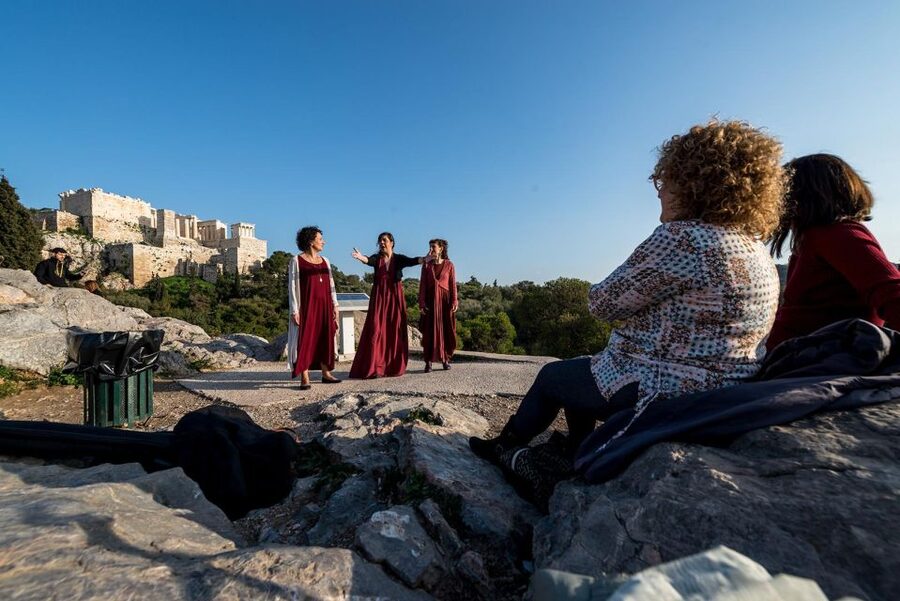
Arrive at Nikis and Kidathineon with a little time to spare. Find the Alternative Athens sign before the scheduled start, and do not assume you can quickly spot the group in the middle of Plaka.
Wear comfortable shoes and clothes. The route includes about 40 minutes of walking between the first and second listed stops, then a further walk toward Pnyx, with the visit and storytelling continuing there. The tour is not suitable for people with mobility impairments, and it is not suitable for children under three.
The tour is conducted in English. If you need another language, this is not the right choice. It is also not suitable for people with hearing impairments, since the central feature is spoken live storytelling.
Bring your own water if you need it, since food and drinks are not included. There is no meal break built into the experience, so eat before or after according to your schedule.
You can cancel up to 24 hours before the start for a full refund, and you can reserve now while paying later. Those options help if your Athens plans are still shifting, but check the available start times before booking.
Who should book this Athens mythology walk?
I would recommend it most strongly to three kinds of people. First are mythology fans who want the major gods and heroes presented in a clear sequence. Second are families seeking an activity that mixes stories with outdoor sightseeing. Third are first-time Athens visitors who want an introduction to the city’s ancient identity without committing to a long museum program.
It also suits adults who like theater and performance. Dionysus’s section, beside the ancient theaters, should be especially appealing if you want to understand the link between Greek religion and drama.
I would be more cautious if you have limited mobility, need frequent rest stops, or want a tour packed with archaeological detail. The activity focuses on storytelling, and the outdoor route ends away from the meeting point.
Should you book it?
Book this walk if you want Greek mythology told with energy and placed in the streets and ancient sites of Athens. The Zeus, Dionysus, and Athena sections each have a clear setting, and the final stop at Pnyx gives you a memorable view toward the Acropolis gateway.
Skip it if you mainly want monument admission, architectural analysis, or a fully accessible route. For everyone else, the $53 price is reasonable for a focused two-hour performance, especially if you are traveling with children or want a lively break from standard sightseeing. Choose comfortable footwear, allow time to find the meeting point, and plan your onward route from Pnyx.
FAQ
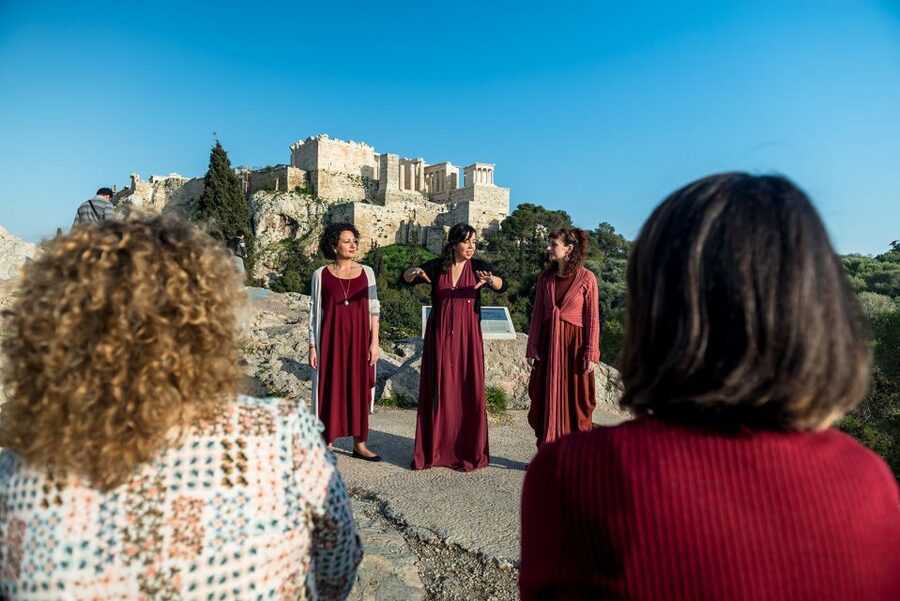
Where does the Greek Mythology Storytelling Walk begin?
It begins at the corner of Nikis and Kidathineon streets in Plaka, Athens.
How do I identify the guide?
Your guide will be holding an Alternative Athens sign at the meeting point.
Where does the tour finish?
The tour finishes at Pnyx.
How long does the experience last?
The experience lasts two hours.
What language is the tour conducted in?
The live tour is conducted in English.
What places are included in the route?
The route includes Plaka, Dionysiou Areopagitou, the area around the Odeon of Herodes Atticus, and Pnyx.
Does the tour include Acropolis admission?
No. Acropolis admission is not listed as an inclusion.
Are food and drinks included?
No. Food and drinks are not included.
Is the walk suitable for children?
It is suitable for all ages except children under three.
Is the route suitable for people with mobility impairments?
No. The activity is not suitable for people with mobility impairments.
Freshly added Athens trips
- Athens and Ancient Corinth Private from Athens★ 5.0 · 3 reviews
- Double Shore Dive (certified divers)★ 4.5 · 3 reviews
- From Athens: Mycenae and Epidaurus Private Tour★ 4.8 · 3 reviews
- Full day Meteora private tour★ 5.0 · 3 reviews
- Athens Hills: Mythology Treasure Hunt★ 5.0 · 3 reviews
- Sunset & swimming at Cape Sounio, Poseidon temple★ 5.0 · 3 reviews
- Philosophy Experience at Plato’s Academy Park – basic version★ 5.0 · 3 reviews
- Private Acropolis Tour – Ticket Included★ 5.0 · 3 reviews
Greek Mythology Tours, compared.

Mythology of Delphi, Museum and Arachova Guided Tour
Read our review →
Athens & Acropolis Highlights: Greek Mythology Small-Group Tour
Read our review →
Acropolis and Mythology Highlights Small Group Tour
Read our review →
The History of Athens: Greek Mythology Private Tour
Read our review →
Greek Mythology Treasure Hunt for Kids – Athens Private Tour
Read our review →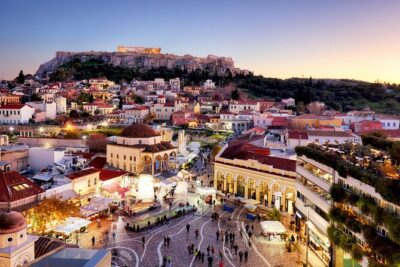

Browse the lists this tour appears in