
Reviewed · ACROPOLIS MUSEUM TOURS
Acropolis monuments & Parthenon Walking Tour with Optional Acropolis Museum
The best part of this Athens tour is not simply reaching the Parthenon. It is having someone explain why each battered stone matters, from the Theatre of Dionysus below the hill to the Caryatids of the Erechtheion above. Guides such as Lisa, Anna, John D, and Dionysios have been praised for turning mythology, architecture, and archaeology into clear stories.
I like the choice of tour times and the small-group format, capped at fewer than 20 people. I also like the optional museum visit, which gives you a second look at the sculptures and objects after seeing the ancient buildings in their original setting. The main drawback is physical: expect steep paths, lots of standing, sun, and a four-hour outing that can feel vigorous even if you are fairly fit.
In This Review
- Key points to know before you book
- Why a guided Acropolis visit works so well
- Starting near Porinou Street
- The Theatre of Dionysus sets the scene
- Herod Atticus Odeon adds a Roman layer
- Passing through the Propylaea
- Temple of Athena Nike, small but important
- The Parthenon remains the main event
- The Erechtheion and its Caryatids
- One hour to explore the Acropolis
- Add the Acropolis Museum for the fuller picture
- What the price really covers
- Who will get the most from this tour
- Should you book the Acropolis and Parthenon tour?
- FAQ
- Where does the tour start?
- Where does the tour end?
- How long does the experience last?
- Is the Acropolis Museum included?
- Are Acropolis entrance tickets included?
- How much is Acropolis admission if I buy it separately?
- How much is Acropolis Museum admission if I buy it separately?
- Do visitors under 25 need identification?
- Is the tour offered in English?
- What should I wear?
- How many people can join the tour?
- Is hotel pickup included?
Key points to know before you book
- The Parthenon comes with context: Your guide explains the monument instead of leaving you to identify a few columns and take photos.
- The museum option is worth serious thought: It adds another hour and helps connect the Acropolis ruins with the art and sculpture now protected indoors.
- You may need to arrange admission yourself: The basic price is listed at $42.33, but Acropolis and museum tickets depend on the option you select.
- Headphones help: Groups larger than five use a whisper guide system, so you can hear while standing near busy monuments.
- Bring proof of age: Visitors under 25 need a passport or ID for reduced or free Acropolis admission.
- Plan for a climb: Comfortable shoes, a hat, and sun cream are practical essentials, not throwaway advice.
Why a guided Acropolis visit works so well
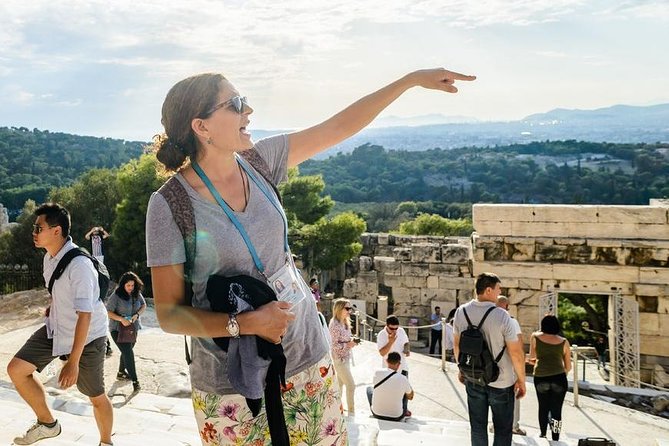
Athens is easy to explore on foot, but the Acropolis is a place where a guide earns the fee. The hill is full of famous names, yet the meaning can blur when you are looking at several temples, walls, and scattered stones at once.
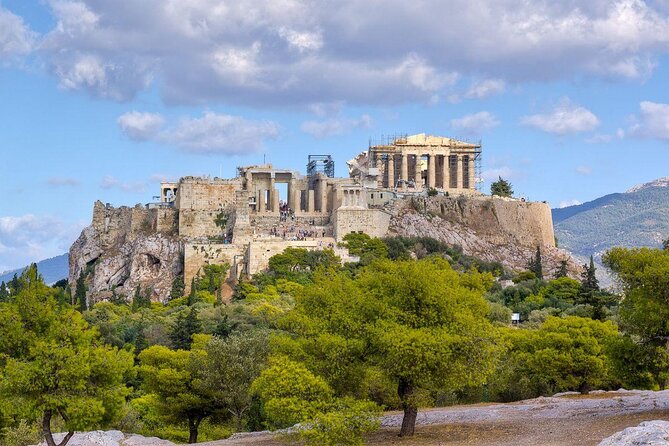
A good guide helps you build a mental map. You see the theatre where Athens staged drama, pass through the grand gateway, then reach the sacred hilltop where the Parthenon and other temples served different purposes. That order matters. It turns the visit into a story rather than a checklist.
The strongest part of this experience is the explanation. Guides with archaeology backgrounds have led the tour, and the most praised leaders, including Lisa, Anna, John D, Aphrodite, Annie, Lydia, and Dionysios, are described as clear, lively, patient, and able to answer questions. Your exact guide is assigned for the date, so treat those names as examples of the company’s guide pool rather than a promise.
You can visit the Acropolis alone. You can also take better photographs alone. But you will likely learn less about the missing sculptures, the building program of the fifth century BC, and the relationship between mythology and civic life. If understanding matters as much as seeing, the guided format makes sense.
More Acropolis Museum visits:
- Athens: Acropolis, Parthenon & Acropolis Museum Guided Tour
★ 4.8 · 9,316 reviews - Athens: Acropolis, Parthenon & Acropolis Museum Guided Tour
★ 4.8 · 3,579 reviews - Athens: Acropolis Museum Ticket with optional Audio Guide
★ 4.4 · 2,652 reviews
Starting near Porinou Street
The meeting point is at Porinou 5, close to the Acropolis and near public transportation. You check in at a professional office area with Wi-Fi, then walk the short distance to the archaeological site.
That nearby meeting point is useful if you are staying in central Athens, but do not treat near the Acropolis as the same as impossible to miss. One person arrived late after misjudging the time needed to reach the office. The company helped them join the next tour, but you should still allow extra time and arrive early.
Your voucher can be shown on paper or on your phone. Hotel pickup and drop-off are not included, so you make your own way to the start. The tour is offered in English, and the group can include up to 20 people. That is small enough to feel organized, though it is not a private visit.
The schedule offers several tour times, including morning departures. An early start can help with heat and crowds, but the exact conditions depend on the season and the day. The activity takes about four hours, so avoid booking it too close to another fixed appointment.
The Theatre of Dionysus sets the scene
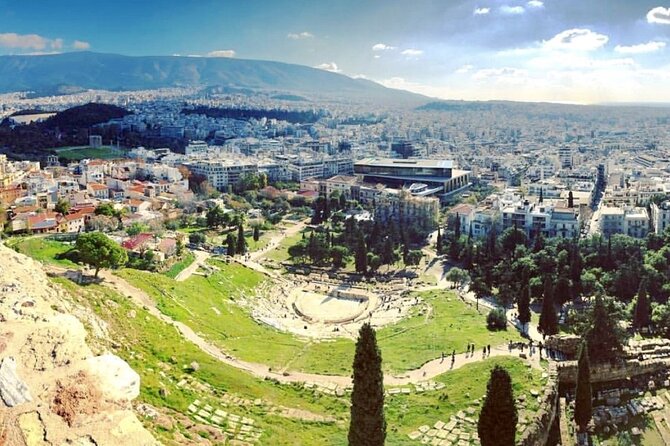
Your first listed stop is the Theatre of Dionysus Eleuthereus, built on the south slope of the Acropolis. The first orchestra terrace appeared around the mid to late sixth century BC, and the theatre hosted the City Dionysia, a major festival honoring Dionysus.
You have about 15 minutes here. That is enough for an introduction and a look at the surviving seating and curved performance space, but not enough for a long archaeological study.
This stop gives the hill a human scale. Before you reach the temples, you see the place where Athenian drama developed in a public religious setting. A guide can connect the physical remains to the plays, festivals, and civic life that made Athens more than a collection of old stones.
Herod Atticus Odeon adds a Roman layer
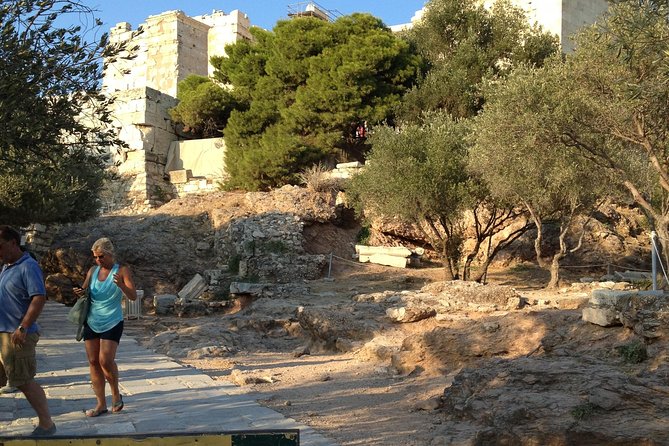
Next comes the Odeon of Herodes Atticus, a stone theatre on the southwest slope. It was completed in AD 161 and renovated in 1950.
The 15-minute stop is brief, yet it makes an important point: the Acropolis was not frozen in the fifth century BC. Romans continued to build and use the area, adding their own monuments to the older Greek sacred site.
The theatre’s scale and stone construction are easy to appreciate from outside. You should not expect a full performance or an extended interior visit. The value here is seeing how later rulers reused and reshaped a place already loaded with cultural meaning.
More Acropolis and Parthenon visits:
- Athens: Acropolis & up to 5 Archaeological Sites Combo Pass
★ 4.4 · 12,619 reviews - Athens: Acropolis Ticket with Optional Audio or Live Guide
★ 4.2 · 11,055 reviews - Athens: Acropolis and Parthenon Guided Walking Tour
★ 4.6 · 5,882 reviews - Athens: Acropolis Ticket with Audio Guide
★ 4.0 · 3,575 reviews
Passing through the Propylaea

The Propylaea is the monumental entrance to the Acropolis. You spend about 15 minutes in this area, taking in a gateway designed roughly 2,500 years ago.
This is the point where the climb begins to feel more ceremonial. The entrance was not a plain gate. Its columns, structure, and approach were meant to prepare people for the sacred buildings beyond.
The paths are uneven in places, and the route includes steep sections. Your guide sets a manageable pace, but you still need to watch your footing and keep up with the group. This is not a flat city stroll.
The Propylaea also makes a fine reminder that the Acropolis was planned as a group of monuments. The Parthenon gets most of the attention, but the entrance controls how you experience everything that follows.
Temple of Athena Nike, small but important
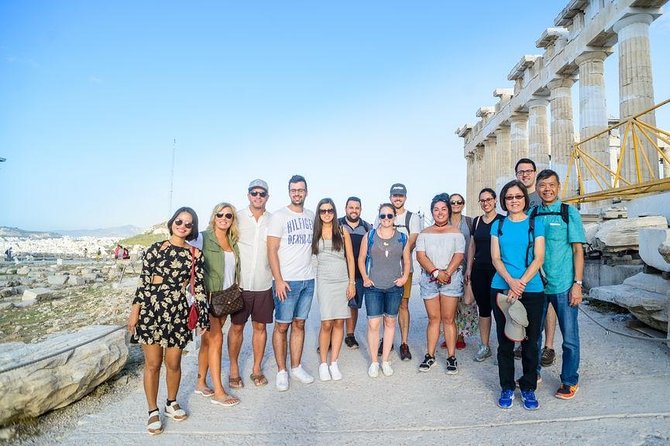
The Temple of Athena Nike is dedicated to Athena Nike, the goddess associated with victory. It was built around 420 BC and is described as the earliest fully Ionic temple on the Acropolis.
The itinerary lists two stops connected with this temple, one near the entrance and another for about 15 minutes. That likely reflects seeing it from different points as you approach and pass through the Propylaea. Do not expect two separate full visits.
The temple is much smaller than the Parthenon, but its position gives it weight. It sits near the entrance, where its association with victory would have greeted people arriving at the hilltop. Your guide can help you notice details that are easy to miss when your eyes are drawn toward the larger buildings.
One practical note: admission treatment can vary by booking option. The tour description lists some monument stops as free, but the main Acropolis admission is not included unless you choose the ticketed option.
The Parthenon remains the main event
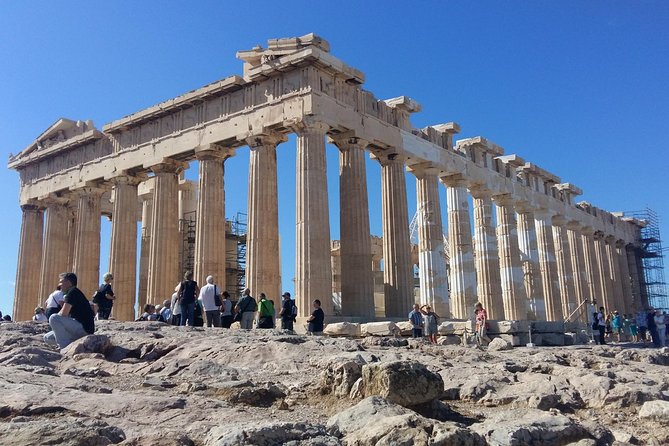
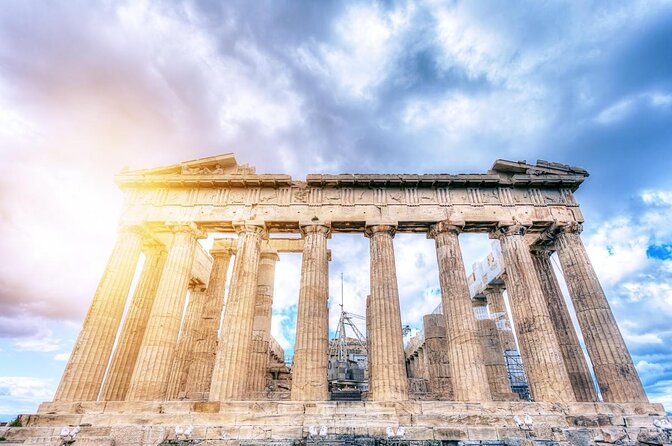
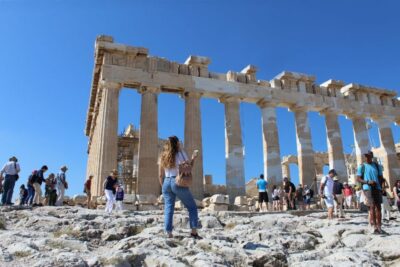
You get about 30 minutes specifically at the Parthenon, followed by a longer period exploring the Acropolis site. The temple was dedicated to Athena, the city’s patron goddess, and most of the monuments you see date to the fifth century BC.
The Parthenon is powerful even in its damaged state. Its columns, carved details, and high setting make it easy to understand why this is Athens’ defining sight. Yet the best visit is not just a photo stop. You need time to look at the building’s proportions, the surviving sculpture, and the gaps left by centuries of damage and removal.
Your guide’s talk may include mythology, architecture, and the political aims behind the building program. That mix is one reason to choose a tour. The site itself cannot tell you which features were religious, civic, or symbolic without some help.
The 30-minute Parthenon stop is not a private block of time. You will still be part of the larger Acropolis visit, with standing, listening, walking, and pauses for views. Some people find the amount of spoken history demanding, especially if they prefer to wander quietly. The guide does keep the pace slow enough for the group to stay together, according to the supplied experience details.
The Erechtheion and its Caryatids
The Erechtheion receives about 10 minutes in the listed schedule. This temple is famous for its Caryatids, the sculpted female figures used as architectural supports.
The building has an unusual shape and a different visual character from the Parthenon. That contrast is useful. The Acropolis was not built as one repetitive row of temples. Each structure had its own purpose, design, and sacred associations.
You will see the Caryatids at the monument, while the Acropolis Museum provides a closer and more protected setting for related material. The museum visit helps explain what you are looking at outdoors, especially when weathering and restoration make details harder to read.
Ten minutes can feel short here. If the Caryatids are a personal priority, listen closely, take your photographs, and return to the subject in the museum if you choose that upgrade.
One hour to explore the Acropolis
The itinerary allows about an hour for the Acropolis itself, in addition to the shorter stops. This is where the separate pieces come together: the Theatre of Dionysus and Odeon below, the Propylaea at the entrance, the Temple of Athena Nike, the Parthenon, and the Erechtheion.
Expect plenty of standing while the guide explains monuments and points out details. You will also walk uphill on steep paths. The views across Athens are a major reward, but the exposure means heat can become a serious factor in warmer months.
Wear shoes with a firm grip. Bring water, a hat, and sun cream. The instructions call for moderate physical fitness, and that is a fair description. You do not need to be an athlete, but you should be comfortable with uphill walking and extended time on your feet.
The whisper system is a real advantage. Once a group grows beyond five, the guide uses a microphone and headsets so you can hear without crowding around the speaker. It is especially helpful when the guide is explaining something beside a monument and you want to look at the stone instead of watching the guide’s face.
Add the Acropolis Museum for the fuller picture
The optional museum visit lasts about one hour and is available only with the Acropolis and museum selection. The New Acropolis Museum houses galleries devoted to objects from the hill, including material that helps you understand the Parthenon and its sculpture.
I favor adding it if your budget and energy allow. After seeing the actual buildings, you have a clearer sense of where the objects belonged. The museum can also give you details that the outdoor site cannot, including closer views of sculpture and protection from weather.
The guide-led museum portion may move quickly. One guide focused on the most important pieces, then left time for independent looking after the formal tour ended. That is a good arrangement if you want an introduction but also like to set your own pace.
The museum has been singled out for strong explanations of Greek art and architecture. Guides with archaeology training have made this portion feel almost like a compact art lesson, especially for people who want more than mythology alone.
The tour ends at the Acropolis Museum if you select that option. This is convenient because you can continue looking around after the guide’s commentary finishes. If you choose the Acropolis-only version, the tour ends at the Acropolis monuments instead.
What the price really covers
The listed starting price is $42.33 per person. That figure should not be treated as the complete cost until you check which option you are selecting.
The basic package includes a licensed professional guide, skip-the-line service, the small-group format, and the listening system for larger groups. Entrance tickets are included only when you choose an option with tickets. The Acropolis and museum versions may cost more, but they also reduce the work of arranging admission.
The stated entrance fees are €30 per adult for the Acropolis from April 2025, or €10 from November through March. The Acropolis Museum is listed at €20 per adult from April 2025. If you do not select the ticketed option, you must purchase the required tickets online in advance through the official website.
That means the tour’s value depends on what you need. If you are comfortable handling official ticketing and only want an outdoor guide, the lower price may suit you. If you value skip-the-line help, a structured route, and the museum explanation, the higher package can be fair, particularly on a first Athens visit.
Check the final booking screen carefully. The words with entrance tickets matter here.
Who will get the most from this tour
I would choose this for a first visit to Athens, especially if you want the Acropolis to make sense rather than simply appear in your camera roll. It is also a good match for anyone interested in archaeology, classical art, mythology, or ancient city planning.
Solo visitors can fit in easily, and the short walk from the meeting point helps if you are staying nearby. The guide-led pace also takes some pressure off if you are unsure where to begin.
Families with older children and teenagers may appreciate the stories, though the amount of standing and listening can test younger attention spans. People with limited stamina should think carefully about the climb, heat, and four-hour length.
If you have already visited the Acropolis several times, a self-guided return may give you more freedom. If this is your first time, the guide’s structure is likely to add real value.
Cancellation is free up to 24 hours before the start time. Changes or cancellations inside that window are not refunded, and poor weather or an insufficient number of participants can lead to a date change or full refund.
Should you book the Acropolis and Parthenon tour?
Book it if you want clear historical explanation, a manageable route, and the option to finish with the museum. The strongest reason is the guide service, especially when you get an energetic leader such as Lisa, Anna, John D, or Dionysios. The headset system, nearby meeting point, and group limit also make the visit easier to follow.
Choose the museum upgrade if you care about sculpture and classical art, or if you want to understand the Parthenon’s decoration after seeing the temple itself. Choose the Acropolis-only version if your time or budget is tight and you mainly want the hilltop monuments.
You should skip it only if you strongly prefer wandering alone, dislike extended commentary, or are not comfortable with steep climbs and long periods on your feet. For most first-time visitors, this is a well-focused way to meet Athens’ greatest ancient site.
FAQ
Where does the tour start?
The meeting point is at Porinou 5, Athens 117 42, Greece. It is close to the Acropolis and near public transportation.
Where does the tour end?
The Acropolis-only option ends at the Acropolis monuments. The option that includes the museum ends at the Acropolis Museum.
How long does the experience last?
The tour lasts approximately four hours.
Is the Acropolis Museum included?
The museum is included only if you book the Acropolis and Acropolis Museum option.
Are Acropolis entrance tickets included?
Entrance tickets are included only with the booking options that specifically include tickets. Otherwise, you must arrange the entrance fee separately.
How much is Acropolis admission if I buy it separately?
The stated adult price is €30 from April 2025 and €10 from November through March. Tickets must be purchased online in advance if they are not included in your tour option.
How much is Acropolis Museum admission if I buy it separately?
The stated adult price for the Acropolis Museum is €20 from April 2025.
Do visitors under 25 need identification?
Yes. Visitors under 25 should bring a passport or ID, or a photocopy, to confirm their birth date and receive the applicable free or reduced admission. EU citizens under 25 have free Acropolis admission, while other visitors under 25 receive a 50 percent discount.
Is the tour offered in English?
Yes. The experience is offered in English.
What should I wear?
Wear comfortable shoes and bring a hat and sun cream. The route includes steep climbs, uneven paths, and extended periods of walking and standing.
How many people can join the tour?
The maximum is 20 participants per group.
Is hotel pickup included?
No. You make your own way to the meeting point, and hotel pickup and drop-off are not included.
More Athens walking tours
- Greek Food Walking Tour in Athens
★ 5.0 · 4,740 reviews - Acropolis: Acropolis and Parthenon Guided Walking Tour
★ 4.7 · 3,442 reviews - Athens Acropolis and Parthenon Walking Tour
★ 4.5 · 1,355 reviews - Athens Authentic Greek Food Walking Tour (Small Group)
★ 5.0 · 809 reviews
More Athens museums
- Athens: Mythology of Delphi, Museum and Arachova Guided Tour
★ 4.6 · 4,008 reviews - Athens All Included: Acropolis and Museum Guided Tour with Ticket
★ 4.5 · 2,673 reviews - From Athens: Small-Group Delphi, Museum & Arachova Day Trip
★ 4.8 · 2,476 reviews - Parthenon & Acropolis Museum with Audio or Live Tour Option
★ 4.1 · 2,446 reviews
Freshly added Athens trips
- Athens and Ancient Corinth Private from Athens★ 5.0 · 3 reviews
- From Athens: Mycenae and Epidaurus Private Tour★ 4.8 · 3 reviews
- Full day Meteora private tour★ 5.0 · 3 reviews
- Double Shore Dive (certified divers)★ 4.5 · 3 reviews
- Athens Hills: Mythology Treasure Hunt★ 5.0 · 3 reviews
- Sunset & swimming at Cape Sounio, Poseidon temple★ 5.0 · 3 reviews
- Philosophy Experience at Plato’s Academy Park – basic version★ 5.0 · 3 reviews
- Private Acropolis Tour – Ticket Included★ 5.0 · 3 reviews
Acropolis Museum Tours, compared.

Acropolis, Parthenon & Acropolis Museum Guided Tour
Read our review →Acropolis, Parthenon & Acropolis Museum Guided Tour
Read our review →
Acropolis Museum Ticket with optional Audio Guide
Read our review →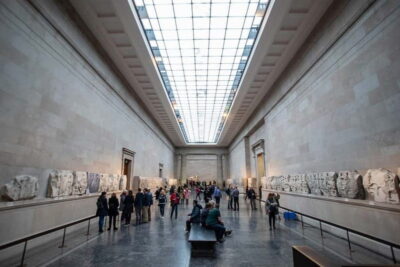
Parthenon & Acropolis Museum with Audio or Live Tour Option
Read our review →
Acropolis, Parthenon and Acropolis Museum Guided Tour
Read our review →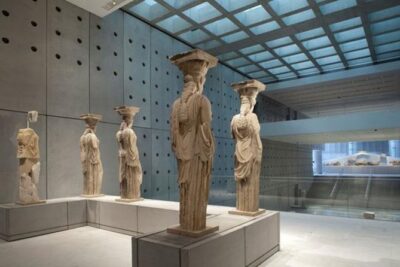

Acropolis & Acropolis Museum Ticket with Audio Guide
Read our review →Browse the lists this tour appears in