

Reviewed · ACROPOLIS TOURS
Acropolis: Acropolis and Parthenon Guided Walking Tour
The best part of this Acropolis tour is its clear route through ancient Athens, from the Theatre of Dionysus and Odeon of Herodes Atticus to the Parthenon itself. An archaeologist guide puts the broken stones into context, explaining not only what you see, but how these buildings served religion, politics, theater, and civic life.
I like the convenient meeting point near the Acropolis metro station, and I like the wireless headsets, which help you follow the guide in a crowded site. The main consideration is the exposed uphill walk: bring water, a hat, sunscreen, and shoes with a firm grip. The Acropolis can also feel crowded, especially later in the day.
In This Review
- Key points to know
- Walking from drama to the Parthenon
- Theatre of Dionysus: where the tour finds its voice
- Asklepieion and the Odeon of Herodes Atticus
- Temple of Athena Nike and the Propylaea
- The Erechtheion and the famous Caryatids
- The Parthenon, Athens at its grandest
- Should you add the Acropolis Museum?
- Guide quality and group experience
- Timing, heat, and what to carry
- Is the $36.14 price good value?
- Who should book this Acropolis walking tour?
- Final call: book it for context, not just entry
- FAQ
- How long does the Acropolis and Parthenon tour last?
- Where does the tour begin?
- Which languages are available?
- Does the price include Acropolis entry?
- Should I choose the option with tickets?
- Is the Acropolis Museum included?
- What should I bring?
- Is the tour accessible for wheelchair users?
Key points to know
- Theater comes first: Begin at the Theatre of Dionysus, where ancient drama took shape.
- The route covers the major monuments: See the Asklepieion, Odeon of Herodes Atticus, Temple of Athena Nike, Propylaea, Erechtheion, and Parthenon.
- An archaeologist leads the visit: Guides such as John, Hermes, Alexia, Anastasia, and Artemis have been especially praised for lively explanations and good pacing.
- Morning is the smart choice: The 8:30 tour can help you reach the summit before the site grows busier.
- Ticket selection matters: Choose the option with Acropolis entry if you want the operator to handle admission, since official tickets can sell out.
- Museum access is optional: Some versions include a guided Acropolis Museum visit and skip-the-line museum entry.
Walking from drama to the Parthenon

This is not simply a photo stop at the Parthenon. The route gives you a useful sequence, beginning where Athenian theater was born and climbing toward the religious and political heart of the Acropolis.
You meet at the Athens Walks office at Porinou 5, about a two-minute walk from the Acropolis metro station. That is a practical location, especially if you are staying in central Athens or arriving by metro. The activity is listed as lasting two to four hours, depending on the option you choose and whether the museum is included.
The walk itself takes about 15 minutes to reach the Theatre of Dionysus. After that, the tour continues uphill through the Acropolis monuments. Expect pauses for explanations rather than a nonstop march, but this is still an active outing on uneven ancient surfaces and slopes.
The exact guide varies. Names associated with highly praised tours include John the archaeologist, Hermes, Alexia, Anastasia, Komissa, Johanna, Aphrodite, Artemis, Anna, and Margarita. You should not book expecting one specific person unless the operator confirms it, but the repeated pattern is clear: the experience depends heavily on the individual guide. The strongest guides combine mythology, architecture, humor, and practical crowd management.
More Acropolis and Parthenon visits:
- Athens: Acropolis & up to 5 Archaeological Sites Combo Pass
★ 4.4 · 12,619 reviews - Athens: Acropolis Ticket with Optional Audio or Live Guide
★ 4.2 · 11,055 reviews - Athens: Acropolis, Parthenon & Acropolis Museum Guided Tour
★ 4.8 · 9,316 reviews
Theatre of Dionysus: where the tour finds its voice

The first major stop is the Theatre of Dionysus, described as the birthplace of drama and the oldest Greek theater still in existence. Ancient stone seats curve around the performance area, giving you a direct sense of how public entertainment once fit into Athenian life.
Your guide explains the role of theater in ancient society, which is more interesting than treating the site as an empty ruin. Greek plays were tied to festivals, religion, civic identity, and public debate. That context helps you see theater as part of the city’s culture rather than a side attraction.
The stop is also a good introduction to the scale of ancient Athens. You can look across the seating area and imagine thousands of people gathered for performances. The site may not have the intact columns or instantly recognizable shape of the Parthenon, but it gives the tour a human starting point.
Asklepieion and the Odeon of Herodes Atticus
The route continues to the Asklepieion of Athens, where you spend about 10 minutes with the guide. This sanctuary was associated with healing, and the stop broadens the visit beyond temples dedicated to gods and city power.
That short explanation matters. The Acropolis was not one single building with one single purpose. It included places tied to worship, healing, performance, civic identity, and public memory. A good guide connects these functions so the hill feels like a working sacred center, not just a collection of ruins.
Next comes the Odeon of Herodes Atticus, a Roman-era theater built on the southern slope of the Acropolis. You receive about 15 minutes of guided explanation here. Its arched stone structure is one of the most visually striking monuments on the route, though access is generally for viewing rather than wandering through the performance space.
This is also one of the places where the wireless headset earns its keep. Groups gather close together, and the Acropolis can be noisy. One person specifically found the earpiece less effective when standing several meters from the guide, so stay reasonably close if you want every word.
Temple of Athena Nike and the Propylaea
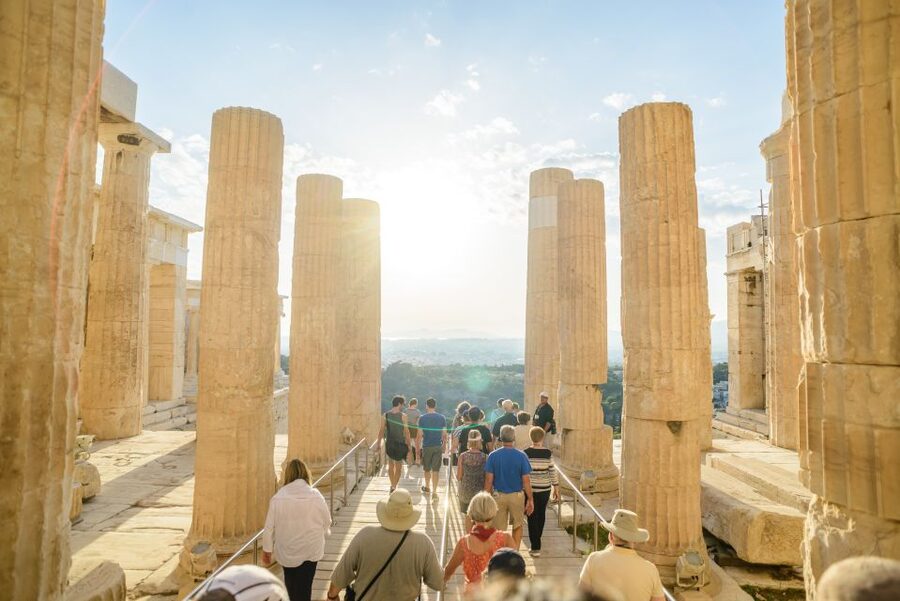
The Temple of Athena Nike is a compact but important stop. Your guide spends about 10 minutes explaining the temple and its connection to Athena in her role as a bringer of victory. Its position near the entrance gives it a special visual role, greeting people as they approach the main summit.
Then the path reaches the Propylaea, the monumental gateway to the Acropolis. Allow about 15 minutes here. The gateway’s broad structure, columns, and carefully planned approach show that ancient Athenians understood arrival as part of the experience. The entrance was meant to impress before you even reached the temples above.
The climb becomes more noticeable around this portion of the route. Wear comfortable shoes, as requested by the operator, and avoid carrying a large bag. Luggage and large bags are not allowed, and pets and smoking are also prohibited.
The walking surface can be uneven. This tour is not suitable for wheelchair users, and anyone with limited mobility should consider that the Acropolis hill involves slopes, steps, and ancient paving.
More Athens walking tours:
- Athens: Acropolis and Parthenon Guided Walking Tour
★ 4.6 · 5,882 reviews - Greek Food Walking Tour in Athens
★ 5.0 · 4,740 reviews - Acropolis monuments & Parthenon Walking Tour with Optional Acropolis Museum
★ 5.0 · 2,678 reviews - Athens Acropolis and Parthenon Walking Tour
★ 4.5 · 1,355 reviews
The Erechtheion and the famous Caryatids

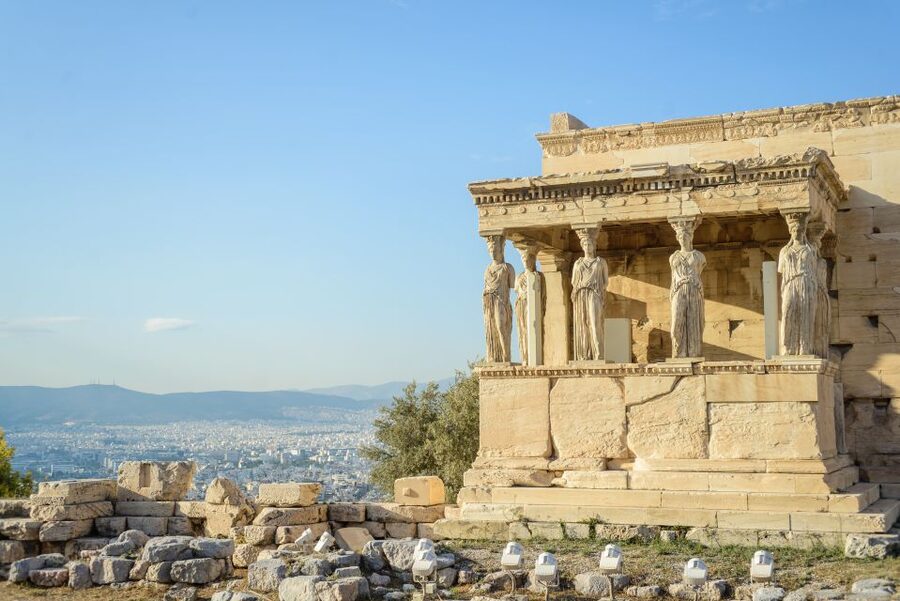
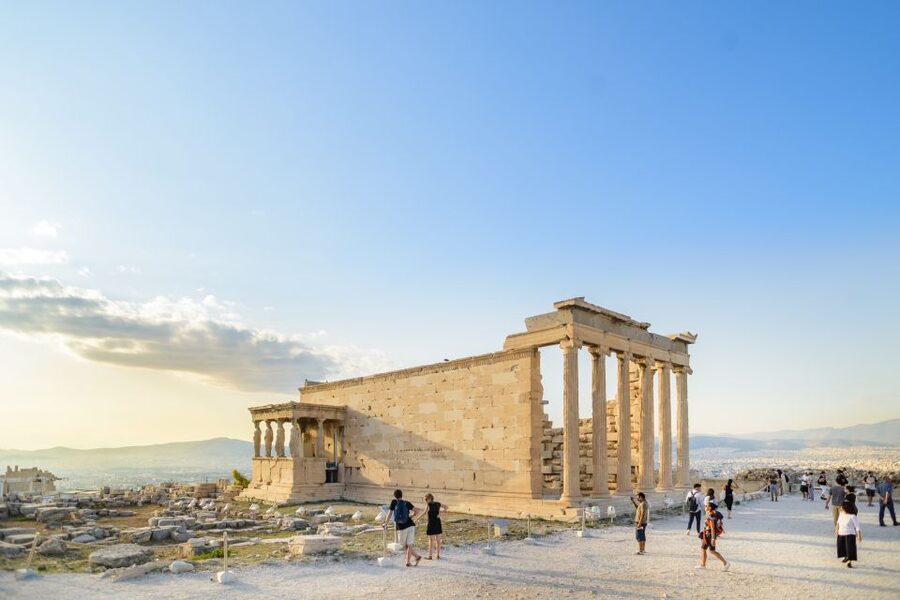
The Erechtheion is one of the most rewarding stops because it looks different from the Parthenon. Rather than presenting a simple rectangular temple, it has an irregular design shaped by the sacred traditions and uneven ground of the hill.
The Caryatids are the stars here. These sculpted female figures serve as architectural supports on the porch, and the guide explains their poses, symbolism, and place in the building’s design. The figures you see on site are copies, while the originals are protected in museums, including the Acropolis Museum. That makes the optional museum visit a useful continuation rather than a separate add-on with no connection.
The guide also covers the famous contest between Athena and Poseidon for the patronage of Athens. Myth gives the stones a storyline, but the best explanations also show how the story supported the city’s identity and religious traditions.
You receive about 15 minutes at the Erechtheion. That is enough for an introduction and photographs, but not for a long, quiet study of every detail. If you want to examine the architecture at length, plan independent time after the tour.
The Parthenon, Athens at its grandest
The Parthenon receives the longest stop, about 30 minutes. This is the moment most people expect, but the guide can make it much more than a quick look at columns under repair.
You learn about the temple’s dedication to Athena, its religious purpose, and its role as a statement of Athenian power. The building’s famous precision is easier to appreciate once you understand that the architects used subtle visual adjustments rather than relying on perfectly straight lines. Your guide may also explain the design, sculpture, and later damage, although the exact depth depends on the person leading your group.
Do not expect an untouched ancient building. The Parthenon has suffered war, explosions, looting, weather, and centuries of change. Restoration equipment and missing sculpture are part of the present view. The reward is not seeing a perfect temple, but understanding how much skill and ambition went into the remains that survive.
The hill gives you broad views over Athens. From beside the Parthenon, you can connect the ancient sanctuary with the modern city below. That contrast is one of the strongest reasons to visit in person. You are not looking at an isolated ruin in a remote setting. You are above the capital of Greece, with ancient temples and present-day neighborhoods sharing the same horizon.
Should you add the Acropolis Museum?
The tour can be booked with an Acropolis Museum option in English. That version includes a guided museum visit and skip-the-line museum entry. The itinerary ends at the Acropolis Museum, while the meeting information also says the activity ends back at the meeting point, so confirm the exact finish for the option you select.
I consider the museum add-on worthwhile if you have only a day or two in Athens. The hill shows the buildings in their original setting, while the museum helps you look closely at sculpture and architectural details that are difficult to study outdoors. The Caryatids are an obvious example.
The museum portion also changes the length and rhythm of the day. If you want a quick visit focused only on the summit, choose the Acropolis tour without the museum. If you want a fuller explanation of the monuments and their surviving art, the combined option gives you a more complete visit.
Guide quality and group experience
The tour is offered in English, French, or German, with a live guide. The repeated strength of the experience is the guide’s ability to make facts easy to follow. John the archaeologist is described as funny and engaging, while Hermes is noted for adding cultural context and humor. Alexia received praise for keeping the history narrative interesting, and Anastasia for maintaining a manageable pace and including the entire group.
Those details matter because the Acropolis can be crowded and distracting. A guide who stops in sensible places, keeps the group together, and knows how to move around other parties can save time and reduce stress.
Groups are described as well organized and generally a good size, but the site itself remains busy. Even with a headset, you need to watch where your group is standing. Keep close enough to hear clearly, especially at the Propylaea and Parthenon, where many groups gather.
Timing, heat, and what to carry
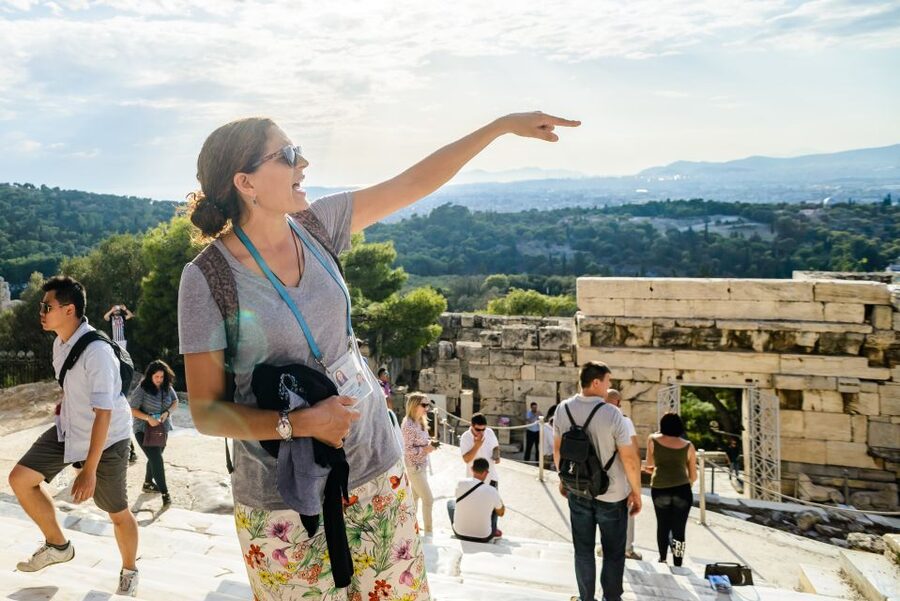
The activity is available in morning or afternoon slots, with starting times shown during booking. I would choose the earliest available tour if you can manage it. An 8:30 start has been specifically recommended because the Acropolis begins to feel busier as the morning progresses.
The hill is exposed, and shade may be limited at key monuments. Bring:
- Comfortable shoes with a secure sole
- A sun hat
- Sunscreen
- Water
- Passport or ID card
Your passport can be important if you qualify for reduced admission, especially if you are under 25. A photo of the passport is noted as acceptable for showing eligibility in that case. Holders of the EU Disability Card can enter the Acropolis free, and should choose the option without an entry ticket.
Food and drinks are not included. Hotel pickup and drop-off are not included either, but the metro-adjacent meeting point keeps the arrival simple.
Is the $36.14 price good value?

The advertised price is $36.14 per person, though the final cost depends on the ticket and museum option you select. The key question is not simply the base price. You need to compare what is included.
The tour with a licensed guide gives you a structured explanation of the monuments, wireless audio equipment, and a convenient meeting point. If entry tickets are included, the price also saves you the task of securing admission yourself. That can be valuable because availability may be limited, especially during busy periods.
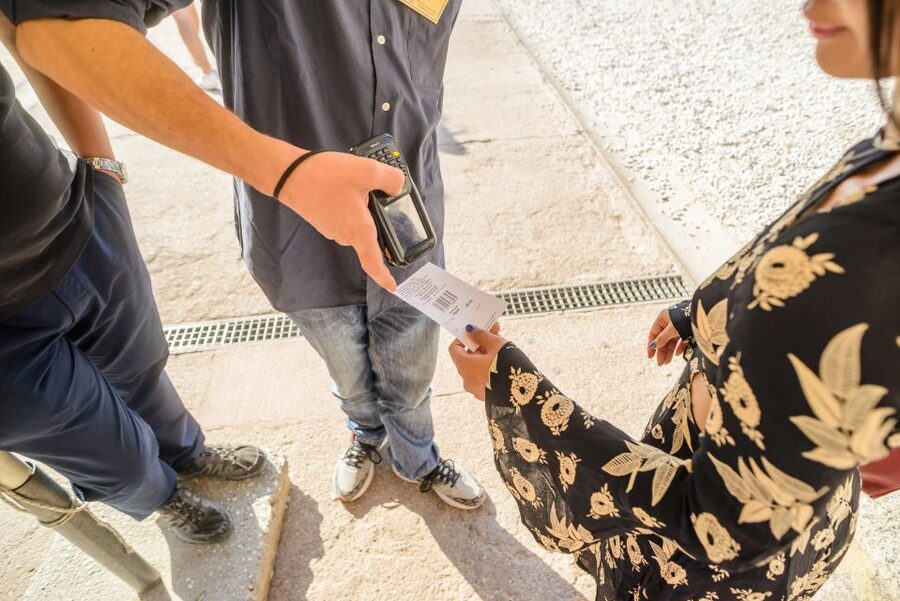
The cheaper option without tickets may look attractive, but you must obtain the official Acropolis ticket online yourself. The operator strongly recommends selecting the ticket option because entrance slots can sell out. Saving a little money is not useful if you cannot get the admission time you need.
The museum version costs more, but it makes sense for a short Athens visit or anyone who wants the sculpture explained rather than merely displayed. Independent visitors can certainly see the Acropolis on their own, but the guide adds structure and context that is hard to reproduce while managing tickets, crowds, and the uphill route.
Free cancellation is available up to 24 hours before the activity for a full refund, and you can reserve now and pay later. Those policies help if your Athens schedule is still changing.
Who should book this Acropolis walking tour?
I would choose this tour if you are visiting Athens for one or two days, want the main Acropolis monuments in one organized route, or prefer stories and explanations to reading a guidebook while walking.
It also suits first-time visitors who want help with the layout. The sequence from theater to sanctuary to gateway to temple gives you a useful mental map. Families and mixed-age groups may appreciate a guide who adjusts the pace, although the climb and uneven ground still require a reasonable level of mobility.
You may prefer an independent visit if you want to linger for hours at one monument, avoid a group schedule, or photograph the site in silence. You will also need to handle tickets and research on your own.
Final call: book it for context, not just entry
Book this Acropolis and Parthenon tour if you want the ancient stones explained by a lively guide and you value an organized route. The strongest features are the complete monument sequence, the archaeologist-led storytelling, the wireless headsets, and the option to add the Acropolis Museum.
Choose an early morning departure, select the ticket option unless you have already secured official admission, and pack for sun and stone. If your time in Athens is short, this tour gives you a solid introduction to the city’s most important ancient site without wasting your limited hours on guesswork.
FAQ
How long does the Acropolis and Parthenon tour last?
The activity lasts between two and four hours. The exact duration depends on the starting time and the option selected, especially if you add the Acropolis Museum.
Where does the tour begin?
Meet the guide at the Athens Walks tour office at Porinou 5, 11742. The office is about a two-minute walk from the Acropolis metro station.
Which languages are available?
The live tour is offered in English, French, and German.
Does the price include Acropolis entry?
Entry depends on the option you choose. Some bookings include the Acropolis ticket, while others require you to buy the ticket separately through the official website.
Should I choose the option with tickets?
The ticket option is recommended if you want the operator to arrange admission. Acropolis entrance slots can sell out, so buying separately requires advance planning.
Is the Acropolis Museum included?
The museum is included only with the option that specifically adds the Acropolis Museum. That version includes a guided museum tour and skip-the-line museum entry.
What should I bring?
Bring your passport or ID card, comfortable shoes, a sun hat, and sunscreen. A passport or passport photo can help confirm eligibility for reduced admission fees for visitors under 25.
Is the tour accessible for wheelchair users?
No. The activity is not suitable for wheelchair users because the route includes an uphill walk and uneven ancient surfaces.
Freshly added Athens trips
- Athens and Ancient Corinth Private from Athens★ 5.0 · 3 reviews
- From Athens: Mycenae and Epidaurus Private Tour★ 4.8 · 3 reviews
- Full day Meteora private tour★ 5.0 · 3 reviews
- Double Shore Dive (certified divers)★ 4.5 · 3 reviews
- Athens Hills: Mythology Treasure Hunt★ 5.0 · 3 reviews
- Sunset & swimming at Cape Sounio, Poseidon temple★ 5.0 · 3 reviews
- Philosophy Experience at Plato’s Academy Park – basic version★ 5.0 · 3 reviews
- Private Acropolis Tour – Ticket Included★ 5.0 · 3 reviews
Acropolis Tours, compared.

Acropolis & up to 5 Archaeological Sites Combo Pass
Read our review →

Acropolis, Parthenon & Acropolis Museum Guided Tour
Read our review →
Acropolis, Parthenon & Acropolis Museum Guided Tour
Read our review →

Acropolis monuments & Parthenon Walking Tour with Optional Acropolis Museum
Read our review →
Athens All Included: Acropolis and Museum Guided Tour with Ticket
Read our review →Browse the lists this tour appears in