
Reviewed · ATHENS
Philosophy Experience at Plato’s Academy Park – basic version
Plato’s Academy Park is not just a place to look at old stones. Here, you sit near the ruins of the ancient Gymnasium and work through Plato’s Allegory of the Cave with a facilitator acting as a modern Socrates. The point is not to memorize philosophy. It is to test your own ideas.
I like the small maximum group of 10, which gives you a real chance to speak. I also like the move from the Digital Museum to the outdoor ruins, since the workshop connects screens and ancient foundations with questions from modern life. The drawback is clear: this is an interactive class, not a relaxed sightseeing tour, and the museum can have technical problems or close without warning.
In This Review
- Key points before you book
- Plato’s Academy Park turns philosophy into a conversation
- The Digital Museum gives you a short modern introduction
- Walking 300 meters to the ancient Gymnasium
- The Allegory of the Cave becomes a modern problem
- What a junior facilitator means for the experience
- Is $495 good value for two hours?
- Who will get the most from this workshop?
- Weather, excavation, and practical planning
- Cancellation rules and the small-group condition
- The strongest reason to book
- Should you book the Basic Version?
- FAQ
- Where does the philosophy workshop begin?
- Where does the activity end?
- How long does the experience last?
- Is the Digital Museum entrance included?
- Is this a guided tour of Plato’s Academy?
- What will the workshop discuss?
- Do I need previous knowledge of Plato?
- Can teenagers attend?
- How large is the group?
- What happens if the weather is poor?
- What is the cancellation policy?
Key points before you book
- You debate Plato instead of simply hearing about him: The workshop asks you to apply the Allegory of the Cave to present-day situations.
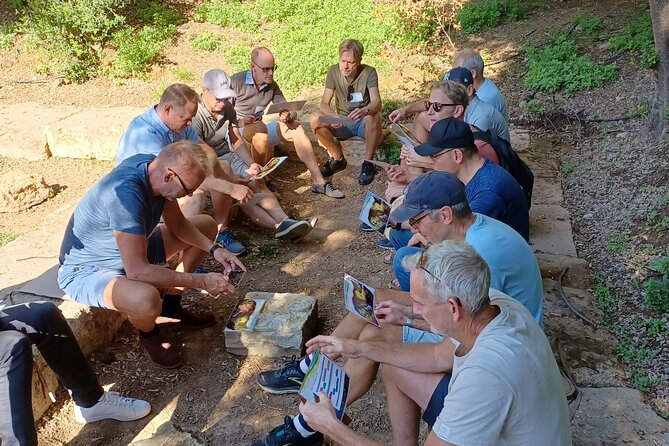
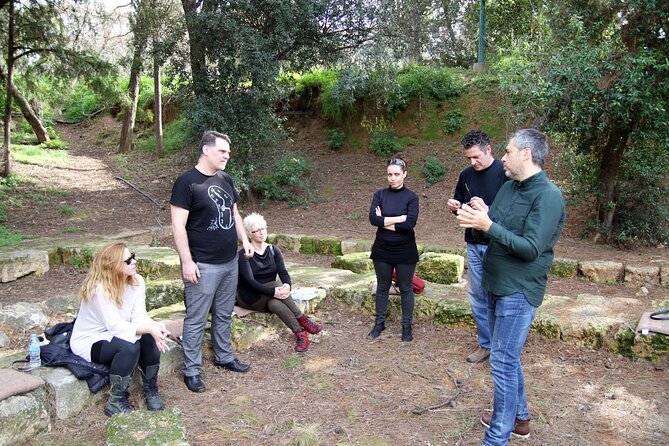
- The ancient Gymnasium is the classroom: You sit on foundation stones beneath shaded trees, close to the remains of Plato’s Academy.
- Groups stay small: A maximum of 10 people allows the facilitator to involve everyone.
- Olga may lead your session: The named facilitator praised in the available feedback is Olga, while the Basic Version is generally led by a junior facilitator.
- The Digital Museum comes first: Entrance is free, but opening hours change and some screens may not work.
- It suits curious adults and teens over 15: No previous philosophy study is needed, and the English is intended to be plain.
Plato’s Academy Park turns philosophy into a conversation
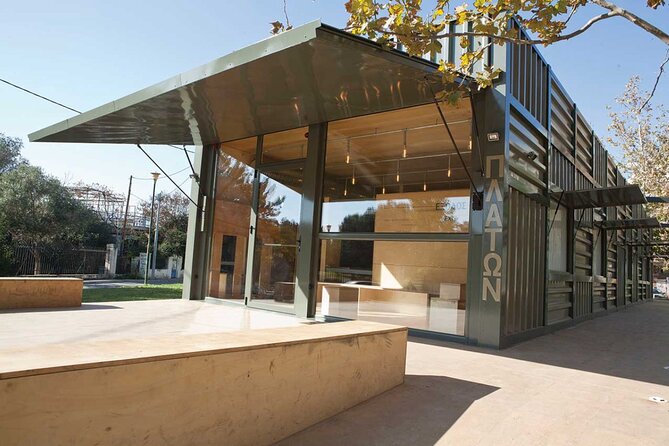
The most unusual part of this Athens experience is the setting. You are not placed in a lecture room or marched past monuments while someone recites dates. You begin at Plato’s Academy Digital Museum, then walk about 300 meters through the archaeological park to the ancient Gymnasium area.
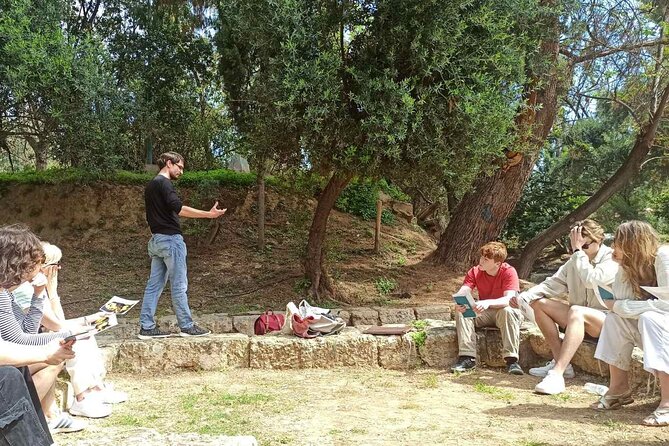
The Gymnasium was a place where young people trained, and it also served as a meeting place for philosophers teaching the next generation. Sitting on the foundations beneath shaded trees gives the workshop a strong sense of place without pretending that the ruins are a preserved theater or museum hall.
You should arrive ready to participate. The facilitator will ask questions, invite different views, and guide the group toward the ideas behind Plato’s Allegory of the Cave. You may discuss how people form beliefs, how they react to information, or how familiar assumptions can shape daily choices.
The method is based on Socrates’ maieutic approach, often described as a midwife method. Instead of handing you a final answer, the facilitator uses questions to help you examine your own thinking. That can feel refreshing if you like discussion. It can feel demanding if you prefer to listen quietly.
Other days out people book around Athens:
- Athens: Acropolis & up to 5 Archaeological Sites Combo Pass
★ 4.4 · 12,619 reviews - Athens: Acropolis Ticket with Optional Audio or Live Guide
★ 4.2 · 11,055 reviews - Athens: Acropolis, Parthenon & Acropolis Museum Guided Tour
★ 4.8 · 9,316 reviews
The Digital Museum gives you a short modern introduction
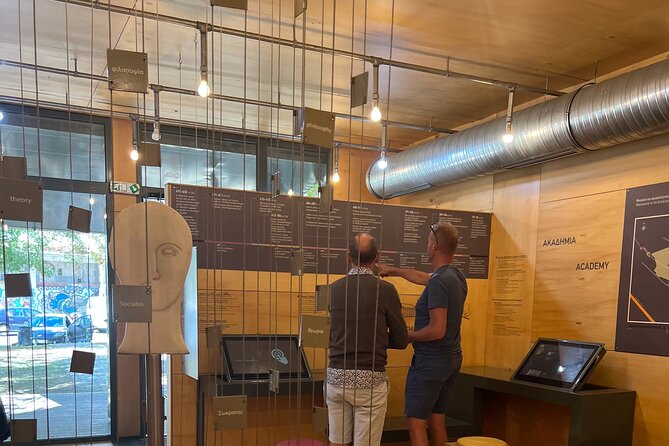
The session begins at Plato’s Academy Digital Museum on Alkmeonos 1. Entrance is included at no extra cost, and the museum helps set up the main workshop by introducing Plato, his work, and his methods through screens, wall information, and videos.
This opening is useful because it gives you some basic context before the discussion begins. You do not need to arrive with a background in Greek philosophy. The activity is designed for people with no previous knowledge, and the language is intended to be plain English without difficult terminology.
Keep your expectations practical. The museum is part of the experience, but it is not guaranteed to operate perfectly. Its opening dates and hours change often, and it sometimes closes for technical reasons. Some screens may not work on the day of your visit.
That does not necessarily ruin the session. The facilitator can make the best of a limited museum visit, and the main workshop takes place outdoors in the park. Still, if the museum is a major reason you want to book, treat it as a useful introduction rather than the central attraction.
Walking 300 meters to the ancient Gymnasium
After the museum, you walk roughly 300 meters through Plato’s Academy Park. This is a short distance, but it matters because the change in setting prepares you for the activity. You move from modern displays to an archaeological site where the discussion can take place near the remains of the ancient Academy.
The exact outdoor spot can change if archaeological excavation is underway. In that case, you may view the ancient Gymnasium ruins from a short distance and settle elsewhere in the park. The experience remains outdoors, but you should not expect one guaranteed seating position.
The usual arrangement is simple. You sit on foundation stones beneath shaded trees, with the facilitator leading the discussion. This is not a polished performance with theatrical costumes or a staged reconstruction. Its appeal comes from using an actual historical site as the setting for a live exchange of ideas.
Wear clothing suitable for an outdoor archaeological area and show respect for the site. The operator asks participants to follow standards for dress, cleanliness, sobriety, noise, and photography. The facilitator may end participation without a refund if someone behaves disrespectfully toward the place or other people.
The Allegory of the Cave becomes a modern problem
Plato’s Allegory of the Cave is often taught as an abstract lesson about perception and reality. Here, you are asked to consider what the allegory means in situations you recognize from modern life.
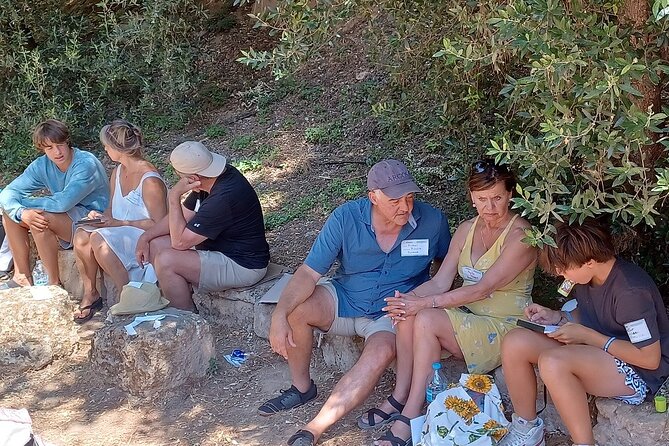
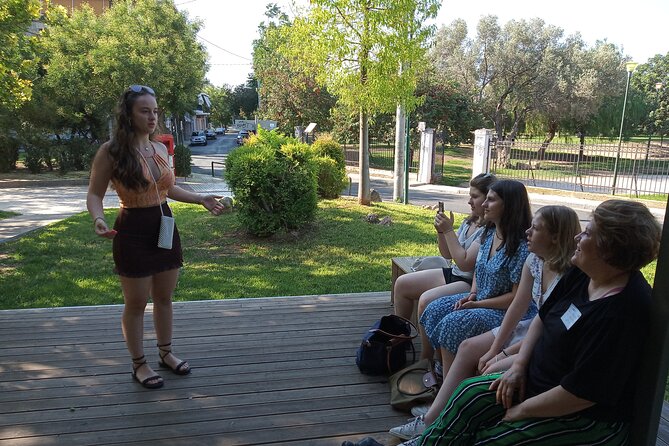
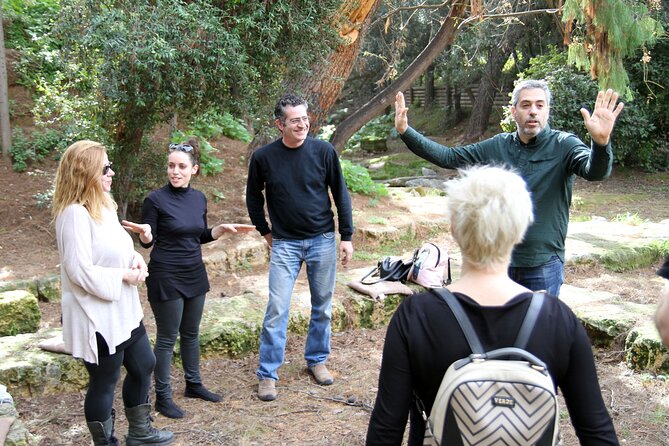
The facilitator takes the role of another Socrates, asking questions instead of delivering a long speech. You exchange beliefs, experiences, opinions, and views with the group. The goal is not to produce one correct answer. It is to notice how you reach your conclusions and how a different point of view may challenge them.
This makes the experience especially useful for people who enjoy conversation. You might leave with a clearer sense of how Plato’s ideas connect to self-awareness, critical thought, and the habits of everyday decision-making. The session also gives teenagers over 15 a structured way to discuss difficult ideas without requiring academic preparation.
The small group helps here. With no more than 10 participants, the facilitator can keep track of who has spoken and encourage quieter people to join in. The guide is responsible for making sure everyone is equally involved, so the experience is not meant to become a debate dominated by one confident speaker.
Still, participation is part of the product. If you want two hours of passive sightseeing, this is not the right choice. You should be comfortable speaking in plain English, listening to other opinions, and considering questions that may not have simple answers.
Same city, a completely different century:
- Athens: Cape Sounion & Poseidon Temple Sunset Half-Day Trip
★ 4.8 · 8,241 reviews - Athens: Acropolis and Parthenon Guided Walking Tour
★ 4.6 · 5,882 reviews - All Day Cruise -3 Islands to Agistri,Moni, Aegina with lunch and drinks included
★ 5.0 · 4,958 reviews - Athens, Piraeus, and Coastline: Blue Hop-On Hop-Off Bus
★ 3.9 · 4,849 reviews
What a junior facilitator means for the experience
The Basic Version is led by a junior facilitator. That detail helps explain both the price and the style. You are booking an educational workshop rather than a private session with a senior academic or a traditional licensed sightseeing guide.
Olga is the named facilitator in the available comments, and her role received strong praise for guiding discussion and connecting ancient ideas with modern times. If Olga leads your session, you can expect an active approach centered on questions and group participation. The assigned facilitator may be someone else, so do not book on the assumption that a particular person is guaranteed.
The facilitator’s job is to guide the process, keep the discussion moving, and make sure each person has a place in it. This is different from a standard tour guide explaining what you see while you walk. The activity description specifically says there is no guided tour.
That distinction is important when comparing prices. You are paying for a planned educational encounter, a small group, a facilitator, and access to the setting, not for a long route through Athens or a detailed archaeological lecture.
Is $495 good value for two hours?
The listed price is $495 for approximately two hours. The supplied information does not state whether that amount is per person or for the whole booking, so check the final booking screen carefully before you pay.
At first glance, the figure may seem high for a short activity. The value depends on what you want from Athens. If you are looking for the lowest-cost way to see ruins, this will not be a strong match. Plato’s Academy Park is publicly accessible, and this experience does not promise a long sightseeing route.
The price makes more sense if you want a planned, small-group discussion in a historic setting. The group is capped at 10, the facilitator prepares the session, the Digital Museum entrance is free, and the workshop gives you a way to use the site rather than only photograph it. Liability insurance and local VAT are included.
I would compare it to the cost of a private or specialist educational activity, not to a basic museum ticket. It is best value for people who will take part fully. If you remain silent throughout, much of what you paid for is lost.
Who will get the most from this workshop?
This activity suits adults and teenagers over 15 who like asking questions, exchanging opinions, and looking at familiar issues from a new angle. It is also a sensible option for families with older teenagers, as long as an adult books with any underage participant and supervises them.
You do not need to have read Plato or studied ancient Greece. The workshop uses plain English and avoids difficult terminology. That makes it approachable for people who are curious but not academically trained.
It can also work well for visitors who have already seen Athens’ major archaeological sights and want a less standard activity. Instead of adding another collection of monuments to your schedule, you spend time thinking about how an ancient philosopher’s ideas apply today.
The experience may be less suitable if you dislike group discussion, have limited English for conversation, or want a formal explanation of the ruins. It is also not a good weather-proof plan. The workshop is outdoors and can be canceled in poor conditions.
Weather, excavation, and practical planning
Plan for an outdoor session. If bad weather forces a cancellation, you should be notified at least three hours ahead and offered another date, a similar workshop, or a full refund.
The activity begins and ends at Plato’s Academy Digital Museum, so you do not need to arrange transport between the museum and the park. The meeting address is Alkmeonos 1, Athens 104 42, Greece. The location is near public transportation.
A mobile ticket is provided, and confirmation is received at booking. Service animals are allowed, and most people can participate. The information does not describe the ruins as a fully accessible path, so if you have specific mobility needs, ask the operator before booking.
Photography and video may take place in the public setting. By attending, you consent to being recorded or photographed during the service and to possible future publication by the operator or other participants. You can withdraw your consent by contacting the operator in writing, but the operator is not responsible for images made or used by other people.
The site also has a conduct policy. This is reasonable for an archaeological setting, but you should know it before you arrive. Keep your voice down, dress respectfully, and treat the ruins and other participants with care.
Cancellation rules and the small-group condition
You can cancel for a full refund up to 24 hours before the local start time. Cancellations or changes made within 24 hours are not refunded or accepted.
The activity also requires good weather and a minimum number of participants. If the operator cancels because the weather is poor or the minimum is not met, you will be offered another date or activity, or a full refund.
These rules make it wise to avoid placing the workshop at the very end of your Athens stay. A little flexibility gives you room to move the activity if weather or operations interfere.
The strongest reason to book
The best part is the link between place and subject. You are discussing Plato near the remains of the Academy, in the same broad setting where teaching and philosophical exchange once took place. The experience does not recreate antiquity, but it gives the site a practical purpose.
I also like that the workshop asks you to do more than repeat famous ideas. The Allegory of the Cave becomes a tool for examining your own beliefs. That is why the experience can work even for someone who grew up in Greece or has heard Plato discussed many times. The questions can still feel personal and current.
The museum’s free entrance and the shaded outdoor seating add useful support, but they are not the main reason to book. The central attraction is the discussion itself.
Should you book the Basic Version?
Book it if you want a thoughtful, unusual Athens activity and are willing to speak, listen, and question your own assumptions. The small group, the ancient Gymnasium setting, and the practical use of Plato’s ideas give the two hours a clear purpose.
Skip it if you want a conventional archaeological tour, a guaranteed museum visit, or a quiet activity with little audience participation. Also think twice if the $495 price does not fit your budget, especially since the experience lasts about two hours and the booking price basis should be checked carefully.
For the right person, this is not simply a visit to Plato’s Academy Park. It is a guided conversation that uses the park, the museum, and Socratic questioning to make an old idea feel close to daily life.
FAQ
Where does the philosophy workshop begin?
It begins at Plato’s Academy Digital Museum, at Alkmeonos 1, Athina 104 42, Greece.
Where does the activity end?
The workshop ends back at the meeting point at Plato’s Academy Digital Museum.
How long does the experience last?
The activity lasts approximately two hours.
Is the Digital Museum entrance included?
Yes. Entrance to Plato’s Digital Museum is free as part of the visit, though the museum may sometimes be closed for technical reasons.
Is this a guided tour of Plato’s Academy?
No. It is an educational, interactive philosophy workshop rather than a conventional guided tour.
What will the workshop discuss?
The main subject is Plato’s Allegory of the Cave. You will also explore Socratic questioning, Platonic dialogue, critical thought, self-awareness, and modern-life examples.
Do I need previous knowledge of Plato?
No. The workshop is designed for people without previous knowledge and uses plain English without difficult terminology.
Can teenagers attend?
Yes. The activity is suitable for adults and teenagers over 15. Anyone under 18 cannot book alone, and an adult must book and supervise them.
How large is the group?
The maximum group size is 10 participants.
What happens if the weather is poor?
Because the workshop takes place outdoors, it may be canceled in poor weather. You will be offered another date, a similar workshop, or a full refund.
What is the cancellation policy?
You receive a full refund if you cancel at least 24 hours before the local start time. Cancellations or changes within 24 hours are not refunded or accepted.
Freshly added Athens trips
- Athens and Ancient Corinth Private from Athens★ 5.0 · 3 reviews
- Full day Meteora private tour★ 5.0 · 3 reviews
- Double Shore Dive (certified divers)★ 4.5 · 3 reviews
- From Athens: Mycenae and Epidaurus Private Tour★ 4.8 · 3 reviews
- Athens Hills: Mythology Treasure Hunt★ 5.0 · 3 reviews
- Sunset & swimming at Cape Sounio, Poseidon temple★ 5.0 · 3 reviews
- Private Acropolis Tour – Ticket Included★ 5.0 · 3 reviews
- Corinth Canal, Ancient Corinth, Mycenae, Nafplio & Epidaurus Private Sightseeing★ 5.0 · 3 reviews