

Reviewed · GREEK MYTHOLOGY TOURS
Athens: Mythology Tour for Families
The clever idea here is to use Greek mythology as the key to the Acropolis. Instead of asking children to admire old stones in silence, the guide connects Athena, Zeus, Poseidon, Dionysus, Theseus, and other figures to the buildings in front of you. I especially like the small groups of no more than 15 and the final activity at the Pnyx, where children can use their imagination in the birthplace of democracy.
I also like that guides such as Chrysa, Demi, Maria, Sophia, and Viki have been praised for keeping children involved while still giving adults plenty to think about. The main drawback is the three-hour length in full summer heat. There are few chances to stop for water, and strollers, backpacks, and large bags are not allowed at the Acropolis.
In This Review
- Key points to know before booking
- Why mythology works so well on the Acropolis
- Starting at the Theater of Dionysus
- Crossing the Propylaea and meeting Athena Nike
- Finding the stories in the Erechtheion
- Spending 70 minutes with the Parthenon
- Walking to the Pnyx
- The 45-minute family activity at the Pnyx
- The guides make or break the experience
- Price, tickets, timing, and group size
- What to bring, and what to leave behind
- Who should book this Acropolis tour?
- FAQ
- How long does the mythology tour last?
- What places are included?
- Is the tour suitable for young children?
- What languages are available?
- Are Acropolis tickets included?
- Can I book a private group?
- Can I bring a stroller or backpack?
- Is the tour accessible for wheelchair users?
- What is the cancellation policy?
Key points to know before booking

- Myths give the Acropolis a storyline: Gods and heroes help children understand why each monument matters.
- The Parthenon gets 70 minutes: That gives your guide time to explain the temple rather than rush past it.
- The Pnyx adds something different: You leave the famous hill for an activity at the ancient meeting place of Athenian citizens.
- Best for ages 5 to 11: Older children may still enjoy it, especially those interested in Classics, but the tone is aimed at younger school-age kids.
- A small group matters: With up to 15 people, children have a better chance to ask questions and take part.
- Plan for the practical limits: Bring identification, sun protection, and comfortable shoes, but not a stroller or backpack.
Why mythology works so well on the Acropolis
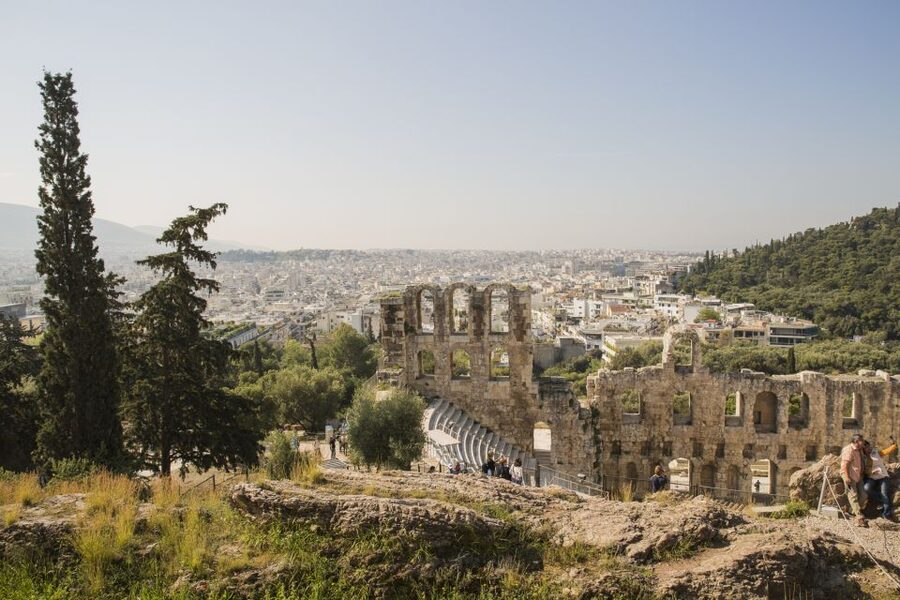
The Acropolis can be a hard place for children to read. You see columns, broken statues, steep stone paths, and crowds, but the meaning is not always clear at first glance. This tour gives the site a cast of characters and a set of stories.
Athena is central to the Acropolis, and the guide uses her role as goddess of wisdom to explain the city’s identity. Poseidon, god of the sea, adds a rival to the story. Zeus, Hera, Aphrodite, Dionysus, Theseus, and the Minotaur widen the picture beyond one temple.
I like this approach because it serves two groups at once. Children get stories, questions, and activities. Adults get context about religion, theater, politics, art, and the way ancient Athenians understood their city. The best guides do not treat mythology as a separate fairy-tale lesson. They connect the tales to the monuments around you.
The tone is meant to be lively rather than academic. Guides have been praised for being patient, funny, expressive, and able to answer a child’s unexpected question without losing the rest of the group. That matters when you are walking with a five-year-old who has suddenly decided that the Parthenon is less interesting than a snack.
More mythology-flavoured Athens days:
- Athens: Mythology of Delphi, Museum and Arachova Guided Tour
★ 4.6 · 4,008 reviews - Athens & Acropolis Highlights: Greek Mythology Small-Group Tour
★ 5.0 · 2,370 reviews - Athens: Acropolis and Mythology Highlights Small Group Tour
★ 4.8 · 2,275 reviews
Starting at the Theater of Dionysus
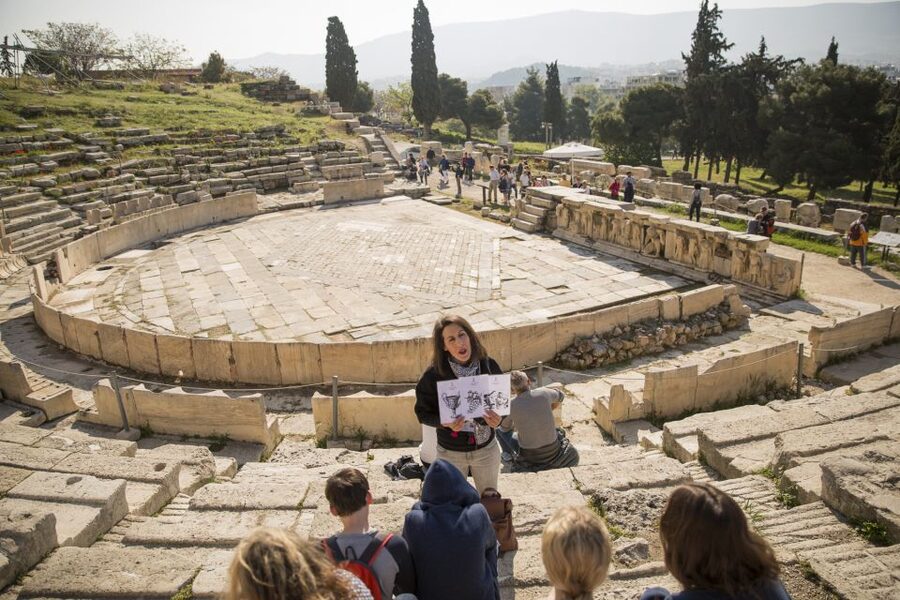
The tour begins at one of the Acropolis area’s most useful introductions: the Theater of Dionysus, often described as the first home of drama. You spend about 15 minutes here with the guide.
Dionysus was the god of wine and theater, so this is an easy place to connect a deity with a real civic tradition. The guide can explain how drama belonged to public life and why theater was more than private entertainment for ancient Athenians.
For children, this stop offers a natural opening. They can think about actors, masks, stories, and performance before the tour moves uphill. It is also a good reminder that the Acropolis was not just a collection of temples. It was tied to festivals, public life, worship, and the city’s sense of itself.
The route involves walking on ancient and uneven ground. Comfortable shoes are essential. If your child tires easily, use this first stop to set the pace for the rest of the morning or afternoon.
Crossing the Propylaea and meeting Athena Nike
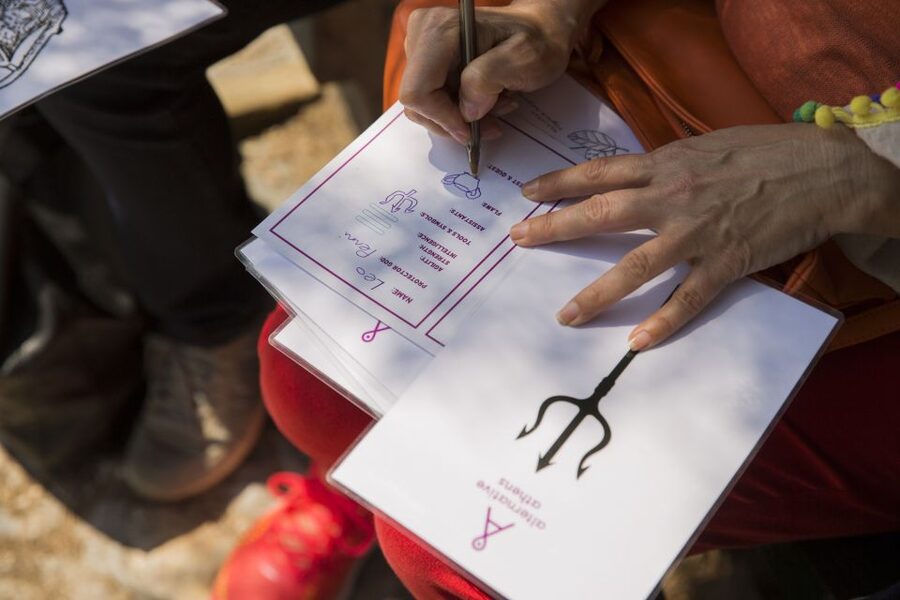
Next comes the Propylaea, the monumental entrance to the Acropolis. The guided explanation lasts about 10 minutes. Even a short stop here can help you understand that the approach to the sacred hill was designed to feel important.
The tour then spends about 15 minutes at the Temple of Athena Nike. Athena appears in different roles across Greek stories, and this small temple gives the guide a chance to discuss her connection with victory and the city.
This is one reason a family guide can be more useful than a simple audio guide. A recorded explanation gives you information, but it cannot tell when the children have lost the thread. A live guide can shorten an explanation, ask a question, or turn the story into a quick exchange.
The walk and stairs remain a consideration. This experience is not suitable for wheelchair users, and families should not bring strollers. The Acropolis also does not allow backpacks or big bags, so pack lightly.
Finding the stories in the Erechtheion
The Erechtheion receives about 10 minutes of guided attention. It is an especially good place for a mythology-focused visit because the building is linked to the contest between Athena and Poseidon for the protection of Athens.
That rivalry gives children a simple question to consider: which gift would help a city more, a powerful sea connection or an olive tree associated with peace and usefulness? The story also shows how mythology helped explain the city’s relationship with its gods.
The Erechtheion is more complex than the clean, famous image most people carry of the Acropolis. Its different sections and unusual design reward a guide who can explain what you are seeing without burying the family in technical terms. The allotted time is short, but it keeps the group moving toward the main event.
Same city, a completely different century:
- Athens: Acropolis & up to 5 Archaeological Sites Combo Pass
★ 4.4 · 12,619 reviews - Athens: Acropolis Ticket with Optional Audio or Live Guide
★ 4.2 · 11,055 reviews - Athens: Acropolis, Parthenon & Acropolis Museum Guided Tour
★ 4.8 · 9,316 reviews - Athens: Cape Sounion & Poseidon Temple Sunset Half-Day Trip
★ 4.8 · 8,241 reviews
Spending 70 minutes with the Parthenon
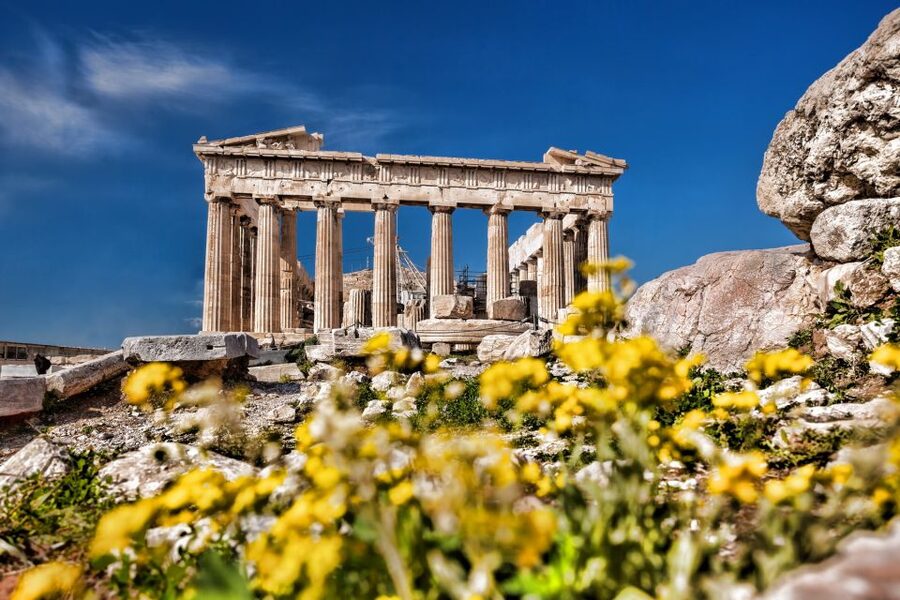
The longest stop is the Parthenon, with about 70 minutes of guided explanation. That is a strong feature of this tour. Many sightseeing walks give the Parthenon a quick photograph and a few facts. Here, the guide has time to connect the temple’s purpose, decoration, Athena’s place in the city, and the wider world of Greek gods and heroes.
You should expect the focus to remain family-friendly. The guide may ask children to look closely, imagine the ancient setting, or connect a myth to what they see. Adults can listen for the larger ideas about power, religion, civic pride, and the way later generations kept these stories alive.
The Parthenon is also the point where the practical demands of the tour become clearest. You are exposed to the sun, there may be little shade, and you are standing on an active archaeological site. In August, the heat can make three hours feel long. Bring water, sunglasses, and a sun hat, even though food and drinks are not included.
The entry ticket question deserves attention. Some booking options include Acropolis admission, while the general terms also say entry fees are not included and can be purchased in advance. Ask for the exact price and ticket arrangement before paying. Pre-purchased tickets may also help if you are booking late and want a particular entry time.
Children’s admission can vary under the stated rules. European Union citizens under 25 may enter free with valid identification, and from April 1, 2025, EU and non-EU visitors under 18 may enter free with valid identification or a passport. Entry fees are non-refundable and cannot be exchanged, so confirm eligibility before tickets are arranged.
Walking to the Pnyx
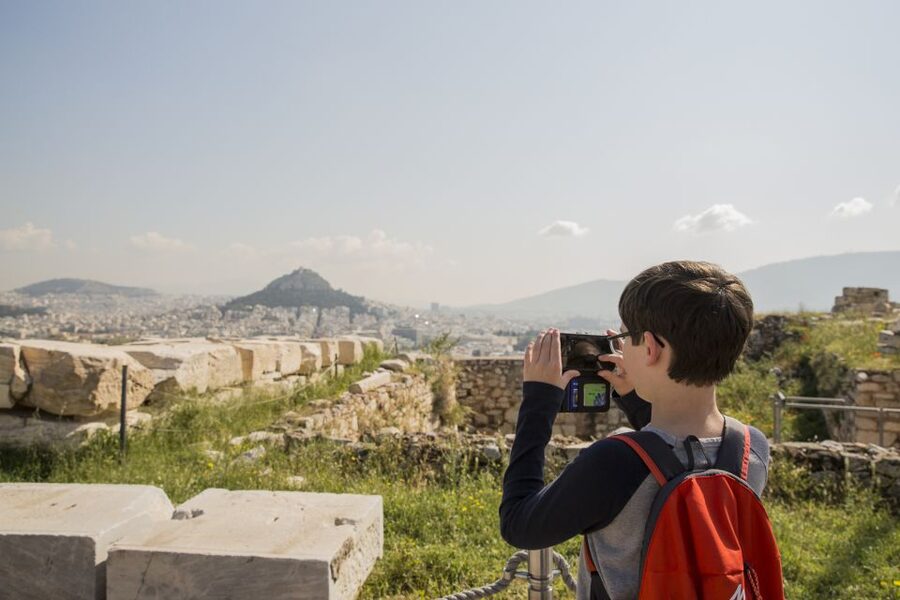
After the Acropolis, the group takes a short walk of about 15 minutes to the Pnyx. This change is important. You move from the most famous monument in Athens to a place tied to public discussion and democracy.
The Pnyx was where Athenian citizens gathered to debate political matters. That makes it a useful counterpoint to the temples. The Acropolis shows religion, art, and civic pride. The Pnyx brings in speech, participation, and the difficult business of deciding how a city should be run.
The walk is not a transfer in a vehicle. You should remain ready for more uneven ground and sun. Families who have already spent a long time sightseeing may find this stretch tiring, especially if the tour begins during the hottest part of the day.
The 45-minute family activity at the Pnyx
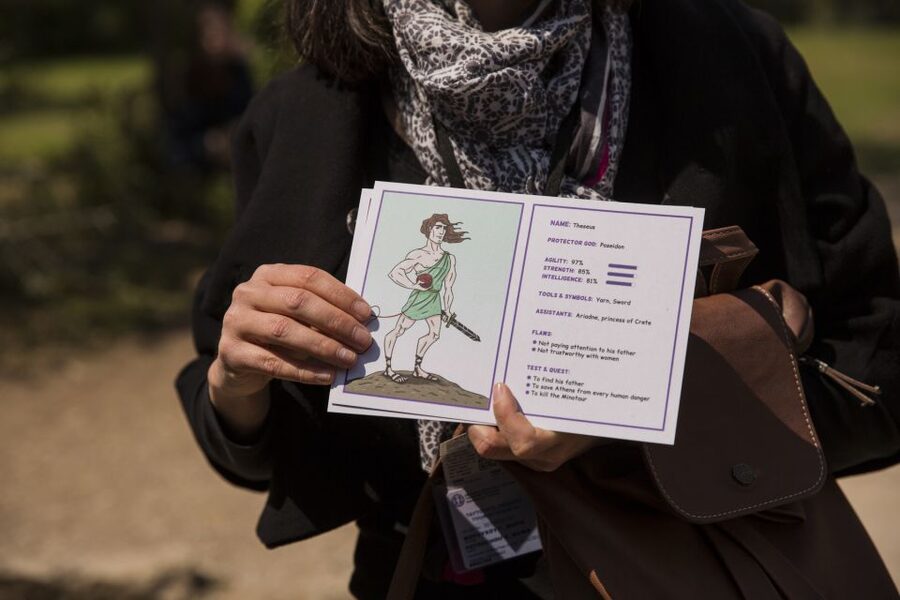
The final 45 minutes are set aside for a group activity based on the gods and heroes introduced earlier. The material is designed for children, but parents can take part too.
This is a smart ending because it lets children do something with the stories instead of simply hearing them. Theseus and the Minotaur, Hera’s jealousy, and Aphrodite’s beauty give the guide plenty of material for imaginative play and questions. The activity also turns the setting into part of the lesson. You are not working from a classroom in central Athens. You are doing it at the place associated with Athenian political gathering.
The Pnyx is the end point, so plan your next stop from there rather than expecting to return to the Acropolis entrance. The tour does not include food or drinks, and there is no promise of a refreshment break. I would carry water in a permitted way and arrange snacks for afterward.
The guides make or break the experience

A mythology tour depends heavily on the guide’s delivery. The strongest examples here include Christina, Kelli, Chrysa, Maria, Demi, Dani, Marika, Angelica, Sophia, Viki, and Amarylis. The repeated strengths are patience, humor, clear storytelling, and the ability to involve children without ignoring the adults.
Sophia has been especially praised for handling a mixed-age family group that included young children and grandparents. When the children became tired, she used games and renewed energy to keep them going. Angelica was noted for helping a family move through the entrance quickly while keeping two young boys involved with age-appropriate stories.
Demi and Maria are good examples of guides who can balance the family audience with the adults’ interest. Dani was able to combine mythology and history during a difficult visit affected by a guide strike. These details point to the real value of booking a live tour: the guide can respond to the group in front of them.
Language choices are English and French. Private groups are available if you want a slower pace, more room for questions, or a tour shaped around your own children. A private option may also be useful for grandparents, very young children, or a family with different walking speeds.
Price, tickets, timing, and group size
The listed price is $79 per person for three hours. That can be fair value if your booking includes the Acropolis entry ticket and you want a guide who can keep children involved. If the ticket is separate, add that cost before comparing this tour with other Acropolis options.
I would think of the price as paying for three things: a live guide, a family-focused structure, and an activity at the Pnyx. You are not just hiring someone to point out the Parthenon. You are getting a planned story that links several sites and gives children something active to do at the end.
The maximum group size is 15, though some departures may be much smaller. One family found itself with only the guide, while another had just one other family. A private group is also available. Small numbers can make a major difference when children have questions or need a short pause.
Meeting points vary by the option you book. Check the address carefully rather than relying on the map alone. At least one family had trouble because the meeting-point address was incorrect in the app, and another had confusion about which group to join. Allow extra time and contact the provider if the instructions do not look clear.
The tour lasts three hours, with starting times based on availability. Early entry is worth considering in summer. One family received a 9:30 a.m. entry time after booking late, a time they felt would have been hard to secure on their own.
What to bring, and what to leave behind
Bring:
- Passport or identity card
- Comfortable walking shoes
- Sunglasses
- Sun hat
- Water, packed in a way that follows site rules
Do not bring a baby stroller, backpack, or large bag. The Acropolis does not allow them, and the tour information specifically warns families not to take them along.
Children ages 5 to 11 are the best match for the activity. A three-year-old can enjoy the stories, as one family found, but the full three hours may be harder at that age. Older children can enjoy it too, particularly if they like Greek mythology or are beginning to study Classics, though some teenagers may prefer a more detailed archaeological tour.
The tour is not suitable for wheelchair users. If anyone in your group has mobility limits, check the route and access arrangements before booking.
Free cancellation is available up to 24 hours before the tour for a full refund. You can also reserve now and pay later, which is useful when your Athens schedule is still shifting. Remember that archaeological entry fees are non-refundable and non-exchangeable once arranged.
Who should book this Acropolis tour?
I would choose this tour for families who want the Acropolis to feel like a story rather than a list of dates and buildings. It is particularly good for children ages 5 to 11, curious parents, and multigenerational groups that need a guide who can adjust the level of detail.
I would be more cautious if your family dislikes structured activities, struggles with three hours of walking, or is visiting Athens in peak heat without a plan for water and sun. The length is a real issue for some children, even when the guide is lively.
For many families, the combination of famous monuments, Greek gods, and the Pnyx activity makes the $79 price worthwhile, especially if entry tickets are included or prearranged. Confirm that detail, check the meeting point, and aim for a cooler start time. If your children learn best through stories and participation, I would book it.
FAQ
How long does the mythology tour last?
The tour lasts three hours. It includes guided time at the Acropolis and Pnyx, with a 15-minute walk between them.
What places are included?
The route includes the Theater of Dionysus, Propylaea, Temple of Athena Nike, Erechtheion, Parthenon, and ancient Pnyx.
Is the tour suitable for young children?
It is most suitable for children ages 5 to 11. Children outside that age range may still enjoy it, depending on their interest and walking stamina.
What languages are available?
The live tour guide is available in English or French.
Are Acropolis tickets included?
Acropolis entry tickets are included only with selected booking options. Entry fees can also be pre-purchased, so confirm the option you choose before booking.
Can I book a private group?
Yes. A private group option is available.
Can I bring a stroller or backpack?
No. Strollers, backpacks, and large bags are not allowed at the Acropolis and should not be brought on the tour.
Is the tour accessible for wheelchair users?
No. The activity is not suitable for wheelchair users.
What is the cancellation policy?
You can cancel up to 24 hours in advance for a full refund. You can also reserve now and pay later. Archaeological entry fees are non-refundable and non-exchangeable.
Freshly added Athens trips
- Athens and Ancient Corinth Private from Athens★ 5.0 · 3 reviews
- From Athens: Mycenae and Epidaurus Private Tour★ 4.8 · 3 reviews
- Full day Meteora private tour★ 5.0 · 3 reviews
- Double Shore Dive (certified divers)★ 4.5 · 3 reviews
- Athens Hills: Mythology Treasure Hunt★ 5.0 · 3 reviews
- Sunset & swimming at Cape Sounio, Poseidon temple★ 5.0 · 3 reviews
- Philosophy Experience at Plato’s Academy Park – basic version★ 5.0 · 3 reviews
- Private Acropolis Tour – Ticket Included★ 5.0 · 3 reviews
Greek Mythology Tours, compared.

Mythology of Delphi, Museum and Arachova Guided Tour
Read our review →
Athens & Acropolis Highlights: Greek Mythology Small-Group Tour
Read our review →
Acropolis and Mythology Highlights Small Group Tour
Read our review →
The History of Athens: Greek Mythology Private Tour
Read our review →
Greek Mythology Treasure Hunt for Kids – Athens Private Tour
Read our review →

Browse the lists this tour appears in