
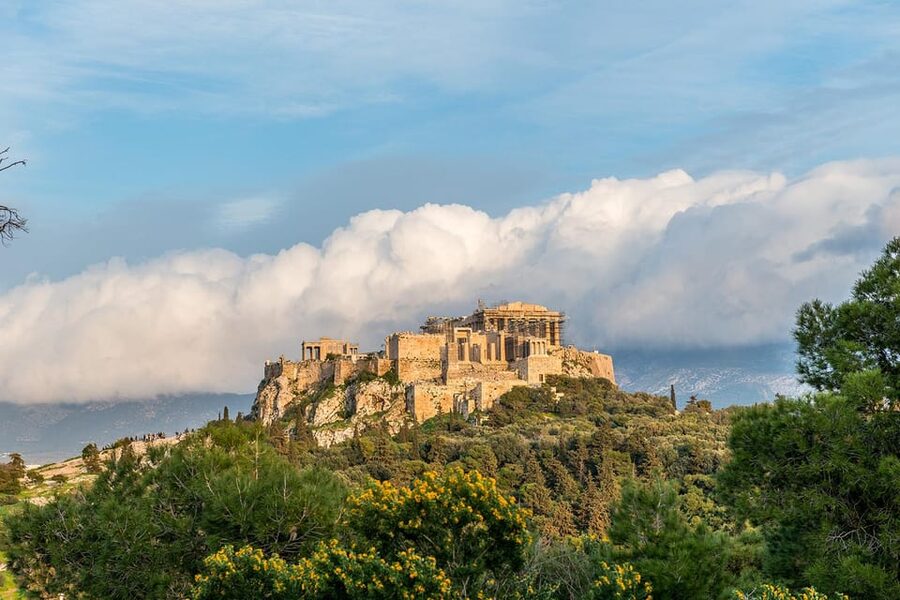
Reviewed · ACROPOLIS TOURS
Athens: Acropolis and Mythology Highlights Small Group Tour
Athens makes more sense when its stones come with stories. This small-group walk connects Athena’s contest for the city, the rise of Athenian democracy, and the dramas of ancient myth to the Parthenon, Acropolis, and Ancient Agora.
I like the intimate group size, which can make it easier to ask questions and hear the guide. I also like the way guides such as Antonia, Alex, Danae, and Stellios bring mythology down to earth instead of treating the gods as a list of names. The main consideration is the pace: with several major sites packed into two to four hours, you will walk, stand, and climb, often in full sun.
In This Review
- Key points to know
- Starting beneath Hadrian’s Arch
- The Temple of Olympian Zeus from the outside
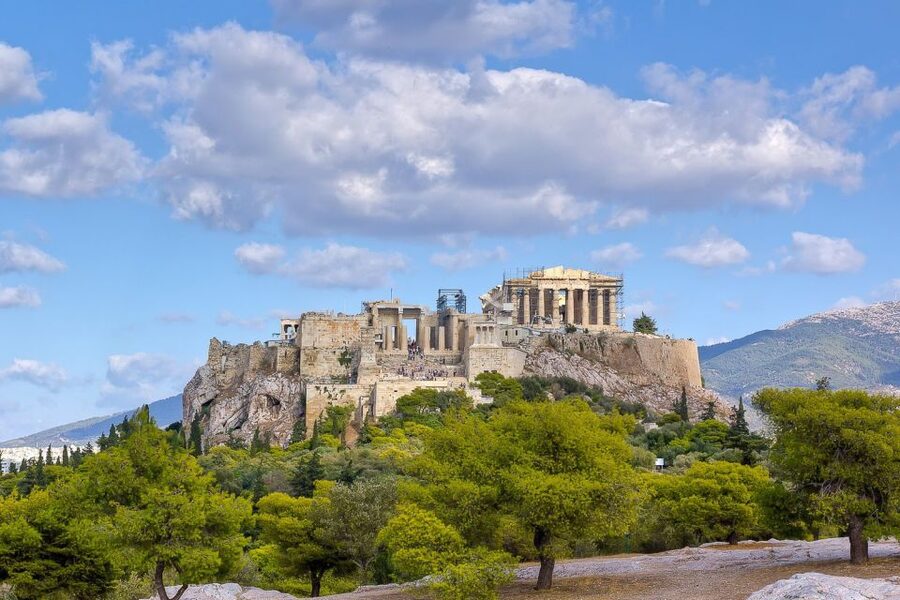
- Walking up to the Acropolis
- The Acropolis in about 90 minutes
- The Theatre of Dionysus and the Sanctuary of Asclepius
- Temple of Athena Nike
- The Erechtheion and the old religious heart of Athens
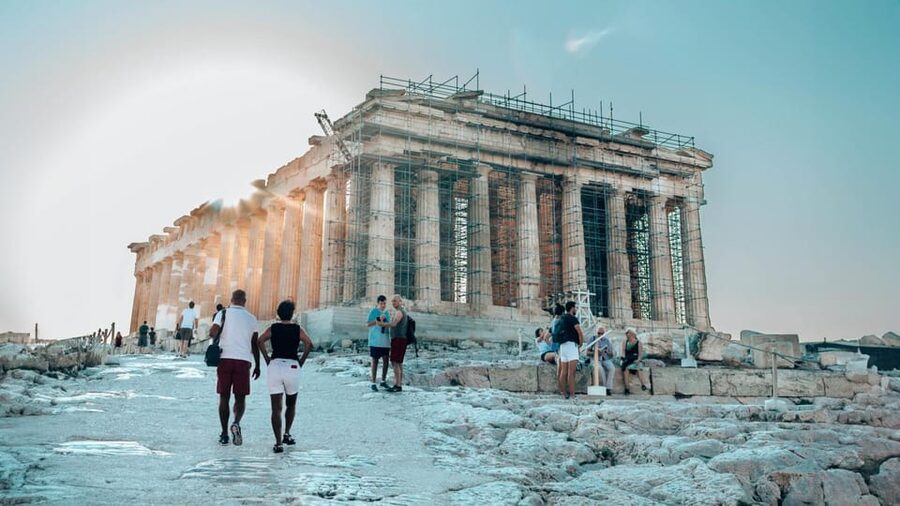
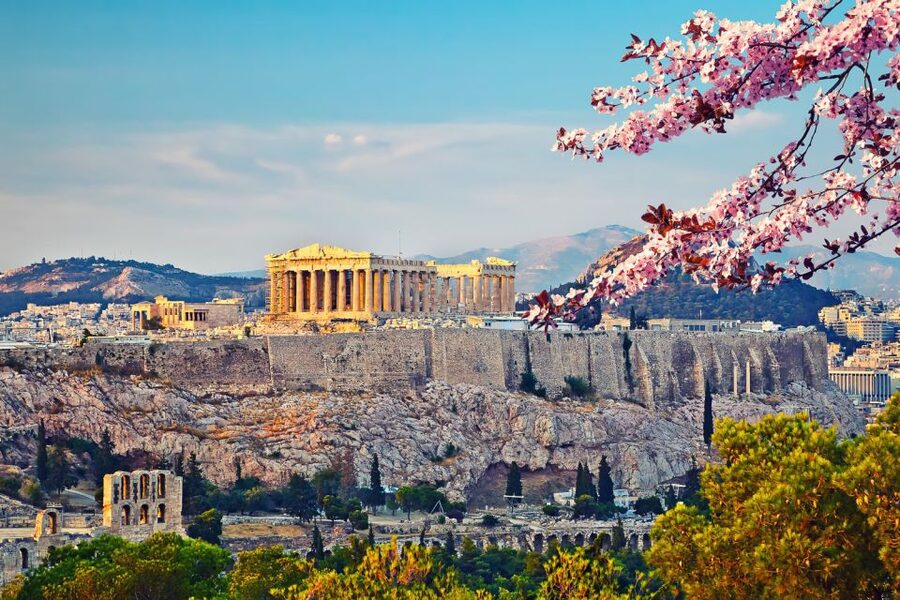
- The Parthenon, Athens’s great symbol
- From the Acropolis to the Ancient Agora
- The Temple of Hephaestus and a calmer final stop
- What the guides do best
- Is the $53 price good value?
- Who should book this Acropolis walk?
- Practical details before you go
- Should you book it?
- FAQ
- Where does the tour meet?
- How long does the tour last?
- Which languages are available?
- Are Acropolis entrance tickets included?
- Can the provider purchase tickets for me?
- Is the Ancient Agora included?
- What should I bring?
- Are backpacks and strollers allowed?
- Can I cancel the tour?
Key points to know
- Mythology with historical context: Learn how stories about Athena, Zeus, and other gods reflect ancient Athenian life.
- Small groups: The tour may feel almost private when numbers are low, making questions and conversation easier.
- Major Acropolis sights: See the Parthenon, Erechtheion, Temple of Athena Nike, Theatre of Dionysus, and Sanctuary of Asclepius.
- Ancient Agora included on selected options: Choose the ticket option carefully if you want to enter both the Acropolis and Agora.
- Strong guide-led experience: The best part is the storytelling, with guides using humor, visual aids, and clear explanations.
- Bring little with you: Backpacks, large bags, strollers, and pets are not allowed at the Acropolis, although assistance dogs are permitted.
Starting beneath Hadrian’s Arch
The tour begins beneath the Arch of Hadrian, at Leof. Vasilisis Amalias 50, beside the Acropolis. The closest metro stop is Acropolis, followed by a walk of about five minutes to the meeting point.
Look for a guide holding an Alternative Athens sign. Starting here is useful because Hadrian’s Arch gives you an immediate lesson in how Athens grew in layers. The ancient Greek city and the later Roman city were not the same thing, and the arch marks that shift before you even reach the Acropolis.
This is also a sensible place to meet because it is easy to reach by metro and close to several of the city’s main archaeological sights. Arrive ready to walk. Comfortable shoes and light, comfortable clothing matter more here than fashionable footwear.
The tour is offered in English and French. Small groups are a real advantage at the first meeting point because you are less likely to lose your guide in the stream of people moving toward the Acropolis.
More Acropolis and Parthenon visits:
- Athens: Acropolis & up to 5 Archaeological Sites Combo Pass
★ 4.4 · 12,619 reviews - Athens: Acropolis Ticket with Optional Audio or Live Guide
★ 4.2 · 11,055 reviews - Athens: Acropolis, Parthenon & Acropolis Museum Guided Tour
★ 4.8 · 9,316 reviews
The Temple of Olympian Zeus from the outside
The first major stop is the Temple of Olympian Zeus, seen from outside during a guided explanation of about 15 minutes. The surviving columns are huge, and even from the perimeter you get a clear sense of the scale ancient builders aimed for.
This stop helps place Athens in a wider religious setting. Zeus was not simply a character from a storybook. He represented authority, order, and power, and a temple of this size tells you something about the ambitions of the city and its rulers.
Because the visit is outside, do not expect to walk through the archaeological enclosure as part of every tour. The experience focuses on explanation and views rather than a full interior visit. That keeps the tour moving, but visitors who want every site from the inside should check the ticket choice and timing before booking.
Walking up to the Acropolis
From the Temple of Olympian Zeus, you walk toward the Acropolis. The route is short in the schedule, but the ground around the hill is uneven and the climb can feel harder in summer heat.
This is when the tour shifts from a city overview to the heart of ancient Athens. Your guide begins to explain how Athens developed from a settlement into the city associated with philosophy, drama, political debate, art, and military power.
The history is not presented as a string of dates alone. The guide links the city’s growth to its social structure and to the period often called the Golden Age of Athens. You also hear about Athens’s eventual conflict with Sparta and its downfall to Spartan armies.
That broad frame is important. Without it, the Acropolis can become a parade of impressive ruins. With it, you begin to see the hill as a public statement about religion, civic identity, victory, and wealth.
The Acropolis in about 90 minutes
The main Acropolis visit lasts about an hour and a half. That is enough time to see the essential monuments and hear the stories behind them, but it is not a slow archaeological study session.
Your guide helps you understand what each structure was for and how the monuments fit together. The emphasis is on the relationship between myth and daily life, not only on identifying columns and stones.
Several guides use visual aids to show what the buildings may have looked like in antiquity. This can be especially helpful for children and for anyone who finds bare ruins hard to picture. The difference between a damaged marble structure and a brightly decorated sacred building is difficult to imagine without help.
Expect some waiting, pauses for photographs, and periods when the guide stops in a spot where the group can gather. In crowded conditions, hearing can be the main challenge. Some groups receive headsets, while at least one visitor found that a listening device would have helped. Stay close enough to see the guide and ask for a repeat if a point gets lost.
More mythology-flavoured Athens days:
- Athens: Mythology of Delphi, Museum and Arachova Guided Tour
★ 4.6 · 4,008 reviews - Athens & Acropolis Highlights: Greek Mythology Small-Group Tour
★ 5.0 · 2,370 reviews - Athens: Mythology Tour for Families
★ 4.8 · 173 reviews - The History of Athens: Greek Mythology Private Tour
★ 5.0 · 138 reviews
The Theatre of Dionysus and the Sanctuary of Asclepius
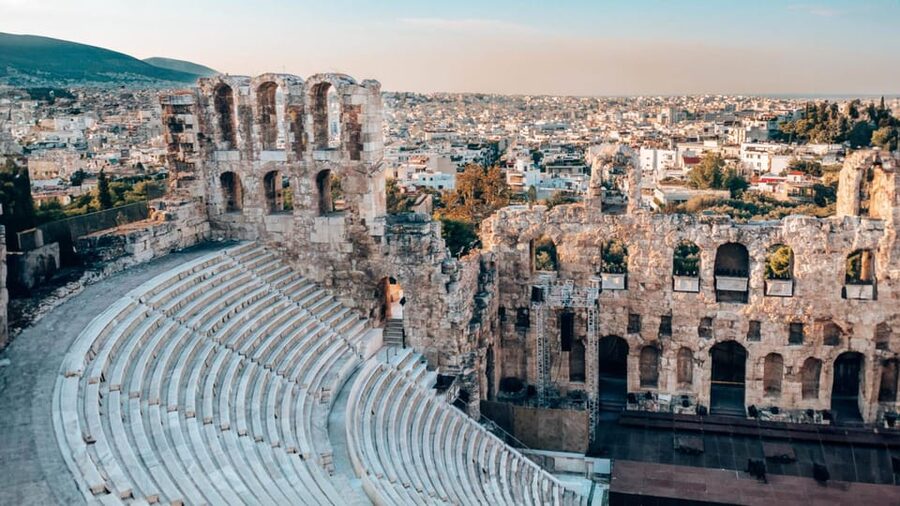
The Theatre of Dionysus is among the important Acropolis-area stops. This is where the connection between religious ceremony, public life, and Greek drama becomes easier to grasp.
Theatre in ancient Athens was not just an evening’s entertainment. It was tied to festivals, civic identity, and the worship of Dionysus. The guide’s mythology focus gives this site more meaning than a quick photograph from the path.
The nearby Sanctuary of Asclepius adds another side of ancient life. Asclepius was linked to healing, so the sanctuary helps show that ancient religion reached into practical concerns such as illness and recovery.
These lesser-known stops are valuable because they widen the visit beyond the Parthenon. You see the Acropolis not only as a symbol of political power, but also as a place connected with performance, worship, and health.
Temple of Athena Nike
The Temple of Athena Nike receives about 15 minutes of guided attention. It is a small structure compared with the Parthenon, but its position near the entrance gives it great visual importance.
Athena Nike represents victory. The name combines Athena with Nike, the personification of victory, and the temple reflects Athens’s wish to present itself as protected and successful.
This is a good example of the tour’s main strength. You are not only told what the monument is called. You are shown how its name, location, religious purpose, and political message fit together.
The space can be crowded, and the stop is fairly brief. You may not have long to linger alone, but the guide’s explanation gives you a useful key for understanding the building before moving on.
The Erechtheion and the old religious heart of Athens
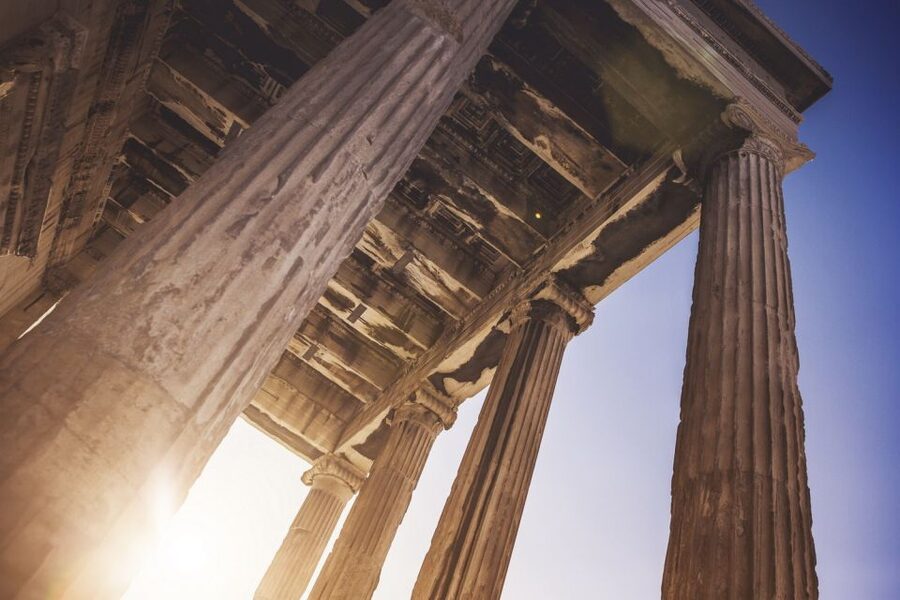
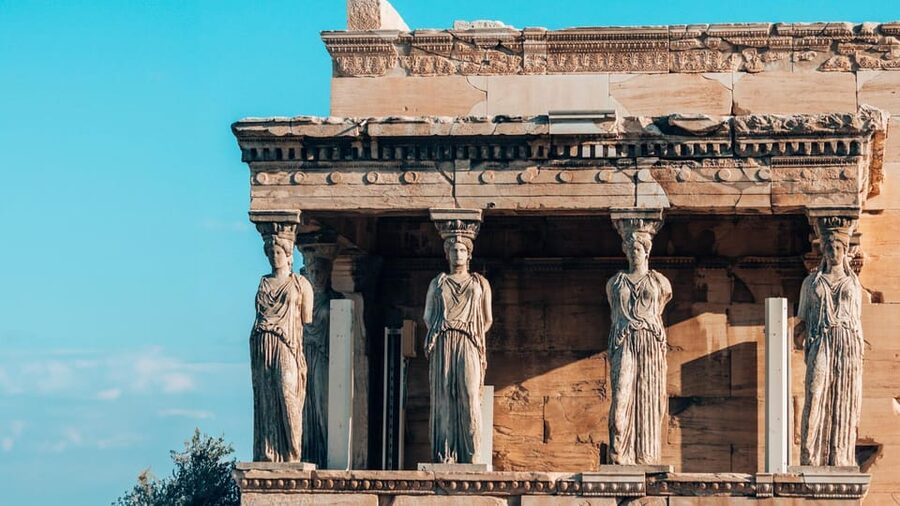
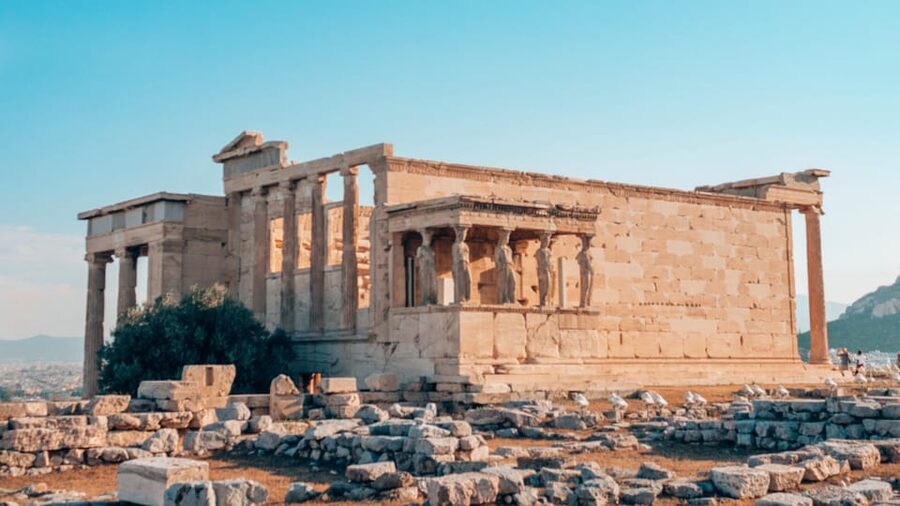
The Erechtheion is one of the most distinctive buildings on the Acropolis. Its unusual design reflects the many old traditions and sacred associations gathered on the hill.
The tour explains the contest between Athena and Poseidon for control of Athens. This is one of the central myths of the city, but the guide also connects it to physical features and historic religious practice.
You will hear about the ruins of the Temple of Athena Polias and the significance of the area around the Erechtheion. The point is not to prove every myth as literal history. Instead, the guide shows how ancient Athenians used stories to explain their origins, their land, and their relationship with the gods.
This is often one of the most rewarding parts for visitors interested in Greek mythology. The story becomes tied to the city itself, rather than floating separately from the monuments.
The Parthenon, Athens’s great symbol
The Parthenon receives about 30 minutes of guided explanation. You will have time to see its exterior, take photographs, and listen to a discussion of its purpose, design, and place in Athenian identity.
The guide explains why this temple was built for Athena and how it expressed the city’s confidence during its strongest period. You also get help reading the architecture, which is useful because the building’s present condition can hide how grand and detailed it once was.
Do not expect a quiet, empty monument. The Acropolis is one of Europe’s busiest historic sites, and even an early visit can involve crowds. Summer adds serious heat, so an early morning booking is worth considering if available.
The best guides manage the tension between information and movement. Alex, Antonia, Athena, Christina, Vicky, and others are praised for answering questions, adding humor, and giving rest or water breaks when the heat is difficult. That kind of care matters on a hill where you may be concentrating on both the ruins and your footing.
From the Acropolis to the Ancient Agora

The walk to the Ancient Agora takes about 30 minutes. This section gives you a change of mood after the grand monuments above.
The Agora was the working center of ancient Athens. It was connected with public discussion, trade, politics, religion, and ordinary social life. The site helps answer a question the Acropolis alone cannot: how did people use the city day to day?
The walking portion may feel long if you are already tired, but it provides useful continuity. You are not simply being transferred between disconnected attractions. You are following the movement from the hilltop sanctuary to the civic center below.
Ticket arrangements matter here. The activity information allows for Acropolis tickets or combined Acropolis and Ancient Agora entry tickets, depending on the option selected. Entrance fees are otherwise not included, though the provider can pre-purchase tickets if you request it. Confirm exactly what your booking covers before you pay, since entry fees are non-refundable and non-exchangeable.
The Temple of Hephaestus and a calmer final stop
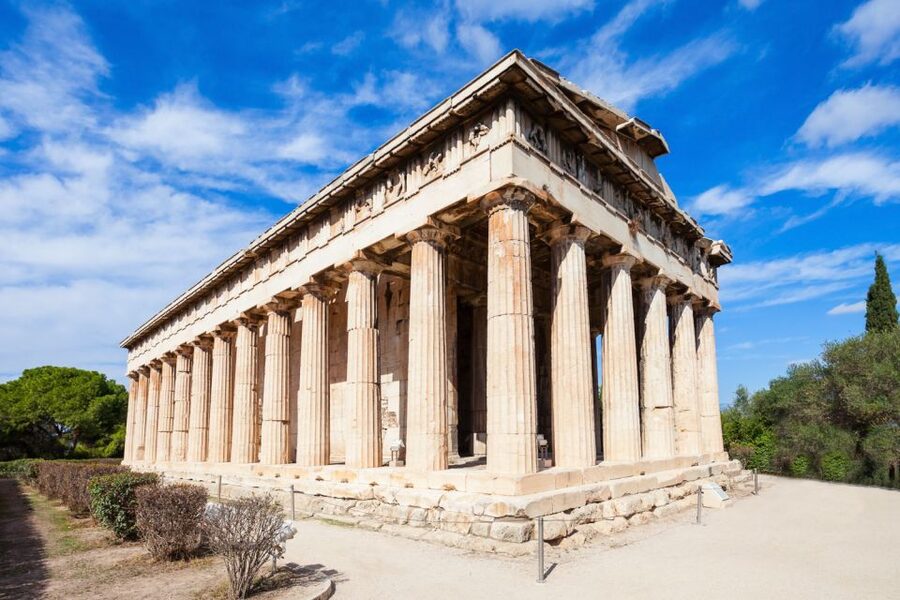
The Temple of Hephaestus receives about 30 minutes of guided attention. It is dedicated to Hephaestus, the god associated with metalworking and craft, and it offers a useful contrast with the Parthenon’s dedication to Athena.
The temple is one of the places where the tour’s focus on mythology and society works particularly well. Hephaestus connects the sacred world to skilled labor, tools, and production. Ancient religion was not separated from practical work in the way modern visitors sometimes imagine.
The Agora can feel more relaxed than the Acropolis, especially after the crowded upper hill. You have room to take in the setting and think about how the city functioned beyond its most famous monument.
The tour’s final section can also feel a little quick if you want a long independent visit. If the Agora matters greatly to you, select the combined entry option and plan to return on your own if your schedule allows.
What the guides do best
The strongest feature is the quality of the live guiding. The guides are licensed and speak English or French, and their success comes less from reciting facts than from explaining why the sites mattered.
Danae Kousouri, for example, has used visual material showing the original appearance of buildings and family relationships among the gods. That approach works well for children, visual learners, and anyone with only a basic grasp of mythology.
Other guides bring different strengths. Alex is described as warm, attentive, and good with mixed-age groups. Antonia is praised for making myths easy to follow while responding carefully to questions. Stellios is noted for linking old stories to everyday reality, while several archaeology-trained guides add detail about the physical remains.
The group size helps here. One small group had only two people and received what felt like a private visit. Another had seven people and found it easy to hear and stay together. Numbers vary, but the format is designed for a more personal experience than a large flag-following crowd.
There is one practical weakness. On a noisy or crowded site, even a strong speaker can be hard to hear. Headsets are used on some tours, but not every experience appears to provide them, so ask at the start if you are having trouble.
Is the $53 price good value?
At $53 per person, this tour offers solid value if you want the Acropolis explained rather than simply entered. You are paying for a licensed guide, a structured route, mythology, historical context, and a small group.
The value is strongest for a first visit. You see the headline monuments and also learn about the Theatre of Dionysus, Sanctuary of Asclepius, Temple of Athena Nike, Erechtheion, Agora, and Temple of Hephaestus. A self-guided visit can cost less in guiding fees, but it requires preparation and does not give you a person who can answer questions as they arise.
The price does not automatically include every entrance fee. Check the selected option carefully, especially if you want the Ancient Agora. Food and drinks are not included either, so bring water and arrange anything you need before or after the walk.
The tour also offers free cancellation up to 24 hours before the start and a reserve-now, pay-later choice. Those policies are useful when your Athens plans are still changing, but they do not make archaeological entry fees refundable.
Who should book this Acropolis walk?
I would choose this for a first-time visitor who wants the major sights in one organized outing. It also suits anyone who knows Greek myths from school, books, or Percy Jackson and wants to connect those stories with real places.
Families can do well here, especially when the guide uses humor and visual aids. Children still need to manage the walking, heat, uneven surfaces, and no-stroller rule, so consider the season and your group’s energy.
Older visitors or anyone sensitive to heat should select an early time when possible and tell the guide if you need shade, water, or a slower pace. Several guides are praised for making rest stops, but this remains a walking tour on an exposed historic hill.
You may prefer a different format if you want long periods for photography, a specialist architectural lecture, or a completely private visit. The scheduled route covers a lot, and the guide’s explanations take priority over extended free time.
Practical details before you go
Bring a passport or ID card, especially if you may qualify for free admission. European Union citizens under 25 and non-EU citizens under 18 can enter the Acropolis and Ancient Agora free with valid identification, according to the stated rules.
Leave backpacks, large bags, and strollers behind. Pets are not allowed, except assistance dogs. Wear shoes with a secure grip and clothing suitable for sun and walking.
Summer can be hot and crowded. The experience is likely to feel easier in cooler weather, and an early start can reduce both heat and queues. One winter group found the sunny morning especially comfortable, while summer groups needed regular shade and water breaks.
Should you book it?
Book this tour if you want the Acropolis to feel like a lived-in religious and civic center rather than a collection of ruins. The combination of mythology, political history, architecture, and the Ancient Agora gives you a useful first picture of Athens.
Choose the combined ticket option if you want to enter the Agora, confirm the entrance details before booking, and bring as little as possible. If you prefer a slow solo visit, this route may feel brisk, but for most first visits, the small group and strong storytelling make $53 a fair price.
FAQ
Where does the tour meet?
The meeting point is beneath the Arch of Hadrian at Leof. Vasilisis Amalias 50. The closest metro station is Acropolis, about a five-minute walk away.
How long does the tour last?
The stated duration is two to four hours, depending on the start time and selected experience.
Which languages are available?
The tour is offered in English and French.
Are Acropolis entrance tickets included?
Acropolis tickets are included with some options. Other options may include entry to both the Acropolis and Ancient Agora. Check the exact option you select, since entrance fees are not included in every booking.
Can the provider purchase tickets for me?
Yes. The provider can pre-purchase entry tickets if you let them know.
Is the Ancient Agora included?
The Ancient Agora is included when you select the option that covers Acropolis and Ancient Agora entry. Confirm your selected ticket option before booking.
What should I bring?
Bring a passport or ID card, comfortable shoes, and comfortable clothing. Identification may be needed for age-based free admission.
Are backpacks and strollers allowed?
No. Backpacks, large bags, and baby strollers are not allowed at the Acropolis and should not be brought on the tour. Assistance dogs are allowed, but other pets are not.
Can I cancel the tour?
You can cancel up to 24 hours in advance for a full refund. Archaeological entry fees are non-refundable and non-exchangeable.
Freshly added Athens trips
- Athens and Ancient Corinth Private from Athens★ 5.0 · 3 reviews
- From Athens: Mycenae and Epidaurus Private Tour★ 4.8 · 3 reviews
- Full day Meteora private tour★ 5.0 · 3 reviews
- Double Shore Dive (certified divers)★ 4.5 · 3 reviews
- Athens Hills: Mythology Treasure Hunt★ 5.0 · 3 reviews
- Sunset & swimming at Cape Sounio, Poseidon temple★ 5.0 · 3 reviews
- Philosophy Experience at Plato’s Academy Park – basic version★ 5.0 · 3 reviews
- Private Acropolis Tour – Ticket Included★ 5.0 · 3 reviews
Acropolis Tours, compared.

Acropolis & up to 5 Archaeological Sites Combo Pass
Read our review →

Acropolis, Parthenon & Acropolis Museum Guided Tour
Read our review →
Acropolis, Parthenon & Acropolis Museum Guided Tour
Read our review →


Acropolis monuments & Parthenon Walking Tour with Optional Acropolis Museum
Read our review →Browse the lists this tour appears in