

Reviewed · ACROPOLIS MUSEUM TOURS
Athens: The Mythology Tour of Acropolis & Acropolis Museum
The best thing about this tour is the way it gives the Acropolis a human story. Instead of seeing the Parthenon as a grand pile of marble, you follow the old tales of Athena, Poseidon, Dionysus, and Asclepius, then see those stories reflected in objects at the museum. Mythology becomes your guidebook.
I like the private format, which lets the guide adjust the pace and explain ideas clearly to both first-time visitors and experienced students of ancient Greece. I also like the sensible four-hour split: two hours on the Acropolis and two in the museum. The main drawback is important: entrance fees are not included in the $518 price for a group of up to two, so your final cost is higher than the headline figure.
In This Review
- Key points to know before you book
- Why mythology changes the Acropolis
- Meeting at Acropoli Metro Station
- Theater of Dionysus: where drama began
- Asklepieion and the myths of healing
- Propylaea and Athena Nike
- The Parthenon and Athena’s Athenian identity
- Erechtheion and the contest between Athena and Poseidon
- Two hours inside the Acropolis Museum
- What the $518 price really covers
- Who will enjoy this four-hour format
- A practical verdict on the mythology tour
- FAQ
- How long does the tour last?
- Where do you meet the guide?
- Where does the tour finish?
- Is the tour private?
- What language is the tour conducted in?
- Are entrance fees included in the price?
- Is the tour suitable for people with mobility impairments?
Key points to know before you book
- Theater of Dionysus: Begin where ancient Greek drama took shape, with stories connected to Dionysus and Athenian festivals.
- Asklepieion stop: Learn about Asclepius, the mythical healer, and the ancient hopes surrounding illness and recovery.
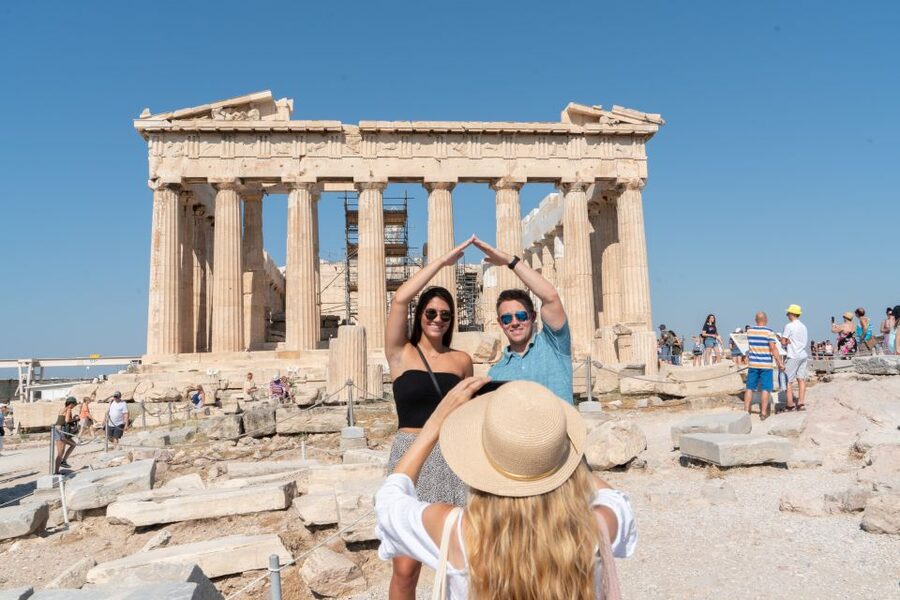
- Parthenon and Propylaea: Connect Athena’s power and the city’s political identity to the monuments on the Acropolis.
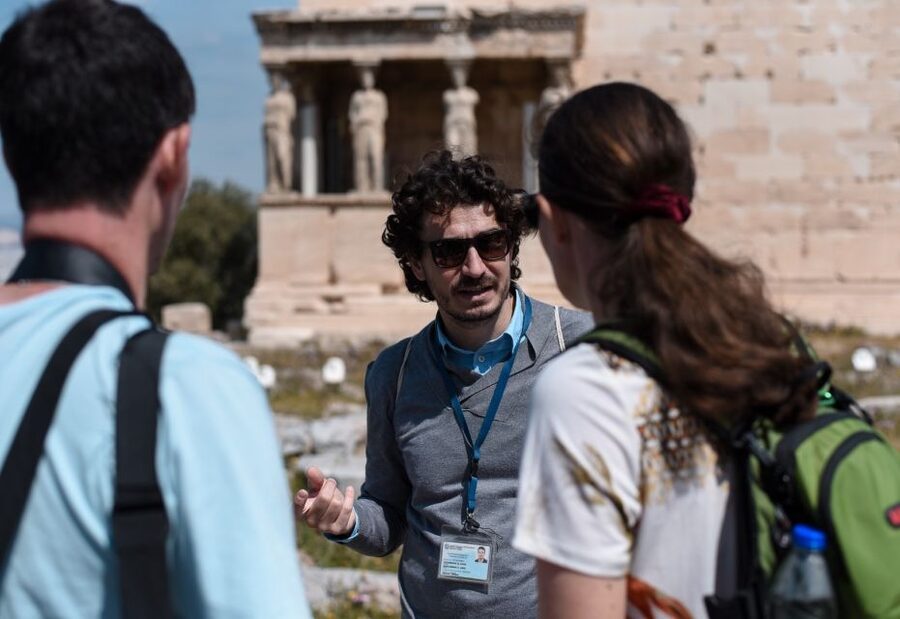
- Erechtheion myths: Hear the story of Athena’s contest with Poseidon at one of the hill’s most sacred sites.
- Museum finale: Spend two hours with statues and objects that give the myths a physical presence.
- Private English tour: Guides such as Nino Tsavalos and Tavouti M. Sapfo have led the experience, with a format suited to families and mixed levels of interest.
Why mythology changes the Acropolis
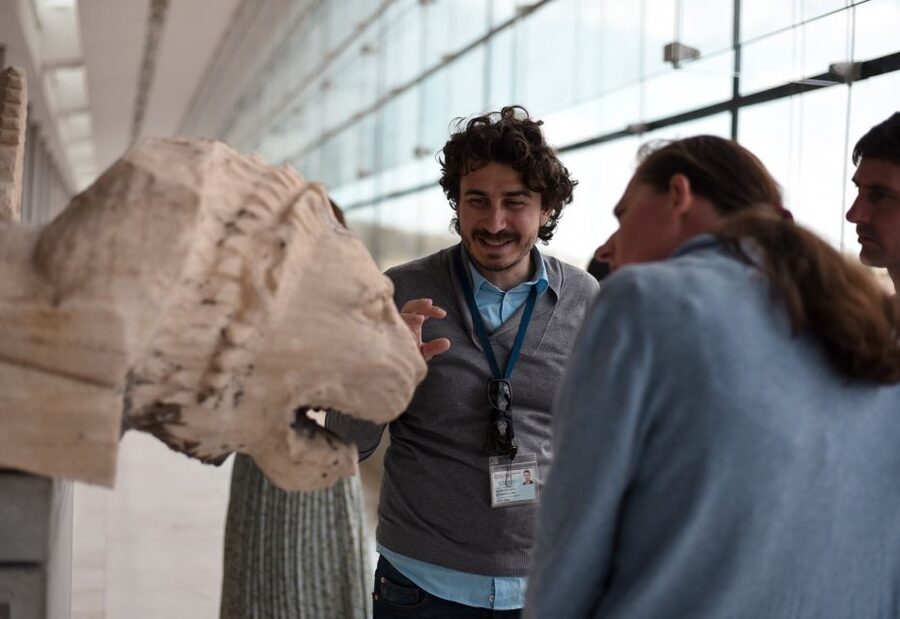
The Acropolis can be difficult to read on your own. You see columns, broken stones, and a famous hill crowded with meaning, but the links between the buildings may not be clear. This tour gives you a thread to follow.
Ancient Athenians did not treat mythology as a separate subject reserved for books. Their stories helped explain the city’s gods, festivals, values, health, theater, warfare, and claims to power. A guide who understands those links can make the ruins easier to read.
That approach also works well if your group has mixed interests. A teenager may connect with the rivalry between Athena and Poseidon, while an adult may be more interested in how the myths supported Athenian political ideas. Younger children can follow the gods and heroes, though the four-hour length may be demanding for some families.
The private setting matters here. You are not tied to the questions of a large crowd, and the guide can spend more time on the stories that catch your attention. Previous guides have included Nino Tsavalos and Tavouti M. Sapfo. The available feedback gives both names strong praise for clear explanations, warmth, and the ability to speak to different ages and levels of familiarity.
More Acropolis Museum visits:
- Athens: Acropolis, Parthenon & Acropolis Museum Guided Tour
★ 4.8 · 9,316 reviews - Athens: Acropolis, Parthenon & Acropolis Museum Guided Tour
★ 4.8 · 3,579 reviews - Acropolis monuments & Parthenon Walking Tour with Optional Acropolis Museum
★ 5.0 · 2,678 reviews
Meeting at Acropoli Metro Station
You meet at the entrance of Acropoli Metro Station on Makrygianni Street. This is a practical starting point for an Acropolis visit because it puts you close to the hill and the museum district.
The tour is conducted in English and lasts four hours. It is a private group experience, priced at $518 for up to two people. That price makes the most sense for two people who place a high value on a dedicated guide and a focused experience. If you are comparing it with a larger group tour, remember that you are paying for privacy and personal attention, not just admission and transport.
There is no transport element listed beyond meeting at the station. Plan to arrive ready to walk uphill and across uneven ancient surfaces. Food and drinks are not allowed during the activity, so handle refreshments before you meet your guide or after the tour ends.
Theater of Dionysus: where drama began
Your first major stop is the Theater of Dionysus, on the southern slope of the Acropolis. This is one of the strongest openings for a mythology tour because it connects the gods to performance, ritual, and public life.
Dionysus was linked with wine, celebration, altered states, and theater. His festivals gave Athens a setting for plays that still shape the way you think about comedy and tragedy. Here, the guide can explain why drama was not merely entertainment. It was part of civic and religious life.
The theater also helps you picture the Acropolis as more than a collection of temples. The hill was tied to ceremonies, competitions, public identity, and worship. The stories of gods and mortals were presented before citizens who were thinking about duty, pride, justice, family, and fate.
This stop should suit you if you enjoy the connection between ancient culture and modern life. It is especially useful for families because drama offers an easy way into Greek mythology. You do not need to know the names of every god before arriving.
Asklepieion and the myths of healing
The route continues past the Asklepieion, a sacred healing site associated with Asclepius. In Greek mythology, Asclepius was a remarkable physician whose abilities became so great that even Zeus grew concerned.
The story gives the guide a chance to discuss a central ancient question: how far should human skill go? Asclepius was not simply a character with a medical gift. His tale explores the limits of mortality, divine authority, and the fear that human beings might cross a line reserved for the gods.
The Asklepieion adds balance to the more familiar stories of Athena and war. Here, the focus turns to illness, recovery, hope, and the role of ritual. It also shows that religious life in Athens involved practical concerns. People prayed for health as seriously as they prayed for protection or victory.
You should expect interpretation rather than a large, intact building at this stop. The value comes from understanding what the site meant and how the healing story fits into ancient Athenian life.
More Acropolis and Parthenon visits:
- Athens: Acropolis & up to 5 Archaeological Sites Combo Pass
★ 4.4 · 12,619 reviews - Athens: Acropolis Ticket with Optional Audio or Live Guide
★ 4.2 · 11,055 reviews - Athens: Acropolis and Parthenon Guided Walking Tour
★ 4.6 · 5,882 reviews - Athens: Acropolis Ticket with Audio Guide
★ 4.0 · 3,575 reviews
Propylaea and Athena Nike
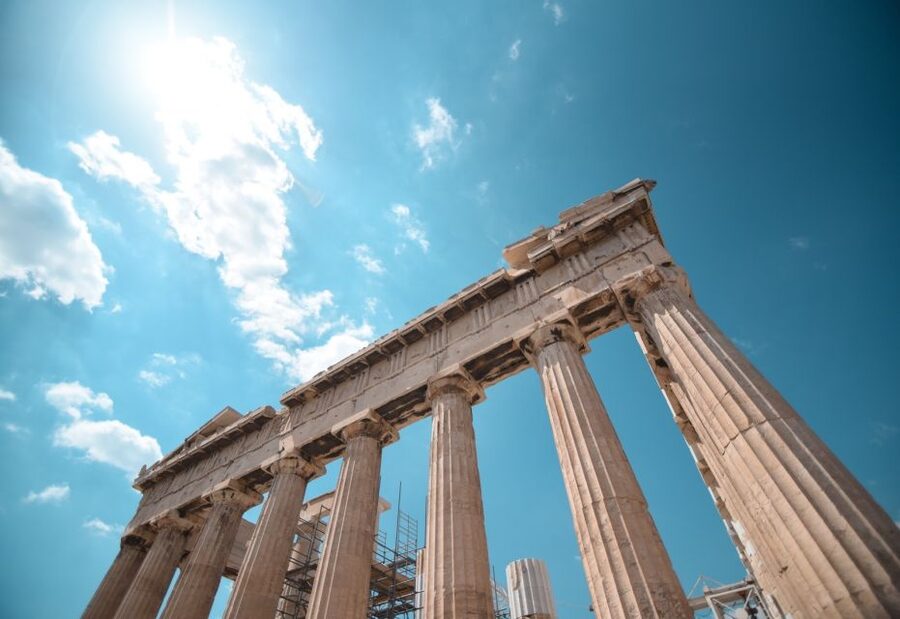
As you continue toward the summit, the Propylaea comes into view. This monumental gateway once controlled the ceremonial approach to the Acropolis. It is not just a passageway. It helps frame the act of entering sacred ground.
Near the gateway, the tour turns to Athena Nike, the victorious form of Athena. Athena was the city’s divine guardian, associated with strategy, wisdom, craft, and victory. Her presence here reflects how Athens wanted to see itself: protected, clever, disciplined, and successful.
This is one reason a guided visit can be more useful than a quick photo stop. The architecture becomes part of a larger message. The route, gateway, temple, and view were arranged to shape how people experienced the hill.
The Acropolis is exposed, and the approach includes uphill walking. If you have mobility limitations, this tour is not recommended. Even visitors who walk comfortably should wear practical shoes and expect the physical demands of ancient stone paths.
The Parthenon and Athena’s Athenian identity
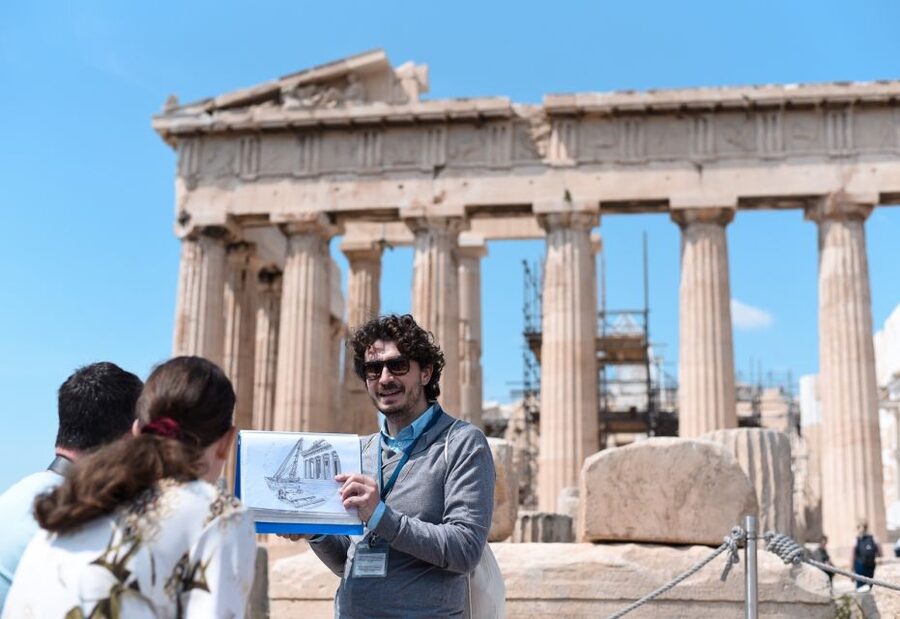
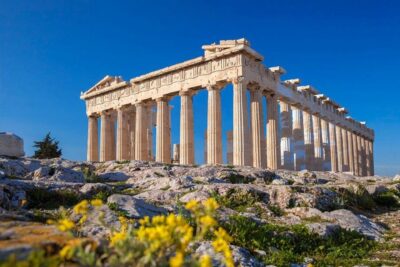
The Parthenon is the emotional center of the visit. Its size and position make it easy to admire in silence, but the mythology gives the building a sharper meaning.
The temple honored Athena, and its decoration drew on gods, heroes, conflict, and the order of the world. The guide uses these themes to explain how myth helped shape Athenian identity. The Parthenon was not simply a religious building. It also expressed the city’s confidence, wealth, power, and political vision.
That does not mean every ancient Athenian understood the temple in exactly the same way. A good explanation should leave room for complexity. The monument celebrated ideals, but ancient Athens was also a competitive society with its own conflicts and limits. The tour’s mythology theme is valuable because it helps you see the ideas the city wanted to project.
Take time to look beyond the famous front view. The Parthenon is best understood as part of the whole summit, with the gateway, neighboring temples, and broad views contributing to its effect. Your guide can help you connect the stonework to the stories rather than leaving you with only a checklist of architectural terms.
Erechtheion and the contest between Athena and Poseidon
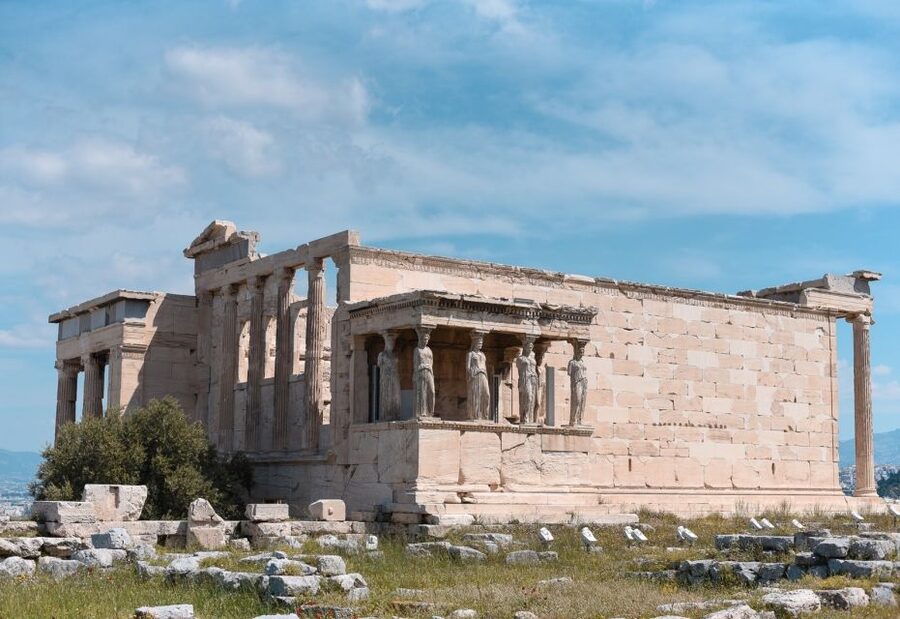
The Erechtheion offers one of the most memorable mythological moments on the Acropolis. It is linked to the contest between Athena and Poseidon for control of Athens.
According to the story, each deity offered a gift. Poseidon produced a source associated with water, while Athena gave the olive tree. The Athenians chose Athena, and the city took her name. The tale explains more than a naming tradition. It contrasts force and usefulness, the sea and the land, and the qualities Athenians wished to associate with their city.
The Erechtheion is also a reminder that the Acropolis was not organized around one simple religious idea. Several sacred traditions met on the hill, and the building’s unusual form reflects that layered importance.
This is a place where a private guide can slow down and answer questions. If you are interested in how myths explain a city’s character, this may be the most rewarding stop of the outdoor portion.
Two hours inside the Acropolis Museum
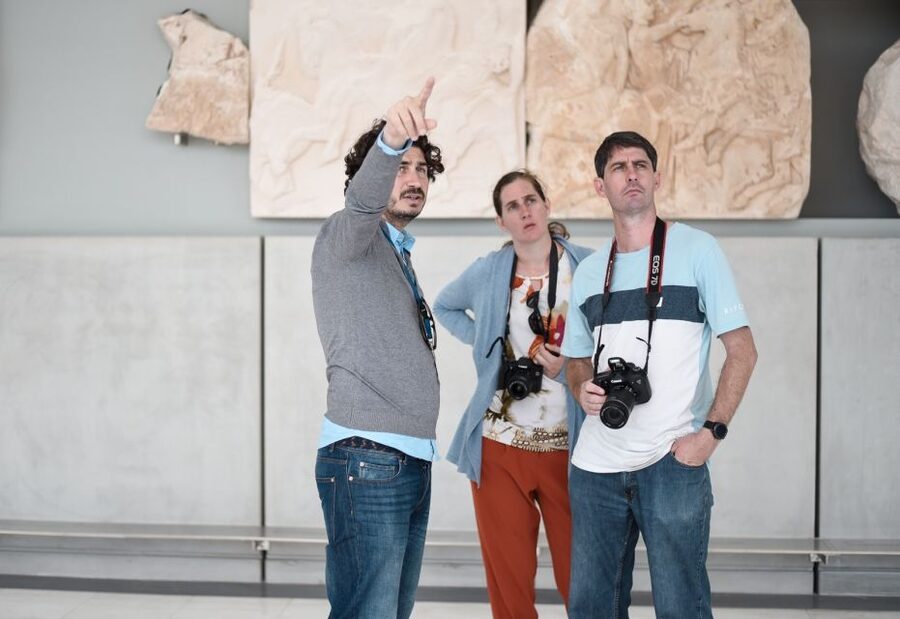
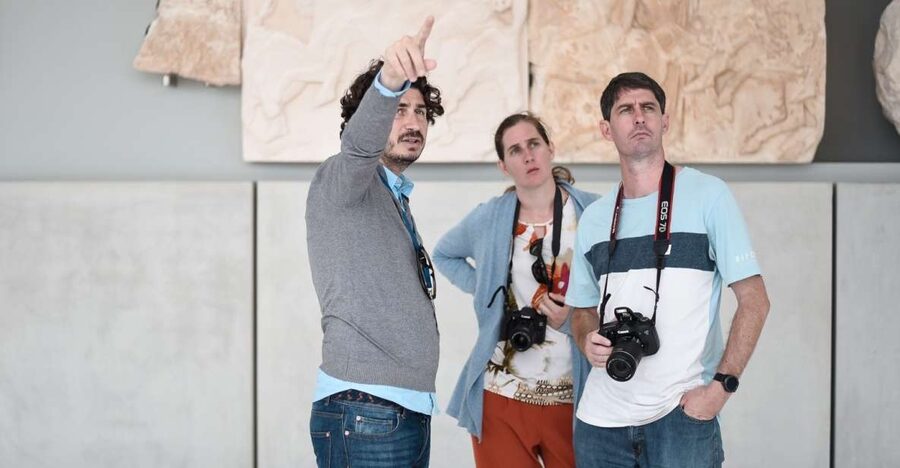
The tour concludes at the Acropolis Museum, with a separate two-hour guided visit. This is not an afterthought. The museum gives you the close-up views that the hill cannot provide.
At the Acropolis, you are looking at buildings from a distance and trying to understand their place in the sacred complex. In the museum, you can examine sculptures, decorative details, and artifacts connected to the myths and rituals you have just heard about.
The order of the day is useful. The outdoor visit gives you the setting first, while the museum helps fill in the missing pieces. You can better understand why a statue mattered when you have already seen the temple or site associated with its story.
The museum portion may be the strongest part for you if you enjoy art and small details. It also provides a break from the open hill, though the tour remains a long four-hour commitment. If you prefer ruins and views but have little interest in objects, this extended museum time may feel like too much. The museum is a planned part of the experience, not an optional extra.
The activity ends at the Acropolis Museum. That makes it easy to continue sightseeing in the surrounding area afterward, though no onward transport is included.
What the $518 price really covers
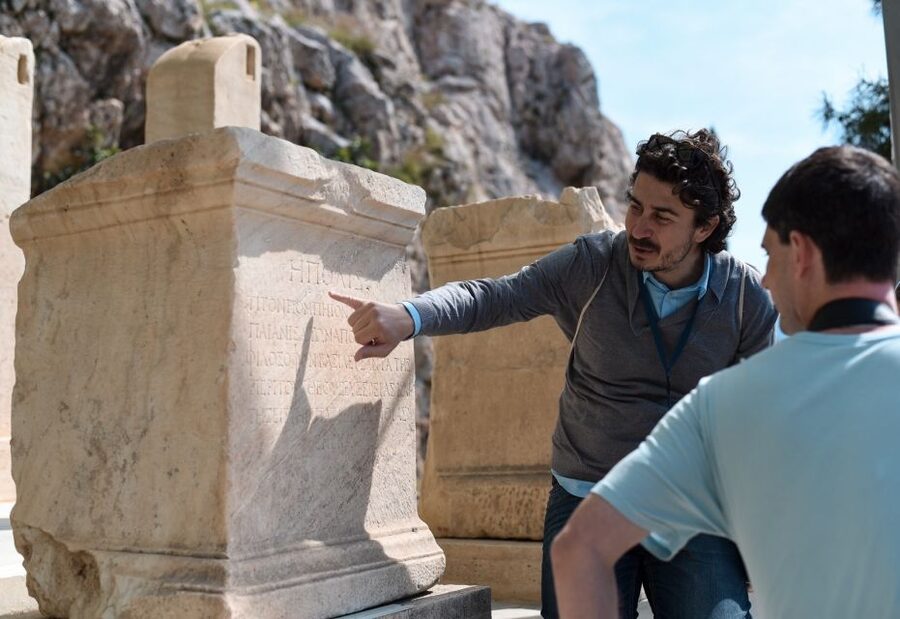
The advertised price is $518 per group of up to two people. It covers the private guide, the guided Acropolis visit, the guided museum visit, and the mythology-focused narration.
It does not cover entrance fees. This is the most important cost issue to settle before booking. One past participant felt caught off guard by the additional admission expense, believing the original payment covered everything. You should treat the $518 as the guiding fee, then add the required site admissions to your budget.
For two people, the cost may be worthwhile if you want a private English-speaking guide for four hours and prefer a focused subject rather than a general overview. For a larger family group, the fixed group price can become better value per person, since the rate is for up to two but the activity is described as a private group. Confirm the exact admission arrangements and group limit before payment.
The tour offers free cancellation up to 24 hours in advance and a reserve-now, pay-later option. Those terms help if your Athens schedule is still shifting, but they do not remove the need to budget for entrance fees.
Who will enjoy this four-hour format
I would recommend this tour to you if mythology is the reason you are excited about Athens. It is also a good choice for families with older children and teenagers who want stories rather than a long architectural lecture.
A private tour can be particularly useful for a group with different levels of preparation. The guide can explain the basics without making an informed adult feel ignored. One family with children aged 10, 14, and 16 found the four hours passed quickly, which suggests that the storytelling can hold attention across age groups when the guide is a good fit.
You may prefer another format if you want only a quick look at the Parthenon, if you do not plan to enter the museum, or if you have difficulty with uphill walking and uneven surfaces. The activity is specifically marked as unsuitable for people with mobility impairments.
The tour is conducted in English only. If you need another language, this is not the right choice based on the available details.
A practical verdict on the mythology tour
Book this tour if you want the Acropolis to make sense as a place of gods, civic identity, healing, drama, and political ambition. The two-hour museum visit is a real part of the experience, and the private format gives the guide room to shape the storytelling around your group.
Before you commit, confirm the entrance fees and accept that four hours means a serious visit, not a quick stop. If the price works for your budget and you enjoy mythology, the structure is strong: Theater of Dionysus, Asklepieion, Propylaea, Parthenon, Erechtheion, then the museum.
I would skip it if you only want photographs, dislike museum time, or need a low-effort route. For everyone else, especially families and curious first-time visitors, this is a thoughtful way to meet Athens through the stories its people used to explain themselves.
FAQ
How long does the tour last?
The tour lasts four hours. The planned visit includes two hours at the Acropolis and two hours at the Acropolis Museum.
Where do you meet the guide?
You meet at the entrance of Acropoli Metro Station on Makrygianni Street.
Where does the tour finish?
The tour finishes at the Acropolis Museum.
Is the tour private?
Yes. It is offered as a private group experience.
What language is the tour conducted in?
The live tour is conducted in English.
Are entrance fees included in the price?
No. Entrance fees to the Acropolis and Acropolis Museum are not included in the $518 group price.
Is the tour suitable for people with mobility impairments?
No. The activity is listed as unsuitable for people with mobility impairments. It includes an ascent of the Acropolis and walking across ancient surfaces.
More Athens museums
- Athens All Included: Acropolis and Museum Guided Tour with Ticket
★ 4.5 · 2,673 reviews - Athens: Acropolis Museum Ticket with optional Audio Guide
★ 4.4 · 2,652 reviews - From Athens: Small-Group Delphi, Museum & Arachova Day Trip
★ 4.8 · 2,476 reviews - Parthenon & Acropolis Museum with Audio or Live Tour Option
★ 4.1 · 2,446 reviews
More mythology-flavoured Athens days
- Athens: Mythology of Delphi, Museum and Arachova Guided Tour
★ 4.6 · 4,008 reviews - Athens & Acropolis Highlights: Greek Mythology Small-Group Tour
★ 5.0 · 2,370 reviews - Athens: Acropolis and Mythology Highlights Small Group Tour
★ 4.8 · 2,275 reviews - Athens: Mythology Tour for Families
★ 4.8 · 173 reviews
Freshly added Athens trips
- Athens and Ancient Corinth Private from Athens★ 5.0 · 3 reviews
- From Athens: Mycenae and Epidaurus Private Tour★ 4.8 · 3 reviews
- Full day Meteora private tour★ 5.0 · 3 reviews
- Double Shore Dive (certified divers)★ 4.5 · 3 reviews
- Athens Hills: Mythology Treasure Hunt★ 5.0 · 3 reviews
- Sunset & swimming at Cape Sounio, Poseidon temple★ 5.0 · 3 reviews
- Philosophy Experience at Plato’s Academy Park – basic version★ 5.0 · 3 reviews
- Private Acropolis Tour – Ticket Included★ 5.0 · 3 reviews
Acropolis Museum Tours, compared.

Acropolis, Parthenon & Acropolis Museum Guided Tour
Read our review →Acropolis, Parthenon & Acropolis Museum Guided Tour
Read our review →
Acropolis monuments & Parthenon Walking Tour with Optional Acropolis Museum
Read our review →
Acropolis Museum Ticket with optional Audio Guide
Read our review →
Parthenon & Acropolis Museum with Audio or Live Tour Option
Read our review →
Acropolis, Parthenon and Acropolis Museum Guided Tour
Read our review →
Browse the lists this tour appears in