
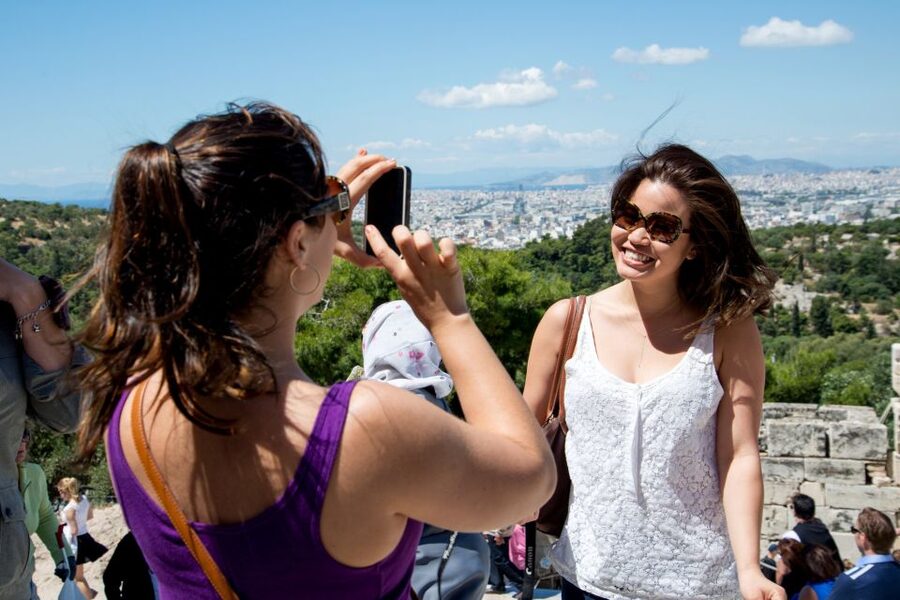
Reviewed · ACROPOLIS MUSEUM TOURS
Athens: Acropolis, Parthenon & Acropolis Museum Guided Tour
The best thing about this tour is the way it connects the Acropolis monuments with the objects and daily life explained inside the Acropolis Museum. You do not simply walk up to the Parthenon, take a photograph, and leave. A guide such as Petros, Demos, Anna, Lisa, or Artemis can explain what you are seeing, why it was built, and how centuries of war, worship, reuse, and restoration shaped its present form.
I especially like two things. First, the route begins on the south slope, so you approach the citadel through the Theater of Dionysus, the Odeon of Herodes Atticus, and the ancient healing area rather than heading straight to the Parthenon. Second, the wireless hearing devices make it much easier to follow the guide in crowded spaces. The main consideration is physical: this is a hilly walk over uneven stone, with limited free time to wander alone.
In This Review
- Key points to know before you book
- Why the Acropolis and museum work so well together
- Meeting at Porinou 5 and starting on the south slope
- Theater of Dionysus: where the route begins to make sense
- The Odeon of Herodes Atticus and the ancient healing area
- Propylaea and Temple of Athena Nike
- The Parthenon, the tour’s great centerpiece
- Erechtheion and the famous Caryatids
- The walk down Dionysiou Areopagitou
- Acropolis Museum: the details the hill cannot show
- Guide quality and group experience
- Price, tickets, and what the $41 buys you
- How to prepare for the climb
- Who should book this tour?
- Should you book the Acropolis and museum tour?
- FAQ
- Where does the tour meet?
- How long does the tour last?
- Is the Acropolis entrance ticket included?
- Is museum entry included?
- What language is the tour in?
- What should I bring?
- Are food and drinks included?
- Is the tour suitable for wheelchair users?
Key points to know before you book
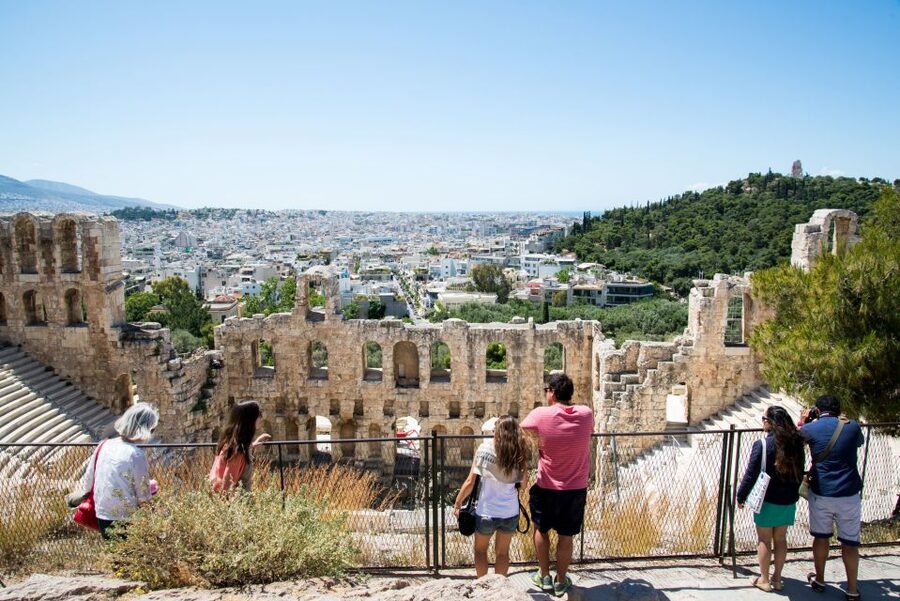
- The south-slope approach adds real context: You see the Theater of Dionysus and Odeon of Herodes Atticus before reaching the summit.
- The Parthenon is only part of the story: The Temple of Athena Nike, Erechtheion, Propylaea, and ancient healing site all receive attention.
- The museum visit lasts about 1.5 hours: It brings the ruins, sculptures, myths, and ordinary Athenian life together.
- A guide makes the stonework easier to read: Archaeology, mythology, construction methods, and later damage are explained on site.
- The tour is physically demanding: Comfortable shoes, a sun hat, and care on slippery sections are important.
- Ticket choice affects convenience: The ticketed option includes skip-the-line Acropolis entry, while museum skip-the-line entry is included.
Why the Acropolis and museum work so well together
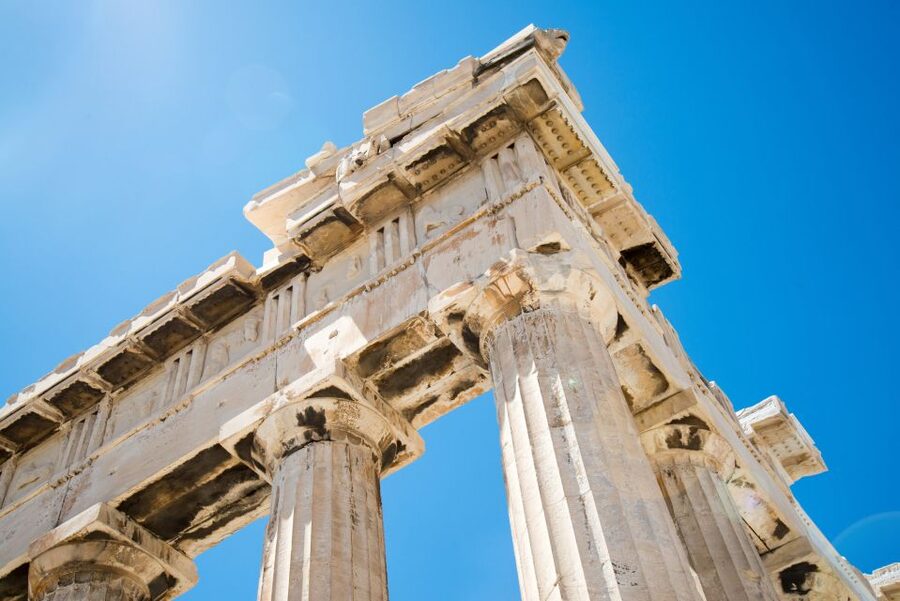
Athens can make the Acropolis feel deceptively simple. You climb a hill, see the Parthenon, admire the view, and take a few pictures. Yet the site is a large religious and civic complex, and its surviving buildings tell different stories.
The museum gives those stories a second layer. You can look at sculpture details close up, see how statues changed over time, and study the design of the Parthenon through a glass gallery. I find this pairing far more useful than visiting the hill alone, particularly if ancient Greek architecture is new to you.
The guide-led format also helps with scale. A guide can point out details that disappear in a general view, explain which parts are ancient and which have been restored, and use images or comparisons to show how the buildings once looked. You still see Athens for yourself, but you have a clearer frame for what you are seeing.
More Acropolis Museum visits:
- Athens: Acropolis, Parthenon & Acropolis Museum Guided Tour
★ 4.8 · 9,316 reviews - Acropolis monuments & Parthenon Walking Tour with Optional Acropolis Museum
★ 5.0 · 2,678 reviews - Athens: Acropolis Museum Ticket with optional Audio Guide
★ 4.4 · 2,652 reviews
Meeting at Porinou 5 and starting on the south slope
You meet the guide at the Athens Walks office on Porinou 5, at street level. There is no hotel pickup, so plan your own route to the meeting point and arrive ready to walk.
The tour then heads toward Makrygianni and the south entrance area. This first stretch is a useful warm-up, but do not mistake it for an easy city stroll. The route climbs, the ground can be uneven, and the upper Acropolis is exposed to the sun.
The company supplies wireless listening devices. I consider these especially useful here because the Acropolis can be noisy and crowded, and the group may spread out over steps or rough paving. One practical point: bring the required identification, as a passport or ID card is listed among the things to carry.
Theater of Dionysus: where the route begins to make sense
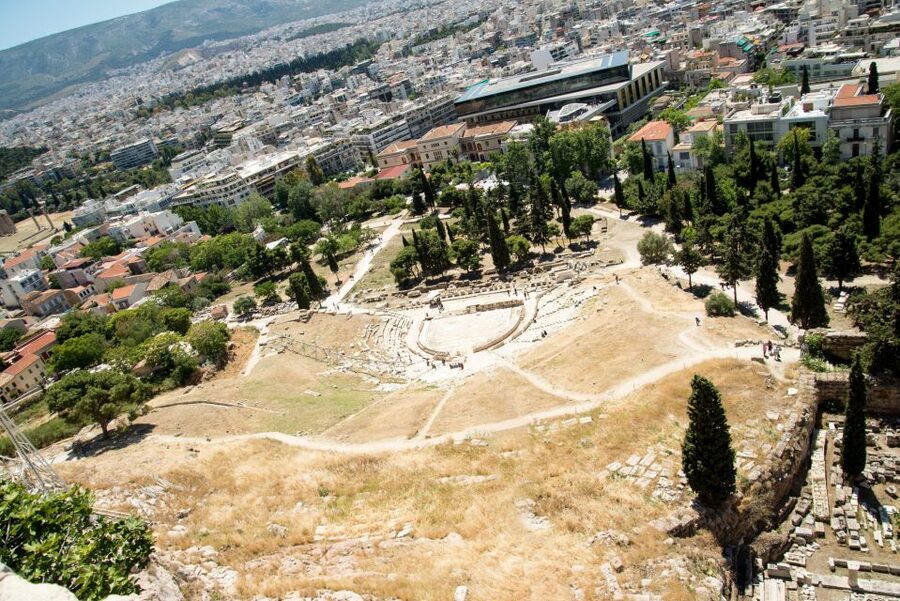
The Theater of Dionysus is one of the most memorable early stops. You can sit or perch on a stone seat and picture ancient audiences watching plays by Aeschylus, Sophocles, and Euripides.
The guide has around 15 minutes here, enough to explain the theater’s role without turning the opening stop into a long lecture. I like this beginning because it shows that the Acropolis was not only a collection of temples. Performance, civic life, religion, and public gatherings all belonged to this hillside.
Stone seats are not designed for modern comfort, so you may prefer to stand. Still, this is a place where a brief pause helps. Look across the theater, listen to the guide’s explanation, and notice how the setting links the lower city with the sacred hill above.
The Odeon of Herodes Atticus and the ancient healing area
Next comes the Odeon of Herodes Atticus, a smaller theater that is still used during the Athens Festival from May through October. Its curved stone structure is easy to appreciate from outside, even when you cannot enter the performance space.
The guide explains how this theater differs from the earlier Theater of Dionysus. That comparison gives you a better sense of how ancient performance buildings served different purposes.
The route also reaches an Asclepius, a healing temple dedicated to the god of medicine. This quieter corner provides a change of mood before the climb to the main monuments. I like that the tour does not rush from one famous photograph to the next. The healing site adds a glimpse of ancient concerns that feel familiar: illness, recovery, prayer, and hope.
More Acropolis and Parthenon visits:
- Athens: Acropolis & up to 5 Archaeological Sites Combo Pass
★ 4.4 · 12,619 reviews - Athens: Acropolis Ticket with Optional Audio or Live Guide
★ 4.2 · 11,055 reviews - Athens: Acropolis and Parthenon Guided Walking Tour
★ 4.6 · 5,882 reviews - Athens: Acropolis Ticket with Audio Guide
★ 4.0 · 3,575 reviews
Propylaea and Temple of Athena Nike
The Propylaea forms the grand gateway to the upper Acropolis. It was designed to impress people entering the sacred precinct, and the approach still creates a strong sense of arrival.
The guide pauses here to discuss the gateway and the excavation work around the citadel. You get a photo stop, but the value is more than a backdrop. The Propylaea helps you understand that the Parthenon was not an isolated building. Visitors passed through a carefully planned entrance before reaching the temples and monuments beyond.
Near the gateway, the Temple of Athena Nike adds a small but elegant counterpoint to the larger structures. The temple honored Athena in her role as Nike, or victory. The stop is brief, around five minutes, but it gives you time to see how a compact temple could occupy an important position beside the entrance.
The paving and steps can be slippery, especially after rain. Wear shoes with a good grip and listen when the guide points out difficult sections.
The Parthenon, the tour’s great centerpiece
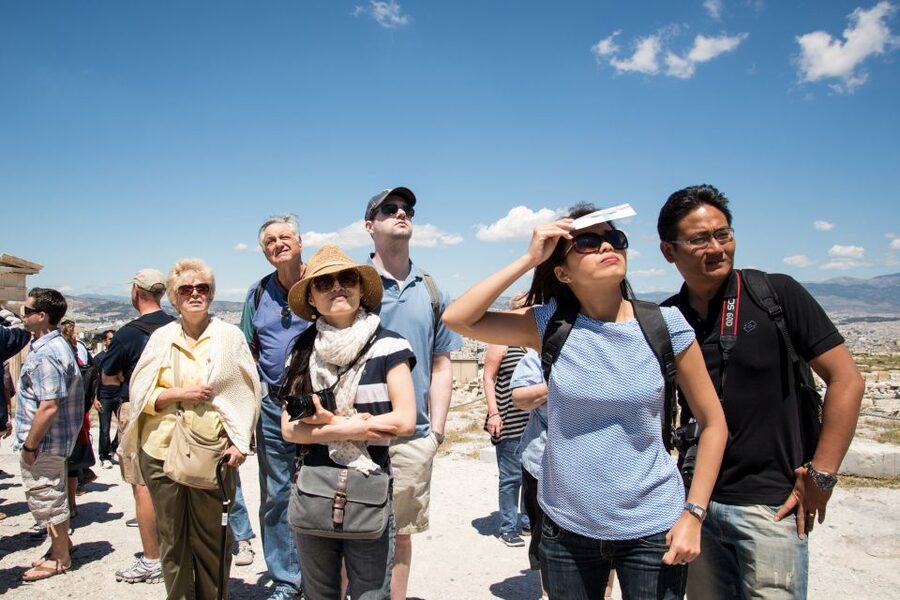
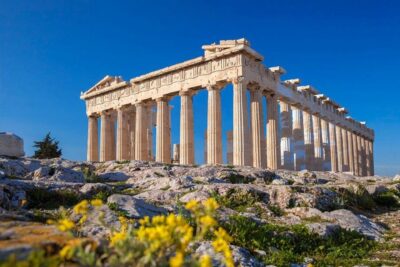
The Parthenon receives about 30 minutes of guided attention, though the full experience takes place around it as you continue through the upper site. The guide discusses its construction for Athena, the building’s classical design, and the damage and changes that left it in its present condition.
This is where an archaeologist’s explanation has practical value. At first glance, the Parthenon can seem like a beautiful but damaged shell. Once someone explains the proportions, the carved decoration, the building materials, and the way the temple functioned, the remaining columns and fragments become much easier to read.
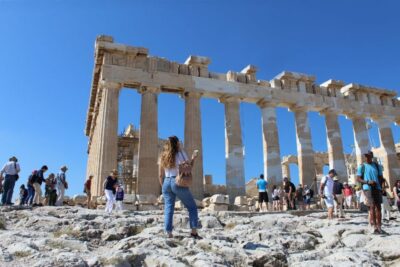
You will have time for photographs, but this is not a free-roaming visit. The guide keeps the group moving and gives you specific pauses. That is helpful for first-time visitors who want a clear route, but it may disappoint you if you prefer to spend long stretches alone framing pictures.
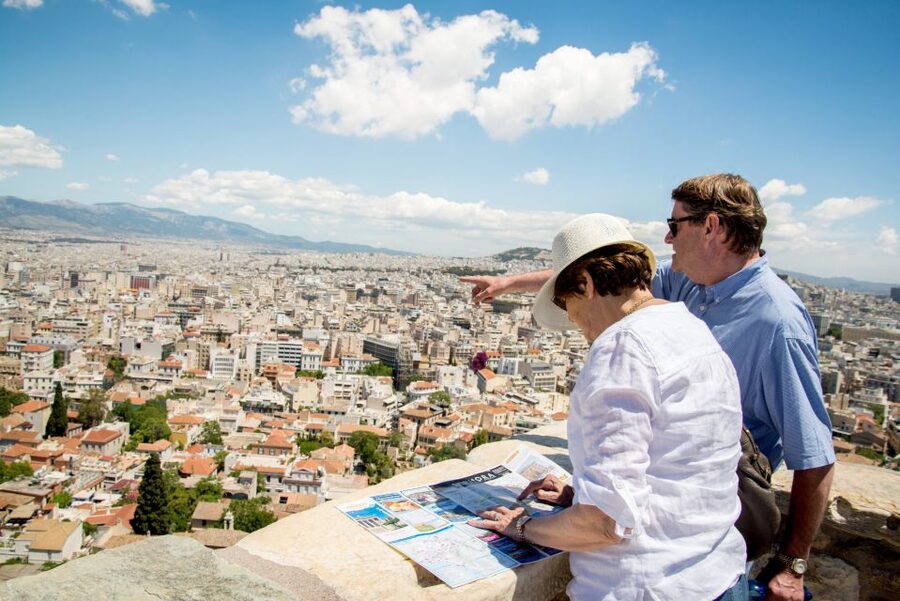
At the top, I would pause for the Athens skyline as well as the temple. The view is one of the strongest parts of the visit, and the guide can help connect the ancient hill with the modern city spread below it.
Erechtheion and the famous Caryatids
The Erechtheion is more complex than the Parthenon, and it deserves close attention. Its unusual design reflects the different sacred traditions associated with the site, including the worship of Athena and Poseidon.
The guide explains the building’s form and points out the Caryatid figures. Some of the original sculptures are displayed in the museum, where you can study them more closely and see details that are difficult to notice from the hill.
The Erechtheion stop lasts about 10 minutes, followed by a short period of free time and photographs around the Acropolis. You should use that pause for your own views and quick pictures, but do not expect a long independent exploration period. One participant specifically found the guided content excellent but wished for more time alone, which is a fair warning for museum-and-monument tours in a tight schedule.
The walk down Dionysiou Areopagitou
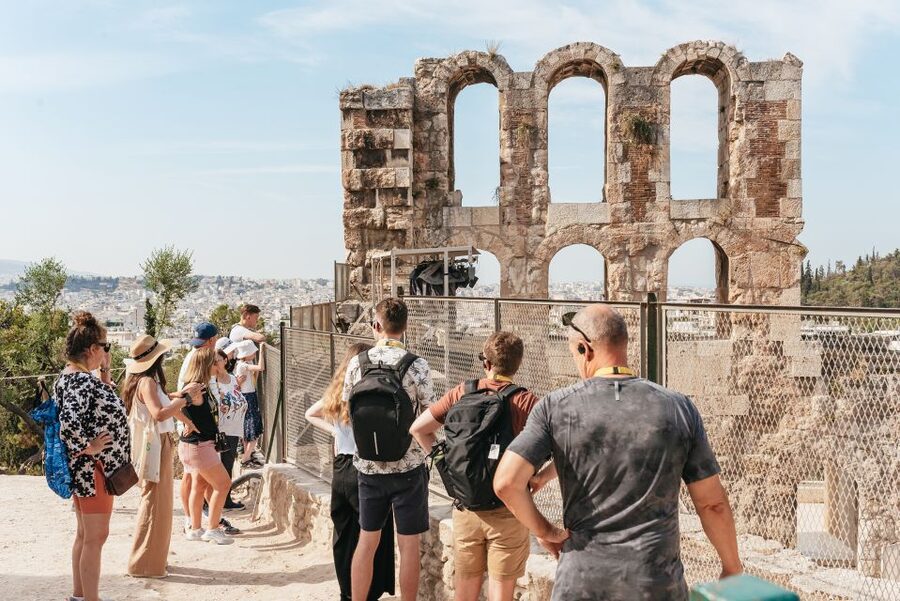
After the upper Acropolis, the route heads down toward Dionysiou Areopagitou. This part takes about 15 minutes and leads naturally toward the museum.
The change in setting is welcome. You leave the exposed summit and return to the city level, with time to reset before the indoor portion. Depending on weather and site conditions, the order may change. On a rainy day, the museum can come first, allowing the guide to provide background before the group goes uphill when conditions improve.
That flexibility matters in Athens. Heat, sun, rain, and crowds can affect the hill much more than the museum, so a sensible guide may adjust the sequence while keeping the core experience intact.
Acropolis Museum: the details the hill cannot show
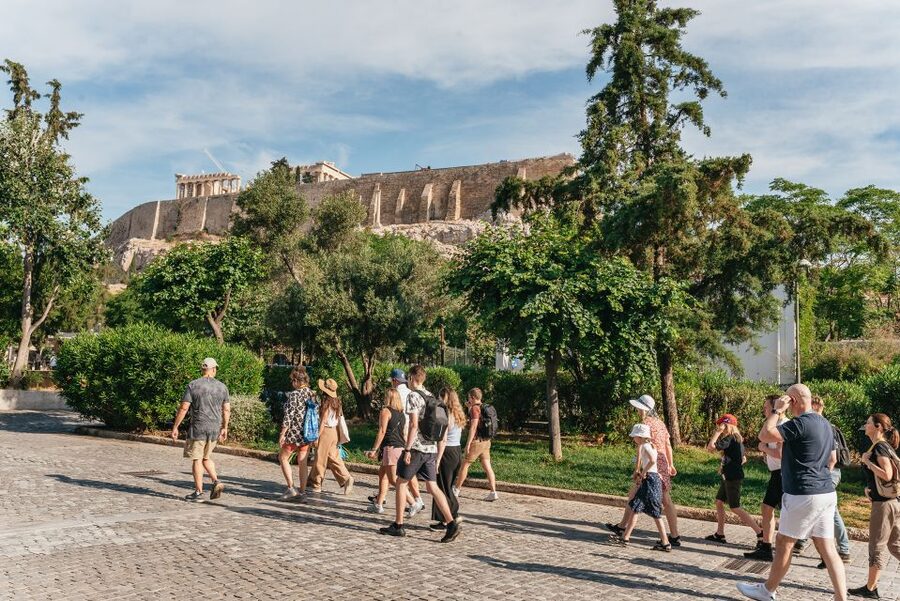
The New Acropolis Museum is not an afterthought. The guided visit lasts about 1.5 hours, making it a substantial part of the tour.
Inside, you see statues, architectural fragments, and objects connected with the Acropolis and the people who used it. The galleries include more than grand religious art. They also offer clues about everyday life, worship, craft, and the changing appearance of the monuments.
The Gallery of the Slopes is especially interesting because its glass floor can reveal archaeological excavation below. You may find yourself looking down at the remains beneath the museum while the guide explains how the modern building relates to the ancient site.
The museum’s glass gallery devoted to the Parthenon is another major strength. It helps you compare surviving sculpture and architectural decoration with the temple you have just seen outside. This is where the visit’s two halves come together: the hill gives you place and scale, while the museum gives you close-up detail and evidence.
You get a break at the museum, and you can buy refreshments at your own expense. The museum portion can feel lengthy if you are already tired from the climb, particularly for children or anyone less interested in artifacts. Still, I think it is worth keeping. Several guides, including Elizabeth and Selina, have been praised for explaining the sculptures, Caryatids, and Parthenon reconstruction in a way that made the outdoor ruins easier to understand.
Guide quality and group experience
The guide is the main reason to choose this tour instead of simply buying an entry ticket. The listed format uses an English-speaking licensed guide with archaeological experience, and the strongest guide names repeatedly associated with this experience include Petros, Demos, Anna, Lisa, Artemis, Aphrodite, Annie, George, Helena, Elizabeth, Selina, and Ermes.
The exact guide is not something you should assume in advance. What you can expect is a guide-led route that mixes history, mythology, construction, archaeology, and practical movement through the site.
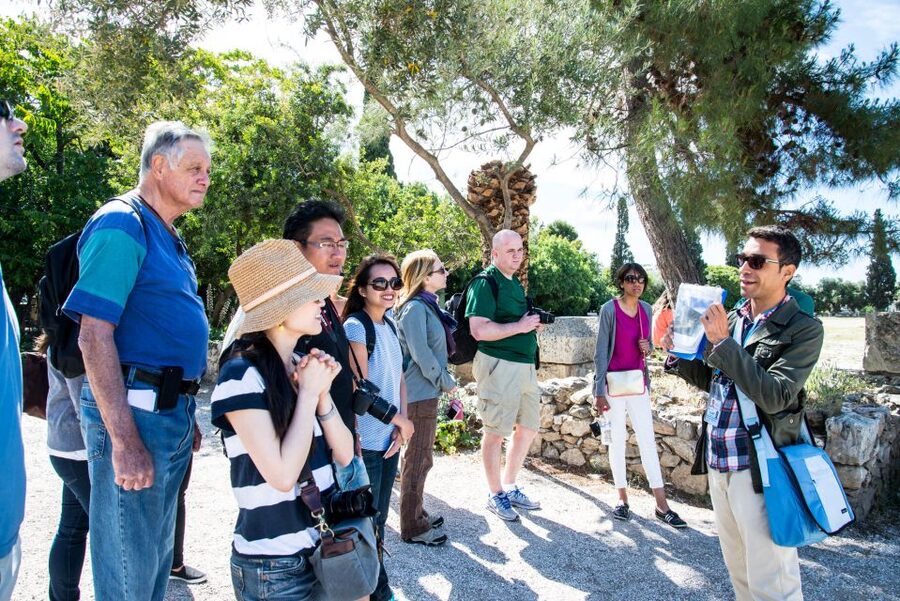
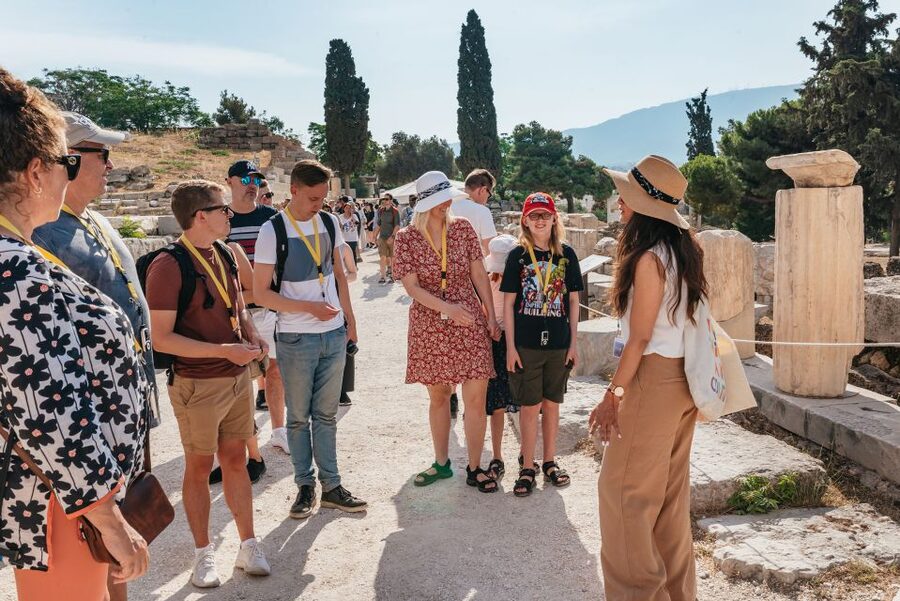
Group size can vary. One group had about 20 people, another about 15. That is small enough for a personal feel in many cases, but not private. The listening devices help, and good guides make regular stops so everyone can catch up.
The most praised qualities are clear delivery, humor, enthusiasm, patience, and the ability to answer unexpected questions. Guides have also helped families stay engaged, moving at a lively pace without racing past the important details.
Price, tickets, and what the $41 buys you
At about $41 per person, the price is reasonable if you want both the Acropolis and museum with an expert guide. You are paying not only for access but also for interpretation, group management, listening equipment, and a planned route through two major sights.
The value depends on the ticket option you select. The option with Acropolis tickets includes skip-the-line entry through a separate entrance. If you choose the version without Acropolis entrance tickets, you must order those tickets online before reaching the meeting point.
Skip-the-line museum entry is included. This can simplify the day, especially when queues and timed access complicate independent sightseeing.
Food, drinks, hotel pickup, and drop-off are not included. The Acropolis elevator is also excluded, and the experience is not suitable for wheelchair users or people with mobility impairments. Pets, strollers, oversize luggage, large bags, and smoking are not allowed.
Free cancellation up to 24 hours before the start and reserve-now, pay-later booking add useful flexibility. I would still check the exact start time and ticket selection carefully before paying.
How to prepare for the climb
Wear comfortable shoes with solid grip. The route includes uphill walking, steps, ancient paving, and sections that may become slick in wet weather.
Bring a sun hat and identification. Leave large bags, oversize luggage, and strollers behind. Water is sensible, but note that one participant found that glass bottles were not permitted at monument entrances, so use an allowed container.
An early start is a smart choice if you have options. The Acropolis can be crowded even in the morning, and cooler temperatures make the climb easier. The hill has little shade, so sun protection matters even when the city below feels comfortable.
Do not plan a tightly timed activity immediately afterward. The stated duration is two to four hours, with the complete Acropolis and museum route generally requiring the longer end of that range. The museum alone takes about 1.5 hours, and weather or crowd control can affect the order.
Who should book this tour?
I would choose this for a first visit to Athens, for anyone who wants the ancient sites explained rather than merely photographed, and for families who benefit from a guide who can keep the story moving.
It also suits visitors with limited time. The route covers the key outdoor monuments and the museum in one organized block, without requiring you to work out ticketing, entrances, and the best order yourself.
You may prefer an independent visit if you want complete control over timing, long quiet pauses, or detailed photography. The guide sets the pace, and the free time is limited. The physical demands also make this a poor fit if uphill walking or uneven ground is difficult.
Should you book the Acropolis and museum tour?
Yes, if this is your first Acropolis visit and you want context. The south-slope route, strong guide storytelling, wireless audio, and museum connection make the $41 price feel justified, particularly with the ticketed option.
I would not book it for a slow, private-style day. You will walk with a group, follow a set route, and spend much of the visit listening. But if you want to understand why the Theater of Dionysus, Propylaea, Parthenon, Erechtheion, and museum pieces matter, this is a practical and well-shaped introduction to Athens.
FAQ
Where does the tour meet?
Meet your English-speaking guide at the Athens Walks tour office on Porinou 5, ground floor.
How long does the tour last?
The stated duration is two to four hours. The museum portion is scheduled for about 1.5 hours, so the full Acropolis and museum visit can take close to four hours.
Is the Acropolis entrance ticket included?
It depends on the option you choose. The ticketed option includes skip-the-line Acropolis entry. If you book without entrance tickets, you must order your Acropolis tickets online before arriving at the meeting point.
Is museum entry included?
Skip-the-line entry to the Acropolis Museum is included.
What language is the tour in?
The live guided tour is in English.
What should I bring?
Bring a passport or ID card, comfortable shoes, and a sun hat. Good footwear is especially useful on uneven or slippery sections.
Are food and drinks included?
No. Food and drinks are not included, though you can purchase refreshments at the museum cafe during the break.
Is the tour suitable for wheelchair users?
No. The experience is not suitable for wheelchair users or people with mobility impairments.
More Athens museums
- Athens: Mythology of Delphi, Museum and Arachova Guided Tour
★ 4.6 · 4,008 reviews - Athens All Included: Acropolis and Museum Guided Tour with Ticket
★ 4.5 · 2,673 reviews - From Athens: Small-Group Delphi, Museum & Arachova Day Trip
★ 4.8 · 2,476 reviews - Parthenon & Acropolis Museum with Audio or Live Tour Option
★ 4.1 · 2,446 reviews
Freshly added Athens trips
- Full day Mycenae – Nafplio – Epidavros private tour★ 5.0 · 3 reviews
- Private Half Day to Ancient Corinth★ 5.0 · 3 reviews
- From Athens: 2-Day Meteora Trip with Tansportation & Hotel★ 5.0 · 3 reviews
- Athens Half Day Small Group Shopping Tour★ 5.0 · 3 reviews
- Athens & Corinth: Guided Christian Tour in Paul’s Footsteps★ 4.0 · 3 reviews
- Nemea wine roads, The most famous wine tour in Greece★ 4.5 · 3 reviews
- Athens: Greek Wine & Olive Oil Tasting at Brettos Plaka★ 4.5 · 3 reviews
- Santorini Dinner Class with Margarita in Athens★ 5.0 · 3 reviews
Acropolis Museum Tours, compared.

Acropolis, Parthenon & Acropolis Museum Guided Tour
Read our review →
Acropolis monuments & Parthenon Walking Tour with Optional Acropolis Museum
Read our review →
Acropolis Museum Ticket with optional Audio Guide
Read our review →
Parthenon & Acropolis Museum with Audio or Live Tour Option
Read our review →
Acropolis, Parthenon and Acropolis Museum Guided Tour
Read our review →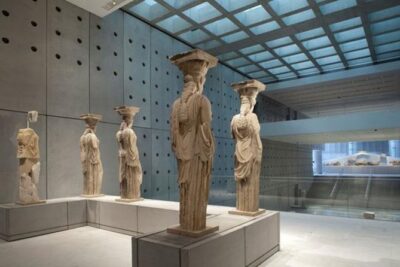
Acropolis & Acropolis Museum Ticket with Audio Guide
Read our review →Browse the lists this tour appears in