

Reviewed · ACROPOLIS MUSEUM TOURS
Athens: Acropolis Museum Ticket with optional Audio Guide
The best reason to visit the Acropolis Museum is simple: it makes the Acropolis easier to understand. Instead of seeing broken columns and scattered stones on the hill, you meet the people, gods, artists, and daily life behind them. The top floor even presents the Parthenon sculptures in a layout that matches the temple above.
I like the mobile skip-the-line entry, especially during busy months or bad weather. I also like the chance to visit at your own pace, with a downloadable guide that points out major works such as the Caryatids and Parthenon Marbles. The main caution is that this is not a live-guided tour, and some people find the app less useful than a human guide.
In This Review
- Key points to know before you book
- What this Acropolis Museum ticket actually covers
- Start with the ruins beneath the museum
- Ancient Athens through everyday objects
- The Caryatids deserve a slow look
- The top floor and the Parthenon story
- Museum first, Acropolis second
- How useful is the audio guide?
- Timing, opening hours, and comfort
- Is $30 good value?
- Who should book this experience?
- FAQ
- Does this ticket include the Acropolis Hill?
- Is there a live guide?
- What languages are available for the audio guide?
- Do I need a phone and headphones?
- How long is the ticket valid?
- Is the museum wheelchair accessible?
- Should you book it?
Key points to know before you book
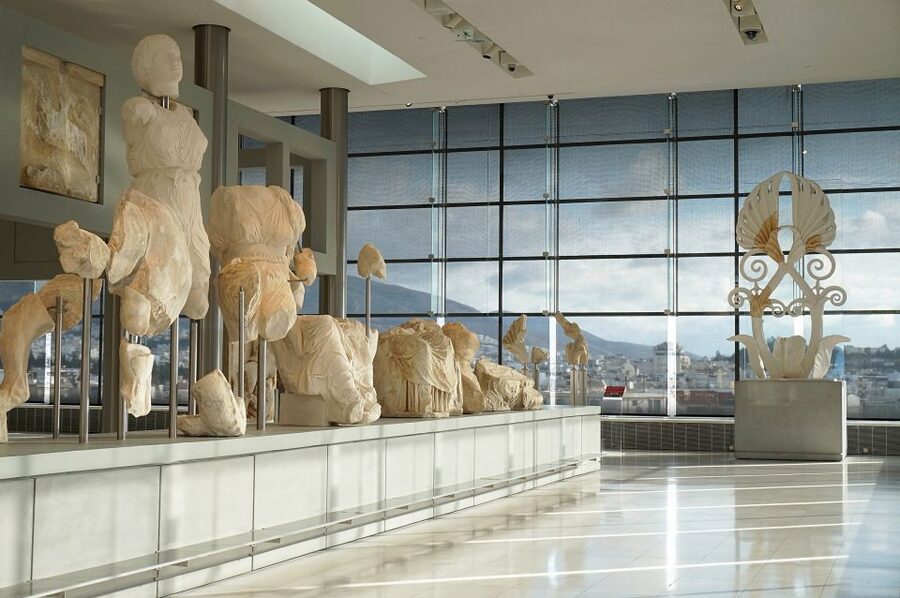
- The museum comes before the Acropolis for a reason: It gives you the background needed to read the ruins on the hill.
- The Caryatids are a must-see: These famous sculpted maidens are among the museum’s most memorable works.
- The top floor has the payoff: Its Parthenon display follows the temple’s original arrangement and includes views toward the Acropolis.
- The excavated ruins below the building are special: Look down into the archaeological remains preserved beneath the museum.
- The audio guide is app-based: You receive no physical device, so bring your phone and headphones.
- The Acropolis Hill is not included: This ticket covers the museum only, not the ancient citadel above it.
What this Acropolis Museum ticket actually covers
This is a one-day entry ticket to the Acropolis Museum in central Athens. You go directly to the museum entrance, open the voucher on your phone, and scan its barcode at the validating machines.
The basic ticket gives you access to the museum. You can add a downloadable audio guide in English, Spanish, French, German, or Italian. A second downloadable guide covers Athens’ old town, Plaka, which can be useful after your museum visit.
There is no hotel pickup, transport, or live guide. You make your own way to the museum and explore independently. That keeps the experience flexible, but it also means you need to take charge of your route and pace.
The price is listed at $30 per person. That is not the cheapest museum admission in Athens, but the value improves when the ticket lets you bypass the regular purchase line. At busy times, saving time outside the museum can matter more than saving a few dollars.
One important detail: this ticket is intended for people over 25, and reduced-price tickets are not available online through this option. Non-EU citizens under 25 may receive reduced admission from April through October by showing identification at the museum ticket booth. If you qualify for a discount, check that option before paying the full price.
More Acropolis Museum visits:
- Athens: Acropolis, Parthenon & Acropolis Museum Guided Tour
★ 4.8 · 9,316 reviews - Athens: Acropolis, Parthenon & Acropolis Museum Guided Tour
★ 4.8 · 3,579 reviews - Acropolis monuments & Parthenon Walking Tour with Optional Acropolis Museum
★ 5.0 · 2,678 reviews
Start with the ruins beneath the museum
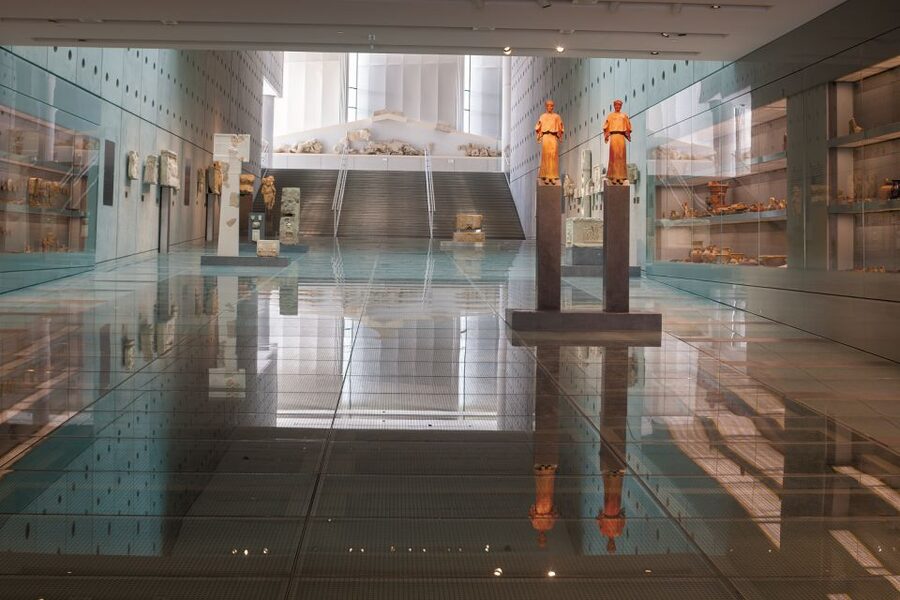
Before racing upstairs to the famous sculptures, look down. The museum was built above archaeological remains, and sections of the settlement are visible through the floor and lower areas.
This part gives the museum a sense of place. You are not looking at objects removed from their setting and arranged without context. You can see that Athens was built, rebuilt, lived in, and altered over many centuries.
The excavated area is easy to overlook if you are focused on the headline pieces. I would give it a few quiet minutes. It helps explain that the Acropolis was not only a ceremonial hill with temples. It was part of a living city, surrounded by homes, streets, workshops, and ordinary activity.
The museum itself is spacious and well arranged, with exhibits spread across several levels. That extra room helps when the building is busy. Still, the collection is large enough to reward patience. A quick 45-minute visit will show you the highlights, but it will not leave much time for labels, details, or the archaeological remains.
Plan on at least two to two and a half hours if you want to give the main galleries proper attention. Four hours would suit a serious museum visit, particularly if you read labels or use the audio guide.
Ancient Athens through everyday objects
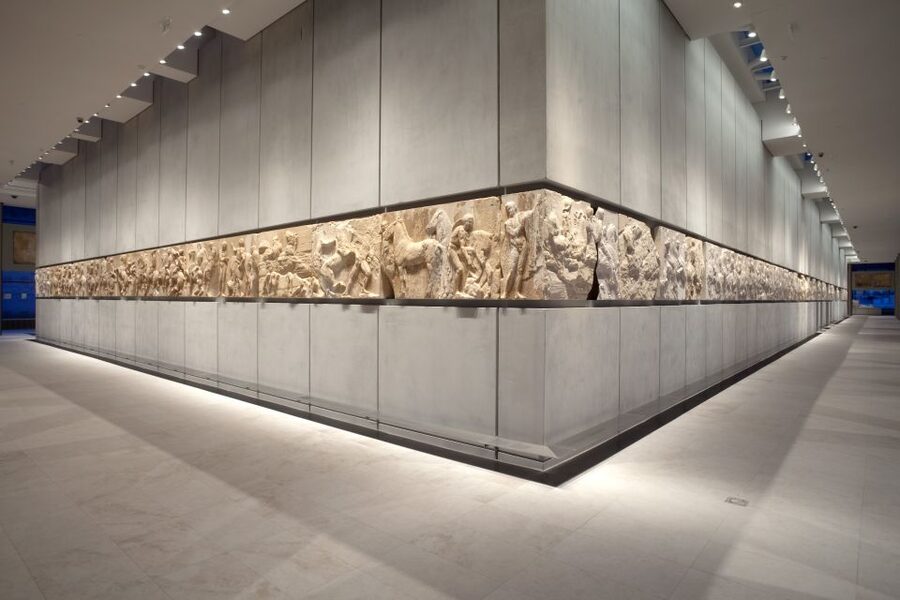
The collection is not only about monumental sculpture. It also shows traces of how ancient Athenians lived and worshipped.
As you move through the galleries, pay attention to the smaller objects. They can make the large temples feel more human. Personal belongings, offerings, decorative pieces, and architectural fragments help connect the Golden Age of Athens with real people rather than treating it as a parade of famous names.
The museum’s central strength is focus. It is devoted to the Acropolis and the objects found there, so the displays build toward a clear story. You are not asked to cross thousands of years and dozens of unrelated cultures in one afternoon.
That focus also makes the museum a good choice for anyone who finds ancient sites hard to read. On the hill, you see columns, stones, and partial structures. Here, you can study the sculpture close up, see how pieces fit together, and understand what the original buildings were meant to look like.
The displays are generally easy to follow, but self-guided visitors need to pay attention to the layout. There is a lot to absorb, and it is possible to walk past an important object without realizing its place in the larger story.
The Caryatids deserve a slow look

The Acropolis Caryatids are among the museum’s clearest highlights. These sculpted female figures once served as architectural supports for the Erechtheion on the Acropolis.
Seeing them indoors allows you to study details that are difficult to appreciate from the hill. Look at the clothing, the posture, and the way the figures carry the visual weight of the structure while appearing calm and human.
This is one place where an audio guide can help, if the narration works for you. A good explanation turns the Caryatids from famous statues into part of a building with a purpose and a story.
The audio option is not essential for everyone. Some people find the recorded sections too brief or difficult to operate, while others like having a few key works explained as they move. The guide is best treated as a selective aid, not as a full substitute for a live museum specialist.
Download the app before you enter if possible, and bring headphones. The ticket includes no physical audio device, and you need your own mobile phone to use the self-guided material.
More Acropolis and Parthenon visits:
- Athens: Acropolis & up to 5 Archaeological Sites Combo Pass
★ 4.4 · 12,619 reviews - Athens: Acropolis Ticket with Optional Audio or Live Guide
★ 4.2 · 11,055 reviews - Athens: Acropolis and Parthenon Guided Walking Tour
★ 4.6 · 5,882 reviews - Athens: Acropolis Ticket with Audio Guide
★ 4.0 · 3,575 reviews
The top floor and the Parthenon story
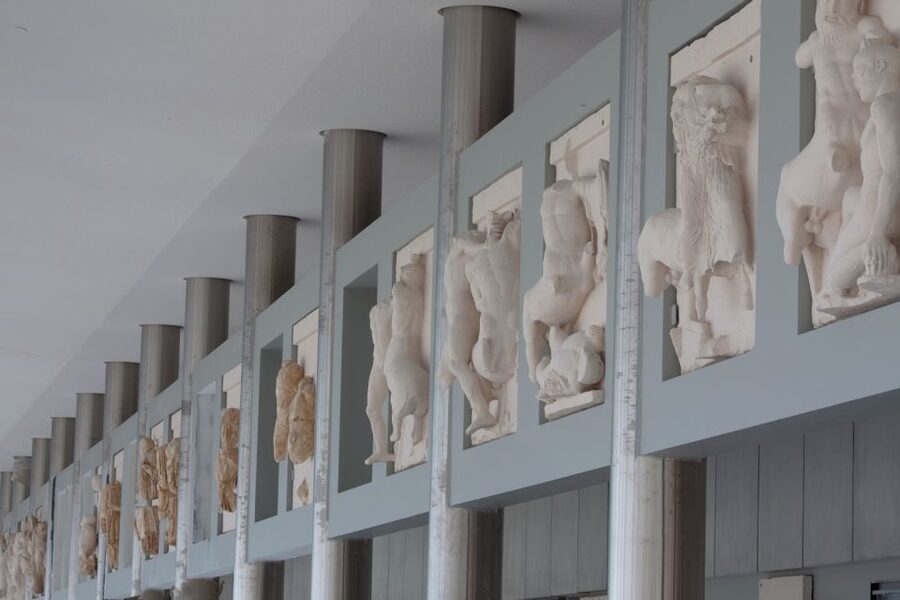
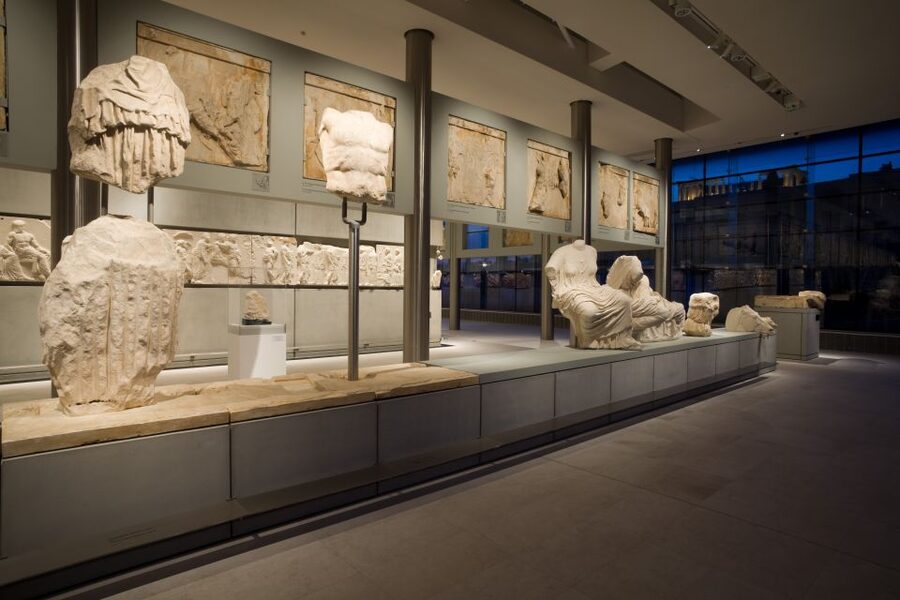
The top floor is the museum’s great reward. Its design follows the plan and orientation of the Parthenon, allowing the sculptures to be viewed in a setting that relates directly to the temple on the hill.
This arrangement helps you understand the original sculptural program. Rather than seeing isolated fragments in a case, you get a sense of how the decoration formed a complete visual story around the building.
The views from this level are another reason to linger. You can look toward the Acropolis and connect the museum objects with the temple outside. That connection is especially useful if you visit the museum the day before going uphill.
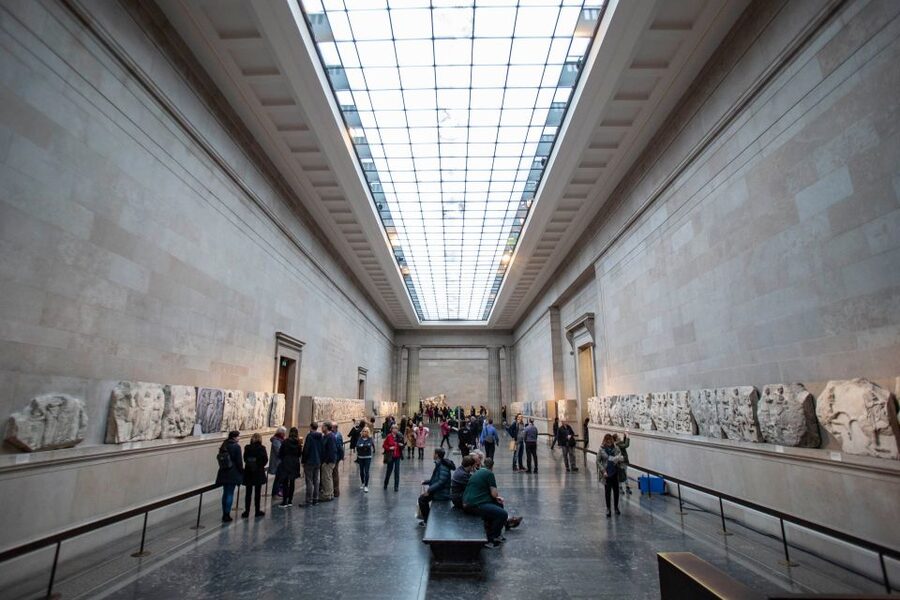
The Parthenon Marbles are the most famous display, though the collection raises an unavoidable question about pieces held elsewhere, particularly in the British Museum. The museum makes the absence part of the wider story of the Acropolis and its scattered sculptures.
You do not need to settle the political and cultural debate to appreciate the display. But you should understand that the museum is not merely presenting beautiful objects. It is also showing what belongs to the Acropolis, what survives, and what remains outside Greece.
Museum first, Acropolis second

I strongly prefer visiting the museum before the Acropolis Hill. The sequence works like a short visual lesson.
First, you learn what the buildings looked like, why the sculptures mattered, and how the site changed. Then, when you climb the hill, you recognize more of what you are seeing. Damaged stones become parts of buildings. Figures in the museum connect with the spaces they once occupied.
You can reverse the order if your schedule requires it. In hot weather, the air-conditioned museum can be a welcome stop after the climb. Still, the museum first approach usually gives you more from the outdoor visit.
Do not confuse this ticket with an Acropolis admission ticket. The hill, Parthenon, and other archaeological areas require separate entry. The museum ticket lets you study the art and objects connected with the Acropolis, but it does not put you inside the ancient citadel.
Some feedback connected the booking platform with live guides named Natasha, Alexandra Kolia, Anna, Ayoub Fayez, and others. Those comments describe guided experiences, not this ticket’s standard arrangement. Here, you should expect independent exploration and an optional app, not a person walking beside you.
How useful is the audio guide?

The audio guide divides people more than the museum itself. Some find it educational and easy to follow, especially because it directs attention to major pieces instead of trying to explain every object.
That selective approach can work well. You do not need a long lecture for every case, and a few clear explanations may be enough to make the Caryatids, sculptures, and architectural fragments memorable.
The weak point is operation. You must use your own phone, download the app, manage the audio, and keep track of where each segment belongs. A few users have found the recordings too short or the app hard to figure out.
If you prefer reading labels and setting your own route, skip the audio option. The museum is interesting without it, and the ticket remains useful for entry. If you learn best through spoken explanation, select the guide, but allow a few minutes to set it up before you start walking.
The Plaka audio guide is a nice extra if you plan to wander Athens’ old town afterward. It does not turn this into a guided walking tour, but it can add structure to an independent walk.
Timing, opening hours, and comfort
The museum is open year-round, but the hours change with the season.
From November through March, it opens Monday through Thursday from 9 AM to 5 PM, Friday from 9 AM to 10 PM, and Saturday and Sunday from 9 AM to 8 PM. From April through October, Monday hours are 9 AM to 5 PM, Tuesday through Thursday run to 8 PM, Friday runs to 10 PM, and Saturday and Sunday run to 8 PM.
Last entry is 30 minutes before closing. Check the current schedule when choosing your day, especially if you are visiting in winter or planning a late Friday visit.
Early entry can help with crowds. A morning visit gives you more room around popular sculptures, while a rainy day can send extra people indoors. The building has enough space to handle large numbers, but the top floor and major displays are more enjoyable when you are not being pushed along.
The museum is wheelchair accessible. There are places to sit, though you may want more breaks if you arrive after walking up the Acropolis. The café provides a convenient place to rest, and the gift shop is worth a quick look if you want quality or less ordinary souvenirs.
A museum visit takes physical pressure off your day, but do not treat it as a quick stop. The displays reward time, especially if ancient art is new to you.
Is $30 good value?
At $30, this is a convenience purchase as much as a museum ticket. The biggest benefit is the ability to arrive with a mobile voucher and avoid the ordinary ticket line.
That benefit is strongest from April through October, during weekends, and when rain drives people toward indoor attractions. In quieter periods, the museum may have little or no queue, so the skip-the-line feature matters less. One visit in late winter reportedly found no line at all.
The optional audio guide changes the value calculation. If you use it well, it adds structure without committing you to a fixed group schedule. If you dislike app-based narration, the extra cost may not be worthwhile.
The ticket is a good fit for solo visitors and independent couples who want freedom. It is less suitable if you want detailed answers, lively discussion, or a planned explanation from an expert. In that case, a live tour may give you more, even if it costs more.
Remember to add the separate Acropolis Hill admission to your Athens budget. This product is not a combined ticket for both sites.
Who should book this experience?
Book it if you want to understand the Acropolis rather than simply photograph it. Families with older children, first-time visitors, art lovers, and solo explorers can all get a lot from the collection.
It is especially useful before an Acropolis visit. The museum provides the setting and detail that the outdoor ruins cannot always supply.
You should also book it if waiting outside would be unpleasant or costly in time. The mobile barcode makes entry simple, and the building offers shelter from heat and rain.
Think twice if you only have 45 minutes. You can see a few famous works, but the museum deserves longer. Also think twice about the audio add-on if you do not want to troubleshoot an app or listen through headphones.
FAQ
Does this ticket include the Acropolis Hill?
No. The ticket includes entry to the Acropolis Museum only. Admission to the Acropolis Hill and its archaeological monuments is not included.
Is there a live guide?
No. This is a self-guided museum visit. You can add a downloadable audio guide through an app, but no live guide or physical audio device is provided.
What languages are available for the audio guide?
The optional audio guide is available in English, Spanish, French, German, and Italian.
Do I need a phone and headphones?
Yes. The audio guide is downloaded to your mobile phone, and you must provide your own device and headphones.
How long is the ticket valid?
The ticket is valid for one day. You should check the available starting times and the museum’s seasonal opening hours before booking.
Is the museum wheelchair accessible?
Yes. The Acropolis Museum is wheelchair accessible.
Should you book it?
I would book this ticket if you want a flexible visit and plan to spend at least two hours inside. The museum’s Caryatids, Parthenon display, Acropolis views, and archaeological remains make it one of the most useful stops in Athens for understanding the ancient site.
Choose the audio option only if you enjoy app-based narration. Otherwise, use the museum at your own pace and save the extra cost. Most important, buy the separate Acropolis Hill ticket too, and visit the museum before the climb if your schedule allows. That order turns a famous ruin into a place you can actually read.
More Self-Guided Tours in Athens
- Athens: Cape Sounio & Poseidon Temple Trip with Audio Guide
★ 4.4 · 4,521 reviews - From Athens: Delphi Full Day V.R. Audio Guided Tour
★ 4.6 · 3,028 reviews - Athens: Acropolis Ticket & Optional Self-Guided Audio Tours
★ 4.1 · 2,542 reviews - Athens: Peloponnese Highlights Day Trip and V.R. Audio Guide
★ 4.5 · 1,425 reviews
More Athens museums
- Athens: Mythology of Delphi, Museum and Arachova Guided Tour
★ 4.6 · 4,008 reviews - Athens All Included: Acropolis and Museum Guided Tour with Ticket
★ 4.5 · 2,673 reviews - From Athens: Small-Group Delphi, Museum & Arachova Day Trip
★ 4.8 · 2,476 reviews - Parthenon & Acropolis Museum with Audio or Live Tour Option
★ 4.1 · 2,446 reviews
Freshly added Athens trips
- Athens and Ancient Corinth Private from Athens★ 5.0 · 3 reviews
- From Athens: Mycenae and Epidaurus Private Tour★ 4.8 · 3 reviews
- Full day Meteora private tour★ 5.0 · 3 reviews
- Double Shore Dive (certified divers)★ 4.5 · 3 reviews
- Athens Hills: Mythology Treasure Hunt★ 5.0 · 3 reviews
- Sunset & swimming at Cape Sounio, Poseidon temple★ 5.0 · 3 reviews
- Philosophy Experience at Plato’s Academy Park – basic version★ 5.0 · 3 reviews
- Private Acropolis Tour – Ticket Included★ 5.0 · 3 reviews
Acropolis Museum Tours, compared.

Acropolis, Parthenon & Acropolis Museum Guided Tour
Read our review →Acropolis, Parthenon & Acropolis Museum Guided Tour
Read our review →
Acropolis monuments & Parthenon Walking Tour with Optional Acropolis Museum
Read our review →
Parthenon & Acropolis Museum with Audio or Live Tour Option
Read our review →
Acropolis, Parthenon and Acropolis Museum Guided Tour
Read our review →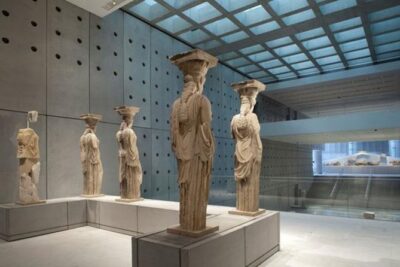


Acropolis & Acropolis Museum Ticket with Audio Guide
Read our review →Browse the lists this tour appears in