
Reviewed · ANCIENT AGORA & CITY SITES
Athens: Roman Agora E-Ticket and Audio Guide
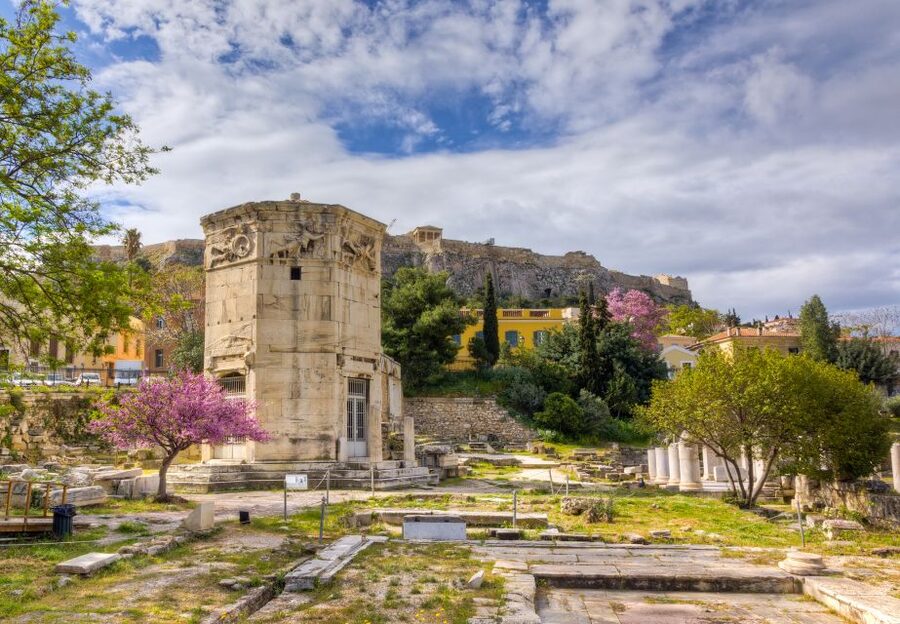
Athens’ Roman Agora is a small site with a surprisingly wide story. In less than an hour, you can move from Roman-era daily life to later religious use, while the Acropolis rises behind the ruins and the Tower of the Winds gives the visit its most memorable focal point.
I like the offline audio content, which saves you from roaming charges, and I like the freedom to pause, repeat, or revisit the tour later. The main catch is navigation: the audio guide can be hard to follow around the site, so you need a charged phone, headphones, and a little patience.
At $18 per person, this is most useful when you value advance booking and storytelling more than a long visit. The Roman Agora is easy to see on your own, and if the site is quiet, buying a ticket at the entrance may cost less.
In This Review
- Key points at a glance
- A small archaeological stop with a big time span
- Getting ready before you reach the entrance
- The Gate of Athena Archegetis sets the tone
- Meeting the Winds at the Tower
- Fountain house, shops, and the Vespasianae
- The Mosque of the Conqueror and later layers
- How the smartphone audio tour works in practice
- Is $18 good value for a short visit?
- Who will enjoy this Roman Agora visit most?
- A simple plan for making the visit work
- Should you book the Roman Agora audio guide?
- FAQ
- How long does the Roman Agora audio-guided visit take?
- What is included in the price?
- Is there a live guide?
- Which languages are available?
- Do I need my own smartphone?
- Does the audio tour work without mobile data?
- What phone versions are supported?
- How much storage space do I need?
- Can I use a reduced admission ticket with skip-the-line access?
Key points at a glance
- The Tower of the Winds is the star attraction: This unusual ancient structure gives the site its strongest sense of place and supplies the audio tour with one of its best subjects.
- The visit lasts 45 minutes to one hour: It is a compact stop, not a half-day archaeological outing.
- The ticket and audio tour are separate parts of the experience: You receive entry plus downloadable stories, maps, and text, but no live guide.
- The audio works offline: Downloading the content before you arrive helps avoid roaming charges and weak connections.
- The route includes more than columns: Look for the Gate of Athena Archegetis, fountain house, Vespasianae, shops, and Mosque of the Conqueror.
- You need the right phone and enough battery: The app requires Android 5.0 or later or a compatible iPhone, plus roughly 100 to 150 MB of storage.
A small archaeological stop with a big time span

The Roman Agora works best as a focused addition to your Athens day. It is not huge, and you will not spend hours wandering among exposed streets, but that compact size makes it easy to fit between the Acropolis, Plaka, Monastiraki, and other central sights.
I enjoy sites like this because they reveal ordinary routines as well as grand monuments. The audio tour is designed to explain habits of daily life in Athens during the Roman conquest, so you are not left staring at broken masonry and guessing what happened there.
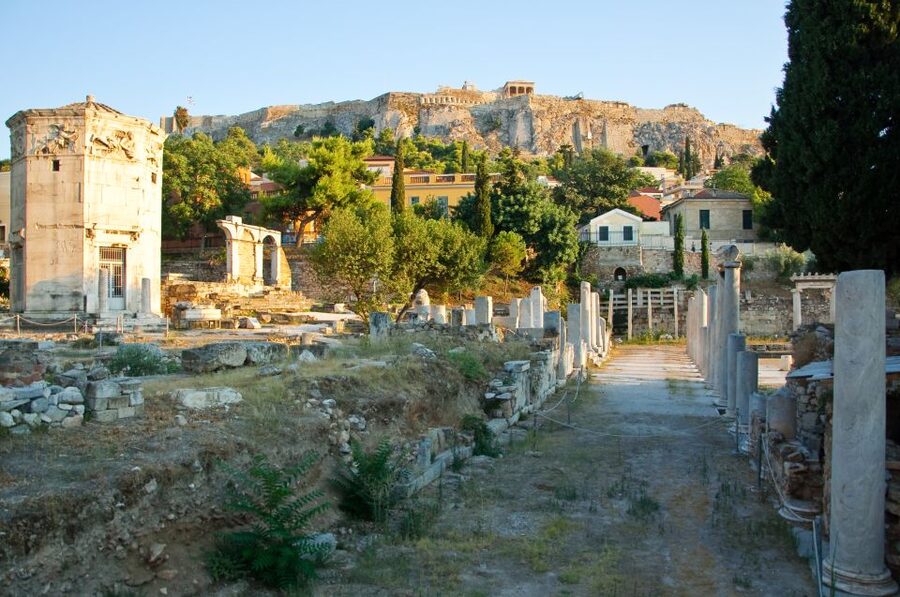
The setting also does much of the work. You get views toward the Acropolis, and the surrounding old streets help connect the archaeological remains to the living city. You are not visiting an isolated museum display. You are standing in a busy historic part of Athens, with layers of use gathered into a tight space.
The tour promises brief, original stories rather than a long lecture. That is a good match for a short visit. You can listen to one section, look closely at the feature it describes, then continue when you are ready.
More ancient city sites in Athens:
- Athens Half Day Tour, Acropolis, Parthenon, Temple of Olympian Zeus & Hephaistus
★ 5.0 · 609 reviews - Athens: Agora and Hephaistos Temple Entrance Ticket
★ 4.0 · 449 reviews - Athens: Ancient Agora E-Ticket and Audio Tour
★ 3.9 · 413 reviews
Getting ready before you reach the entrance
This experience has no live guide and no standard meeting point. Your ticket and instructions arrive by email, and you need to download the app and audio tour before visiting. Check your spam folder if the instructions do not appear promptly.
Do not leave the download until you are standing at the gate. You need a compatible Android or iOS phone, around 100 to 150 MB of free storage, and enough battery for both the audio and the screen. Bring headphones, since the tour is built for personal listening.
The audio content works offline after download. That is especially useful if you use a foreign mobile plan or want to avoid roaming charges. It also means you can listen without depending on a strong connection inside the site.
You book per device, not per person. If two people want to listen separately, plan around the device arrangement before purchasing. The service does not provide a smartphone or headphones, and it is not compatible with Windows phones or several older Apple devices.
Wear comfortable shoes. The site is compact, but archaeological ground is not always as smooth as a modern pavement. The area is partially accessible for people with disabilities, though the information provided does not promise full access across every part of the site.
The Gate of Athena Archegetis sets the tone
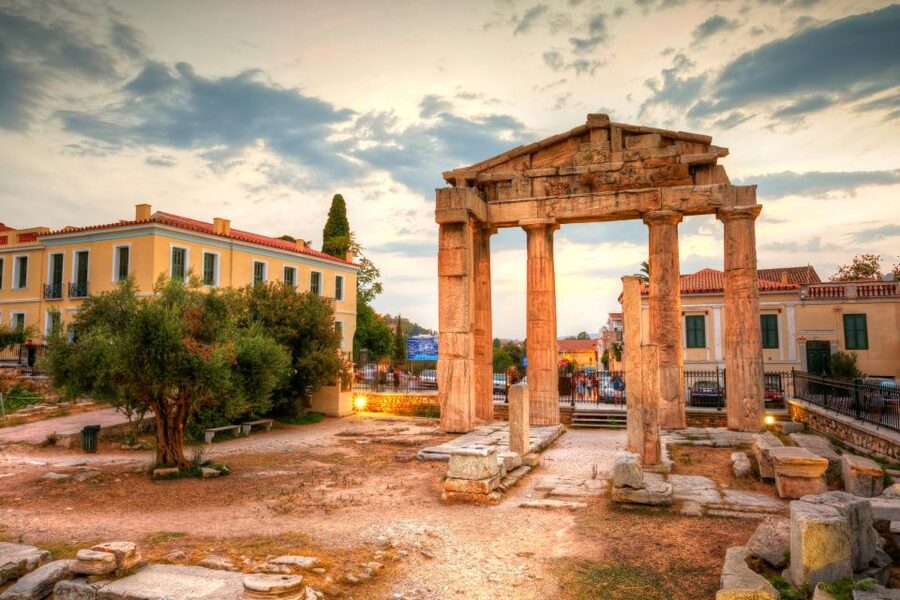
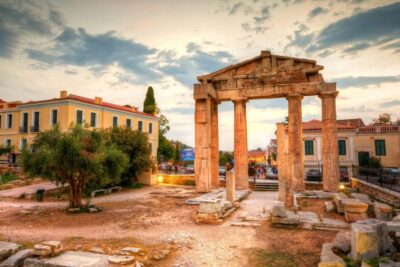
The Gate of Athena Archegetis is one of the first major features to look for. Its name gives the visit an immediate connection to Athena, the city’s patron goddess, while its position helps you understand how the Roman Agora was presented to people entering it.
The audio narration gives this first stop more purpose than a quick photograph. You learn to look at the gate as an entrance with meaning, not simply as a surviving set of stone supports.
This is where I recommend getting your bearings before pressing play on every section. Since the audio tour can be difficult to follow spatially, first identify where you are in relation to the gate and the rest of the site. Then listen while facing the feature being described.
The site is small enough that you can backtrack. That is important. You are not locked into a one-way tour, and you can repeat the narration if you have moved too quickly or missed a detail.
Meeting the Winds at the Tower
The Tower of the Winds is the Roman Agora’s most distinctive stop. The audio tour uses it to introduce ancient ideas about time, weather, and the forces shaping daily life, making the structure more than a striking object in the middle of the ruins.
The supplied material calls it a chance to meet the Winds, which is a fitting way to approach the building. Listen closely here, then take time to study the exterior and its relationship to the open space around it.
This is likely the point where history buffs will get the most pleasure. One visitor described the site as not very large but quite interesting for anyone who enjoys history. That is a fair assessment: the Tower gives the short visit a clear center, but the overall experience depends on how much you enjoy context and ancient remains.
Do not expect a long interior exploration or a series of rooms packed with exhibits. The appeal comes from the building itself, the story attached to it, and the way it frames the surrounding Agora.
A few more Athens days worth a look
- Athens: Acropolis Ticket with Optional Audio or Live Guide
★ 4.2 · 11,055 reviews - Athens: Cape Sounio & Poseidon Temple Trip with Audio Guide
★ 4.4 · 4,521 reviews - Athens: Acropolis Ticket with Audio Guide
★ 4.0 · 3,575 reviews - From Athens: Delphi Full Day V.R. Audio Guided Tour
★ 4.6 · 3,028 reviews
Fountain house, shops, and the Vespasianae
The tour also points you toward less famous remains, including the fountain house, shops, and the Vespasianae. These features matter because they bring the site down from public monuments to practical city life.
The fountain house helps you think about water and shared urban routines. The shops suggest the commercial activity that once filled the Agora. The Vespasianae, a public convenience, adds a touch of everyday reality that grand archaeological sites often leave out.
I like this part of the route because it keeps the visit from becoming a parade of famous names. The remains are fragmentary, but the audio narration helps you connect them with the people who used the space. You get a better sense of the Agora as a working part of Athens rather than a collection of attractive ruins.
At the same time, keep your expectations sensible. These are not fully reconstructed rooms with displays of household goods. You are interpreting partial remains, and the audio is doing much of the explanatory work.
The Mosque of the Conqueror and later layers
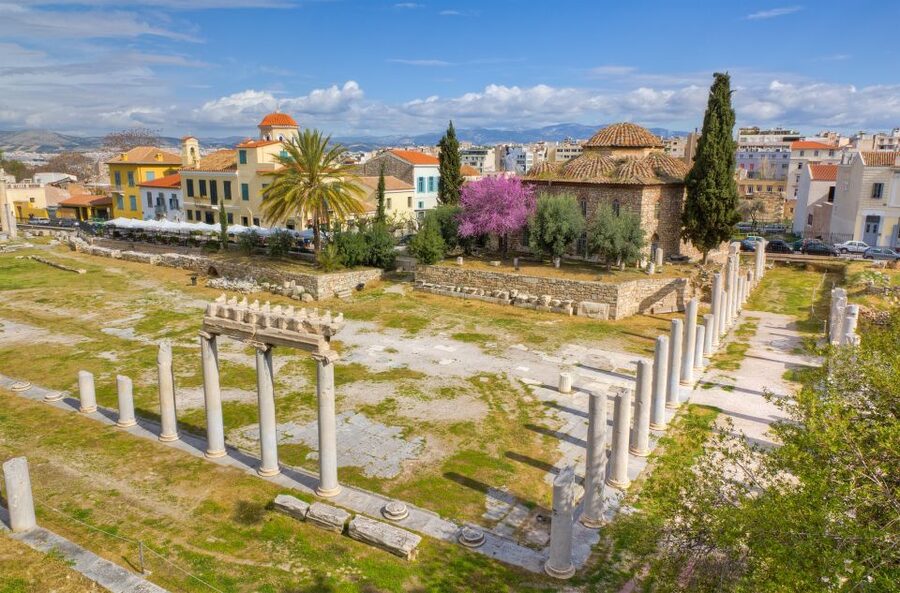
The Mosque of the Conqueror adds another period to the visit. Its presence reminds you that this site did not stop mattering when the ancient Greek and Roman eras ended.
The audio tour includes the mosque among its main points of interest, allowing you to consider how the Roman Agora was reused and understood across different periods. That later layer gives the visit more range than a simple tour of classical monuments.
I find this kind of change in use especially helpful in Athens. Ancient sites can seem frozen in one famous age, but the Mosque of the Conqueror shows that the area continued to have a role long after the Roman conquest.
The tour’s storytelling format is useful here because a bare structure may not explain itself. Listen for the historical connections, then look around the site again. The value is not only in seeing the building, but in recognizing that the Agora’s story continued.
How the smartphone audio tour works in practice
The experience is self-guided. You decide where to pause, how long to look, and whether to replay a section. The app includes audio narration, written content, and maps, so you can use it in the format that suits you.
The available languages are English, Spanish, German, French, Italian, and Greek. That range makes the tour practical for many visitors, especially if you prefer to hear historical information in a language other than English.
The audio content can be used repeatedly, before or after your visit. You can listen to an introduction before entering, use the map on-site, or revisit a story later when you have more time to think about it.
The weak spot is orientation. One recent French-language assessment found the audio guide very difficult to navigate, while another found the narration strong enough to bring the past to life. Those two points can both be true: the stories may be useful, but the route instructions may not always tell you clearly where to stand or which feature to find next.
My practical fix is simple. Download everything, open the map before entering, and take a quick look around the site first. If you get lost, stop the audio rather than listening while wandering. Match each story to the actual monument, then continue.
Is $18 good value for a short visit?
At $18 per person, you are paying for convenience as much as admission. The ticket is sent in advance, the activity includes skip-the-line service, and the audio content is available offline in six languages.
That price makes more sense during a busy period, when skipping the ticket line saves time. It is less attractive when the Roman Agora is nearly empty and the on-site ticket booth is easy to use.
The visit itself takes 45 minutes to one hour. A recent French-language assessment found the ticket somewhat expensive for the amount of time spent, and that is the clearest value concern here. You are not buying an all-day pass or a long guided walk.
There is also a practical distinction between the advertised skip-the-line service and reduced admission. Free and reduced tickets must be obtained at the ticket booth and do not receive skip-the-line privileges. If you qualify for one of those categories, this product may not offer the benefit you are seeking.
I would consider the price reasonable if you want a prearranged entry and a narrated visit in your own language. If you are comfortable reading site information yourself and the entrance is quiet, the extra cost is harder to justify.
Who will enjoy this Roman Agora visit most?
This suits independent history lovers who want structure without a live guide. You receive enough explanation to make the remains meaningful, but you are not tied to a group pace or a fixed lecture.
It also works well for visitors with a tight Athens schedule. You can pair it with nearby sights and give the Roman Agora a clear hour rather than trying to build an entire morning around it.
Families may appreciate the short length, though the audio’s navigation issue could make it less smooth if you are managing several people at once. A charged phone and headphones for each listener make the experience easier.
I would be more cautious if you dislike phone-based tours or prefer direct conversation with a guide. There is no live guide to answer questions, adjust the route, or explain a feature when the app leaves you unsure of your position.
The site is also a better choice for someone who enjoys interpreting ruins than for someone looking for a large museum collection. Its strength is the connection between monuments, stories, and the surrounding city.
A simple plan for making the visit work
Download the app and audio content at your accommodation or another reliable Wi-Fi point. Check the email instructions, confirm the ticket, and make sure your phone has enough storage and battery.
Bring headphones and comfortable shoes. Keep the map open at the start, but do not feel obliged to stare at the screen for the entire visit. The monuments are the reason you came.
Begin with the Gate of Athena Archegetis, then locate the Tower of the Winds. After that, use the audio to guide you toward the fountain house, shops, Vespasianae, and Mosque of the Conqueror.
Allow a little extra time for photos and for replaying sections. The official duration is 45 minutes to one hour, but you can move faster or slower because the tour is self-guided.
Finally, look back toward the Acropolis before leaving. The view is one of the best rewards of this compact stop, and it helps place the Roman Agora within the larger story of Athens.
Should you book the Roman Agora audio guide?
Book it if you want advance entry, offline narration, and a flexible one-hour visit. The Tower of the Winds, Gate of Athena Archegetis, and everyday features such as the shops and Vespasianae give the site enough variety to reward a careful look.
Skip it if you are mainly seeking the cheapest possible admission, since the site may be easy to enter directly and the visit is short. I would also skip it if a confusing phone route would frustrate you or if you need a live guide.
For the right visitor, this is a tidy, useful addition to an Athens itinerary. Treat it as a focused archaeological stop, prepare your phone properly, and use the audio as a helpful companion rather than expecting it to lead you perfectly from one point to the next.
FAQ
How long does the Roman Agora audio-guided visit take?
The stated duration is 45 minutes to one hour. Since the tour is self-guided, you can pause, replay sections, and set your own pace.
What is included in the price?
The experience includes an adult entry ticket to the Roman Agora, skip-the-line service, and a self-guided audio tour on your smartphone. The app also provides offline text, audio narration, and maps.
Is there a live guide?
No. This is a downloadable self-guided audio tour, and no live guide or standard meeting point is provided.
Which languages are available?
The audio tour is available in English, Spanish, German, French, Italian, and Greek.
Do I need my own smartphone?
Yes. You need your own compatible Android or iOS smartphone. Smartphones and headphones are not supplied.
Does the audio tour work without mobile data?
Yes. The content can be downloaded for offline use, which helps you avoid roaming charges.
What phone versions are supported?
Android version 5.0 and later is supported. The service is also available on compatible iOS devices, but it does not work with Windows phones, iPhone 5, iPhone 5C, or older listed Apple devices such as the fifth-generation iPod Touch, fourth-generation iPad, and first-generation iPad Mini.
How much storage space do I need?
You need approximately 100 to 150 MB of free storage for the app and tour content.
Can I use a reduced admission ticket with skip-the-line access?
No. Free and reduced admission tickets must be obtained at the on-site ticket booth and do not include skip-the-line privileges.
More Audio Tours in Athens
- Athens: Acropolis Museum Ticket with optional Audio Guide
★ 4.4 · 2,652 reviews - Athens: Acropolis Ticket & Optional Self-Guided Audio Tours
★ 4.1 · 2,542 reviews - Parthenon & Acropolis Museum with Audio or Live Tour Option
★ 4.1 · 2,446 reviews - Athens: Peloponnese Highlights Day Trip and V.R. Audio Guide
★ 4.5 · 1,425 reviews
Freshly added Athens trips
- Athens and Ancient Corinth Private from Athens★ 5.0 · 3 reviews
- Double Shore Dive (certified divers)★ 4.5 · 3 reviews
- From Athens: Mycenae and Epidaurus Private Tour★ 4.8 · 3 reviews
- Full day Meteora private tour★ 5.0 · 3 reviews
- Athens Hills: Mythology Treasure Hunt★ 5.0 · 3 reviews
- Sunset & swimming at Cape Sounio, Poseidon temple★ 5.0 · 3 reviews
- Philosophy Experience at Plato’s Academy Park – basic version★ 5.0 · 3 reviews
- Private Acropolis Tour – Ticket Included★ 5.0 · 3 reviews
Ancient Agora & City Sites, compared.

Athens Half Day Tour, Acropolis, Parthenon, Temple of Olympian Zeus & Hephaistus
Read our review →



Roman Agora & Ancient Agora E-ticket & 2 Audio Tours
Read our review →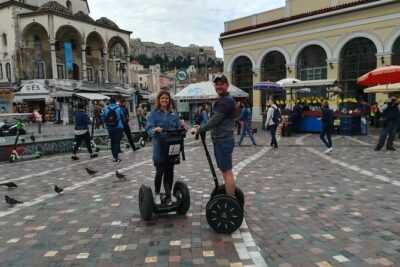
Ancient Athens Segway Tour with Agora and Kerameikos
Read our review →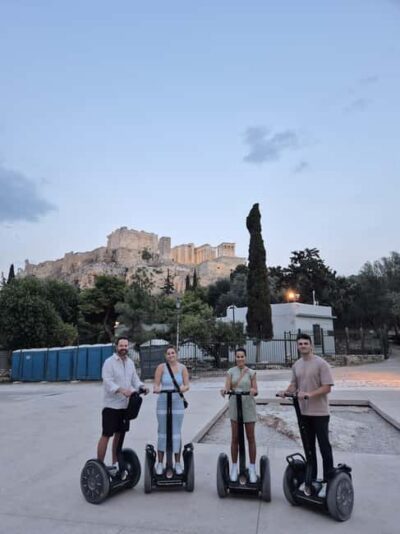
Ancient Athens, Agora, and Keramikos Segway Tour
Read our review →Browse the lists this tour appears in