
Reviewed · ANCIENT AGORA & CITY SITES
Athens: Roman Agora & Ancient Agora E-ticket & 2 Audio Tours
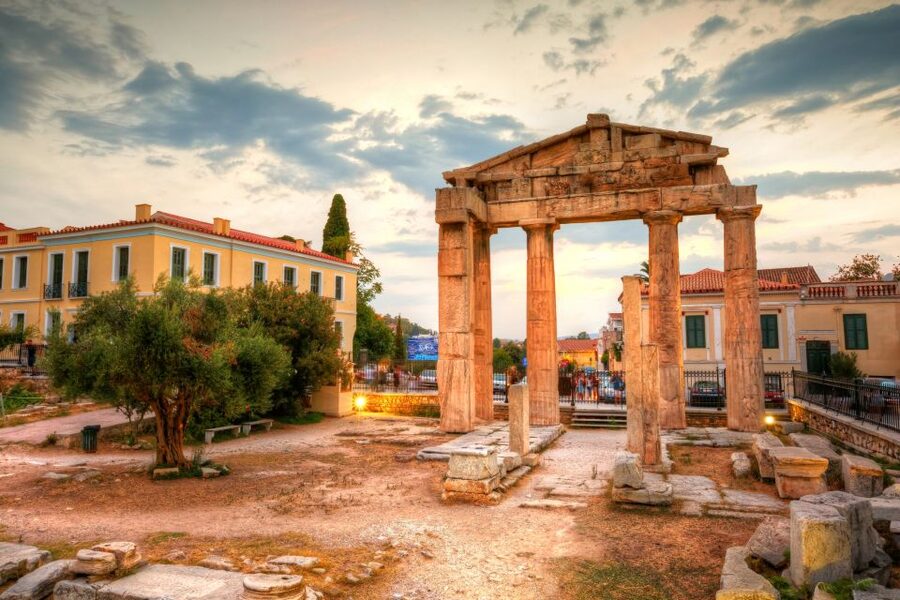
The best part of this experience is the chance to see two major Athenian archaeological sites with one booking, then explore each at your own speed. The Roman Agora offers the Gate of Athena Archegetis and the Tower of the Winds, while the Ancient Agora gives you a larger setting, museum displays, and fine views across the city.
I like the simple two-stop plan and the offline audio content, which means you can listen without using mobile data. I also like that the smaller Roman Agora comes first, helping you get your bearings before the more expansive Ancient Agora. The main concern is the audio quality: one visitor found the narration stiff and the pronunciation weak, so you may prefer to treat it as useful background rather than a substitute for a live guide.
In This Review
- Key points to know before booking
- Two Agoras, two chapters of Athens
- Starting at the Roman Agora near Monastiraki
- Allowing time between the two entrances
- Seeing the Ancient Agora from Thissio
- How the smartphone audio tours work
- Timing, tickets, and the $51 price
- The right order for a better day
- Who will enjoy this experience most
- Small details that make the visit easier
- Should you book the two-Agora ticket?
- FAQ
- How long is the experience valid?
- Which time slots are available?
- Where does the Roman Agora audio tour start?
- Where do I enter the Ancient Agora?
- What languages are available for the audio tours?
- Do I need my own phone and headphones?
- Can I use the audio tours without mobile data?
Key points to know before booking
- Two archaeological sites in one day: Visit the Roman Agora and Ancient Agora with separate timed entries.
- Start near Monastiraki: The Roman Agora is about 230 meters along Areos Street from the Monastiraki metro station.
- Ancient Agora access has changed: Construction has closed the main entrance, so you must walk from Thissio to the temporary entrance on Apostolou Pavlou Street.
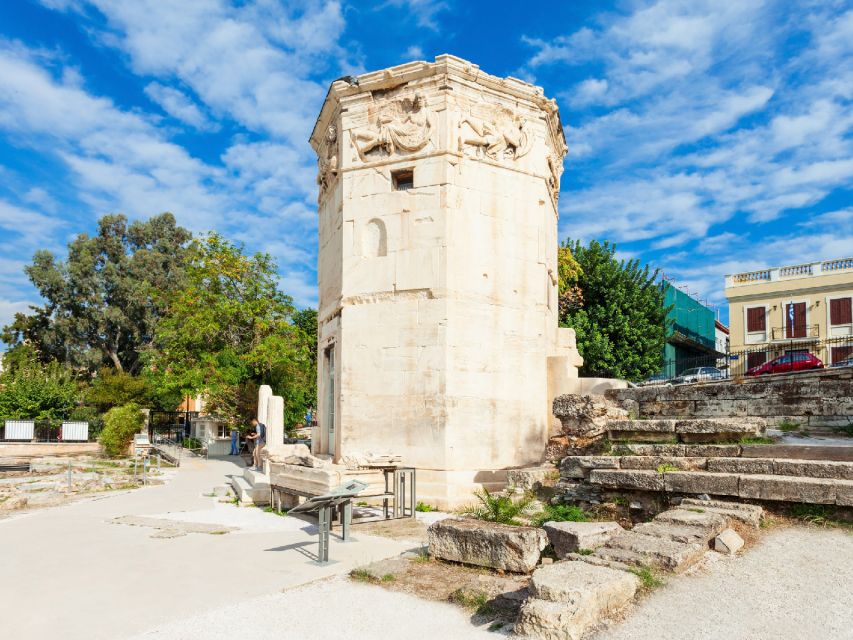
- The Tower of the Winds is the Roman Agora highlight: This unusual marble building once served practical and scientific purposes.
- The Ancient Agora includes a museum: The Stoa of Attalos houses exhibits that help explain daily and civic life in Athens.
- Bring your own equipment: You need a charged Android or iPhone, headphones, and 200 to 300 MB of storage.
Two Agoras, two chapters of Athens
This is not a guided group walk. You receive two timed entry tickets and two self-guided audio tours for your phone, then move through the sites independently.
That arrangement suits you if you like stopping for photographs, reading signs, or sitting in the shade without keeping up with a guide. It is less suitable if you want lively conversation, detailed answers on the spot, or help adjusting the route when construction changes access.
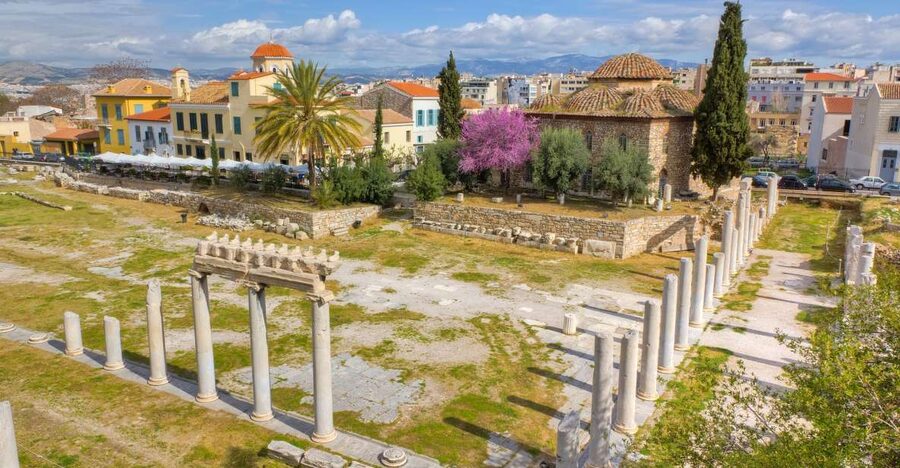
The two sites tell different stories. The Roman Agora reflects Athens under Roman influence and focuses on a compact collection of surviving monuments. The Ancient Agora is broader and more closely tied to the city’s public life, politics, commerce, and the Athenian Golden Age.
You can choose from four suggested schedules:
- 8:00 AM Roman Agora, followed by 10:00 AM Ancient Agora
- 10:00 AM Roman Agora, followed by 12:00 PM Ancient Agora
- 1:00 PM Roman Agora, followed by 3:00 PM Ancient Agora
- 2:00 PM Roman Agora, followed by 4:00 PM Ancient Agora
The two-hour gap gives you time to walk between the sites and pause for food or coffee. The morning options are likely more comfortable in Athens’ strong sun, though the exact conditions will depend on the season.
More ancient city sites in Athens:
- Athens Half Day Tour, Acropolis, Parthenon, Temple of Olympian Zeus & Hephaistus
★ 5.0 · 609 reviews - Athens: Agora and Hephaistos Temple Entrance Ticket
★ 4.0 · 449 reviews - Athens: Ancient Agora E-Ticket and Audio Tour
★ 3.9 · 413 reviews
Starting at the Roman Agora near Monastiraki
The Roman Agora is the easier site to reach. Take the metro to Monastiraki, served by lines 1 and 3, then walk along Areos Street for about 230 meters toward the entrance at Epaminonda 6 to 22.
There is no meeting point because no guide is waiting for you. You simply arrive during your selected time slot, open the ticket on your phone, and begin the audio tour at the entrance.
The site is compact, which makes it a good first stop. You can see the Gate of Athena Archegetis, an impressive entrance built by the people of Athens in the Roman period. It gives the visit a clear visual anchor before you move toward the other remains.
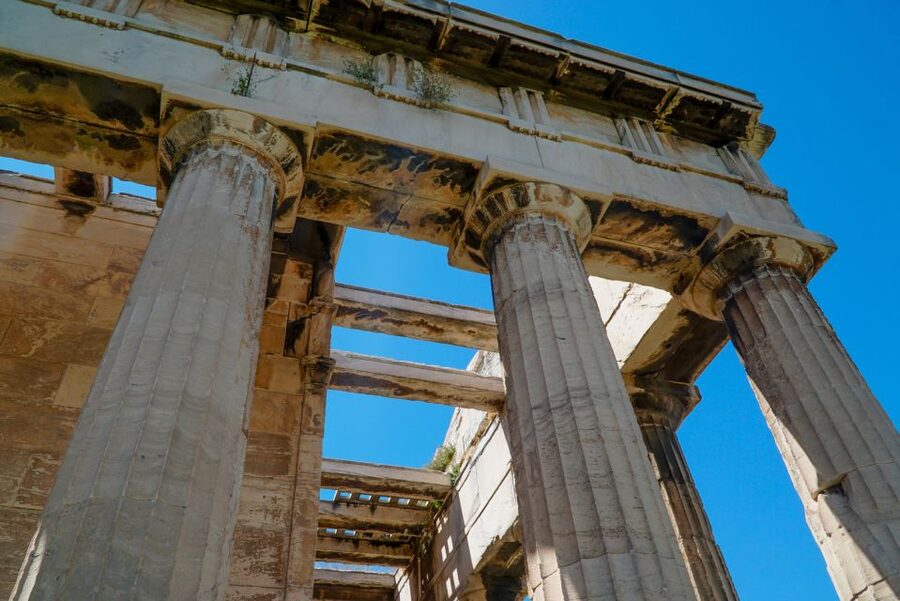
The Tower of the Winds is the star attraction. This octagonal marble structure served as a water clock, sundial, and weather indicator. Its carved figures represent the winds, giving the building both practical purpose and visual appeal. It is the sort of monument that rewards a slow look, even if you are not usually drawn to archaeological ruins.
The Roman Agora tour ends inside the site at the Mosque of the Conqueror. That endpoint matters because you should not expect to finish back at the entrance. Follow the audio route rather than assuming you can leave from the final stop.
One practical warning: the Roman Agora may feel brief compared with the Ancient Agora. That is not necessarily a flaw. It works well as a focused introduction, but you should not book this combination expecting two equally large archaeological parks.
Allowing time between the two entrances
The suggested schedules place the Ancient Agora two hours after the Roman Agora. That gap is useful, but you need to handle the transfer yourself.
The two sites are in the central Athens area, but the Ancient Agora entrance instructions are especially important. Ongoing construction has temporarily closed its main entrance. You must use the temporary entrance on Apostolou Pavlou Street, at the level of Akamantos Street.
The supplied directions say the only way to reach the Ancient Agora is on foot from Thissio station. Plan around that instruction rather than heading to the usual entrance and hoping for a quick change of plans.
This is where the experience loses some of its hassle-free quality. The tickets simplify admission, but they do not remove the need to check the current access route. Construction can alter the course of your visit, and site rules take priority over the audio itinerary.
I would leave enough time to find the temporary entrance, especially for the first available Ancient Agora slot. Do not use the full two-hour gap for a long meal or a distant detour. You still need to arrive at the correct entrance on time.
Seeing the Ancient Agora from Thissio
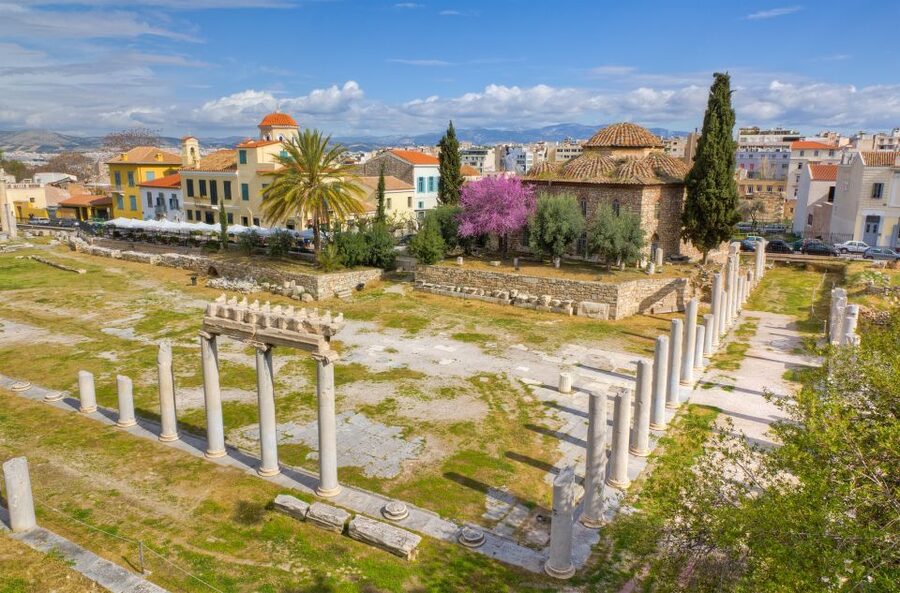
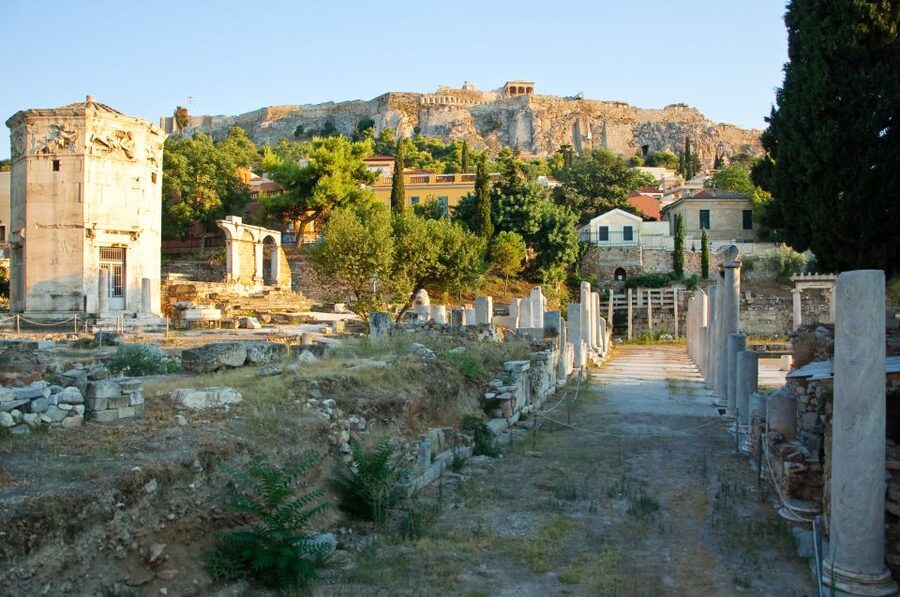
The Ancient Agora is the larger and more rewarding half of the day for many people. This was the civic heart of Athens, a place connected with public business, political activity, commerce, and ordinary city life.
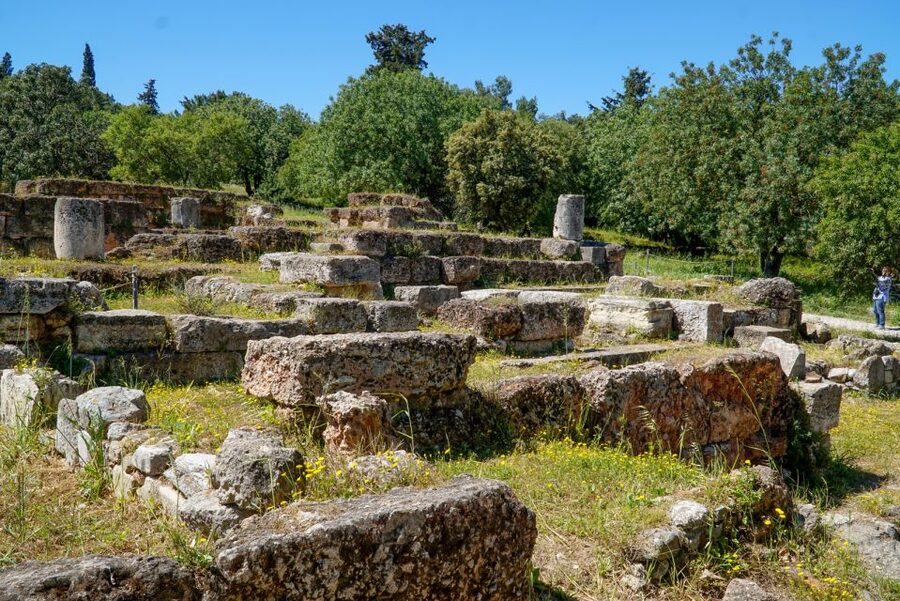
The audio tour is useful here because the open site can otherwise feel like a wide field of stones and scattered columns. Good narration helps you connect the remains to the people and functions that once filled the area.
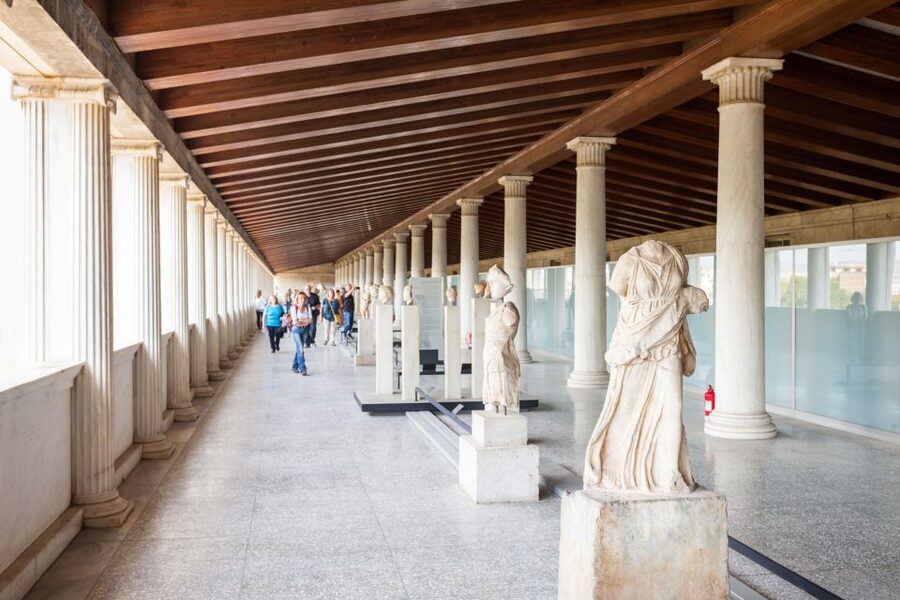
The route ends at the Stoa of Attalos, inside the archaeological site and not far from the entrance. This long reconstructed building now houses the Ancient Agora museum. It gives you a strong final stop, since the displays put smaller objects and archaeological finds into a more understandable setting.
The museum is especially valuable after walking through the ruins. Instead of seeing only foundations outdoors, you can examine historical exhibits connected with the site and get a clearer sense of how Athens worked as a city.
The Ancient Agora also provides attractive viewpoints across Athens. Bring your camera, but remember that the site is partly outdoors and exposed. Comfortable shoes, sunglasses, a sun hat, and sunscreen are sensible choices.
The site is only partially accessible for people with disabilities or reduced mobility. If that affects your planning, check the current route and site conditions before paying, since construction may further change access.
A few more Athens days worth a look
- Athens: Acropolis Ticket with Optional Audio or Live Guide
★ 4.2 · 11,055 reviews - Athens: Cape Sounio & Poseidon Temple Trip with Audio Guide
★ 4.4 · 4,521 reviews - Athens: Acropolis Ticket with Audio Guide
★ 4.0 · 3,575 reviews - From Athens: Delphi Full Day V.R. Audio Guided Tour
★ 4.6 · 3,028 reviews
How the smartphone audio tours work
After receiving the ticket by email, you download the app and the two audio tours before your visit. An activation link gives you access to the content.
The tours include audio narration, written text, and maps. You can download the material for offline use, which is helpful if you do not have reliable data service in Greece or want to conserve your phone battery and roaming allowance.
The tours are available in English, Spanish, German, French, and Italian. You need an Android phone running version 5.0 or later, or a compatible iPhone. Older devices are not supported, including the iPhone 5 and 5C, fifth-generation iPod Touch, fourth-generation iPad, first-generation iPad Mini, and earlier models.
You also need 200 to 300 MB of free storage. Download everything before arriving, not while standing outside the entrance in the sun. A fully charged phone and your own headphones are essential because neither is supplied.
The audio tours can be replayed before or after the visit. Listening beforehand may help you recognize the major stops, while replaying sections later can fill in details you missed while taking photos.
There is a real trade-off here. A self-guided audio tour gives you control, but it cannot respond to questions or changes in the site. A critical visitor found the narration sounded artificial, with poor pronunciation and too little time to move between stops. That complaint is worth taking seriously if natural delivery matters to you.
At the same time, the audio guide can still add value, particularly at the Ancient Agora, where context makes a large open archaeological area easier to understand. Think of it as a portable information tool, not the same thing as a live historian.
Timing, tickets, and the $51 price
The listed price is $51 per person. Its value depends on how you use the day.
You are paying for two timed entry tickets plus two audio tours. If you already planned to visit both Agoras and would otherwise buy admission separately and arrange information on your own, the package offers convenience. The offline maps and narration also save you from researching two sites in advance.
The price is harder to justify if you want only a short look at the Roman Agora, dislike phone-based tours, or qualify for free or reduced admission. Discounted tickets cannot be obtained through this booking and must be acquired at the site ticket booth. That is particularly important for families.
A 16-year-old may qualify for free admission under the site’s rules, but the booking terms require you to book per device used, not simply per person. Check eligibility before buying. The price is non-refundable, so an incorrect booking can be expensive.
The ticket is also not a transportation pass. You arrange your own metro ride and walking route. That is easy enough in central Athens, but it means the product is best understood as admission plus digital interpretation, not a fully managed excursion.
The right order for a better day
Starting at the Roman Agora makes sense. It is smaller, closer to Monastiraki, and easier to cover in a focused visit. You can then move on to the larger Ancient Agora with a basic understanding of Athens under Roman rule.
The two-hour spacing is also sensible. It prevents the second site from becoming a rushed add-on, provided you pay attention to the temporary Ancient Agora entrance.
The best schedule for you depends on the season and your tolerance for heat. An 8:00 AM start puts both visits earlier in the day. The 10:00 AM option is less demanding if you prefer a slower morning. The 1:00 PM and 2:00 PM choices leave the morning free, but much of the route will take place during the warmer part of the day.
Do not assume the audio will tell you when to leave one monument and walk to the next. The narration may not account for current construction, and one negative experience specifically concerned timing between stops. Use the maps and site signs as your practical guide.
Who will enjoy this experience most
I would recommend this to an independent visitor who wants a clear plan without joining a group. You get the freedom to pause, take pictures, and repeat the narration whenever you like.
It is a good fit for first-time Athens visitors who want both Agoras in one day and prefer to organize their own transport. It also suits people who value offline access and do not want to spend time researching the monuments on arrival.
Families should check reduced-admission rules carefully. You may save money by buying eligible tickets directly at the site rather than paying the full package price for every person.
This is less ideal for anyone who wants a human guide, a flexible route, or polished spoken commentary. If you are sensitive to pronunciation or synthetic-sounding narration, bring your own research or consider a live tour instead.
The experience is also not the best choice if mobility is a major concern. Both sites are archaeological areas, access is only partial, and the Ancient Agora entrance has changed because of construction.
Small details that make the visit easier
Download the app, activate both tours, and test the audio before leaving your accommodation. This prevents a technical problem from eating into your time slot.
Keep your phone charged throughout the day. Maps, audio, photographs, and screen brightness can use power quickly, and there is no indication that charging facilities are available at the sites.
Wear shoes with good support. Even a compact archaeological site can involve uneven ground, and the Ancient Agora requires enough walking to reach the temporary entrance from Thissio.
Use the two-hour interval with care. The route between the sites is manageable on foot, but construction means the entrance is not as straightforward as it may have been in the past.
Finally, stay alert to site instructions. The route may be modified and special restrictions may apply. The audio tour is a guide to the monuments, not permission to ignore current rules.
Should you book the two-Agora ticket?
Book it if you want both sites, like exploring alone, and value having tickets, maps, and narration ready on your phone. The Roman Agora is a quick, concentrated stop, while the Ancient Agora supplies the fuller visit with its open ruins, Stoa of Attalos, and museum.
Think twice if you need reduced admission, expect a live guide, or want highly natural audio narration. For the best value, confirm your device compatibility, download the content in advance, check the temporary Ancient Agora entrance, and make sure every person in your party is booked correctly.
FAQ
How long is the experience valid?
The tickets are valid for one day. You select available starting times when booking.
Which time slots are available?
The suggested combinations are 8:00 AM and 10:00 AM, 10:00 AM and 12:00 PM, 1:00 PM and 3:00 PM, or 2:00 PM and 4:00 PM. The first time is for the Roman Agora and the second is for the Ancient Agora.
Where does the Roman Agora audio tour start?
It starts at the Roman Agora entrance at Epaminonda 6 to 22 in Athens. From Monastiraki metro station, walk along Areos Street for about 230 meters.
Where do I enter the Ancient Agora?
Because of ongoing construction, the main entrance is temporarily closed. Use the temporary entrance on Apostolou Pavlou Street, at the level of Akamantos Street, and reach it on foot from Thissio station.
What languages are available for the audio tours?
The tours are available in English, Spanish, German, French, and Italian.
Do I need my own phone and headphones?
Yes. A compatible Android or iOS smartphone, headphones, and a charged battery are required. The package does not include a smartphone or headphones.
Can I use the audio tours without mobile data?
Yes. The text, audio narration, and maps can be downloaded for offline use. You need about 200 to 300 MB of storage on your phone.
More Audio Tours in Athens
- Athens: Acropolis Museum Ticket with optional Audio Guide
★ 4.4 · 2,652 reviews - Athens: Acropolis Ticket & Optional Self-Guided Audio Tours
★ 4.1 · 2,542 reviews - Parthenon & Acropolis Museum with Audio or Live Tour Option
★ 4.1 · 2,446 reviews - Athens: Peloponnese Highlights Day Trip and V.R. Audio Guide
★ 4.5 · 1,425 reviews
Freshly added Athens trips
- Athens and Ancient Corinth Private from Athens★ 5.0 · 3 reviews
- From Athens: Mycenae and Epidaurus Private Tour★ 4.8 · 3 reviews
- Full day Meteora private tour★ 5.0 · 3 reviews
- Double Shore Dive (certified divers)★ 4.5 · 3 reviews
- Athens Hills: Mythology Treasure Hunt★ 5.0 · 3 reviews
- Sunset & swimming at Cape Sounio, Poseidon temple★ 5.0 · 3 reviews
- Philosophy Experience at Plato’s Academy Park – basic version★ 5.0 · 3 reviews
- Private Acropolis Tour – Ticket Included★ 5.0 · 3 reviews
Ancient Agora & City Sites, compared.

Athens Half Day Tour, Acropolis, Parthenon, Temple of Olympian Zeus & Hephaistus
Read our review →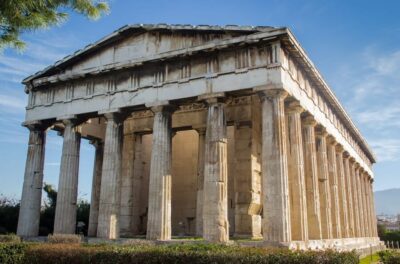
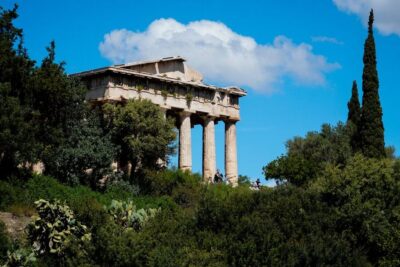


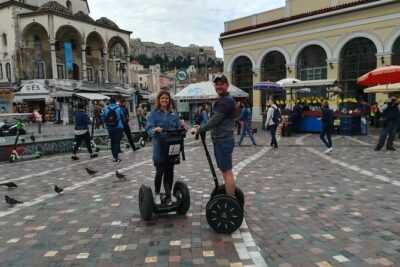
Ancient Athens Segway Tour with Agora and Kerameikos
Read our review →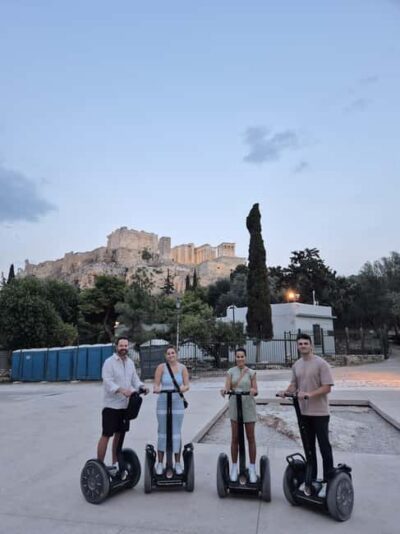
Ancient Athens, Agora, and Keramikos Segway Tour
Read our review →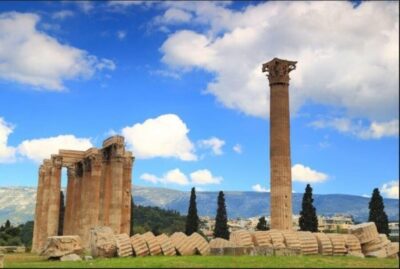
Browse the lists this tour appears in