
Reviewed · ANCIENT AGORA & CITY SITES
Athens: Kerameikos Stone House Cooking Class
The best part of this Athens cooking class is its setting: a 1920s stone house tucked into Kerameikos, with a shaded garden that feels far removed from the city streets. You shop for ingredients, work beside a small group, and sit down to eat the meal you made.
I like the hands-on cooking and the warm, family-style teaching from hosts such as Elena, Kostas, and Vasilis, also known as Billy. I also like the useful menu: spinach pies, tzatziki, stuffed vegetables, and tomato-based eggs are simple enough to make at home. The main consideration is that the menu changes with the season, and one participant found the dessert preparation less hands-on than the rest.
In This Review
- Key points before you book
- Why this cooking class feels different from a restaurant meal
- Arriving at the Kerameikos stone house
- The Tuesday market stop
- Six dishes, with everyone working
- From Cretan recipes to Peloponnese family cooking
- Eating beneath the trees
- Price and practical value at $106
- Who should book this class
- Booking advice and small details that matter
- Should you book Mama’s Roots?
- FAQ
- Where does the cooking class take place?
- How long does the experience last?
- How much does the class cost?
- Is the class taught in English?
- How many dishes will I cook?
- Is the menu vegetarian?
- Is the farmers’ market included?
- What is included in the price?
- Can I cancel the booking?
Key points before you book
- Shop like a local on Tuesdays: Spend about 15 minutes at the farmers’ market held outside the house, choosing fresh ingredients for the class.
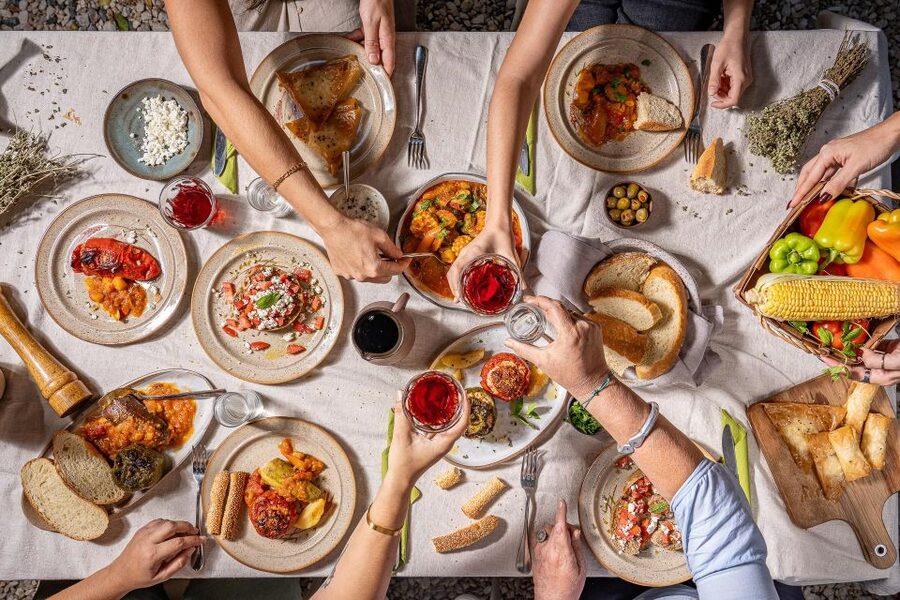
- Cook six Greek dishes: The menu can include yemista, spinach cheese rolls, Cretan ntakos, kagiana, tzatziki, and loukoumades.
- Eat in a garden courtyard: The finished meal is served outdoors when conditions allow, with local wine to accompany it.
- Small groups mean real participation: You are given practical jobs instead of simply watching a chef work.
- Recipes go home with you: Digital recipes are supplied, usually through a QR code, so you can repeat the dishes later.
- Plan around the neighborhood: The house is about a 20-minute walk from Monastiraki and sits in Kerameikos, an area known for bars and restaurants.
Why this cooking class feels different from a restaurant meal
Athens has no shortage of places to eat Greek food. A restaurant gives you a polished plate and a quick introduction to local flavors. This class gives you the reason behind the plate, along with the chance to chop, stir, fill, fold, and taste as you go.
The setting does much of the work. Mama’s Roots occupies an old stone house in Kerameikos, with an indoor kitchen and a garden courtyard. The house has been carefully renewed, but it still feels like a home rather than a cooking school designed for large tour groups.
That matters because the class is built around conversation. Guides explain ingredients, techniques, family recipes, and connections to Crete and the Peloponnese. You are not simply learning how to follow instructions. You are getting a small window into the food traditions that shaped the family behind the experience.
The class is conducted in English. The guides vary by date, with Elena, Kostas, Vasilis, Billy, and other members of the team leading sessions. Their personalities differ, but the pattern is consistent: friendly instruction, plenty of stories, and an effort to involve everyone.
More ancient city sites in Athens:
- Athens Half Day Tour, Acropolis, Parthenon, Temple of Olympian Zeus & Hephaistus
★ 5.0 · 609 reviews - Athens: Agora and Hephaistos Temple Entrance Ticket
★ 4.0 · 449 reviews - Athens: Ancient Agora E-Ticket and Audio Tour
★ 3.9 · 413 reviews
Arriving at the Kerameikos stone house
Your meeting point is Mama’s Roots in central Athens. Kerameikos is a practical location for this kind of activity. It is close enough to the main central sights to reach on foot, but it has a more local feel than the busiest streets around the Acropolis.
One useful reference point is Monastiraki. The house is roughly a 20-minute walk from there, according to one participant, making the class easy to pair with time in the historic center. Check your route before setting out, since the property is tucked into a backstreet and may not be obvious from a main road.
Once inside, you move from Athens street life into a quieter courtyard and cooking space. Some sessions begin with a drink and a little time to settle in. The atmosphere is relaxed, and the hosts make an effort to introduce people and get the group talking.
Group size is a major part of the experience. The class is promoted as small-group, and one session had seven people. That is large enough to meet other people but small enough for the instructor to give each person a task. A private feeling is possible if bookings are light, as happened for one couple whose Tuesday class had only two participants.
The Tuesday market stop
If you book a Tuesday session, a farmers’ market takes place directly in front of the house. The group usually spends about 15 minutes there selecting fresh ingredients.
This is a short stop, not a full market tour. Still, it adds something useful. You see how vegetables and other supplies are bought for a home meal, and you connect the ingredients on the table with the people selling food nearby. It also gives the instructor a natural way to explain freshness, seasonality, and how certain items are used in Greek cooking.
The market visit is not part of every class, so do not book on another day expecting it. The class itself continues even when the market is not operating. Seasonal availability also affects the menu, so the six dishes listed for a date may not be exactly the same as those prepared by another group.
Six dishes, with everyone working
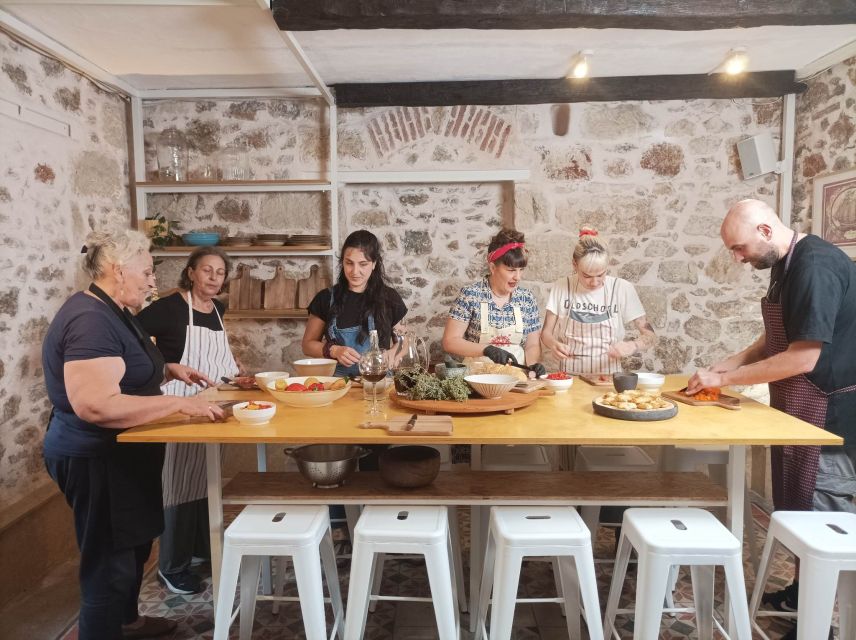
The menu is vegetarian and centers on everyday Greek cooking. That makes this a particularly good choice if you want recipes that can fit into a normal home kitchen rather than restaurant projects that require rare equipment or hard-to-find ingredients.
The sample menu includes:
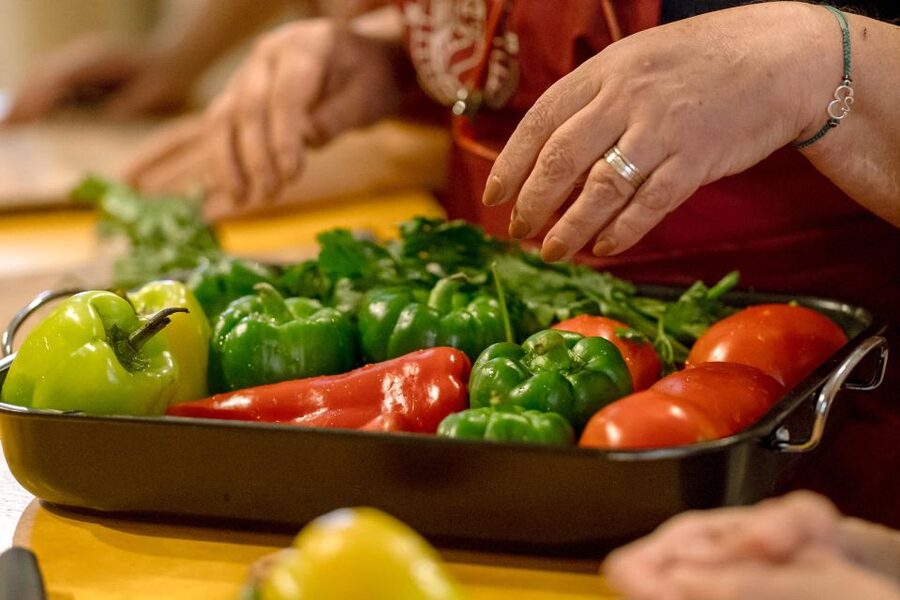
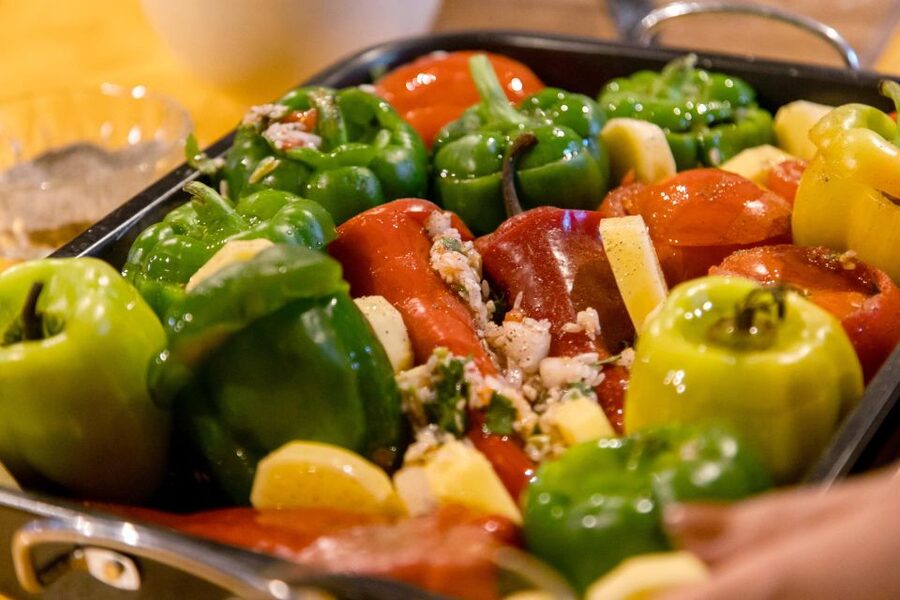
- Yemista: Tomatoes and peppers stuffed with rice, vegetables, herbs, and extra virgin olive oil. This is a useful lesson in turning simple produce into a filling main dish.
- Spinach cheese rolls: Small pies made with feta, fresh spinach, herbs, and phyllo pastry. These were a repeated favorite, and the folding and baking process gives you a clear feel for how Greek savory pastries come together.
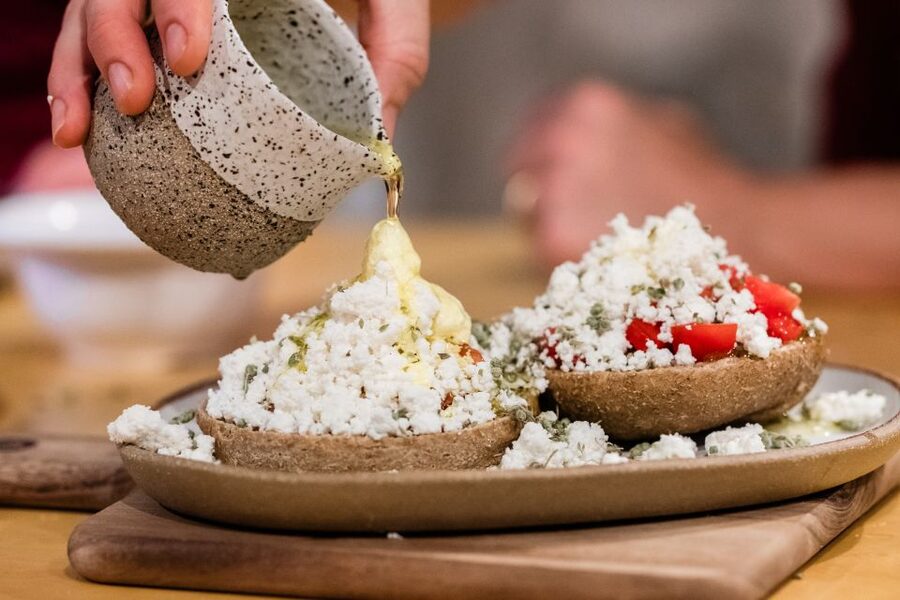
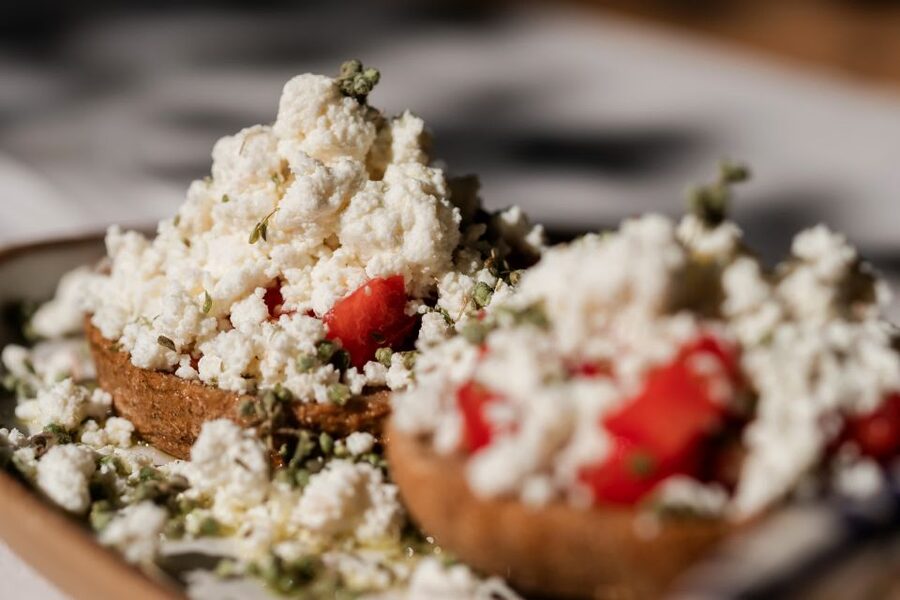
- Cretan ntakos salad: Barley rusks softened with olive oil and topped with diced tomato, capers, oregano, and sour mizithra cheese. It is a good reminder that Greek salad traditions extend well beyond the familiar chopped cucumber and feta combination.
- Kagiana: Scrambled eggs with grated tomatoes, peppers, and feta cheese. This is perhaps the easiest dish to recreate, and one participant was still making it at home months later.
- Tzatziki: Yogurt, cucumber, garlic, and the seasonings that give the sauce its fresh, sharp flavor. You learn a quick version that can be made in about five minutes.
- Loukoumades: Small round doughnuts served with honey and cinnamon. These finish the meal on a sweet note.
The cooking is collaborative. You may work on vegetables while another person handles phyllo, and the group comes together as the meal takes shape. Instructors explain portions, ingredients, and methods as they go, rather than handing you a recipe and leaving you to guess.
That shared work is the class’s main strength. You learn by doing, but the pace remains social rather than intense. The guides keep the meal moving so the dishes are ready in a sensible order, and they make room for questions about ingredients and Greek food customs.
There is one small limitation. The dessert may not always be demonstrated from start to finish while you watch. One participant specifically wished for a fuller explanation of the loukoumades process. If dessert technique is your main reason for booking, ask how that part will be handled on your date.
More cooking classes in Athens:
- Athens: Classic Cooking Class with Market Visit and Wine
★ 5.0 · 1,101 reviews - Athens: Food Market Visit and Cooking Class with Wine
★ 4.9 · 1,087 reviews - Greek Cooking Class in Athens Including Rooftop Dinner with Acropolis View
★ 5.0 · 826 reviews - Greek Small-Group Athens Cooking Class & Dinner
★ 5.0 · 574 reviews
From Cretan recipes to Peloponnese family cooking
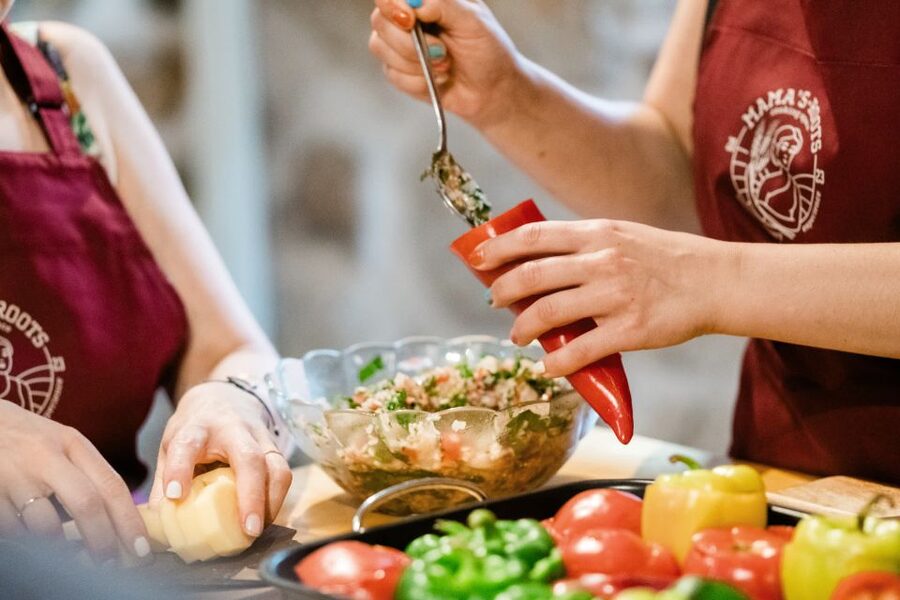
The menu reflects the family’s connections to Crete and the Peloponnese. This is not presented as a formal regional survey, and you will not cook a separate dish from every corner of Greece. Instead, the session uses family recipes to show how Greek food depends on vegetables, olive oil, herbs, cheese, pastry, and simple cooking methods.
That approach is valuable because it keeps the food practical. You can find versions of these dishes across Greek restaurants, but the class helps explain how they fit into home cooking. The instructor may discuss why an ingredient is used, where it comes from, and how its texture affects the final dish.
The stories are part of the lesson. Elena, in particular, was praised for explaining the origin and purpose of ingredients while keeping the pace comfortable. Vasilis and Kostas were also singled out for warmth, humor, patience, and clear instruction.
You should expect some variation in presentation depending on who leads your class. That is not necessarily a weakness. The experience is family-run in spirit, so it feels more personal than a fixed demonstration repeated word for word.
Eating beneath the trees
After the food is prepared, you sit down together in the garden courtyard. This is when the class shifts from instruction to a shared meal.
The garden is shaded and has been described as a peaceful retreat from central Athens. Lemon trees, olive trees, and garden plants help make the outdoor meal feel connected to the ingredients you have just handled. In hot weather, the meal may be served indoors with air conditioning instead, so the courtyard should be viewed as a likely feature rather than a guarantee.
The food comes in generous quantities. You may leave full, and the hosts have packed leftovers for some participants who could not finish everything. That is a practical touch, especially if you have afternoon sightseeing planned.
Local wine is included with the meal. It adds to the relaxed, communal mood, though you should not treat this as a wine tasting. The focus remains on cooking and eating, with wine served as an accompaniment.
This final meal is also where the small-group format pays off. You have worked together for several hours, so sitting down with new acquaintances feels natural. For couples, families, and solo visitors, it is an easy way to meet people without the forced energy of a large group tour.
Price and practical value at $106
At $106 per person, this is not the cheapest meal you can buy in Athens. You can eat well for less at a casual taverna. The question is not simply how much food you receive, but what else comes with it.
The price includes the hands-on class, six dishes, local wine, and digital recipes. You also get the setting, the market visit on Tuesdays, and several hours of personal instruction. If you would otherwise pay for a cooking class and a restaurant meal separately, the value becomes easier to see.
I would consider it good value for people who want an activity, not just lunch. You are paying for time with an instructor, ingredients, kitchen access, and the chance to repeat the meal at home.
The value is weaker if you dislike group participation or mainly want a quick introduction to Greek food. Three to three and a half hours is a substantial block of your Athens day. It works best when you want to slow down and spend an afternoon or evening in one place.
The food itself also helps justify the cost. These are not decorative tasting portions. Six dishes create a full meal, and the menu is based on accessible ingredients and methods. That gives you a better chance of using the recipes after your trip.
Who should book this class
I would recommend it to couples, families, solo visitors, and small groups of friends who enjoy doing something together. It is also a good choice for mixed cooking abilities. Beginners can follow the guided steps, while experienced home cooks can ask about technique and ingredients.
Families should note that the class has accommodated a wide age range, including children as young as seven in one group. The experience is active and social, so it suits children who are happy to help with food preparation and sit through a shared meal.
Vegetarians have a clear reason to consider it. The listed menu is fully vegetarian, and one vegetarian couple was pleased to discover that they could take part without requesting major changes.
You should think twice if you need a strictly fixed menu. Seasonal produce can change the dishes, and the exact level of participation in each recipe may depend on timing and group size. The activity also includes wine, so it is less suited to anyone seeking a completely alcohol-free class unless that point is confirmed in advance.
The small shop at the house is another appealing extra. It carries pottery, jewelry, art, and other handmade items from local makers. Purchases are separate from the class, and one participant wished for more time to browse, so allow a few extra minutes if you want to look around.
Booking advice and small details that matter
The activity lasts three to three and a half hours, with starting times shown according to availability. I would avoid placing an important timed attraction immediately afterward. Cooking and eating may run at a comfortable pace, and you will likely want a little time to say goodbye or collect your recipes.
Cancellation is flexible up to 24 hours before the activity for a full refund. You can also reserve and pay later, which helps if you are still arranging your Athens schedule.
Recipes are provided digitally, often through a QR code. Scan it before leaving and check that you can access the files. One participant had a communication problem and did not receive the expected recipes, so it is sensible to confirm the download while you are still at the house.
Wear something comfortable for standing and food preparation. The class takes place in a working kitchen, not at a dining table from beginning to end. In warm weather, the garden is pleasant, but indoor air conditioning may be used for the meal when the heat is strong.
Should you book Mama’s Roots?
I would book this class if you want a personal food experience with a full meal, not a short cooking demonstration. The stone house, garden, market option, practical recipes, and small group give the activity a sense of place that a standard restaurant meal cannot provide.
The strongest reason to go is the teaching. Elena, Kostas, Vasilis, and the rest of the team make the class feel like a friendly kitchen gathering, while still explaining enough technique for you to repeat the food at home.
Skip it if your Athens schedule is packed, you prefer sightseeing to participatory activities, or you need an exact menu and tightly timed program. For everyone else, $106 buys a generous meal, several useful recipes, local wine, and a relaxed afternoon in one of Athens’s more interesting central neighborhoods.
FAQ
Where does the cooking class take place?
The class takes place at Mama’s Roots in a traditional 1920s stone house in the Kerameikos neighborhood of Athens.
How long does the experience last?
The cooking class lasts approximately three to three and a half hours.
How much does the class cost?
The listed price is $106 per person.
Is the class taught in English?
Yes. English is the stated language for the instructor and activity.
How many dishes will I cook?
You will prepare six traditional Greek dishes. The sample menu includes yemista, spinach cheese rolls, Cretan ntakos salad, kagiana, tzatziki, and loukoumades.
Is the menu vegetarian?
The listed menu is vegetarian, and participants have described the class as fully vegetarian. The menu may change according to seasonal availability.
Is the farmers’ market included?
On Tuesdays, a farmers’ market takes place directly in front of the house. The group usually spends about 15 minutes there selecting ingredients.
What is included in the price?
The price includes the hands-on cooking lesson, six traditional dishes, wine from local producers, and digital recipes.
Can I cancel the booking?
You can cancel up to 24 hours in advance for a full refund. The activity also offers a reserve-now, pay-later option.
More Workshops in Athens
- Athens: Greek Cooking Class & Dinner on a Rooftop
★ 5.0 · 383 reviews - Athens: Greek Cuisine Cooking Class and 3-Course Dinner
★ 4.8 · 270 reviews - Traditional Greek cooking class and lunch or dinner with an Acropolis view
★ 5.0 · 250 reviews - Athens Airport Private Transfer by Mercedes-Benz E Class Wagon to City Center
★ 5.0 · 232 reviews
Freshly added Athens trips
- Athens and Ancient Corinth Private from Athens★ 5.0 · 3 reviews
- From Athens: Mycenae and Epidaurus Private Tour★ 4.8 · 3 reviews
- Full day Meteora private tour★ 5.0 · 3 reviews
- Double Shore Dive (certified divers)★ 4.5 · 3 reviews
- Athens Hills: Mythology Treasure Hunt★ 5.0 · 3 reviews
- Sunset & swimming at Cape Sounio, Poseidon temple★ 5.0 · 3 reviews
- Philosophy Experience at Plato’s Academy Park – basic version★ 5.0 · 3 reviews
- Private Acropolis Tour – Ticket Included★ 5.0 · 3 reviews
Ancient Agora & City Sites, compared.

Athens Half Day Tour, Acropolis, Parthenon, Temple of Olympian Zeus & Hephaistus
Read our review →


Roman Agora & Ancient Agora E-ticket & 2 Audio Tours
Read our review →
Ancient Athens Segway Tour with Agora and Kerameikos
Read our review →
Ancient Athens, Agora, and Keramikos Segway Tour
Read our review →
Browse the lists this tour appears in