
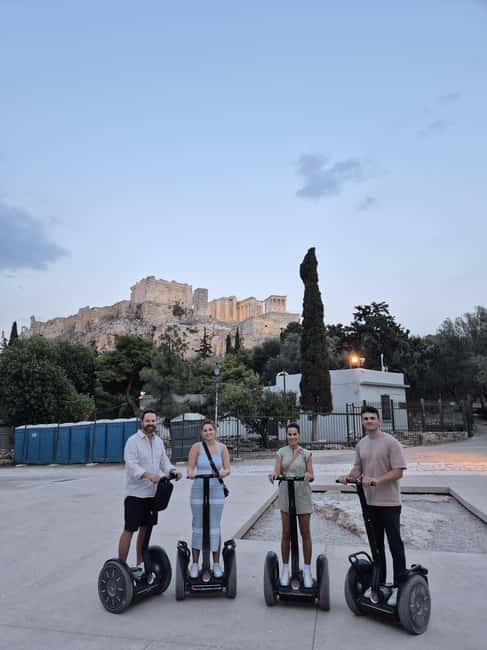
Reviewed · ANCIENT AGORA & CITY SITES
Ancient Athens, Agora, and Keramikos Segway Tour
Athens is hilly, hot, and packed with ancient sites. This 2-hour Segway tour gives you a quick way to cover ground between the Acropolis, Agora, Keramikos, and Pnyka Hill without turning your first day into a march. The 30-minute training session helps you get comfortable before the historic riding begins.
I like the small groups, limited to 10 people, and the way the route mixes famous sights with less obvious corners of the old city. I also like that guides such as Alexander and Gina can adjust the ride to your interests. The main drawback is clear: you do not enter the archaeological sites, and it can be hard to hear the guide while moving.
In This Review
- Key points at a glance
- Why a Segway works well in hilly Athens
- Keramikos: an ancient cemetery at the city’s edge
- The Agora and the old route through Thiseio
- Mars Hill and the approach to the Acropolis
- Pnyka Hill and the idea of democracy
- Monastiraki, Thiseio, and the changing city
- What the two-hour schedule really gives you
- Guides, languages, and the group feel
- Who should book this Athens Segway ride?
- Is $78 a fair price?
- My call: a lively overview, not a full ruin visit
- FAQ
- How long does the Ancient Athens Segway Tour last?
- Where does the tour start and finish?
- Does the tour enter the Acropolis, Agora, or Keramikos archaeological sites?
- What sights does the route cover?
- Is Segway training included?
- What languages are available?
- What is the minimum age for the tour?
- Can I bring luggage or a large bag?
Key points at a glance
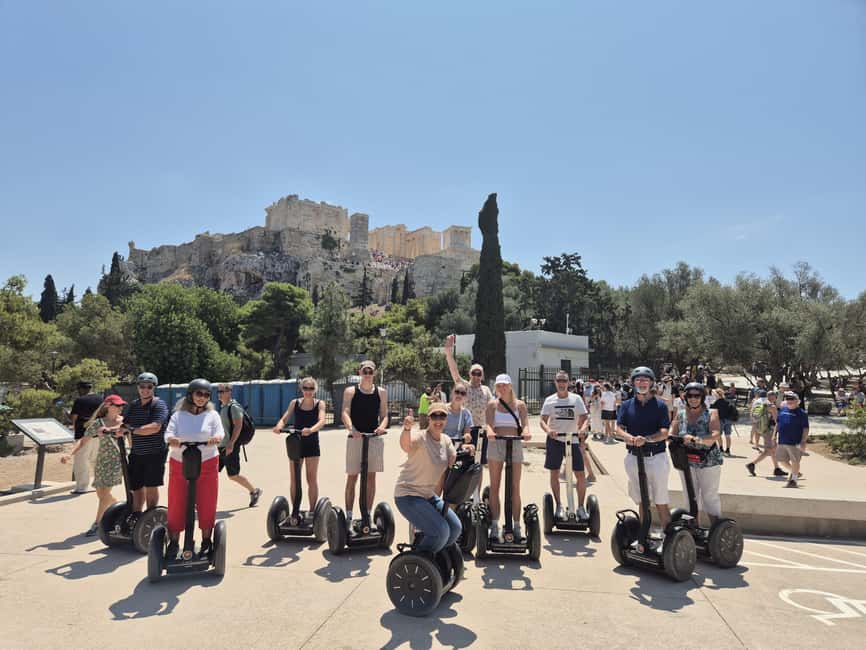
- Keramikos reveals Athens beyond the Acropolis: See the city’s ancient cemetery and a former entrance to Athens.
- Mars Hill provides a memorable climb: Ride toward the Acropolis entrance and take in views from one of the city’s most important rocky hills.
- Pnyka Hill connects the ride to democracy: Visit the terraced area linked with the birth of Athenian democracy.
- A 30-minute lesson comes first: You learn the controls before tackling Athens’ hills and streets.
- Small groups keep the tour manageable: No more than 10 participants ride with the guide.
- The route is best for orientation: You see a lot in two hours, but this is a sightseeing ride, not a full archaeological visit.
Why a Segway works well in hilly Athens
The appeal here is practical. Athens has a compact center, but the ancient sights are spread across roads, slopes, pedestrian lanes, and open areas. On foot, you can cover them, but you may spend much of your energy climbing and retracing your steps.
A Segway changes the pace. After training, you can move from Plaka toward Keramikos, the Agora, Thiseio, Mars Hill, and the Acropolis area with less effort. You still need to balance, steer, stop, and handle uneven urban surfaces, but the machine takes much of the strain out of the hills.
You begin at Eschinou 9 in Plaka. The first half hour is not sightseeing time, and that is a good thing. Rushing beginners into the historic center would make the tour less safe and less pleasant. The instructor gives you time to learn how to move, turn, slow down, and stop.
If you have never used a Segway, expect a short learning curve. The controls are simple, but they respond to your body position. Comfortable shoes matter, especially when you are getting on and off or walking during photo stops.
More ancient city sites in Athens:
- Athens Half Day Tour, Acropolis, Parthenon, Temple of Olympian Zeus & Hephaistus
★ 5.0 · 609 reviews - Athens: Agora and Hephaistos Temple Entrance Ticket
★ 4.0 · 449 reviews - Athens: Ancient Agora E-Ticket and Audio Tour
★ 3.9 · 413 reviews
Keramikos: an ancient cemetery at the city’s edge
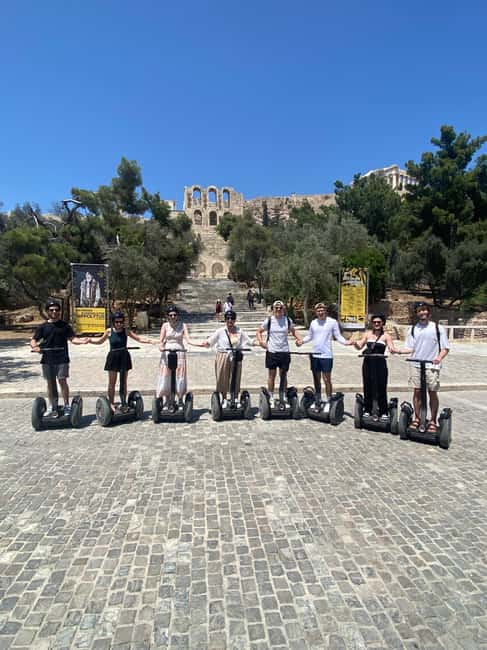
Keramikos is an excellent early stop because it gives you a different view of Athens. This area served as an ancient cemetery and also marked one of the entrances to the city. It was not simply a place for the dead. Its position on an old route made it part of the movement into and out of Athens.
You stop for photos and a guided look at the area, with about 15 minutes of Segway riding connected to this part of the route. Since the tour does not include archaeological-site entry, you should think of this as an exterior visit and historical introduction rather than a full examination of the ruins.
That limitation matters. If you want to walk among every visible remain, read detailed signs, and spend time inside each site, you need a separate ticket and more time. If your goal is to learn where Keramikos fits into the city while seeing several other districts in one outing, the stop works well.
I especially like this part for a first day in Athens. The route helps you understand that ancient Athens was more than a single hill crowned by the Acropolis. Keramikos adds a quieter, more human layer to the city’s story.
The Agora and the old route through Thiseio
From Keramikos, the tour continues toward the ancient Agora. The ride follows the old path toward the civic heart of Athens, linking streets and areas that once carried people toward the center of public life.
Thiseio provides a useful pause along the way. You have a photo stop and a guided visit, with about 10 minutes of riding associated with this section. The area also helps connect the ancient sites with modern Athens, since you are not simply transported from one isolated ruin to another.
The ancient Agora is the central historical stop after Keramikos. In classical Athens, this was where public, commercial, political, and social life came together. The site matters because it shows how democracy functioned as part of daily city life, not as an idea kept apart from markets, courts, meetings, and ordinary errands.
You get roughly 15 minutes of Segway riding around the Agora area, along with time for photos and explanation. Again, the tour does not include entry into the archaeological site. You will see the area from outside and hear the guide set the scene, but you should book a separate visit if the Agora is high on your list.
This is one place where the tour’s fast format is both useful and limited. You get the big picture quickly, which is valuable when you are still learning the city. You do not get the slow, detailed visit that the Agora deserves on its own.
Mars Hill and the approach to the Acropolis
The ride then heads toward Mars Hill, also called the Areopagus. This rocky rise near the Acropolis is one of the most striking points on the route. You ride up toward the Acropolis entrance and stop for photos, views, and a guided explanation.
The listed stop includes about 15 minutes of Segway riding, along with free time. The phrase up Mars Hill is important here. Athens’ hills are part of the experience, and this tour lets you reach them with far less effort than walking.
You should still be ready for short periods on foot. A Segway does not take you everywhere, and you need to make motions similar to climbing and descending stairs without assistance. The activity is not designed for anyone who needs help with those movements.
Mars Hill gives you one of the best orientation points in the tour. From here, you can connect the Acropolis, Agora, and surrounding neighborhoods in your mind. You are close to the Acropolis entrance, but you do not enter the Acropolis as part of this activity. If you have already visited the Acropolis, this route becomes especially useful because it fills in the surrounding history rather than repeating the full monument visit.
One guide adjusted the ride for a participant who had seen the Acropolis the previous day, directing more attention toward other areas. That kind of flexibility can make a short tour much more worthwhile.
More segway rides around Athens:
- Best of Athens City Segway Tour
★ 5.0 · 207 reviews - Best of Athens Segway Tour
★ 4.9 · 127 reviews - Classical Athens Segway Tour
★ 5.0 · 114 reviews - Athens Acropolis 2-Hour Segway Tour
★ 4.8 · 97 reviews
Pnyka Hill and the idea of democracy
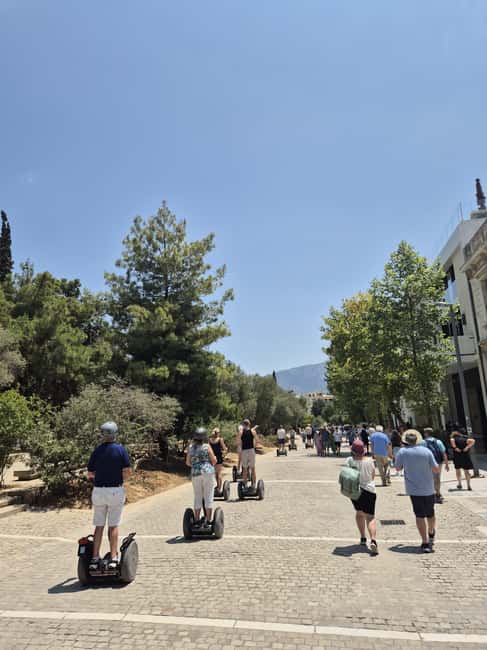
The route continues to Pnyka Hill, described as the terraced area where democracy was born. This stop gives the tour more meaning than a simple photo circuit. You are not only looking at ruins and views. You are visiting a place linked with the public meetings that helped shape Athenian political life.
The exact value of Pnyka depends on your guide’s explanation. The physical remains are not as instantly dramatic as the Parthenon, but the setting invites you to think about how the city used its hills and open spaces. The stop also brings you to a panoramic view of Athens.
This is where the Segway helps most. Pnyka Hill is part of the city’s uneven terrain, and reaching a high viewpoint without a long uphill walk can be welcome, particularly in warm weather. Bring water, wear shoes with a firm sole, and do not expect the Segway to replace every step.
The views are one of the strongest reasons to choose this route. You see Athens from several angles instead of spending the full two hours beside one monument. That makes the tour a good first-day activity, especially if you want a mental map before returning to individual sites.
Monastiraki, Thiseio, and the changing city
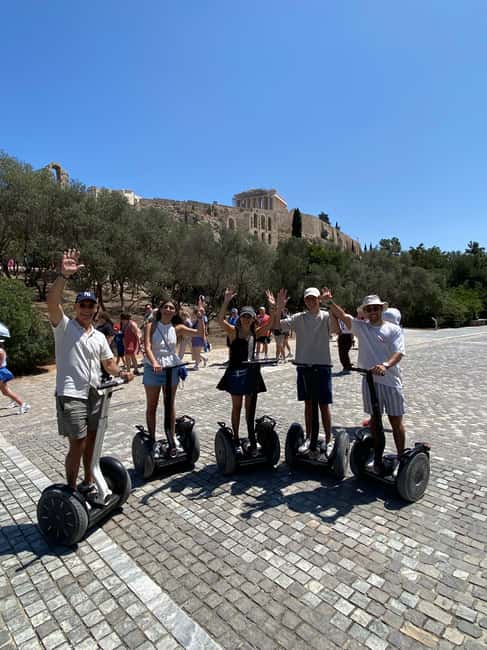
Monastiraki appears briefly, with about five minutes of Segway riding and time for photos and a guided look. This is a short stop, so do not book the tour expecting a long market visit or a full neighborhood walk.
Its value is contrast. Ancient Athens, historic streets, and modern city life sit close together here. The tour moves through these areas quickly, showing how the old center works as a connected district rather than a collection of separate attractions.
Thiseio offers a similar bridge between past and present. You pass through the area, pause for photos, and continue along routes shaped by the ancient city. The guide’s commentary is important because the physical remains alone may not explain why each place matters.
One practical concern is sound. A participant found it difficult to hear the guide while the group was moving. That is a common risk on any mobile tour. If you miss a sentence, ask the guide to repeat it during the next stop. Staying near the guide should also help, though the group needs to keep moving together.
What the two-hour schedule really gives you
The tour lasts two hours, including the initial training session. That means roughly 90 minutes remain for the route, stops, riding, explanations, and photos. It is a brisk introduction, not a leisurely archaeological day.
The itinerary divides time across several places:
- Areopagus and Mars Hill: about 15 minutes of riding, plus a stop and free time
- Thiseio: about 10 minutes of riding
- Keramikos: about 15 minutes of riding
- Ancient Agora: about 15 minutes of riding
- Monastiraki: about 5 minutes of riding
- Broader Athens and Pnyka Hill: about 1 hour of riding and sightseeing
These figures describe riding segments, not guaranteed time spent at each site. The guide may adjust the pace based on the group, traffic, skill levels, and questions.
That flexibility is helpful for beginners. A confident rider may cover more ground, while a new rider may need extra care at turns and stops. The tour’s small-group size makes that easier than a large coach-style outing.
Still, you should set the right goal. You will get an overview of central Athens, several good photo stops, and useful historical context. You will not receive entry, tickets, or full guided visits inside Keramikos, the Agora, or the Acropolis.
Guides, languages, and the group feel
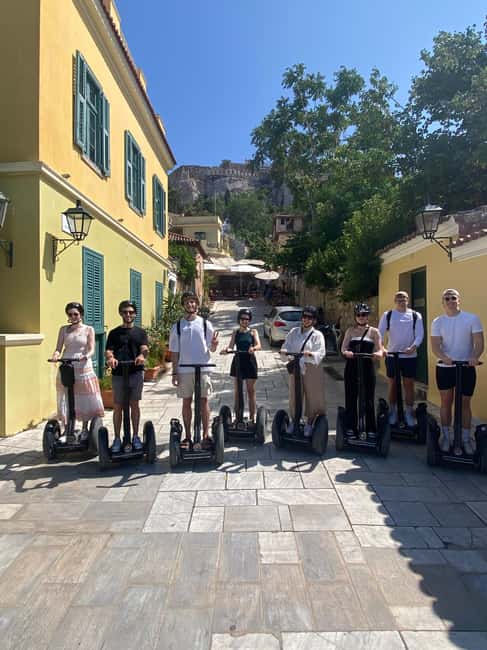
The tour is led by an experienced local guide and is offered in English, Spanish, Hebrew, or Russian. The group is limited to 10 people, which is a sensible size for a moving activity where the guide needs to watch riders closely.
Alexander received especially strong praise for his patience with a 14-year-old beginner. He allowed time to learn the controls and even found an open area where the young rider could practice after the main route. That detail tells you something useful: the experience can work for a family with an older child who is ready to follow instructions and ride independently.
Gina is another named guide associated with the tour. She is described as friendly, polite, accommodating, and strong on the historical side. The rating is 4.8 from 53 reviews, with repeated approval for the guides’ attitude and ability to make the ride enjoyable.
You should not assume every guide will give a private tour or redesign the route entirely. But the small group and local guide format allow more room for questions than a large sightseeing vehicle.
Who should book this Athens Segway ride?
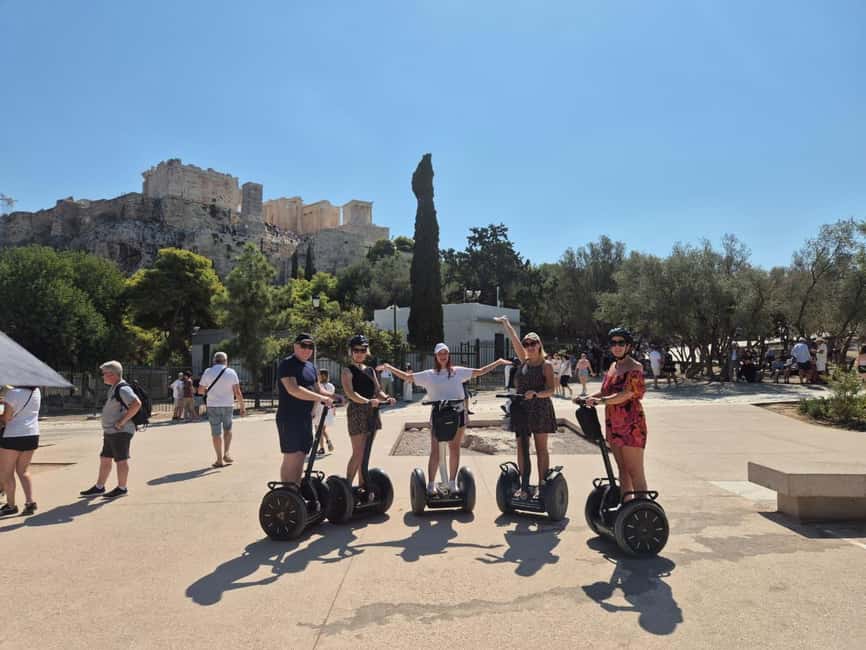
I would choose this for a first or second day in Athens. It gives you a useful sense of direction and shows how the ancient center fits together. It also works well if you want outdoor sightseeing but would rather not walk uphill for two hours.
It suits:
- First-time visitors who want a city overview
- Families with children aged 10 and older
- Visitors who have already seen the Acropolis and want surrounding areas
- People who enjoy active sightseeing but do not want a long walking tour
- Small groups looking for several viewpoints in a short time
The minimum riding age is 10. Anyone under 18 must be accompanied by an adult. Riders must weigh at least 100 pounds, or 45 kilograms, and no more than 250 pounds, or 113 kilograms. The activity is not suitable for pregnant women.
You also cannot bring luggage or large bags. That is more than a minor rule. A large backpack can interfere with balance and steering, so leave bulky items at your accommodation or arrange storage before arriving.
Is $78 a fair price?
At $78 per person, this is not the cheapest way to see central Athens. You are paying for the Segway, helmet, training, local guide, and the convenience of moving between several historic areas in two hours.
The value is strongest if you would otherwise pay for a walking tour and want to cover more ground. It is also a fair option for anyone who finds Athens’ hills tiring. The training takes a large part of the scheduled time, but it is essential and gives beginners a safer start.
The value is weaker if your main purpose is entering archaeological sites. Tickets and guided entry are not included, so you will need to plan separate visits to the Acropolis and Agora. In that case, think of this tour as orientation and exterior sightseeing, not as a substitute for your site visits.
Free cancellation up to 24 hours before the activity and a reserve-now, pay-later option add useful flexibility. Check the available starting times before booking, since the tour runs at scheduled departures.
My call: a lively overview, not a full ruin visit
Book this tour if you want to learn Athens by moving through it. The route links Keramikos, the Agora, Thiseio, Monastiraki, Mars Hill, the Acropolis approach, and Pnyka Hill in a short stretch of time. The views, hills, and guide commentary give you more than a simple ride around the center.
Skip it if you dislike balancing devices, need a slow pace, or want long visits inside ancient sites. Also skip it if carrying luggage is unavoidable or if you cannot manage stairs and similar movements without help.
For most suitable riders, I see this as a smart first-day choice. You get a feel for the city, learn where the major ancient areas sit, and can return later to the Acropolis or Agora with a better sense of place.
FAQ
How long does the Ancient Athens Segway Tour last?
The tour lasts 2 hours, including the initial training session. Starting times vary, so check availability when booking.
Where does the tour start and finish?
It starts at Eschinou 9 in Plaka, Athens 105 58, Greece. The activity ends back at the same meeting point.
Does the tour enter the Acropolis, Agora, or Keramikos archaeological sites?
No. The tour does not enter archaeological sites, and entry tickets or guided site visits are not included.
What sights does the route cover?
The route includes Areopagus and Mars Hill, Thiseio, Keramikos, the ancient Agora, Monastiraki, the Acropolis entrance area, Pnyka Hill, and panoramic views of Athens.
Is Segway training included?
Yes. A training session is included before the sightseeing portion of the tour. A helmet and an experienced local tour leader are also included.
What languages are available?
The live tour guide can lead the experience in English, Spanish, Hebrew, or Russian.
What is the minimum age for the tour?
The minimum age to ride a Segway is 10. Anyone under 18 must be accompanied by an adult.
Can I bring luggage or a large bag?
No. Luggage and large bags are not allowed. Wear comfortable shoes and bring only what you can safely carry during the ride.
Freshly added Athens trips
- Athens and Ancient Corinth Private from Athens★ 5.0 · 3 reviews
- From Athens: Mycenae and Epidaurus Private Tour★ 4.8 · 3 reviews
- Full day Meteora private tour★ 5.0 · 3 reviews
- Double Shore Dive (certified divers)★ 4.5 · 3 reviews
- Athens Hills: Mythology Treasure Hunt★ 5.0 · 3 reviews
- Sunset & swimming at Cape Sounio, Poseidon temple★ 5.0 · 3 reviews
- Philosophy Experience at Plato’s Academy Park – basic version★ 5.0 · 3 reviews
- Private Acropolis Tour – Ticket Included★ 5.0 · 3 reviews
Ancient Agora & City Sites, compared.

Athens Half Day Tour, Acropolis, Parthenon, Temple of Olympian Zeus & Hephaistus
Read our review →



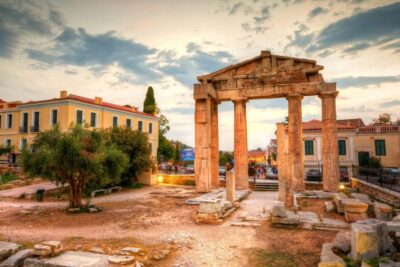
Roman Agora & Ancient Agora E-ticket & 2 Audio Tours
Read our review →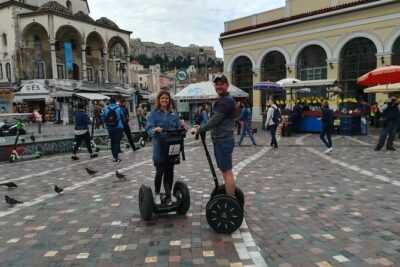
Ancient Athens Segway Tour with Agora and Kerameikos
Read our review →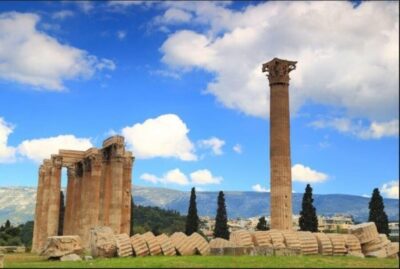
Browse the lists this tour appears in