
Reviewed · ANCIENT AGORA & CITY SITES
Athens: Agora and Hephaistos Temple Entrance Ticket
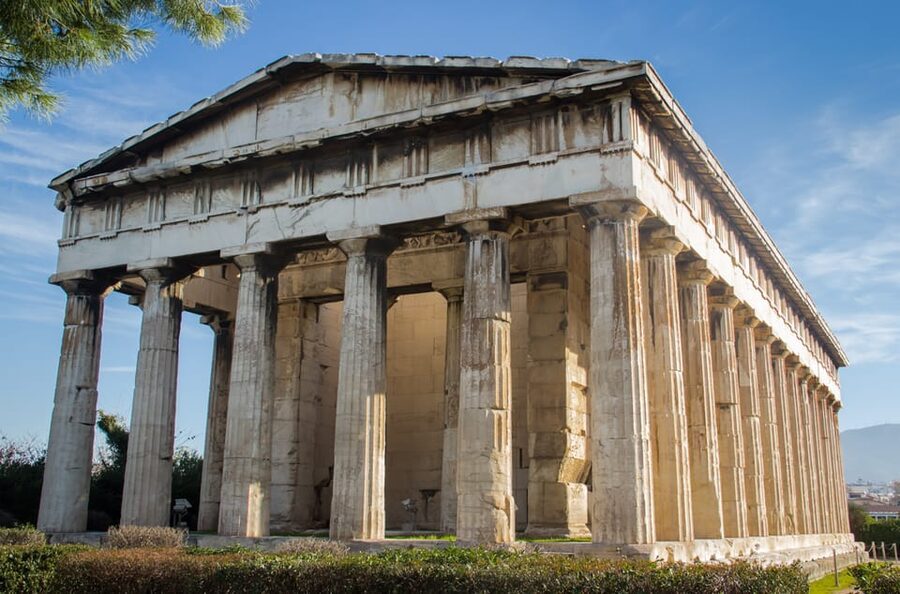
The Temple of Hephaistos is the star here: a remarkably complete Doric temple rising above the old marketplace of Athens. Unlike the Acropolis, the Agora lets you picture daily city life, with politics, trade, religion, and public debate all packed into one open site. I like the way the ruins spread out below the temple, giving you both ancient remains and a fine view toward the Acropolis.
I also like the freedom of a self-guided visit. You enter during a selected time slot, scan your ticket, and set your own pace. The optional audio guide adds stories about the Agora and its buildings, though its starting point and directions can be confusing. The main drawback is practical: the entrance has changed, and incorrect map information has sent people walking in circles.
In This Review
- Key points to know
- Why the Ancient Agora deserves time after the Acropolis
- Entering from Thissio Square
- Walking through the marketplace of ancient Athens
- The Temple of Hephaistos, the site’s great reward
- The Stoa and the practical side of ancient Athens
- The Church of the Holy Apostles
- Should you add the audio guide?
- The museum and the Spartan shield
- Price, timing, and value
- Who will enjoy this visit most?
- Practical plan for a smoother visit
- Should you book the Agora ticket?
- FAQ
- How long is the ticket valid?
- When can I enter the archaeological site?
- Where is the current entrance?
- Is there a live guide?
- Which languages are available for the audio guide?
- Is the audio guide included with every ticket?
- What does the ticket include?
- Is the site wheelchair accessible?
- Can I change my travel date or entry time?
- Can young people receive free admission?
Key points to know
- Hephaistos Temple is the main attraction: This is one of the best-preserved ancient Greek temples anywhere.
- The Agora shows ordinary city life: Expect foundations and ruins, but also a clear sense of an ancient civic center.
- The entrance is now on Thissio Square: Use the current access point on Apostolou Pavlou rather than relying blindly on an older map pin.
- The ticket is time-sensitive: Entry is allowed only during the chosen slot or within 15 minutes before or after it.
- The audio guide is optional: It is available in English, German, Spanish, Italian, and French, but the route may not match the current entrance.
- Plan for sun and walking: Bring water, sunscreen, a hat, and comfortable shoes. Shade is limited.
Why the Ancient Agora deserves time after the Acropolis
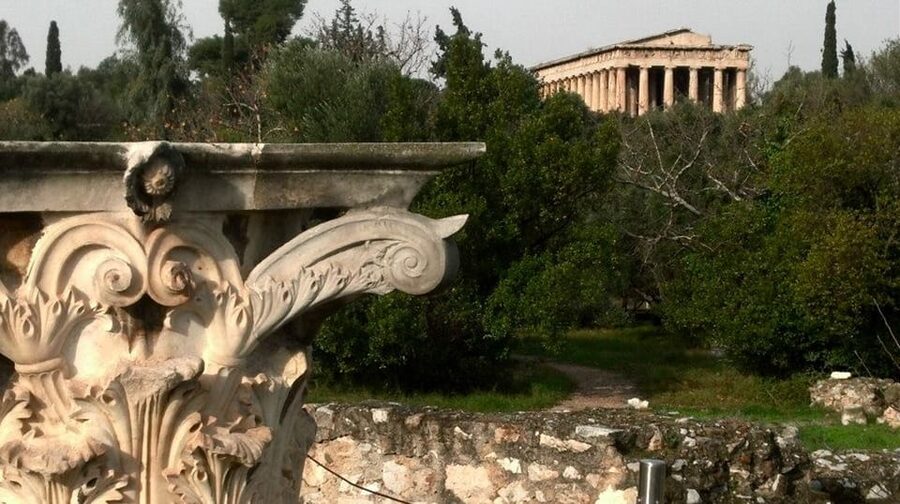
The Acropolis tells the grand story of Athens from above. The Ancient Agora brings you down to street level, at least in spirit. This was the city’s marketplace and civic center, a place where people met, traded, debated public matters, and took part in religious life.
Much of what you see today consists of foundations, low walls, and broken columns. That can sound modest beside the Parthenon, but the layout helps you read the site. You are not just looking at isolated ruins. You are walking through the former center of public life.
I find the Agora especially useful after seeing the Acropolis because it fills in the missing everyday details. The Acropolis represents power and ceremony. The Agora shows the city functioning below it.
The grounds are large enough to reward a slow walk. One visitor spent about four hours seeing the site, museum, and ruins. You can spend less time if you focus on the temple and the main buildings, but rushing through in 30 minutes would miss much of the point.
More ancient city sites in Athens:
- Athens Half Day Tour, Acropolis, Parthenon, Temple of Olympian Zeus & Hephaistus
★ 5.0 · 609 reviews - Athens: Ancient Agora E-Ticket and Audio Tour
★ 3.9 · 413 reviews - Athens: Temple of Olympian Zeus Ticket and Audio Tour
★ 3.4 · 188 reviews
Entering from Thissio Square
The current access instructions direct you to the entrance on Thissio Square, also called Jacqueline de Romilly Square, along the pedestrian street of Apostolou Pavlou. This is important because older directions and map pins have caused real confusion.
The former entrance shown in some instructions is no longer the working access point. People have arrived at a locked gate, walked uphill, reached the wrong end of the site, and then had to retrace their steps. One person lost around 10 minutes this way, while another found the entrance difficult enough to ask local people for help.
My advice is simple: check the access information immediately before setting out, then allow extra time to find the gate. That matters because the ticket is tied to a specific time slot. Entry is permitted at the selected time or 15 minutes before or after, so arriving late can create stress.
Once at the correct entrance, the process is straightforward. Go directly to the archaeological site, scan the ticket at the validating machine, and enter. There is no live guide or group meeting to organize.
Walking through the marketplace of ancient Athens
Inside, you follow paths through a broad archaeological area filled with the remains of buildings that once supported Athenian public life. Some structures are easy to identify, while others require patience and a bit of imagination.
The Agora was not simply a place to buy food or goods. It was also a meeting place and political center. Ancient Athenians came here to handle business, take part in civic affairs, meet other citizens, and worship.
That mixture is what makes the site worthwhile. You are not walking through one monument with a single story. You are moving through a district that served many purposes at once.
The ruins themselves can feel understated at first. If you expect every stop to look like a complete temple, you may be disappointed. Instead, look for the way the foundations form streets, building outlines, and open spaces. The experience improves when you slow down and consider how crowded and active this area once was.
The Agora also gives you a different angle on the Acropolis. From parts of the site, you can look uphill toward the famous rock and understand how closely the civic center was tied to the rest of Athens.
The Temple of Hephaistos, the site’s great reward
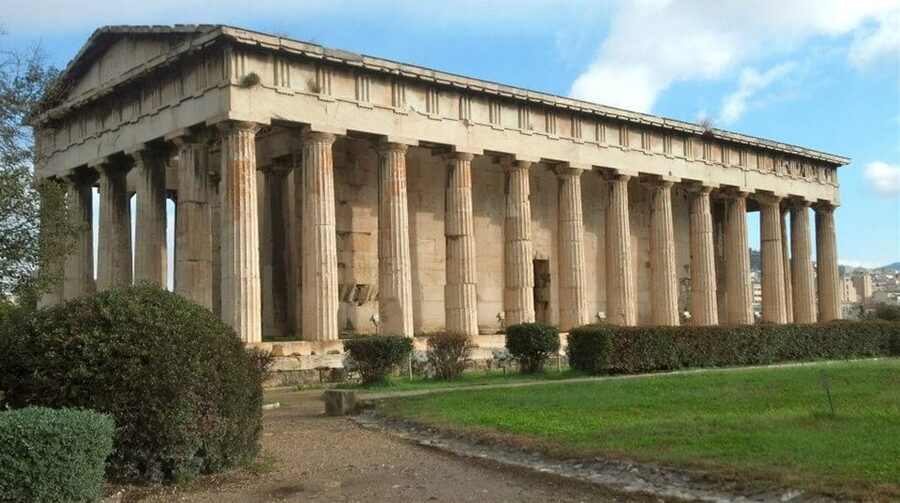
The Temple of Hephaistos is the reason many people leave the Agora especially pleased. It is described as the best-preserved ancient Greek temple in the world, and its survival is striking.
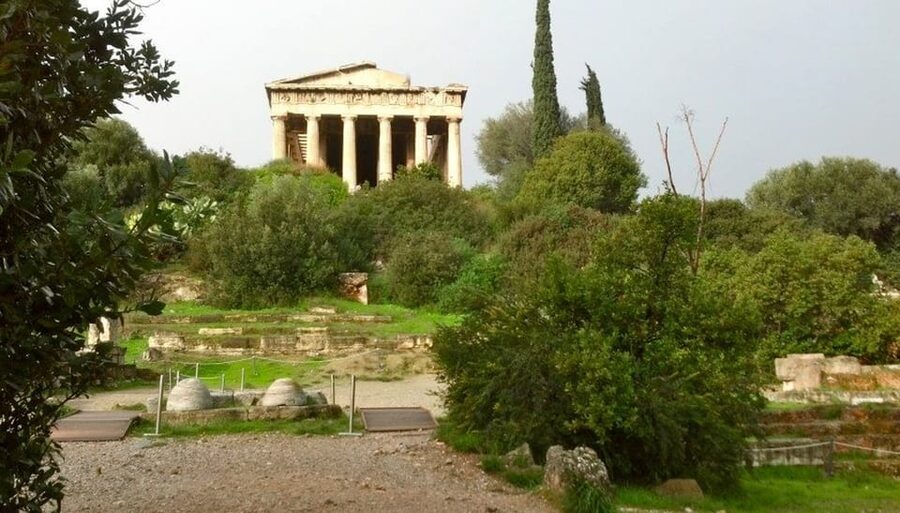
The temple sits on a rise above the Agora. Its Doric columns, pediment, and overall form remain clear, so you can understand the design without having to reconstruct every detail in your head. It is a strong contrast to the scattered foundations elsewhere on the grounds.
Take time to walk around it and view it from different angles. The setting lets you see the temple as part of the wider Agora rather than as a separate monument. From here, the surrounding ruins make more sense, and the Acropolis appears across the city as a familiar reference point.
The temple is also a good place to pause. The open grounds provide room to step away from the busiest parts of central Athens, although shade is limited. In hot weather, the lack of cover can shorten your visit. A hat, sunscreen, and water are not optional extras on a sunny day.
A few more Athens days worth a look
- Athens: Acropolis Ticket with Optional Audio or Live Guide
★ 4.2 · 11,055 reviews - Athens: Acropolis Ticket with Audio Guide
★ 4.0 · 3,575 reviews - Athens All Included: Acropolis and Museum Guided Tour with Ticket
★ 4.5 · 2,673 reviews - Athens: Acropolis Museum Ticket with optional Audio Guide
★ 4.4 · 2,652 reviews
The Stoa and the practical side of ancient Athens
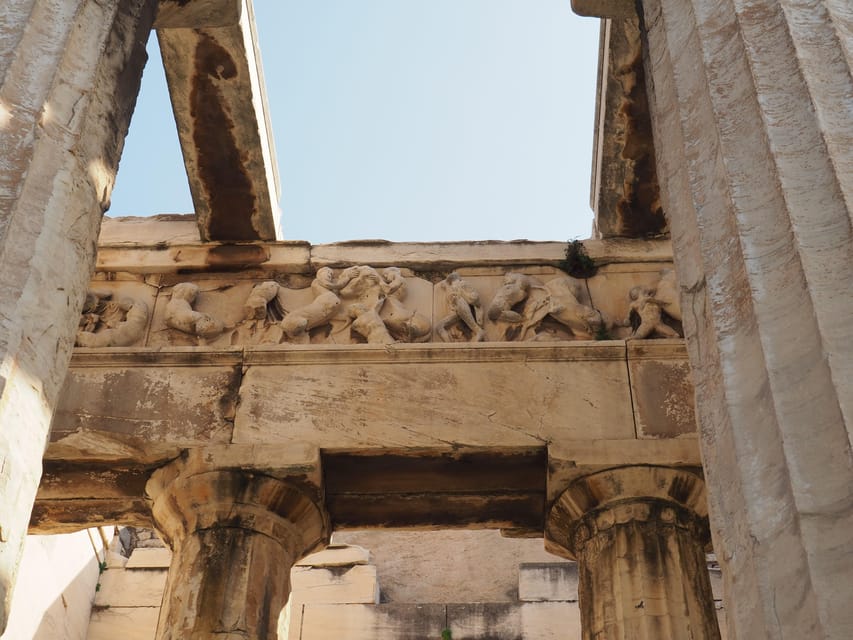
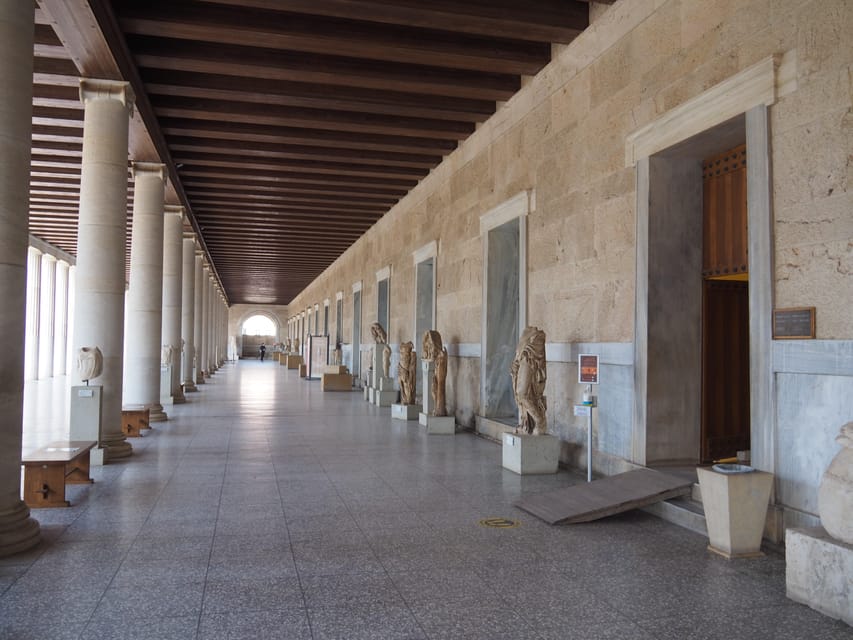
The Stoa is another important structure to look for. Stoas were covered walkways used for shelter, gathering, and public activity. The remains here help show how people could conduct business and meet others in a city without modern streets, shops, or public halls.
The Agora’s ruins are more rewarding when you connect them to use. Ask yourself where people would have walked, gathered, argued, or waited. The site gives you enough surviving structure to make those questions worthwhile.
The area can take more walking than you expect. You will be outdoors on archaeological paths, often under direct sun, and the ground may require attention. Comfortable shoes will make a difference, especially if you plan to spend several hours exploring instead of heading straight to the temple.
The Church of the Holy Apostles
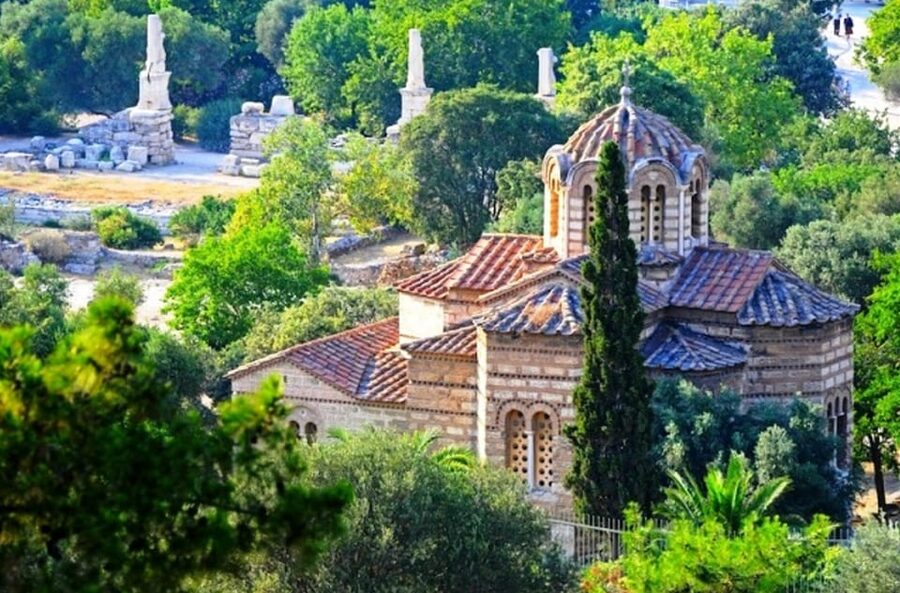
The Church of the Holy Apostles adds a later layer to the Agora. It is a reminder that this ground did not stop mattering when ancient Athens changed. The church is associated with the preaching of St. Paul and offers a clear contrast with the surrounding classical remains.
Its presence makes the Agora feel less like a single-period museum and more like a place used across many centuries. You move from ancient civic buildings to a Christian monument, seeing how the meaning of the area shifted over time.
The church is included with this ticket, along with the Temple of Hephaistos. If your main interest is classical Athens, you may spend more time at the temple and Stoa. If you enjoy seeing layers of religious and civic history in one place, the church deserves a careful stop.
Should you add the audio guide?
The self-guided audio tour is available as an add-on in English, German, Spanish, Italian, and French. It is presented by professional guides and history experts, with explanations and selected stories to accompany your walk.
I like the idea because the Agora does not always explain itself at a glance. A low wall or partial foundation can be hard to understand without context. The audio commentary can help turn scattered stones into a picture of the ancient city.
The guide also includes small asides and stories, which can make the walk more enjoyable than reading every sign. One person found those extra details especially entertaining and informative.
There are two cautions. First, the audio guide may begin at an entrance that is no longer in use. That can leave you listening to directions from the wrong starting point. Second, not everyone finds spoken commentary easy to follow while walking. Some people prefer the signs and written information on site, which allow you to stop and look at your own pace.
If you choose the audio option, download or open it before entering if the instructions allow, bring headphones, and check the map against the current entrance. Treat it as background help, not as a live guided tour.
The museum and the Spartan shield
A museum is mentioned as worth checking during the visit. It adds useful context to the stones outside by showing objects connected with the Agora and the people who used it.
One particularly memorable item is an original Spartan bronze shield. That is the sort of object that can make the ancient world feel immediate. A temple can impress you with scale and survival, but a personal or military object can suggest the people who carried, made, or used it.
The museum is not listed as a separate inclusion in the ticket details, so check on-site access if it is central to your plans. Give yourself enough time if you want both the outdoor ruins and the museum rather than treating the latter as a quick extra.
Price, timing, and value
The listed price is $30 for a group up to one, effectively an adult-price admission for one person, with the audio guide depending on the option selected. Since the ticket is non-refundable and the time slot cannot be amended, the value depends heavily on choosing the right day and arrival time.
Pre-purchasing can save time when a line forms. Several people found it easy to scan and enter, and one person appreciated being able to bypass a long queue. On a quieter day, though, you may find the ticket office has plenty of availability and that buying ahead costs more than necessary.
That is the tradeoff. You are paying for advance certainty, not necessarily a discount. If your schedule is tight or you are visiting at a busy time, that certainty may be worth it. If you have a flexible day and see no queue, buying on site could be better value.
The ticket is for the regular adult price. Children of all ages can use it, but they pay the full price under this offer. From April 1, 2025, EU citizens under 25 and non-EU citizens under 18 can receive free admission by showing identification at the ticket booth. People with disabilities can also receive free admission with a disability certificate.
Because ticket conditions and access arrangements can change, check the current rules before paying, especially if a child, young adult, or disability discount applies to your party.
Who will enjoy this visit most?
I would choose this experience if you have already seen the Acropolis and want to understand how Athens worked beyond its famous monuments. It suits history fans, archaeology enthusiasts, photographers, and anyone who enjoys walking through open-air sites without a fixed group schedule.
It is also a good choice for independent visitors who dislike being hurried. You can linger at the temple, stop at the church, study the Stoa, or spend time in the museum according to your interests.
It is less ideal if you want a polished, fully narrated tour with a guide answering questions at every stop. There is no live guide. The audio option offers information, but it does not replace a person who can adjust the route or explain a confusing ruin on the spot.
People sensitive to heat should plan carefully. The grounds have limited shade, and the combination of walking and sun can become tiring. Go prepared with water, a hat, sunscreen, and sturdy shoes.
Practical plan for a smoother visit
Before you leave, confirm the entrance location and selected time slot. Do not rely only on an old GPS pin, particularly if the information shows an entrance away from Thissio Square.
Arrive within the allowed window, which is 15 minutes before or after your chosen time. Once inside, start with the major structures rather than wandering without a plan. See the Temple of Hephaistos, continue through the Agora, visit the Church of the Holy Apostles, and then allow time for the museum if it is open and included in your plans.
If you use the audio guide, compare its map with the current site layout. You may find the written signs easier to follow, and there is no rule saying you must listen to every stop. Pick the sections that help you understand the buildings you are looking at.
For photos, the temple and the views toward the Acropolis are the obvious choices. The foundations and smaller ruins reward a wider camera frame that shows their relationship to the hill, paths, and surviving buildings.
Should you book the Agora ticket?
Book it if you want a self-paced look at ancient Athens and value having your admission arranged before you arrive. The Temple of Hephaistos alone is a powerful reason to come, while the Agora’s political and market spaces add the everyday setting that the Acropolis lacks.
Think twice if your schedule is uncertain, you may qualify for free admission, or you dislike fixed entry times. The ticket is non-refundable, the time cannot be changed, and outdated directions have caused avoidable confusion.
My practical choice would be to book when the timing matters and confirm the Thissio Square entrance before leaving. Add the audio guide if you enjoy stories and do not mind navigating it yourself. Skip it if you prefer signs, quiet observation, or a completely flexible walk.
FAQ
How long is the ticket valid?
The ticket is valid for one day, but entry is tied to the selected time slot.
When can I enter the archaeological site?
You may enter only during your selected time slot or 15 minutes before or after it.
Where is the current entrance?
The stated access point is on Thissio Square, also called Jacqueline de Romilly Square, on the pedestrian street of Apostolou Pavlou.
Is there a live guide?
No. This is an entrance ticket with an optional self-guided audio tour, not a live guided tour.
Which languages are available for the audio guide?
The audio guide is available in English, German, Spanish, Italian, and French.
Is the audio guide included with every ticket?
It is included only if you select the audio guide option when booking.
What does the ticket include?
It includes entrance to the Temple of Hephaistos and the Church of the Holy Apostles. The audio tour is included only with the relevant option.
Is the site wheelchair accessible?
Yes, the activity is described as wheelchair accessible.
Can I change my travel date or entry time?
No. The travel date and entry time slot cannot be amended.
Can young people receive free admission?
From April 1, 2025, EU citizens under 25 and non-EU citizens under 18 can receive free admission by providing identification at the ticket booth. People with disabilities can receive free admission with a disability certificate.
Freshly added Athens trips
- Athens and Ancient Corinth Private from Athens★ 5.0 · 3 reviews
- From Athens: Mycenae and Epidaurus Private Tour★ 4.8 · 3 reviews
- Full day Meteora private tour★ 5.0 · 3 reviews
- Double Shore Dive (certified divers)★ 4.5 · 3 reviews
- Athens Hills: Mythology Treasure Hunt★ 5.0 · 3 reviews
- Sunset & swimming at Cape Sounio, Poseidon temple★ 5.0 · 3 reviews
- Philosophy Experience at Plato’s Academy Park – basic version★ 5.0 · 3 reviews
- Corinth Canal, Ancient Corinth, Mycenae, Nafplio & Epidaurus Private Sightseeing★ 5.0 · 3 reviews
Ancient Agora & City Sites, compared.

Athens Half Day Tour, Acropolis, Parthenon, Temple of Olympian Zeus & Hephaistus
Read our review →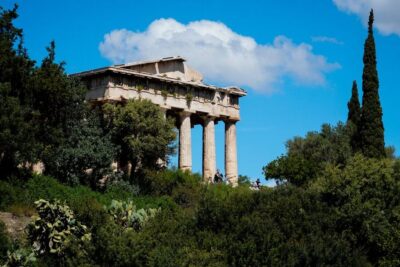

Roman Agora & Ancient Agora E-ticket & 2 Audio Tours
Read our review →
Ancient Athens Segway Tour with Agora and Kerameikos
Read our review →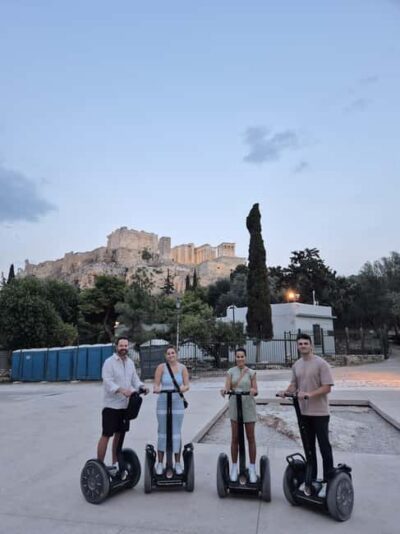
Ancient Athens, Agora, and Keramikos Segway Tour
Read our review →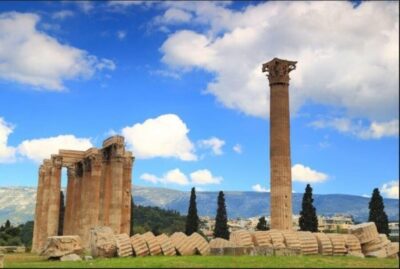
Browse the lists this tour appears in