
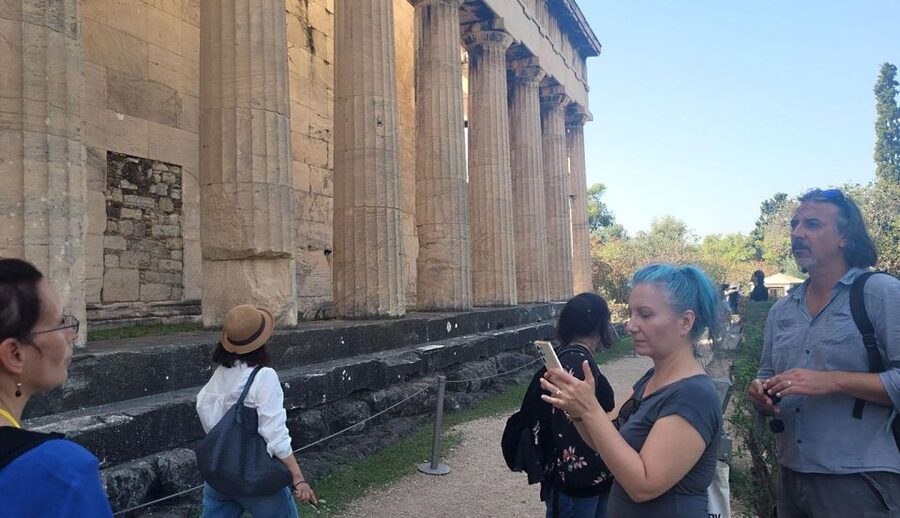
Reviewed · ANCIENT AGORA & CITY SITES
Ancient Agora: E-Ticket w/Treasure Hunt Tour on your phone
The clever part of this Ancient Agora visit is that it turns an open-air archaeological site into a family mission. Instead of asking children to quietly admire old stones, the phone app gives them riddles, stories, and a role in helping the Spirit of Democracy prevail in Athens.
I like the skip-the-line e-ticket and the freedom of a self-guided visit. I also like that the activity connects the Agora to philosophy and democracy, rather than treating the site as a string of monuments. The main drawback is simple: there is no live guide, and one child found the finishing gift underwhelming. Download the app before arriving, since the internet signal around archaeological sites can be weak.
In This Review
- Key points at a glance
- Why this Ancient Agora activity works for families
- Arriving at the Ancient Agora ticket office
- Starting the phone-based treasure hunt
- The Temple of Hephaestus and the first big sights
- The Stoa of Attalos and the story of public life
- Solving riddles without losing the real site
- Views toward the Acropolis and Athens
- Finishing the mission and receiving the reward
- What $28.22 per person gets you
- Who should book this activity
- Booking flexibility and final practical advice
- Should you book the Ancient Agora treasure hunt?
- FAQ
- How long does the Ancient Agora treasure hunt last?
- Is entry to the Ancient Agora included?
- Is there a live guide?
- Where do I start the activity?
- What do I need to bring?
- How do I receive the ticket and app?
- Can I cancel the booking?
Key points at a glance
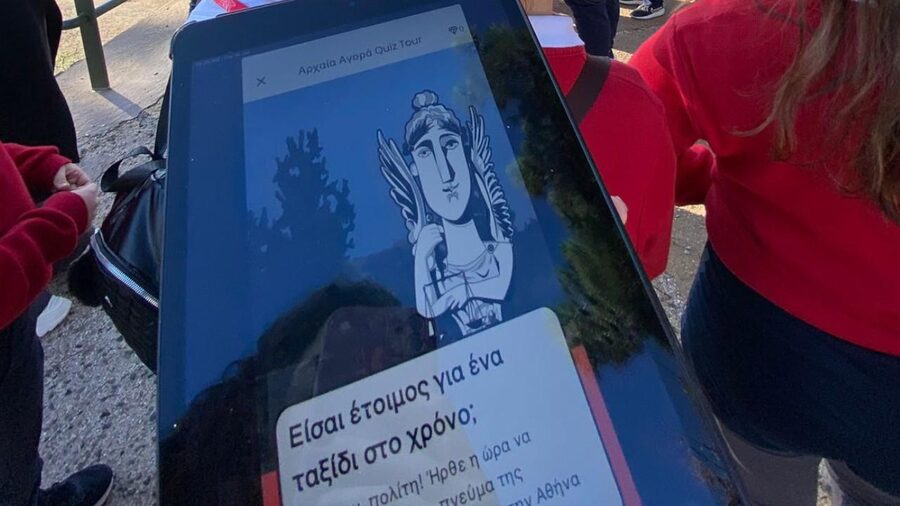
- A 1.5-hour family mission: Explore the Ancient Agora while solving riddles at your own pace.
- Entry by e-ticket: Go to the archaeological site ticket office and use the ticket sent to your email.
- The Stoa of Attalos and Temple of Hephaestus: The activity draws your attention to two of the site’s best-known monuments.
- History with a purpose: The app introduces ancient philosophers and the ideas behind Greek democracy.
- Views beyond the ruins: Look for broad views toward the Acropolis, Lycabettus Hill, and Athens.
- A private group format: Your family or group uses the activity together without joining a larger walking tour.
Why this Ancient Agora activity works for families
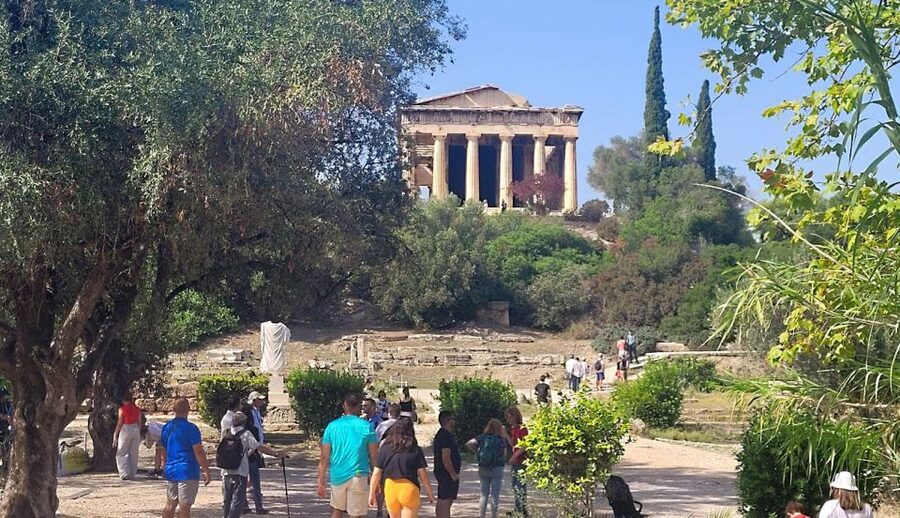
The Ancient Agora can be a hard sell to children. The stones are important, but importance alone does not always hold a young visitor’s attention. This activity gives your family a goal: complete the mission, answer the riddles, gather points, and help the Spirit of Democracy.
That structure matters. You are not simply moving from one sign to the next. You have a reason to look closely, listen to the app’s stories, and talk with your children about the people who shaped public life in ancient Athens.
The game is suitable for all ages, so it can work with a mixed group. Younger children may enjoy the hunt itself, while older children and adults can focus more on the ideas of philosophy and democracy. Since the activity is self-guided, you can pause when someone needs a break or spend longer at a monument that catches your interest.
I would treat the game as a layer over the archaeological site, not as a replacement for your own sightseeing. The Agora has more to offer than any set of riddles can cover. Let the app keep the family moving, then stop for a closer look when the setting deserves it.
More ancient city sites in Athens:
- Athens Half Day Tour, Acropolis, Parthenon, Temple of Olympian Zeus & Hephaistus
★ 5.0 · 609 reviews - Athens: Agora and Hephaistos Temple Entrance Ticket
★ 4.0 · 449 reviews - Athens: Ancient Agora E-Ticket and Audio Tour
★ 3.9 · 413 reviews
Arriving at the Ancient Agora ticket office
Your meeting point is the ticket office of the Ancient Agora Archaeological Site. You receive the entry ticket by email after booking, along with information and a link to download the treasure hunt app.
This is where a little preparation pays off. Download the app before you reach the site, and make sure your phone is fully charged. The information warns that the internet signal around archaeological sites may be weak, so waiting until you arrive can make the start less smooth.
You should also carry a passport or identity card for yourself and one for each child. The instructions specifically call for identification, so do not leave it behind just because you already have an electronic ticket.
The e-ticket is intended to help you avoid the ticket line. You still begin at the site’s ticket office, but you use the ticket already sent to you rather than waiting to purchase admission there. Keep the email easy to access, especially if your group is eager to get started.
Starting the phone-based treasure hunt
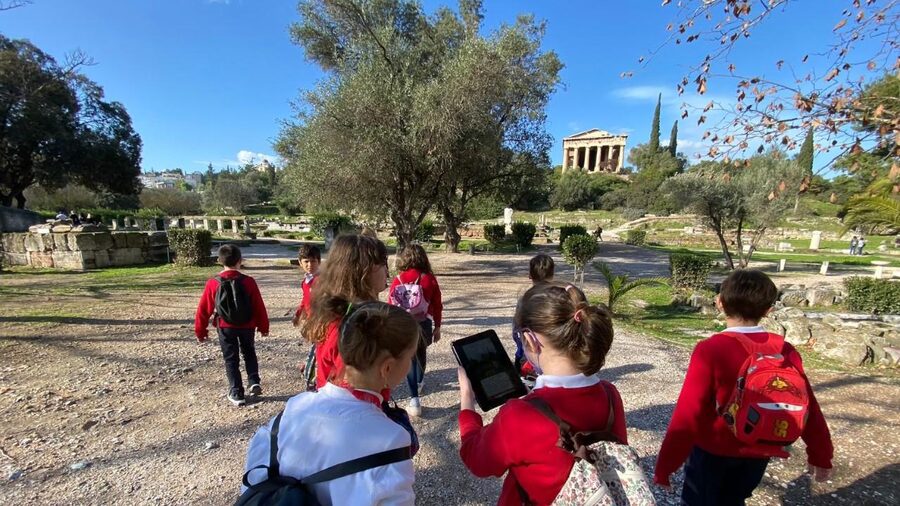
Once inside, press start in the app. The activity then guides your group through the site with stories, questions, and riddles.
This is not a live tour with a person waiting to give a talk. Your phone is the guide, and your group controls the pace. That makes the format flexible, but it also means you need to read the prompts and keep the children involved.
I would make one adult the phone holder and let the children take turns solving the clues. If everyone crowds around one small screen, the activity can become less enjoyable. A simple team approach works better: one person reads, another searches, and everyone discusses the answer.
The app brings ancient philosophers into the story and links the mission to the Spirit of Democracy. That framing gives the visit a clear thread. You are not just collecting answers. You are using the site to think about how ideas, public life, and civic decisions developed in ancient Athens.
The Temple of Hephaestus and the first big sights
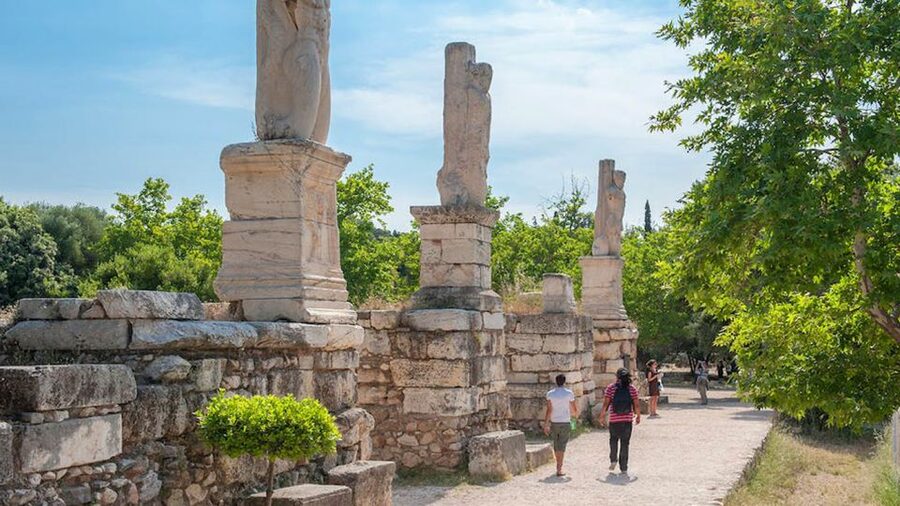
The Temple of Hephaestus is one of the main places included in the activity. Its presence gives the hunt a strong visual focus and a chance to connect a surviving monument with the wider Agora.
The supplied information does not give a fixed order for every clue, so your route may depend on how the app presents the mission. You can expect the riddles to draw attention to the temple and other important features rather than send you on a fast march through the grounds.
Take your time here. A family game can tempt you to look only for the next answer, but the temple is worth viewing as a building, not just a clue location. Let children solve the prompt, then give the group a moment to look around and take in the setting.
There is also a practical point about timing. The advertised duration is 1.5 hours, but that is a guide rather than a command. If your group stops often for photos, reads every prompt carefully, or takes breaks, the visit may feel longer. If children lose interest, the mission can also move faster.
A few more Athens days worth a look
- Athens: Acropolis Ticket with Optional Audio or Live Guide
★ 4.2 · 11,055 reviews - Athens: Acropolis Ticket with Audio Guide
★ 4.0 · 3,575 reviews - Athens All Included: Acropolis and Museum Guided Tour with Ticket
★ 4.5 · 2,673 reviews - Athens: Acropolis Museum Ticket with optional Audio Guide
★ 4.4 · 2,652 reviews
The Stoa of Attalos and the story of public life

The Stoa of Attalos is another featured monument. The app uses the Agora’s buildings and spaces to tell stories, so this is one of the places where the physical setting and the digital activity work together.
The Agora was not simply a collection of temples. It was a place tied to public life, ideas, and civic activity. The activity’s focus on philosophy and democracy helps your family see the site as part of a functioning ancient community.
That connection is one of the strongest reasons to choose this format. A standard walk through ruins can leave children wondering what happened in all those buildings. Here, the questions give them a reason to imagine the Agora as a place where people met, argued, traded ideas, and took part in public affairs.
The app cannot answer every question a curious adult may have. If you want a detailed archaeological explanation or a sustained discussion of the site, a live guide would be better. For families who need momentum and simple prompts, the phone format is likely more useful.
Solving riddles without losing the real site

The riddles are the heart of the activity. They give children something active to do and turn careful observation into part of the game.
You should expect to read a story, locate a feature, and answer a question before moving on. The exact prompts are not provided in advance, so I cannot tell you how difficult each one will be. The activity is described as suitable for all ages, which suggests the group can solve them together rather than leaving the youngest children on the sidelines.
The best way to use the hunt is to balance speed with attention. Do not rush past a monument simply because the app has given you the next task. Ask your children what they notice, then return to the phone when everyone has had a chance to look.
This also makes the activity a good choice for a private group. You are not trying to keep up with strangers or worrying about holding up a scheduled walking tour. Your family can discuss an answer, take a short pause, and continue when ready.
Views toward the Acropolis and Athens
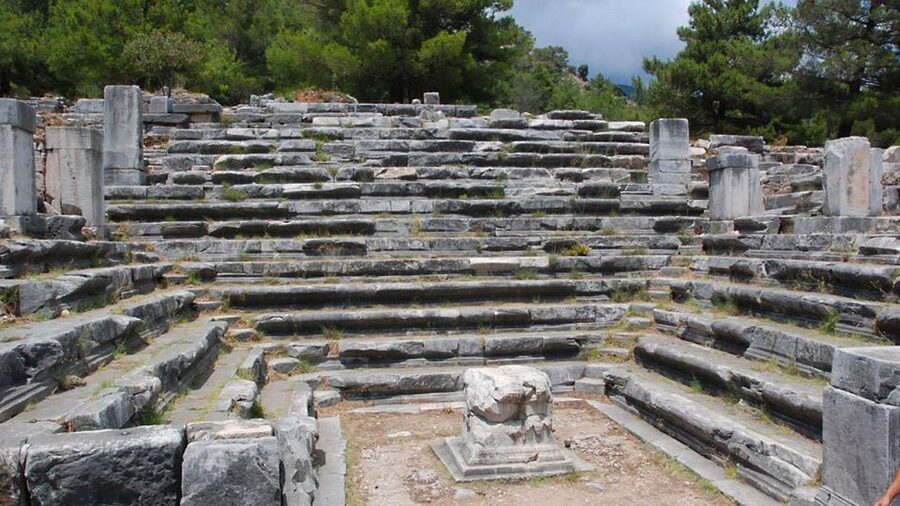
The Ancient Agora offers views toward the Acropolis, Lycabettus Hill, and Athens. These wider views give the visit a useful sense of place.
Ruins can feel isolated when you look only at individual walls and columns. The views remind you that the Agora is part of a much larger city. They also give you natural moments to pause between riddles and let everyone look up from the screen.
I would plan at least a few minutes for this. Children may be focused on completing the mission, but the views are among the parts of the visit that do not come through an app. Use the phone for the story, then put it away for a moment.
The setting also helps adults connect the activity to present-day Athens. You can see the ancient site in relation to the city around it, which gives the visit more meaning than a checklist of stops.
Finishing the mission and receiving the reward
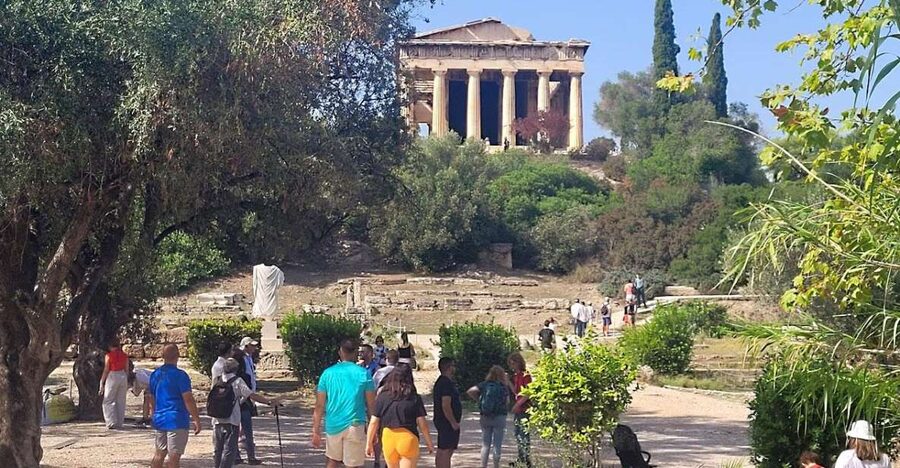
After you complete the mission, you can claim a reward. The activity awards digital points during the hunt, which can be redeemed online for gifts connected with sustainability, empowerment, and innovation.
The reward idea gives children a clear finish line. It also links the game to causes beyond the archaeological site. Still, keep expectations modest. The reward should be treated as a small extra, not the main value of the visit.
One child enjoyed the hunt but felt the final gift was not very impressive. If your children are highly motivated by prizes, explain before arriving that the real payoff is the game and the time spent exploring the Agora. A tiny physical souvenir might have made the ending feel more satisfying, but the available information does not promise one.
The most valuable result is likely the conversation the activity starts. If your children leave understanding a little more about philosophy, democracy, and public spaces, the mission has done its job.
What $28.22 per person gets you

At $28.22 per person, this is more than a basic admission ticket. The price includes entry to the Ancient Agora and a self-guided app with stories, riddles, and the reward system.
The value depends on your group. For a family that wants a structured visit and would otherwise struggle to keep children interested, the added activity may justify the cost. You are paying for a ready-made way to explore together, with no need to research a scavenger hunt before you arrive.
For adults who prefer reading site information at their own pace, the extra cost may feel less useful. The activity does not include a live guide, so you should not expect detailed personal explanations or the chance to ask questions as you walk.
The private group format improves the value for families who want to stay together. You are not sharing the mission with a large group, and you can move at your own speed. The $28.22 price is easiest to justify when several people in your party will actively use the game.
Who should book this activity
I would recommend it most strongly to families with children who enjoy puzzles, missions, and phone-based games. It also suits adults who want a light structure but do not need a live guide.
It may work well for:
- Families visiting the Agora for the first time
- Groups with children of different ages
- Parents who want history presented through tasks
- Visitors who value flexible timing and a private group
- Anyone comfortable using a smartphone during a self-guided site visit
I would choose a different format if you want a formal archaeological tour, a human guide, or detailed answers to spontaneous questions. The app can make the Agora easier to approach, but it cannot respond to your group in the way a person can.
Make sure everyone knows that a charged smartphone is required. You also need to manage the app yourself, including downloading it and opening the e-ticket. This is easy for most phone users, but it is still part of the experience.
Booking flexibility and final practical advice
You can cancel up to 24 hours before the activity for a full refund, and you can reserve now while paying later. That flexibility is useful when your Athens schedule is still changing.
Check the available starting times before booking. The visit lasts about 1.5 hours, but you should leave room around it if your family likes to stop often or if you plan to see more of the archaeological site.
Before leaving for the Agora, download the app, charge your phone, find the ticket email, and pack identification for adults and children. Those four steps remove most of the avoidable trouble.
Should you book the Ancient Agora treasure hunt?
Book it if you want your family to explore the Agora through a shared game rather than a standard self-guided visit. The strongest features are the private format, the clear mission, and the way the riddles connect monuments with philosophy and democracy.
Think twice if your main goal is expert commentary or if your children are not interested in using a phone during sightseeing. The final gift may also feel modest, so do not buy this mainly for the prize.
For the right group, $28.22 per person buys more than entry. It gives you a practical way to turn a potentially quiet archaeological stop into an active family outing, while still leaving room to pause and enjoy the Temple of Hephaestus, the Stoa of Attalos, and the views across Athens.
FAQ
How long does the Ancient Agora treasure hunt last?
The activity lasts 1.5 hours. Starting times depend on availability when you book.
Is entry to the Ancient Agora included?
Yes. The price includes an entry ticket to the Ancient Agora Archaeological Site.
Is there a live guide?
No. This is a self-guided activity that uses a smartphone app with stories and riddles.
Where do I start the activity?
Go to the ticket office of the Archaeological Site of the Ancient Agora. The activity ends back at the meeting point.
What do I need to bring?
Bring a passport or identity card for yourself and each child, along with a charged smartphone.
How do I receive the ticket and app?
After booking, you receive an email with information, your e-ticket, and a link to download the treasure hunt app. Check your spam folder if the email does not appear.
Can I cancel the booking?
Yes. You can cancel up to 24 hours in advance for a full refund. You can also reserve now and pay later.
Freshly added Athens trips
- Athens and Ancient Corinth Private from Athens★ 5.0 · 3 reviews
- From Athens: Mycenae and Epidaurus Private Tour★ 4.8 · 3 reviews
- Full day Meteora private tour★ 5.0 · 3 reviews
- Double Shore Dive (certified divers)★ 4.5 · 3 reviews
- Sunset & swimming at Cape Sounio, Poseidon temple★ 5.0 · 3 reviews
- Philosophy Experience at Plato’s Academy Park – basic version★ 5.0 · 3 reviews
- Athens Hills: Mythology Treasure Hunt★ 5.0 · 3 reviews
- Private Acropolis Tour – Ticket Included★ 5.0 · 3 reviews
Ancient Agora & City Sites, compared.

Athens Half Day Tour, Acropolis, Parthenon, Temple of Olympian Zeus & Hephaistus
Read our review →



Roman Agora & Ancient Agora E-ticket & 2 Audio Tours
Read our review →
Ancient Athens Segway Tour with Agora and Kerameikos
Read our review →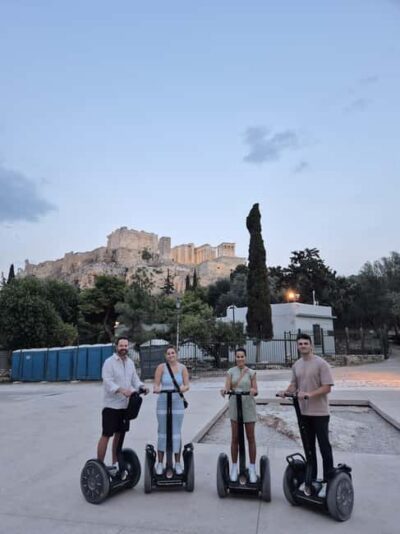
Ancient Athens, Agora, and Keramikos Segway Tour
Read our review →Browse the lists this tour appears in