
Reviewed · ANCIENT AGORA & CITY SITES
Private Luxury Tour: Mystic Pilgrimage – Kerameikos to Eleusis
The most unusual part of this Athens tour is the route itself. You follow the ancient Sacred Way from Kerameikos, Athens’ old cemetery and potters’ quarter, toward Eleusis, where the famous Mysteries honored Demeter and Persephone. Along the way, ruins, a Byzantine monastery, old bridges, and modern industrial scenery help you see how the sacred road changed over time.
I like two things right away: the private vehicle and pickup make this much easier than piecing the route together by public transport, and the trip connects sites that are often treated as separate day outings. I also like the personal touch of a family-run operation, with guides such as Pericles and Dimitris praised for clear storytelling, humor, and care.
The main drawback is important: this is a driver-guide tour, not a full licensed-guide tour inside every archaeological site. Entry fees and lunch are extra, and some stops take only 10 minutes. If you want lengthy museum talks and detailed instruction at every ruin, you may need to arrange a licensed guide separately.
In This Review
- Key points to know before you book
- Following the Sacred Way from Athens to Eleusis
- Kerameikos, where the procession began
- Dipylon Gate and the Pompeion
- Kerameikos Museum
- Small surviving pieces of the Sacred Way
- Daphni Monastery and its Byzantine mosaics
- The Sanctuary of Aphrodite at Skaramagkas
- Roman engineering before Eleusis
- Eleusis, the goal of the pilgrimage
- The Eleusis Archaeological Museum
- Lunch in Eleusis, with the bill kept separate
- What the private vehicle adds
- Is $129 a good value?
- Who should book this experience?
- Should you book the Sacred Way tour?
- FAQ
- How long does the tour last?
- Where can pickup and drop-off take place?
- Is this a private tour?
- What vehicle is used for a group of four?
- What vehicle is used for a group of five to seven?
- Are archaeological entrance fees included?
- Is lunch included?
- Does a licensed guide enter the sites with the group?
- What should I bring?
- Can I cancel for a refund?
Key points to know before you book
- The Sacred Way links two major sites: Begin at Kerameikos in Athens and finish at Eleusis, the ancient center of the Eleusinian Mysteries.
- Private transport keeps the day relaxed: Groups of one to four use a luxury sedan, while groups of five to seven use a minivan.
- Pericles and Dimitris are named guides: Their storytelling, mythology, humor, and printed materials receive especially warm praise.
- Daphni Monastery adds a Byzantine layer: Its 11th-century mosaics provide a striking change from the ancient Greek ruins.
- The price does not cover site admission: You also pay for lunch in Eleusis and any gratuity separately.
- A taverna meal is part of the rhythm: The 45-minute lunch stop is scheduled, but you choose and pay for your food.
Following the Sacred Way from Athens to Eleusis
This is not a tour built around one famous monument. It is a historical route, and its appeal comes from watching the story unfold stop by stop.
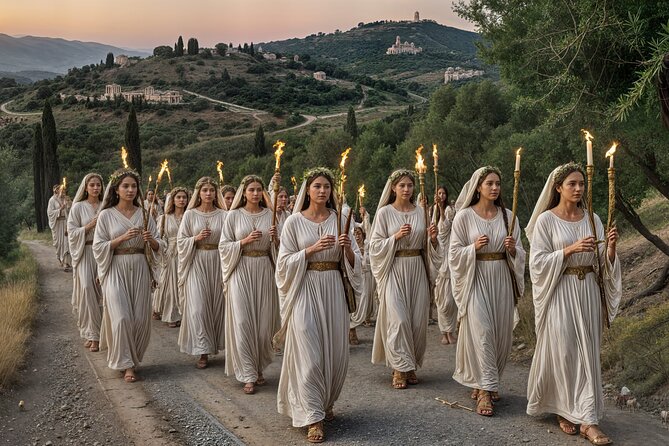
The Sacred Way once carried pilgrims from Athens to the Sanctuary of Demeter at Eleusis. During the Eleusinian Mysteries, initiates made this journey as part of a major religious festival. The road connected everyday city life with a sanctuary tied to death, rebirth, agriculture, and the story of Persephone’s return from the Underworld.
Today, much of the route passes through modern Athens and the western suburbs. You will not walk the full ancient road in one uninterrupted stretch. Instead, the driver takes you between surviving sections, archaeological remains, and important landmarks. That makes the private car especially useful. You can cover a large area without spending the day figuring out connections.
The tour lasts about five to six hours, including driving time. The schedule contains many brief stops, so expect a moving overview rather than a slow archaeological study. You will have more time at Kerameikos, Eleusis, Daphni Monastery, and lunch, while several road and bridge remains receive about 10 minutes each.
More ancient city sites in Athens:
- Athens Half Day Tour, Acropolis, Parthenon, Temple of Olympian Zeus & Hephaistus
★ 5.0 · 609 reviews - Athens: Agora and Hephaistos Temple Entrance Ticket
★ 4.0 · 449 reviews - Athens: Ancient Agora E-Ticket and Audio Tour
★ 3.9 · 413 reviews
Kerameikos, where the procession began
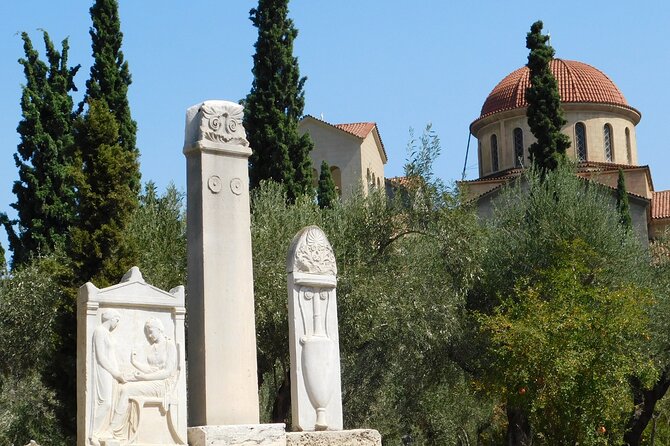
Kerameikos is one of the best places in Athens to begin this story. It was once the city’s potters’ quarter, but it also became Athens’ main cemetery. The site includes sections of the ancient city walls, funerary monuments, and the route taken by sacred processions.
I find the setting quieter than the Acropolis area, which helps you focus on the details. Funeral markers and grave goods reveal how Athenians thought about family, status, and the afterlife. The Sacred Way begins here in a symbolic sense, connecting the city of the living with the sanctuary where people sought answers about life and death.
The planned visit is about 30 minutes. That is enough for an introduction, a walk near the walls, and a look at the key remains, but it may feel short if you want to read every inscription or study every funerary monument. Admission is not included.
Dipylon Gate and the Pompeion
Within the Kerameikos area, the Dipylon Gate was the largest gateway in ancient Athens. It was a defensive entrance, but it also had a ceremonial role, since the Panathenaic procession passed through this part of the city on its way to the Acropolis.
The tour allows about 10 minutes here. Your driver-guide can help you picture the traffic of merchants, citizens, pilgrims, and festival processions that once moved through this gateway. Much of the structure survives as archaeological remains rather than a complete monumental arch, so context matters.
The nearby Pompeion was used for preparations connected with the Panathenaic Procession. It gives the route a civic and ceremonial dimension before you move on to the road leading west. Another 10-minute stop is planned, with admission included as part of the Kerameikos site ticket, though that ticket itself is extra.
Kerameikos Museum
The small museum at Kerameikos helps make sense of the open-air ruins. Its collection includes pottery, grave goods, funerary stelae, and other objects found in the cemetery.
Give this stop its full 30 minutes if you can. The artifacts show the skill of ancient craftsmen, but they also make the cemetery more personal. You see evidence of mourning, family identity, religious practice, and ordinary household life rather than only large temples and famous statues.
Admission is not included. Since the museum sits within the archaeological site, confirm the ticket arrangement at the entrance rather than assuming the museum is a separate free stop.
A few more Athens days worth a look
- Best of Athens Half Day Private Tour
★ 5.0 · 3,714 reviews - Athens Full Day Private Tour
★ 5.0 · 2,903 reviews - Athens Airport Private Arrival Transfer with Meet & Greet
★ 4.5 · 1,495 reviews - Athens Airport to Athens Hotels Private Arrival Transfer
★ 5.0 · 947 reviews
Small surviving pieces of the Sacred Way
After Kerameikos, the route follows fragments of the Sacred Way through the modern city and western suburbs. These stops are not grand monuments. Their value comes from seeing how an ancient pilgrimage road survives in pieces.
Near the Eleonas Metro Station, excavators found remains of a bridge over the Kifisos River. Three piers survive from a bridge that had at least five arches. Ancient pilgrims heading to Eleusis would have crossed here, along with people moving goods between Athens and the coast.
The stop takes about 10 minutes and is free. It is best approached as a quick historical marker, not a full archaeological site. Your driver-guide’s explanation is what gives the remaining stonework meaning.
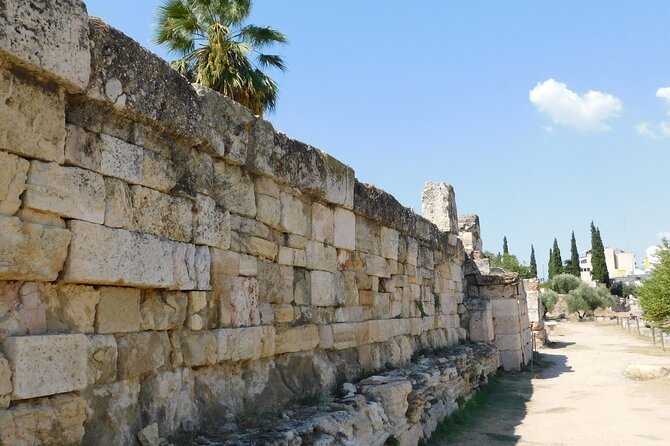
Another short stop in Aigaleo presents a surviving section of Iera Odos, the Greek name for the Sacred Way. You can walk along the remains and think about the route as a working road of ritual, travel, and trade. The modern surroundings may surprise you. This is not a preserved rural path through untouched countryside, but that contrast is part of the lesson.
Daphni Monastery and its Byzantine mosaics
Daphni Monastery is the visual change-up of the day. Along the same broad route once used by pilgrims to Eleusis, this 11th-century Byzantine monastery offers a quieter setting and a different religious tradition.
The monastery is a UNESCO World Heritage Site and is known for its mosaics, especially the image of Christ Pantocrator in the dome. Cypress trees and the monastery walls create a calm pause after the busier urban sections of the drive.
The scheduled visit lasts about 30 minutes and is listed as free. Check current opening arrangements when booking, since historic religious sites can have changing access hours. If the interior is open, the mosaics are the reason to linger. If access is restricted, the exterior still gives you a useful sense of the route’s long religious life.
The Sanctuary of Aphrodite at Skaramagkas
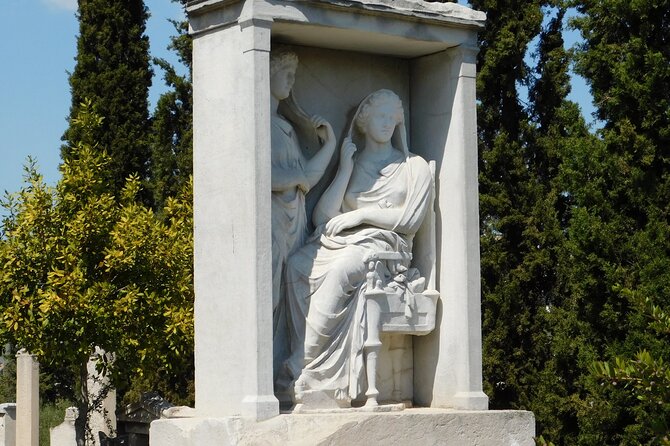
The Sanctuary of Aphrodite is a lesser-known stop near the ancient road. It was connected with worship of Aphrodite, goddess of love and beauty, and formed part of the wider religious setting encountered on the way to Eleusis.
Access depends on the day. The sanctuary is open to the public on weekends. On weekdays, the tour makes a brief exterior stop for photographs and a view of the remains.
That limitation matters. Do not book this tour expecting an interior visit here every day. The stop is more about placing another ancient sanctuary on the map and understanding that the Sacred Way was surrounded by several religious sites, not just the final sanctuary at Eleusis.
Roman engineering before Eleusis
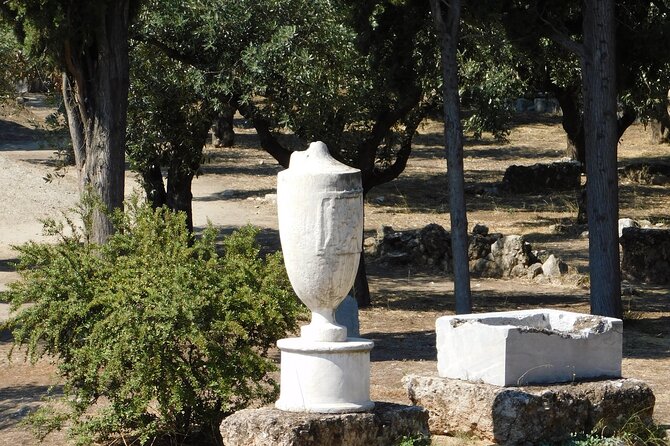
About one kilometer east of the Sanctuary of Demeter, you stop at a Roman bridge built during the reign of Emperor Hadrian in 125 CE. The bridge is about 50 meters long and 5.30 meters wide, with four arches and sloping approaches on both sides.
This is a quick, free stop of about 10 minutes. Look for the arrangement of the arches and the durable Piraeus limestone. The bridge helped connect the Sacred Way with the Eleusinian Kephisos River and shows that the road remained useful long after the classical Greek period.
I appreciate this kind of stop because it broadens the story. Eleusis was not frozen in the fifth century BCE. Romans repaired, expanded, and used the same routes and sacred spaces.
Eleusis, the goal of the pilgrimage
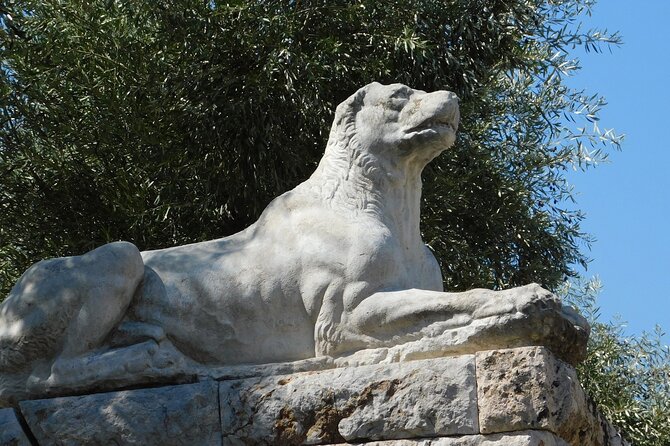
Eleusis is the center of the tour. The ancient sanctuary was dedicated mainly to Demeter and Persephone, and its ceremonies became one of the most important religious traditions in the Greek world.
You enter through the Great Propylaea, a monumental gateway built in the second century CE under Marcus Aurelius. Its design recalled the Propylaea of the Acropolis, creating a powerful threshold between the ordinary world and the sacred precinct.
The Kallichoron Well is tied to the story of Demeter. Ancient tradition says the goddess rested here while searching for Persephone. The name means well of the beautiful dances, referring to the women who were said to dance there in an effort to comfort her.
Nearby, the Ploutonion Cave was associated with Plouton, or Hades, and was regarded as a symbolic entrance to the Underworld. You do not get a theatrical reenactment, of course, but the physical setting gives the myth a strong sense of place. The cave, well, and gateways help you understand why Eleusis carried such power for ancient worshippers.
The Telesterion was the great hall where the central initiation ceremonies took place. Much of the mystery remains unknown because initiates were forbidden to reveal the rites. That silence is part of the attraction. You can examine the foundations and walls, but you must use imagination to picture the ceremonies held there.
The planned visit to the archaeological site is about 30 minutes, followed by shorter stops at the Great Propylaea, Kallichoron Well, Ploutonion, and Telesterion. Admission is extra. If Eleusis is your main reason for booking, ask in advance how much time your driver-guide normally allows inside the site. The listed schedule is broad, and actual pacing may depend on opening hours, traffic, and your group.
The Eleusis Archaeological Museum
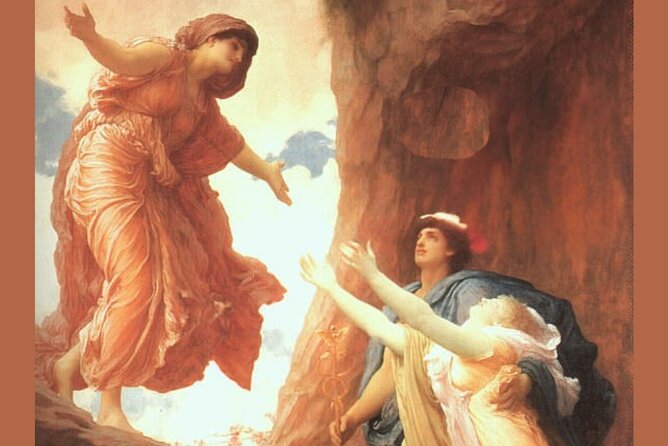
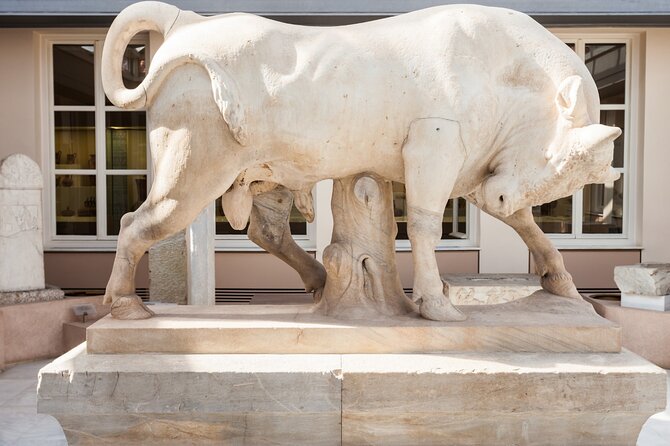
The museum completes the visit. It holds statues, reliefs, sacred offerings, and other finds from the sanctuary.
I would not rush this part. The open-air ruins show where ceremonies happened, but the museum shows what ancient worshippers and artists left behind. Reliefs connected with Demeter and Persephone can help you follow the myths, while smaller objects give the sanctuary a human scale.
The planned museum visit is 30 minutes, and admission is not included. If you have a strong interest in ancient religion or Greek sculpture, you may want to trade one of the 10-minute roadside stops for extra museum time. That is one of the advantages of a private outing: you can ask for a more personal pace, although the total tour time remains limited.
Lunch in Eleusis, with the bill kept separate
After the ruins, the tour schedules about 45 minutes at a traditional Greek taverna in Eleusis. Lunch is not included, so you pay for your own meal.
This is a practical ending to a history-heavy morning. You can choose familiar Greek dishes such as grilled meats, salads, tzatziki, and eggplant dip, depending on the restaurant. The meal also gives you a chance to sit down after walking on uneven archaeological ground.
Do not treat lunch as a fixed tasting menu. It is a scheduled stop at your own expense. If you have dietary needs, mention them when arranging the tour so the driver can help with the restaurant plan.
What the private vehicle adds
Pickup is offered from your Athens hotel or cruise ship port, and drop-off is included. Groups of one to four use a luxury sedan, while groups of five to seven use a minivan.
The vehicles are air-conditioned and supplied with bottled water. WiFi is listed onboard. These details matter most in warm weather, when moving between scattered sites can become tiring. Comfortable transport also makes the tour workable for a family or small group that does not want to navigate the western suburbs independently.
The driver-guide provides historical explanations during the route. Pericles is repeatedly singled out for passion, humor, and storytelling, while Dimitris is praised for bringing mythology and the Telesterion to life. Printed guides are also provided, according to the experience details shared by the operator.
Still, keep the role clear. The driver-guide does not accompany you into the archaeological sites as a licensed guide. You get transport and commentary, not a formal guided lecture at every monument. That distinction explains why one particularly disappointed customer felt the service was closer to transport with basic explanations, while many others valued the relaxed personal approach.
Is $129 a good value?
At a listed price of $129, the tour can make sense if you value a private car, hotel or port pickup, flexible pacing, and a driver who can connect the sites. Covering Kerameikos, western Athens, Daphni, Skaramagkas, and Eleusis independently would take planning and several separate transport decisions.
The price is not all-inclusive. You still pay archaeological admission, museum admission, lunch, and tips. Airport pickup also costs extra. For a solo visitor, the total may feel high once those charges are added. For a small private group, the vehicle and door-to-door service can offer better value.
Before booking, confirm the current entrance costs and ask how the five to six hours will be divided. The itinerary includes many stops, and you cannot spend a long time at every one. The tour works best when you want the full route and a broad understanding of its meaning.
Who should book this experience?
I would choose this tour if you have already seen central Athens and want a less obvious ancient site. It suits people interested in Greek mythology, religious history, archaeology, Byzantine art, and the connections between them.
It also fits cruise passengers who need pickup and drop-off, families who prefer private transport, and small groups that want to avoid a large coach. The air-conditioning, water, and vehicle-based route are useful during hot months.
I would hesitate if your priority is a formal archaeological lesson. You may prefer hiring a licensed guide who enters each site with you, or arranging a longer private visit focused mainly on Eleusis. I would also hesitate if you dislike short stops or modern urban surroundings between ancient remains.
Wear sturdy, comfortable shoes. Bring a hat and sunscreen. The tour requires good weather, and cancellation due to poor conditions leads to either another date or a full refund. You can cancel for a full refund up to 24 hours before the start time. Within 24 hours, the payment is not refunded.
Should you book the Sacred Way tour?
Book it if you want to understand how Athens and Eleusis were connected, not just collect another ancient monument. The route gives you Kerameikos’ cemetery, the procession road, Daphni’s mosaics, Roman engineering, and the myths of Demeter and Persephone in one private outing.
Skip it if you expect entrance fees, lunch, and a licensed guide to be included. At its best, this is a comfortable, personal historical route with strong storytelling from guides such as Pericles and Dimitris. Its value depends on appreciating that format.
FAQ
How long does the tour last?
The tour lasts approximately five to six hours, including time spent driving between locations.
Where can pickup and drop-off take place?
Pickup and drop-off are offered at your Athens hotel or the Athens cruise ship port. Airport pickup is available for an additional cost.
Is this a private tour?
Yes. Only your group participates in the activity.
What vehicle is used for a group of four?
Groups of one to four people travel in a luxury sedan.
What vehicle is used for a group of five to seven?
Groups of five to seven people travel in a comfortable minivan.
Are archaeological entrance fees included?
No. Entrance fees for archaeological sites and museums are not included in the price.
Is lunch included?
No. A lunch stop at a traditional Greek taverna in Eleusis is scheduled, but you pay for the meal yourself.
Does a licensed guide enter the sites with the group?
No. The tour includes an English-speaking driver-guide, but not a licensed guide to accompany you inside the archaeological sites.
What should I bring?
Wear comfortable footwear and bring a hat and sunscreen. Bottled water and air-conditioning are provided in the vehicle.
Can I cancel for a refund?
You can cancel at least 24 hours before the start time for a full refund. Cancellations or changes made less than 24 hours before the start time are not refunded or accepted. If poor weather causes the operator to cancel, you are offered another date or a full refund.
Freshly added Athens trips
- Athens and Ancient Corinth Private from Athens★ 5.0 · 3 reviews
- From Athens: Mycenae and Epidaurus Private Tour★ 4.8 · 3 reviews
- Full day Meteora private tour★ 5.0 · 3 reviews
- Double Shore Dive (certified divers)★ 4.5 · 3 reviews
- Athens Hills: Mythology Treasure Hunt★ 5.0 · 3 reviews
- Sunset & swimming at Cape Sounio, Poseidon temple★ 5.0 · 3 reviews
- Philosophy Experience at Plato’s Academy Park – basic version★ 5.0 · 3 reviews
- Private Acropolis Tour – Ticket Included★ 5.0 · 3 reviews
Ancient Agora & City Sites, compared.
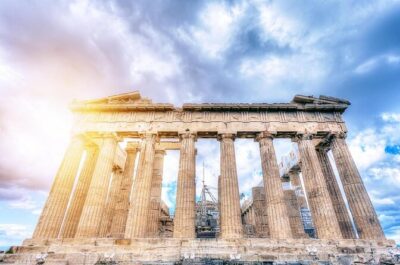
Athens Half Day Tour, Acropolis, Parthenon, Temple of Olympian Zeus & Hephaistus
Read our review →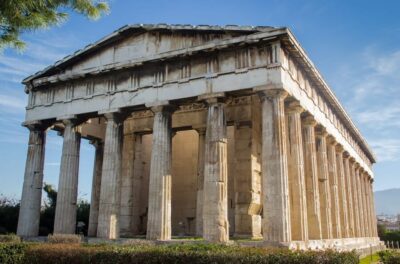
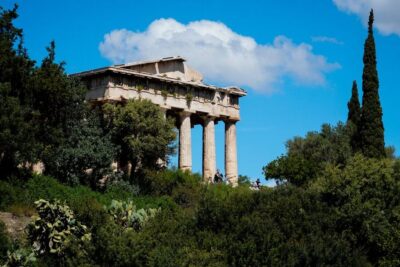

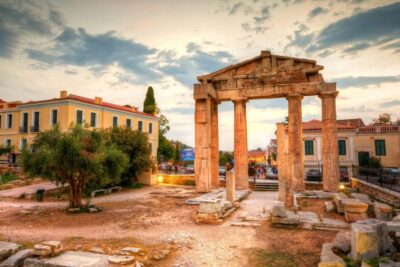
Roman Agora & Ancient Agora E-ticket & 2 Audio Tours
Read our review →
Ancient Athens Segway Tour with Agora and Kerameikos
Read our review →
Ancient Athens, Agora, and Keramikos Segway Tour
Read our review →Browse the lists this tour appears in