
Reviewed · MYCENAE & EPIDAURUS TOURS
Full Day Biblical Ancient Corinth Canal Mycenae Epidauvro Nafplio
The most striking part of this full-day outing is the sheer range of Greek history packed into one road trip. In roughly 9 to 10 hours, you move from the Corinth Canal and the world of Saint Paul to the Bronze Age citadel of Mycenae, then finish in elegant Nafplio beneath Palamidi Castle.
I like the ease of private pickup from your Athens hotel, apartment, port, or another agreed point. I also like the flexible pace: drivers such as Chris, Michael, Costas, Yiannes, and Dimitrios have been praised for good timing, clear explanations, and letting you spend longer at places that matter to you. The main catch is that entrance fees and lunch are extra, and the title mentions Epidaurus even though it is not included in the listed route.
In This Review
- Key points to know before booking
- What this private Peloponnese tour actually delivers
- The Corinth Canal gives the day a dramatic opening
- Cenchreae adds a Biblical connection
- Ancient Corinth connects Saint Paul with Roman power
- Acrocorinth explains why Corinth mattered
- Mycenae brings Homeric legend into the real world
- Nafplio supplies the relaxed finish
- Palamidi Castle rewards the climb
- Bourtzi and Akronafplia add postcard views
- Price, inclusions, and the real value
- Who should book this day out?
- Final booking advice
- FAQ
- How long does the tour last?
- Is this a private tour?
- Where can pickup take place?
- What type of vehicle is used?
- Is lunch included?
- Are entrance fees included?
- Is a licensed archaeological guide included?
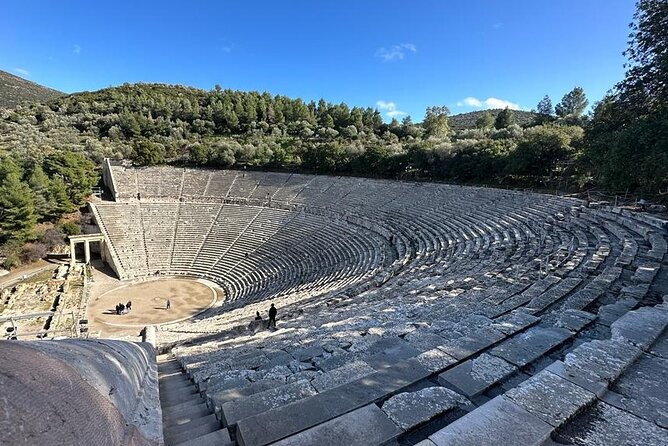
- Is Epidaurus included?
Key points to know before booking
- A private Athens day trip: Your group travels alone in a sedan for one to three people or a minivan for four to seven.
- Three major Peloponnese stops: Ancient Corinth, Mycenae, and Nafplio give the day a strong mix of archaeology, myth, churches, castles, and town life.
- A driver, not a licensed site guide: Your English-speaking driver can explain the places and local history, but cannot accompany you as a licensed guide inside the archaeological sites.
- Palamidi requires stamina: The castle is reached by a steep climb of roughly 913 to 999 steps from Nafplio, depending on which count you use.
- Costs add up: Site entry, the boat to Bourtzi, and lunch are not included in the $277.09 per-person price.
- Check the Epidaurus question: Epidaurus is not one of the 17 listed stops, so confirm the route before paying if its theater is essential to you.
What this private Peloponnese tour actually delivers
This is best understood as a private driving day with sightseeing stops, rather than a traditional guided archaeological tour. Your driver collects you in Athens and handles the long stretches of road, parking, route planning, and return trip. That matters because Corinth, Mycenae, and Nafplio are spread across the northeastern Peloponnese, and fitting them together by public transport would be awkward in one day.
The vehicle depends on your party size. One to three people ride in a luxury sedan, while four to seven use a minivan. The cars have air-conditioning, Wi-Fi, and bottled water. Pickup is available from an Athens hotel, Airbnb residence, or port, with the driver waiting in the hotel lobby, at the apartment entrance, or by the port gate with a sign.
The service is private, but the day is still busy. The advertised duration is 9 to 10 hours, and the route includes many short stops. I would treat this as a highlights tour, not a slow archaeological study. You will see a great deal, but you will need to keep moving.
The strongest part of the service is the driver’s role. Chris was praised for adjusting the schedule around personal interests. Michael was noted for patience when a stop ran long. Costas was praised for arrival texts, bottled water, careful driving, solid English, and useful choices along the way. Yiannes and Dimitrios were also singled out for history, courtesy, and calm handling of the day.
That kind of personal attention is the real value here. You are not simply being delivered from one site to another. You can ask questions, adjust the order, and request more time at a favorite stop. Still, remember that an informed driver is not the same as a licensed guide standing beside you at every monument.
More Ancient Corinth and canal stops:
- From Athens: Ancient Corinth Day Trip with Canal & VR Guide
★ 4.6 · 1,073 reviews - Private Biblical Tour Ancient Corinth & Isthmus Canal from Athens
★ 5.0 · 762 reviews - Athens: Ancient Corinth & Nafplio Full Day Trip with Swim
★ 4.8 · 523 reviews
The Corinth Canal gives the day a dramatic opening
The first stop is the Corinth Canal, usually a quick 15-minute visit. From the bridge, you look down into a narrow, striking cut through the Isthmus of Corinth. The canal links the Gulf of Corinth with the Saronic Gulf and separates the mainland from the Peloponnese in practical geographic terms.
The modern canal was completed in the late 19th century, but the idea is far older. Periander, the ruler of Corinth in the 6th century BC, is credited with considering a canal. Instead, ancient engineers built the diolkos, a stone route that let ships move overland on wheeled platforms.
That small detail helps explain Corinth’s importance. Before the canal, ships sailing between the Aegean and Adriatic had to circle the Peloponnese, adding about 185 nautical miles. You will not spend long here, but it is an effective introduction to the strategic geography that shaped the entire region.
Cenchreae adds a Biblical connection
The stop in the Corinthia region focuses on Kechries, the site of ancient Cenchreae, another 15-minute visit. The ancient harbor was linked to Corinth, and it is named in the New Testament.
According to Acts 18:18, Saint Paul stopped at Cenchreae during his second missionary journey. He cut his hair there as part of a vow. Paul also refers to the local Christian community and Phoebe in his Letter to the Romans.
This is a short stop, and the information provided does not promise a large archaeological visit or extensive time at the harbor. Its appeal is mainly religious and historical. If Saint Paul’s journeys are important to you, this brief pause adds meaning to the larger Corinth visit.
Ancient Corinth connects Saint Paul with Roman power
Ancient Corinth receives about 45 minutes, followed by another 30 minutes in the archaeological museum. The site is the historical heart of the day, but the time is tight if you want to study every ruin carefully.
The Roman Forum is the main focus. It was a broad civic center filled with shops, temples, altars, and public buildings. The Bema, a raised platform in the forum, is traditionally linked with Saint Paul’s appearance before the Roman proconsul Gallio around AD 52.
The accusation against Paul was that he taught an unlawful religion. Gallio refused to treat the case as a Roman legal matter, seeing it as an internal religious dispute. The story gives the ruins a human edge: this was not only a place of columns and stones, but a working city where law, trade, politics, and religion met.
Look for the Lechaion Road, the Fountain of Peirene, the basilica, the stoa, and the Odeon. The Temple of Apollo receives a separate 10-minute stop. Built around 550 BC, it is one of the earliest Doric temples in the Greek mainland and Peloponnese, with large monolithic columns.
The museum helps fill in what the open-air ruins cannot show. Its collections came from excavations at the site, and it sits within the archaeological area. You will see objects that give scale and detail to Corinth’s public buildings and religious life.
The drawbacks are practical. Admission is not included, and 45 minutes at the main site plus 30 minutes in the museum may feel short for anyone with a serious interest in archaeology. Your driver can explain the setting, but a licensed guide is not included to lead you through the ruins.
More Mycenae and Epidaurus days:
- From Athens: Mycenae, Epidaurus & Nafplio Full Day Trip
★ 4.8 · 2,438 reviews - From Athens: Mycenae, Epidaurus & Nafplio Full-Day Tour
★ 4.5 · 1,580 reviews - 4-Day Classical Greece Tour: Epidaurus, Mycenae, Olympia, Delphi, Meteora
★ 4.5 · 732 reviews - Mycenae and Nafplion Day Trip from Athens with Official guide
★ 4.5 · 501 reviews
Acrocorinth explains why Corinth mattered
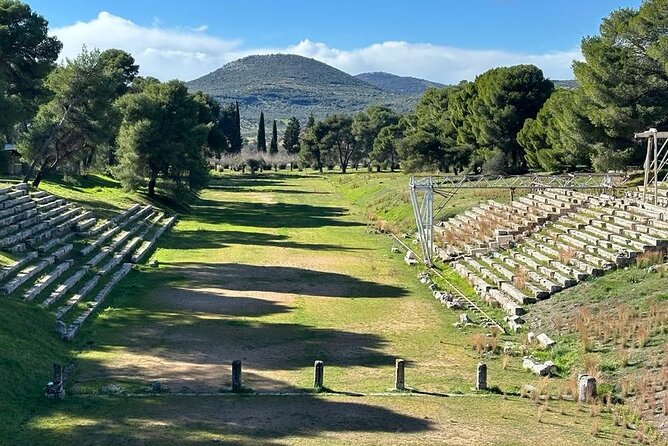
Acrocorinth is listed as a 15-minute stop. This huge rocky fortress rises above Ancient Corinth and controlled the land route into the Peloponnese.
Its secure water supply made it useful as a final defensive position for centuries. From below, you can appreciate its commanding location even if the schedule does not allow a long climb or a full fortress visit.
Do not expect a deep exploration of the upper citadel during this quick stop. The value lies in seeing the relationship between the ancient city, the plain, and the defensive rock above it. If you want to walk extensively inside Acrocorinth, ask about changing the timing before the day begins.
Mycenae brings Homeric legend into the real world
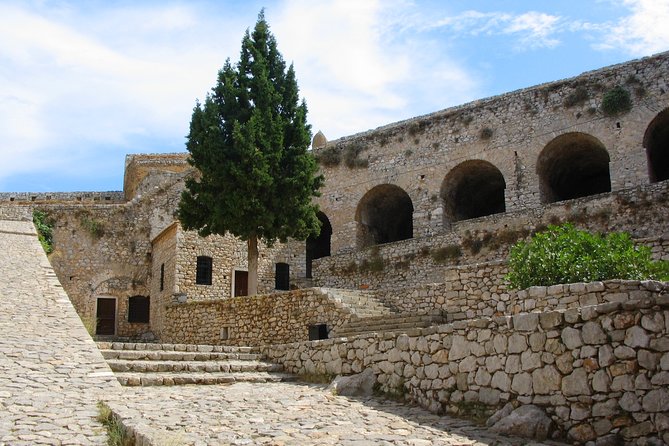
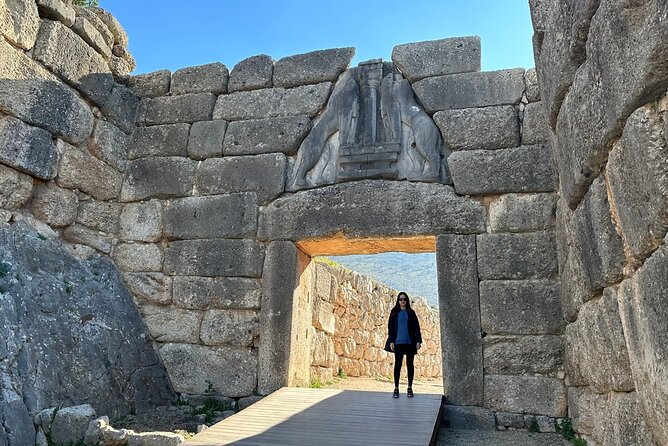
Mycenae is the day’s strongest archaeological stop. The fortified citadel was the center of a Bronze Age civilization that dominated much of southern Greece from about 1600 to 1100 BC. The tour allows about an hour at the site, followed by 19 minutes at the Lion Gate, 15 minutes in the museum, and 15 minutes at the Treasury of Atreus.
The name Agamemnon is attached to Mycenae, linking the ruins to the stories of the Trojan War. The archaeological evidence is older than classical Greece, and the massive Cyclopean walls give the site its power. Ancient builders used enormous blocks, so later Greeks imagined that only the Cyclopes could have placed them.
The Lion Gate is the essential sight. Built around 1250 BC, it was the main entrance to the citadel. Two lions or lionesses face one another above the doorway, set within a triangular relief space. It is the only surviving monumental sculpture of Mycenaean Greece and remains the symbol of the site.
The museum puts the ruins into context, while the surrounding funerary and settlement areas show that Mycenae was more than a fortress. At its height around 1350 BC, the citadel and lower town may have held about 30,000 people across 32 hectares.
The Treasury of Atreus, also called the Tomb of Agamemnon, is just as memorable for its engineering. This beehive-shaped tholos tomb was built around 1250 BC. The lintel above the entrance weighs about 120 tons, a remarkable piece of Bronze Age construction.
Here, the time limits matter. The listed schedule splits Mycenae into several short visits, and the admission charges are extra. You will get the main sights, but you may need to choose between lingering at the walls, examining the museum, and walking farther around the citadel.
Nafplio supplies the relaxed finish
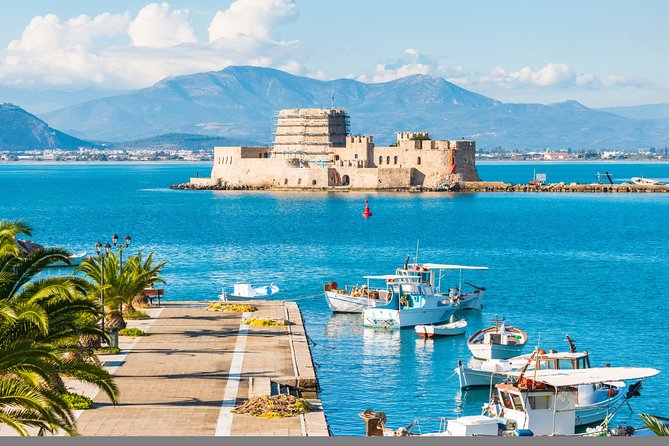
After the archaeological sites, Nafplio changes the mood. The old town has cobbled streets, flowered balconies, neoclassical houses, and Syntagma Square at its center. The town served as Greece’s capital until 1834, and Venetian, neoclassical, Ottoman, and early Greek influences remain visible in its buildings.
Two hours are assigned to Nafplio, with lunch planned at a traditional seaside tavern. The meal is not included, so budget separately. This is one of the few parts of the day where you can slow down, eat, and enjoy the port rather than study ruins.
Syntagma Square is the natural place to get your bearings. The square is linked with the early government of the newly formed Greek state, and the old Parliament building now houses the Municipal Gallery on its ground floor.
The schedule also includes the Lion of the Bavarians, carved into the rock above Michael Iatrou Street. German sculptor Christian Ziegel created it in memory of Bavarian soldiers who died in Nafplio during a typhoid epidemic in 1833. It is an unusual monument and a useful reminder that Greek independence brought foreign advisers, soldiers, and political influence into the new state.
Palamidi Castle rewards the climb
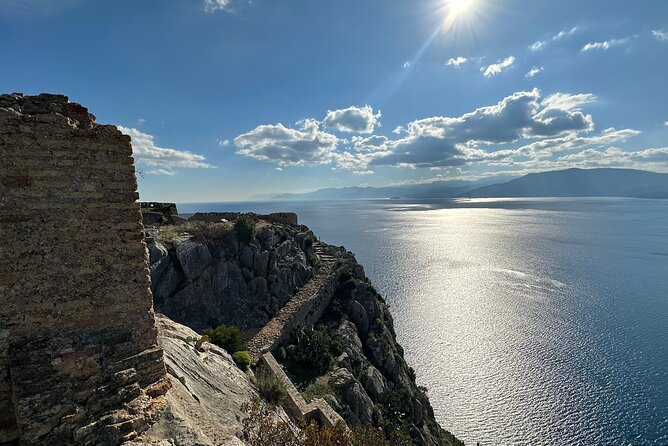
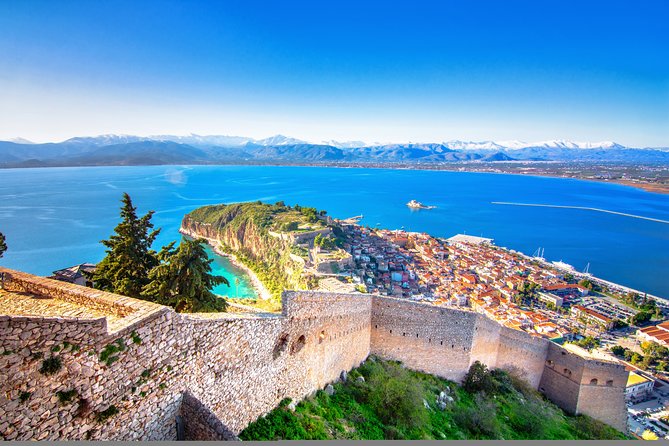
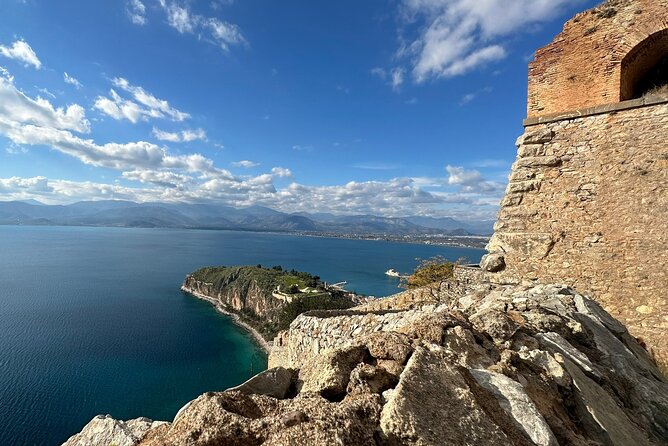
Palamidi Castle sits on a 216-meter hill above Nafplio. The Venetians built the fortress during their second period of control, from 1686 to 1715. Its walls, lookout points, and sweeping views over Nafplio and the Argolic Gulf make it one of the day’s best photo stops.
The famous stair count needs a little clarification. The route from town is often described as 913 steps, while local tradition says there are 999, and reaching the highest point involves more than 1,000 steps. The exact number matters less than the practical fact: this is a steep climb.
The stop is listed as 30 minutes, which is enough for a quick look if you arrive by vehicle at the upper entrance, but not enough for a leisurely climb from the old town and a full fortress walk. Ask your driver exactly how the visit will work. If you have knee, heart, or mobility concerns, do not assume the 999-step route is part of the scheduled time.
Inside, you can see defensive walls, lookout points, and the prison associated with Kolokotronis. The views are the main reward. I would protect time for Palamidi if you want one memorable panorama of Nafplio.
Bourtzi and Akronafplia add postcard views
Bourtzi is the small fortress on the islet of Agioi Theodoroi in Nafplio’s harbor. The Venetians built it in 1473 and called it Castello dello Soglio, or Castle of the Throne. Later, the Ottomans gave it the name Bourtzi, meaning fortress.
The boat ride takes less than 10 minutes, and the stop is listed as one hour. The boat and entrance cost are not included, so confirm the current arrangements before counting on an island visit. The fortress has served as a prison and, later, a luxury hotel. Today, it is best known as Nafplio’s classic harbor view.
Akronafplia is the oldest part of the city. It once functioned as a separate town and later became part of Nafplio’s fortifications under Frankish and Venetian rule. A short 15-minute stop gives you a chance to see its position above the old town and harbor.
These stops are scenic rather than long museum visits. They work well after the heavier archaeological material, but you will need to watch the clock if you want the boat, Palamidi, lunch, Syntagma Square, and the old town in the same afternoon.
Price, inclusions, and the real value
At $277.09 per person, the price is easiest to justify for a small group. A private sedan for two or three people, hotel or port pickup, a full day of driving, air-conditioning, Wi-Fi, water, and a flexible schedule can be worthwhile when compared with arranging several separate transfers.
The value is less clear if you expect admission, lunch, and a formal guide to be part of the price. They are not. You pay entrance fees at the archaeological sites and museums, the Bourtzi boat if operating as planned, and your meal in Nafplio.
The driver can provide historical explanations and local suggestions, but a licensed guide to accompany you into the sites is an optional extra. If you want detailed interpretation of Mycenaean architecture or Corinthian archaeology, add that service or plan to read the site signs carefully.
The 4.9 rating from 27 reviews and 96 percent recommendation indicate strong satisfaction, especially with professionalism, communication, driving, and personal attention. I would still read the inclusions closely, because the price does not cover every major expense.
Free cancellation is available up to 24 hours before the start time. Changes made inside that window are not accepted, and poor weather can lead to a new date or full refund. Airport pickup is possible for an added charge.
Who should book this day out?
I would choose this tour if you want to see several major Peloponnese sights without renting a car. It suits couples, families, and small groups who value a private vehicle and the ability to adjust the pace.
It is also a good fit for first-time visitors who want a broad introduction: Corinth for Saint Paul and Roman civic life, Mycenae for Bronze Age Greece, and Nafplio for castles and town life.
I would hesitate if you want a slow day at one archaeological site. The route is ambitious, and the short visits at Corinth and Mycenae favor breadth over close study. You should also reconsider if Epidaurus is a must-see. Despite its appearance in the tour title, Epidaurus is not included in the listed itinerary, so confirm this directly before booking.
Final booking advice
Book this private tour for convenience, variety, and strong driver service. The best part is not simply the number of monuments. It is having one person manage the road, timing, pickup, and return while you focus on the Peloponnese.
Before you commit, confirm three things: the exact driver service, the entrance budget, and whether Epidaurus can be added or substituted. If those details suit your plans, this is a useful and efficient day from Athens, with enough variety to keep the long route interesting.
FAQ
How long does the tour last?
The tour lasts approximately 9 to 10 hours and ends back at the agreed meeting point.
Is this a private tour?
Yes. Only your group participates, and the pickup time can be adjusted upon request.
Where can pickup take place?
Pickup is offered from an Athens hotel, Airbnb residence, or port. Airport pickup is also available for an additional cost.
What type of vehicle is used?
Groups of one to three people use a luxury sedan. Groups of four to seven people use a comfortable minivan. Vehicles include air-conditioning, Wi-Fi, and bottled water.
Is lunch included?
No. A lunch stop is scheduled in Nafplio, but the cost of the meal is not included.
Are entrance fees included?
No. Entrance fees for the attractions, archaeological sites, museums, and Bourtzi are not included.
Is a licensed archaeological guide included?
No. The tour includes an English-speaking driver with historical knowledge. A licensed guide to accompany you inside archaeological sites is an additional option.
Is Epidaurus included?
Epidaurus is not listed among the scheduled stops. The listed route includes the Corinth Canal, Corinthia, Ancient Corinth, Mycenae, Palamidi Castle, Nafplio, Bourtzi, Syntagma Square, Akronafplia, and the Lion of the Bavarians.
More Full-Day in Athens
- All Day Cruise -3 Islands to Agistri,Moni, Aegina with lunch and drinks included
★ 5.0 · 4,958 reviews - From Athens: Delphi Full Day V.R. Audio Guided Tour
★ 4.6 · 3,028 reviews - Athens Full Day Private Tour
★ 5.0 · 2,903 reviews - Athens Greece Full Day private tour
★ 5.0 · 785 reviews
More footsteps-of-Paul trips
- Biblical Tour Letters ToThe Corinthians St Paul’s Footsteps 6Hour
★ 5.0 · 1,065 reviews - Private Tour of Apostle Paul’s Footsteps in Ancient Corinth
★ 5.0 · 275 reviews - Paul”s Footsteps Ancient Corinth Biblical Tour
★ 5.0 · 184 reviews - Private Luxury Biblical Tour: Apostle Paul in Athens & Corinth
★ 5.0 · 162 reviews
Freshly added Athens trips
- Athens and Ancient Corinth Private from Athens★ 5.0 · 3 reviews
- From Athens: Mycenae and Epidaurus Private Tour★ 4.8 · 3 reviews
- Full day Meteora private tour★ 5.0 · 3 reviews
- Double Shore Dive (certified divers)★ 4.5 · 3 reviews
- Athens Hills: Mythology Treasure Hunt★ 5.0 · 3 reviews
- Sunset & swimming at Cape Sounio, Poseidon temple★ 5.0 · 3 reviews
- Philosophy Experience at Plato’s Academy Park – basic version★ 5.0 · 3 reviews
- Private Acropolis Tour – Ticket Included★ 5.0 · 3 reviews
Mycenae & Epidaurus Tours, compared.
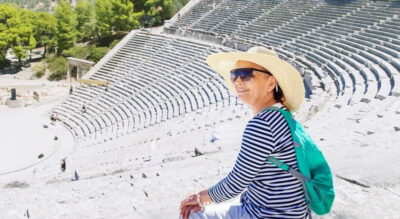
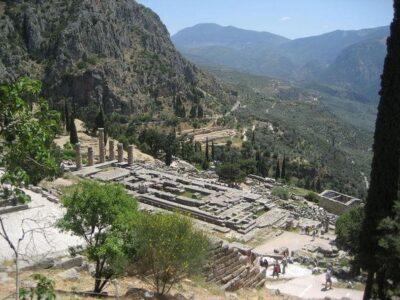
4-Day Classical Greece Tour: Epidaurus, Mycenae, Olympia, Delphi, Meteora
Read our review →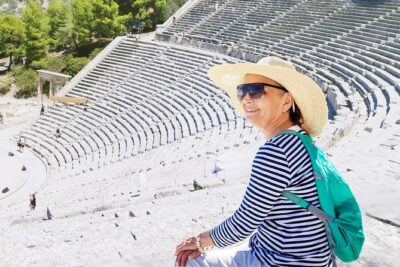
Ancient Corinth & Nafplio Full Day Trip with Swim
Read our review →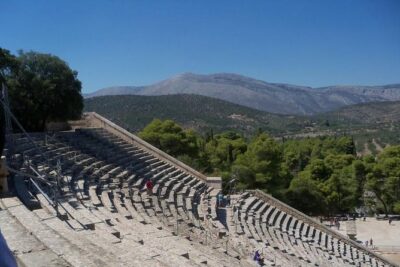
Mycenae and Nafplion Day Trip from Athens with Official guide
Read our review →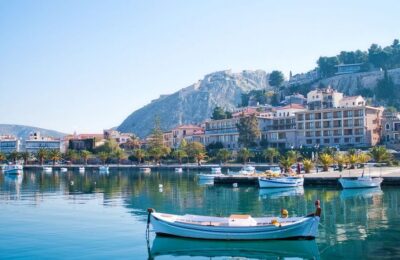
3-Day Classical Greece Tour: Epidaurus, Mycenae, Nafplion, Olympia, Delphi
Read our review →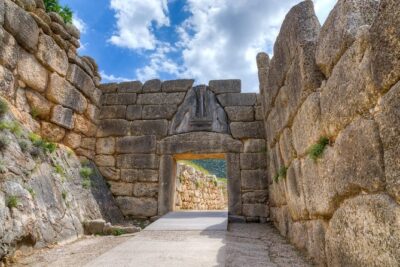
Mycenae, Epidaurus, Nafplio Full Day Private Tour from Athens
Read our review →Browse the lists this tour appears in