
Reviewed · DELPHI TOURS
4-Day Classical Greece Tour: Epidaurus, Mycenae, Olympia, Delphi, Meteora
The remarkable thing about this four-day tour is its reach. From Athens, you cross the Corinth Canal, walk into Mycenae and Olympia, stand at Delphi, and look up at Meteora’s cliff monasteries, all while sleeping in hotels and leaving the driving to someone else. It is a crash course in Classical Greece, not a slow village holiday.
I especially like two things here. The major entrance fees are bundled in, including two Meteora monasteries, so you are not stopping at every gate with your wallet open. I also like the range of scenery between the ruins: olive groves, mountain roads, seaside towns, farmland, and the spectacular bridge crossing toward western Greece.
The tradeoff is pace. You cover roughly 2,500 kilometers, with early starts and long rides. Hotel quality can also vary from solid and comfortable to dated, and some departures may grow larger after Delphi. If you want deep free time at each site or boutique lodging, this is not the right fit.
In This Review
- Key points to know before booking
- What this Classical Greece tour really covers
- Day 1: Corinth Canal, Epidaurus, and Mycenae
- Day 2: Olympia and the bridge to western Greece
- Day 3: Delphi, Apollo, and Athena Pronaia
- Day 4: Meteora and Thermopylae
- Hotels, meals, and the 4-star question
- How hard is the tour?
- The value of the $766.70 price
- Who should book it?
- FAQ
- What is included in the four-day Classical Greece tour?
- Are lunches included?
- Where does the tour start and end?
- What hotel rooms are provided?
- Is the tour available in languages besides English?
- What should I wear for Meteora and other religious sites?
Key points to know before booking
- Five UNESCO World Heritage Sites: Visit Epidaurus, Mycenae, Olympia, Delphi, and Meteora with site admissions included.
- A fast mainland-Greece route: You return to Athens on the fourth day at about 7 p.m., after a full day on the road.
- Three hotel nights and six included meals: Breakfast and dinner are included, while lunch is paid separately.
- Guide quality matters: Guides connected with this tour have included Joy, Xenia, Maria, Foteini, Sophia, Emilia, Eleni, and Dimitra.
- Comfortable but not luxury lodging: The Amalia hotels are generally clean and practical, though the 4-star label may not match North American expectations.
- Moderate walking on uneven ground: Bring sturdy shoes, water, sun protection, and clothing that covers shoulders and knees for religious sites and selected museums.
What this Classical Greece tour really covers
This is one of the most efficient ways to see the great archaeological sites of mainland Greece without arranging several hotels, rental cars, tickets, and road routes yourself. The price is $766.70 per person, though the final cost can change with the hotel category and any single supplement.
For that price, you receive three nights of accommodation, three breakfasts, three dinners, a professional guide, an air-conditioned vehicle, hotel pickup and return from selected Athens hotels, and admission to Mycenae, Epidaurus, Olympia, Delphi, and two Meteora monasteries.
That package has real value. Greece’s archaeological entrance fees add up, and the driving between these sites is not simple. You will be on mountain roads, crossing long stretches of the Peloponnese, and arriving in places where parking and navigation can be awkward. A capable driver removes a lot of work.
The main thing you give up is independence. You follow a fixed timetable, eat lunch where the schedule allows, and see each site in a guided block rather than wandering until you are ready to leave. The tour suits you best if your priority is seeing a lot of ancient Greece in a short visit.
More Delphi day trips:
- Athens: Mythology of Delphi, Museum and Arachova Guided Tour
★ 4.6 · 4,008 reviews - From Athens: Delphi Full Day V.R. Audio Guided Tour
★ 4.6 · 3,028 reviews - From Athens: Small-Group Delphi, Museum & Arachova Day Trip
★ 4.8 · 2,476 reviews
Day 1: Corinth Canal, Epidaurus, and Mycenae
Pickup begins between 7:30 and 8:15 a.m. from selected hotels. The group departs from Leof. Vasilisis Amalias 10 at 8:30 a.m., so do not treat the pickup window as a leisurely suggestion. Keep breakfast simple and have your day bag ready.
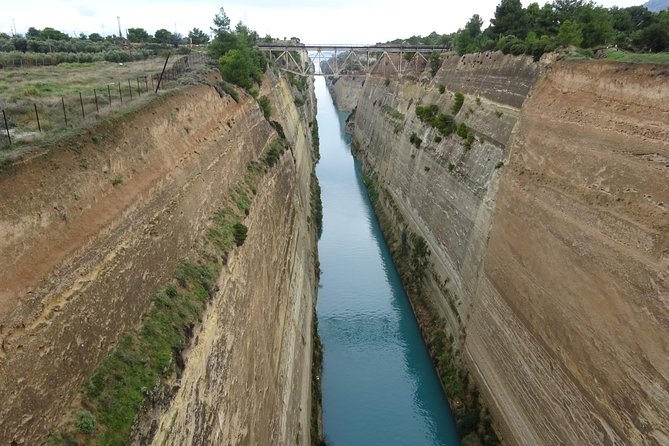
The first stop is the Corinth Canal, where a narrow waterway cuts through the isthmus linking the Gulf of Corinth and the Saronic Gulf. You have about 20 minutes here. That is enough for photos and a quick look, but not for a long walk or detailed exploration.
Next comes the Theatre of Epidaurus, usually one of the tour’s most memorable stops. The theater is famous for its elegant form and remarkable acoustics. You receive about an hour at the site, including the admission ticket. The guide’s explanation helps you see this as more than a beautiful semicircle of stone. It was part of a wider sanctuary connected with healing and worship.
The site involves walking over open ground, and summer heat can be intense. Take a hat, water, and sun cover. An umbrella can help in direct sun, though weather can change quickly. One departure experienced both heat and a sudden storm at Mycenae, a useful reminder to carry a light rain layer outside peak summer.
The itinerary also lists the Epidaurus Archaeological Museum, with about 15 minutes included. It is a short visit, so think of it as a compact introduction to objects and architectural pieces from the sanctuary rather than a full museum session.
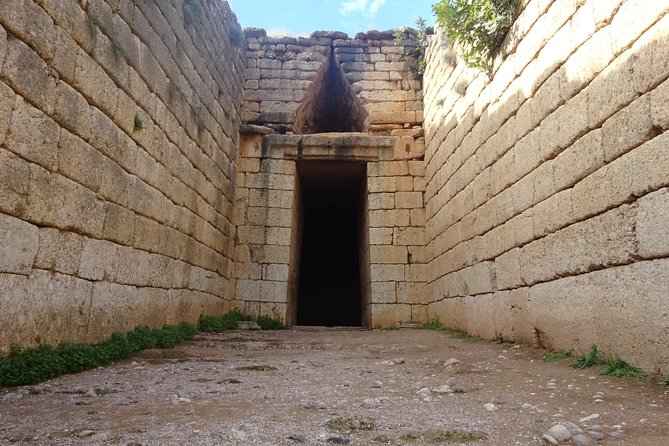
After lunch at your own expense, you continue to Mycenae, the fortified Bronze Age center linked in myth with Agamemnon. This is where the tour shifts from theater and sanctuary to a dramatic hilltop citadel. You will see the famous Lion Gate, massive stone walls, and the remains of the palace area. The Tomb of Agamemnon, also called the Treasury of Atreus, is a powerful stop nearby.
Mycenae is uneven, exposed, and more demanding than a quick city museum. Wear shoes with a firm sole. The guide adds the essential context, especially where archaeology, Homeric legend, and later Greek storytelling overlap. You should not expect every story about Agamemnon to be treated as proven fact, and a good guide will help separate myth from material evidence.
The first night is normally in Nafplio, though the overnight may sometimes be in Olympia instead. That change matters because it alters the feel of the evening and can shorten or lengthen the next day’s drive. Dinner at the hotel is included.
Day 2: Olympia and the bridge to western Greece
After breakfast, the second day focuses on Olympia, the sanctuary where the ancient Olympic Games were held. The archaeological site deserves about 90 minutes with the guide. You walk among the remains of temples, athletic facilities, and ceremonial spaces, trying to picture a place that drew Greek communities together despite their frequent rivalries.
Olympia is important because it was not simply an ancient sports stadium. It was a religious center dedicated mainly to Zeus, and the games were part of that sacred setting. The guide’s storytelling is especially useful here, since bare foundations can be hard to read without a clear explanation of what each area did.
The Archaeological Museum of Olympia receives about an hour. This is a strong part of the day, particularly if you care about sculpture. The museum gives you a closer look at objects found on the site, including major works associated with the sanctuary. You can enjoy details that are easy to miss while walking outdoors in the heat.
Lunch is not included. The scheduled lunch locations are practical, but they can be aimed at tour groups and may cost more than a small local taverna. You will want to budget for these three lunches, along with drinks and snacks. It is worth keeping water and something small to eat in your bag, even though the coach makes comfort stops.
The afternoon includes a crossing of the Rio-Antirrio Bridge, one of the striking modern engineering features on this route. It creates a strong contrast with the ancient stones you have been seeing all day. Dinner and the second overnight are at your hotel.
This is also the day when the distance starts to feel real. You are not just moving between nearby ruins. You are crossing a large part of mainland Greece, and the road time is part of the experience. The air-conditioned coach is an important feature, not a minor comfort.
Day 3: Delphi, Apollo, and Athena Pronaia
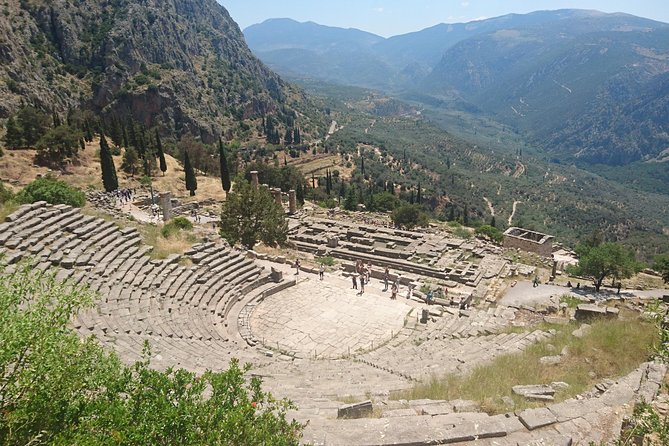
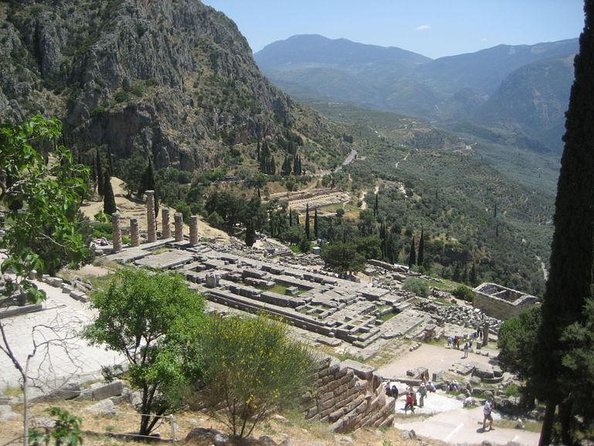
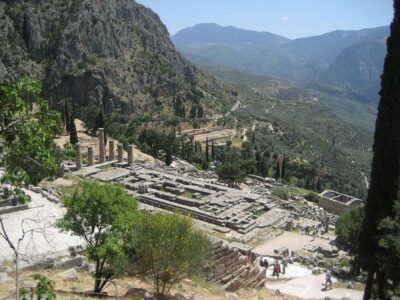
Delphi is the intellectual and spiritual center of the tour. In the ancient Greek world, people came here to consult Apollo’s oracle, and rulers treated its pronouncements with serious care. The mountainside setting makes the visit visually impressive, but the steep and uneven paths require attention.
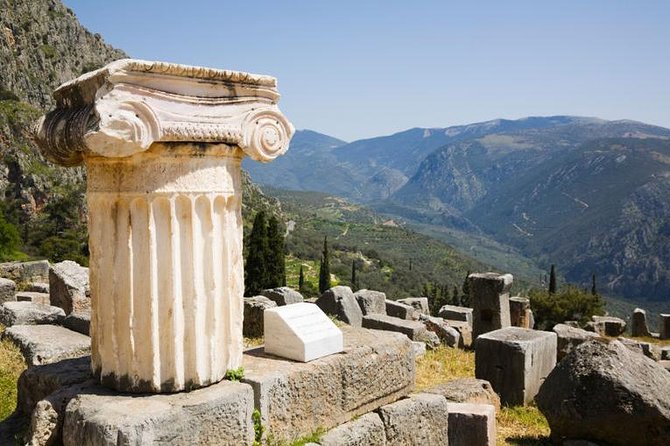
The main archaeological site includes the Temple of Apollo, with about 90 minutes set aside. You will see the remains of the Sacred Way and other monuments spread along the slope. The guide’s role is especially valuable here because Delphi is a place where politics, religion, myth, and architecture overlap.
The Delphi Archaeological Museum follows, with about an hour. It contains several famous works, including the bronze Charioteer of Delphi and the statues known as the Dancers. The museum is compact enough to visit without exhaustion, yet important enough to reward close attention.
You also stop at the Tholos of Athena Pronaia for roughly 30 minutes. Its circular form is one of the most recognizable images from Delphi. The stop is brief and admission is free, but the setting gives you a different view of the sanctuary complex.
Lunch is again at your own expense. The Delphi area has dramatic mountain views, but scheduled group restaurants can be more functional than intimate. If you care strongly about food, ask your guide what choices are available before ordering, and allow enough time to return to the coach.
Guide quality can shape this day. The tour has featured guides such as Xenia, Joy, Maria, Foteini, Emilia, Eleni, and Dimitra, with particularly strong praise for clear English, historical detail, and group organization. That does not guarantee a specific guide on your departure, but it tells you why the experience can vary so much from one group to another.
One practical issue deserves attention: some departures change vehicles or combine groups around Delphi for the onward journey. A small group may begin with a 9-, 12-, or 17-seat vehicle, then continue with a much larger coach. The published maximum is 40 people, but operational changes can affect how personal the commentary feels. If a small-group experience is essential to you, ask the operator to clarify the arrangement for your date.
More Meteora trips from Athens:
- Athens: Meteora Monasteries Day Trip with Caves and Lunch
★ 4.7 · 2,964 reviews - Athens: Meteora Monasteries Day Tour with Lunch
★ 4.8 · 2,196 reviews - Athens: Meteora Tour with Local Guide and Greek Lunch
★ 4.8 · 1,561 reviews - Athens: Meteora Monasteries, Caves & Coastal Stopovers with Lunch
★ 4.5 · 1,432 reviews
Day 4: Meteora and Thermopylae
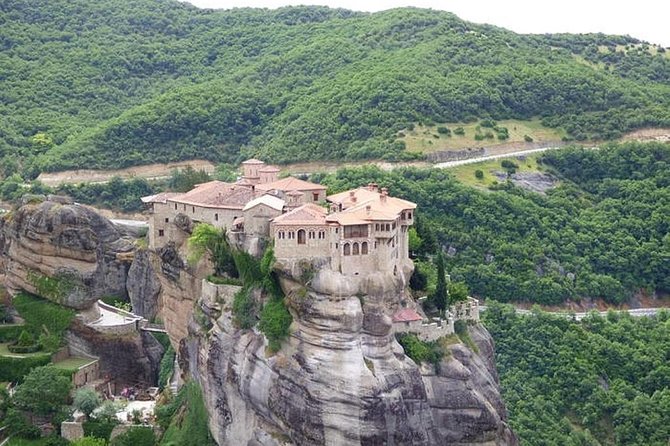
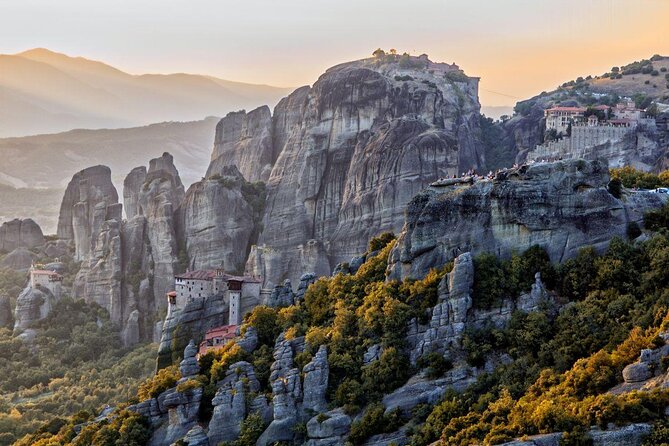
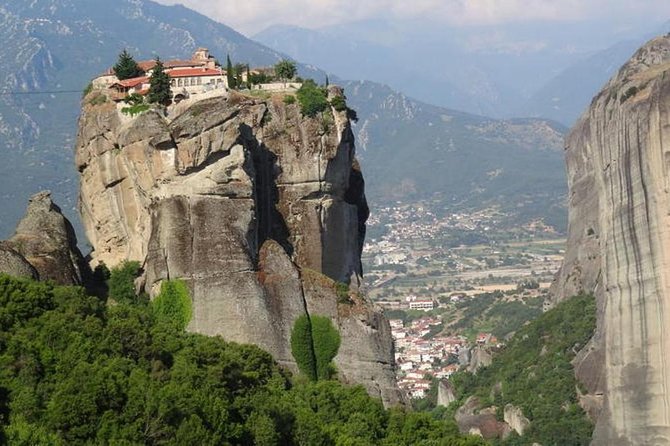
The final morning takes you toward Kalambaka and Meteora. The monasteries perch on tall rock formations, creating one of Greece’s most unusual sights. The tour includes admission to two monasteries, though the listed stop itself allows about an hour, so this is an overview rather than a full exploration of every religious building in the area.
Meteora is also where clothing rules become especially important. Men and women must cover knees and shoulders at places of worship and selected museums. Pack a scarf or light cover-up, and do not rely on very short shorts or sleeveless tops. You could be refused entry if you arrive dressed outside the required standard.
The final historical stop is the Leonidas Monument at Thermopylae, with about 15 minutes for a look and photographs. The memorial recalls the Spartan stand against the Persian army. It is a brief roadside stop, but it ties the trip back to the wars, legends, and heroic figures that have appeared throughout the tour.
The return to Athens takes much of the day. Drop-off is at the same meeting point, with arrival planned for about 7 p.m., though traffic can change that. Do not schedule a tight evening flight, ferry, or dinner reservation immediately after the return.
Hotels, meals, and the 4-star question
Accommodation is offered in tourist-class or 4-star categories, with one room assigned according to the booking: one double room for two adults, one triple room for three adults, and additional rooms for larger parties. A single booking can include a single room, but a single supplement applies when relevant.
The Amalia hotel chain appears often on this route. The hotels are generally clean, comfortable, and suited to a touring schedule. Several have pools, which can be welcome after a hot day among ruins. Rooms may have balconies or patios, and the hotel in Delphi is especially valued for its views.
Do not book the 4-star option expecting North American luxury. Some rooms and public areas feel dated, and air-conditioning has not always kept rooms as cool as people hoped. Twin beds may also be provided, even when a double setup was expected. The difference between the advertised category and your personal standard is the main lodging concern.
The included breakfast and dinner buffets make the tour easier. You can eat without hunting for a restaurant after a long road day, and there is usually a broad choice of fruit, vegetables, desserts, and Greek-style dishes. The downside is repetition. Hotel dinners can feel similar from night to night, and the quality may be good rather than special.
The environmental fee is €10 per room per night, paid at reception. For the three-night tour, that works out to €30 per booking when one room is used. Lunches, drinks, and tips are not included, so build those costs into your budget.
How hard is the tour?
You need moderate physical fitness. The sites include stone paths, cobbles, stairs, marble, rocks, slopes, and little shade. You do not need to be an athlete, but you should be comfortable walking for extended periods in warm conditions.
I would bring:
- Supportive walking shoes with good grip
- A refillable water bottle
- Hat, sunscreen, and sunglasses
- Light rain protection
- A scarf or cover-up for religious sites
- Small cash for lunches, drinks, tips, and the hotel fee
The schedule often begins around 8 a.m. and returns to the hotel near 7 p.m. Comfort stops are built into the long drives, and the driver must follow regulated rest periods. Still, road time is unavoidable. This is a sightseeing circuit with archaeological walks, not a restful break from routine.
The value of the $766.70 price
At $766.70 per person, the tour offers a strong amount of sightseeing for four days. Five major UNESCO sites, transportation, a guide, three hotel nights, six meals, and several admission fees would be costly and time-consuming to arrange separately.
The best value comes from the route. Epidaurus, Olympia, Delphi, and Meteora are spread across mainland Greece. A rental car would require careful planning, extra fuel, parking, tolls, navigation, and a driver willing to handle long days. Here, you can look out the window, listen to commentary, and arrive near the archaeological sites.
The price is less appealing if you expect luxury hotels, memorable restaurant meals, or a small private group throughout. The 4-star accommodation can feel closer to a clean 2- or 3-star standard by North American measures. Large-group transitions can also reduce the personal feel.
For a first visit to mainland Greece, I think the practical value is high. You are paying for access, logistics, and coverage. You are not paying for a slow, carefully tailored cultural journey.
Who should book it?
Book this tour if you want the main ancient sites in one organized sweep and you enjoy learning from a guide. It is a good match for history and archaeology fans, families with older children interested in mythology, solo visitors who prefer structured travel, and anyone adding mainland Greece before or after an island cruise.
Children who enjoy Greek myths may have a wonderful time, but very young children may struggle with long bus rides and repeated outdoor walks. Children aged 5 to 12 need a passport or identity card to receive the discounted price. Without the required identification, they may have to pay the standard site and museum entrance fees.
Skip it if you want daily freedom, high-end hotels, quiet meals, or lots of time in Nafplio, Delphi, or Kalambaka. You should also think twice if heat, uneven ground, or long coach rides are difficult for you.
The overall rating is 4.5 from 732 reviews, with 91 percent recommending the experience. That fits my reading of the tour’s strengths: excellent coverage, strong guides on many departures, capable drivers, and good practical value. The weak points are clear too: rushed visits, basic or dated lodging, uneven food quality, and possible changes in group size.
FAQ
What is included in the four-day Classical Greece tour?
The tour includes a professional guide, air-conditioned transportation, hotel pickup and drop-off from selected Athens hotels, three nights of accommodation, three breakfasts, three dinners, and admission to Mycenae, Epidaurus, Olympia, Delphi, and two Meteora monasteries.
Are lunches included?
No. Lunch is paid separately on all four days. You should also budget for drinks, tips, and the environmental hotel fee.
Where does the tour start and end?
The departure point is Leof. Vasilisis Amalias 10 in Athens. Pickup from selected hotels runs from about 7:30 to 8:15 a.m., with departure at 8:30 a.m. The tour ends back at the meeting point on the fourth day.
What hotel rooms are provided?
Each booking is valid for one room based on the number of adults: a double or twin room for two adults, a triple room for three adults, and additional rooms for larger groups. A single supplement applies when required.
Is the tour available in languages besides English?
French is available only on Mondays. During winter, all tours operate in English only.
What should I wear for Meteora and other religious sites?
You must cover your knees and shoulders at places of worship and selected museums. Shorts and sleeveless tops are not allowed, so bring suitable clothing or a light cover-up.
More Ancient Olympia trips
- 3-Day Classical Greece Tour: Epidaurus, Mycenae, Nafplion, Olympia, Delphi
★ 4.5 · 342 reviews - 4-Day Tour of Mycenae, Epidaurus, Olympia, Delphi & Meteora
★ 4.8 · 168 reviews - 4-Day Greece Highlights Tour: Epidaurus, Mycenae, Olympia, Delphi and Meteora
★ 5.0 · 79 reviews - Day tour to Ancient Olympia,Ancient Sparta Mycenae Including Meal
★ 5.0 · 54 reviews
More Mycenae and Epidaurus days
- From Athens: Mycenae, Epidaurus & Nafplio Full Day Trip
★ 4.8 · 2,438 reviews - From Athens: Mycenae, Epidaurus & Nafplio Full-Day Tour
★ 4.5 · 1,580 reviews - Athens: Ancient Corinth & Nafplio Full Day Trip with Swim
★ 4.8 · 523 reviews - Mycenae and Nafplion Day Trip from Athens with Official guide
★ 4.5 · 501 reviews
Freshly added Athens trips
- Athens and Ancient Corinth Private from Athens★ 5.0 · 3 reviews
- From Athens: Mycenae and Epidaurus Private Tour★ 4.8 · 3 reviews
- Full day Meteora private tour★ 5.0 · 3 reviews
- Double Shore Dive (certified divers)★ 4.5 · 3 reviews
- Athens Hills: Mythology Treasure Hunt★ 5.0 · 3 reviews
- Sunset & swimming at Cape Sounio, Poseidon temple★ 5.0 · 3 reviews
- Philosophy Experience at Plato’s Academy Park – basic version★ 5.0 · 3 reviews
- Private Acropolis Tour – Ticket Included★ 5.0 · 3 reviews
Delphi Tours, compared.

Mythology of Delphi, Museum and Arachova Guided Tour
Read our review →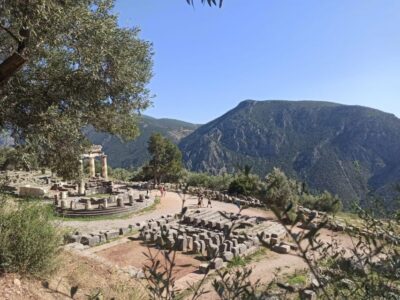
Small-Group Delphi, Museum & Arachova Day Trip
Read our review →
Delphi English Day Trip from Athens with Official Guide
Read our review →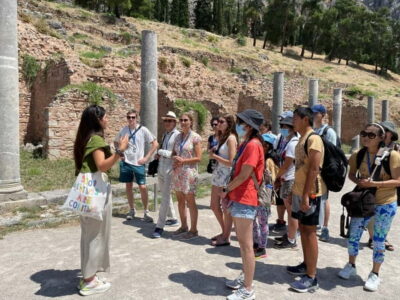
Delphi Guided Trip with Optional Lunch and Entry
Read our review →
Historical Delphi One Day Tour with Arachova Stop & Expert Guide
Read our review →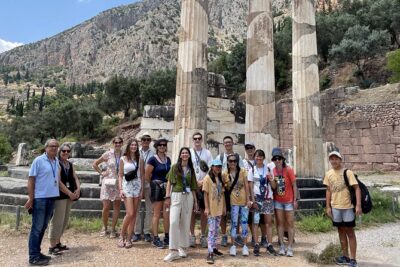
Premium Delphi Day Trip with an Expert Guide, Museum & Lunch
Read our review →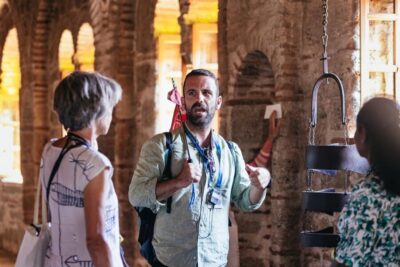
Browse the lists this tour appears in