
Reviewed · ANCIENT CORINTH TOURS
Private Tour of Apostle Paul’s Footsteps in Ancient Corinth
The most meaningful part of this private Corinth tour is the chance to connect familiar Bible passages with real places. You can walk through the ancient Agora where Paul preached, see the Bema where he is believed to have faced trial, and visit Kenchreai, the port tied to his arrival and departure. The Acrocorinth fortress adds a dramatic non-biblical layer, with huge walls and wide views above the old city.
I like two things here. First, the private car gives you a calmer day than a large coach trip, with room to ask questions and adjust the pace. Guides such as Giannis, Nick, Ruslan, George, and Fotis are praised for clear explanations, safe driving, and special care with older family members. Second, the tour combines Paul’s story with Greek engineering, Roman Corinth, pagan worship, and medieval fortifications.
The main consideration is that your driver is not a licensed archaeological guide, and admission to the archaeological site and museum costs an additional €15 per person. If you expect a formal, verse-by-verse Bible tour inside every site, this may feel too broad. If you want a private historical outing with strong Christian connections, it offers solid value.
In This Review
- Key points before you book
- Why Ancient Corinth makes such a strong Paul tour
- The Corinth Canal gives you a quick lesson in geography
- The Diolkos shows ancient Greek practical thinking
- Kenchreai connects Paul with the eastern sea route
- Ancient Corinth brings the Bible setting into focus
- The museum fills in what the ruins cannot show
- Acrocorinth is the visual high point
- Saint Paul Church provides a modern closing scene
- The private car is the real convenience
- Who gets the best value from the $169.03 price
- Practical advice for a smoother Corinth day
- Should you book this private Corinth tour?
- FAQ
- Where does the Apostle Paul tour begin?
- How long does the tour last?
- Is airport pickup included?
- What language is the tour offered in?
- Is this a private tour?
- What kind of vehicle is used?
- Are entrance fees included?
- Is a licensed guide included at the archaeological sites?
- What should I wear or bring?
- Can I cancel for a full refund?
Key points before you book
- See Corinth through several time periods: The route covers ancient engineering, Roman trade, early Christianity, Greek mythology, and medieval military history.
- Walk where Paul preached: The Agora, Bema, shops, and nearby streets help give physical meaning to the Corinthian letters and Acts of the Apostles.
- Enjoy a private vehicle from Athens: Pickup is available at your hotel, apartment, or port, and groups of one to four use a sedan.
- Allow five to six hours: Travel time is included, so this is a focused half-day outing rather than a full day at the ruins.
- Plan for extra entry costs: The archaeological site and museum charge €15 per person, while airport pickup adds €50 per booking.
- Expect a driver-led experience: Your English-speaking driver provides historical information, but a licensed guide is not included inside the sites.
Why Ancient Corinth makes such a strong Paul tour
Corinth was not a quiet village on the edge of Greece. Its position on the Isthmus made it a major crossroads between mainland Greece and the Peloponnese. Goods, sailors, soldiers, merchants, and religious ideas all passed through here.
That setting matters when you think about Paul’s work. He spent about 18 months with the Corinthians around A.D. 50 and 51, preaching in a city shaped by commerce and competing beliefs. The setting was practical, worldly, and religiously mixed. Christianity did not arrive in an empty place.
This tour works best when you let those layers sit together. You are not simply ticking off Christian locations. You are also seeing how ships crossed the isthmus, how Roman authority worked, how pagan temples shaped public life, and how Corinth became a place where Paul’s message met a complicated urban culture.
The private format helps here. You can ask why a site matters to Paul, how much of the ancient city remains, or what is known from the Bible compared with later tradition. Guides named in the tour feedback, including Giannis, Nick, Ruslan, George, Dennis, Johnny, and Fotis, are repeatedly praised for answering questions and explaining the wider Greek setting.
More Ancient Corinth and canal stops:
- From Athens: Ancient Corinth Day Trip with Canal & VR Guide
★ 4.6 · 1,073 reviews - Private Biblical Tour Ancient Corinth & Isthmus Canal from Athens
★ 5.0 · 762 reviews - Athens: Ancient Corinth & Nafplio Full Day Trip with Swim
★ 4.8 · 523 reviews
The Corinth Canal gives you a quick lesson in geography
Your first stop is the Isthmus of Corinth, the narrow land bridge linking mainland Greece with the Peloponnese. The isthmus is about 6.3 kilometers wide, and the modern canal cuts directly through it.
You get about 20 minutes here, enough to look down at the canal, take photographs, and understand why this strip of land mattered for so long. The steep limestone walls and blue water make a strong first scene, but the real value is geographical. Once you see the narrow crossing, Corinth’s importance becomes easier to grasp.
The canal was completed in 1893. It turned the Peloponnese into an island and gave ships a shortcut around the long southern route. The modern project also makes an interesting contrast with the much older attempts to move ships across the isthmus.
Do not expect a long canal cruise or a major museum stop here. This is a short orientation visit. It works well at the start of the tour because it gives you a simple map in your head before you begin exploring ancient Corinth.
The Diolkos shows ancient Greek practical thinking
A short stop at the Diolkos follows. This stone-paved trackway predates the canal by more than two thousand years and was used to move ships overland across the isthmus.
You have around 10 minutes to see the remains. That is brief, but the stop is unusual. Many visitors know the canal, yet far fewer realize that ancient engineers created a workable land route for hauling vessels between the two seas.
The Diolkos also helps explain Corinth as a commercial center. Moving a ship over land was difficult, but it could save a dangerous voyage around the Peloponnese. This was not just a clever trick. It was part of the city’s economic and strategic power.
Because the stop is short and the remains are limited, you will get the most from it if your driver explains what you are looking at. It is not a grand monument. It is a practical ruin, and that is exactly why it is interesting.
Kenchreai connects Paul with the eastern sea route
At the ancient port of Kenchreai, also written as Kechrees, you visit the eastern harbor of Corinth. Paul is associated with this port during his first visit to Corinth around A.D. 51, and he later departed from here for Ephesus.
The stop lasts about 20 minutes. Only modest traces remain, so set your expectations correctly. You are not walking through a complete harbor district. The importance comes from the location and its connection to the early Christian community.
Kenchreai is also linked with Phoebe, a Christian woman from the local church who is associated with Paul’s letter to the Romans. The site gives you a useful reminder that women played active roles in the early Christian movement, even though ancient public monuments rarely preserve their stories in equal detail.
This is one of the places where a private driver can make a real difference. The physical remains may not explain themselves, but a good explanation can connect the port to Paul’s travels, maritime routes, and the people around him.
More footsteps-of-Paul trips:
- Biblical Tour Letters ToThe Corinthians St Paul’s Footsteps 6Hour
★ 5.0 · 1,065 reviews - Paul”s Footsteps Ancient Corinth Biblical Tour
★ 5.0 · 184 reviews - Private Luxury Biblical Tour: Apostle Paul in Athens & Corinth
★ 5.0 · 162 reviews - Private Luxury Biblical Tour: Apostle Paul’s Footsteps – Corinth
★ 5.0 · 148 reviews
Ancient Corinth brings the Bible setting into focus
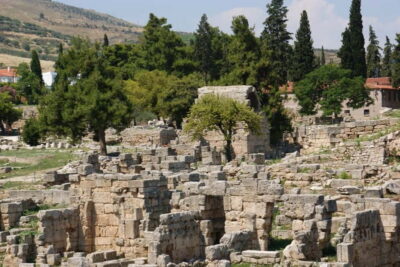
The main archaeological site is Ancient Corinth, or Archaia Korinthos. You get about 40 minutes here, though the time may feel tight if you want to study every visible ruin.
The Agora is the heart of the visit. In Paul’s time, this was a public marketplace and meeting area, not simply a collection of stones. Picture shops, civic business, religious activity, and daily errands taking place in the same urban space. The Corinthian community Paul addressed lived and worked around places like this.
The Bema, a raised platform in the city center, is linked with Paul’s appearance before the Roman proconsul. It is one of the clearest physical points for visitors following Acts of the Apostles. You can stand near the place where Roman law and public preaching came into contact.
The nearby shops also help make the story more human. Paul worked as a tentmaker and is associated with Aquila and Priscilla, who shared that trade. The remains do not provide a complete picture of their workshop, but the commercial setting gives you a more grounded view of Paul’s daily life. He was not only preaching. He was also working and building relationships.
Look for the street connected with Erastus, a civic official and a name associated with Paul’s circle. Details such as this are especially useful if you have read the New Testament before the trip. Bring a Bible or Bible app if that helps you follow the references as you walk.
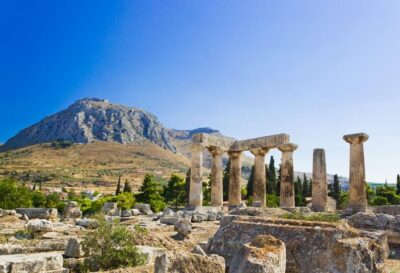
The Temple of Apollo is another major sight. Its surviving columns are a reminder that Corinth had a long religious life before Christianity. The contrast matters. Paul’s message entered a city shaped by Greek and Roman worship, civic ceremony, and established ideas about the gods.
This is also the stop where the tour’s limitations are most noticeable. The driver can explain the history, but a licensed guide is not included inside the archaeological site. If you want detailed archaeological interpretation, you may prefer to arrange a licensed guide separately or use your own reading beforehand.
The museum fills in what the ruins cannot show
The Archaeological Museum of Ancient Corinth gives you about 45 minutes. It was built in 1932 to hold discoveries from the excavations, and it adds objects that help explain how people lived in the city.
The galleries include prehistoric finds and material from the Sanctuary of Asklepios. You will see evidence of daily life, religious practice, and artistic work across several periods. The museum is especially useful after the Agora because it supplies the small details that open-air ruins cannot preserve.
I would not rush this stop. The remains outdoors can blur together if you are not used to reading ancient sites. A museum visit gives you objects with a clearer human scale, including pieces tied to worship, medicine, household life, and civic culture.
The €15 entrance fee covers the archaeological sites and museum according to the tour information. Keep that cost in mind when comparing the advertised price of $169.03 per person. The base rate includes a private air-conditioned vehicle, bottled water, onboard WiFi, hotel or port pickup, and an English-speaking driver, but the entry charge is extra.
Acrocorinth is the visual high point
Acrocorinth rises above Ancient Corinth and was used as a fortified acropolis. Its walls and defenses were built and strengthened over many centuries by Greek, Byzantine, Frankish, Venetian, and Ottoman rulers.
You get roughly 40 minutes here. That is enough to explore a portion of the fortress and enjoy the views, but not enough for a slow examination of every wall and tower. Wear shoes with a firm grip. The route involves walking over uneven ground, and the elevated setting can make the sun feel stronger.
Acrocorinth is a different experience from the Agora. Ancient Corinth helps you picture public life below. Acrocorinth shows why the location mattered to armies and rulers. Its height provided protection and control over the surrounding routes.
The site is also connected with the Temple of Aphrodite, whose ancient reputation has contributed to Corinth’s image as a center of pagan worship. Claims about the sanctuary and its priestesses are part of the traditional account of the site, but your main experience here is the fortress, the walls, and the broad view.
Several guides are praised for helping older family members in and out of the car and adjusting the pace. That is useful here, since Acrocorinth may be the most physically demanding stop. Still, the supplied information does not promise full accessibility, so ask in advance if anyone in your group has serious walking limits.
Saint Paul Church provides a modern closing scene
The final stop is the Church of Saint Paul, or Apostolos Pavlos Church, in the center of Ancient Corinth. You spend about 20 minutes here.
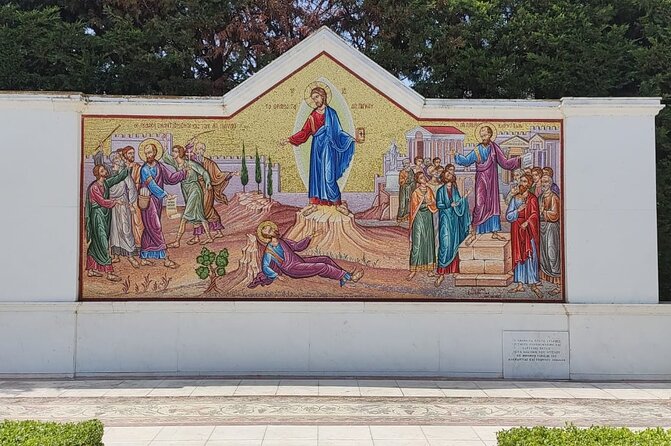
Inside, a mosaic by Pastorutti and Tsotsonis depicts Paul’s journey and mission in Corinth. After the archaeological site, the church gives you a modern place for reflection. It links the ancient setting with the continuing religious importance of Paul’s story.
This stop is likely to matter most to Christian visitors, but it can also interest anyone studying how modern communities remember ancient figures. The church is not an archaeological ruin. It is a present-day tribute built near the places associated with Paul.
The tone of the tour is not fixed. Some drivers keep the discussion mainly historical, while others bring Scripture and personal faith more directly into the day. If you want a strongly devotional experience, tell your driver at the start. If you prefer history first, say so. The private format makes that conversation easier.
The private car is the real convenience
Pickup is offered at Athens hotels and apartments, with the driver waiting at the entrance. At the port, the driver waits at the gate with a sign bearing your name. Airport pickup and drop-off are possible for an extra €50 per booking.
For groups of one to four people, the company uses a sedan. Larger vehicles may be used for bigger groups, but the exact vehicle is not specified. The tour includes air conditioning, WiFi, and bottled water, all useful in Greece’s hot, sunny weather.
The private arrangement is particularly helpful if you are traveling with an older parent or if you are arriving from a cruise ship. Drivers named George, Dennis, and Ruslan are praised for careful driving, helping passengers in and out, and coordinating pickup times. One group was picked up from Piraeus and later dropped at the airport, which shows how useful the transfer option can be when arranged properly.
Travel time counts toward the five to six hours. You are not getting five to six full hours inside the ruins. The route has seven stops, and several are short. Think of it as an efficient Corinth overview with meaningful Paul connections, not a slow archaeological study.
Who gets the best value from the $169.03 price
At $169.03 per person, the tour is not the cheapest way to reach Corinth. Its value comes from the private transport and the time saved arranging the route yourself.
You are paying for hotel or port pickup, an air-conditioned vehicle, an English-speaking driver, bottled water, and a direct route through several sites. A private tour can also be good value for a family or small group because everyone shares the vehicle and receives a more personal pace.
The price makes less sense if you only want to see the canal and the main ruins. In that case, a simpler transport option may be enough. It makes more sense if you want Kenchreai, the Diolkos, Acrocorinth, the museum, and the church in one organized outing.
Add the €15 per person site and museum fee. Add €50 if you need airport pickup. Group discounts are available, though the amount is not specified, so check the final price for your group before booking.
Practical advice for a smoother Corinth day
Wear comfortable shoes, especially for Ancient Corinth and Acrocorinth. Bring a hat and sunscreen, and carry water even though bottled water is supplied.
The tour is offered in English. Child seats are available on request, and most people can participate, but the information does not give a specific accessibility rating. Tell the provider about mobility needs before the day, particularly if Acrocorinth is important to you.
Book early if your dates are fixed. The average booking lead time is about 65 days, which suggests that popular travel periods can fill ahead of time.
You can cancel for a full refund up to 24 hours before the start time. Changes made inside that 24-hour window are not accepted, and late cancellations are not refunded. The tour requires good weather, with a different date or full refund offered if poor weather causes cancellation.
Should you book this private Corinth tour?
Book it if you want a comfortable, efficient trip from Athens that joins Paul’s story to the wider history of Corinth. It is especially suitable for Christian visitors, families, cruise passengers, and anyone who prefers a private car to a large group.
You should also book it if Acrocorinth appeals to you. The fortress is the visual highlight, while the Agora, Bema, Kenchreai, and church supply the strongest Paul connections.
Think twice if you want a formal biblical seminar or a licensed guide leading you through the archaeological site. The driver provides historical information, but that is not the same as an on-site archaeological specialist. For most people seeking a thoughtful half-day outing, though, the combination of personal transport, strong guide service, and varied sites makes this a worthwhile addition to an Athens stay.
FAQ
Where does the Apostle Paul tour begin?
Pickup is available from hotels and apartments in Athens, with the driver waiting at the entrance. Port pickup is also available, with the driver waiting at the gate and holding a sign with your name.
How long does the tour last?
The tour lasts approximately five to six hours. Travel time between Athens and Corinth is included in that duration.
Is airport pickup included?
No. Airport pickup or drop-off is optional and costs an additional €50 per booking.
What language is the tour offered in?
The tour is offered in English.
Is this a private tour?
Yes. Only your group participates in the activity.
What kind of vehicle is used?
Groups of one to four people use a sedan. The vehicle is air-conditioned and includes WiFi onboard.
Are entrance fees included?
No. Entrance fees for the archaeological sites and museum cost €15 per person.
Is a licensed guide included at the archaeological sites?
No. The tour includes an English-speaking professional driver with historical knowledge, but a licensed guide to accompany you inside the sites is not included.
What should I wear or bring?
Wear comfortable shoes for walking and exploring. A hat and sunscreen are recommended because the weather can be hot and sunny.
Can I cancel for a full refund?
Yes, if you cancel at least 24 hours before the experience start time. Cancellations made less than 24 hours in advance are not refunded, and poor-weather cancellations receive a different date or full refund.
Freshly added Athens trips
- Athens and Ancient Corinth Private from Athens★ 5.0 · 3 reviews
- From Athens: Mycenae and Epidaurus Private Tour★ 4.8 · 3 reviews
- Full day Meteora private tour★ 5.0 · 3 reviews
- Double Shore Dive (certified divers)★ 4.5 · 3 reviews
- Athens Hills: Mythology Treasure Hunt★ 5.0 · 3 reviews
- Sunset & swimming at Cape Sounio, Poseidon temple★ 5.0 · 3 reviews
- Philosophy Experience at Plato’s Academy Park – basic version★ 5.0 · 3 reviews
- Private Acropolis Tour – Ticket Included★ 5.0 · 3 reviews
Ancient Corinth Tours, compared.
Ancient Corinth Day Trip with Canal & VR Guide
Read our review →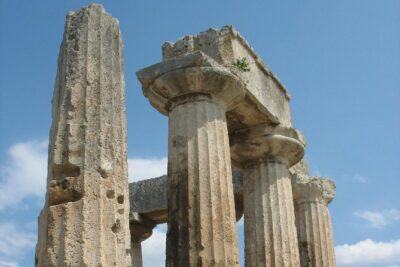
Private Biblical Tour Ancient Corinth & Isthmus Canal from Athens
Read our review →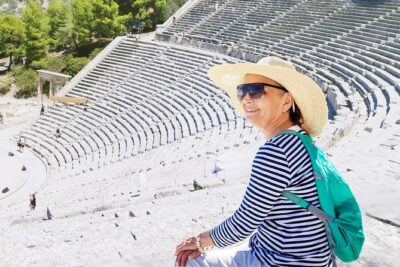
Ancient Corinth & Nafplio Full Day Trip with Swim
Read our review →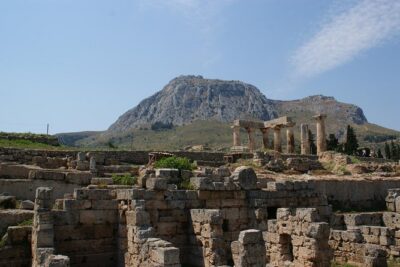
Corinth Half-Day Trip from Athens with Entrance Tickets
Read our review →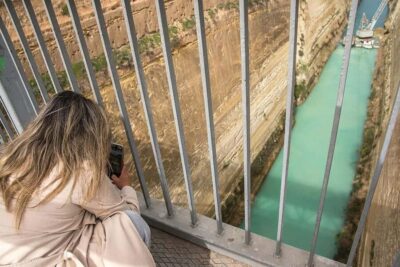
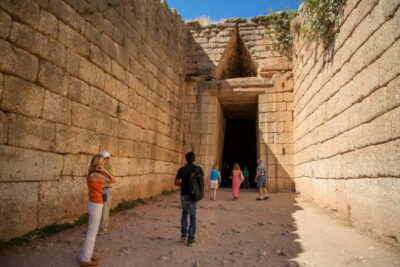
Ancient Corinth, Epidaurus, Nafplio full day private tour from Athens
Read our review →Browse the lists this tour appears in