
Reviewed · MYCENAE & EPIDAURUS TOURS
Biblical Ancient Corinth Canal Epidaurus Nafplio Private Tour
The best thing about this day is the range: you move from the Corinth Canal and Saint Paul’s Corinth to the near-perfect theatre at Epidaurus, then finish in handsome Nafplio. It is a lot of Greece in one private vehicle, with the freedom to adjust the plan instead of following a fixed group schedule.
I like the door-to-door pickup and the personal pace. I also like that drivers such as Giannis, Themos, and Chris have adjusted stops for families, added places of interest, and helped guests make the most of a hot day. The main drawback is time. Eight and a half hours is tight for this many sites, and admission fees, lunch, and a licensed guide are extra.
In This Review
- Key points to know before booking
- One long day across the Corinthian Gulf
- The Corinth Canal and a 2,000-year-old idea
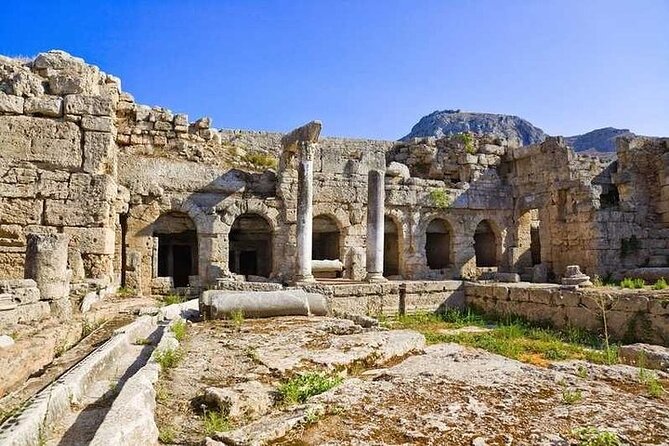
- Ancient Corinth, Saint Paul, and the Temple of Apollo
- Epidaurus and the theatre that carries a whisper
- Nafplio, from fortress views to a harbor castle
- What the private format really adds
- Is $240.93 per person good value?
- Who will enjoy this day most?
- Should you book the Corinth, Epidaurus, and Nafplio tour?
- FAQ
- How long does the private tour last?
- Where can pickup and drop-off take place?
- Is the tour private?
- What type of vehicle is used?
- Are entrance fees included?
- Is lunch included?
- Is a licensed guide included?
Key points to know before booking
- The Corinth Canal is a quick but worthwhile first stop, with a free 20-minute visit and a story that reaches back to the ancient world.
- Ancient Corinth combines archaeology and Christian history, including the setting linked with Saint Paul.
- Epidaurus has the day’s strongest single sight, its famous theatre, but the sanctuary and museum also deserve attention.
- Nafplio gives you a welcome change of pace, with lunch, coffee, shopping, harbor views, and a look at Palamidi Castle.
- Private transport matters here, since the route covers several destinations beyond Athens and includes hotel, apartment, port, and adjustable pickup options.
- The price is strongest for a small group, especially when you value comfort, flexibility, and a driver who can shape the day around your interests.
One long day across the Corinthian Gulf
This private tour covers the western side of the Attica region and the northeastern Peloponnese. You leave Athens by air-conditioned car or minivan, cross toward the Corinthian Isthmus, continue south through Argolis, and return after visiting Nafplio.
The route is ambitious. The listed stops add up to several hours on the ground, before you count driving, lunch, photo breaks, and the return to Athens. Think of this as a broad introduction rather than a slow archaeological study.
That tradeoff can work well if you want to see several major places in one day. It is less suitable if you prefer to read every museum label, walk every fortress path, or linger at each ruin.
Your driver meets you at your hotel lobby, apartment entrance, port gate, or the airport arrival hall if you arrange airport pickup for an added cost. The driver returns you to the original point or another agreed location. Pickup time can be adjusted, which is useful for families, cruise passengers, and anyone trying to fit the tour around a flight or hotel schedule.
Groups of one to three use a sedan, while groups of four to seven use a minivan. Vehicles include air conditioning, Wi-Fi, and bottled water. That last detail matters in the Greek heat, especially during the open-air visits at Corinth, Epidaurus, and Palamidi.
More Ancient Corinth and canal stops:
- From Athens: Ancient Corinth Day Trip with Canal & VR Guide
★ 4.6 · 1,073 reviews - Private Biblical Tour Ancient Corinth & Isthmus Canal from Athens
★ 5.0 · 762 reviews - Athens: Ancient Corinth & Nafplio Full Day Trip with Swim
★ 4.8 · 523 reviews
The Corinth Canal and a 2,000-year-old idea
The first stop is the Corinth Canal, where you get about 20 minutes to look across the narrow cut and take photographs. Admission is free, so this is an easy opening stop with little financial fuss.
The canal links the Gulf of Corinth with the Saronic Gulf. By cutting across the isthmus, it separates the mainland from the Peloponnese and saves ships from sailing around the peninsula. Before the modern canal opened in the late 19th century, that longer route added roughly 185 nautical miles.
The idea was not new. Periander, the tyrant of Corinth, is said to have considered digging a canal around 602 BC. Ancient engineers could not carry out the full project, so a stone road called the diolkos allowed ships to be moved on wheeled platforms.
Your 20 minutes here will not allow a long walk or a detailed look at the engineering. Still, it gives you a clear sense of why Corinth became so important. If you want a dramatic first photograph and a useful piece of ancient transport history, the canal earns its place.
Ancient Corinth, Saint Paul, and the Temple of Apollo
Ancient Corinth receives about 90 minutes, followed by time in its archaeological museum and at the Temple of Apollo. The entrance fee to the archaeological site is listed as €15 per person, and museum and site charges are not included in the tour price.
Corinth occupied the narrow land bridge between mainland Greece and the Peloponnese, roughly between Athens and Sparta. That position made it a major commercial and political center. The ancient city had an estimated population of 90,000 in 400 BC, a striking figure for the period.
The site also matters to Christian visitors. Saint Paul visited Corinth during his missionary travels, and the New Testament letters First Corinthians and Second Corinthians preserve the city’s name in Christian history. You can appreciate the archaeological remains on their own, but a licensed guide would add useful context, especially for separating the Greek, Roman, and early Christian layers.
Roman forces destroyed Corinth in 146 BC. Julius Caesar established a new Roman city here in 44 BC, and Corinth later became the Roman provincial capital of Greece. That sequence explains why the ruins do not belong to one clean historical period. You are looking at a city rebuilt and reshaped over centuries.
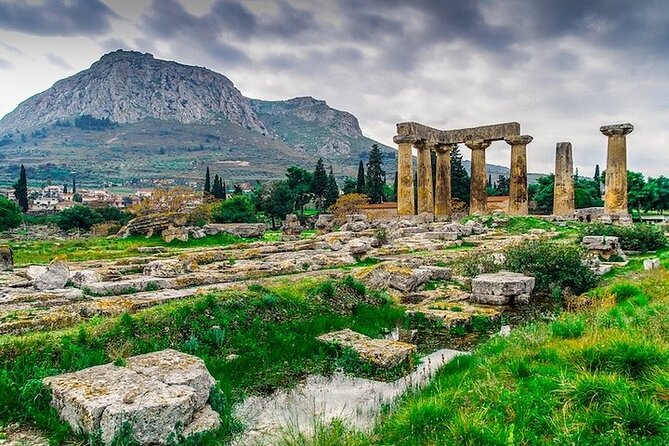
The archaeological site includes the Agora, the Lechaion Road, the Fountain of Peirene, a basilica, a theatre, a stoa, and other remains. The Temple of Apollo is the most recognizable feature, with its surviving Doric columns. The temple was built around 550 BC and is among the earliest Doric temples in the Greek mainland and the Peloponnese. Its large monolithic columns give the ruin a solid, almost stern appearance.
Acrocorinth, or Upper Corinth, rises above the ancient city on a massive rock. The tour allows about 30 minutes there. Its fortress commanded the route into the Peloponnese, and its secure water supply helped it serve as a final defensive position for centuries.
This is a short visit, so do not expect to explore every wall or reach every viewpoint. The reward is the commanding view and the sense of why the site mattered. If stairs, uneven ground, or heat are concerns, tell your driver early. One advantage of a private tour is that you can choose how much time and energy to give the climb.
Epidaurus and the theatre that carries a whisper
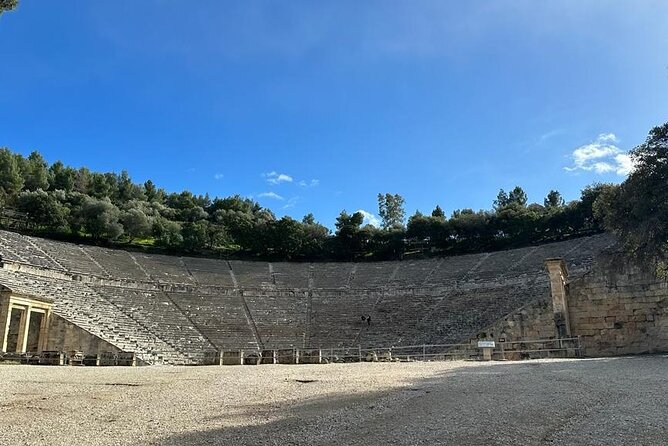
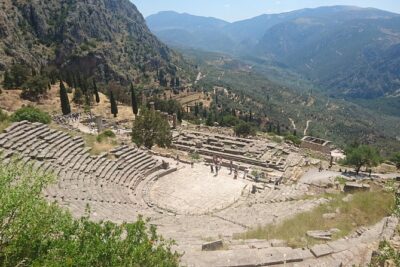
Epidaurus is the emotional high point for many people on this route. The sanctuary was dedicated to Asclepius, the ancient Greek god of medicine, and functioned as a major healing center. The tour allows about an hour for the wider archaeological area, then another 30 minutes at the museum, 15 minutes at the sanctuary, and 45 minutes at the theatre.
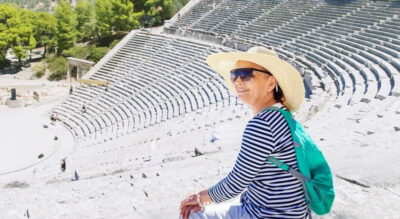
The Ancient Theatre of Epidaurus is famous for its design and acoustics. Its curved seating area, orchestra, and stage building form the classic tripartite layout of a Hellenistic theatre. A small sound test from the stage can help you appreciate the acoustics, but be considerate if other people are exploring nearby.
The theatre was part of a larger religious and medical complex. People came to the sanctuary of Asclepius seeking treatment and divine help. The site competed with major sanctuaries such as Olympia and Delphi, which gives you a better idea of its importance in the ancient Greek world.
The Archaeological Museum of Epidaurus displays finds from the sanctuary and is known for reconstructed temple elements, columns, and inscriptions. The museum is not large, but it helps explain fragments that can be difficult to understand outdoors.
The listed entrance information deserves careful attention. The archaeological site fee is given as €20 per person, while the museum and other admissions are also excluded. Ask for the current combined or separate ticket price when you book, since the supplied charges do not present one complete total for every Corinth and Epidaurus entry.
Epidaurus requires walking on exposed archaeological ground. Bring water, a hat, and shoes that can handle uneven surfaces. The tour provides bottled water and an air-conditioned vehicle, but the shade and cool air disappear once you enter the site.
More Mycenae and Epidaurus days:
- From Athens: Mycenae, Epidaurus & Nafplio Full Day Trip
★ 4.8 · 2,438 reviews - From Athens: Mycenae, Epidaurus & Nafplio Full-Day Tour
★ 4.5 · 1,580 reviews - 4-Day Classical Greece Tour: Epidaurus, Mycenae, Olympia, Delphi, Meteora
★ 4.5 · 732 reviews - Mycenae and Nafplion Day Trip from Athens with Official guide
★ 4.5 · 501 reviews
Nafplio, from fortress views to a harbor castle
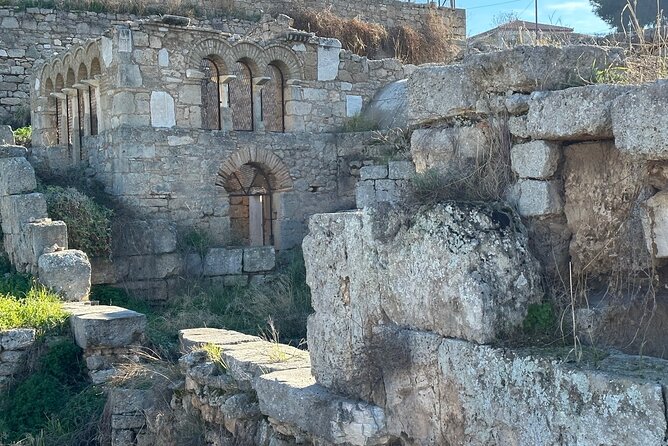
After the archaeological sites, Nafplio offers a useful change of rhythm. You have free time for lunch, coffee, and shopping, with about an hour listed for the town. Meal costs are not included, and the driver can help point you toward a suitable lunch stop.
Nafplio was the first capital of the Greek Republic and later the kingdom of Greece during the early years after the Greek Revolution. Its port, old fortifications, and position at the head of the Argolic Gulf give the town a strong historical character without requiring another long museum visit.
The Lion of the Bavarians is an unusual stop. The monument is carved into the rock above Michael Iatrou Street and shows a sleeping lion. It honors Bavarian soldiers from the dynasty of Otto who died in Nafplio during a typhoid epidemic in 1833. A small park sits below it, making this a quick photo and history stop rather than a major visit.
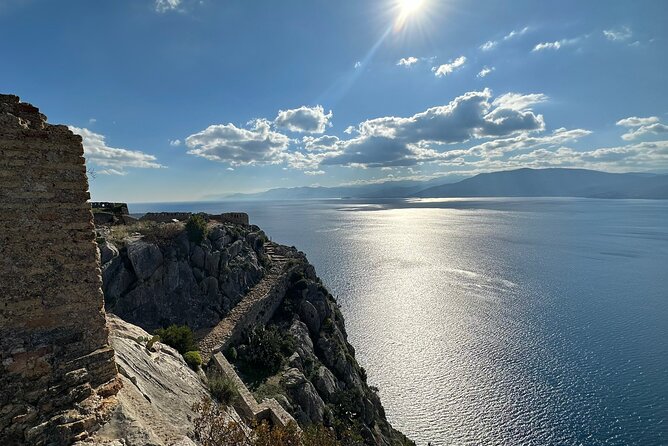
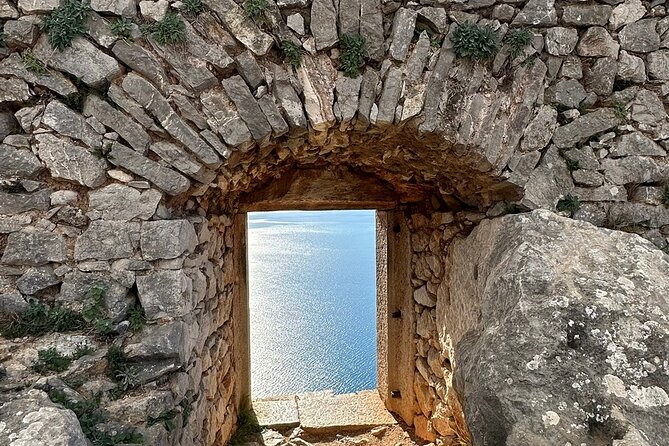
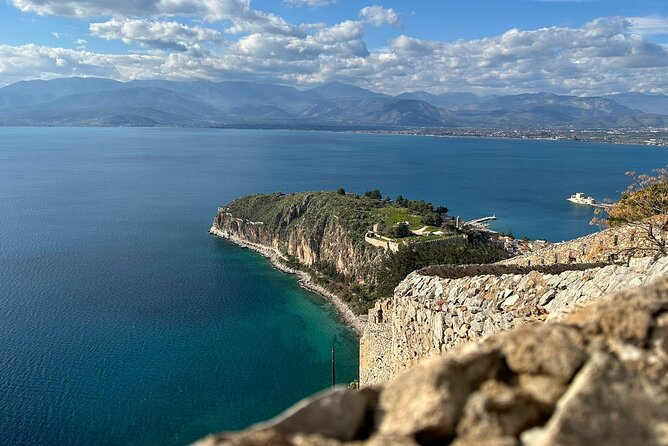
Palamidi Castle is the main Nafplio sight. The Venetian fortress sits on a 216-meter hill above the town and offers wide views over Nafplio, the gulf, and the surrounding country. The stairway from town is famously counted at 913 steps, though local estimates often round the total to 999 or more depending on the route and starting point.
The tour allows 30 minutes at Palamidi and lists admission at €20 per person. That is enough for a quick look and photographs, but not a full fortress walk. If the view is your priority, the stop can work well. If you want to inspect the bastions, prison, and paths in detail, you will need more time than this schedule provides.
The Akronafplia is the oldest part of Nafplio. It was once a separate town and later became part of the wider fortifications under Frankish and Venetian rule. Parts of the area were used as a prison, and its elevated position gives you another way to understand Nafplio’s defensive past.
Bourtzi, the small Venetian water castle in the harbor, is viewed from the waterfront. The 10-minute stop is intended for photographs rather than a full visit, and admission is not included. The castle’s position offshore gives Nafplio a memorable final image.
What the private format really adds
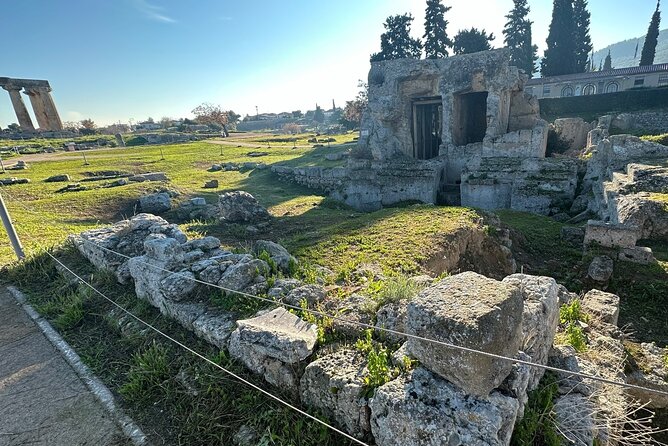
The strongest reason to choose this tour is not simply the number of stops. It is the control you get over a demanding day.
The drivers are English-speaking and have extensive historical knowledge, but they are not licensed guides accompanying you inside the archaeological sites. That distinction matters. You should expect useful explanations during the drives and at the stops, but not the same formal site interpretation you would receive from a licensed archaeologist.
If Corinth or Epidaurus is your main interest, you can hire a licensed guide separately at the sites or arrange one in advance. One past visitor specifically recommended doing so because the added context made the ruins more meaningful. Without a guide, you will still see the monuments, but you may miss how the pieces fit together.
The private setup is especially helpful for mixed-age groups. A family with teenagers and older adults can split up briefly, use shaded areas or cafés, and avoid forcing everyone to walk at the same pace. A driver can also add a stop or alter the order when time allows. Chris, Themos, and Giannis are names associated with especially flexible service, but your assigned driver may be different.
Do not assume every requested change will fit. The route already includes Corinth, Epidaurus, Nafplio, and several smaller stops. Extra detours are possible only if the day’s timing permits them.
Is $240.93 per person good value?
At $240.93 per person, the tour is not a budget outing. Its value depends heavily on group size and what you would otherwise spend arranging transport.
The price covers a fully private vehicle, pickup and drop-off, fuel, tolls, air conditioning, Wi-Fi, water, and an English-speaking driver. For a group of several people, that can be a sensible way to reach sites that are spread across two regions without managing rental-car directions, parking, or a packed public transport schedule.
The cost is harder to justify for one person or a couple if you mainly want a single destination. In that case, a smaller day trip focused only on Corinth or Epidaurus might offer more time at the site. Here, you are paying for breadth, privacy, and convenience.
Set aside extra money for Ancient Corinth, the Corinth museum, Palamidi Castle, Epidaurus, and other archaeological entries. The listed fees include €15 for Ancient Corinth, €20 for Palamidi, and €20 for the Epidaurus archaeological site, but the exact museum charges are separate or not fully specified. Lunch, tips, and airport pickup are also extra.
Group discounts are offered, though the amount is not specified. Ask for the total price for your exact party before booking, including children and any requested car seats.
Who will enjoy this day most?
I would choose this tour if you have one day outside Athens and want a broad look at ancient sites, fortifications, and a historic coastal town. It is well suited to families, private groups, cruise passengers, and anyone who prefers a car over a large coach.
It also works for people with mixed interests. One person can focus on Saint Paul and Corinth, another on Greek theatre, and another on Nafplio’s cafes and shops. The private format gives the group more room to make practical choices.
I would think twice if you want a slow, academic visit. The schedule is full, and the 8.5-hour estimate may feel especially compressed if you spend time inside both museums or walk far at Acrocorinth and Palamidi.
The tour requires good weather. Cancellation because of poor weather brings either a different date or a full refund. You can cancel for a full refund up to 24 hours before the start time, while later cancellations and changes are not accepted.
Should you book the Corinth, Epidaurus, and Nafplio tour?
Book it if you value private transport and flexibility more than extended time at each monument. You will see the Corinth Canal, the remains of a major Roman and Greek city, one of Greece’s finest theatres, a medical sanctuary, and Nafplio’s castles in a single day.
Before paying, confirm your pickup point, the vehicle size, current admission fees, and whether you want a licensed guide at Corinth or Epidaurus. If you are traveling with family or a group of up to seven, ask about car seats, lunch timing, and which stops can be shortened.
This is a strong choice for a first look at the northeastern Peloponnese. It is not the final word on any one site, but it gives you a comfortable and flexible introduction to several of Greece’s most rewarding places.
FAQ
How long does the private tour last?
The tour lasts approximately 8 hours and 30 minutes.
Where can pickup and drop-off take place?
Pickup is available from an Athens hotel, apartment or Airbnb residence, port, and airport for an additional airport pickup cost. The driver can return you to the original location or another agreed point.
Is the tour private?
Yes. Only your group participates.
What type of vehicle is used?
Groups of one to three people use a luxury sedan. Groups of four to seven use a comfortable minivan. Vehicles include air conditioning and Wi-Fi.
Are entrance fees included?
No. Archaeological sites and museums are paid separately. Listed fees include €15 for Ancient Corinth, €20 for Palamidi Castle, and €20 for the Epidaurus archaeological site.
Is lunch included?
No. Lunch time is scheduled in Nafplio, but the meal cost is not included.
Is a licensed guide included?
No. The tour includes an English-speaking driver with historical knowledge, but a licensed guide to accompany you inside the archaeological sites is not included.
More footsteps-of-Paul trips
- Biblical Tour Letters ToThe Corinthians St Paul’s Footsteps 6Hour
★ 5.0 · 1,065 reviews - Private Tour of Apostle Paul’s Footsteps in Ancient Corinth
★ 5.0 · 275 reviews - Paul”s Footsteps Ancient Corinth Biblical Tour
★ 5.0 · 184 reviews - Private Luxury Biblical Tour: Apostle Paul in Athens & Corinth
★ 5.0 · 162 reviews
Freshly added Athens trips
- Athens and Ancient Corinth Private from Athens★ 5.0 · 3 reviews
- From Athens: Mycenae and Epidaurus Private Tour★ 4.8 · 3 reviews
- Full day Meteora private tour★ 5.0 · 3 reviews
- Double Shore Dive (certified divers)★ 4.5 · 3 reviews
- Athens Hills: Mythology Treasure Hunt★ 5.0 · 3 reviews
- Sunset & swimming at Cape Sounio, Poseidon temple★ 5.0 · 3 reviews
- Philosophy Experience at Plato’s Academy Park – basic version★ 5.0 · 3 reviews
- Private Acropolis Tour – Ticket Included★ 5.0 · 3 reviews
Mycenae & Epidaurus Tours, compared.
4-Day Classical Greece Tour: Epidaurus, Mycenae, Olympia, Delphi, Meteora
Read our review →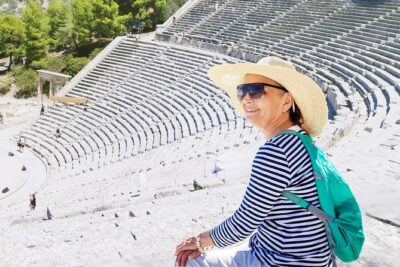
Ancient Corinth & Nafplio Full Day Trip with Swim
Read our review →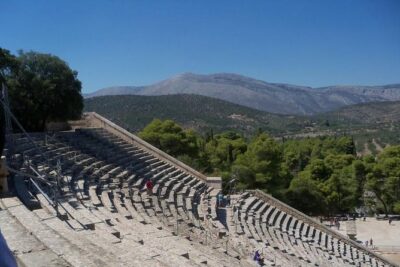
Mycenae and Nafplion Day Trip from Athens with Official guide
Read our review →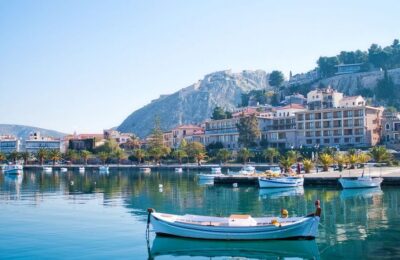
3-Day Classical Greece Tour: Epidaurus, Mycenae, Nafplion, Olympia, Delphi
Read our review →
Mycenae, Epidaurus, Nafplio Full Day Private Tour from Athens
Read our review →Browse the lists this tour appears in