
Reviewed · GREEK MYTHOLOGY TOURS
Athens: Family Mythology Treasure Hunt and Tour
Athens becomes a giant game board on this family mythology hunt. You help Athena defeat Poseidon and win the right to name the city, solving smartphone riddles as you walk from Hadrian’s Arch through Plaka, Anafiotika, and up toward the Acropolis.
I like the clever mix of storytelling and sightseeing, which gives children a reason to look closely at old stones and winding lanes. I also like the built-in lukumades stop, since warm Greek donuts with honey and cinnamon give young legs a welcome rest. The main drawback is the walking: stairs, mild uphill sections, and summer heat can make this feel longer than two hours for small children.
In This Review
- Key points to know
- Turning Athens into Athena’s game board
- Starting at Hadrian’s Arch
- The Temple of Olympian Zeus and the big myths
- Plaka, where the clues get more playful
- Anafiotika’s lanes and family photos
- Areopagus and the climb to the view
- The final stop, clues, and collected tokens
- Lukumades, the sweet break that helps
- How long it takes and how much it is worth
- Who will enjoy this most
- Practical details before you book
- Should you book the Athens mythology treasure hunt?
- FAQ
- Where does the Athens mythology treasure hunt begin?
- How long does the activity last?
- What languages are available?
- What landmarks does the route include?
- Is food included?
- What should I bring?
- Is the route suitable for young children?
Key points to know
- Athena versus Poseidon: The mythology plot gives children a clear mission instead of asking them to listen to a long standard walking tour.
- A live guide stays with you: Guides including Jo, Maria, Aliki, and Orestis add history, answer questions, and help when a clue proves tricky.
- The route covers classic Athens: You visit Hadrian’s Arch, the Temple of Olympian Zeus, Plaka, Anafiotika, and Areopagus.
- Lukumades are included: Greek donuts with honey and cinnamon, plus water, are part of the experience.
- A charged phone matters: The digital riddles guide your next move, while the tour leader provides the needed materials.
- Plan for real walking: Comfortable shoes, sunglasses, and some patience with steps and inclines will improve the day.
Turning Athens into Athena’s game board
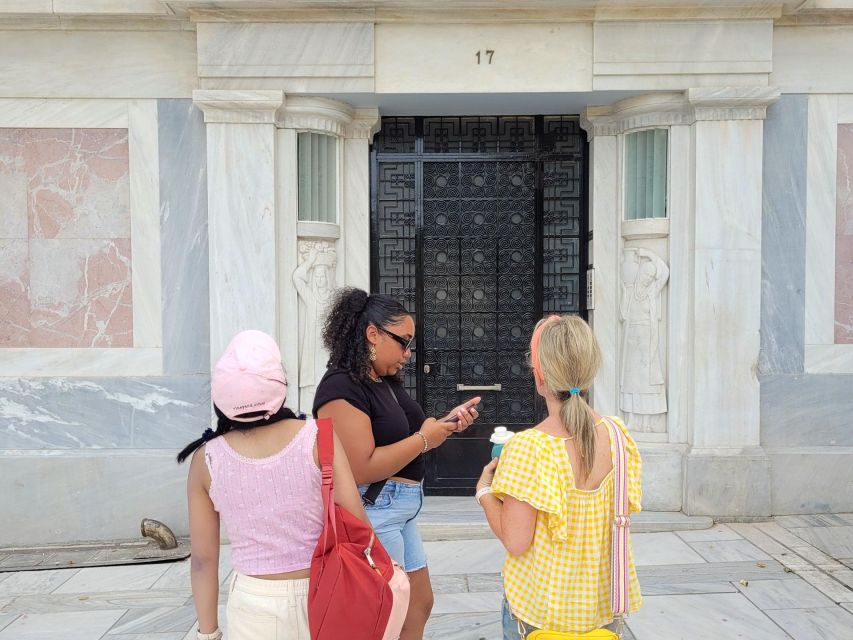
The clever idea here is simple: children help Athena win her famous contest with Poseidon and decide the city’s name. Instead of receiving mythology as a lecture, you use clues, answer questions, collect tokens, and move through Athens looking for the next part of the story.
That structure matters. A five-year-old will not care much about a date carved into a stone, but might care very much about finding the place that helps Athena win. Older children can read the text on the phone and solve the riddles, while adults enjoy the monuments and fill in the historical background.
Your guide remains with the group from start to finish. Jo, Maria, Aliki, Orestis, and other guides have been praised for being patient, friendly, and engaging. That human help is important because the app is only part of the experience. If you miss a turn or cannot spot the right location, the guide can nudge you along without giving away every answer.
The format works best when parents join the game rather than simply watch. Let your children read a clue, suggest an answer, and lead the group for a few minutes. You will get more from the activity than if you treat it as a normal guided walk with a phone attached.
More mythology-flavoured Athens days:
- Athens: Mythology of Delphi, Museum and Arachova Guided Tour
★ 4.6 · 4,008 reviews - Athens & Acropolis Highlights: Greek Mythology Small-Group Tour
★ 5.0 · 2,370 reviews - Athens: Acropolis and Mythology Highlights Small Group Tour
★ 4.8 · 2,275 reviews
Starting at Hadrian’s Arch
The meeting point is Hadrian’s Arch, at Leoforos Vasilisis Amalias 50. It is a useful place to begin because you are already near some of central Athens’ most important ancient sites, and the arch provides an immediate visual reminder that this city has several historical layers.
From here, the guide sets up the rules and gives you the digital materials needed for the hunt. You should arrive with a fully charged smartphone, since the riddles and written clues form the working part of the game. Check your booking email for the exact meeting details and instructions, including your spam folder if the message does not appear in your main inbox.
The opening usually sets the tone for the whole outing. You are not expected to be a mythology expert. The guide supplies the context, explains what to do, and keeps the pace moving while your family works out the answers.
The Temple of Olympian Zeus and the big myths
The Temple of Olympian Zeus is one of the strongest early stops. Even in its ruined state, the scale of the surviving columns gives children something easy to grasp: these are enormous building blocks from a world of gods, heroes, and rulers.
The stop is listed at about 10 minutes, so do not expect an extended archaeological visit. You will see the site, hear a focused explanation, and use it as part of the clue trail. That short format is a good match for families because it delivers one clear idea before attention begins to wander.
This is also where the mythological theme earns its keep. Zeus, Athena, and Poseidon are not abstract names on a museum label. They become characters in the family’s mission. The guide can connect the old stories to the monuments, helping children see why the ancient Greeks placed so much meaning in these gods.
You should not book this as a replacement for a full Acropolis archaeological tour. The emphasis here is movement, play, and selected sights rather than detailed excavation notes or a slow examination of every monument.
Plaka, where the clues get more playful
The hunt continues into Plaka, the old quarter around the Acropolis. Its narrow lanes and small passages make a natural setting for a treasure hunt. You may need to read the clue carefully, look around for the right feature, and work out where the story sends you next.
Plaka is more enjoyable with a purpose. Without one, families can drift through the streets without knowing which corners matter. Here, each turn has a reason, and the guide adds facts about the area while the children concentrate on the challenge.
The route includes a stop of roughly 10 minutes in Plaka, but the overall pace depends on your group. A family with an eager older child may move quickly. A family with a five-year-old, stroller, or several children will need more time for pauses, questions, and snacks.
One useful tip is to keep the group together. The phone may make the activity feel independent, but the guide is there to connect the clues with the places around you. You will get better explanations if you pause long enough to look up from the screen.
Same city, a completely different century:
- Athens: Acropolis & up to 5 Archaeological Sites Combo Pass
★ 4.4 · 12,619 reviews - Athens: Acropolis Ticket with Optional Audio or Live Guide
★ 4.2 · 11,055 reviews - Athens: Acropolis, Parthenon & Acropolis Museum Guided Tour
★ 4.8 · 9,316 reviews - Athens: Cape Sounion & Poseidon Temple Sunset Half-Day Trip
★ 4.8 · 8,241 reviews
Anafiotika’s lanes and family photos
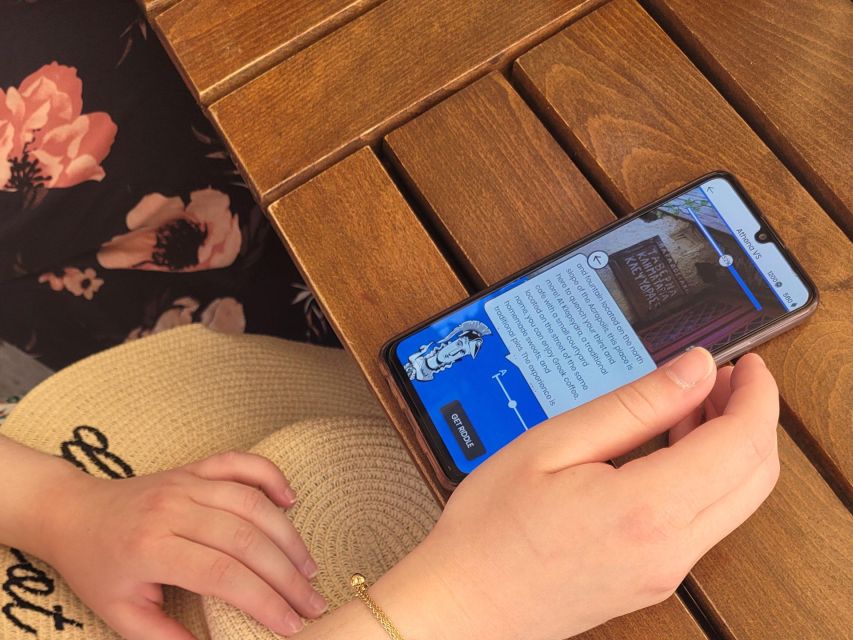
Anafiotika brings a change of mood. This small area on the Acropolis slope is known for its narrow lanes and simple whitewashed buildings, creating a sharp contrast with the major monuments below. It is the sort of place children often remember because it feels like a secret passage rather than a formal ancient site.
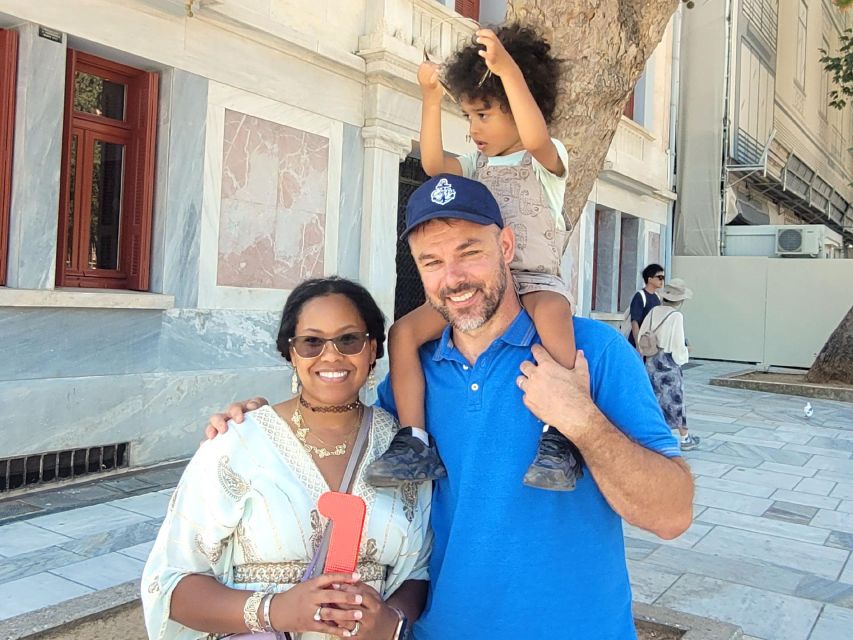
The stop includes sightseeing and a photo break. You can take family pictures here, although the most dramatic Acropolis backdrop comes later near Acropolis Hill. Keep your camera ready, but do not let the hunt turn into a race through the lanes. The charm is in noticing the small details as you walk.
This part can be less comfortable for anyone who dislikes uneven routes or steps. The activity specifically warns about staircases and mild uphill sections. A family brought a stroller for a five-year-old and found it useful, but you should still expect to manage it over sections that are not perfectly flat.
Areopagus and the climb to the view
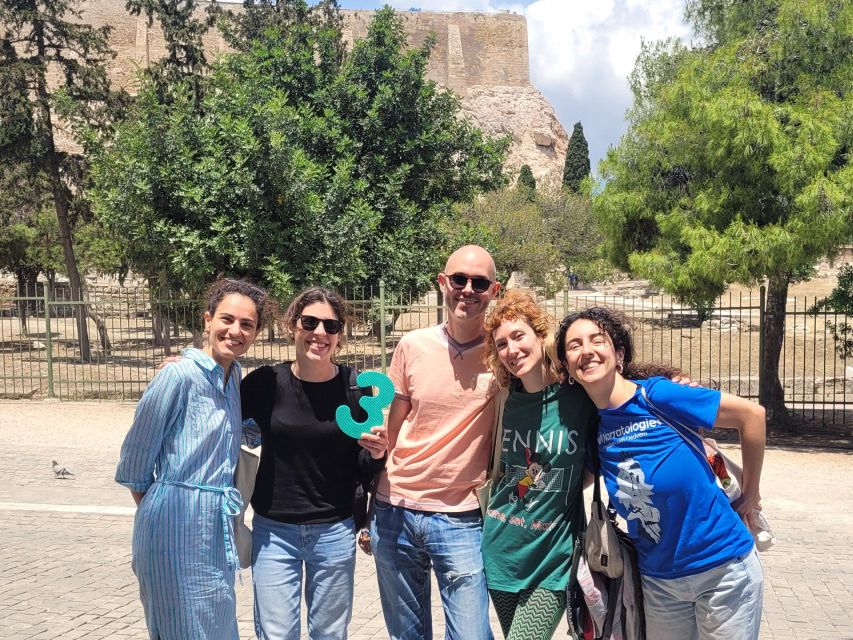
Areopagus is another photo stop and one of the most memorable points on the route. From this rocky height, you can look across central Athens with the Acropolis close by. The climb helps explain why the final part of the hunt can feel more strenuous than the advertised time suggests.
The view gives the children a physical reward after the clues and walking. You are not just checking answers on a screen. You are reaching a high point, seeing the city spread below, and taking photos with one of Athens’ great backdrops.
Take care on the stone surface and keep children close. The supplied information does not promise a fully smooth or step-free route, and the general warning about stairs and uphill walking is worth taking seriously. Sunglasses and water are sensible, especially during hot weather.
A summer heat wave made the experience harder for one group, and that is easy to understand. Athens can be intensely sunny, with limited shade along some central routes. I would choose a cooler starting time when possible, dress lightly, and avoid treating this as a casual indoor activity.
The final stop, clues, and collected tokens

The route includes a final lesser-known stop before the ceremony. The exact details of that place are not provided in advance, which fits the treasure-hunt format. You reach it by following the riddles rather than by simply being led from one famous sight to another.
As you solve challenges, you collect tokens that can later be redeemed online for family-friendly rewards. These support sustainability, women’s empowerment, and innovation. The reward system is not the main reason to book, but it gives the children a satisfying finish and links the game to useful causes.
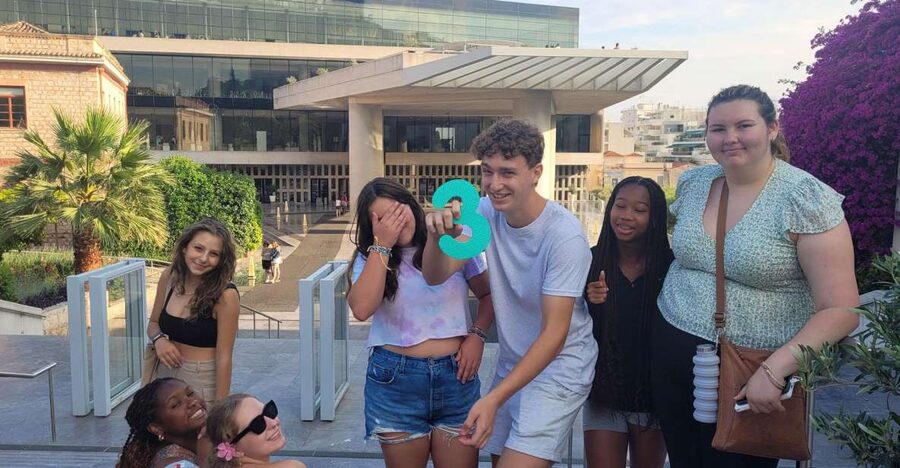
The ending takes place with a celebratory ceremony led by the guide. You finish the Athena and Poseidon story, celebrate the solved puzzles, and take family photographs near the Acropolis. For many parents, that closing moment is valuable because it creates a clear memory of the day rather than letting the activity simply fade into another walk.
Lukumades, the sweet break that helps
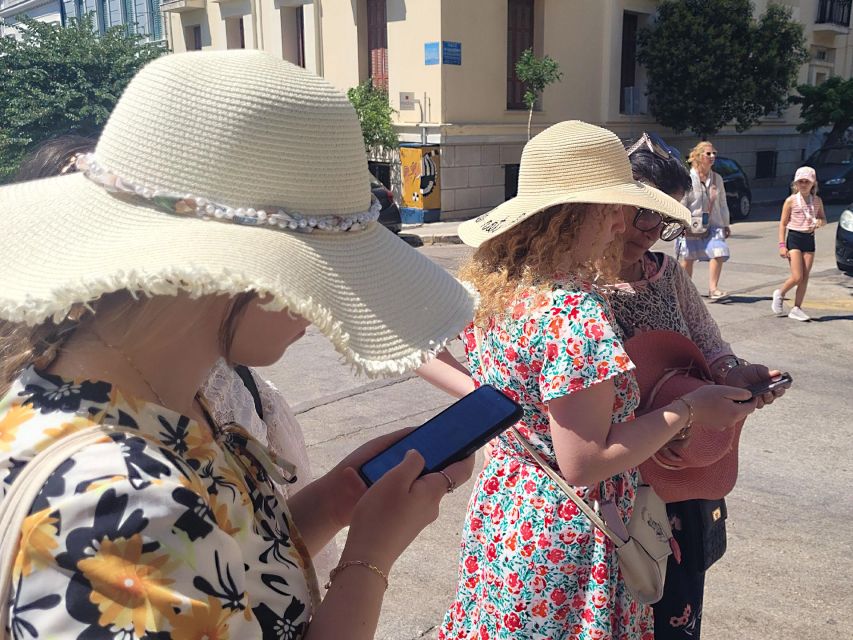
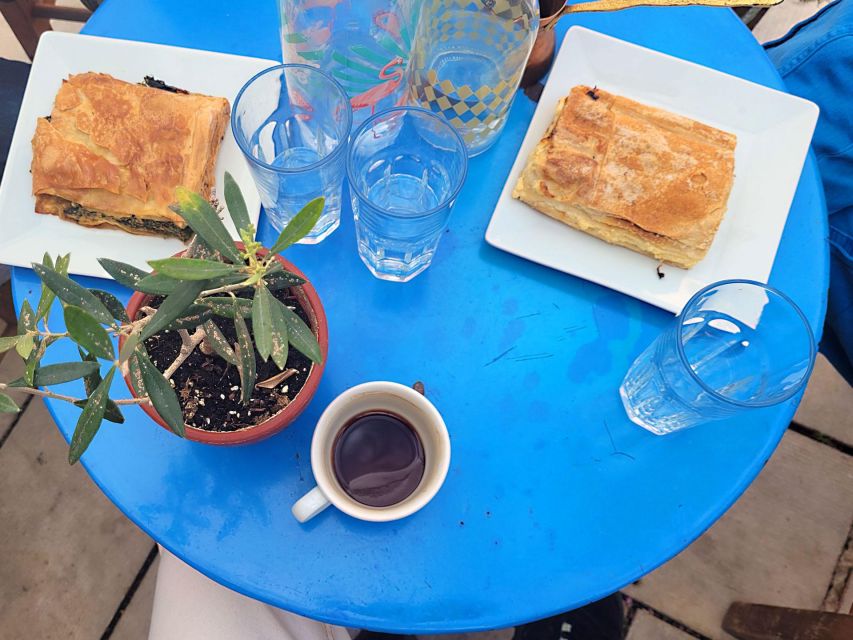
Greek lukumades are small fried dough balls served with honey and cinnamon. They are lighter than many visitors expect from a doughnut, and they give the family a pleasant food break during the hunt.
The included food stop comes with water. Drinks beyond water are not included, so bring money if you want something else. Tell the guide about dietary restrictions before the activity so the food stop can be handled as well as possible.
Some families have also had an additional traditional food stop during their outing, including time at a tavern away from the busiest tourist streets. Since the stated inclusion is one lukumades stop, I would treat any second stop as a possible extra rather than something to depend on when planning lunch.
The food is more than a sweet bonus. It gives children a chance to sit down, use a bathroom, and reset before the next clue. One family with four boys found that food pauses and a playground break helped keep everyone focused over a longer outing.
How long it takes and how much it is worth

The listed duration is two hours, and that is a sensible planning figure for the core experience. Still, one family with four children said their outing lasted about three hours, so I would avoid scheduling a museum reservation or ferry immediately afterward.
At $59 per person, this is not the cheapest way to see Plaka. You are paying for a private-feeling family activity with a live guide, a digital hunt, a food stop, mythology storytelling, and help navigating a route that includes several major locations.
The value improves if you have children who resist ordinary sightseeing. A standard walking tour may offer more historical detail for less money, but this format gives children a role. That can save the day from the familiar family problem of adults enjoying the monuments while the youngest members ask when it will be over.
The price is harder to justify for adults traveling without children, or for families whose main goal is a detailed look at the Temple of Olympian Zeus and Acropolis sites. You can see several places, but the tour is not designed as a full archaeological explanation.
The rating is 4.8 from 42 reviews, with repeated praise for the guides, food, and ability to hold children’s attention. The strongest pattern is not one particular landmark. It is the blend of clues, walking, mythology, and friendly help from guides such as Jo and Maria.
Who will enjoy this most
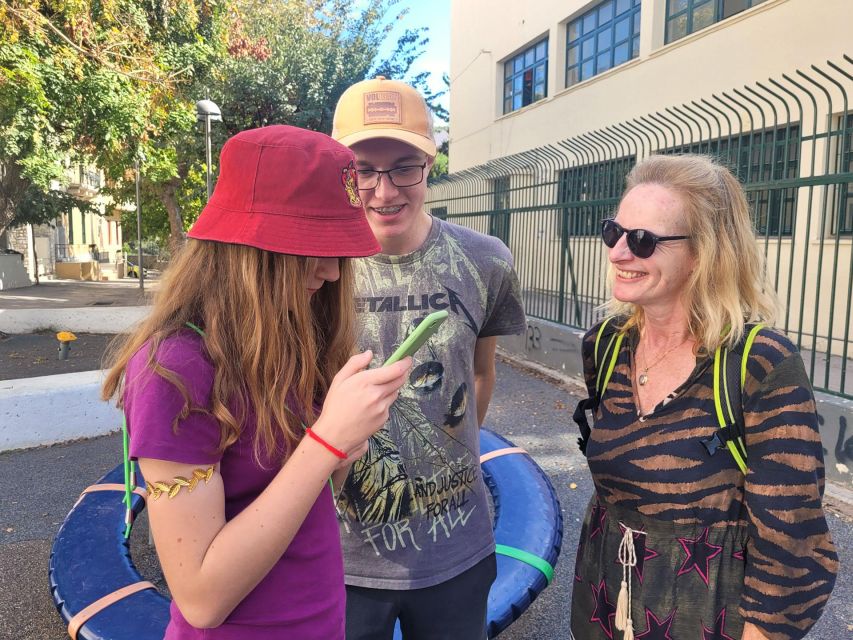
I would choose this for families with children roughly five to early teenage years, especially if they like puzzles, stories, and being given a mission. A lively 10-year-old called it the best activity of a trip, while a 13-year-old enjoyed the structure and said he would do it again.
Younger children can take part, but adults will need to help with reading, phone use, and clue solving. A stroller may be useful for a five-year-old, though you should still be ready for stairs and uphill stretches.
The activity also suits families who want history in small pieces. You hear enough about the gods and monuments to make the walk meaningful, but you are not asked to stand still for long lectures. If your child asks many questions, guides such as Maria and Orestis can add useful context along the way.
I would be cautious about booking it during the hottest part of a summer afternoon. The route is outdoors, includes a climb, and has no promise of constant shade. Comfortable shoes and sunglasses are not optional extras here. They are part of making the two hours pleasant.
Practical details before you book
The tour is offered in English and Greek. One guide accompanies the group, and the necessary digital hunt materials are provided during the activity.
You need a charged smartphone, comfortable shoes, and sunglasses. The exact meeting instructions arrive by email after booking, so check your spam folder before the day of the tour.
Free cancellation is available up to 24 hours before the start for a full refund. You can also reserve now and pay later, which is useful when your Athens plans are still changing.
The route begins at Hadrian’s Arch and includes staircases and mild uphill sections. It ends with a ceremony and photographs near the Acropolis, but it is not described as a step-free activity. Families should plan around the walking rather than assuming this is a short, flat Plaka stroll.
Should you book the Athens mythology treasure hunt?
Book it if you want your children to take part in Athens rather than simply follow behind you. The Athena and Poseidon story, phone-based clues, sweet break, and final viewpoint give the family a clear arc from beginning to end.
I would especially recommend it for first-time visitors with children who enjoy puzzles and for parents who want a guide but dislike long formal lectures. The guides receive the strongest praise, and their patience matters when the clues take longer than expected.
Skip it if you want a deep archaeological tour, need a fully level route, or have only a tight two-hour window before another fixed booking. For everyone else, $59 buys a well-shaped family outing that turns several central Athens sights into a shared game and leaves you with photos, a story, and a better chance that your children will remember the monuments.
FAQ
Where does the Athens mythology treasure hunt begin?
It begins at Hadrian’s Arch, at Leoforos Vasilisis Amalias 50, Athens 105 58, Greece. Exact meeting instructions arrive by email after booking.
How long does the activity last?
The stated duration is two hours. Some outings may take longer, especially with larger families, young children, extra questions, or longer rest stops.
What languages are available?
The live guide can lead the experience in English or Greek.
What landmarks does the route include?
The route includes Hadrian’s Arch, the Temple of Olympian Zeus, Plaka, Anafiotika, Areopagus, and another lesser-known stop. It also includes photo opportunities near the Acropolis.
Is food included?
Yes. The included food stop features Greek lukumades with honey and cinnamon, along with water. Drinks other than water are not included.
What should I bring?
Bring sunglasses, comfortable shoes, and a charged smartphone. Tell the guide about dietary restrictions before the food stop.
Is the route suitable for young children?
The activity is designed for families and has suited children from about five years old through the early teenage years. It includes stairs and mild uphill sections, so parents should plan for walking and may find a stroller useful for younger children.
Freshly added Athens trips
- Athens and Ancient Corinth Private from Athens★ 5.0 · 3 reviews
- From Athens: Mycenae and Epidaurus Private Tour★ 4.8 · 3 reviews
- Full day Meteora private tour★ 5.0 · 3 reviews
- Double Shore Dive (certified divers)★ 4.5 · 3 reviews
- Athens Hills: Mythology Treasure Hunt★ 5.0 · 3 reviews
- Sunset & swimming at Cape Sounio, Poseidon temple★ 5.0 · 3 reviews
- Philosophy Experience at Plato’s Academy Park – basic version★ 5.0 · 3 reviews
- Private Acropolis Tour – Ticket Included★ 5.0 · 3 reviews
Greek Mythology Tours, compared.

Mythology of Delphi, Museum and Arachova Guided Tour
Read our review →
Athens & Acropolis Highlights: Greek Mythology Small-Group Tour
Read our review →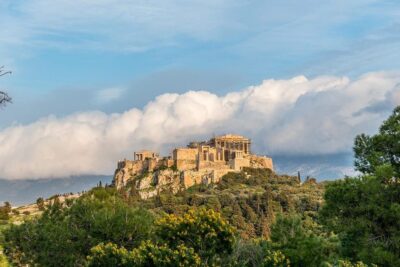
Acropolis and Mythology Highlights Small Group Tour
Read our review →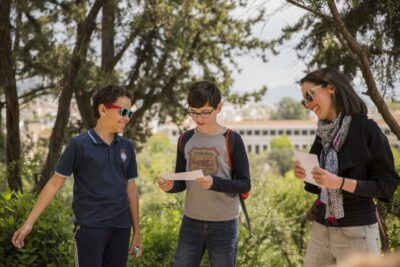
The History of Athens: Greek Mythology Private Tour
Read our review →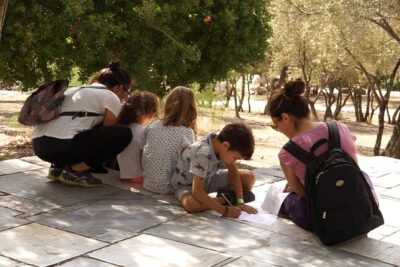
Greek Mythology Treasure Hunt for Kids – Athens Private Tour
Read our review →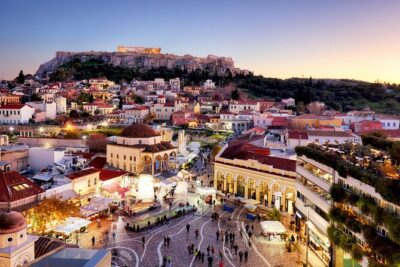
Browse the lists this tour appears in