
Reviewed · ATHENS SEGWAY TOURS
Best of Athens Segway Tour
Athens is a city where major sights sit close together, but the hills, heat, and rough pedestrian streets can make a short visit tiring. This three-hour Segway tour links ancient cemeteries, democracy’s birthplace, Acropolis viewpoints, Roman monuments, Olympic sites, and the changing presidential guards without asking you to walk the whole route.
I like two things right away: you get a useful first look at Athens before deciding which places deserve a longer visit, and the Segway lets you reach spots such as Pnyx Hill and Areopagus with less effort. Guides including Menelaos, Demi, Stelios, Vana, and Georgia have been praised for patience, local insight, and keeping riders comfortable in the heat.
The tradeoff is clear: this is an outside overview, not an archaeological-site visit. Your $112 covers the guide, helmet, and training, but not entry tickets, so you will need another visit for the Acropolis, Agora, or other interiors.
In This Review
- Key Points
- Why a Segway Works Well in Athens
- Kerameikos, Where Ancient Athens Began and Ended
- The Ancient Agora and the Roman Agora
- Areopagus, the Acropolis, and Pnyx Hill
- Monastiraki and Thiseio on Two Wheels
- Zappion, the National Garden, and Olympic Athens
- The Presidential Guards and the Tour’s Final Moment
- What the $112 Price Buys You
- Who Will Enjoy This Ride Most
- Guide Quality and Group Comfort
- Should You Book the Best of Athens Segway Tour?
- FAQ
- How long is the Best of Athens Segway Tour?
- Does the tour enter the Acropolis or other archaeological sites?
- Is Segway training included?
- What languages are available?
- What is the minimum age for the tour?
- What should I wear and bring?
Key Points
- Thirty minutes of practice comes first: You do not need prior Segway experience, but you do need balance, confidence, and the ability to step up and down without help.
- Kerameikos and the Agora provide ancient Athens context: The route follows part of the old path toward the civic heart of the city.
- Areopagus and Pnyx offer some of the best Acropolis views: You see the monuments from outside and get strong photo stops without climbing the Acropolis itself.
- The route reaches Olympic Athens: Zappion, the National Garden, and the Panathenaic Stadium add a modern chapter to the city’s story.
- The presidential guards make a memorable final stop: You may see the changing ceremony and have time for a picture near the guards.
- It suits short stays and hot days: You cover a wide area quickly, though busy pedestrian streets and uneven stone surfaces still require care.
Why a Segway Works Well in Athens
A Segway is a practical compromise between a walking tour and a vehicle ride. You stay close to the streets and monuments, yet move fast enough to cover a large part of central Athens in one morning or afternoon.
The route includes hills and broad stretches where walking could wear you down. That matters in summer, when several hours on exposed stone can drain your energy before you reach the next sight. Several tours have also supplied water, and guides have adjusted the pace or shortened the ride when the heat became too much.
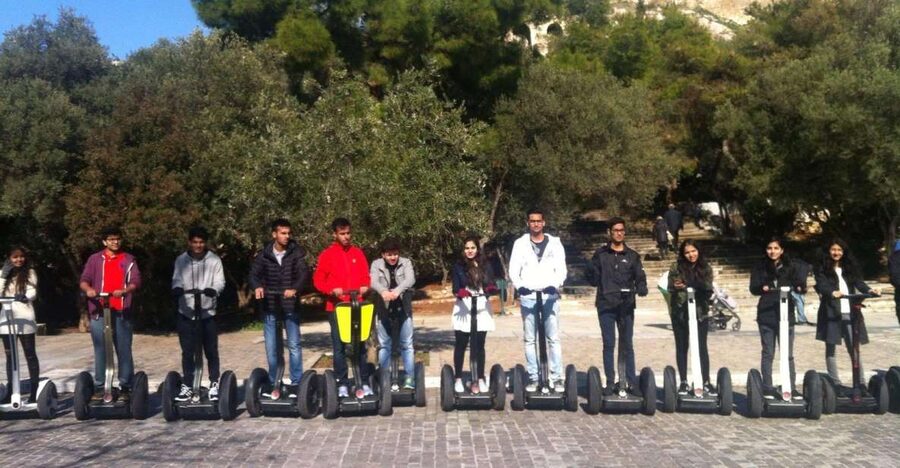
You begin with about 30 minutes of instruction. The guide explains how to mount, stop, turn, and control your speed, then gives you time to practice. First-time riders have found the machines easier to learn than expected, but do not confuse easy to learn with effortless. You still need to remain alert around pedestrians, cobbles, gravel, and narrow paths.
The tour is conducted in English, Hebrew, Russian, Ukrainian, or Spanish. The exact meeting point can vary by booking option, though Eschinou 9 is listed as the main Athens City Segway Tours location and the return point.
More segway rides around Athens:
- Best of Athens City Segway Tour
★ 5.0 · 207 reviews - Classical Athens Segway Tour
★ 5.0 · 114 reviews - Athens Acropolis 2-Hour Segway Tour
★ 4.8 · 97 reviews
Kerameikos, Where Ancient Athens Began and Ended
The first major area is Kerameikos, often written as Kerameikos or Keramikos. In ancient Athens, this was both a cemetery and an entrance to the city. That combination gives the stop unusual weight: you are not simply looking at old graves, but standing near a former boundary between the city and the road beyond it.
You will hear about the ancient route leading inward, then ride toward the Agora along a path that roughly follows the movement of ancient Athenians. The ride itself is part of the lesson. Instead of seeing isolated ruins one after another, you get a basic sense of how the city was arranged.
The stop is primarily for explanation and photographs. Since the tour does not enter archaeological sites, you should not expect a full visit to the Kerameikos grounds. If you want to examine the cemetery, gates, or surviving remains closely, plan a separate ticketed visit.
The Ancient Agora and the Roman Agora
The Ancient Agora was the civic center of Athens, a place tied to public life, politics, trade, and daily business. The guide uses the area to explain how ancient Athens functioned beyond the Acropolis. That context helps you see the Acropolis as part of a larger city, not an isolated hilltop monument.
The ride through this area is short, listed at about 10 minutes, so think of it as a pointed introduction rather than a full archaeological tour. You will have a photo stop and a guided explanation, but no entry is included.
The route also reaches the Roman side of the city. The Roman Agora and the nearby Temple of Olympian Zeus and Hadrian’s Gate show how Athens continued to change long after its classical peak. This mix of Greek and Roman remains is one of the tour’s strengths. In a few hours, you move between different periods instead of spending the whole outing on one era.
Areopagus, the Acropolis, and Pnyx Hill

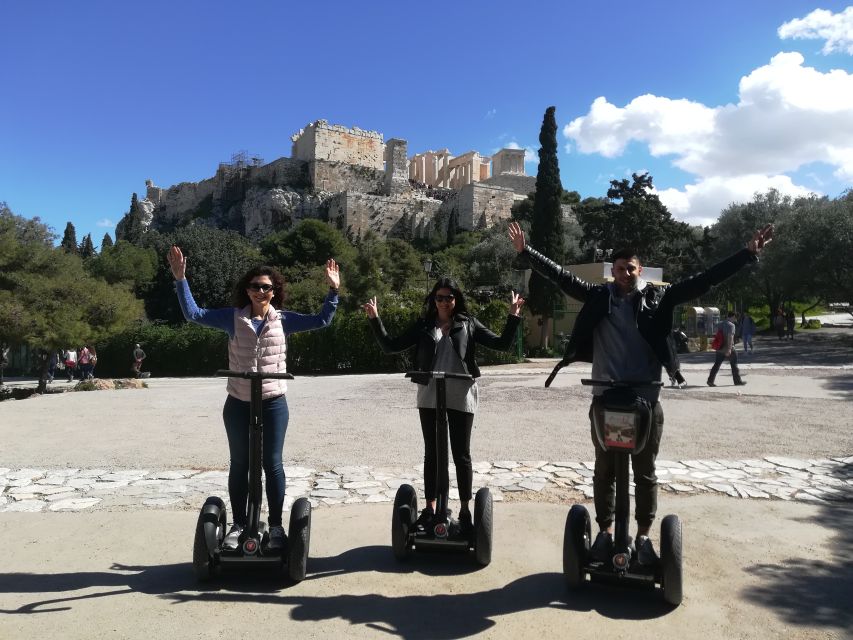
Areopagus, also called Mars Hill, is one of the most rewarding outdoor stops. From here, you get a distinct view toward the Acropolis, with the ancient rock and its monuments rising above the surrounding city.
The tour does not take you through the Acropolis entrance. You will not enter the Parthenon, Temple of Athena Nike, Erechtheion, Propylaea, or the Odeon of Herodes Atticus. You may see these places from the outside and hear them explained, which makes this stop ideal for photographs and orientation.
The stone at Areopagus can be uneven, and you may need to dismount for the break and photo stop. The ability to climb and descend stairs without assistance is required, so this is not a ride for anyone who struggles with basic movement.
From there, the route continues toward Pnyx Hill. This terraced area is less obvious than the main Acropolis sights, yet it adds an important piece of Athenian history. Pnyx is associated with the development of democracy, and its open setting gives you a useful view back toward the Acropolis.
I especially like this section because it combines a quieter historical setting with a broad city view. The ride up means you avoid a long, tiring walk, but you still need to handle the Segway carefully on uneven ground and follow the guide’s instructions.
Same city, a completely different century:
- Athens: Acropolis & up to 5 Archaeological Sites Combo Pass
★ 4.4 · 12,619 reviews - Athens: Acropolis Ticket with Optional Audio or Live Guide
★ 4.2 · 11,055 reviews - Athens: Acropolis, Parthenon & Acropolis Museum Guided Tour
★ 4.8 · 9,316 reviews - Athens: Cape Sounion & Poseidon Temple Sunset Half-Day Trip
★ 4.8 · 8,241 reviews
Monastiraki and Thiseio on Two Wheels

The tour rolls around the pedestrian streets near the Acropolis, then connects with Monastiraki and Thiseio. These areas give you a feel for central Athens beyond the formal monuments.
Monastiraki is a good place for seeing the city’s layers in quick succession: ancient remains, later buildings, shops, cafés, and busy pedestrian routes. Thiseio offers another strong angle toward the Acropolis and links naturally with the walkways around the historic center.
This is also where the Segway’s convenience has limits. Pedestrian areas can be crowded, and the surface may shift from smooth pavement to cobbles, slate, gravel, or dirt. You need to slow down, leave room for people on foot, and accept that the guide may pause or guide the group around congested sections.
One recent group used an electric four-wheeler instead of a Segway. That option is not described as standard for every booking, so do not assume it will be available. If you are uneasy about balancing on a Segway, ask the operator before you reserve.
Zappion, the National Garden, and Olympic Athens
The route then turns toward Zappion, the National Garden, and the Panathenaic Stadium. This is the part of the tour that broadens the picture from ancient Athens to the city’s modern Olympic identity.
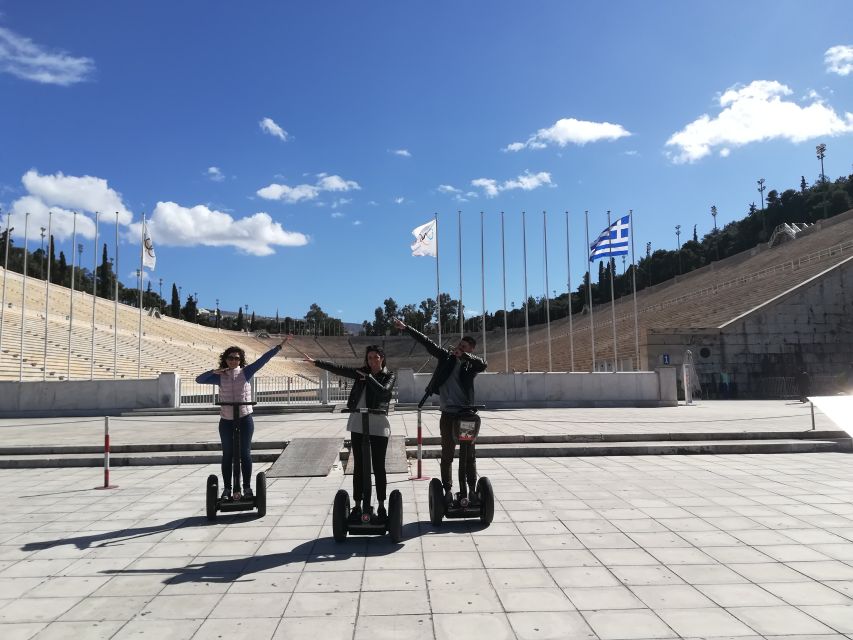
Zappion Mansion and its surrounding district connect with the first modern Olympic era. The Panathenaic Stadium is the star here, built in marble and tied to the first modern Olympic Games. You will see it from outside and have time for photographs, but entry is not included.
The National Garden provides a change of mood. After ruins, traffic, stone, and city streets, the gardens offer a calmer stretch. The supplied route describes it as a place where kings and queens once found relief, a fitting pause before the final presidential stop.
You will not get a long garden walk on this tour. The Segway ride through or near the area is brief, with the main value being the contrast between Athens’ formal monuments and its leafy public spaces.
The Presidential Guards and the Tour’s Final Moment
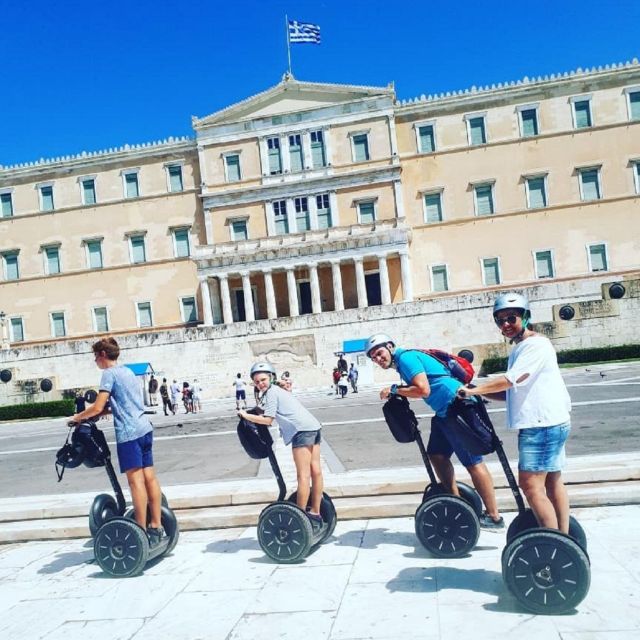
A highlight near the end is the presidential guards, known as the Tsolias. Their distinctive uniform carries strong national meaning, and the guard ceremony gives you a glimpse of a living tradition rather than another silent ruin.
Timing matters here. The tour is designed to catch the changing of the guard before returning, but the exact ceremony you see depends on the day and schedule. Some outings have included the full change, while the stated plan promises the chance to see the guards and take a picture nearby.
Keep your expectations practical. This is not a dedicated guard ceremony tour with a long wait built into the schedule. It is a well-placed final stop on a wider city circuit. If the guards are your top priority, confirm the start time and ceremony timing before booking.
What the $112 Price Buys You
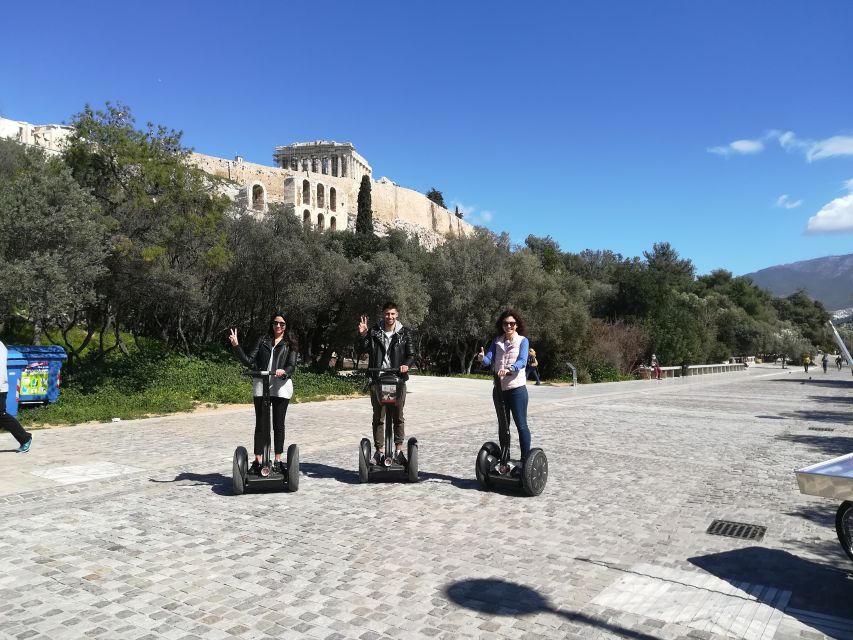
At $112 per person, this is not the cheapest way to see Athens. The value depends on how you use the three hours.
You are paying for the Segway, helmet, 30-minute training session, and live guide. You are also paying for the route design, which connects places that could take much longer to reach on foot, especially in hot weather. For a first day in Athens, the tour can help you choose where to return for a longer visit.
The cost is harder to justify if you already plan a full walking tour, have plenty of time, or mainly want to enter the Acropolis and archaeological sites. You would still need separate admission tickets and additional time afterward.
I see this as a city orientation tour with transport built in, not a substitute for museum or ruin visits. It has good value for a short stay, a cruise stop, families with older children, and anyone who wants a broad view without spending three hours on foot.
Who Will Enjoy This Ride Most
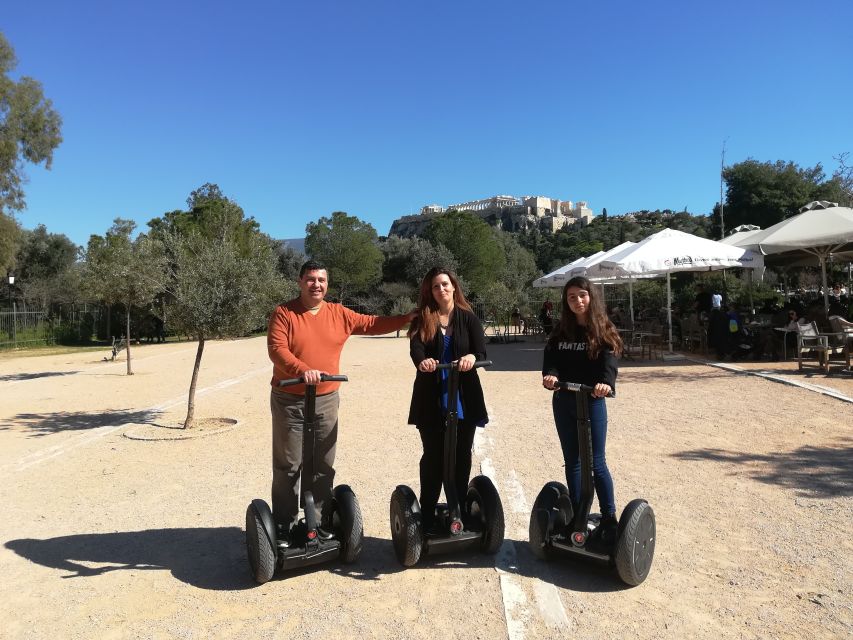
This tour fits confident first-time riders, couples, families with children aged 10 and older, and people with limited time in Athens. Teenagers can get a lot from it because the ride adds movement and variety to the history stops. One guide, Demi, was especially praised for making a group with teens comfortable and engaged.
It also suits people arriving after an Acropolis visit. If you have already spent the morning walking up and around the Acropolis, a Segway can help you keep seeing the city without putting the same strain on your legs.
The tour is not suitable for children under 10, unaccompanied minors, or pregnant women. Anyone under 18 must ride with an adult. The published guidance calls for riders to weigh at least 45 kilograms and no more than about 125 kilograms, with an additional limit listed at 275 pounds. Check your exact eligibility with the operator if you are near either limit.
You must be able to climb and descend stairs without assistance. Wear comfortable shoes, leave large bags behind, and expect to dismount at some stops.
Guide Quality and Group Comfort
A good Segway guide does two jobs: explain Athens and keep a line of riders safe. The strongest guide comments have praised patience with beginners, careful handling of crowds, attention to shade, and good local suggestions.
Names that have appeared across the experience include Menelaos, Demi, Stelios, Georgia, Vana, Gina, Anastasia, and Demetri. Do not expect a particular person unless your booking confirms it, but the range of positive comments points to a consistent focus on rider confidence and group care.
Guides have helped nervous riders settle in, stopped for water during hot weather, and adjusted the pace when needed. One outing was shortened at the group’s request because of the heat, while still covering many sights. That flexibility is worth valuing in Athens, where conditions can change the feel of a three-hour ride.
Should You Book the Best of Athens Segway Tour?
Book it if you have only one full day, want a fast first look at central Athens, or prefer to avoid a long walking route in summer. You will see more districts and viewpoints than most people could comfortably cover on foot in three hours, with enough explanation to plan your next stops.
Skip it if your main goal is entering the Acropolis or spending serious time among the ruins. This tour stays outside archaeological sites, and the $112 price does not include admissions.
For most suitable riders, I would place it early in an Athens stay. Use it to get your bearings, note the places that deserve a slower visit, and save your legs for the Acropolis, museums, and evening streets later.
FAQ
How long is the Best of Athens Segway Tour?
The tour lasts three hours. Starting times depend on availability when you book.
Does the tour enter the Acropolis or other archaeological sites?
No. The tour visits archaeological areas from the outside and does not include entry or guided visits inside the sites.
Is Segway training included?
Yes. The guide provides about 30 minutes of Segway training before the sightseeing begins. A helmet and live guide are also included.
What languages are available?
The tour is offered with live guides in English, Hebrew, Russian, Ukrainian, and Spanish.
What is the minimum age for the tour?
The minimum age to ride is 10. Anyone under 18 must be accompanied by an adult, and unaccompanied minors are not allowed.
What should I wear and bring?
Wear comfortable shoes and avoid bringing a large bag. You must be able to climb and descend stairs without assistance. The tour is not recommended for pregnant women or for people outside the published weight limits.
Freshly added Athens trips
- Athens and Ancient Corinth Private from Athens★ 5.0 · 3 reviews
- From Athens: Mycenae and Epidaurus Private Tour★ 4.8 · 3 reviews
- Full day Meteora private tour★ 5.0 · 3 reviews
- Double Shore Dive (certified divers)★ 4.5 · 3 reviews
- Athens Hills: Mythology Treasure Hunt★ 5.0 · 3 reviews
- Sunset & swimming at Cape Sounio, Poseidon temple★ 5.0 · 3 reviews
- Philosophy Experience at Plato’s Academy Park – basic version★ 5.0 · 3 reviews
- Private Acropolis Tour – Ticket Included★ 5.0 · 3 reviews
Athens Segway Tours, compared.


Ancient Athens Segway Tour with Agora and Kerameikos
Read our review →
Segway Journey: Athens Tour From The Ancient Past To The Present
Read our review →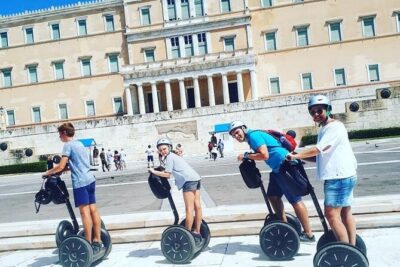
Browse the lists this tour appears in