
Reviewed · ACROPOLIS TOURS
Acropolis and Agora Tour: The Rise & Fall of Democracy
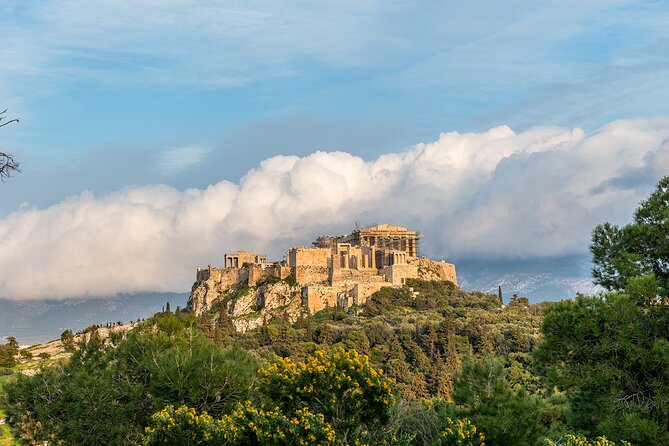
The clever idea here is to read Athens through the story of democracy, not just through marble and mythology. You move from the Acropolis, where civic ideals were presented in grand stone, to the Ancient Agora, where politics, trade, justice, and daily life actually happened.
I like the small group of no more than 15 and the way the tour links the Parthenon to the people and institutions below it. I also like the practical extras: a certified guide, a takeaway map, and a route that ends at the Agora instead of sending you back to your starting point. The main caution is time. The advertised visit is about three hours, and the scheduled stops add up to roughly three hours and fifteen minutes, so some explanations may feel brisk.
In This Review
- Key points to know before booking
- Why the democracy theme changes the Acropolis visit
- Starting at the Acropolis on Dionysiou Areopagitou
- Theater of Dionysus: where Greek drama began
- Temple of Athena Nike and the small details
- The Erechtheion and the Parthenon
- Walking down to the Ancient Agora
- The Temple of Hephaestus and the misleading site label
- Guides, group size, and the feel of the morning
- Price, tickets, and what you really pay
- Who will get the most from this tour
- Booking advice and cancellation rules
- Should you book the Acropolis and Agora democracy tour?
- FAQ
- How long does the tour last?
- Where does the tour start and finish?
- Are admission tickets included?
- How large is the tour group?
- Is the tour offered in English?
- Can I cancel for a full refund?
Key points to know before booking
- Democracy is the theme: The Acropolis and Agora are explained as parts of one political and social world.
- The group stays small: A maximum of 15 people gives the guide room to handle questions and adjust the pace.
- You visit seven major sites: The route includes the Acropolis, Parthenon, Theater of Dionysus, Temple of Athena Nike, Erechtheion, Ancient Agora, and Temple of Hephaestus.
- Entry costs extra: Admission is not included, and pre-purchased tickets cost €50 per person.
- Several guides lead the tour: Guides named Athena, Demi, Christina, Kimon, and Vassia are associated with the experience.
- Bring little luggage: Backpacks, large bags, and strollers are not allowed at the Acropolis.
Why the democracy theme changes the Acropolis visit
Many Acropolis tours focus on columns, dates, and gods. This one tries to connect the famous monuments to the political experiment that made Athens such a powerful idea in the modern world.
That gives you a useful lens for the Parthenon. You still hear about Athena, Doric design, and the building’s place on the Acropolis, but the monument becomes part of a larger question: who had power, how was it displayed, and what did Athenian citizenship mean?
The link to the Agora matters just as much. The Acropolis was Athens at its most ceremonial and symbolic. The Agora was where political, commercial, administrative, social, religious, and legal life met. Seeing both in one morning helps you separate the city’s grand public image from the practical machinery of civic life.
I especially like this approach if you have already seen plenty of ancient temples and want more than a monument-by-monument tour. The guide may bring in mythology, archaeology, and the rise of democracy at the same time. The result can feel more like a connected story than a list of ruins.
There is one limit. Three hours is not long for the Acropolis and Agora, especially when you include walking, pauses, questions, and crowded viewpoints. One detailed account found the history and mythology engaging but wished for more time to explore the Acropolis and explain the fall of democracy. If political history is your main reason for booking, keep your expectations in check.
More Acropolis and Parthenon visits:
- Athens: Acropolis & up to 5 Archaeological Sites Combo Pass
★ 4.4 · 12,619 reviews - Athens: Acropolis Ticket with Optional Audio or Live Guide
★ 4.2 · 11,055 reviews - Athens: Acropolis, Parthenon & Acropolis Museum Guided Tour
★ 4.8 · 9,316 reviews
Starting at the Acropolis on Dionysiou Areopagitou
The tour begins at 9:00 a.m. at Dionysiou Areopagitou 45, near the Acropolis. That early start is helpful in Athens, where heat and crowds can make a hilltop visit harder later in the day.
You should arrive ready to walk uphill and over ancient, uneven ground. The experience does not include transport to or from the meeting point, so you handle your own way there. The route is near public transportation, which makes the start fairly practical for people staying in central Athens.
Your guide first sets the Acropolis into its place above the city. This is the great sanctuary dedicated mainly to Athena, Athens’ patron goddess, and its monuments have influenced architecture and art for centuries.
The scheduled Acropolis visit lasts about an hour. That is enough to give you a strong framework, but not enough for a slow, detailed look at every corner. Listen closely at the start, since the guide will need to cover the hill, its purpose, and its major buildings in a compact period.
Theater of Dionysus: where Greek drama began

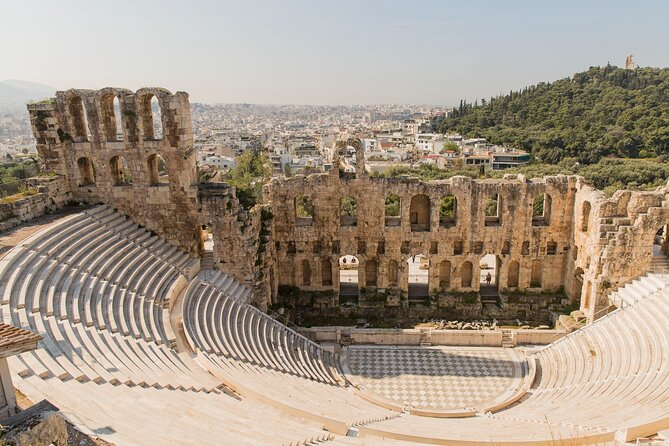
The first stop is the Theater of Dionysus Eleuthereus, scheduled for about 15 minutes. It is associated with Dionysus, the god of wine and the grape harvest, and is considered the oldest theater founded in Athens.
This is where the works of Aeschylus, Sophocles, Euripides, and Aristophanes were first performed. That list alone makes the stop worthwhile. Western theater did not begin as an abstract school lesson. It took shape in a real civic setting, tied to religion, public life, competition, and the audience gathered below the Acropolis.
Fifteen minutes will not allow for a full discussion of Greek drama, but a good guide can make the theater a key part of the democracy story. Public performances gave citizens a shared place to consider war, leadership, justice, family, and the behavior of the gods.
This stop also breaks up the climb and the temple viewing. Instead of seeing Athens only as a collection of sacred buildings, you begin to see how performance and public debate helped shape the city.
Temple of Athena Nike and the small details
The Temple of Athena Nike receives another 15 minutes. It honored Athena in her role as a bringer of victory, with Nike representing victory in Greek mythology.
The detail to listen for is the wingless cult statue. According to the tradition connected with the temple, the statue had no wings so victory would never leave Athens. It is a small story, but it explains how mythology could support civic hopes and political identity.
The temple itself is compact compared with the Parthenon, so this portion of the visit works best when the guide draws your attention to its meaning rather than simply pointing out its size. You will also see how the Acropolis grouped different forms of worship into one carefully planned sanctuary.
More ancient city sites in Athens:
- Athens Half Day Tour, Acropolis, Parthenon, Temple of Olympian Zeus & Hephaistus
★ 5.0 · 609 reviews - Athens: Agora and Hephaistos Temple Entrance Ticket
★ 4.0 · 449 reviews - Athens: Ancient Agora E-Ticket and Audio Tour
★ 3.9 · 413 reviews - Athens: Temple of Olympian Zeus Ticket and Audio Tour
★ 3.4 · 188 reviews
The Erechtheion and the Parthenon
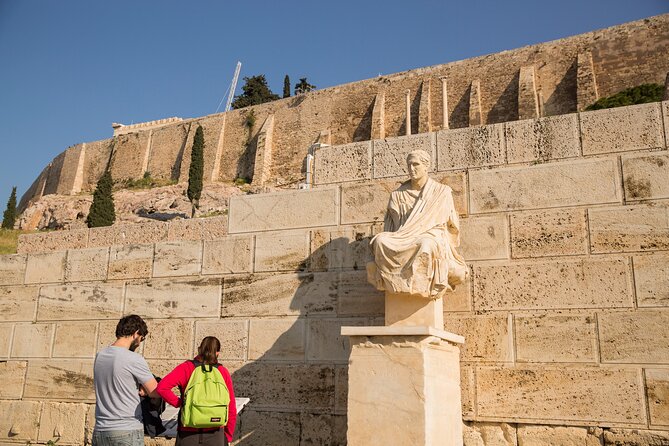
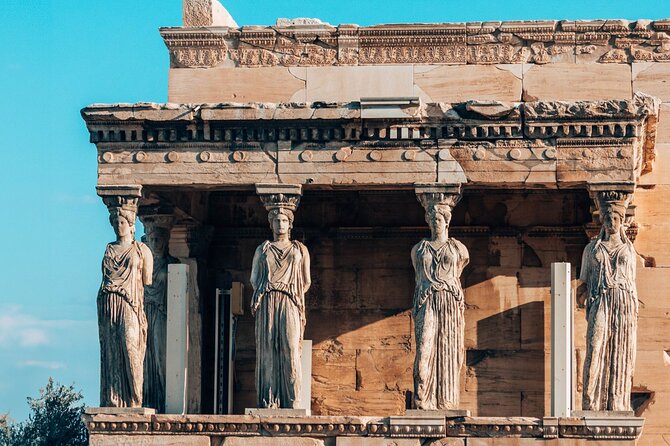
The Erechtheion gets about 15 minutes. It was built to house the ancient wooden cult statue of Athena and to honor Athens at the height of its power.
Its purpose was not exactly the same as the Parthenon’s, and that contrast helps explain why the Acropolis is more than one grand temple. The buildings carried different religious roles and different messages about the city.
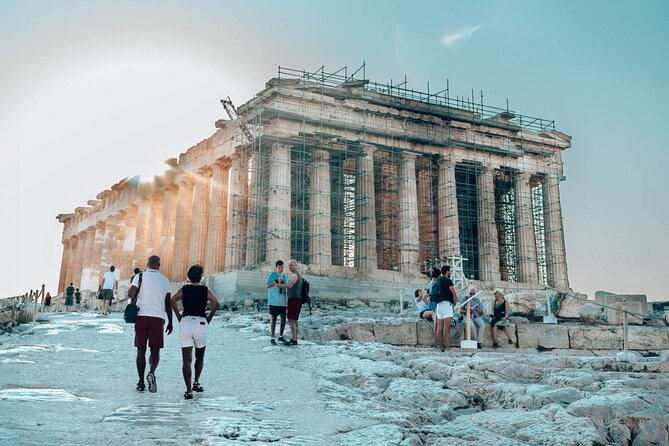
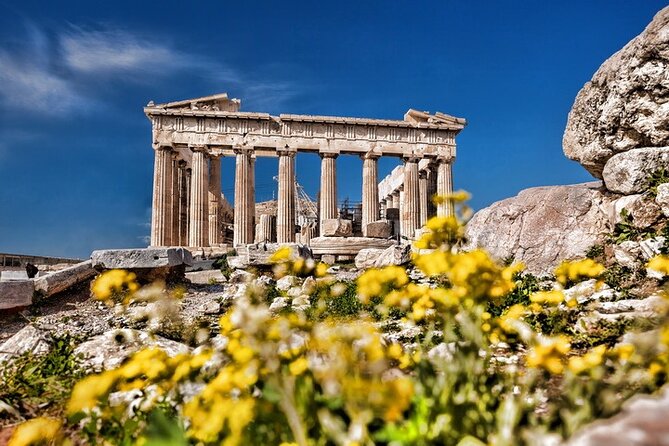
The Parthenon receives the longest single stop, about 30 minutes. Built in the mid-5th century BCE and dedicated to Athena Parthenos, it is the monument most people picture when they think of Athens.
The guide can use it to explain the Doric order, the simplest of the three Classical Greek architectural orders, along with the building’s place in the Athenian story. You will get the best value here if you ask questions about what the temple represented, not only how it was built.
The schedule is generous enough for the guide to discuss the Parthenon properly, but it is still a guided overview rather than a scholarly examination. You should not expect extended time with every Acropolis monument. The tour includes the Propylaea and the Acropolis setting in its general visit, but the listed timed stops focus on the main buildings above.
Walking down to the Ancient Agora

The route continues to the Ancient Agora, where the emphasis shifts from symbolic Athens to working Athens. This is the most important move in the tour.
The Agora was the center of political, commercial, administrative, and social activity. It also served religious and cultural roles and was connected to the city’s justice system. Here, the theme of democracy becomes more concrete. You are no longer looking only at the monuments used to express Athenian identity. You are considering the public spaces where civic life was organized.
The Agora portion is scheduled for about 30 minutes. That is a useful introduction, though the site deserves extra time if you want to examine it independently afterward. The tour ends at the Ancient Agora of Athens, Athens 105 55, so you can continue exploring from there rather than retracing the full route.
This end point is one of the tour’s practical strengths. You can make your own plans afterward in the Agora area, visit nearby sights, or stop for food without needing to return to the Acropolis meeting point.
The Temple of Hephaestus and the misleading site label
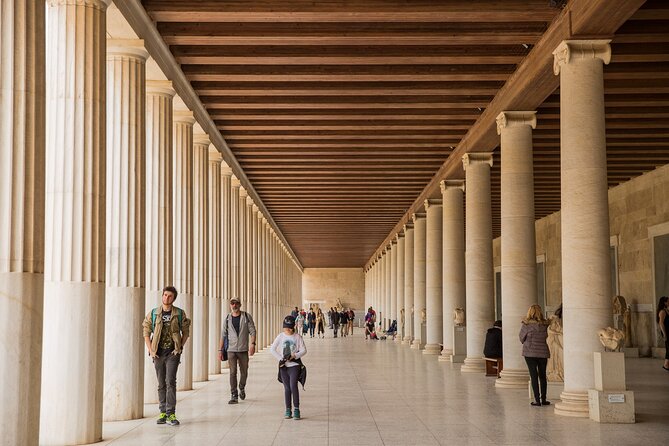
The final listed stop is called the Temple of Aries, but the description clearly identifies the monument as the Temple of Hephaestus. It is one of the best-preserved ancient temples in the world.
The temple was important to merchants and shop owners in the Agora because it honored Hephaestus, protector of metalworkers, and Athena Ergani, protector of potters and cottage industries. That connection makes the building a fitting end to a tour concerned with the daily workings of the city.
The Parthenon shows Athens at its grandest. The Temple of Hephaestus brings you back to skilled work, shops, trade, and the people who kept the city functioning. I would ask the guide to clarify the naming if the phrase Temple of Aries appears in your booking information, since the historical description points to Hephaestus.
Guides, group size, and the feel of the morning
The tour is led by an expert certified guide, and several guide names are associated with past departures, including Athena, Demi, Christina, Kimon, and Vassia. That matters because the quality of a history tour depends heavily on the person telling the story.
The strongest guide traits described in the supplied material are clear explanations, patience, humor, and the ability to adjust to different kinds of people. Athena is noted for answering questions and adapting the visit to the group. Demi is described as professional and well organized. Christina is associated with an engaging four-hour visit, while Kimon and Vassia are praised for stories, anecdotes, mythology, and historical connections.
The group limit is 15 people. That is small enough for a more personal feel without making the tour private. It also gives you a better chance to hear questions and follow the discussion than you would in a large coach group.
Headset information is mixed. One account specifically liked the remote headsets, while another found that a lack of earphones made it hard to hear in noisy areas. Since the included features do not formally list headsets, I would ask the operator about current equipment before booking if clear audio is important to you.
There is also a physical consideration. One account found the guide engaging but felt that the group sometimes stood listening for too long, causing back and foot pain. Wear supportive shoes, and take the chance to sit or move during pauses when possible.
Price, tickets, and what you really pay
The tour price is $67.43 per person. Entry fees are separate, with pre-purchased admission listed at €50 per person. That brings the basic cost well above the headline tour price, so compare the full amount before you decide.
The extra ticket cost is not a minor detail. The Acropolis and Agora are the reason you are booking, and you cannot treat the guided fee as the total cost of the morning. Entry fees are non-refundable and non-exchangeable, so make sure your date and group details are correct.
Even with the added admission, the tour can offer fair value if you want the sites explained in a connected way. You are paying for a small group, a certified guide, a focused route, and a theme that ties monuments to civic life. If you prefer to read signs at your own speed or already know ancient Athenian history well, buying your own tickets may be less expensive and more flexible.
A fun map of ancient Athens is included. It is a modest extra, but it can help you keep the Acropolis, Agora, and wider city in relation to each other after the tour.
Who will get the most from this tour
I would choose this for a first visit to Athens if you want a strong foundation without spending a full day on a single archaeological site. It suits adults, families with older children, and anyone interested in politics, philosophy, drama, mythology, or how cities organize public life.
It is also a good match for people who enjoy asking questions. The small group and adaptable guides make that easier than on a large sightseeing circuit.
You may want another option if you need a slow, highly detailed archaeological tour. The schedule is tight, and the walk includes standing and uneven surfaces. Strollers, backpacks, and large bags are not allowed at the Acropolis, so travel light and plan for that rule.
The tour is offered in English. Most people can participate, but the physical demands of the Acropolis still matter. There is no included meal or transfer, so plan your breakfast and arrival on your own.
Booking advice and cancellation rules
Confirmation normally arrives at booking. If you book within one hour of departure, confirmation comes as soon as possible and depends on availability.
You can cancel for a full refund up to 24 hours before the 9:00 a.m. start. Changes made inside that 24-hour window are not accepted, and late cancellations are not refunded. Poor weather or failure to meet the minimum group size can lead to a different date, another experience, or a full refund.
People under 25 should carry an ID card or passport in case a discount applies to admission. Since ticket charges are separate and non-refundable, this is worth sorting out before the tour begins.
Should you book the Acropolis and Agora democracy tour?
Book it if you want Athens explained as a living political city, not just a photo stop. The strongest feature is the route itself: the Acropolis gives you power, religion, and public symbolism, while the Agora gives you politics, trade, justice, and daily civic life.
The guide quality appears to be a major part of the experience, with Athena, Demi, Christina, Kimon, and Vassia all associated with clear, friendly storytelling. Still, allow for a brisk pace, possible standing, and the added €50 entry fee.
If your priority is context, questions, and a small group, this is a sensible choice. If your priority is maximum time inside each monument, book your own admission and explore at a slower pace after learning the basics.
FAQ
How long does the tour last?
The advertised duration is approximately three hours. The scheduled stop times total about three hours and fifteen minutes, and some past departures have lasted closer to four hours.
Where does the tour start and finish?
It starts at Dionysiou Areopagitou 45, Athens 117 42, at 9:00 a.m. It finishes at the Ancient Agora of Athens, Athens 105 55.
Are admission tickets included?
No. Entry fees are separate. The operator can pre-purchase tickets for you at €50 per person.
How large is the tour group?
The tour has a maximum of 15 travelers.
Is the tour offered in English?
Yes. English is the listed language for the experience.
Can I cancel for a full refund?
Yes, if you cancel at least 24 hours before the experience start time. Cancellations or changes made less than 24 hours in advance are not refunded or accepted.
Freshly added Athens trips
- Athens and Ancient Corinth Private from Athens★ 5.0 · 3 reviews
- Full day Meteora private tour★ 5.0 · 3 reviews
- Double Shore Dive (certified divers)★ 4.5 · 3 reviews
- From Athens: Mycenae and Epidaurus Private Tour★ 4.8 · 3 reviews
- Athens Hills: Mythology Treasure Hunt★ 5.0 · 3 reviews
- Sunset & swimming at Cape Sounio, Poseidon temple★ 5.0 · 3 reviews
- Philosophy Experience at Plato’s Academy Park – basic version★ 5.0 · 3 reviews
- Private Acropolis Tour – Ticket Included★ 5.0 · 3 reviews
Acropolis Tours, compared.

Acropolis & up to 5 Archaeological Sites Combo Pass
Read our review →

Acropolis, Parthenon & Acropolis Museum Guided Tour
Read our review →
Acropolis, Parthenon & Acropolis Museum Guided Tour
Read our review →


Acropolis monuments & Parthenon Walking Tour with Optional Acropolis Museum
Read our review →Browse the lists this tour appears in