
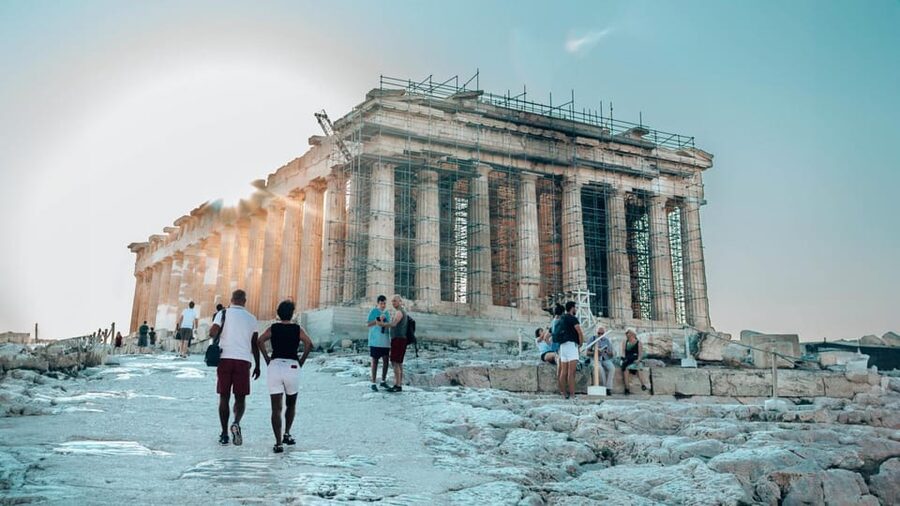
Reviewed · ACROPOLIS TOURS
Acropolis & Agora: The Rise & Fall of Democracy
Athens’ democracy was never a simple story of people gaining power. This three-hour walking tour connects the Acropolis to the Ancient Agora, showing how monuments, public spaces, political ideas, and sharp limits all fit together. Guides including Maria, Nathalia, Anastasia, Helena, and others bring the subject to life with anecdotes and patient explanations.
I like the tour’s focus on the birth and failure of democracy, rather than another quick round of photographs at the Parthenon. I also like the thoughtful pacing: guides leave time for pictures, answer questions, and can build in shade or sitting breaks. The main drawback is that three hours is a brisk stretch for two large archaeological sites, especially in summer, and admission may cost extra depending on the option you book.
In This Review
- Key points to know before you book
- Why this Athens tour is more than a Parthenon visit
- Beginning at the Acropolis entrance
- Herodes Atticus and the first look uphill
- Propylaea, the grand entrance
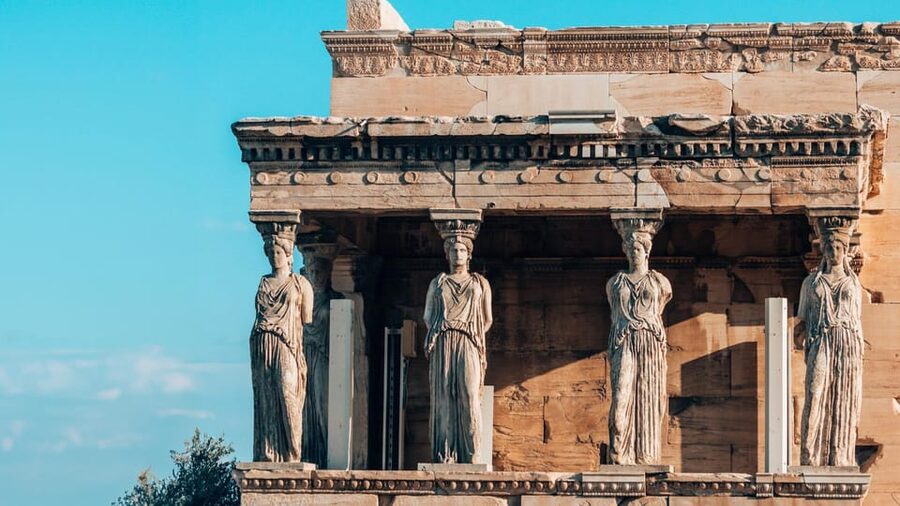
- Erechtheion and the city’s competing traditions
- Temple of Athena Nike and the meaning of victory
- The Parthenon, with an hour to look beyond the postcard
- Walking down to the Ancient Agora
- Temple of Hephaestus and the final lesson
- What $69 means in practical value
- Who will enjoy this tour most
- Useful timing and preparation advice
- Should you book Acropolis and Agora: The Rise and Fall of Democracy?
- FAQ
- How long does the tour last?
- What sites are included?
- Are entrance tickets included in the price?
- Which languages are available?
- Can I book a private group?
- What should I bring, and what is not allowed?
Key points to know before you book

- The political story links both sites: The Acropolis presents Athens’ public image, while the Ancient Agora shows where civic life took place.
- You see the Parthenon, Propylaea, Erechtheion, and two temples: The route covers the major Acropolis monuments, not just the famous front view.
- Democracy is treated as an experiment: You learn who counted as the people, what power they held, and why the system eventually failed.
- The guides shape the experience: Maria, Nathalia, Anastasia, and Helena have received particular praise for clear explanations, warmth, flexibility, and useful advice.
- The tour is best for curious adults and older children: Children under eight are not accepted, and the route is not suitable for wheelchair users or people with visual impairments.
- Plan light and travel-ready: Comfortable shoes and clothes are essential. Backpacks, large bags, pets, and strollers are not allowed at the Acropolis.
Why this Athens tour is more than a Parthenon visit
Many Acropolis tours focus on mythology, architecture, or the famous names carved into the stones. This one uses the monuments to ask a harder question: what did democracy actually mean in ancient Athens?
The Greek word demokratia means people-power, but the word people had a narrow meaning in the ancient city. The tour helps you examine that gap. You consider who could take part, what political power looked like, and what purposes the system served.
That approach gives the Acropolis a sharper edge. The hill was not only a religious center. It was also a public statement about Athenian power, wealth, identity, and ambition. After seeing that grand message above the city, you walk to the Ancient Agora, where the daily work of civic life took place.
I like this order. You first see the polished symbol of Athens, then visit the practical center where public business, trade, administration, and political life unfolded. The contrast helps you understand that democracy was not just an idea. It needed meeting places, rules, officials, arguments, and citizens willing to take part.
The tour also compares ancient Athenian democracy with the systems you know today. You are not asked to treat the ancient model as perfect. Instead, you look at which parts still help modern societies and which weaknesses caused trouble then, and can still cause trouble now.
More Acropolis and Parthenon visits:
- Athens: Acropolis & up to 5 Archaeological Sites Combo Pass
★ 4.4 · 12,619 reviews - Athens: Acropolis Ticket with Optional Audio or Live Guide
★ 4.2 · 11,055 reviews - Athens: Acropolis, Parthenon & Acropolis Museum Guided Tour
★ 4.8 · 9,316 reviews
Beginning at the Acropolis entrance
The tour has two possible starting locations, both associated with Dionysiou Areopagitou 45. Check the exact meeting point for the option you select, since it can vary.
From there, your guide leads the walking route toward the Acropolis. This is a pedestrian-focused experience, so your footwear matters. Choose shoes that can handle uneven ancient surfaces and a few hours on your feet. Comfortable clothing is also a wise choice, especially during Athens’ warmer months.
The tour is offered in English or French. A private group option is available, while the standard format is a small group. That matters here because the subject depends on explanation. You want to hear the guide clearly and have room to ask why a particular building or space mattered.
The practical rules are strict. Do not bring a backpack, large bag, baby stroller, or pet, although assistance dogs are allowed. The Acropolis does not permit these items, and arriving with too much luggage can create a needless problem at the start.
Herodes Atticus and the first look uphill
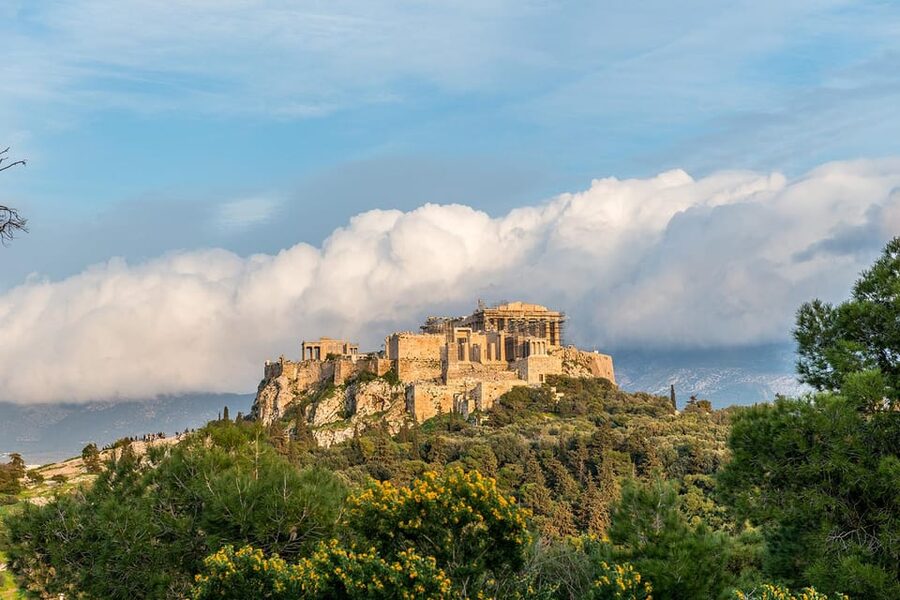
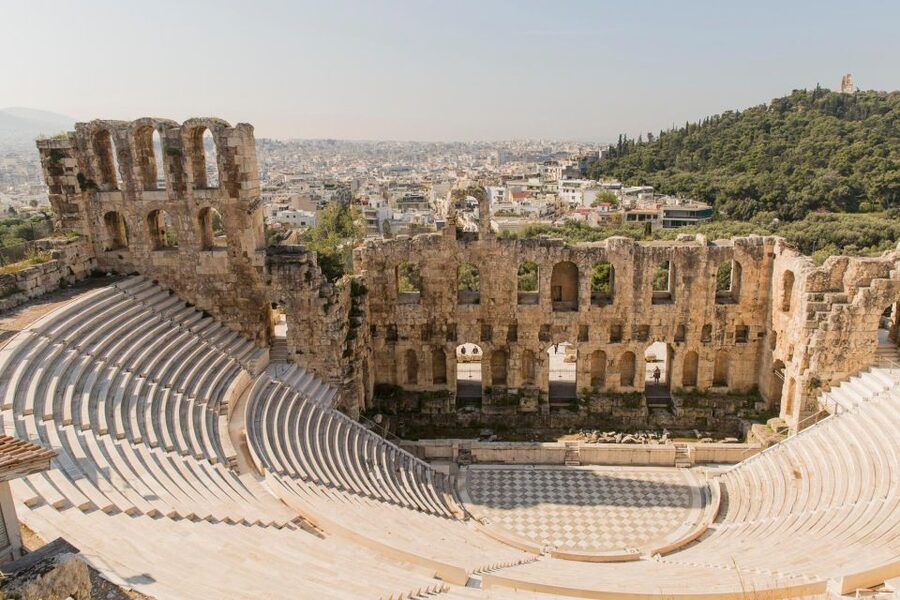
The route includes the Odeon of Herodes Atticus, a Roman-era theater built into the southern slope of the Acropolis. You receive about 15 minutes of guided attention here.
The theater is a useful opening stop because it reminds you that the Acropolis was shaped over many centuries, not by one single age. Its setting also gives you an early sense of the hill’s scale and the work involved in building on it.
Your guide can use this point to separate the different layers of Athens: religion, theater, civic life, empire, and later restoration. The tour’s political theme begins to take shape here, but you should expect the main explanation to build as you move through the Acropolis monuments.
The climb and stone surfaces are worth taking seriously. The tour is not suitable for wheelchair users, and the supplied information also lists it as unsuitable for people with visual impairments. If you need frequent rests, tell your guide early. Anastasia was specifically praised for adding shade stops and sitting time, and the guides are described as adaptable.
Propylaea, the grand entrance
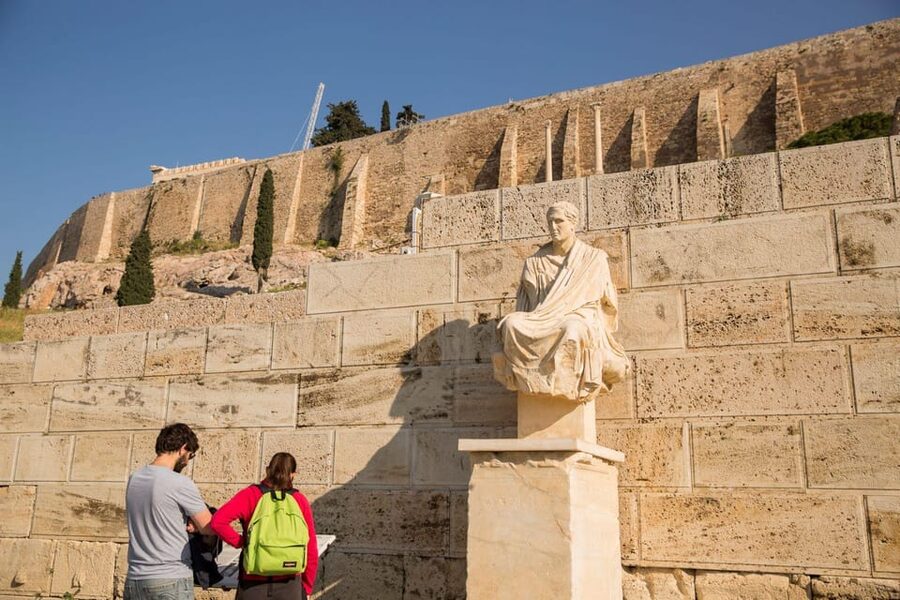
The Propylaea is the monumental gateway to the Acropolis. You spend about 15 minutes with your guide here, looking at how visitors were brought into the sacred and political world above the city.
An entrance can shape a visitor’s mood, and the ancient Athenians understood that well. The scale and design of the Propylaea made arrival feel important. As you pass through, the tour can connect architecture with public image, a key idea for understanding the Acropolis as political propaganda.
That phrase does not mean the buildings were fake. It means the city used architecture to communicate power and values. Athens wanted its citizens, allies, and rivals to see a confident, wealthy city favored by the gods.
This is one of the tour’s strongest ideas: democracy did not operate in a neutral setting. It existed alongside competition, military power, religious belief, social inequality, and civic pride.
More ancient city sites in Athens:
- Athens Half Day Tour, Acropolis, Parthenon, Temple of Olympian Zeus & Hephaistus
★ 5.0 · 609 reviews - Athens: Agora and Hephaistos Temple Entrance Ticket
★ 4.0 · 449 reviews - Athens: Ancient Agora E-Ticket and Audio Tour
★ 3.9 · 413 reviews - Athens: Temple of Olympian Zeus Ticket and Audio Tour
★ 3.4 · 188 reviews
Erechtheion and the city’s competing traditions

The Erechtheion receives another 15-minute guided stop. Its unusual design and multiple sacred associations make it a good place to discuss the way ancient Athens held different traditions together.
You will hear about the building as part of the Acropolis rather than treating it as a quick photo stop. The guide’s job here is to show how Athens used sacred stories and old cults to explain its identity.
This also gives the tour a useful human scale. The Parthenon can feel overwhelming because of its size and fame. The Erechtheion invites closer attention to details, competing sacred claims, and the ways a city preserves older beliefs while presenting itself as a modern power.
The guides praised most highly on this experience are not simply fast narrators. Maria is noted for being friendly and full of information, while Nathalia is described as gentle, anecdotal, and willing to leave time for photographs. Those qualities matter at a stop like this, where the best experience comes from pausing long enough to notice what makes the building different.
Temple of Athena Nike and the meaning of victory
The small Temple of Athena Nike is covered in another 15-minute explanation. Its position near the entrance makes it easy to miss if you are racing toward the Parthenon, but the tour gives it proper attention.
Athena Nike links religion with victory, a fitting subject for an Athens that wanted to present itself as powerful and successful. The guide can use the temple to explain how civic identity was tied to divine protection and military achievement.
This is where the tour’s political theme gains another layer. A democracy may give citizens a role in public decisions, but it can also pursue war, celebrate victory, and use public monuments to support the city’s goals. The ancient system was radical in some ways and limited in others.
The Parthenon, with an hour to look beyond the postcard
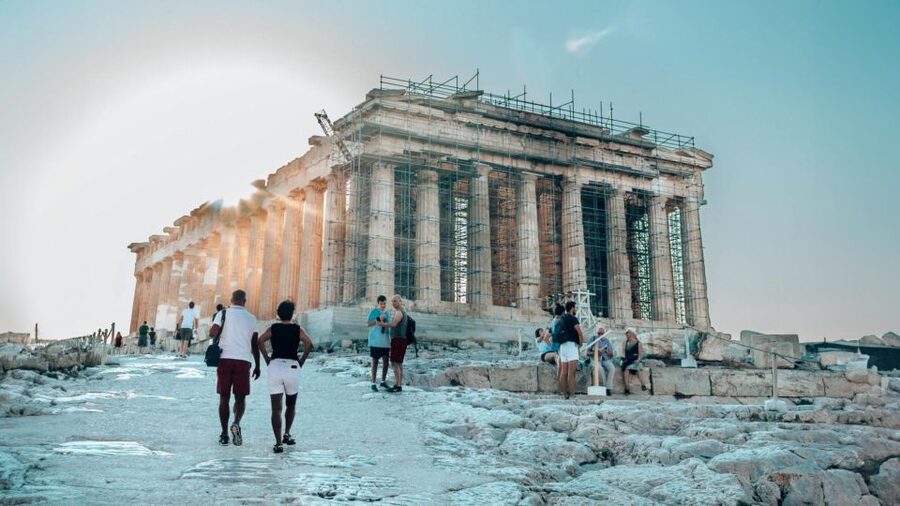
The Parthenon gets the longest Acropolis stop, about one hour. That is appropriate. You have time to understand its purpose, admire its design, ask questions, and take photographs without reducing the visit to a quick look at the columns.
The Parthenon was dedicated to Athena, the city’s patron goddess, but it also projected Athenian confidence. Your guide explains how the building fits into the city’s public image and the political world that created it.
I like that the tour does not present the Parthenon as an isolated masterpiece. Its meaning grows when you connect it to the democracy discussion. The citizens who helped shape Athens’ political system also lived in a city that excluded many residents from political participation. Women, enslaved people, and foreigners did not hold the same civic role as adult male citizens.
That tension is central to the experience. You can admire the political experiment without pretending it matched modern ideas of equal participation. The tour asks you to look at both the achievement and the boundaries.
The one-hour stop also makes room for the sheer pleasure of being there. The Parthenon is one of the great monuments of the ancient world, and no lecture should crowd out the view. Several guides have been praised for allowing photography and answering questions, so you should have a chance to enjoy the setting as well as the explanation.
Walking down to the Ancient Agora
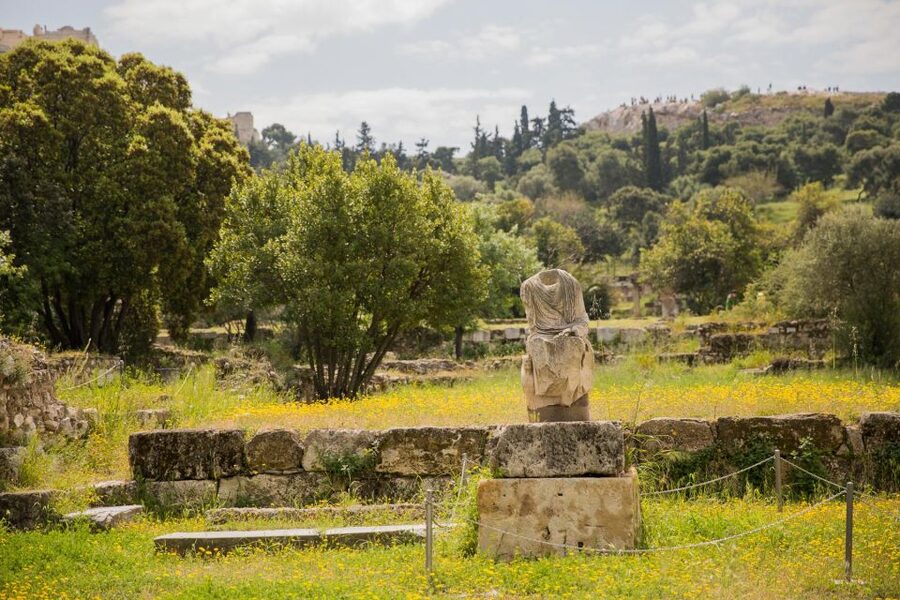
The Ancient Agora is the heart of the tour’s political argument. After the ceremonial and symbolic world of the Acropolis, you reach the area that served as ancient Athens’ political, commercial, and administrative center.
The word agora means a gathering place, and that is the useful idea to carry with you. Democracy needs somewhere for people to meet, discuss public matters, conduct business, and carry out the work of government.
You spend about 30 minutes here with the guide. The time is shorter than the Acropolis portion, so expect a focused visit rather than a detailed look at every feature. The guide will direct your attention to the parts that best explain how the city functioned.
This is also the place where the tour’s central questions become concrete. Who was allowed to take part? How were decisions made? What did public service require? What happened when strong personalities, popular emotion, or political pressure pushed the system off course?
The Ancient Agora is valuable because it takes democracy out of the abstract. You are standing in the setting where civic life happened, rather than only hearing about institutions in a classroom.
Temple of Hephaestus and the final lesson
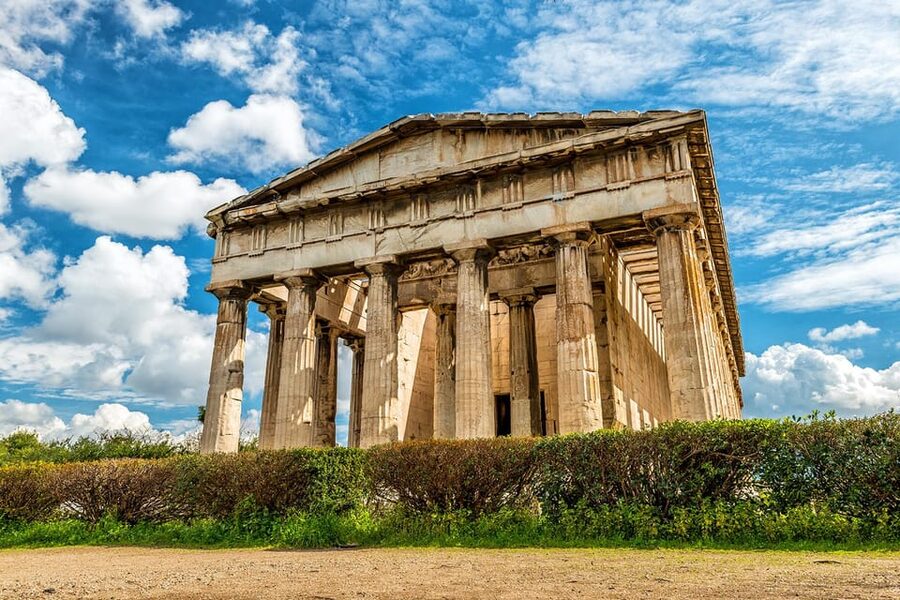
The tour ends at the Temple of Hephaestus, with about 30 minutes of guided attention. This well-preserved temple gives you a calmer final stop after the busier Acropolis visit.
Its dedication to Hephaestus, the god associated with metalworking and craft, offers a chance to consider the practical skills behind ancient building. It also gives your guide a strong place to draw together the main themes: religion, public identity, labor, citizenship, and the institutions of Athens.
The finish at the Ancient Agora is convenient if you want to continue exploring the area afterward. It also means you do not return to the original meeting point, so plan the rest of your day from the Agora rather than assuming you will end back on the Acropolis side.
The final discussion focuses on why democracy failed as an experiment. The point is not that democracy was useless. It is that political systems depend on people, rules, institutions, and limits, and each can break down.
That makes the comparison with modern democracy useful. You consider which structures still serve society well and which weaknesses remain familiar. The tour aims to leave you thinking about how the past might help improve the future, not simply memorizing dates.
What $69 means in practical value
At $69 per person, this is not the cheapest way to enter the Acropolis. You are paying for a certified guide, a small-group walking format, and a connected explanation of two major sites.
Admission to the Acropolis and Ancient Agora is included only if you select the ticket option. Otherwise, entrance fees are not included, though the provider can pre-purchase them if you request it. Check this detail carefully before comparing the advertised price with other tours.
The value is strongest if you want context. A self-guided visit can show you the stones, columns, and views. This experience is built to explain why the buildings mattered and how the Agora worked as a political center.
The price also makes more sense if you use the guide well. Ask questions, request clarification, and tell the guide if you need a short sitting or shade break. The best comments about Maria, Nathalia, Anastasia, and Helena focus on their teaching, warmth, flexibility, and willingness to answer questions.
If you only want a fast visit and a few photographs, the political focus may feel heavier than necessary. The tour spends time on ideas, arguments, and contradictions. That is its value, but also its limit.
Who will enjoy this tour most
I would choose this tour if you want Athens to make sense beyond its famous monuments. It suits adults, students, and families with children aged eight and older who can handle a three-hour walking route and enjoy asking why.
It is especially useful if you are new to ancient Greek politics. The guide introduces the main values and principles without requiring you to arrive with a background in classical history.
The experience also works well for visitors who want a bridge between ancient Athens and modern civic life. You will not get only mythology or architecture. You will look at institutions, citizenship, public power, and failure.
French-speaking visitors have a dedicated language option, and English is also available. A private group may be worth considering if your party wants a more personal pace or has specific questions.
I would hesitate if you have limited mobility, significant visual impairment, or young children under eight. The route includes ancient surfaces and walking between sites, and the tour is not designed for wheelchair users. I would also reconsider if you are carrying large bags, since backpacks and big bags are not allowed.
Useful timing and preparation advice
The experience lasts three hours, with starting times varying by availability. Since the route combines two archaeological sites, arrive ready to walk and keep your belongings light.
Bring a passport or ID card. This is particularly important for visitors who may qualify for free admission: European Union citizens under 25 and European Union and non-European Union citizens under 18 can enter free with valid identification, according to the stated rules.
Entry fees are non-refundable and non-exchangeable. If tickets are purchased for you, confirm the arrangement before booking so you know exactly what is covered.
You can cancel up to 24 hours in advance for a full refund, and the reserve-now, pay-later option keeps your immediate plans flexible. Those policies help if your Athens schedule is still shifting, but they do not remove the need to check the ticket choice and meeting point.
Should you book Acropolis and Agora: The Rise and Fall of Democracy?
Book it if you want a guided visit with a clear argument. The Acropolis shows you Athens’ grand public face, while the Ancient Agora helps you understand the machinery of civic life. Together, they create a stronger picture than either site alone.
I especially recommend it for anyone tired of collecting monument photographs without understanding what they are seeing. Maria, Nathalia, Anastasia, and Helena have each been singled out for the qualities that matter most here: clear teaching, kindness, useful anecdotes, flexibility, and time for questions and photographs.
Skip it if you want a short, unstructured monument visit, cannot manage three hours of walking, or need a wheelchair-accessible route. For everyone else, $69 can be a fair price if admission is included and you want the political story explained rather than left to guesswork.
FAQ
How long does the tour last?
The tour lasts three hours. Starting times depend on availability.
What sites are included?
The route includes the Acropolis, Odeon of Herodes Atticus, Propylaea, Erechtheion, Temple of Athena Nike, Parthenon, Ancient Agora, and Temple of Hephaestus.
Are entrance tickets included in the price?
Acropolis and Ancient Agora tickets are included only when you choose the ticket option. Otherwise, entrance fees are separate, though they can be pre-purchased on request.
Which languages are available?
The tour is offered in English and French.
Can I book a private group?
Yes. A private group option is available.
What should I bring, and what is not allowed?
Bring a passport or ID card, comfortable shoes, and comfortable clothing. Backpacks, large bags, baby strollers, and pets are not allowed, although assistance dogs are permitted.
Freshly added Athens trips
- Athens and Ancient Corinth Private from Athens★ 5.0 · 3 reviews
- From Athens: Mycenae and Epidaurus Private Tour★ 4.8 · 3 reviews
- Full day Meteora private tour★ 5.0 · 3 reviews
- Double Shore Dive (certified divers)★ 4.5 · 3 reviews
- Athens Hills: Mythology Treasure Hunt★ 5.0 · 3 reviews
- Sunset & swimming at Cape Sounio, Poseidon temple★ 5.0 · 3 reviews
- Philosophy Experience at Plato’s Academy Park – basic version★ 5.0 · 3 reviews
- Private Acropolis Tour – Ticket Included★ 5.0 · 3 reviews
Acropolis Tours, compared.

Acropolis & up to 5 Archaeological Sites Combo Pass
Read our review →

Acropolis, Parthenon & Acropolis Museum Guided Tour
Read our review →
Acropolis, Parthenon & Acropolis Museum Guided Tour
Read our review →


Acropolis monuments & Parthenon Walking Tour with Optional Acropolis Museum
Read our review →Browse the lists this tour appears in