
Reviewed · TOURS
Unexpected Athens Orientation Tour
Athens is more than the Acropolis, and this four-hour walk makes that point early. You move from the polished cafés of Kolonaki to the political edge of Exarchia, then through street-art-filled Psiri to Monastiraki’s ancient remains and flea-market lanes. It is a useful look at modern Athens, not just the city of 2,000 years ago.
I like the small group, capped at 12, because Athens sidewalks can be tight and crowded. I also like the neighborhood contrasts, plus the chance to ask for practical tips from guides such as Nikos, Leo, Simos, Antigoni, Mary Kate, and Elissavet. The main caution is simple: this is a long walk with some steep uphill sections, and a hot day can make the four hours feel longer.
In This Review
- Key points to know before you book
- Why this Athens walk feels different
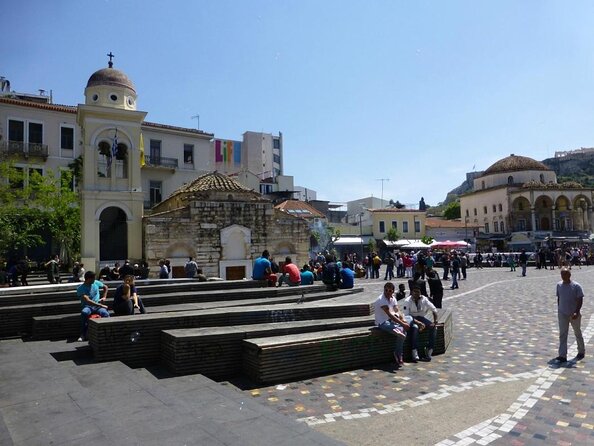
- Syntagma Square: Athens at full speed
- Kolonaki and Lykavittos: Polished Athens and a hillier side
- Exarchia: Politics, students, and everyday Athens
- Psiri: Craftsmen, food, and Athens street art
- Monastiraki: Ruins, food stalls, and an underground surprise
- What the guide adds to the walk
- Walking conditions, pace, and group size
- Is $64.12 a fair price?
- The best time to take it
- Who should book Unexpected Athens?
- Should you book this Athens walk?
- FAQ
- Where does the Unexpected Athens Orientation Tour start?
- Where does the tour end?
- How long does the tour last?
- How many people can join the tour?
- Are food and drinks included?
- Can I cancel for a full refund?
Key points to know before you book
- Five very different neighborhoods: You see Syntagma, Kolonaki and Lykavittos, Exarchia, Psiri, and Monastiraki in one outing.
- A modern view of Athens: The focus is on how the city developed, how Athenians live, and how politics, art, commerce, and history shape each district.
- Small groups matter: The maximum of 12 makes it easier to hear the guide and move through busy streets.
- Expect a serious walk: Good shoes are essential, with hills and an uphill climb in parts of the route.
- Useful at the start of a stay: The walk begins at 9:30 a.m. in Syntagma and ends in Monastiraki, giving you a practical sense of the central city.
- Food and drinks cost extra: A coffee or water stop may be part of the flow, but refreshments are not included.
Why this Athens walk feels different
Many first-time visits to Athens follow a familiar path: Acropolis, Ancient Agora, museum, dinner. Those places deserve your time, but they do not fully explain the city you see around them. This tour fills in that gap by using neighborhoods as chapters in Athens’ story.
You begin in the city center and gradually move through districts with sharply different personalities. Along the way, the guide connects buildings, streets, political movements, cafés, shops, ruins, and daily life. That approach gives you a better sense of how Athens became a modern capital after its ancient past.
The strongest guides appear to be the heart of the experience. Simos is an archaeologist and cultural historian, while Leo has been praised for explaining the city’s modern history through buildings, street art, and neighborhoods. Nikos, Antigoni, Mary Kate, and Elissavet have also been singled out for clear explanations, friendly conversation, and useful local suggestions.
Guide assignments can change, so you should not book solely to meet one particular person. Still, the repeated praise for the guides points to an important value: this is not simply a walk between map pins. It depends on someone who can explain why a neighborhood looks and feels the way it does.
Other days out people book around Athens:
- Athens: Acropolis & up to 5 Archaeological Sites Combo Pass
★ 4.4 · 12,619 reviews - Athens: Acropolis Ticket with Optional Audio or Live Guide
★ 4.2 · 11,055 reviews - Athens: Acropolis, Parthenon & Acropolis Museum Guided Tour
★ 4.8 · 9,316 reviews
Syntagma Square: Athens at full speed
The meeting point is Syntagma Square, at 9:30 a.m. This is Athens’ main civic and transport hub, with the Greek Parliament occupying the former Royal Palace. The square is free to enter, of course, and the real value here comes from understanding its role in the city.
Syntagma is a good starting point because it immediately shows Athens as a working capital. People cross the square on their way to offices, shops, government buildings, and public transport. It is not a quiet historical plaza. The constant movement gives you a quick read on the city’s pace.
You spend about 30 minutes here. That is enough time for orientation without using up the morning before the walk reaches the less familiar districts. Since the tour starts near public transportation, Syntagma is also a practical place to reach from other parts of central Athens.
Kolonaki and Lykavittos: Polished Athens and a hillier side
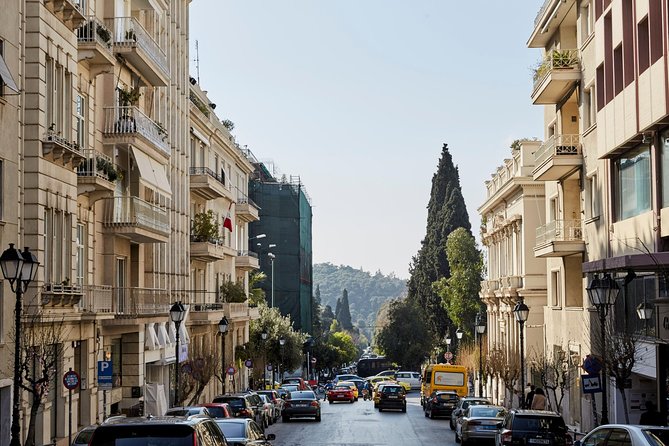
The next hour takes you into Kolonaki and toward Lykavittos. Kolonaki has long been one of central Athens’ most expensive and fashionable districts, known for boutiques, sidewalk cafés, and higher-end restaurants.
This section is useful because it shows a side of Athens that ancient sites cannot. The streets, shops, and cafés reveal present-day social life and the city’s more polished face. You may also get views connected with Lykavittos, although the exact route and stopping points can depend on the guide and group.
This is one of the portions where comfortable shoes matter. The route includes uphill stretches, and several people specifically noted that the walk involves climbing. The pace is described as relaxed, but relaxed does not mean flat or effortless.
A hot morning can also change the experience. Bring water and sun protection. The tour does not include food or drinks, though a coffee break may be arranged along the way. Greek coffee is not everyone’s favorite, so treat it as an optional local pause rather than part of the ticket’s value.
Exarchia: Politics, students, and everyday Athens
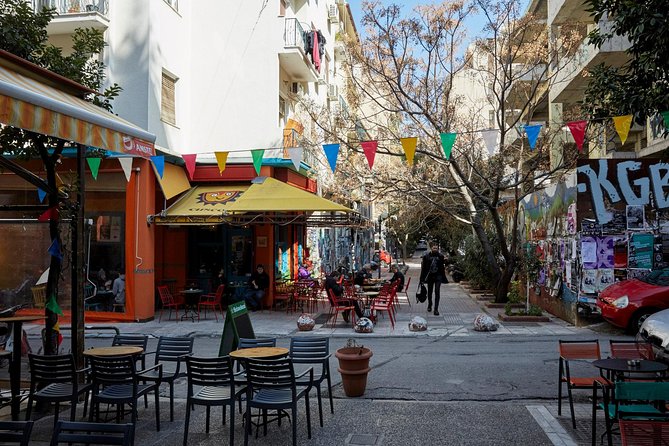
Exarchia brings a dramatic change in tone. Located in the center of Athens, this district is associated with progressive political ideas, university students, inexpensive tavernas, bars, and snack shops.
The value of this stop is the context. Instead of presenting Athens as one polished historic center, the guide shows you a district shaped by activism, education, youth culture, and ordinary local commerce. This is the sort of place many people would pass by without knowing how to read it.
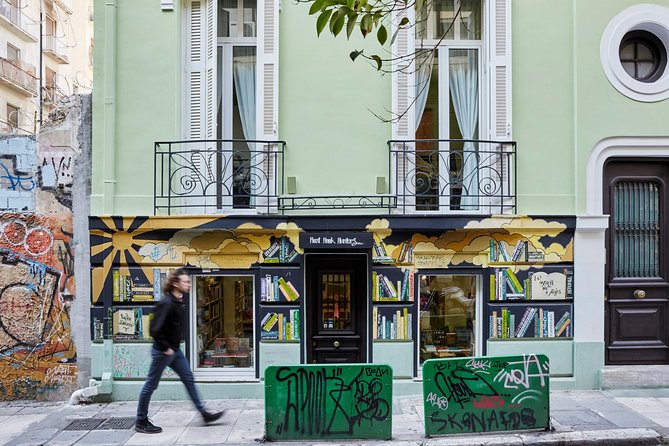
Plan on about an hour here. The guide may explain the area’s social and political character, point out places connected with intellectual and student life, and show how the neighborhood differs from Kolonaki. One particularly useful aspect of this walk is the attention to places such as bookstores and cafés frequented by academics and local residents.
Do not expect a standard sightseeing stop with a single grand monument. Exarchia works best when you are interested in how people use a neighborhood, not just in photographing its most famous building. The streets can also feel more rough-edged than the areas around Syntagma, which is part of the point, but may not suit anyone seeking a purely polished city walk.
Same city, a completely different century:
- Athens: Cape Sounion & Poseidon Temple Sunset Half-Day Trip
★ 4.8 · 8,241 reviews - Athens: Acropolis and Parthenon Guided Walking Tour
★ 4.6 · 5,882 reviews - All Day Cruise -3 Islands to Agistri,Moni, Aegina with lunch and drinks included
★ 5.0 · 4,958 reviews - Athens, Piraeus, and Coastline: Blue Hop-On Hop-Off Bus
★ 3.9 · 4,849 reviews
Psiri: Craftsmen, food, and Athens street art
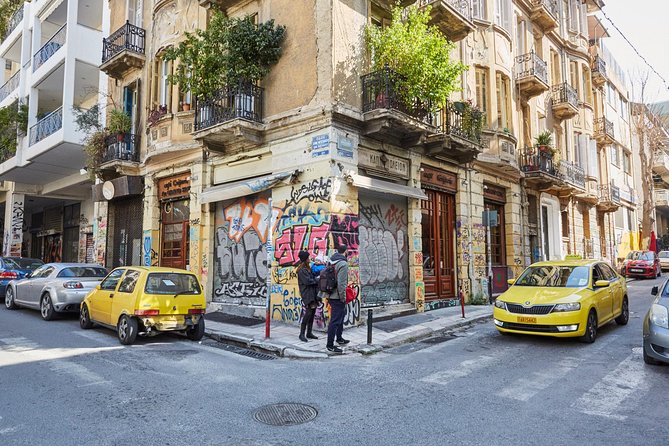
After Exarchia, the walk continues to Psiri, another district with a changed identity over time. It was long associated with small workshops and local craftsmen. Today, it is known for food, drinks, evening activity, and street art.
This is one of the most visually engaging sections. Street art appears throughout the area, and the guide can give it meaning beyond a quick photo. You may see how old commercial streets, newer cafés, creative work, and nightlife now share the same district.
The planned time here is about an hour. That gives you space to take in the streets without racing from one attraction to the next. It also leaves you well placed to return to Psiri later for food or drinks, though you will need to choose and pay for those separately.
I like this part for another reason: it bridges the social history of Exarchia and the market energy of Monastiraki. You get a sense of Athens as a city that keeps changing, where older trades and newer businesses occupy the same blocks.
Monastiraki: Ruins, food stalls, and an underground surprise
The walk ends in Monastiraki after about 30 minutes in the area. This district is famous for its antique and flea-market atmosphere, but its appeal is broader than shopping.
You may see Hadrian’s Library, surviving Ottoman-era architecture, street food, and an underground river visible through a metro station. These details sit close together, which makes Monastiraki a fitting final stop for a tour built around layers of Athens.
The ending is practical. You finish in one of the city’s best-known central areas, with easy access to food, shops, and further sightseeing. You can continue exploring, stop for lunch, or use what you have learned to return to a neighborhood that caught your interest.
The short time here is the one limitation. Monastiraki contains enough history and street life for much longer than 30 minutes. Think of this as an introduction rather than a full visit to Hadrian’s Library, the market, or the surrounding monuments.
What the guide adds to the walk
The tour’s best feature is the conversation between the guide and the city. A good guide can explain not just what you are looking at, but why it matters. That might mean connecting a ruin in a commercial street with Athens’ ancient past, explaining a neighborhood’s political identity, or pointing out how occupation and more recent events affected the city.
Simos has been described as bringing archaeology and cultural history together. Leo’s approach has focused on the making of the modern Greek state and the development of Athens as a capital. Mary Kate has been praised for combining history with practical tips, including food and drink suggestions. Elissavet has tailored parts of the walk to individual interests and followed up with restaurant recommendations.
Those details suggest that you should speak up during the tour. Ask about places to eat, areas to revisit, museums, coffee, or how the neighborhoods connect. The smaller group makes that easier than on a large bus tour.
The guide may adjust the conversation to the people in front of them. That is useful, but it also means two departures may not feel identical. The stops are set, while the stories, pauses, and emphasis can vary.
Walking conditions, pace, and group size
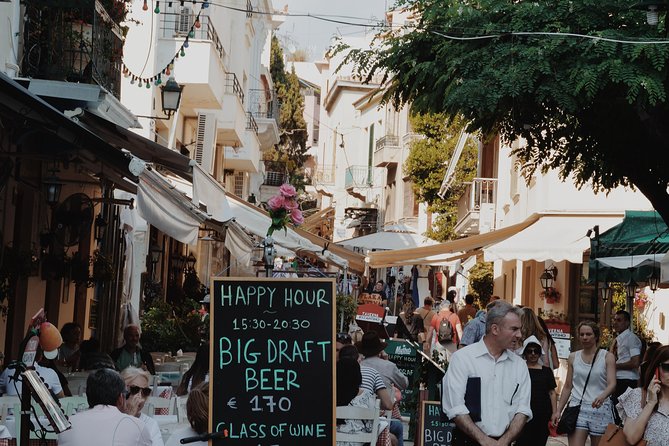
You should treat this as an active walking tour, not a gentle sightseeing stroll. It lasts about four hours, includes hills, and covers several districts. Good walking shoes are the most repeated practical tip, and water is sensible, especially in warm weather.
The pace is generally described as relaxed, with rest stops built into the route. One person in their seventies reported managing the walk without trouble, but that does not remove the need to judge your own comfort with hills and city pavement.
A maximum of 12 people is a real advantage. Athens can be crowded around central squares and market streets, and a small group can stay together more easily. It also gives you a better chance of hearing the guide and asking questions.
The tour is offered in English and includes a local guide and a fun map of Athens. Service animals are allowed, and most people can participate. Hotel pickup and drop-off are not included, so you need to reach Syntagma Square yourself and make your own plans after arriving in Monastiraki.
Is $64.12 a fair price?
At $64.12 per person, this is not the cheapest way to walk around central Athens. You can visit many streets and public areas without paying anything. The price makes more sense if you want a local guide to connect the neighborhoods and help you understand what you are seeing.
You are paying for about four hours, a small group, an English-speaking guide, and an organized route that covers several districts. You are not paying for meals, drinks, attraction admission, or transport. Since the stops are mostly public places, the value rests mainly on the guide’s explanations and the route design.
For a first visit, I think the price is easier to justify. The tour can prevent you from spending several days seeing only the Acropolis area, and it may help you decide where to return for dinner, shopping, street art, or a quieter neighborhood walk.
It is less useful if you already know central Athens well or prefer to explore without a schedule. You could also spend the same money on a museum ticket and a meal, so be clear about what you want: this is a city-orientation experience, not an attraction-heavy tour.
The best time to take it
The 9:30 a.m. start works well at the beginning of your stay. You get your bearings before the rest of the day and finish near Monastiraki in time for lunch or more sightseeing.
Taking it early in your trip also lets you use the guide’s suggestions. If Nikos, Mary Kate, or another guide points you toward a neighborhood restaurant, café, shop, or area worth revisiting, you still have time to fit it into your plans.
The tradeoff is that you must be ready for a four-hour walk soon after breakfast. If you have just arrived after a long journey, consider your energy level. The morning start may be refreshing, but it is not a short orientation lasting only an hour or two.
Free cancellation is available up to 24 hours before the start time. Changes or cancellations inside that window are not refunded, and the experience requires a minimum number of participants. If the minimum is not met, you are offered another date or experience, or a full refund.
Who should book Unexpected Athens?
I would choose this tour for a first-time visitor who wants to understand Athens as a living city. It suits people who enjoy history, architecture, politics, street art, local food culture, and the small details that rarely appear on a standard ancient-site route.
It is also a good match for anyone who wants a guide’s help with orientation. The route links several central areas, so you finish with a clearer idea of where Syntagma, Kolonaki, Exarchia, Psiri, and Monastiraki sit in relation to one another.
I would be more cautious if you dislike hills, hot-weather walking, or four-hour outings. Families should also check the age mix and group makeup before booking, since one participant felt the tour would be better suited to older teens and adults. The general participation guidance is broad, but the physical demands remain real.
Should you book this Athens walk?
Book it if you want Athens explained through its neighborhoods rather than presented as a string of ancient monuments. The combination of upscale Kolonaki, political Exarchia, creative Psiri, and historic Monastiraki gives you a strong first look at the city’s present-day character.
Skip it if you want indoor attractions, included food, hotel pickup, or a short and flat route. For most visitors who can manage the walking, the small group and strong guide focus make this a useful first or second-day activity, especially if you want to get your bearings fast and find the Athens beyond the headline sights.
FAQ
Where does the Unexpected Athens Orientation Tour start?
It starts at Syntagma Square, Plateia Syntagmatos, Athens. The scheduled start time is 9:30 a.m.
Where does the tour end?
The walk ends in Monastiraki, Athens. This puts you near the flea-market area, street food, Hadrian’s Library, and public transportation.
How long does the tour last?
The tour lasts approximately four hours.
How many people can join the tour?
The experience has a maximum of 12 travelers, creating a small-group setting.
Are food and drinks included?
No. Food and drinks are not included in the price. A coffee stop may occur during the walk, but you pay for refreshments yourself.
Can I cancel for a full refund?
Yes, if you cancel at least 24 hours before the experience start time. Cancellations or changes made less than 24 hours before the start are not refunded.
Freshly added Athens trips
- Athens and Ancient Corinth Private from Athens★ 5.0 · 3 reviews
- From Athens: Mycenae and Epidaurus Private Tour★ 4.8 · 3 reviews
- Full day Meteora private tour★ 5.0 · 3 reviews
- Double Shore Dive (certified divers)★ 4.5 · 3 reviews
- Athens Hills: Mythology Treasure Hunt★ 5.0 · 3 reviews
- Sunset & swimming at Cape Sounio, Poseidon temple★ 5.0 · 3 reviews
- Philosophy Experience at Plato’s Academy Park – basic version★ 5.0 · 3 reviews
- Private Acropolis Tour – Ticket Included★ 5.0 · 3 reviews
Tours, compared.

Acropolis, Parthenon & Acropolis Museum Guided Tour
Read our review →


Mythology of Delphi, Museum and Arachova Guided Tour
Read our review →
Acropolis, Parthenon & Acropolis Museum Guided Tour
Read our review →