
Reviewed · PIRAEUS & CRUISE PORT
Athens, Piraeus, and Coastline: Blue Hop-On Hop-Off Bus
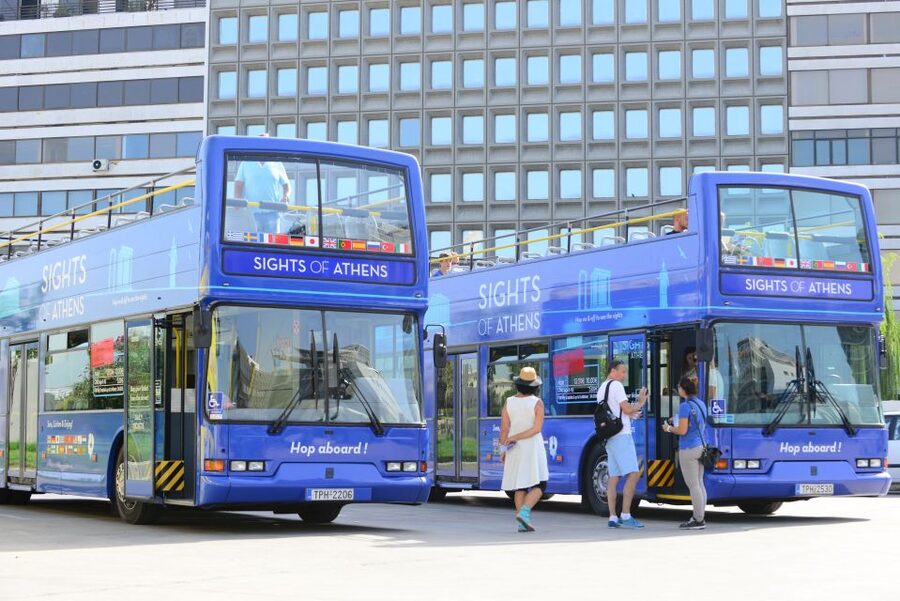
The clever part of this Athens bus tour is its reach. One ticket connects the Acropolis and Plaka with the cruise terminals at Piraeus, then continues south to beaches, marinas, Glyfada, and Vouliagmeni. For $14, that is a useful transport deal, not just a sightseeing loop.
I like the direct pickup at Piraeus, especially if you are arriving by cruise ship, and I like the freedom to use the ticket for two days from first activation. The recorded guide comes in 16 languages, and free Wi-Fi helps with maps and messages. The catch is Athens traffic, plus occasional long waits when too many passengers are trying to return to the port.
In This Review
- Key points
- Four routes that tie Athens together
- Starting at Piraeus cruise port
- The Acropolis stop and central Athens
- The Athenian Riviera on the Yellow Line
- Vouliagmeni, Kavouri, and the lake
- What the audio guide adds
- Timing, traffic, and changing buses
- Comfort, access, and the upper deck
- Is $14 good value for two days?
- Who should book this bus?
- FAQ
- How long is the Athens Blue Hop-On Hop-Off ticket valid?
- Which routes are included?
- Can I board at the Piraeus cruise terminals?
- Is entry to the Acropolis included?
- What languages are available for the audio guide?
- Is the bus wheelchair accessible?
Key points
- Four routes in one ticket: Cover central Athens, Piraeus, Glyfada, and Vouliagmeni without arranging separate transport.
- Excellent for cruise passengers: Board near Cruise Terminals A, B, or C and ride toward the Acropolis and city center.
- A second day adds real value: Use one day for Athens and another for the Athenian Riviera, or return to sights you missed.
- The coast is more than a bus ride: Stops include Agios Kosmas, Marina Flisvou, Glyfada, Kavouri Oceanis, and Vouliagmeni Lake.
- Audio guide included: Commentary is available in English, Greek, Spanish, French, German, Italian, Portuguese, Russian, Arabic, Chinese, Japanese, Turkish, Dutch, Finnish, and Hebrew.
- Plan around the last bus: Timetables and service gaps can vary, and the final ride back to Piraeus matters if your ship is waiting.
Four routes that tie Athens together
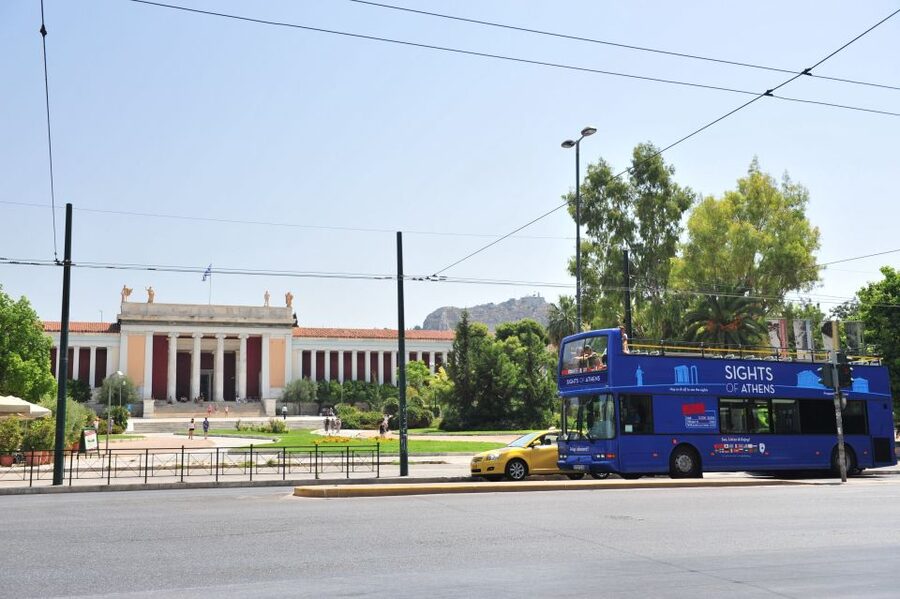
This is not a single city loop with a few extra stops. The ticket covers four related routes, each with a different job.
The Orange Line is your central Athens route. It reaches the Acropolis area, Plaka, Syntagma Square, the Temple of Olympian Zeus, the Panathenaic Stadium, Monastiraki, Thission, the National Archaeological Museum, the National Library, and the Benaki Museum.
The Blue Line links Piraeus with Athens. It is the key route for cruise passengers and also passes Piraeus sights such as Pasalimani yacht marina and Mikrolimano harbor.
The Yellow Line runs along the coast toward Glyfada. It starts from the Planetarium stop on the Blue Line and passes the Stavros Niarchos Foundation area, Marina Alimou, Marina Flisvou, Agios Kosmas, and the Glyfada shopping district.
The Green Line continues farther south toward Vouliagmeni. It covers the Allied Forces Cemetery, the Byzantine Museum, Kavouri Oceanis beach, Vouliagmeni Lake, and the thermal-bath area around the lake.
That range is the main reason to choose this service. You can use it as a sightseeing bus, a practical connection from ship to city, or a simple way to reach the coast without figuring out several local transport links.
More Piraeus port days:
- City Sightseeing Athens, Piraeus & Beach Riviera Hop-On Hop-Off Bus Tours
★ 4.0 · 1,887 reviews - Hop on Hop Off Classic tour of Athens, Piraeus & Beaches
★ 3.5 · 1,266 reviews - Big Bus Athens Hop-On Hop-Off with optional Piraeus & Riviera
★ 4.0 · 652 reviews
Starting at Piraeus cruise port
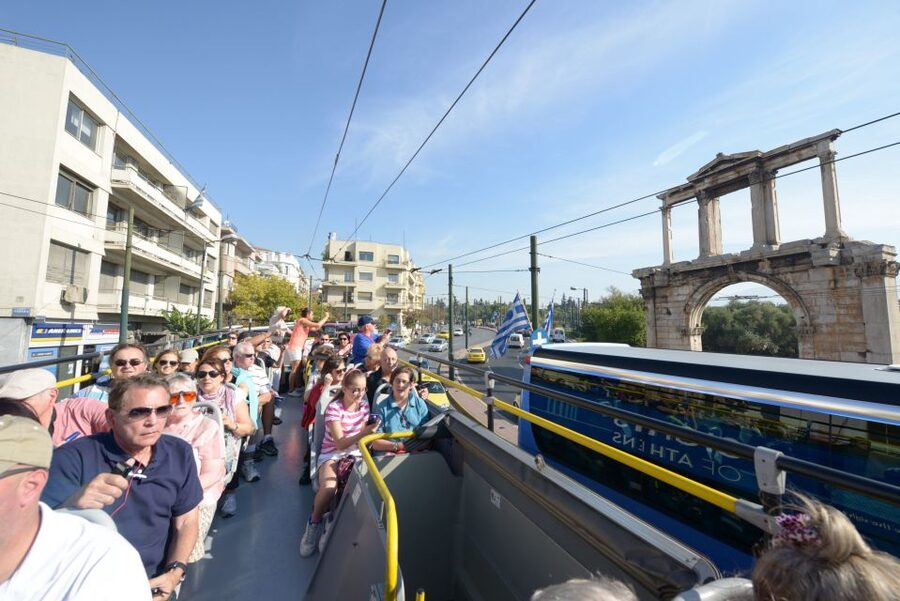
The Blue Line is built with cruise passengers in mind. Buses serve Cruise Terminals A, B, and C, so you can often board close to your ship rather than walking through the port or paying for a taxi.
The first ride into Athens is especially useful. It takes you toward the Acropolis, with the Acropolis stop placed for access to the hill and the Acropolis Museum. From there, you can walk up to the Parthenon or continue on the Orange Line for the rest of the city.
Check your ship’s terminal before returning. Piraeus has more than one cruise stop, and getting off at the wrong one can turn into a long walk in an area that is not especially easy to navigate on foot. If you are unsure, ask staff before boarding the return bus and keep your ship information handy.
The ride from the port is usually straightforward, but the timing depends on traffic. One useful report described a quick 20-minute ride on a holiday morning, while normal conditions can take closer to 30 minutes. Allow extra time on the way back. A bus that looks comfortably early in the morning can move slowly through Athens later in the day.
The Acropolis stop and central Athens
The Acropolis stop is the natural change point between the port and central Athens. It is also a good place to get your bearings, though you should not confuse a bus stop with an admission ticket. Entry to the Acropolis, the Acropolis Museum, and other attractions is not included.
For an Acropolis visit, arrive with a separate timed plan if you have one. The bus gets you close, but it does not reserve your entry or guide you through the site. You will need comfortable shoes, water, sunglasses, and a sun hat, especially during the hotter months.
The Orange Line then opens up the city beyond the ancient hill. At Plaka, you can wander narrow streets and traditional-looking lanes beneath the Acropolis. It is a pleasant place to step off, though the bus cannot replace walking here. The best parts are found on foot.
At Hadrian’s Gate and the Temple of Olympian Zeus, you get a clear sense of how Athens grew from Greek city to Roman capital. The temple is particularly striking for its huge columns and open setting. If you are interested in ancient monuments but do not want to spend the whole day inside museums, this stop gives you a useful outdoor view.
Syntagma Square brings you to the Hellenic Parliament and its ceremonial guards. The square is also a practical central point for walking toward Ermou, Athens’ busy shopping street. You can use the bus to connect the big sights, then walk between nearby stops rather than riding the full loop.
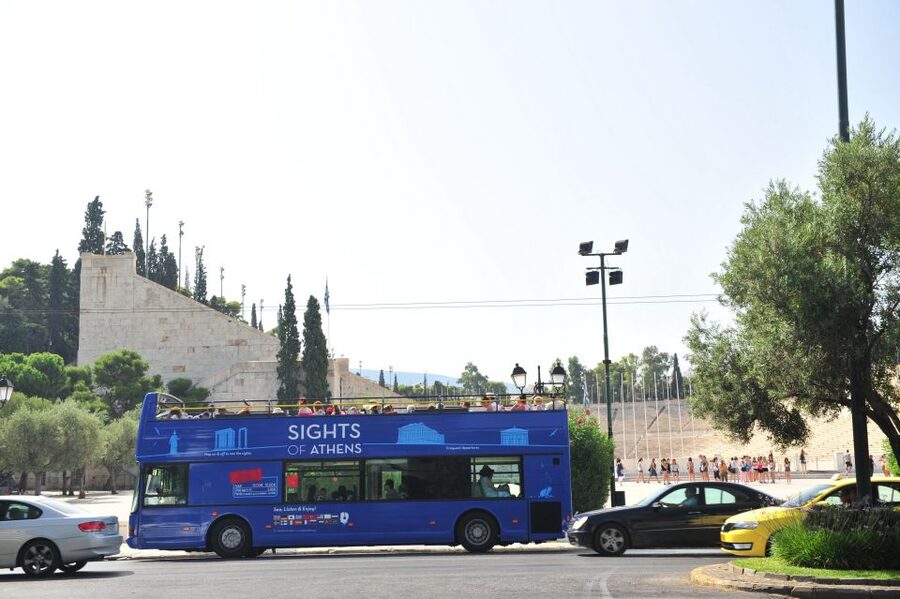
The Panathenaic Stadium is another worthwhile stop. It hosted the first modern Olympic Games, and its white marble seating makes it easy to understand why the site remains important. Admission is separate, but even the exterior gives you a sense of the stadium’s scale.
Monastiraki is useful for food, shopping, and city atmosphere. Its flea market area can be crowded, so keep an eye on your belongings and allow time to browse. Thission offers a more relaxed walk, with views toward ancient sites and a chance to pause away from the main tourist flow.
The National Archaeological Museum, National Library, and Benaki Museum extend the route beyond the Acropolis district. You will not see all of them properly in one day, but the bus helps you choose. Use the first day to note what interests you, then spend the second day returning to one or two places in more detail.
The Athenian Riviera on the Yellow Line
The Yellow Line changes the mood of the outing. Instead of ancient ruins and dense central streets, you get marinas, seaside roads, beaches, and southern suburbs.
You connect to it at the Planetarium stop on the Blue Line. The route passes the Stavros Niarchos Foundation area and Marina Alimou, showing how Athens reaches from its historic center into a modern coastal district.
Marina Flisvou is a good place for a waterfront pause, especially if you want a sunset setting. Agios Kosmas is the practical beach stop mentioned for swimming and sunbathing. Bring what you need for a beach break, since admission to attractions and personal beach costs are not included.
At the Glyfada terminal, you can get off for cafes, shops, and a more polished suburban feel. Glyfada is known for luxury department stores and seaside dining, so this section works well if you want a break from archaeological sites. It is also a simple way to add a few hours by the water without committing to a full beach day.
The coast route is not only for summer. In cooler months, the views and marinas still make a pleasant ride, but swimming stops will be less useful. In hot weather, the open top deck can be enjoyable, while an air-conditioned lower deck gives you relief when the sun becomes too strong.
More hop-on hop-off bus tickets:
- Athens: City Sightseeing Hop-On Hop-Off Bus Tour
★ 4.3 · 4,520 reviews - Athens: Big Bus Hop-on, Hop-off Tour by Open-Top Bus
★ 4.1 · 1,042 reviews - Athens Shore Excursion: Athens and Piraeus Hop-On Hop-Off Bus Tour
★ 4.0 · 617 reviews - Athens:City Pass with Acropolis, Museums, Hop-On Hop-Off Bus
★ 3.9 · 586 reviews
Vouliagmeni, Kavouri, and the lake
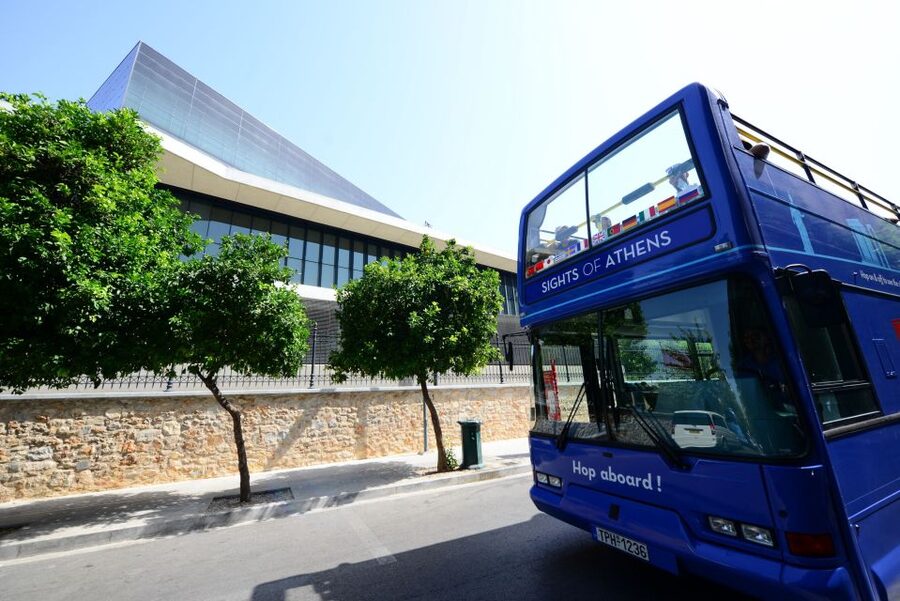
The Green Line reaches farther south and is best treated as a separate half-day outing. It is not the route to squeeze in casually between a timed Acropolis entry and a ship departure.
Vouliagmeni is known for beaches, but the route also includes the Allied Forces Cemetery and Byzantine Museum. Those stops add a cultural and historical side to an area often treated only as a seaside escape.
Kavouri Oceanis beach is one of the main reasons to continue south. You can use the bus to reach the beach area, then stop for swimming, sun, or a meal before continuing. Pack sun protection and comfortable footwear, and check the final departure time before settling in.
Vouliagmeni Lake is another major stop. The lake is associated with thermal baths and attractive surroundings, giving you a different kind of coastal visit. Admission and any services at the lake are separate, so factor those costs into your plan.
The Green Line is the least useful choice for a tight cruise-port schedule. Traffic, service gaps, and the distance from Piraeus can all work against you. It makes much more sense if you are staying in Athens for at least two days and want to give the coast proper time.
What the audio guide adds
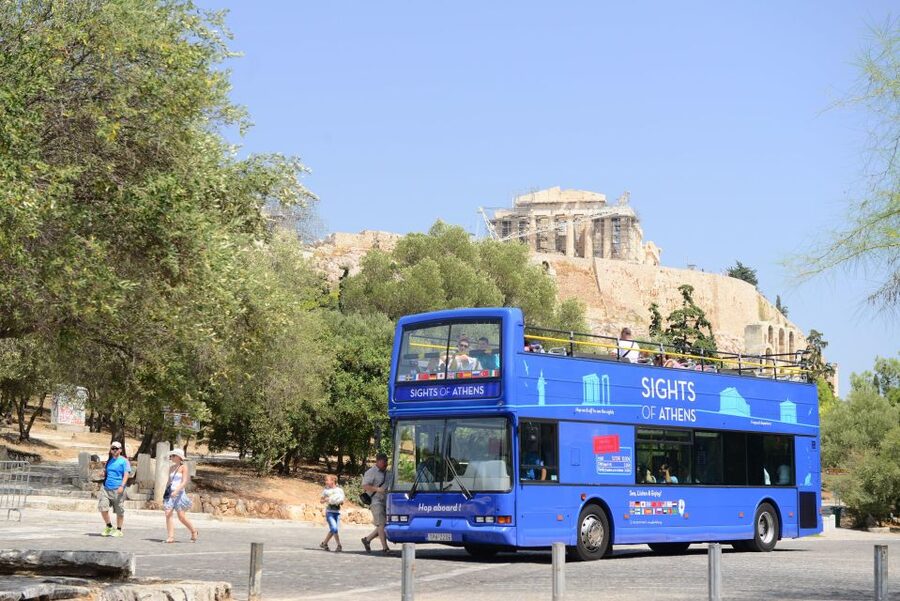
The recorded commentary gives basic historical, cultural, and social information as you pass each area. That matters on a route this broad, since the bus moves from ancient Athens to Roman monuments, modern government buildings, port districts, and the Riviera.
You choose from 16 languages: English, Greek, Spanish, French, German, Italian, Portuguese, Russian, Arabic, Chinese, Japanese, Turkish, Dutch, Finnish, and Hebrew. Free disposable earphones are provided when you board.
The system is useful rather than theatrical. Some buses have had static or loose headphone jacks, and a few passengers have found the connection unreliable. Bring your own earbuds only if you know they will work with the bus socket, but use the supplied pair first so you can change channels easily.
The commentary does not replace a specialist guide inside the Acropolis or a museum. Its value is that it gives you context while you rest your feet and look out from the bus. That makes the service particularly handy on a first visit, when you want a broad view before choosing where to spend more time.
Timing, traffic, and changing buses
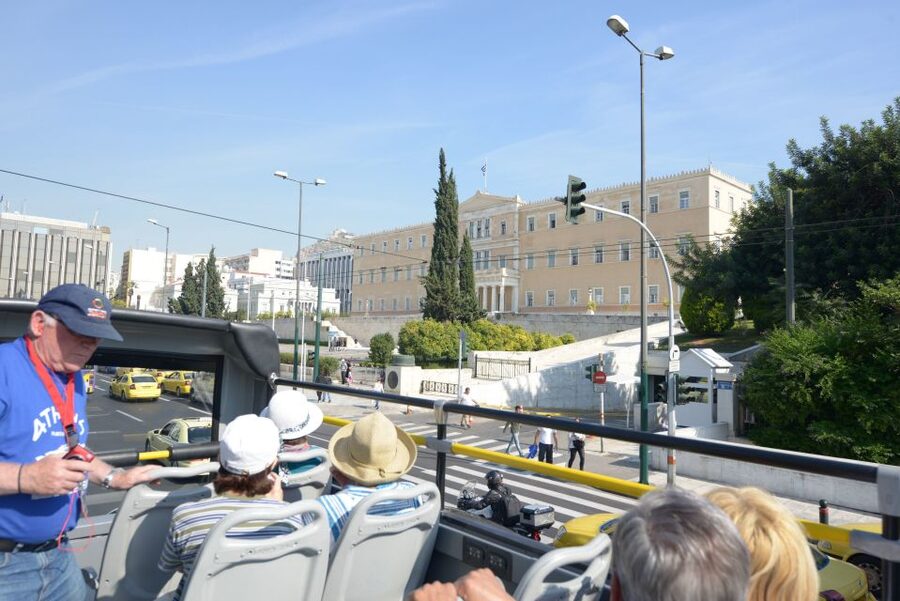
The buses are frequent on the main Athens sections, with some riders reporting intervals of around 15 minutes. Other waits have been much longer, particularly for the Blue Line back from the Acropolis when many cruise passengers are heading to ships at the same time.
This is the central practical issue. Hop-on hop-off does not mean instant service at every stop. You may need to wait, and some routes have fewer buses than the busiest central loop.
Ask a staff member to explain the route map before you plan your day. This small step can prevent a lot of confusion, especially when changing between the Blue, Orange, Yellow, and Green lines. Look for the marked stops and confirm the direction before boarding.
The routes are loops, so riding the wrong direction can cost time. In some cases, walking across the street or a few blocks to catch the bus going the other way is faster than remaining aboard for the full circle.
Do not assume the driver will announce every stop clearly. Keep the route map open, watch for landmarks, and set a phone reminder if you are heading for a particular stop. One missed stop near the port can be inconvenient, and Piraeus is not the place to improvise at the last minute.
Service times also matter. The route may be frequent in the middle of the day but less forgiving near the end of service. Before you get off for lunch, shopping, or the beach, find out when the last bus leaves that route and where you need to change.
Comfort, access, and the upper deck
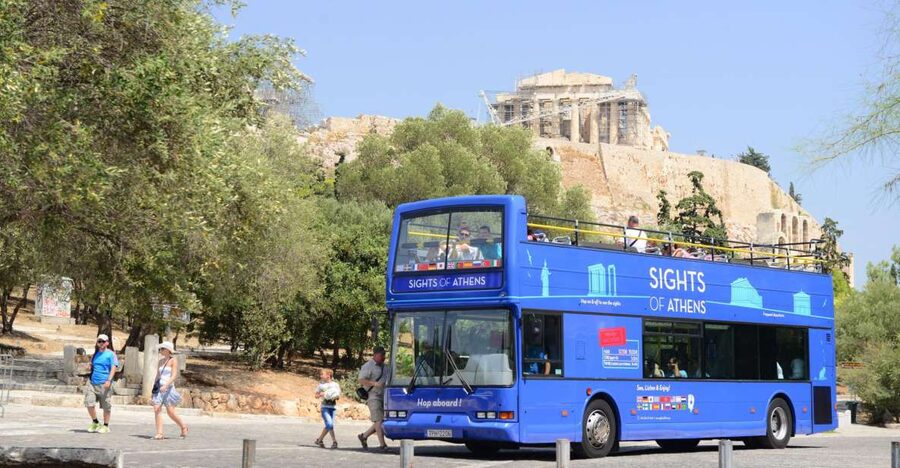
Buses have low-floor access and a designated wheelchair space, making the service suitable for wheelchair users. Some buses also have air conditioning, while roof arrangements vary. A few have open upper decks, and others offer more shade or cover.
The upper deck gives you better views and a pleasant breeze, but Athens sun is serious. Carry water, wear a hat, and use sunscreen. The lower deck is the smarter choice during the hottest part of the day or on a slow return through traffic.
The fleet is not uniformly new. Air-conditioning leaks and worn headphone connections have been reported, so do not expect polished luxury. Still, the combination of seating, route coverage, Wi-Fi, and open-air views makes it a comfortable enough way to rest your feet between stops.
Free Wi-Fi is useful for checking maps and sharing photos, but it has not connected reliably on every bus. Treat it as a bonus, not your only source of directions.
Is $14 good value for two days?
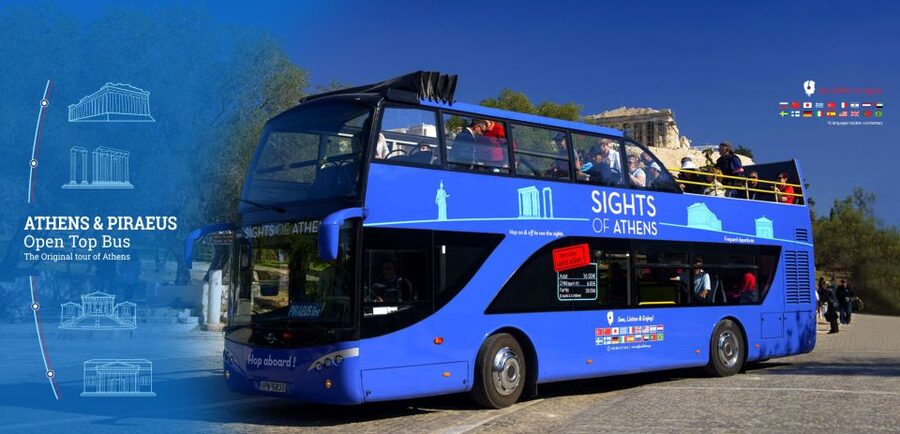
At $14 per person, the price is hard to fault if you use more than one route. A single taxi from Piraeus to central Athens can cost more than this, while the bus also provides sightseeing commentary and lets you continue around the city.
The value improves if you use the complimentary second day. You could spend day one on the Orange Line, with time at the Acropolis, Plaka, Syntagma, and Monastiraki. Then use day two for Glyfada and Vouliagmeni, or take the Blue Line from your accommodation to the port.
If you only ride once from the port to the Acropolis, the ticket still offers practical value, but the sightseeing portion is less important. You are paying for convenience and a direct port connection rather than a full tour.
Attractions are not included, so budget separately for the Acropolis, museums, Vouliagmeni Lake, and any beach facilities. The bus ticket works best as your transport framework, not as an all-inclusive Athens pass.
Who should book this bus?
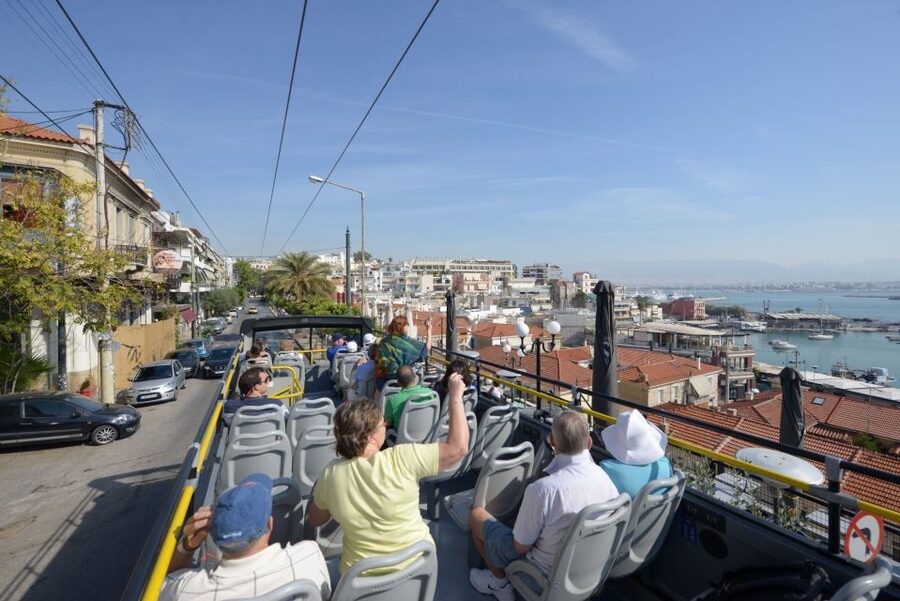
I would recommend it most strongly to cruise passengers, first-time visitors, families, older travelers, and anyone who wants a broad look at Athens without mastering the city’s transport system immediately.
It is also useful if you are staying near the Acropolis and want an easy trip to the port on a later day. The two-day validity gives you room to split the city and coast rather than trying to force everything into one exhausting circuit.
Independent visitors who prefer local buses, walking, or a tightly timed museum plan may find the loops slow. The service cannot avoid Athens traffic, and it may not get you directly to every entrance. If you have only a few hours before your ship sails, stay near the Acropolis and Piraeus routes and skip the distant coast.
Book it if you value simple connections and wide coverage more than exact timing. Skip it if you need guaranteed departures, a personal guide, or admission to the sights.
Free cancellation is available up to 24 hours before the activity, and you can reserve now and pay later. Children aged four and under ride free. Those details make the ticket a low-risk choice for a flexible Athens plan, provided you keep a close eye on return times.
FAQ
How long is the Athens Blue Hop-On Hop-Off ticket valid?
The ticket is valid for two days from first activation. It includes access to the four bus routes during that period.
Which routes are included?
The ticket covers the Orange Line in Athens, the Blue Line in Piraeus, the Yellow Line toward Glyfada, and the Green Line toward Vouliagmeni.
Can I board at the Piraeus cruise terminals?
Yes. Buses run from Cruise Terminals A, B, and C at Piraeus Port. Confirm your ship’s terminal before returning.
Is entry to the Acropolis included?
No. The ticket provides transport to the Acropolis stop, but admissions to the Acropolis, museums, and other attractions are not included.
What languages are available for the audio guide?
Recorded commentary is available in English, Greek, Spanish, French, German, Italian, Portuguese, Russian, Arabic, Chinese, Japanese, Turkish, Dutch, Finnish, and Hebrew.
Is the bus wheelchair accessible?
Yes. All buses have low-floor access and a designated wheelchair space. Free earphones and onboard Wi-Fi are also included.
Freshly added Athens trips
- Full day Mycenae – Nafplio – Epidavros private tour★ 5.0 · 3 reviews
- Private Half Day to Ancient Corinth★ 5.0 · 3 reviews
- From Athens: 2-Day Meteora Trip with Tansportation & Hotel★ 5.0 · 3 reviews
- Athens Half Day Small Group Shopping Tour★ 5.0 · 3 reviews
- Athens: Greek Wine & Olive Oil Tasting at Brettos Plaka★ 4.5 · 3 reviews
- Athens & Corinth: Guided Christian Tour in Paul’s Footsteps★ 4.0 · 3 reviews
- Nemea wine roads, The most famous wine tour in Greece★ 4.5 · 3 reviews
- Santorini Dinner Class with Margarita in Athens★ 5.0 · 3 reviews
Piraeus & Cruise Port, compared.

City Sightseeing Athens, Piraeus & Beach Riviera Hop-On Hop-Off Bus Tours
Read our review →
Hop on Hop Off Classic tour of Athens, Piraeus & Beaches
Read our review →
Big Bus Athens Hop-On Hop-Off with optional Piraeus & Riviera
Read our review →
Athens Shore Excursion: Athens and Piraeus Hop-On Hop-Off Bus Tour
Read our review →



Piraeus Shore Excursion: ALL INCLUSIVE Skip-the-Lines Athens sightseeing Tour
Read our review →Browse the lists this tour appears in