
Reviewed · TOURS
Small Group Tour: Balkans & Central Europe from Athens to Vienna
The big draw here is the sheer sweep of the route: 10 countries in 21 days, from ancient Delphi and Meteora to Sarajevo, Budapest, Bratislava, and Vienna. You get a guided introduction to places that are still awkward to connect by public transport, especially across the Balkans.
I like the small maximum of 10 people, which should make border crossings, meals, and city walks easier to manage. I also like the mix of major sights and local experiences, including Albanian food stops, a family-run farm, Kosovo wine country, and old Ottoman bazaars.
The trade-off is pace. You will cover a lot of ground by road, and several days include multiple borders or several short stops. The advertised price of $7,734.19 per person also demands a close look at what is included and what you will still pay for yourself.
In This Review
- Key points to know before booking
- Why this Athens to Vienna route is unusual
- Delphi, Meteora, and the first Greek road day
- Gjirokaster and Berat: Albania’s strongest historic towns
- Lake Ohrid, St. Naum, and a practical route note
- Tirana’s markets and Albania’s communist past
- Prizren, Gjakova, and Kosovo’s religious crossroads
- Shkoder, Montenegro, and the Adriatic side of the Balkans
- Mostar and Sarajevo, where history feels close
- Serbia by the Drina, Danube, and vineyard roads
- Budapest, Bratislava, and the finish in Vienna
- What the $7,734.19 price really covers
- Who should book this Balkan road trip?
- FAQ
- How long is the tour from Athens to Vienna?
- How many countries does the tour visit?
- What type of transportation is included?
- How large is the group?
- Are hotels and breakfasts included?
- Are lunches and dinners included?
- Is a single room available?
- Should you book it?
Key points to know before booking
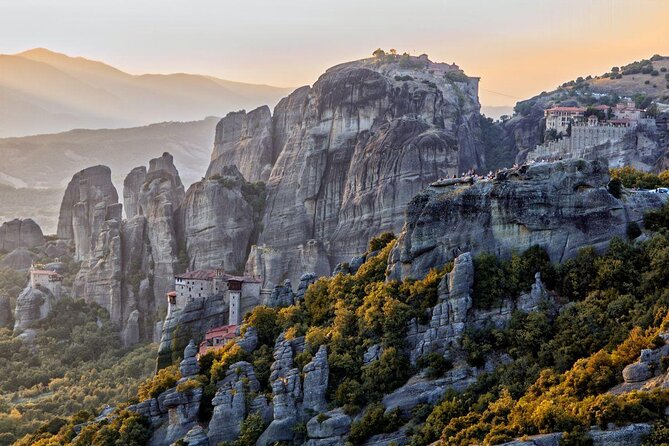
- Delphi and Meteora begin the trip with two of Greece’s finest historic sights, including an evening view of Meteora’s monasteries.
- A maximum of 10 people keeps the group manageable, with a private vehicle used throughout the journey.
- The route covers Greece, North Macedonia, Albania, Kosovo, Montenegro, Bosnia and Herzegovina, Serbia, Hungary, Slovakia, and Austria.
- Food is part of the experience, from byrek, qofte, gjize, and raki in Tirana to farm cooking and Serbian wine country.
- Twenty breakfasts, 3-star hotels, fuel, road taxes, tourist taxes, and listed entry fees are included, but lunches, dinners, drinks, snacks, and personal spending are not.
- This is a road trip rather than a slow city holiday, so comfortable shoes, patience at borders, and an appetite for long transfers will help.
Why this Athens to Vienna route is unusual
Most European tours stay inside familiar tourist circuits. This one heads through the Balkans first, then works north toward Central Europe. That gives you a useful look at how Greek, Ottoman, Byzantine, Austro-Hungarian, communist, and modern European influences meet across one region.
The route is especially strong in Albania and Kosovo, where a guided vehicle trip can save you a great deal of planning. You are not simply ticking off capital cities. You will visit Gjirokaster’s stone homes, Berat’s castle quarter, a Tirana food market, a rural farm, Prizren’s mosque and fortress, and vineyards around Rahovec.
The schedule is tightly packed. Some stops last only 30 minutes, while most guided visits run for one to three hours. That is enough to get a taste of each place, but not enough for a slow, independent exploration of every town.
You start at 9 a.m., with pickup at your Athens hotel on the first day and drop-off at your Vienna hotel on the last. That door-to-door arrangement is useful if you prefer not to arrange buses, taxis, and hotel transfers in ten different countries.
Other days out people book around Athens:
- Athens: Acropolis & up to 5 Archaeological Sites Combo Pass
★ 4.4 · 12,619 reviews - Athens: Acropolis Ticket with Optional Audio or Live Guide
★ 4.2 · 11,055 reviews - Athens: Acropolis, Parthenon & Acropolis Museum Guided Tour
★ 4.8 · 9,316 reviews
Delphi, Meteora, and the first Greek road day
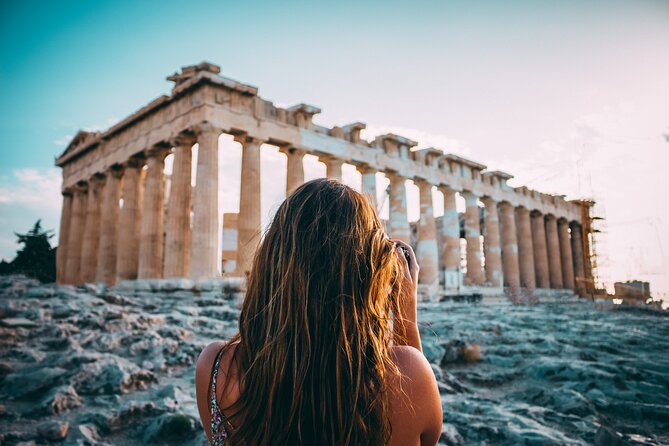
The opening day has unusually strong scenery and history. From Athens, you drive to Delphi, the ancient sanctuary linked to Apollo and the famous oracle. The planned visit includes the Temple of Apollo, the Treasury of the Athenians, the theater, stadium, fountain, and museum pieces such as the Charioteer of Delphi.
The scheduled Delphi visit is about one hour. That is enough for the central sights with a good guide, though you will not have time to inspect every corner of the archaeological site at a leisurely pace.
Next comes Meteora, where monasteries sit on tall rock formations above the Thessalian plain. The stop is listed at two hours and is timed to include sunset. This is one of the most memorable parts of the trip, but remember that a sunset stop is not the same as a full monastery visit. Check the final schedule if entering the monasteries matters to you.
The following day takes you through Ioannina and its Byzantine and Ottoman old town. Ioannina Castle gets a dedicated visit, while the old town and City Hall area allow time for a walk and perhaps a Greek meal. The schedule then continues to Gjirokaster, so expect a long road day rather than a relaxed stay in Ioannina.
Gjirokaster and Berat: Albania’s strongest historic towns
Gjirokaster is one of the tour’s best stops. Its steep stone lanes, fortress-like houses, medieval bazaar, and hilltop castle give the town a distinctive character. The visit to Skenduli House is particularly worthwhile because the house remains original and shows how an upper-class Gjirokaster home was arranged.
You will have time in the bazaar for handmade goods and local crafts. The streets are narrow and steep, so sensible shoes matter. The town’s charm comes partly from walking without a fixed agenda, but the one-hour blocks mean you should keep an eye on the meeting time.
Berat follows with a different look. Its white hillside homes appear stacked one above another, giving it the nickname town of 1001 windows. Berat Castle is still lived in, an unusual feature that makes the site feel less like a preserved monument and more like a functioning neighborhood.
The National Iconographic Museum Onufri adds context through religious paintings and church art. Gorica Bridge and the Gorica neighborhood then provide a short walk and a view back toward the old town.
I like this part of the route because the included admissions are directed toward meaningful places rather than filler attractions. The drawback is that Albania appears several times on the route, including a return to Tirana after North Macedonia. That routing adds road time.
Lake Ohrid, St. Naum, and a practical route note
The journey reaches Lake Ohrid after stops at Drilon National Park and Tushemisht, listed in the schedule as Tusheti National Park. Drilon is known for clear springs, a small lake, and willow-lined paths. Tushemisht offers a village setting and a quieter break before the border crossing.
At St. Naum Monastery, the setting matters as much as the building. The monastery sits near the springs of the Crni Drim River, where clear water, greenery, and mountain views meet Lake Ohrid. The entry ticket is included.
Ohrid receives about three hours the next day. You will see the city’s Orthodox churches, a viewpoint near St. John, St. Nicolas, and the Halveti Hayati Tekke. Ohrid and the lake have UNESCO status and form one of the trip’s most attractive combinations of water, old stone, religious sites, and hill walking.
One practical point: the published route places Albania, North Macedonia, and Albania again in close succession. That may reflect the operator’s overnight plan, but you should ask for the confirmed hotel sequence before paying. The route also includes repeated border crossings, so keep your passport accessible and expect the day’s timing to shift.
Same city, a completely different century:
- Athens: Cape Sounion & Poseidon Temple Sunset Half-Day Trip
★ 4.8 · 8,241 reviews - Athens: Acropolis and Parthenon Guided Walking Tour
★ 4.6 · 5,882 reviews - All Day Cruise -3 Islands to Agistri,Moni, Aegina with lunch and drinks included
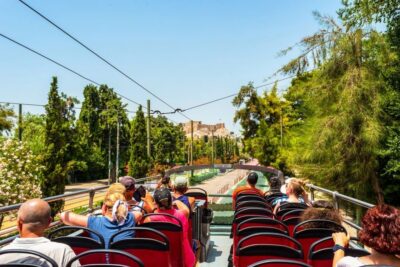
★ 5.0 · 4,958 reviews - Athens, Piraeus, and Coastline: Blue Hop-On Hop-Off Bus
★ 3.9 · 4,849 reviews
Tirana’s markets and Albania’s communist past
Tirana is approached through food rather than a long list of monuments. With a local companion, you visit Tregu Çam for byrek, a pastry filled with options such as cheese, meat, or spinach. At Pazari i Ri, the food continues with qofte, bread, gjize for vegetarians, and a taste of Albanian raki.
These stops are valuable because they show daily life and eating habits, not just formal sightseeing. You also have time around the markets, where bargaining and browsing are part of the experience.
Bunk’Art 2 occupies a former nuclear bunker built for communist leader Enver Hoxha and senior officials. Its exhibits focus on the communist army and ordinary life under the regime. The scheduled time is shown as one minute, which is clearly too short for a meaningful museum visit and may be a data error. Ask how much time is actually planned there.
Kruja follows with its castle and old bazaar. The bazaar is a good place for handmade carpets, jewelry, and other souvenirs, while the castle recalls Albania’s resistance to Ottoman expansion. The tour includes paths once used to leave the fortress unseen, adding a human detail to the visit.
Prizren, Gjakova, and Kosovo’s religious crossroads
Crossing into Kosovo, you reach Prizren, one of the most rewarding urban stops on the route. The old town follows the river, with Ottoman-era houses, bridges, craft shops, mosques, and cobbled lanes. Filigree metalwork is a local specialty, so this is a better place for a distinctive souvenir than a generic airport shop.
Sinan Pasha Mosque is included, followed by Kalaja Fortress above town. The fortress provides a wide view over Prizren, and the free afternoon gives you a chance to eat, shop, or simply walk the old center.
Gjakova offers another bazaar, rebuilt after repeated wartime destruction. Decan Monastery adds a very different experience, with Orthodox monks still living there and 14th-century frescoes forming the central reason for its UNESCO status.
The day ends in Rahovec Valley, a wine-producing area where grapes have been cultivated for roughly 2,000 years. The schedule allows time in the region, but it does not explicitly promise a formal tasting. If wine is important to you, ask whether tasting fees or a cellar visit are included.
Shkoder, Montenegro, and the Adriatic side of the Balkans
At Mrizi i Zanave, you visit an agricultural tourism farm that preserves local products and has adapted old communist buildings for storage. You can tour the farm, eat lunch, or buy produce. Lunch is not included, but this is one of the most personal food stops on the route and a useful look at a family business built around regional ingredients.
Shkoder brings you to Rozafa Castle, with views toward Lake Shkoder and the rivers flowing toward the Adriatic. The city also shows Venetian influence, especially in its older architecture and craft traditions.
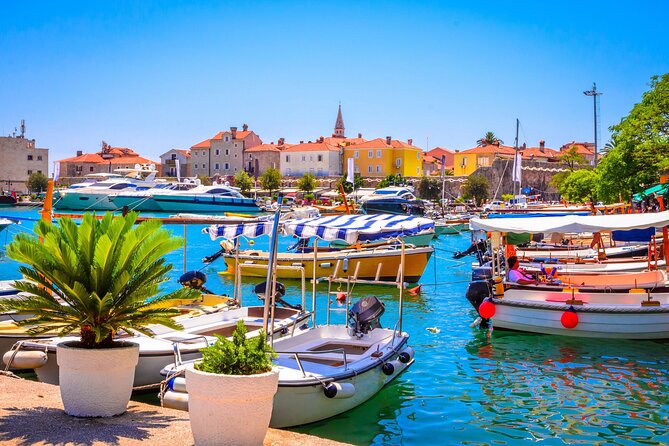
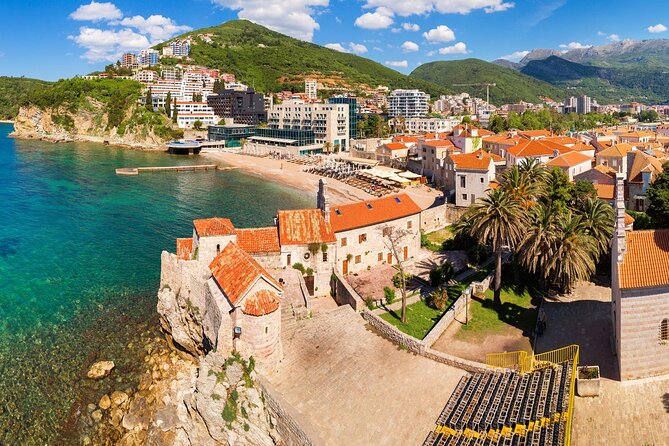
Montenegro begins with a viewpoint near Sveti Stefan. You cannot visit the island resort, so this is strictly a photo stop. Budva offers a more substantial walk through its old town, churches, stone lanes, shops, and waterfront setting.
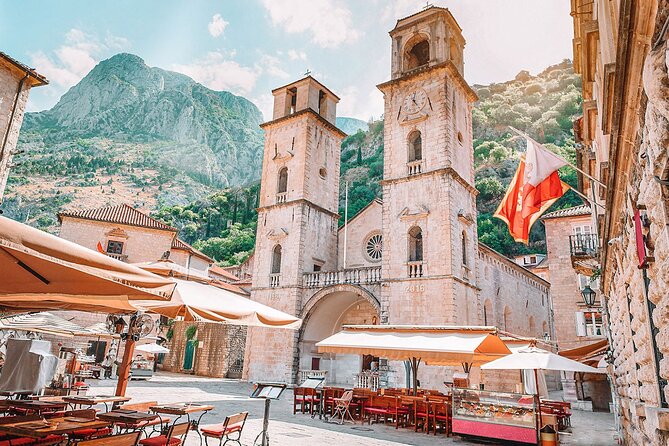
Kotor is another highlight. Its UNESCO old town is enclosed by mountains and filled with narrow streets designed long ago to slow intruders. The visit includes St. Luke’s Church, but the one-hour schedule will not allow the full Kotor fortress climb. If you want that hike, confirm whether independent time is available.
Mostar and Sarajevo, where history feels close
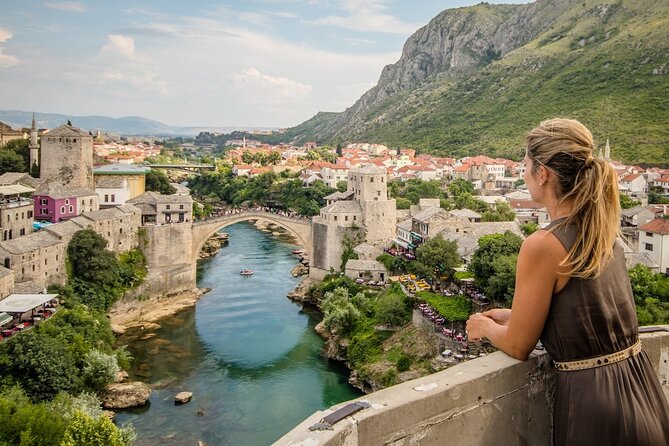
Mostar’s Old Bridge is one of the trip’s signature sights. The rebuilt bridge, Ottoman-style old town, stone lanes, and bazaar create a powerful sense of place, while the repeated Don’t Forget reminders point to the damage caused by the war.
Blagaj Tekija, outside Mostar, provides a quieter stop beside blue water and a cliff. The included entry makes this a worthwhile addition, though 30 minutes is brief.
Sarajevo is handled as a walking tour through Ottoman and Austro-Hungarian districts. You will see mosques, churches, synagogues, markets, and war damage, including bullet and cannon marks. Latin Bridge introduces the 1914 assassination that helped trigger World War I.
The tour warns that Sarajevo includes uneven terrain and visits to ruins. This is important if you have knee, balance, or mobility concerns. You will also have free time for Bosnian dishes and desserts, but meals remain your responsibility.
Serbia by the Drina, Danube, and vineyard roads
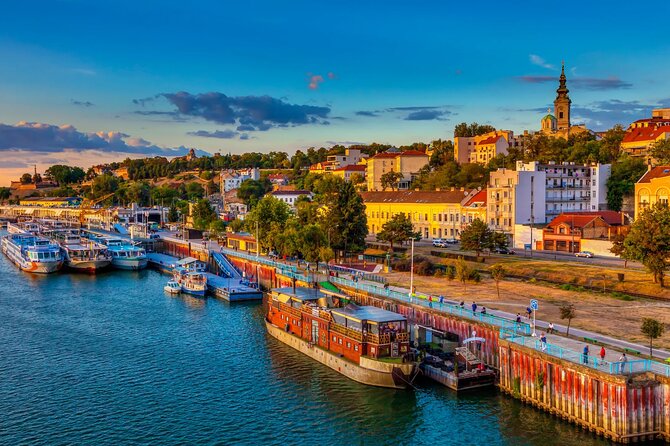
Zvornik is a lunch and walking stop on the Drina River before Belgrade. In Belgrade, the focus is the fortress and Kalemegdan Park at the meeting point of the Sava and Danube. The two-hour visit then continues along Knez Mihailova toward Republic Square.
Sremski Karlovci is a pleasant change of pace. Its Baroque center, wine cellars, and role in Serbian cultural life give the town a formal, old-world feel. Free time here is best used for regional wine specialties, though confirm which tastings cost extra.
Novi Sad receives two hours and includes Petrovaradin Fortress, often called the Gibraltar on the Danube, plus pedestrian streets such as Zmaj Jovina and Dunavska. The schedule lists an overnight in Novi Sad, which gives you a little more breathing room than some earlier stops.
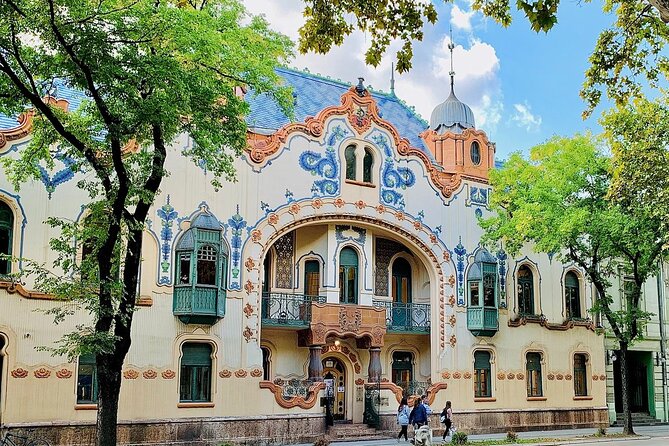
Subotica is the final Serbian stop, with colorful Austro-Hungarian architecture and a city hall centered on a large square. Three hours is generous by this itinerary’s standards and should let you eat, wander, and see more than just a photo stop.
Budapest, Bratislava, and the finish in Vienna
Budapest gets a full sightseeing day. You pass St. Stephen’s Basilica, the Opera, Parliament, Heroes’ Square, and Fisherman’s Bastion, then visit Buda Castle. The plan also leaves an evening free, which is useful because Budapest is particularly atmospheric after dark.
The next day’s stop in Győr adds smaller-city charm, with Baroque streets, the Town Hall tower, the Cathedral of the Virgin Mary, the former synagogue, and pedestrian Baross Gabor Street. The scheduled time allows you to eat and browse without the pressure of a quick photograph.
Bratislava is the final major sightseeing stop. You walk through the Old Town, see Michael’s Gate, and climb to Bratislava Castle for views over the Danube. A free café period gives you a chance to slow down before the final hotel drop-off in Vienna.
Vienna itself is only the endpoint here. You do not receive a dedicated Vienna sightseeing day, so add extra nights if you want to explore the Austrian capital properly.
What the $7,734.19 price really covers
This is an expensive tour, especially with 3-star accommodation and no included lunches or dinners. Still, the price covers 20 nights of bed-and-breakfast lodging, private transportation, fuel, road taxes, international vehicle insurance, tourist taxes, a tour leader, hotel pickup and drop-off, and listed admission tickets.
The value is strongest if you would otherwise struggle to plan this route yourself. Ten countries bring different border rules, currencies, driving conditions, and transport links. Having one vehicle and one tour leader removes much of that work.
The value is weaker if you prefer luxury hotels, long free periods, or independent dining. Room prices are calculated for double, twin, triple, or quadruple occupancy. A single room costs an extra 45 euros per night, and your meals, drinks, snacks, souvenirs, and other personal spending are extra.
The five published ratings are all highly positive, praising friendly staff, comfortable accommodation, local food, personal stories, and the smooth overall experience. One couple used the trip for a honeymoon and especially valued the hands-on guiding and restaurant choices. That suggests the operator’s strength is personal service rather than hotel luxury.
Who should book this Balkan road trip?
Book it if you want a guided first look at southeastern Europe and would rather leave transport and border planning to someone else. It suits curious, active adults who enjoy old towns, archaeological sites, local food, and long road journeys.
It is less suitable if you want to linger in each destination, spend several days by the coast, or choose every restaurant and hotel yourself. You should also be comfortable with uneven streets, frequent hotel changes, and days that may run long.
The tour is non-refundable and cannot be changed after booking, so confirm the exact hotel list, room arrangement, current border requirements, and the amount of free time before committing. Tips are not required in Albania or the Balkans, though tipping the tour leader and driver for good service is recommended.
FAQ
How long is the tour from Athens to Vienna?
The tour lasts approximately 21 days, beginning with hotel pickup in Athens and ending with hotel drop-off in Vienna.
How many countries does the tour visit?
The route covers 10 countries: Greece, North Macedonia, Albania, Kosovo, Montenegro, Bosnia and Herzegovina, Serbia, Hungary, Slovakia, and Austria.
What type of transportation is included?
Private transportation is included for the route, along with fuel, road taxes, and international vehicle insurance.
How large is the group?
The tour has a maximum of 10 travelers. A private tour option is also available when booking.
Are hotels and breakfasts included?
Yes. Accommodation and breakfast are included for all overnights in 3-star hotels, with 20 breakfasts provided.
Are lunches and dinners included?
No. Lunches, dinners, drinks, snacks, souvenirs, and personal spending are not included.
Is a single room available?
Yes. Single-room occupancy is possible for an additional 45 euros per night per person in 3-star accommodation.
Should you book it?
Book this trip for breadth, convenience, and local contact, not for a slow holiday. Its best moments are the places where the schedule brings you close to everyday culture: an Albanian food market, a rural farm, a Kosovo bazaar, a wine valley, and old towns where several faiths and empires meet.
At this price, ask detailed questions before paying, especially about hotels, Bunk’Art timing, monastery access, wine tastings, and the exact route between Albania and North Macedonia. If those details suit your travel style, this is a useful way to see a large and varied part of Europe without arranging ten separate trips.
Freshly added Athens trips
- Athens and Ancient Corinth Private from Athens★ 5.0 · 3 reviews
- From Athens: Mycenae and Epidaurus Private Tour★ 4.8 · 3 reviews
- Full day Meteora private tour★ 5.0 · 3 reviews
- Double Shore Dive (certified divers)★ 4.5 · 3 reviews
- Athens Hills: Mythology Treasure Hunt★ 5.0 · 3 reviews
- Sunset & swimming at Cape Sounio, Poseidon temple★ 5.0 · 3 reviews
- Philosophy Experience at Plato’s Academy Park – basic version★ 5.0 · 3 reviews
- Private Acropolis Tour – Ticket Included★ 5.0 · 3 reviews
Tours, compared.

Acropolis, Parthenon & Acropolis Museum Guided Tour
Read our review →


Mythology of Delphi, Museum and Arachova Guided Tour
Read our review →
Acropolis, Parthenon & Acropolis Museum Guided Tour
Read our review →