
Reviewed · TOURS
Small Group Tour: 7 Balkan Countries Athens to Dubrovnik / Split
The appeal here is simple: in 14 days, you move from ancient Greek sanctuaries to Ottoman bazaars, Orthodox monasteries, communist-era museums, Adriatic towns, and Bosnia’s war-scarred capital. Few trips give you this much Balkan variety without making you arrange every border crossing and hotel yourself.
I especially like the small maximum of 10 people, which should make border days and town walks easier to manage. I also like the local food stops, from Albanian byrek and qofte to farm produce at Mrizi i Zanave. The tradeoff is a busy schedule with long drives, several border crossings, and some short visits that give you an introduction rather than a full stay.
In This Review
- Key Points at a Glance
- Why This Balkan Route Works
- Delphi and Meteora: A Big First Day in Greece
- Ioannina, Gjirokaster, and Berat
- Lake Ohrid and North Macedonia
- Tirana Through Food and Memory
- Kruja, Prizren, and Kosovo
- Northern Albania and the Adriatic Coast
- Mostar, Sarajevo, and the Final Transfer
- Accommodation, Guides, and Daily Practicalities
- Is This Seven-Country Tour Worth Booking?
- FAQ
- How long is the tour?
- Which countries does the tour visit?
- Where does the tour end?
- What is included in the price?
- Are meals included?
- How many people can join the tour?
Key Points at a Glance
- Seven countries in one overland route: Greece, Albania, North Macedonia, Kosovo, Montenegro, Bosnia and Herzegovina, and Croatia.
- A strong UNESCO focus: Delphi, Meteora, Gjirokaster, Berat, Ohrid, Kotor, Mostar, and Deçan all add cultural weight to the route.
- Private transportation for up to 10 people: This removes the need to coordinate buses across a complicated region.
- Real local food experiences: Try byrek, Albanian coffee, qofte, raki, regional cheeses, and farm-made products.
- A memorable finish: The route crosses into Croatia for hotel drop-off in either Dubrovnik or Split.
- Important pace warning: Several days combine multiple towns, so you need to enjoy moving on and packing light.
Why This Balkan Route Works
The route links places that are close on a map but very different in culture, faith, architecture, and recent history. You begin among the classical ruins of Greece, then head through southern Albania, Lake Ohrid, Kosovo, Montenegro, Bosnia and Herzegovina, and finally Croatia.
That variety is the tour’s main strength. One day you may be looking at a Byzantine monastery, the next at an Ottoman bazaar, followed by an Austro-Hungarian street or an Italianate coastal town. Private transport also matters here. Public connections between smaller Balkan cities can be slow, seasonal, or awkward, while this trip takes you directly from one stop to the next.
The small group size is a real plus. With no more than 10 people, it is easier to hear explanations, fit into narrow old-town streets, and keep the group moving at border crossings. It is still a road trip, though, not a relaxed single-country holiday. Expect early starts, uneven streets, steep hills, and some days where the driving takes up a large part of the experience.
The price is listed at $5,116.01 per person. That is a serious outlay, but it covers private transport, fuel, road taxes, international car insurance, tourist taxes, breakfast, three-star accommodation, a tour leader, and entry fees for the sites included in the program. Lunch, dinner, drinks, snacks, and personal purchases are extra.
You are paying for the route design and logistics as much as for the sightseeing. If you tried to arrange seven countries, multiple border crossings, and one-way transport on your own, the planning would be substantial. If you prefer to choose your own hotels, linger for several nights, or travel by local bus, the cost may feel high.
Other days out people book around Athens:
- Athens: Acropolis & up to 5 Archaeological Sites Combo Pass
★ 4.4 · 12,619 reviews - Athens: Acropolis Ticket with Optional Audio or Live Guide
★ 4.2 · 11,055 reviews - Athens: Acropolis, Parthenon & Acropolis Museum Guided Tour
★ 4.8 · 9,316 reviews
Delphi and Meteora: A Big First Day in Greece
The tour begins with hotel pickup in Athens at 8:00 a.m. Athens itself is not part of the main guided route, so plan to explore the capital before this trip begins.
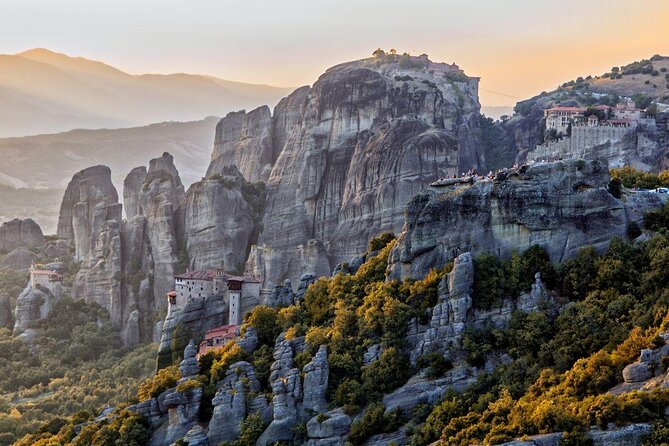
The first major stop is Delphi, one of Greece’s finest archaeological sites. You will see the Temple of Apollo, the Castalian Fountain, the Treasury of the Athenians, the theater, and the stadium. The museum adds famous works such as the Charioteer of Delphi and the statue of Antinous.
The scheduled visit is about an hour, which is enough for an overview but not enough for a slow archaeological study. Wear shoes with a firm grip, since the site includes uneven ground and slopes. Delphi is not just a pile of stones. Its mountain setting and role as an ancient religious center make it one of the places where the location matters as much as the ruins.
The day continues to Meteora, where monasteries sit above towering rock formations. The sunset is the visual high point of the day, and it gives you a chance to see the monasteries in changing light rather than only as museum pieces.
This is also the first sign of the tour’s pace. Delphi and Meteora in one day make for a powerful introduction, but you will spend plenty of time on the road. If you prefer detailed visits with long museum hours, this schedule may feel too tight. If you want a broad first look at Greece before crossing into the Balkans, it works well.
Ioannina, Gjirokaster, and Berat
Day two brings you to Ioannina, a Greek city shaped by Byzantine and Ottoman rule. The old town has cobbled lanes, old walls, historic homes, cafes, and Ioannina Castle. Three hours here gives you more breathing room than the previous day, with time to walk and have a meal.
Afterward, you cross into Albania and head to Gjirokaster, known for its stone houses and steep streets. The next day is devoted to the town, including its castle and old bazaar. Gjirokaster feels almost fortified from every angle, with homes built like small defensive towers on the hillside.
The bazaar is a good place to look for handmade goods, but the stone streets can be tiring. Bring shoes suited to sloping cobbles, and expect plenty of uphill walking. A visit to one of the best-preserved traditional houses adds useful detail because it shows how people actually lived inside these imposing structures.
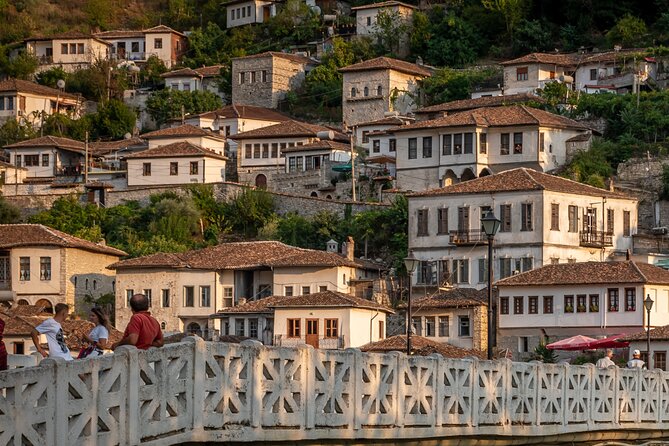
Berat follows on day four. Its nickname, the town of 1,001 windows, comes from the old homes climbing the hillsides above the river. The unusual feature is that people still live inside the castle area, so this is not only an archaeological site. It is a living neighborhood.
The castle visit includes old churches and mosques, while the National Iconographic Museum Onufri focuses on the famous church painter known for a distinctive red pigment. Cross the Gorica Bridge and look back toward the hillside houses for one of the best views in town.
Berat may be the most rewarding early stop because it brings architecture, religion, art, and daily life together in a compact setting. The visit is not long, so use free moments for a slow walk rather than trying to cover every lane.
Lake Ohrid and North Macedonia
Day five begins in Albania at Drilon National Park, a quiet stop built around spring-fed water, greenery, and willow trees. It is a welcome change after several hill towns and castles. Tushemisht follows, offering another short look at village life near the lake.
You then cross into North Macedonia for Saint Naum. The monastery sits near the source of the Crni Drim River, where clear spring water meets Lake Ohrid. The setting is the main attraction, but the monastery also gives you a glimpse of the area’s Orthodox tradition.
Border crossings can affect the day’s timing. Your tour leader handles the route, but you should keep your passport accessible and avoid planning independent evening reservations too tightly.
Ohrid receives a fuller visit on day six. The city and lake have UNESCO status, and the town’s identity is closely tied to Orthodox Christianity. You will see viewpoints and churches including St. John and St. Nicholas, along with the Halveti Hayati Tekke, an Ottoman-era religious site.
Ohrid is one of the tour’s most appealing stops because it combines water, old stone streets, religious buildings, and a long past in one place. The three-hour visit allows time to walk, take photographs, and pause by the lake, though you may still want a separate overnight stay if you like slow travel.
After Ohrid, the route drives back into Albania toward Tirana. That may look unusual on a map, but it positions you for the next day’s food-focused visit and the route north.
Same city, a completely different century:
- Athens: Cape Sounion & Poseidon Temple Sunset Half-Day Trip
★ 4.8 · 8,241 reviews - Athens: Acropolis and Parthenon Guided Walking Tour
★ 4.6 · 5,882 reviews - All Day Cruise -3 Islands to Agistri,Moni, Aegina with lunch and drinks included
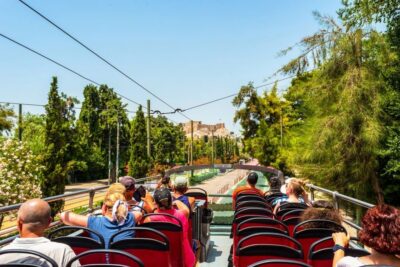
★ 5.0 · 4,958 reviews - Athens, Piraeus, and Coastline: Blue Hop-On Hop-Off Bus
★ 3.9 · 4,849 reviews
Tirana Through Food and Memory
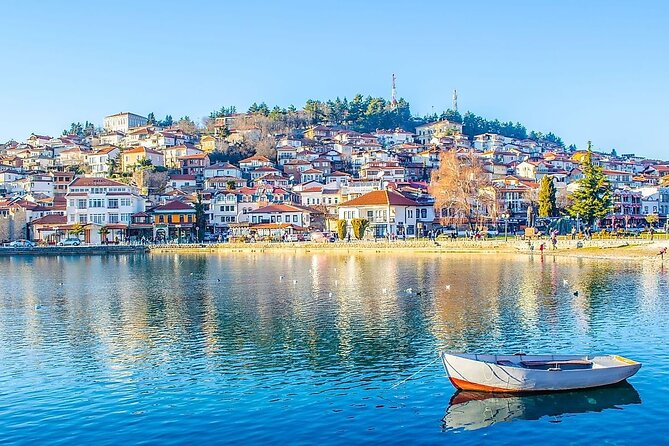
Tirana is presented through food rather than a long list of monuments. You begin with byrek, a flaky pastry filled with options such as cheese, meat, or spinach. This is a practical way to understand Albanian food because it is a common everyday meal, not a dish reserved for special occasions.
The route continues through Tregu Çam and the New Bazaar, where you can browse ordinary goods, fresh produce, secondhand items, and kitchen supplies. The point is not polished sightseeing. You are seeing the parts of the city where people shop, eat, and meet.
You will also try Albanian coffee, a traditional dessert, qofte with bread, and raki. Vegetarians are offered bread with Albanian gjize, a cottage cheese. Tell the local companion about dietary needs early, since the food stops are a central part of the day.
Bunk’Art 2 shifts the focus to Albania’s communist period. The museum occupies a former nuclear bunker built for Enver Hoxha and senior party members. Its exhibits cover the communist army and everyday life under the regime.
This is an important stop because Albania’s recent past can otherwise be reduced to a few labels. The bunker makes that period physical and immediate. The scheduled times shown for some Tirana stops are very short, so treat the food walk as a guided introduction rather than a full city tour.
Kruja, Prizren, and Kosovo
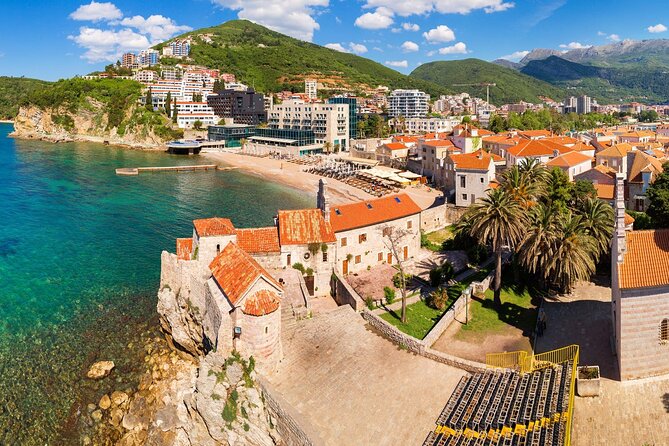
Kruja sits on rocky high ground and is tied to Albania’s resistance against Ottoman expansion in the 15th century. Its medieval bazaar is one of the most atmospheric shopping stops on the route, with carpets, jewelry, crafts, and souvenirs.
The castle is reached by walking uphill, and the tour includes paths once used by locals to leave without being seen. The combination of castle, bazaar, and mountain setting makes Kruja more than a quick photo stop.
The border crossing into Kosovo leads to Prizren, a city shaped by Illyrian, Byzantine, and Ottoman connections. The river, bridges, old homes, mosques, and stone lanes make it easy to explore on foot. The Sinan Pasha Mosque is the main religious visit, with colorful interior decoration and patterns.
The Kalaja Fortress sits above town and gives you a broad view over Prizren. You also have free time here, which is useful after a morning of structured sightseeing. Look for filigree metalwork, one of the city’s traditional crafts.
The next day adds Gjakova, Deçan, and Rahovec. Gjakova’s rebuilt bazaar is a good place for handmade items and a meal. Deçan Monastery is still occupied by Orthodox monks and is known for its 14th-century frescoes. Modest dress and respectful behavior are essential at religious sites.
Rahovec brings wine culture into the trip. Grapes have been grown in the valley since Illyrian times, and vineyards cover the low hills. The itinerary includes a stop in the wine-producing area, but it does not specify a tasting, so do not assume one is included.
Northern Albania and the Adriatic Coast
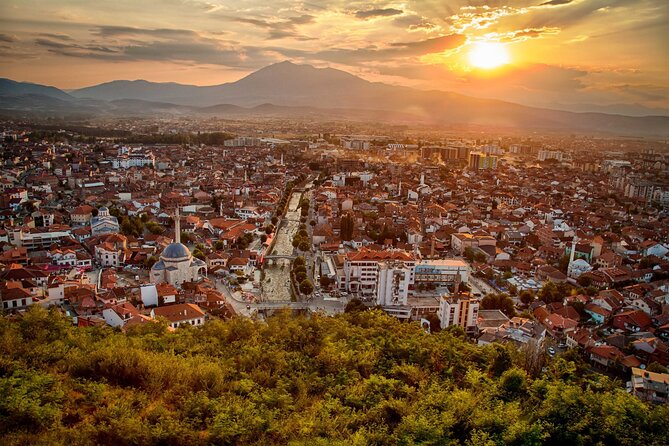
Mrizi i Zanave is one of the tour’s most distinctive stops. This agro-tourism farm uses regional products and adapted former communist buildings for storage and food production. You can tour the farm, learn how the family business created jobs in the area, eat lunch, or buy local produce.
Lunch is not included, so budget for it here if you want to sample the farm’s cooking. This is exactly the sort of stop that gives a road trip more meaning than a string of viewpoints.
Shkoder follows, with a visit to Rozafa Castle. From the hilltop, you can see the lake and the rivers that flow toward the Adriatic. The city also carries strong Venetian influence, including its tradition of handmade masks.
Montenegro begins with a viewpoint over Sveti Stefan. The former fishing village is now an exclusive resort, and the island itself is not open for ordinary visits. This is a photograph stop, not a chance to wander through the settlement.
Budva offers a contrast between modern resort development and the old town’s churches and stone lanes. The visit is short, so focus on the historic center rather than trying to cover the whole coastal area.
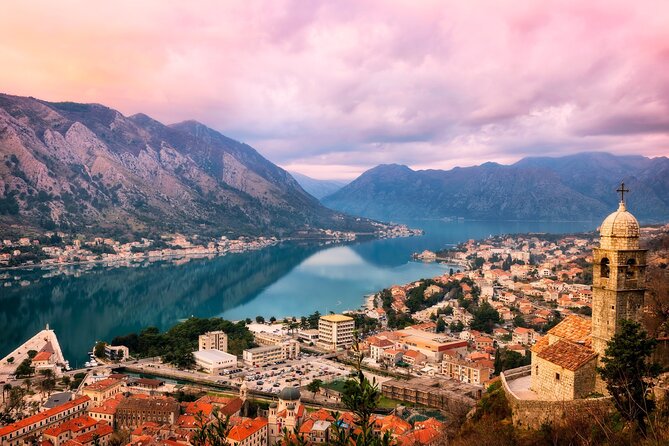
Kotor gets more time. Its old town is enclosed by defensive walls and filled with narrow cobbled streets, churches, and dated stone buildings. Saint Luke’s Church is included, and the maze-like plan makes wandering part of the fun. Kotor is also one of the busier places on the route, especially during the coastal season, so expect a livelier feel than in Gjirokaster or Berat.
Mostar, Sarajevo, and the Final Transfer
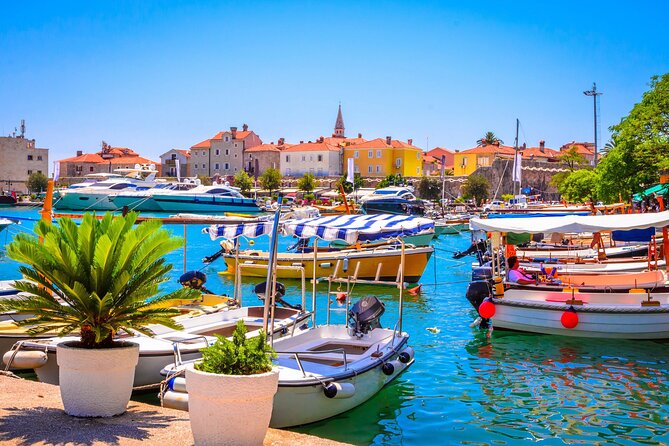
In Bosnia and Herzegovina, Mostar’s Stari Most is the headline attraction. The 16th-century bridge uses Islamic architectural forms and remains the visual symbol of the city. You will walk through the old bazaar, where cobbled lanes, mosques, shops, and cafes fill the center.
The town also makes its recent past visible. Stones marked with Don’t Forget appear around the city, a reminder that the bridge and much of Mostar were destroyed during the war and later rebuilt. Give yourself time to look beyond the postcard view.
Blagaj Tekija, outside Mostar, sits beside the Buna River spring beneath a cliff. The water and religious complex create a calmer stop after the old-town streets. An hour is enough for the main visit, but you will likely wish for longer if you want to sit by the water.
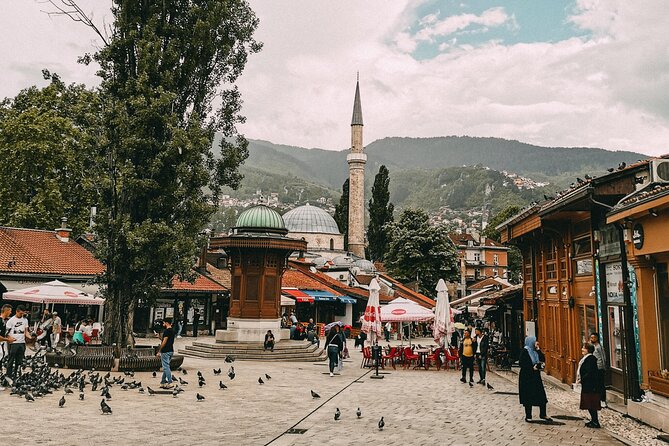
Sarajevo is the final major city. The tour covers the Ottoman and Austria-Hungarian quarters, along with mosques, churches, synagogues, markets, and the Latin Bridge. The city’s mix of faiths explains its nickname as a European Jerusalem, though the phrase should not replace attention to Sarajevo’s own identity.
You will also see bullet holes and cannon marks from the Yugoslav War. Some walking takes place on uneven ground, so sturdy shoes matter. The Latin Bridge is linked to the 1914 assassination of Archduke Franz Ferdinand, an event that helped trigger World War I.
Free time in Sarajevo is best used for a traditional meal or dessert in the old town. The final day is mainly a transfer. Your tour leader takes you to the Croatian border, where a local driver continues to your hotel in Dubrovnik or Split. Confirm your ending city carefully before booking onward travel.
Accommodation, Guides, and Daily Practicalities
Accommodation is in three-star hotels based on double, twin, triple, or quadruple occupancy. Breakfast is included throughout the 14-day program, but solo-room pricing is not specified. Ask about the supplement if you are not sharing.
Private transport, road fees, fuel, and insurance are included. That is valuable on a route with several countries and border crossings. It also means you are not responsible for navigating mountain roads or finding parking near old towns.
Past tour guides named Elton and Eri Veseli received particularly warm praise for care, organization, historical explanations, and music on the road. Your assigned guide may differ, but the role clearly matters here. A good leader helps turn fast-moving stops into a connected story.
Tipping is not required in Albania or the Balkans, but a tip for good service is recommended as an international custom. Bring your own health and travel insurance. The tour is non-refundable, so this is not a booking to make casually or without checking your dates.
Pack light. You will change bases often, walk on stone streets, and cross borders repeatedly. Comfortable shoes, modest clothing for religious sites, a passport that remains easy to reach, and a small day bag will make the route easier.
Is This Seven-Country Tour Worth Booking?
Book it if you want a guided overview of the Balkans and value having transport, hotels, breakfast, border logistics, and site entries organized. It is especially suited to first-time visitors who want to connect Greece with Albania, North Macedonia, Kosovo, Montenegro, Bosnia and Herzegovina, and Croatia in one trip.
Think twice if you want long stays, beach time, independent meals, or detailed museum visits. The itinerary is ambitious, and several stops are measured in an hour or two. At $5,116.01, the value depends on how much you value convenience and breadth.
For the right person, this is a strong introduction to a complicated and fascinating corner of Europe. You will not see everything, but you will see enough to know which places deserve your next, slower visit.
FAQ
How long is the tour?
The tour lasts approximately 14 days and begins in Athens at 8:00 a.m.
Which countries does the tour visit?
The route includes Greece, Albania, North Macedonia, Kosovo, Montenegro, Bosnia and Herzegovina, and Croatia.
Where does the tour end?
The tour ends with hotel drop-off in either Dubrovnik or Split, Croatia. The selected ending should be confirmed when booking.
What is included in the price?
The price includes accommodation and breakfast, private transportation, a professional tour leader, hotel pickup in Athens, hotel drop-off in Dubrovnik or Split, listed entry tickets, tourist taxes, international car insurance, road taxes, and petrol.
Are meals included?
Breakfast is included for all overnight stays. Lunches, dinners, drinks, snacks, and personal purchases are not included.
How many people can join the tour?
The maximum group size is 10 travelers. Price calculations are based on double, twin, triple, or quadruple occupancy in three-star hotels.
Freshly added Athens trips
- Athens and Ancient Corinth Private from Athens★ 5.0 · 3 reviews
- From Athens: Mycenae and Epidaurus Private Tour★ 4.8 · 3 reviews
- Full day Meteora private tour★ 5.0 · 3 reviews
- Double Shore Dive (certified divers)★ 4.5 · 3 reviews
- Athens Hills: Mythology Treasure Hunt★ 5.0 · 3 reviews
- Sunset & swimming at Cape Sounio, Poseidon temple★ 5.0 · 3 reviews
- Philosophy Experience at Plato’s Academy Park – basic version★ 5.0 · 3 reviews
- Private Acropolis Tour – Ticket Included★ 5.0 · 3 reviews
Tours, compared.

Acropolis, Parthenon & Acropolis Museum Guided Tour
Read our review →


Mythology of Delphi, Museum and Arachova Guided Tour
Read our review →
Acropolis, Parthenon & Acropolis Museum Guided Tour
Read our review →