
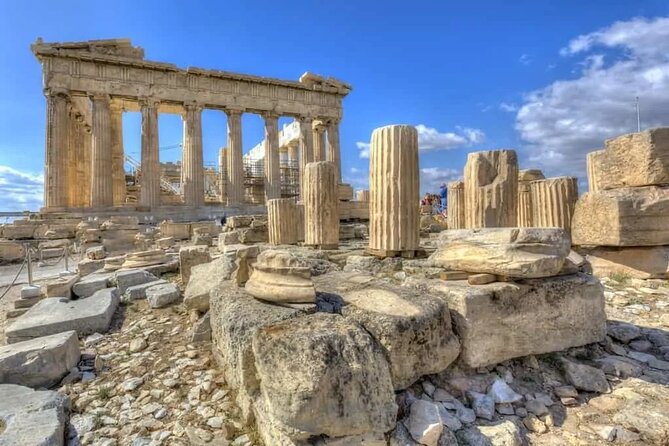
Reviewed · ACROPOLIS MUSEUM TOURS
Private local tour of the Acropolis Hill and the New Acropolis Museum
The best part of this private Athens tour is the way it links the Acropolis monuments with the objects now displayed in the New Acropolis Museum. You climb the hill with a guide, then see the Caryatids, Parthenon sculpture, and excavation remains at close range below.
I like the private format, since your guide can match your pace and answer your questions without a large group slowing things down. I also like the route through the Propylaea, where views open toward the Temple of Athena Nike, the Ancient Agora, and the hills tied to Athenian democracy. The main drawback is cost: at $249.25 per person, plus $50 in entrance tickets, this is a serious splurge for a 2.5-hour walk.
In This Review
- Key points to know before booking
- Climbing the Acropolis with a private guide
- The Parthenon and Erechtheion at the summit
- Inside the New Acropolis Museum
- Why a private guide changes the visit
- Is $249.25 per person a fair value?
- Timing, meeting point, and practical details
- Who will get the most from this Athens tour?
- Should you book this private Acropolis tour?
- FAQ
- How long does the tour last?
- Are entrance tickets included?
- What is included in the $249.25 price?
- Is this a private activity?
- Where does the tour start and end?
- Is the tour physically demanding?
Key points to know before booking
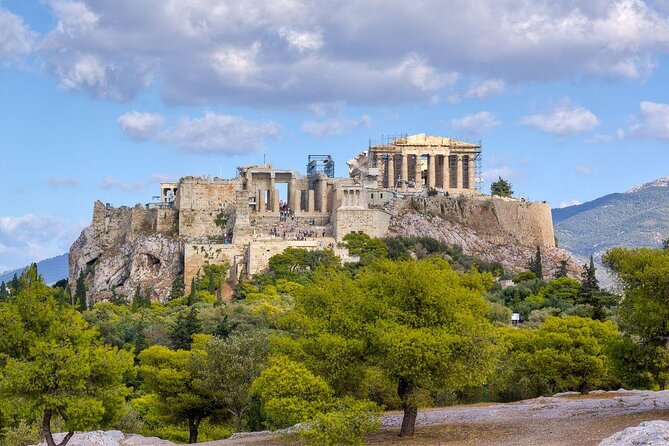
- Two major Athens sights in one private visit: You see the Acropolis Hill and New Acropolis Museum with the same certified guide.
- The guide brings the ruins to life: Expect explanations of Pericles, the Pnyx, Areopagus Hill, the Ancient Agora, Socrates, Plato, and Aristotle.
- The Caryatids appear twice: You see the Erechtheion on the Acropolis, then related sculpture and museum displays inside.
- The price is about $299.25 per person with admission: The listed tour price excludes the $30 Acropolis ticket and $20 museum ticket.
- This is a demanding uphill walk: Strong physical fitness is advised, and there is no private transportation.
- Private means personal attention: Only your own group participates, with English-speaking service.
Climbing the Acropolis with a private guide
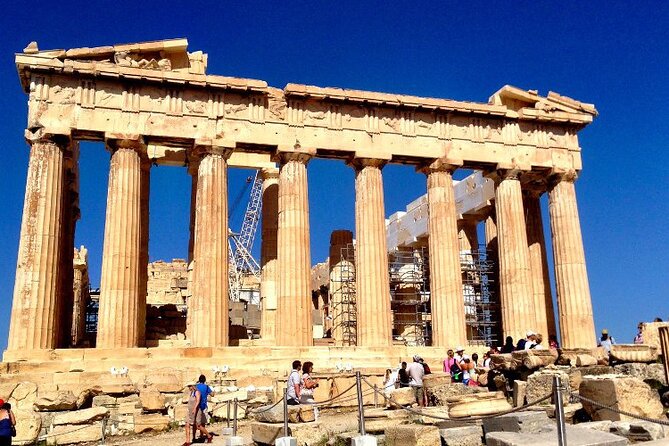
Your guide meets you near the Acropolis entrance and begins the ascent with you. The climb is not simply a march to the Parthenon. Along the way, your guide uses the surrounding hills and ruins to explain how Athens worked in the 5th century BC.
You learn about Filopappos Hill, the Herodium Odeon, the Theater of Dionysus, Pnyx Hill, and Areopagus Hill. These places matter because they show that the Acropolis was part of a much larger civic and religious center. The rock at the top is famous, but the slopes and neighboring hills help explain how public life developed around it.
Pnyx Hill is especially useful context. It is linked with the birth of democracy, so the approach to the Acropolis becomes more than a look at old marble. You begin to see the hill in relation to debate, public decision-making, theater, worship, and political power.
A private guide is helpful here because the view can otherwise become a blur of names. You can stop to ask why a hill mattered, how a building was used, or which parts belong to different periods. The guide can also adjust the pace to your interests, something that is much harder in a large group.
The approach reaches an important pause before the Propylaea, the monumental gateway to the summit. From here, you get a strong view of the Temple of Athena Nike, also known as the Temple of Wingless Nike, as well as the Ancient Agora below.
The Agora was the setting for public life and philosophical discussion. Your guide connects it with Socrates, Plato, and Aristotle, giving you a useful reminder that the Acropolis was never an isolated monument. It was part of a city where religion, politics, philosophy, and daily life met.
The Propylaea itself marks the transition from the busy city below to the sacred summit. Passing through it, you reach the central monuments: the Parthenon and the Erechtheion.
More Acropolis Museum visits:
- Athens: Acropolis, Parthenon & Acropolis Museum Guided Tour
★ 4.8 · 9,316 reviews - Athens: Acropolis, Parthenon & Acropolis Museum Guided Tour
★ 4.8 · 3,579 reviews - Acropolis monuments & Parthenon Walking Tour with Optional Acropolis Museum
★ 5.0 · 2,678 reviews
The Parthenon and Erechtheion at the summit
The Parthenon is the visual center of the visit. Your guide places it in the Golden Age of Pericles, the period when many of the monuments on the Acropolis were built. That historical frame makes the columns and surviving sculpture easier to understand, especially when you are looking at a building that has been damaged, altered, and partly rebuilt over many centuries.
The Parthenon is not the only major structure here. Opposite it, the Erechtheion has a different design and a more irregular form. Its most famous feature is the row of Caryatids, sculpted female figures used in place of ordinary columns to support the roof.
Seeing the Erechtheion in person gives you one of the tour’s clearest visual moments. The Caryatids are easy to remember, and the guide’s explanation helps you understand why this building differs so much from the Parthenon.
The Acropolis portion lasts about 1 hour and 30 minutes. That is enough time for a focused introduction, but not an all-day archaeological study. You should expect a brisk sightseeing visit rather than long periods at every monument.
The ground is uneven, the route rises steadily, and the experience calls for strong physical fitness. Wear practical shoes and bring what you need for a walk exposed to the elements, though the supplied details do not specify weather arrangements or a particular accessibility plan.
Admission is not included. The stated Acropolis entrance fee is €30 per person. That fee is separate from the $249.25 tour charge, so check the full cost before booking.
Inside the New Acropolis Museum
After the hill, the tour continues to the New Acropolis Museum for about one hour. The museum gives you a different view of the Acropolis. Instead of looking at monuments in place, you see sculpture, architectural fragments, and excavation remains arranged inside a modern museum setting.
One memorable feature is the glass floor, which reveals parts of the ancient city beneath the building. This helps connect the museum to the archaeological site you have just visited. You are not simply moving from an outdoor ruin to an unrelated collection. The museum continues the story at ground level.
The collection includes Korai and Kouroi statues, as well as the Caryatids. The Caryatids are particularly important because you can compare the museum displays with the Erechtheion above. That side-by-side connection is one of the strongest reasons to combine the two places with a guide.
The museum route rises through several levels. At the top, a glass-walled floor displays surviving pediments and parts of the Parthenon frieze. It also provides a direct view back toward the Parthenon itself.
That view gives you a useful visual check. From inside the museum, you can look at the actual temple and then study the sculpture that once belonged to it. The arrangement makes it easier to picture how the decoration related to the building.
The museum admission fee is €20 per person and is also excluded from the tour price. When you add the two stated entrance fees to the $249.25 guide charge, the total comes to about $299.25 per person, before any group discount.
Why a private guide changes the visit
The private format is the main reason to consider this experience at a high price. Only your own group takes part, so the guide can respond to your questions and adjust the pace to your interests.
That flexibility matters on the Acropolis. One person may care about Periclean Athens, another about architecture, and another about the Caryatids or ancient philosophy. A private visit gives you room to follow those interests instead of listening to a fixed script intended for a mixed crowd.
The guide quality also matters more in a short tour. Konstandina is described as having excellent English, a warm manner, strong energy, and sensitivity to the group’s pace and interests. Vicky is singled out for clear explanations and a willingness to answer questions.
Those comments point to the traits you want here: clear English, patience, accurate explanations, and enough energy to handle the uphill route. The provider is Niki Olympic Tours, and the included service is a certified tour guide.
The private setting does not mean the tour is leisurely in every sense. You still cover two major sites in roughly 150 minutes. A guide can make the time useful, but cannot turn a short visit into a full archaeological course.
More Acropolis and Parthenon visits:
- Athens: Acropolis & up to 5 Archaeological Sites Combo Pass
★ 4.4 · 12,619 reviews - Athens: Acropolis Ticket with Optional Audio or Live Guide
★ 4.2 · 11,055 reviews - Athens: Acropolis and Parthenon Guided Walking Tour
★ 4.6 · 5,882 reviews - Athens: Acropolis Ticket with Audio Guide
★ 4.0 · 3,575 reviews
Is $249.25 per person a fair value?
The answer depends on the size of your group and how much you value personal guidance. At $249.25 per person, the guide fee is expensive for a 2.5-hour experience, especially once you add the €30 Acropolis ticket and €20 museum ticket.
The price makes more sense for a small group that wants a focused introduction and does not want to manage the route alone. It can also work well for visitors who want to ask many questions, need help connecting the two sites, or prefer not to join a larger shared tour.
Group discounts are offered, but the supplied details do not state the discount amount. Ask for the final per-person price before you commit. A larger private group may bring the cost down enough to improve the value.
There is no private transportation included. That is not a major weakness for this route, since the visit centers on an uphill archaeological site followed by the museum. Still, you are paying for guiding rather than transfers, meals, skip-the-line access, or other extras.
The tour is best understood as a premium guide service. You are paying for the human explanation, the private pace, and the connection between the hill and museum. If you mainly want to see the monuments quickly, a self-guided visit will cost less.
Timing, meeting point, and practical details
The meeting location is given at the Acropolis of Athens, near the site entrance. The tour description says the guide meets you right by the entrance before the climb.
The end details contain a small inconsistency. The stated meeting-point information repeats the Acropolis location, but the tour description says the experience ends at the New Acropolis Museum. Plan on finishing at the museum and confirm the exact meeting instructions after booking.
The tour is offered in English and comes with a mobile ticket. Confirmation is provided at booking. It is near public transportation, but private transportation is not included.
The experience is available as a private activity, so only your group participates. Service animals are allowed. A strong level of physical fitness is advised, which is important because the first portion includes an uphill climb over the Acropolis site.
The tour is often booked well ahead, with an average booking time of 78 days before the visit. That does not guarantee that every date sells out, but it is a good reason to reserve early if your Athens schedule is fixed.
Free cancellation is available up to 24 hours before the local start time for a full refund. Changes or cancellations inside that 24-hour window are not accepted for a refund. The experience also requires a minimum number of participants, and if the provider cancels for that reason, you are offered another date or experience, or a full refund.
Who will get the most from this Athens tour?
I would recommend this tour to a couple, family, or small group that wants the Acropolis explained rather than simply photographed. The route is especially useful if you are visiting Athens for the first time and want a clear connection between ancient civic life, the hilltop temples, and the museum collection.
It also suits people who like to ask questions. The comments about Konstandina and Vicky suggest that the guide service is strongest when you use it actively. Ask about the buildings, the Caryatids, the Golden Age of Pericles, or the Agora, and you should get more from the short time available.
Families may appreciate the private format because the guide can respond to the group’s pace, though the physical demand still needs to be taken seriously. The tour is not a good match for anyone who cannot comfortably manage an uphill archaeological walk.
It is less suitable for budget-conscious visitors, independent history buffs who enjoy reading site signs, or anyone wanting a slow day at the Acropolis. The private price is hard to justify if you only need directions or a basic introduction.
Should you book this private Acropolis tour?
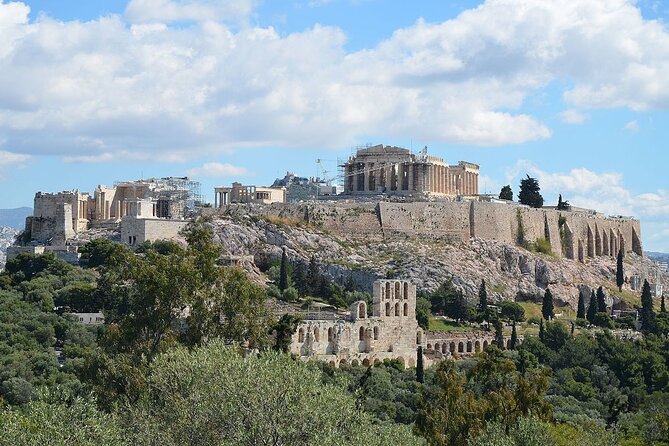
Book it if you want a polished, private introduction to Athens’ two essential ancient sites and are willing to pay for personal attention. The strongest features are the link between the Acropolis and museum, the English-speaking certified guide, and the chance to set the pace within a short schedule.
Before booking, budget for the separate €30 Acropolis admission and €20 museum admission. Also confirm the meeting point and final price after any group discount.
Skip it if cost matters more than guided context. You can spend less by visiting independently, but you will give up the focused explanations that make the Pnyx, Agora, Erechtheion, Caryatids, and Parthenon fit together.
With an overall rating of 5 from 11 reviews and a 100 percent recommendation rate, the experience has a strong record so far. The small number of reviews means I would still judge it mainly by your budget, walking ability, and appetite for a private guide.
FAQ
How long does the tour last?
The tour lasts approximately 2 hours and 30 minutes. About 1 hour and 30 minutes is spent at the Acropolis, followed by about 1 hour at the New Acropolis Museum.
Are entrance tickets included?
No. The Acropolis entrance fee is €30 per person, and the New Acropolis Museum entrance fee is €20 per person. Both are separate from the tour price.
What is included in the $249.25 price?
Certified tour guide services are included. Private transportation and both entrance fees are not included.
Is this a private activity?
Yes. Only your group participates in the tour. Group discounts are available, though the discount amount is not stated.
Where does the tour start and end?
The guide meets you near the Acropolis entrance. The tour description says the visit ends at the New Acropolis Museum, although the supplied meeting-point information repeats the Acropolis location, so confirm the exact details after booking.
Is the tour physically demanding?
Yes. The Acropolis portion includes an uphill climb, and a strong level of physical fitness is advised. The experience is near public transportation, and service animals are allowed.
More Athens museums
- Athens: Mythology of Delphi, Museum and Arachova Guided Tour
★ 4.6 · 4,008 reviews - Athens All Included: Acropolis and Museum Guided Tour with Ticket
★ 4.5 · 2,673 reviews - Athens: Acropolis Museum Ticket with optional Audio Guide
★ 4.4 · 2,652 reviews - From Athens: Small-Group Delphi, Museum & Arachova Day Trip
★ 4.8 · 2,476 reviews
Freshly added Athens trips
- Athens and Ancient Corinth Private from Athens★ 5.0 · 3 reviews
- From Athens: Mycenae and Epidaurus Private Tour★ 4.8 · 3 reviews
- Full day Meteora private tour★ 5.0 · 3 reviews
- Double Shore Dive (certified divers)★ 4.5 · 3 reviews
- Athens Hills: Mythology Treasure Hunt★ 5.0 · 3 reviews
- Sunset & swimming at Cape Sounio, Poseidon temple★ 5.0 · 3 reviews
- Philosophy Experience at Plato’s Academy Park – basic version★ 5.0 · 3 reviews
- Private Acropolis Tour – Ticket Included★ 5.0 · 3 reviews
Acropolis Museum Tours, compared.

Acropolis, Parthenon & Acropolis Museum Guided Tour
Read our review →Acropolis, Parthenon & Acropolis Museum Guided Tour
Read our review →
Acropolis monuments & Parthenon Walking Tour with Optional Acropolis Museum
Read our review →
Acropolis Museum Ticket with optional Audio Guide
Read our review →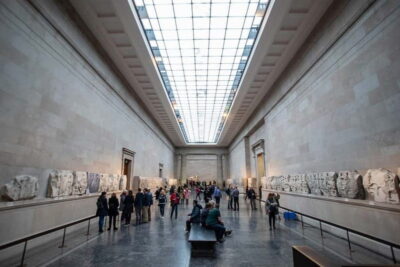
Parthenon & Acropolis Museum with Audio or Live Tour Option
Read our review →
Acropolis, Parthenon and Acropolis Museum Guided Tour
Read our review →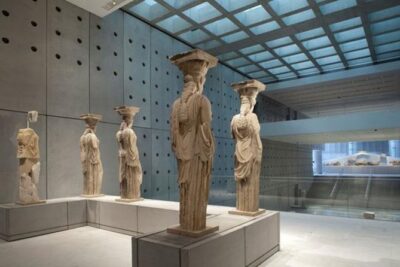

Browse the lists this tour appears in