
Reviewed · TOURS
Philosophy and Democracy tour of Athens
Athens makes more sense when you connect its stones with its ideas. This walking tour follows that thread from the cemetery at Kerameikos to Pnyx Hill, where citizens gathered to shape the city’s future. Along the way, guide Panos brings Socrates, Pericles, and the first democracy into the streets around you.
I especially like two things here: the tour visits several important sites beyond the Acropolis, and it asks you to compare ancient democracy with the system you know today. The small group, capped at 15 people, also gives you a better chance to ask questions and hear the guide clearly.
The main consideration is that this is a walking tour with several outdoor stops, and admission fees for archaeological sites are not included. Bring water, wear sensible shoes, and expect an ideas-first experience rather than a leisurely sightseeing stroll.
In This Review
- Key points at a glance
- Why this Athens walk is different
- Kerameikos: where Athens buried its citizens
- The Flea Market and the city between eras
- Hadrian’s Library and Roman Athens
- The Tower of the Winds: ancient science in plain view
- Plaka adds a human scale
- The Ancient Agora: Athens’ civic heart
- A brief tribute at the Prison of Socrates
- Pnyx Hill and the meaning of democracy
- What the $50.81 price includes in practical terms
- Pace, weather, and who should book
- Should you book the Philosophy and Democracy tour?
- FAQ
- How long is the Philosophy and Democracy tour of Athens?
- What language is the tour offered in?
- How much does the tour cost?
- Where does the tour begin?
- Where does the tour end?
- Is the Acropolis included as a site visit?
- Are archaeological admission tickets included?
- How many people can join the tour?
- Is the tour suitable for most people?
- Can I cancel for a full refund?
Key points at a glance
- Kerameikos puts Pericles’ famous funeral speech in context: This former pottery district and cemetery links daily Athenian life with the public defense of democracy.
- Pnyx Hill is the tour’s big payoff: You get a free outdoor stop with broad views toward the Acropolis and Athens.
- Panos is the central strength: He explains complex philosophy and political ideas in clear, lively language, with room for questions and humor.
- The route fills in the Athens beyond the Parthenon: You visit the Agora, Roman Agora, Hadrian’s Library, the Flea Market, and the Tower of the Winds.
- The $50.81 price can be good value: You receive about three and a half hours of guided context, but site admission is extra.
- Plan for heat and walking: A bottle of water is a smart addition, and a short refreshment break may be part of the morning.
Why this Athens walk is different
Many Athens tours organize the city around monuments. This one organizes it around questions: Who gets to make decisions? What makes a good citizen? How should a city be governed? What does philosophy have to do with ordinary life?
That approach gives the route a clear purpose. You are not simply collecting photographs of ancient ruins. You are tracing how public debate, politics, religion, science, and city life met in one place.
The tour lasts about 3 hours and 30 minutes and is offered in English. It begins at the Statue of Theseus in Athens 105 55 and ends on Theorias Street, close to the Acropolis area. You should expect steady walking between sites, with time at each stop for explanation rather than long independent visits.
Panos is repeatedly praised for speaking clearly, answering questions, using humor, and making difficult ideas easier to follow. He is also described as passionate about the subject, which matters on a tour that asks you to think as well as look.
Other days out people book around Athens:
- Athens: Acropolis & up to 5 Archaeological Sites Combo Pass
★ 4.4 · 12,619 reviews - Athens: Acropolis Ticket with Optional Audio or Live Guide
★ 4.2 · 11,055 reviews - Athens: Acropolis, Parthenon & Acropolis Museum Guided Tour
★ 4.8 · 9,316 reviews
Kerameikos: where Athens buried its citizens
Kerameikos is an excellent starting point because it is less obvious than the Acropolis but loaded with meaning. The name comes from keramos, meaning ceramic, a reminder that workshops once operated here. It later served as Athens’ cemetery for many centuries.
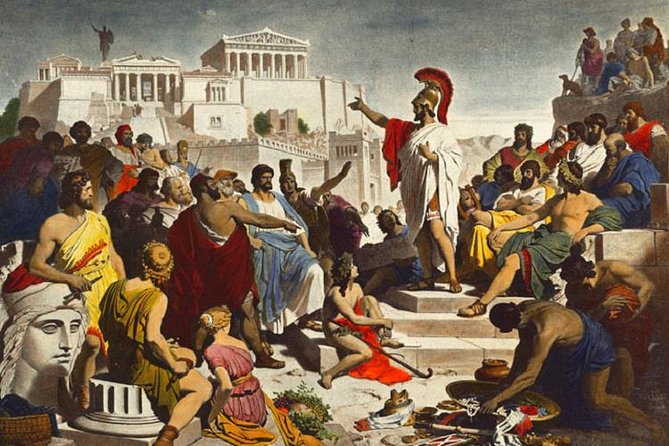
The site also connects directly to the political theme. Prominent Athenians were buried here, and Pericles delivered his famous funeral speech for the first Athenian casualties of the Peloponnesian War. In that speech, he praised the city’s way of life and its democratic values.
Your stop here lasts about 15 minutes. That is enough for a focused explanation, but not enough for an unhurried archaeological visit. Admission is not included, so check the current entry arrangements if you want to return and explore the site on your own.
I like this stop because it turns democracy from an abstract subject into something tied to grief, civic pride, and public memory. It also helps you see that ancient Athens was not only temples and philosophers. It was a working city with potters, families, soldiers, mourners, and citizens.
The Flea Market and the city between eras
The route then moves at an easy pace through the Athens Flea Market. This is a short 15-minute walk rather than a major lecture stop, and admission is free.
Its value is practical. You get a change of scene between archaeological sites and a sense of modern Athens moving through the same central districts once used by ancient residents. The market also gives the tour a more everyday rhythm.
Do not expect a dedicated shopping session. Fifteen minutes passes quickly, and the purpose is to walk through the area, not browse every stall. Still, this pause helps prevent the morning from becoming a string of fenced ruins.
Hadrian’s Library and Roman Athens
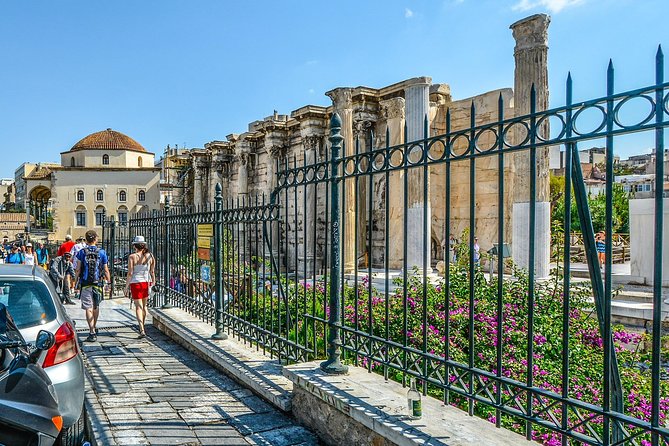
Hadrian’s Library was built by the Roman Emperor Hadrian in AD 132 on the north side of the Acropolis. The 15-minute stop introduces the Roman chapter of Athens, when the city remained important but no longer directed the Greek world in the way it had during its classical peak.
Admission is not included. As with the other paid archaeological sites, you should think of the guide’s explanation as the main part of this tour and decide separately if you want more time inside.
The nearby Roman Agora adds another layer. Located north of the Acropolis and east of the Ancient Agora, it shows how public and commercial life continued to develop around the old civic center. The stop lasts about 15 minutes and also requires a separate admission ticket.
These two sites are useful because they widen the story. If you only focus on classical Athens, it is easy to forget that the city changed under Roman rule and continued to matter long after the age of Socrates and Pericles.
Same city, a completely different century:
- Athens: Cape Sounion & Poseidon Temple Sunset Half-Day Trip
★ 4.8 · 8,241 reviews - Athens: Acropolis and Parthenon Guided Walking Tour
★ 4.6 · 5,882 reviews - All Day Cruise -3 Islands to Agistri,Moni, Aegina with lunch and drinks included
★ 5.0 · 4,958 reviews - Athens, Piraeus, and Coastline: Blue Hop-On Hop-Off Bus
★ 3.9 · 4,849 reviews
The Tower of the Winds: ancient science in plain view

The Tower of the Winds gets only about five minutes, but it may be one of the most memorable quick stops. This octagonal building was created in the first century BC by Andronicus of Kyrristos, an astronomer.
It served as a wind indicator, a sundial, and a water-powered clock. On cloudy days, a hydraulic mechanism produced a sound each hour. In simple terms, it was both a city clock and a weather station, making it an early public piece of scientific equipment.
The short visit means you will not spend long studying the structure. The benefit comes from the explanation, especially if Panos connects it to the broader Greek interest in observation, measurement, and reason.
This is a good example of the tour’s wider reach. Philosophy here is not treated as a list of famous names. It connects to astronomy, politics, religion, ethics, and the practical workings of a city.
Plaka adds a human scale
The route includes Plaka, one of Athens’ most scenic neighborhoods, with narrow streets and small houses. The information provided does not assign a fixed duration to this part of the walk, so treat it as a passage through the neighborhood rather than a formal museum-style stop.
Plaka helps break up the ancient sites. It gives you a chance to notice the layers of Athens as a living city, not just an archaeological display. Panos also provides tips on where to eat, drink, and continue exploring, which can be especially useful early in your stay.
If you are taking this tour near the beginning of your visit, keep a note of those suggestions. The guide’s local advice may be as useful as the historical background, particularly when you want to move beyond the most obvious tourist streets.
The Ancient Agora: Athens’ civic heart
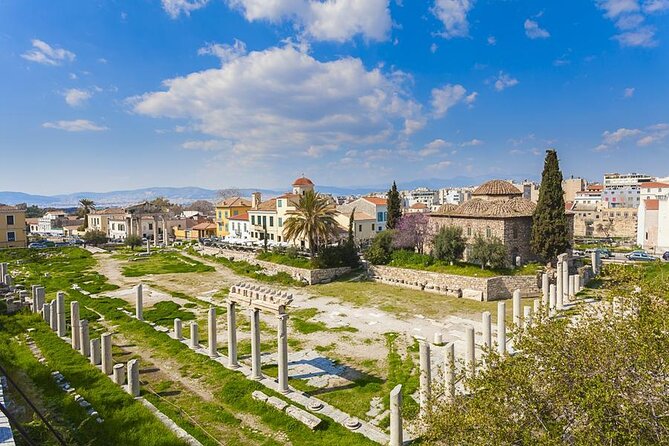
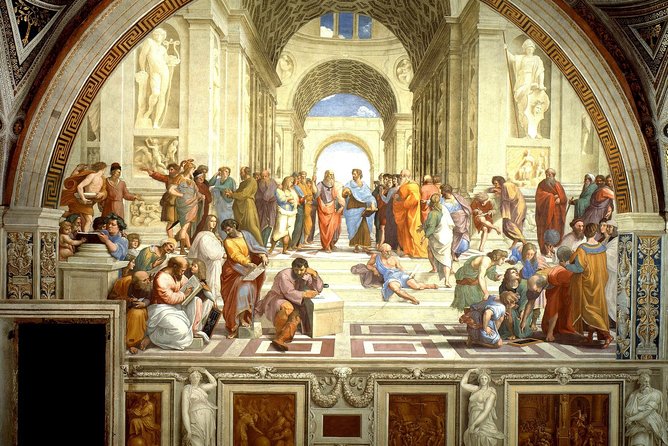
The Ancient Agora is the intellectual and political center of the tour. This was the heart of Athens, where citizens, politicians, philosophers, and ordinary residents met, walked, argued, and discussed public matters.
Names linked with this setting include Socrates, Plato, Solon, Themistocles, Pericles, Thucydides, Sophocles, and Aristophanes. The point is not that every famous Athenian sat in one corner together. It is that the Agora was the setting for the conversations and decisions that shaped Athenian public life.
The tour allows about 20 minutes here, with admission not included. That is a fairly short period for a large archaeological area, so you should not expect to see every corner or read every sign. Instead, you get a guided framework that can make a later independent visit much easier.
One of the strongest parts of this experience is the way the guide links physical places to ideas. A ruined wall can feel remote on its own. It becomes more meaningful when you understand that this was a place where citizens debated laws, leadership, war, and the responsibilities of public life.
The Agora area also includes the Temple of Hephaestus, a major ancient monument that helps make this section particularly worthwhile. If you have already visited the Acropolis, this stop gives you a different view of Athens, focused less on sacred height and more on civic ground.
A brief tribute at the Prison of Socrates
The Prison of Socrates is a free stop lasting about 10 minutes. The tour treats it as a tribute to the philosopher rather than a long archaeological presentation.
The site matters because Socrates has become a symbol of inquiry, questioning, and intellectual courage. His importance comes not only from his ideas but also from the way his life and death shaped later philosophy.
You will get more from this stop if you are willing to ask questions. The tour’s strongest moments come from conversation, and Panos is repeatedly described as patient and willing to explain difficult concepts without turning the morning into a lecture.
Pnyx Hill and the meaning of democracy
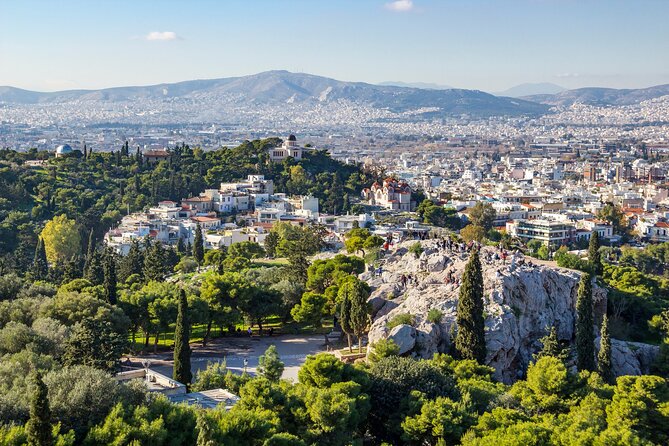
Pnyx Hill is the natural climax. It is known as the cradle of democracy because this is where citizens gathered to make decisions about their future.
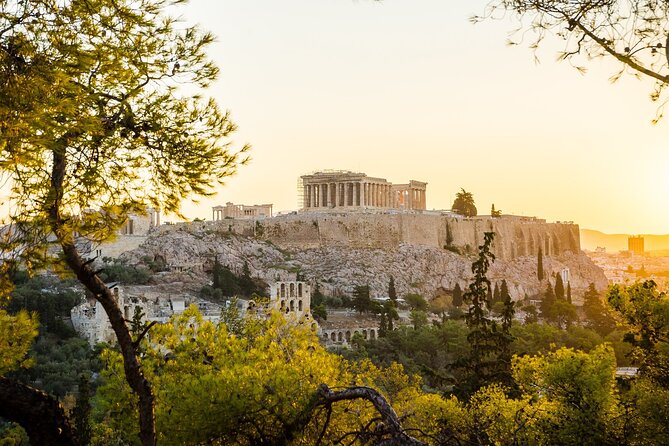
The stop lasts about 30 minutes and is free. It also offers strong views of the Acropolis and Athens, giving the tour a fitting visual finish. You can look across the city while considering the gap between ancient Athenian democracy and modern democratic systems.
That comparison is central to the experience. Ancient Athens was not a modern democracy in every sense, and the tour is valuable partly because it gives you room to examine both the achievement and the limits of the system. The focus is on the development of democratic ideas, not on pretending that the ancient model solved every question.
The hill is also where the tour’s physical and intellectual routes meet. You have moved from the cemetery and public speech at Kerameikos, through libraries, marketplaces, civic spaces, and the Agora, to the place where citizens took part in public decisions.
What the $50.81 price includes in practical terms
At $50.81 per person, this is not the cheapest way to walk around central Athens, but the value is fairly strong if you want interpretation rather than a self-guided route.
You are paying for about three and a half hours with an English-speaking guide, a route through several important sites, discussion of philosophy and democracy, and practical advice for the rest of your stay. The small group limit of 15 is another plus. It is more personal than a large coach tour and better suited to questions.
The key limit is that admission tickets are not included for Kerameikos, Hadrian’s Library, the Roman Agora, and the Ancient Agora. The itinerary also gives some sites only 15 or 20 minutes, so this is not a substitute for a full archaeological visit.
I would treat the tour as a guided orientation with serious historical content. Take it early in your Athens stay if you can. You will likely understand later visits to the Acropolis and other ancient sites better after hearing how the city developed and how its public spaces worked.
Pace, weather, and who should book
The pace is described as comfortable, but this remains a three-and-a-half-hour outdoor walk. Water matters, especially in warm weather. You may have a short stop for refreshments and restroom facilities, but do not count on the route feeling like a seated tour.
Most people can participate, and service animals are allowed. The experience requires good weather, and it can be canceled if the minimum number of participants is not reached. In either case, a different date or a full refund is offered.
This tour suits you best if you:
- Enjoy history, political ideas, and philosophy
- Want to see Athens beyond the Parthenon
- Like asking questions and joining a conversation
- Prefer a small walking group to a large guided crowd
- Want useful suggestions for food and further exploring
- Are comfortable spending several hours outdoors
It may be less suitable if you want a slow photographic tour, a full visit inside every archaeological site, or a route centered mainly on the Acropolis itself.
The material is aimed at adults, but older children can enjoy it too. One particularly useful sign is that children aged 11 and 15 have enjoyed the tour when the guide kept the ideas lively and connected them to real life. That said, younger children who need constant movement may find the philosophy sections demanding.
Should you book the Philosophy and Democracy tour?
I would book this if you want Athens to become more than a collection of famous ruins. The route covers the main archaeological sites outside the Parthenon, and the focus on Socrates, Pericles, the Agora, and Pnyx gives the city a strong narrative.
Book it early in your visit if possible. Panos’ explanations can help you understand the city’s layout, its political past, and the connections between its monuments. The $50.81 fee is reasonable for a small-group tour of this length, provided you are comfortable paying separate entry fees where required.
Skip it if your priority is maximum time inside each site or a relaxed neighborhood walk with little discussion. For history lovers, curious families, and anyone who wants to think about what democracy means, this is one of the more useful ways to spend a morning in Athens.
FAQ
How long is the Philosophy and Democracy tour of Athens?
The tour lasts approximately 3 hours and 30 minutes.
What language is the tour offered in?
The tour is offered in English.
How much does the tour cost?
The listed price is $50.81 per person.
Where does the tour begin?
The meeting point is the Statue of Theseus in Athens 105 55, Greece.
Where does the tour end?
The tour ends at Theorias 21, Athina 105 58, Greece.
Is the Acropolis included as a site visit?
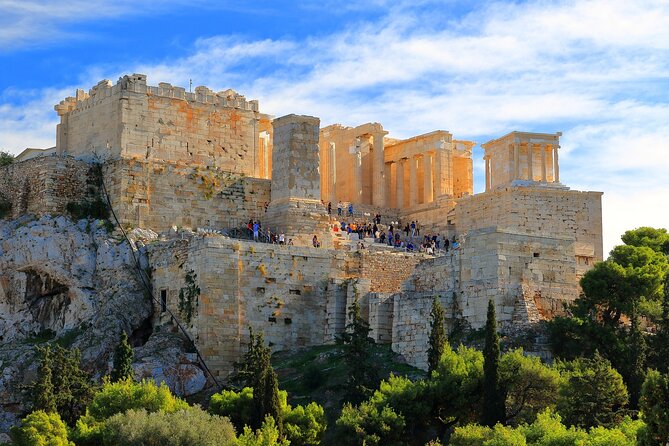
The route ends near the Acropolis area, and the Acropolis is presented as a monument to admire. The provided details do not state that admission inside the Acropolis is included.
Are archaeological admission tickets included?
Admission tickets are not included for Kerameikos Archaeological Site, Hadrian’s Library, the Roman Agora, the Tower of the Winds, or the Ancient Agora.
How many people can join the tour?
The group can have a maximum of 15 travelers.
Is the tour suitable for most people?
Most travelers can participate, and service animals are allowed. The experience takes place on foot and requires good weather.
Can I cancel for a full refund?
Yes. You can cancel at least 24 hours before the start time for a full refund. Cancellations or changes made less than 24 hours before the start time are not accepted for a refund.
Freshly added Athens trips
- Athens and Ancient Corinth Private from Athens★ 5.0 · 3 reviews
- From Athens: Mycenae and Epidaurus Private Tour★ 4.8 · 3 reviews
- Full day Meteora private tour★ 5.0 · 3 reviews
- Double Shore Dive (certified divers)★ 4.5 · 3 reviews
- Athens Hills: Mythology Treasure Hunt★ 5.0 · 3 reviews
- Sunset & swimming at Cape Sounio, Poseidon temple★ 5.0 · 3 reviews
- Philosophy Experience at Plato’s Academy Park – basic version★ 5.0 · 3 reviews
- Private Acropolis Tour – Ticket Included★ 5.0 · 3 reviews
Tours, compared.

Acropolis, Parthenon & Acropolis Museum Guided Tour
Read our review →


Mythology of Delphi, Museum and Arachova Guided Tour
Read our review →
Acropolis, Parthenon & Acropolis Museum Guided Tour
Read our review →