

Reviewed · WALKING TOURS
Myths and Legends of Athens Walking Tour
Greek mythology comes alive on this 2-hour-15-minute walk through central Athens, where gods, heroes, vanished goddesses, and Trojan War figures are tied to real streets and buildings. The tour starts at the Academy of Athens and ends in Plaka, with a quiet National Garden stop and a short storytelling game along the way.
I like the small group, capped at 10 people, and the gentle pace. I also like the way the route mixes famous central sights with myth-focused stops you might otherwise pass without a second thought. The main consideration is that this is a storytelling walk, not a major archaeological-site tour, and the $41.70 price does not include entry to any paid attraction.
In This Review
- Key things to know before you book
- Why mythology is a smart way to see Athens
- Starting at the Academy of Athens
- Trojan War stories near the Numismatic Museum
- A quieter pause in the National Garden
- Syntagma Square and the modern life of myth
- Plaka, where Athenian myths meet narrow streets
- What the guide adds to the experience
- Is $41.70 a fair price?
- Who should book this Athens walk?
- Should you book the Myths and Legends of Athens walk?
- FAQ
- How long does the Myths and Legends of Athens Walking Tour last?
- What language is the tour offered in?
- Where does the tour start?
- Where does the tour end?
- How many people can join the tour?
- Can I cancel for a full refund?
Key things to know before you book

- Greek mythology drives the whole walk: Learn about the creation of the world, the Olympian gods, the Trojan War, Athenian myths, and divine figures linked to nature and the moon.
- The route stays in central Athens: Begin near the Academy of Athens, pass the Numismatic Museum, cross the National Garden, visit Syntagma Square, and finish in Plaka near Monastiraki.
- The group is small: A maximum of 10 people makes it easier to hear the guide and ask questions.
- The pace is manageable: Previous feedback describes a slow, steady walk with little climbing, making it suitable for many families and casual walkers.
- Children can follow the stories: The guide Chiara, also written as Kara or Cara in the supplied comments, held the attention of children aged 10 and 12.
- You pay for interpretation, not admissions: Every listed stop has free admission, so the value rests in the guide’s storytelling and the connections she makes between myth and modern Athens.
Why mythology is a smart way to see Athens
Athens can feel like a collection of grand ruins, busy squares, museums, and traffic until you know the stories behind the names. This walk gives you a different starting point. Instead of treating Greek mythology as a school lesson, the guide uses the city itself as the setting.
You begin with the gods and the creation of the world, move into the Trojan War and its heroes, then turn toward nature, lunar myths, and stories tied to Athens. By the time you reach Plaka, the myths have become a kind of map for the city.
I like this approach for a first or last day in Athens. At the start of a trip, it helps you recognize mythological names and themes during later sightseeing. At the end, it offers a slower way to connect the modern city with what you have already seen.
The tour is offered in English and uses a mobile ticket. Since the meeting point is close to public transportation, you should be able to reach the start without much trouble. Still, allow a little extra time. Central Athens can be confusing if you are navigating with luggage, and a walking tour is much more enjoyable when you arrive calm rather than rushed.
More Athens walking tours:
- Athens: Acropolis and Parthenon Guided Walking Tour
★ 4.6 · 5,882 reviews - Greek Food Walking Tour in Athens
★ 5.0 · 4,740 reviews - Acropolis: Acropolis and Parthenon Guided Walking Tour
★ 4.7 · 3,442 reviews
Starting at the Academy of Athens
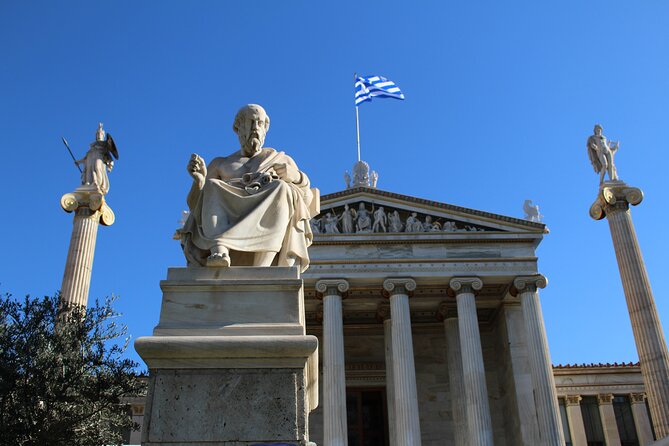
The first 50 minutes focus on the main gods and goddesses and the Greek creation story. The Academy of Athens is a fitting place to begin because its grand exterior gives you a formal setting for stories about divine order, power, rivalry, and the origins of the world.
This opening section is likely the most information-heavy part of the walk. If you have forgotten who Zeus, Hera, Athena, Apollo, Artemis, or the other major figures are, the guide can help put them in place. The useful part is not simply memorizing names. You begin to understand the family ties, conflicts, and repeated patterns that make the myths easier to follow.
The building also gives the guide a chance to connect classical ideas with Athens today. One review specifically praised the way the guide linked stories to modern buildings and architecture. That is a worthwhile feature because it keeps the walk from becoming a lecture detached from its surroundings.
The stop has no admission fee. You will be viewing the Academy from the public route rather than entering a paid attraction, so set your expectations accordingly. The focus is on the building, the setting, and the stories told there.
Trojan War stories near the Numismatic Museum
The next stop lasts about 30 minutes at the Numismatic Museum. Here the subject shifts to the Trojan War, its heroes, and the gods involved. This gives the tour a clear change of mood. Creation myths explain the divine world, while Trojan War stories show what happens when gods and humans interfere with one another.
This section should suit you if you enjoy dramatic stories with rivalries, loyalty, revenge, and heroic choices. The Trojan War is packed with memorable figures, but it can also become confusing when names and family connections pile up. A small group helps here. With no more than 10 people, you can ask for a name or story to be explained without holding up a large crowd.
The Numismatic Museum is another useful setting because you are not simply walking from one famous monument to the next. The route includes a place you might not have chosen on your own, then gives it a role in the wider story of Athens.
Again, admission is free as part of the walking route. If you want to visit the museum itself, do not assume that entrance is included. The tour information lists the stop as free, but the experience described is the guided outdoor walk.
A quieter pause in the National Garden
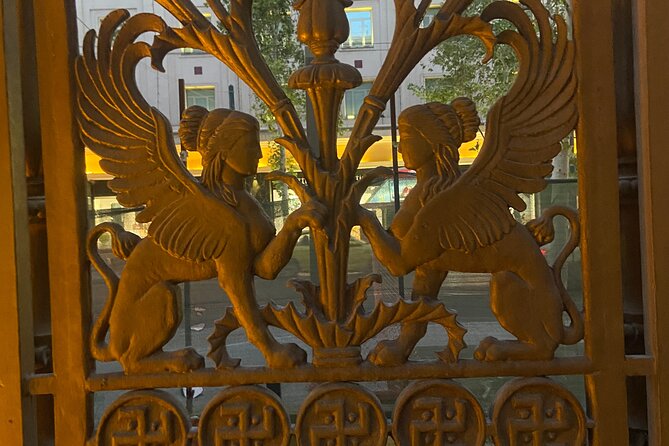
After the first two storytelling sections, the National Garden provides a change of pace. This 15-minute stop moves away from formal buildings and busy streets into a shaded green setting in the middle of the city.
The stories here connect nature and myth. You will hear about divine hunters, vanished goddesses, and lunar mysteries. These themes show a side of Greek mythology that is less focused on battles and royal families. Nature becomes an active part of the story, filled with danger, loss, transformation, and divine power.
The National Garden is also where the tour adds a light improv storytelling game. The activity is inspired by the whims of the gods and the chaos of fate. You are invited to step into the myths for a moment, but the tone is described as playful rather than demanding.
That detail matters if you are deciding between a standard history walk and a more interactive experience. You should be comfortable taking part in a simple group activity. If you prefer to listen quietly the whole time, this may be the one part that feels less natural, though it is short.
I like the garden stop because it gives the walk some breathing room. Two hours of standing on hard pavement can wear you down, especially in warm weather. The route is still outdoors, and the tour requires good weather, but this section offers shade and a calmer setting.
Same city, a completely different century:
- Athens: Acropolis & up to 5 Archaeological Sites Combo Pass
★ 4.4 · 12,619 reviews - Athens: Acropolis Ticket with Optional Audio or Live Guide
★ 4.2 · 11,055 reviews - Athens: Acropolis, Parthenon & Acropolis Museum Guided Tour
★ 4.8 · 9,316 reviews - Athens: Cape Sounion & Poseidon Temple Sunset Half-Day Trip
★ 4.8 · 8,241 reviews
Syntagma Square and the modern life of myth
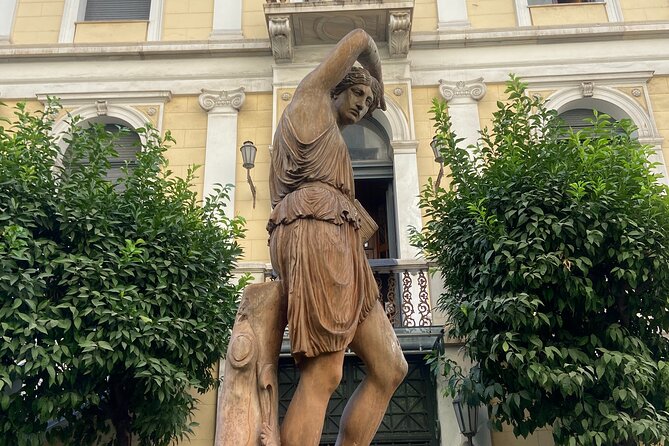
The Syntagma Square fountain stop lasts about 10 minutes. Here the guide points out a statue, introduces a mysterious god, and explains how Greek mythology remains visible in modern Athens.
This is a short stop, but it serves an important purpose. The tour does not suggest that mythology exists only in ancient ruins or museum displays. Instead, it asks you to look for mythological ideas in statues, public spaces, names, and architectural details around the city.
You will not spend a long time at Syntagma Square, so think of it as a focused explanation rather than a full guided visit to the square. It is also a central place with a lot happening around you. You may hear traffic and city noise while the guide speaks, which is normal for an urban walking tour.
The connection between public art and ancient stories is one of the more useful parts of the experience. It gives you a habit you can use after the tour. As you continue around Athens, you may start looking more closely at statues and building decorations instead of walking past them as background scenery.
Plaka, where Athenian myths meet narrow streets
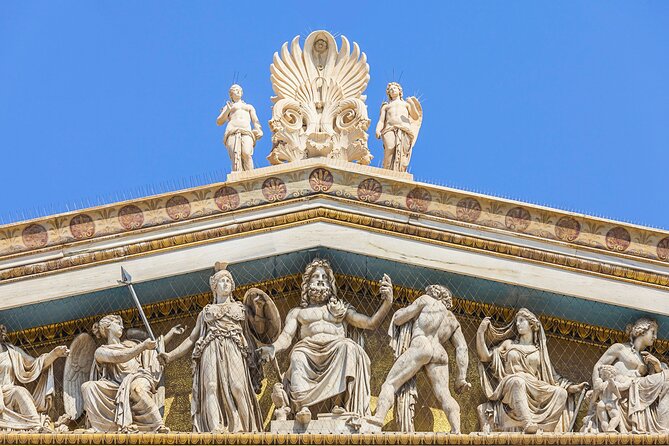
The final 30 minutes take you into Plaka, the old neighborhood close to the Acropolis. The tour ends in Monastiraki Square, so this last section places you near one of the most useful areas for continuing your evening.
Plaka is a natural setting for stories linked to Athens. The neighborhood feels different from the wide central avenues near the Academy and Syntagma. Its older streets make the myths feel closer to daily city life, even though the tour is not entering the Acropolis itself.
This part should be especially helpful if you are new to Athens and want to get your bearings in the central districts. You finish close to Monastiraki, where you can continue walking, find food, or make your way to another part of the city. The tour does not include a meal or a paid site visit, so plan your next activity separately.
The end point is also practical for a late-day outing. One family used the walk as a calm way to finish an Athens trip, and the slow pace worked well for both adults and children. That does not mean every child will enjoy two hours of mythology, but the storytelling format can hold attention better than a long list of dates and facts.
What the guide adds to the experience
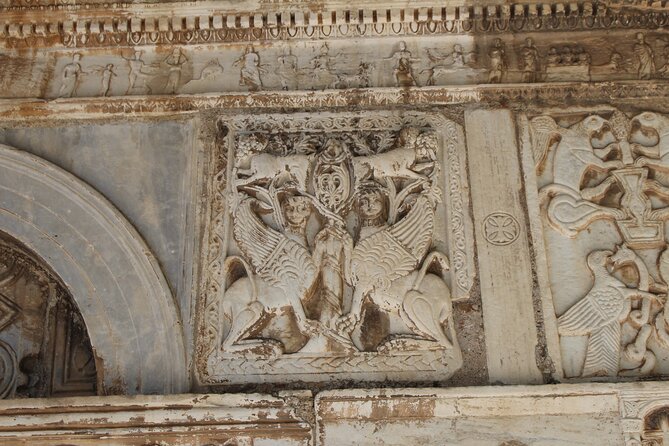
The guide is identified as Chiara in one comment, with Kara and Cara used elsewhere. She is described as originally from Italy, which gives the walk a personal angle on Athens and Greek mythology. The consistent message is that her storytelling is friendly, lively, and easy to follow.
The strongest praise centers on storytelling. That is important because the route itself is made up of public places that you can visit without paying for a tour. You are paying for the narrative, the connections, and the guide’s ability to make the stops feel related.
I would book this walk if you want stories told with energy rather than a formal academic presentation. It also suits families with older children. Children aged 10 and 12 were able to stay engaged, and the improv game in the National Garden gives the tour a break from simply listening.
The pace is another plus. The walk has been described as slow and steady, with little climbing. You still need to be comfortable walking for more than two hours, but this is not presented as a strenuous hike or a race between monuments.
Is $41.70 a fair price?

At $41.70 per person, this is not the cheapest way to spend two hours in Athens. The listed stops have free admission, and you could walk through the same central areas on your own.
The value comes from the guide. If you already know Greek mythology well and enjoy exploring without commentary, the price may feel high. If the names of the gods blur together, or if you want a clear story linking public buildings, statues, gardens, and neighborhoods, the cost is easier to justify.
The maximum group size of 10 improves the value. A small group makes storytelling more personal and reduces the chance that you will be standing at the back trying to hear. It also suits families and couples who want something more focused than a large city walk.
The tour is booked an average of 28 days ahead, so popular dates may fill early. That does not guarantee every date sells out, but it is a useful planning signal. If you know your Athens dates, reserving in advance makes sense.
Who should book this Athens walk?
I would recommend it to:
- First-time visitors who want a simple introduction to central Athens
- Families with children interested in gods, heroes, and dramatic stories
- Adults who enjoy mythology more than lists of archaeological dates
- People who want a gentle route with limited climbing
- Visitors looking for an evening activity that ends near Monastiraki
- Anyone who likes connecting architecture and public spaces with stories
I would be more cautious if your main goal is to enter the Acropolis, tour museums, or study ancient artifacts in detail. This experience does not replace those visits. It is a city walk built around storytelling, with the sights serving as settings for the myths.
Wear comfortable shoes and check the weather. The tour requires good conditions, and the route is outdoors. Service animals are allowed, and most people can participate, but you should still be ready for more than two hours on foot.
Free cancellation is available when you cancel at least 24 hours before the start time. Changes or cancellations inside that window are not accepted for a refund. If bad weather or the minimum group size causes the tour to be canceled, you will be offered another date or experience, or a full refund.
Should you book the Myths and Legends of Athens walk?
Book it if you want Athens explained through stories rather than a checklist of monuments. The combination of Chiara’s engaging delivery, a small group, a gentle route, and stops such as the National Garden and Numismatic Museum gives the walk a clear personality.
Skip it if you are seeking an archaeological tour with site entry or a detailed museum visit. For everyone else, especially families and first-time visitors, this is a practical way to learn the mythic framework behind Athens before exploring the city on your own.
FAQ
How long does the Myths and Legends of Athens Walking Tour last?
The tour lasts approximately 2 hours and 15 minutes.
What language is the tour offered in?
The tour is offered in English.
Where does the tour start?
The meeting point is Korai 4, Athina 105 64, Greece.
Where does the tour end?
The tour ends at Monastiraki Square in Athens.
How many people can join the tour?
The experience has a maximum group size of 10 people.
Can I cancel for a full refund?
Yes. You can cancel at least 24 hours before the start time for a full refund. Cancellations made less than 24 hours before the start time are not refunded.
Freshly added Athens trips
- Athens and Ancient Corinth Private from Athens★ 5.0 · 3 reviews
- From Athens: Mycenae and Epidaurus Private Tour★ 4.8 · 3 reviews
- Full day Meteora private tour★ 5.0 · 3 reviews
- Double Shore Dive (certified divers)★ 4.5 · 3 reviews
- Sunset & swimming at Cape Sounio, Poseidon temple★ 5.0 · 3 reviews
- Philosophy Experience at Plato’s Academy Park – basic version★ 5.0 · 3 reviews
- Athens Hills: Mythology Treasure Hunt★ 5.0 · 3 reviews
- Private Acropolis Tour – Ticket Included★ 5.0 · 3 reviews
Walking Tours, compared.




Acropolis monuments & Parthenon Walking Tour with Optional Acropolis Museum
Read our review →

Athens Authentic Greek Food Walking Tour (Small Group)
Read our review →
Early Morning Acropolis & Old Athens Guided Walking Tour
Read our review →
Browse the lists this tour appears in