
Reviewed · 4-DAY EXPERIENCES
Indulge to the beauty of Greece with the 4 days Classical Greece private tour
Greece’s greatest ancient sites are spread across a wide stretch of country, and this four-day private tour links them by road: Mycenae, Olympia, Delphi, and Meteora. You move from Bronze Age fortress to Olympic sanctuary, then from Apollo’s oracle to cliff-top monasteries.
I like the private vehicle, which gives your group freedom to pause and travel at a comfortable pace. I also like the included three hotel nights and breakfasts, especially since the route covers long distances. The main drawback is clear: this is an ambitious schedule with plenty of time in the car, and entrance tickets plus licensed guides inside the sites are extra.
In This Review
- Key points to know
- Why this four-day route works
- Day 1: Corinth Canal and the ruins of Mycenae
- Day 2: Olympia, birthplace of the ancient Games
- Day 3: Delphi and the center of the ancient world
- Day 4: Meteora monasteries above Kalambaka
- Transport, accommodation, and the real pace
- Extra costs and booking details
- Who should book this private Greece tour
- Should you book it?
- FAQ
- What is included in the four-day Classical Greece private tour?
- Are archaeological site and museum entrance fees included?
- Can I arrange a licensed guide inside the archaeological sites?
- Where does pickup take place?
- Does the tour include meals and drinks?
- How much walking is involved?
Key points to know
- Four major Greek landmarks in four days: Corinth, Mycenae, Olympia, Delphi, Meteora, and Thermopylae all fit into one sweeping route.
- Private transport for up to two people: You avoid a large coach and return to the same pickup point in Athens.
- The strongest days are Delphi and Meteora: Both offer memorable settings as well as important monuments.
- Three nights and breakfast are included: Accommodation is arranged in Olympia, Delphi, and Kalambaka.
- A driver is not the same as a licensed guide: Your English-speaking driver explains the sites up to the entrance, but cannot accompany you inside without an added fee.
- Pack snacks and wear proper shoes: The drives are long, and several locations involve uneven ground, steps, or uphill walking.
Why this four-day route works
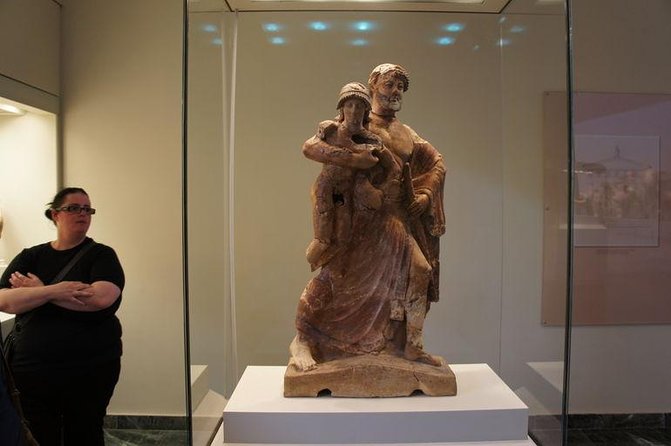
This private Greece tour is built around one simple idea: see the country’s major mainland landmarks without changing hotels every night on your own. Starting in Athens, you head west into the Peloponnese, continue north to Central Greece, then finish among the monasteries of Meteora before returning to Athens.
For a pair, the price is $3,275.19 per group, or about $1,637.60 each before entrance fees, meals, and optional licensed guides. That is a serious outlay, but it includes private transportation, an English-speaking driver, three nights of accommodation, and breakfast each morning.
The value depends on what you want. If you have only four days and want a broad look at mainland Greece, the private format saves you from arranging several difficult rail, bus, and hotel connections. If you prefer slow mornings, long meals, or detailed museum visits, this route may feel rushed.
The tour is offered in English, and pickup is available from your hotel or a cruise port. Airport transfers can also be arranged on request. Since the group is limited to your party, you can ask for stops and adjust the rhythm within the day’s broad plan, though road distances still set the limits.
A few more Athens days worth a look
- 4-Day Classical Greece Tour: Epidaurus, Mycenae, Olympia, Delphi, Meteora
★ 4.5 · 732 reviews - 4-Day Tour of Mycenae, Epidaurus, Olympia, Delphi & Meteora
★ 4.8 · 168 reviews - 4-Day Greece Highlights Tour: Epidaurus, Mycenae, Olympia, Delphi and Meteora
★ 5.0 · 79 reviews
Day 1: Corinth Canal and the ruins of Mycenae
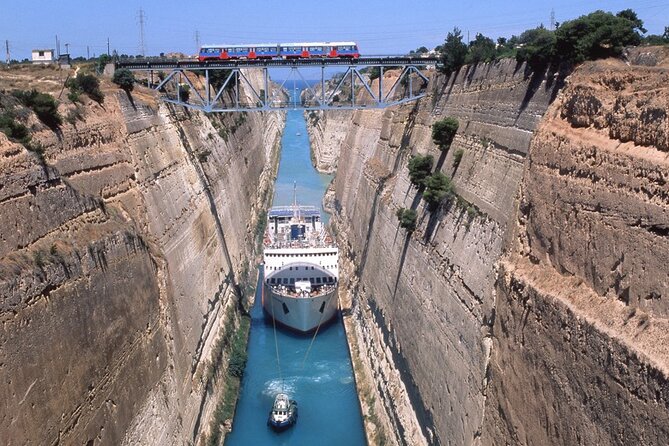
The first stop is the Corinth Canal, a brief but striking introduction to modern Greek engineering. The canal cuts through the narrow Isthmus of Corinth and links the Gulf of Corinth with the Saronic Gulf, separating the Peloponnese from mainland Greece.
You get about 20 minutes here, enough to look down into the steep-sided cut and take photographs. The idea of creating such a passage reaches back to the 7th century BC, when Corinthian ruler Periander considered a canal to avoid the dangerous voyage around the Peloponnese. His plan was not completed, but the need was understood for centuries.
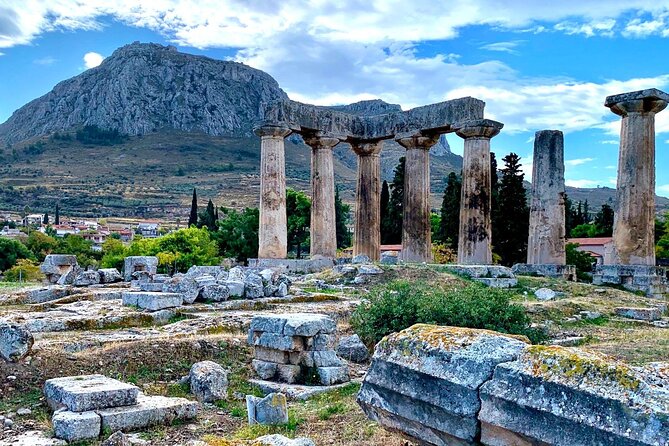
From the canal, you continue to Ancient Corinth. The settlement’s location made it powerful: land routes crossed here, and sea routes linked the western Mediterranean with the Aegean and lands farther east. Corinth grew through farming, trade, and overseas colonies, including Corfu and Syracuse.
Allow about an hour at the archaeological site. Admission is not included, so plan for that extra cost. The site is a useful early stop because it helps you understand why Corinth mattered beyond its surviving columns. Its position, rather than sheer size alone, shaped its place in Greek history.
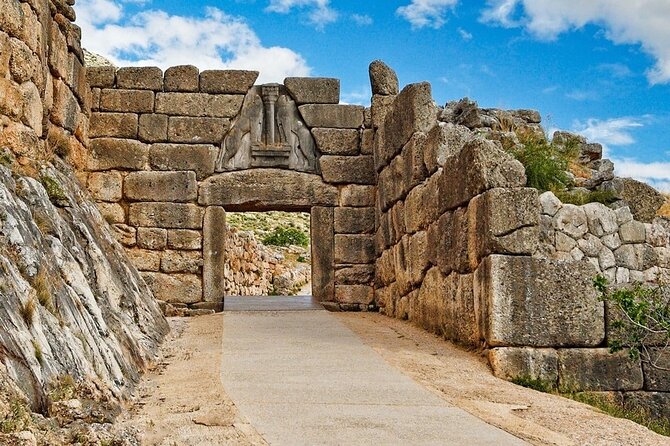
Mycenae is the day’s major archaeological visit. Allow two hours for the citadel and surrounding remains of the kingdom associated with Agamemnon. Homer’s epics and later Greek tragedies turned Mycenae into one of Greece’s great legendary places, but the site is also important on its own as the leading palatial center of the Late Bronze Age.
Mycenae gave its name to the Mycenaean civilization, which flourished in prehistoric Greece. The setting is powerful: the fortified site occupies high ground, with broad views across the Argolid. You can expect uneven paths, stonework, and a strong sense of the defensive character of the citadel.
Admission is extra here too. A driver can give you background before you enter, but if you want detailed explanations among the remains, arrange a licensed guide in advance. The added cost may be worthwhile at Mycenae, where the difference between a fortress, palace, tomb, and later myth is not always obvious at first glance.
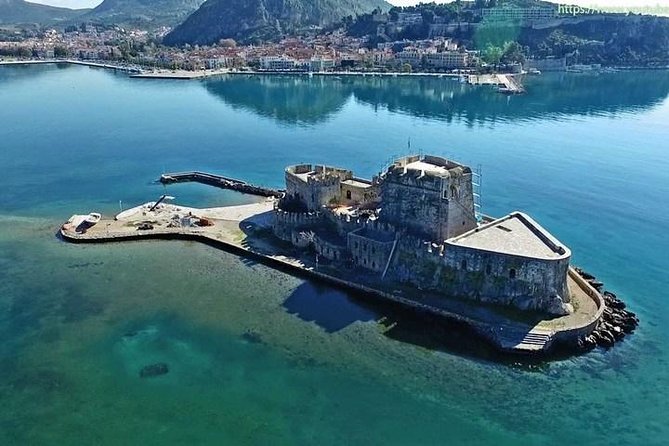
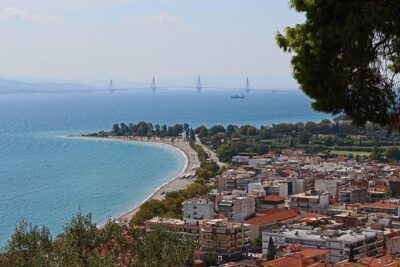
The day ends in Nafplio, one of the prettiest towns in the Argolis. It served as the first capital of the modern Greek state from 1823 to 1834. You have about two hours to walk through its streets, look at Venetian and neoclassical buildings, and see traces of Ottoman, Frankish, and Byzantine rule.
Nafplio provides a welcome change after the archaeological sites. Its appeal is less about one single monument and more about architecture, town streets, and a relaxed waterfront setting. From there, you continue toward Olympia for the night.
Day 2: Olympia, birthplace of the ancient Games
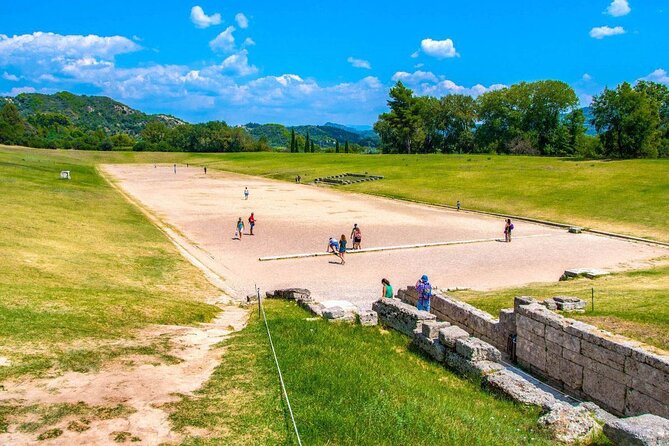
Olympia lies in a green valley near the Alpheios River, at the foot of Mount Kronios. The sanctuary became the most famous religious and athletic center of ancient Greece because it hosted the Olympic Games in honor of Zeus.
The ancient Games began in 776 BC and took place every four years. Competitors and religious visitors came from Greek communities across the wider world, and hostilities were suspended so participants could travel and compete. That mix of worship, sport, politics, and ceremony is what makes Olympia more than a collection of fallen stones.
The archaeological site includes the stadium, temples, training areas, and buildings connected with athletic contests and communal gatherings. You have about an hour at the site itself, with admission not included.
The Archaeological Museum of Olympia is close by and deserves more than the one-minute timing shown in the schedule. In practical terms, you should confirm with your driver how much time is available for the museum on your day. Its collection covers more than 3,500 years, and its ancient bronzes and sculptures help restore the meaning of the ruins outside.
The museum’s best-known work includes the Hermes attributed to Praxiteles. Seeing such sculpture indoors, with the original details preserved, can make the open-air sanctuary easier to understand.
Olympia is often the most demanding stop for people who expect grand standing monuments. Much of the site is made up of foundations and partial columns, so the appeal comes from the setting and the role of the sanctuary rather than a single intact building. I would keep your expectations focused on the birthplace of the Games and the museum, not on a fully rebuilt ancient city.
After Olympia, the road turns north through Central Greece toward Delphi. The route passes through the region associated with Thebes, Livadia, and Arachova before reaching the slopes of Mount Parnassos. This is one of the tour’s long driving sections, so carry water and snacks.
A previous itinerary note places an overnight in Delphi, followed by travel toward Kalambaka on the next stage. Because the schedule includes several long transfers and approximate times, confirm the exact hotel location and daily departure times before setting out.
Day 3: Delphi and the center of the ancient world
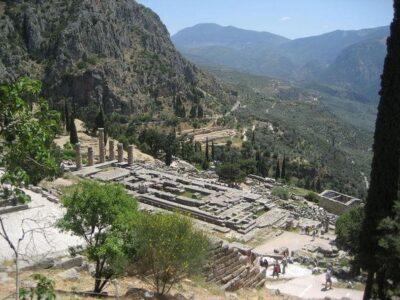
Delphi is one of the most memorable stops on the tour. Set on the slopes of Mount Parnassos, the sanctuary was regarded by ancient Greeks as the center of the world. The myth tells of two eagles sent in opposite directions by Zeus that met above Delphi, marking the site as the Earth’s navel.
The sanctuary was home to the oracle of Apollo, whose priestess, the Pythia, delivered predictions that influenced rulers and cities. Delphi was also a cultural and religious meeting point for the Greek world, hosting festivals with music and athletic contests.
You get about an hour at Delphi’s main archaeological area, but the listed stop times are approximate. The site climbs along a slope, so comfortable shoes matter. The paths can be uneven, and the combination of stairs, sun, and elevation makes this a place where a leisurely pace may not be possible if you want to see everything.
The Temple of Apollo is the central monument. The building visible today dates from the 4th century BC, after earlier temples were damaged by fire and earthquake. Only parts remain, but its position gives you a strong sense of how the sanctuary was arranged.
The omphalos, or navel-stone, represents Delphi’s claim to be the world’s center. The marble example is a later copy of an older sacred object once kept inside the temple. It is a small detail, but it helps connect the site’s myths with its physical remains.
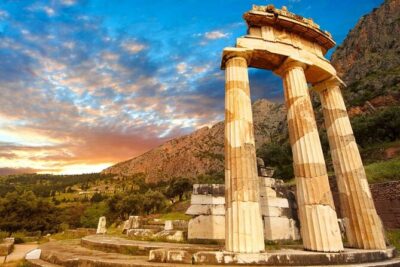
On the lower part of the sanctuary, the Tholos of Athena Pronaia is one of Delphi’s most recognizable structures. Its circular form and surviving columns make it especially photogenic. The building dates to the 4th century BC and combines Doric and Corinthian elements.
The Tholos is not simply a quick photo stop. It shows the care ancient architects gave to proportion and form, even when the building’s exact purpose remains uncertain. The stop is listed as free, but other Delphi admissions are not included, so check the current ticket arrangements.
The big practical issue at Delphi is guiding. Your driver can provide cultural and historical context before you enter, but drivers are not licensed to guide inside the archaeological sites or museums. You can arrange a state-licensed guide for an additional fee, subject to availability.
I would strongly consider that option at Delphi if ancient religion and architecture interest you. Without an inside guide, you can still enjoy the setting, but many details are easy to pass without explanation.
The schedule then moves toward Kalambaka in Thessaly. The region includes mountains, rivers, villages, and the famous Meteora rock formations. The drive is long, but the change in scenery helps break up the concentration on classical antiquity.
Same city, a completely different century:
- Athens: Acropolis & up to 5 Archaeological Sites Combo Pass
★ 4.4 · 12,619 reviews - Athens: Acropolis Ticket with Optional Audio or Live Guide
★ 4.2 · 11,055 reviews - Athens: Acropolis, Parthenon & Acropolis Museum Guided Tour
★ 4.8 · 9,316 reviews - Athens: Cape Sounion & Poseidon Temple Sunset Half-Day Trip
★ 4.8 · 8,241 reviews
Day 4: Meteora monasteries above Kalambaka
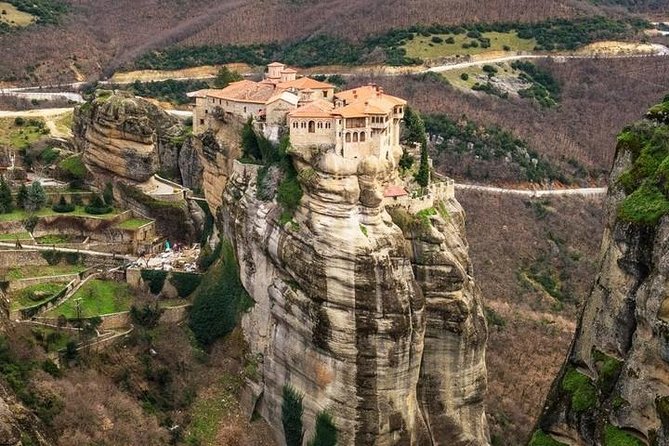
Meteora is the tour’s great visual finale. Huge rock pillars rise above the Thessalian plain, topped by Eastern Orthodox monasteries that seem to cling to the cliffs. The site has UNESCO World Heritage status and is also part of the Natura 2000 network.
The monasteries began as places of retreat and later developed into organized religious communities. Their position was not chosen for convenience. The cliffs offered isolation and protection, while the height created a powerful spiritual setting.
You have about two hours for Meteora itself, but the day includes several monasteries with separate visits. That means you must be selective and ready for steps. The tour description includes the Great Meteoron, Saint Nicholas Anapafsas, Saint Stephen, Varlaam, Holy Trinity, and Rousanou. Opening schedules can vary, so you may not enter every monastery listed on a particular day.
The Great Meteoron is the oldest and largest monastery in the complex. Founded by Saint Athanasios the Meteorite in the 14th century, it became the base for organized monastic life at Meteora. Its commanding position and size make it a natural priority if it is open.
Saint Nicholas Anapafsas was built on a very small rock platform, so its structure rises in levels rather than spreading outward. Its compact design shows how closely the buildings had to follow the shape of the cliff.
Saint Stephen is easier to approach than some of the other monasteries, but the exact access conditions still depend on the day. Varlaam is known for its history of rebuilding and its church dedicated to All Saints. Both offer a closer look at the religious art and monastic buildings that make Meteora different from an ordinary archaeological site.
Holy Trinity requires a downhill pedestrian path followed by 145 carved steps back up to the monastery. That detail matters. If stairs are difficult for you, ask the driver which monasteries are most suitable before committing to every stop.
Rousanou, now a nunnery, sits on its own striking rock and was restored in the 20th century. Its present form dates largely from the 16th century, and the monastery has served as a refuge during difficult periods in Greek history.
The nearby towns of Kalambaka and Kastraki are useful bases for the visit. Kalambaka sits at the foot of Meteora and provides the practical services associated with the monasteries. Kastraki is smaller and lies among the rocks, with guesthouses, taverns, and a strong connection to climbing and outdoor access.
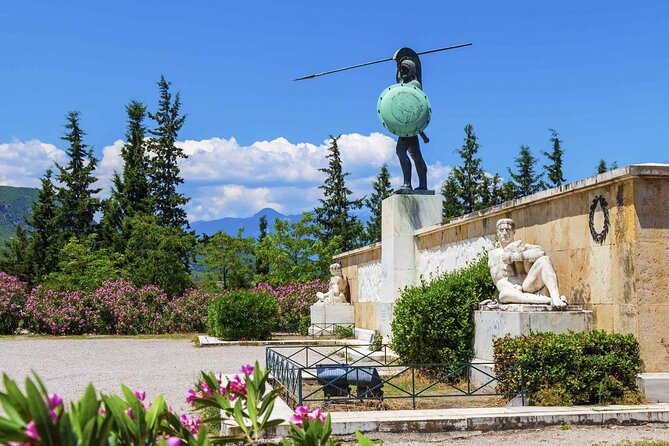
The day ends with a stop at Thermopylae on the drive back to Athens. In antiquity, the sea passage here was narrow, but river deposits have moved the shoreline. The battlefield does not look exactly as it did in 480 BC.
The Leonidas Monument marks the famous stand of the Spartan king and his allies against the Persian army. You have about 20 minutes at Thermopylae and about 10 minutes at the monument. It is a brief stop, but it gives the long return drive a clear historical endpoint.
Transport, accommodation, and the real pace
The private air-conditioned vehicle is the backbone of this experience. You are not trying to coordinate several public transport connections between small archaeological sites, mountain towns, and monasteries. For two people, that convenience has real value.
Still, private transport does not remove the distance. This is a road tour, and some stretches are lengthy. Bring snacks, especially since food and drinks are not included. Breakfast is provided for all three nights, but you should budget for other meals.
The hotels are described as comfortable, with overnight stays connected to Olympia, Delphi, and Kalambaka. Exact hotel names are not provided, so ask for them before booking if room style or location matters to you.
The driver is an English-speaking professional with good knowledge of Greek history and culture. That makes the transfers more useful than silent rides, but it does not replace a licensed guide inside a monument. The distinction is important for anyone choosing this tour mainly for archaeological interpretation.
Extra costs and booking details
Entrance fees to archaeological sites and museums are not included. Meals and drinks are also separate, and licensed guides inside the sites cost extra. The operator can purchase admission tickets in advance for a small service fee, which may help during busy periods when availability is limited.
Pickup is arranged at your hotel’s main entrance. At a cruise port, you leave the terminal and meet the driver outside with a sign bearing your name. The return is to the same place, unless another arrangement is made.
The tour requires moderate physical fitness. You will walk over ancient ground, climb steps at some monasteries, and spend time outdoors in the sun. In summer, bring sunscreen and a hat. Comfortable walking shoes are not optional decoration here.
Cancellation is flexible only up to six full days before the start for a full refund. Cancellations two to six days before departure receive 50 percent back, while cancellations within two days are not refunded.
Who should book this private Greece tour
I would choose this tour if you want to cover a great deal of mainland Greece in a short visit and value a private car more than a slow, relaxed schedule. It suits a couple, two friends, or a small family who want direct transport and the ability to travel together without a large group.
It is especially good for people who rank Delphi and Meteora at the top of their Greece wish list but also want Olympia and Mycenae. The accommodation and breakfast arrangement removes much of the planning work.
I would hesitate if you dislike long drives, need generous free time, or want detailed inside commentary at every ruin. In that case, add licensed guides and consider extending the route beyond four days if possible.
Should you book it?
Book this tour for breadth, privacy, and efficient access to sites that are awkward to connect independently. The private vehicle, included accommodation, and strong focus on Delphi and Meteora give it solid value for a short mainland visit.
Before paying, confirm the hotel names, exact overnight sequence, entrance fees, and which monasteries are expected to be open. Pack snacks, allow extra money for tickets and meals, and consider adding a licensed guide at Delphi and Mycenae. If you accept the fast pace, this is a practical way to see the classical heart of Greece without spending your trip behind the wheel.
FAQ
What is included in the four-day Classical Greece private tour?
The tour includes an air-conditioned vehicle, private transportation, an English-speaking professional driver, three nights of accommodation, and three breakfasts.
Are archaeological site and museum entrance fees included?
No. Entrance fees to archaeological sites and museums are not included in the tour price.
Can I arrange a licensed guide inside the archaeological sites?
Yes. A licensed English-speaking guide can be arranged for an additional cost, subject to availability. The driver can guide you until you enter the sites and museums but cannot accompany you inside as a licensed guide.
Where does pickup take place?
Hotel pickup takes place at the main entrance. Cruise-port pickup takes place outside the terminal exit, where the driver waits with a sign showing your name.
Does the tour include meals and drinks?
No. Breakfast is included for three mornings, but other food and drinks are not included.
How much walking is involved?
A moderate amount of walking is involved, including uneven archaeological paths and monastery steps. Comfortable shoes are recommended, and Holy Trinity Monastery requires a downhill path followed by 145 carved steps.
Freshly added Athens trips
- Athens and Ancient Corinth Private from Athens★ 5.0 · 3 reviews
- From Athens: Mycenae and Epidaurus Private Tour★ 4.8 · 3 reviews
- Full day Meteora private tour★ 5.0 · 3 reviews
- Double Shore Dive (certified divers)★ 4.5 · 3 reviews
- Athens Hills: Mythology Treasure Hunt★ 5.0 · 3 reviews
- Sunset & swimming at Cape Sounio, Poseidon temple★ 5.0 · 3 reviews
- Philosophy Experience at Plato’s Academy Park – basic version★ 5.0 · 3 reviews
- Private Acropolis Tour – Ticket Included★ 5.0 · 3 reviews
4-Day Experiences, compared.
4-Day Classical Greece Tour: Epidaurus, Mycenae, Olympia, Delphi, Meteora
Read our review →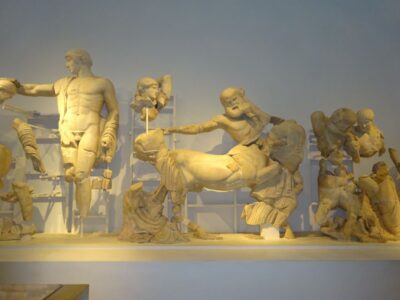
4-Day Tour of Mycenae, Epidaurus, Olympia, Delphi & Meteora
Read our review →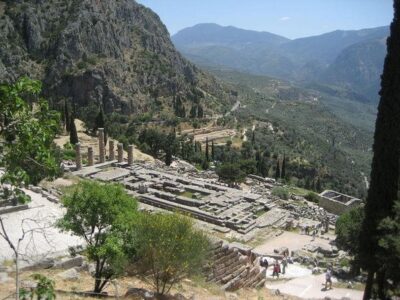
4-Day Greece Highlights Tour: Epidaurus, Mycenae, Olympia, Delphi and Meteora
Read our review →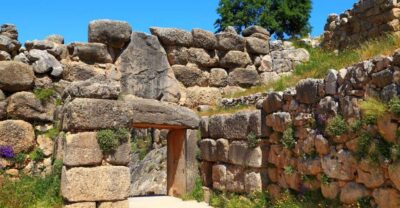
4day Spanish tour in Epidaurus Mycenae Olympia Delphi and Meteora
Read our review →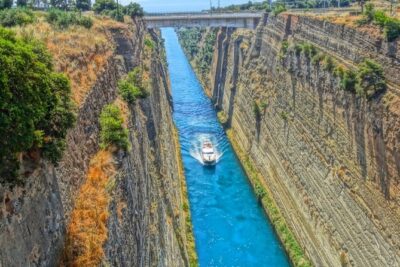
4 Day Private Tour, Mycenae, Nafplio, Olympia, Delphi, Meteora
Read our review →
BEST 4-Day CLASSICAL GREECE: Corinth Epidaurus Delphi Meteora
Read our review →Browse the lists this tour appears in