
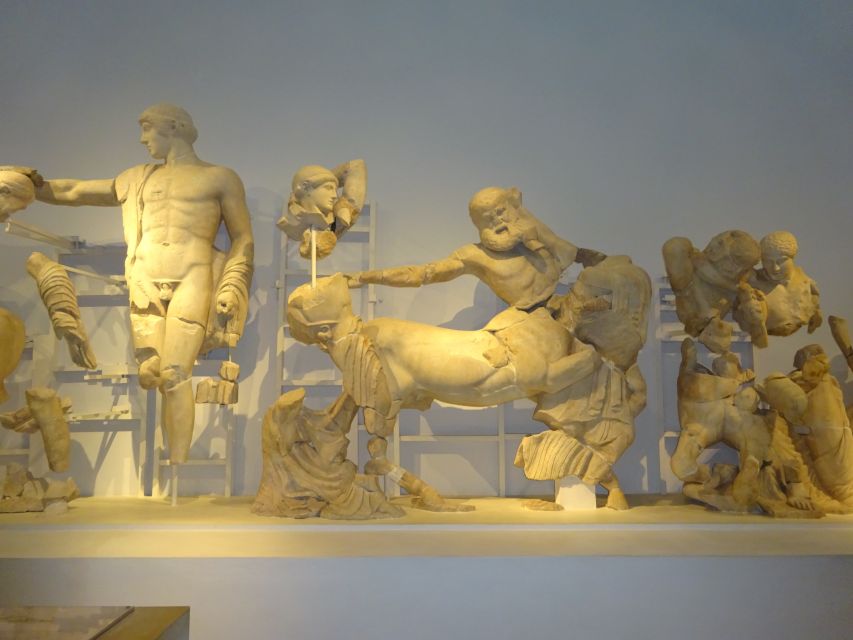
Reviewed · DELPHI TOURS
4-Day Tour of Mycenae, Epidaurus, Olympia, Delphi & Meteora
The most remarkable thing about this four-day circuit is how much of mainland Greece it covers. You move from the Bronze Age ruins of Mycenae to the Olympic birthplace, Apollo’s oracle at Delphi, and the cliff-top monasteries of Meteora, with the Corinth Canal and Thermopylae added along the way. I like the strong historical arc, and I like that entrance fees, hotels, breakfasts, and dinners are bundled together. The tradeoff is clear: this is a fast-moving tour with several long bus rides, not a slow village-to-village holiday.
I especially like the way a good guide can bring the myths and monuments to life during the drive. Guides such as Eustasis, Xenia, Rose, Joy, and Christina have been singled out for vivid storytelling and strong command of Greek history and religion. Just prepare for walking on uneven ground, winding roads, group sizes that can reach about 60 people, and set meals that are practical rather than memorable.
In This Review
- Key points at a glance
- Is this the right way to see ancient Greece?
- Day one: Corinth Canal, Mycenae, Epidaurus, and Nafplio
- Day two: Olympia and the bridge to Delphi
- Day three: Delphi, Apollo, and the road to Kalabaka
- Day four: Meteora monasteries and Thermopylae
- Hotels, meals, and the coach
- Group size, guide quality, and daily pace
- What to pack and who should skip it
- What the $747 price really buys you
- Should you book this four-day Greek history tour?
- FAQ
- What does the tour price include?
- Are lunches included?
- Where does the tour depart from?
- Which languages are available?
- What should I wear at the Meteora monasteries?
- How much luggage can I bring?
- Is the tour suitable for wheelchair users?
Key points at a glance
- Five major ancient sites in four days: Mycenae, Epidaurus, Olympia, Delphi, and Meteora form the backbone of the trip.
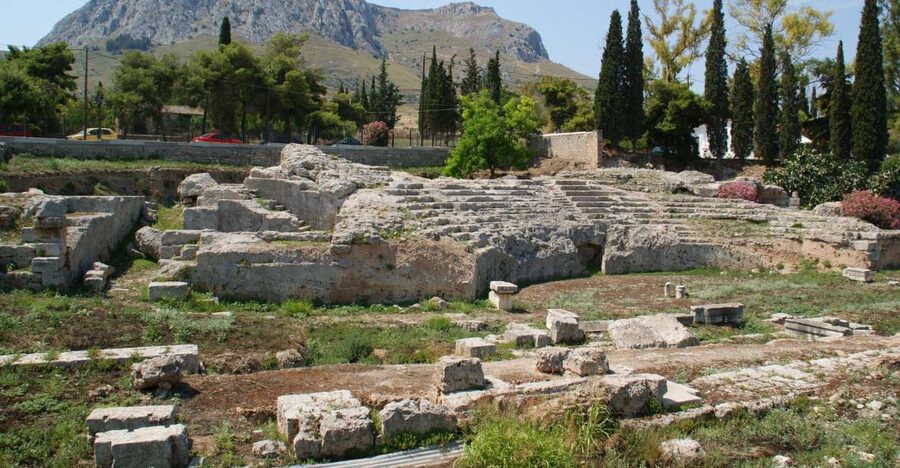
- The Corinth Canal is a quick but worthwhile stop: You get a sharp view into the narrow waterway linking the Gulf of Corinth with the Saronic Gulf.
- Delphi includes its excellent museum: The bronze Charioteer of Delphi is one of the tour’s finest individual treasures.
- Meteora is the visual high point: You visit two monasteries in a dramatic rock setting, with a strict dress code.
- The price covers the costly basics: At $747 per person, three nights in 4-star hotels, half-board meals, transport, guides, and admission fees are included.
- The pace suits limited time: You see a great deal without arranging several separate hotels, tickets, and intercity connections.
Is this the right way to see ancient Greece?
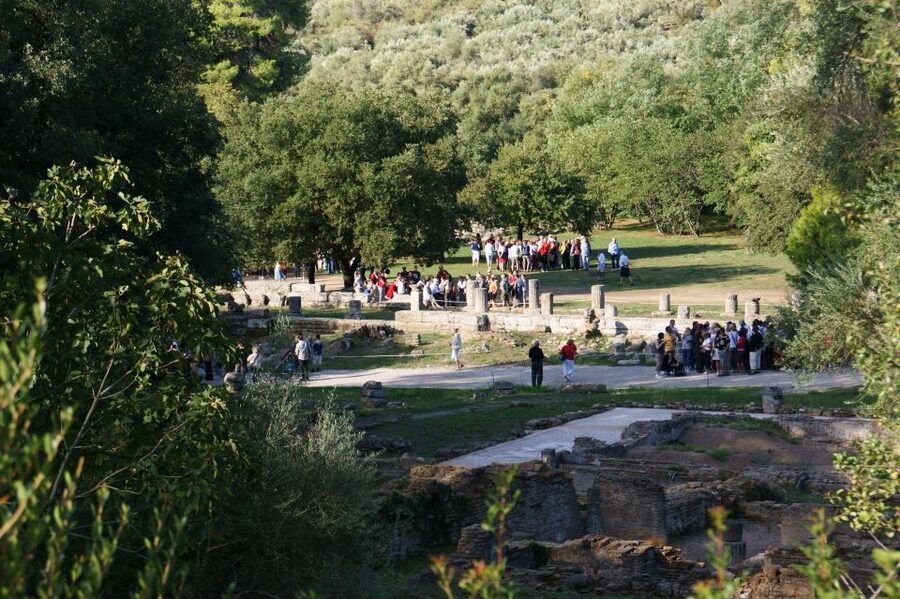
I would choose this tour if I had four spare days in Athens and wanted to see the major mainland sites without renting a car. Greece’s famous ruins are spread across a wide area, and connecting them by public transport takes planning. Here, one air-conditioned coach, one driver, and one guide handle the complicated part.
The route also gives you more than a string of isolated ruins. Mycenae introduces the heroic Bronze Age world linked with Agamemnon. Epidaurus shows the polish of classical Greek architecture and theater. Olympia connects sport with worship, Delphi brings in prophecy and sacred myth, and Meteora shifts the story into the world of Greek Orthodox monasticism.
The cost is reasonable for what is included. You receive three nights in 4-star hotels, breakfast and dinner, attraction tickets, a licensed guide, coach transport, headphones at the sites, and Wi-Fi on the coach and at the hotels. Lunches, drinks, and a €10 environmental fee per room per night are extra. The biggest value is time: you avoid figuring out how to reach remote archaeological sites yourself.
The main caution is stamina. Day two includes a long transfer after Olympia, day three involves the journey from Delphi to Kalabaka, and day four returns to Athens after Meteora and Thermopylae. Several drives last around four hours, and Greek roads can be winding. You should be comfortable with a full sightseeing day followed by a coach ride.
More Delphi day trips:
- Athens: Mythology of Delphi, Museum and Arachova Guided Tour
★ 4.6 · 4,008 reviews - From Athens: Delphi Full Day V.R. Audio Guided Tour
★ 4.6 · 3,028 reviews - From Athens: Small-Group Delphi, Museum & Arachova Day Trip
★ 4.8 · 2,476 reviews
Day one: Corinth Canal, Mycenae, Epidaurus, and Nafplio
The tour departs from central Athens at about 8:30 a.m., with hotel pickups beginning earlier, from 7:30 to 8:15. The main departure point is Hotel Amalia Athens near Syntagma Square. If you are using the pickup service, check that your hotel is on the selected list and has bus access.
The first stop is the Corinth Canal, usually a short photo break. Do not expect a long visit, but the view is impressive. The canal cuts through a narrow strip of land, and the steep sides make its scale easier to appreciate from above.
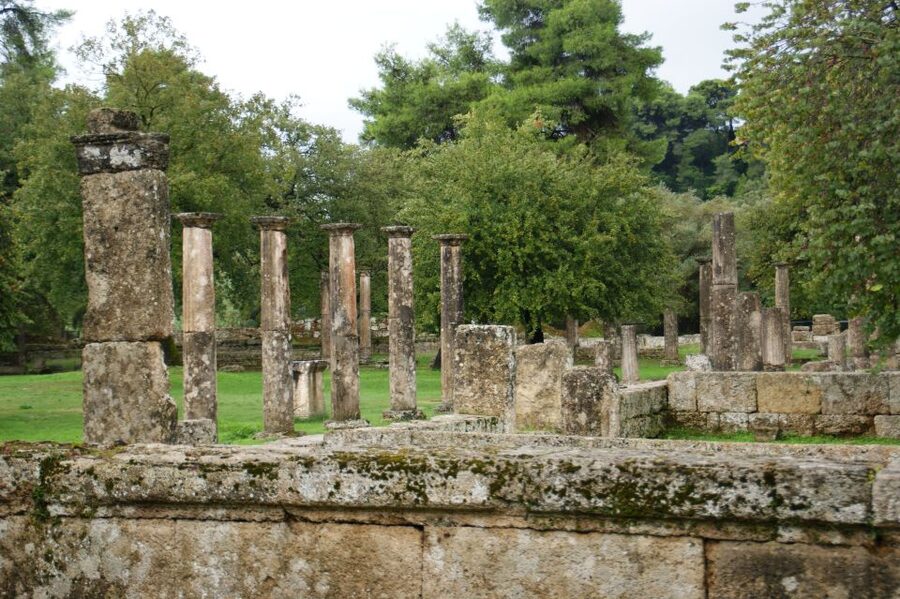
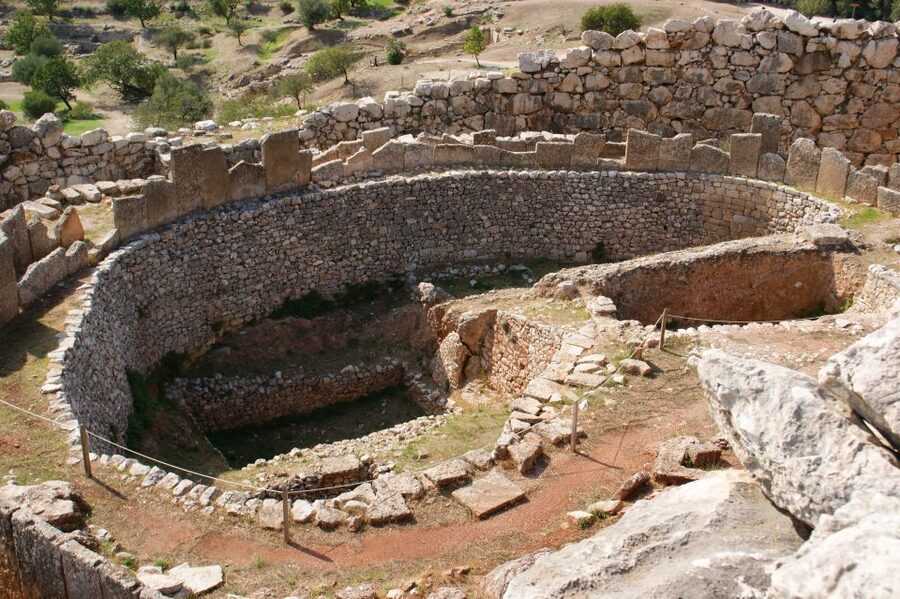
Mycenae is the first major archaeological visit. This was the center of the Mycenaean world, the Bronze Age culture later remembered through Homer’s stories of Agamemnon and the Trojan War. The site is known for its massive stone gateways, fortified walls, and royal tombs. The ancient name often translated as Mycenae, rich in gold, points to the wealth found in its burial chambers.
You receive about an hour of guided sightseeing, followed by free time for lunch at your own expense. The ruins sit in open country, so bring a hat, water for the walk, and shoes with a firm sole. The stones can be uneven, and there is little reason to wear anything delicate or slippery.
Epidaurus offers a different kind of ancient Greek experience. Its theater is famous for its acoustics and remains remarkably well preserved. Your guide explains how the theater fitted into the wider sanctuary, where healing and worship were closely linked. The semicircular seating, stone steps, and open stage make the design easy to understand even if you are not an architecture enthusiast.
The day ends with a stop in Nafplio, Greece’s first capital after independence in 1829. The schedule allows free time, though it may not be enough for a full exploration of the town. I would use it for a short walk, a coffee, or a quick look at the waterfront rather than trying to pack in every sight.
Your first overnight is generally described as being in Nafplio, though the accommodation may sometimes be arranged in Olympia. That detail matters, since it can change the feel of the first evening and the length of the next day’s drive. Ask for the confirmed hotel location when you book.
Day two: Olympia and the bridge to Delphi
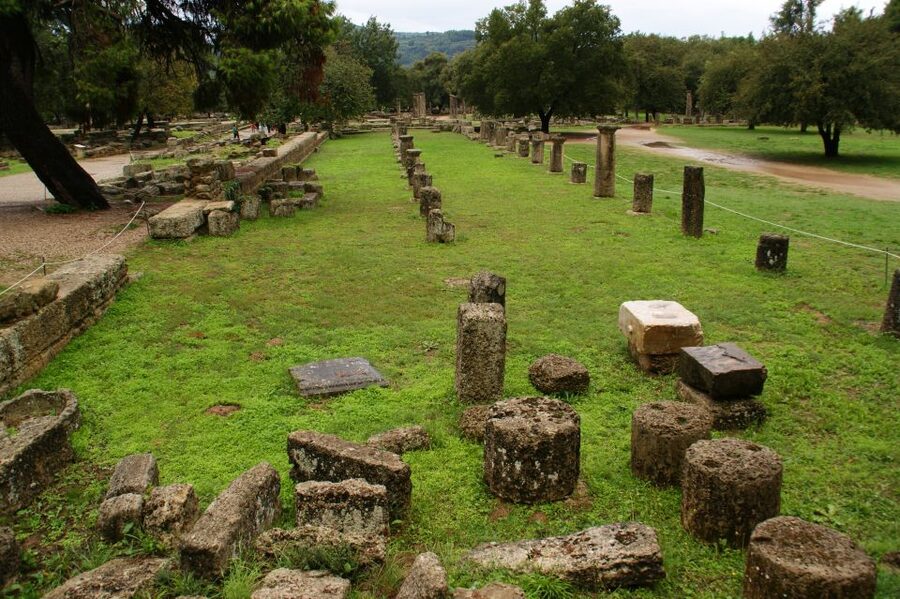
Olympia is one of the tour’s essential stops. It was not simply an athletic venue. The sanctuary honored Zeus and became a major religious center, while the Olympic Games brought Greek communities together every four years.
At the archaeological site, you see the remains of temples, training areas, and sporting facilities, including the ancient stadium. The museum adds valuable context, since columns and foundations alone can leave you guessing about the original appearance of the sanctuary. A guided visit helps connect the scattered stones to the ceremonies, athletes, and religious life that once filled the area.
After Olympia, the coach travels through Patras toward Rio and crosses the modern suspension bridge to Antirrio. This is an enjoyable change of scale after the ruins. The bridge is a major piece of modern engineering, and the crossing gives you broad views across the Gulf of Corinth.
The route passes through Nafpaktos before continuing to Delphi. Much of this day is spent on the road, but the guide usually provides historical context about the places you pass. That makes a difference. A long transfer is easier to appreciate when it is treated as part of the trip rather than dead time.
Dinner and the overnight stay are in the Delphi area. Because the tour uses half-board arrangements, you do not need to find a restaurant after a tiring day. The meals are generally buffet style. Breakfasts are often the stronger part of the package, while evening meals can be repetitive or plain. If food is important to you, plan to buy lunch independently when the schedule allows and consider treating dinner as simple fuel.
Day three: Delphi, Apollo, and the road to Kalabaka
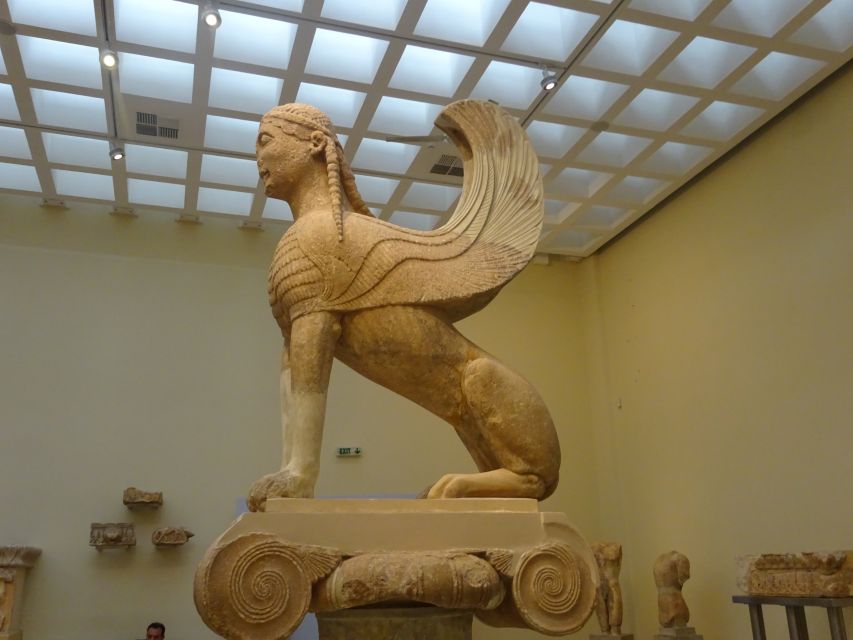
Delphi is perhaps the most layered stop on the tour. Ancient Greeks regarded it as the center of the world, and the sanctuary drew visitors seeking advice from Apollo’s oracle. Political leaders, athletes, and ordinary worshippers all came to this mountain site, where religious authority and Greek identity met.
The archaeological site climbs along the lower slopes of Mount Parnassos. You will walk uphill over stone paths, so comfortable shoes are essential. The views help explain why Delphi felt separate from ordinary life, but the site is not easy for anyone with serious mobility limits.
The museum is a major reason to value this stop. Its collection includes the bronze Charioteer of Delphi, dedicated to Apollo after a victory in the chariot race at the Pythian Games in 478 BC. The statue’s calm expression and careful detail provide a more personal connection to the ancient world than a broken wall usually can.
This is where the guide’s skill matters most. The sanctuary involves mythology, politics, religion, and athletic competition, and a strong storyteller can give those pieces a clear shape. Several guides on this route, including Xenia, Joy, Rose, Evi, and Eustasis, have been praised for making those subjects understandable and engaging. You also have some freedom to explore on your own after the guided explanation.
The coach then heads north to Kalabaka, the base town for Meteora. This is another long transfer, roughly four hours. The scenery changes as you leave the Delphi region, but the ride can feel tiring after a morning on foot. Keep a small bag beside you with water, medication, a light layer, and anything you need during the drive.
More Meteora trips from Athens:
- Athens: Meteora Monasteries Day Trip with Caves and Lunch
★ 4.7 · 2,964 reviews - Athens: Meteora Monasteries Day Tour with Lunch
★ 4.8 · 2,196 reviews - Athens: Meteora Tour with Local Guide and Greek Lunch
★ 4.8 · 1,561 reviews - Athens: Meteora Monasteries, Caves & Coastal Stopovers with Lunch
★ 4.5 · 1,432 reviews
Day four: Meteora monasteries and Thermopylae
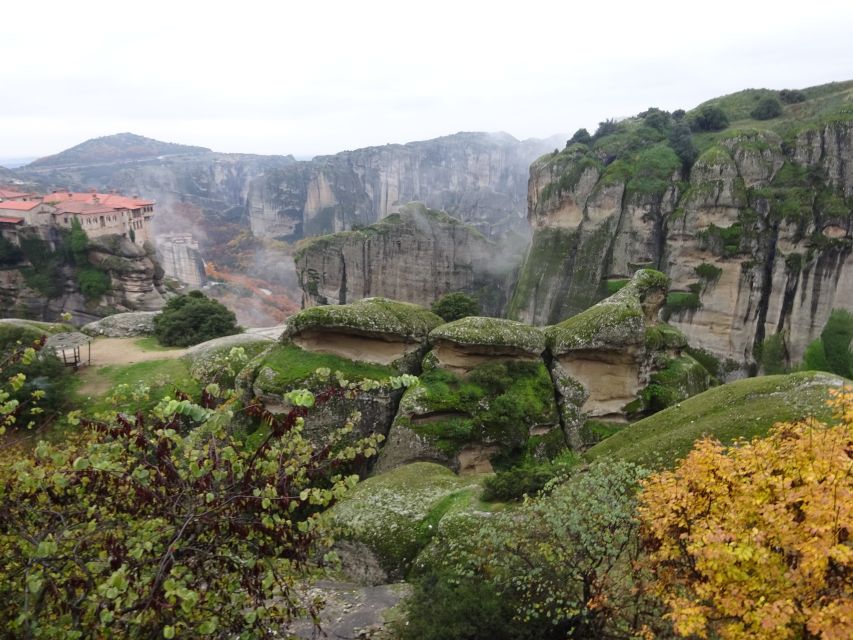
Meteora is the tour’s most unusual setting. Tall rock pillars rise above the plain, carrying monasteries that seem almost out of reach. The name means suspended in air, and it fits the place well.
The wider Meteora complex once included 24 monasteries. Monks used nets and retractable wooden ladders to reach the isolated communities and descend to the valleys for farming. Today, roads and steps make access easier, but the setting still gives you a strong sense of separation from the world below.
The tour visits two monasteries. Exact monastery choices can depend on opening schedules, but you should expect steps, uneven surfaces, and an active religious site rather than a museum built only for sightseeing. At Meteora, men must wear long trousers. Women need a long skirt or a dress covering the knees. Pack suitable clothing instead of hoping to borrow something at the entrance.
Meteora is also the most important reason to accept the long drives. The monasteries offer a type of scenery and religious architecture you will not find at Mycenae, Olympia, or Delphi. The tour does not treat ancient Greece as the whole story. It shows how Greece’s cultural life continued through Orthodox Christianity and medieval monastic communities.
The return to Athens includes a photo stop at Thermopylae, the pass associated with the battle of 480 BC. This is a brief stop, not a full archaeological visit. It works best as a final historical marker before the coach continues to Athens, arriving at about 7 p.m.
Hotels, meals, and the coach
The package includes three nights in 4-star hotels, with rates based on a double or triple room. A solo participant receives a private single room. Hotel quality can vary, despite the advertised category, and the first overnight may shift between Nafplio and Olympia.
The rooms are intended to make the route comfortable, not to provide a resort holiday. Several stays are in Amalia hotels or similar 4-star properties. Breakfast and dinner are included, which saves time and keeps the evening simple. The food is usually plentiful, but you may find the buffet menus similar from night to night. Lunch is not included, giving you some control over what you eat during the day.
The air-conditioned coach is one of the tour’s strengths. It includes Wi-Fi, and headphones are provided during visits. A good driver also matters on roads that curve through mountain regions. Drivers such as George, Nick, Vassilis, and Stamatis have been praised for smooth, safe driving, but no coach can remove the fatigue of a four-hour transfer.
You may bring one medium suitcase and one small carry-on bag. Oversize luggage is not allowed, so pack with restraint. Keep your day items easy to reach, since the coach becomes your base between sites.
Group size, guide quality, and daily pace
The guide can make or break a history-heavy tour. The best guides on this route combine facts with myths, local traditions, and clear explanations of what you are seeing. You may hear stories about Agamemnon, Apollo, Zeus, and Orthodox monastic life in the same four days, so a guide who can keep the connections clear is a major advantage.
Do not assume the group will be small. One departure had around 60 people, while some earlier departures were closer to 20. A large group can mean slower movement at entrances and more difficulty hearing, even with headphones. It can also lower the personal feel of the experience. The 4.8 rating from 168 reviews reflects strong overall satisfaction, but group size remains a practical point to confirm before booking.
The schedule is busy but not reckless. You normally receive guided time at the main sites and some free time for lunch or a short town stop. Nafplio is the place most likely to leave you wishing for more time. If independent wandering is your top priority, a private or slower itinerary would suit you better.
What to pack and who should skip it
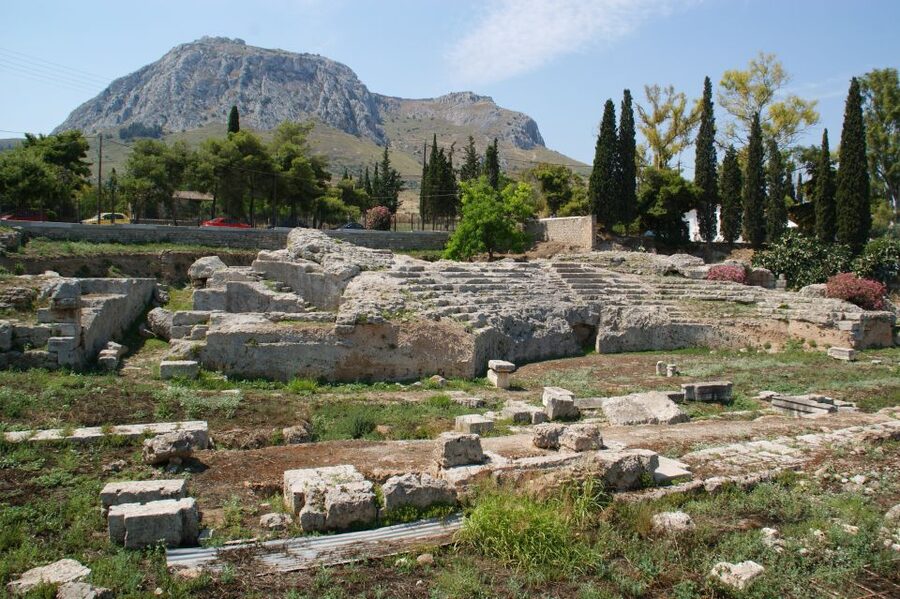
Bring comfortable walking shoes, a sun hat, sunscreen, and a long-sleeved shirt for sun protection. Long trousers are useful for men at Meteora, and women should pack a knee-covering skirt or dress.
The tour is not suitable for wheelchair users, people using mobility scooters, or anyone with major mobility impairments. It is also a poor fit if you suffer badly from motion sickness, since the roads can be winding. The operator advises against participation for people with colds and those over 80, which reflects the pace and physical demands of the route.
Children and students up to age 18 need a valid passport or identity card to receive discounted admission. Without the correct document, you may have to pay the site and museum entrance fees again.
What the $747 price really buys you
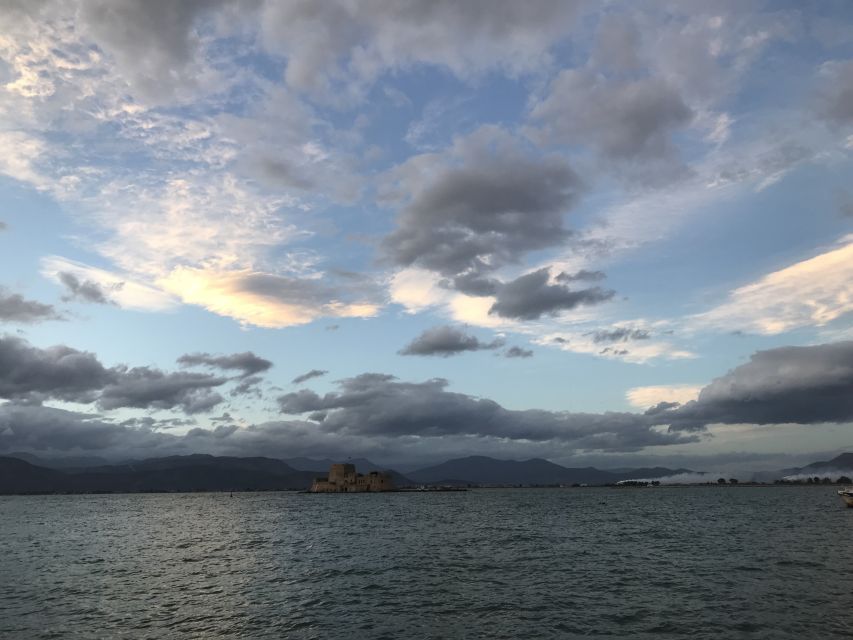
At $747 per person, this is not a bargain-basement bus trip, but the package carries useful value. Three hotel nights, six included meals, all listed entry fees, a licensed guide, a driver, coach transport, and hotel pickup from selected central Athens hotels would be expensive and time-consuming to arrange separately.
You are paying for efficiency as much as comfort. In four days, you reach places that are spread across the Peloponnese and central Greece, while avoiding car rental, route planning, and ticket queues. The price is strongest for a first visit or a short stay.
The value is weaker if you prefer restaurant meals, boutique hotels, long visits in small towns, or time alone at each ruin. Lunch and drinks cost extra, the €10 environmental fee per room per night is paid at the hotel, and the included dinners may feel basic. Still, for a broad introduction to mainland Greece, the numbers are fair.
Cancellation is free up to 24 hours before departure, and you can reserve now and pay later. The tour runs in English and French, with Monday departures operating in both languages.
Should you book this four-day Greek history tour?
I would book it if you want the major mainland sights in a short window and prefer a guide-led trip to independent driving. The strongest parts are Delphi, Olympia, and Meteora, while Mycenae and Epidaurus provide essential context for Greece’s earlier periods. The combination gives you a much fuller picture than an Athens-only visit.
I would not book it if long coach rides, set meals, uneven paths, or a potentially large group sound frustrating. You should also confirm the first-night hotel location and pickup point before paying.
For an efficient first sweep of ancient Greece, this tour earns its place. Pack light, wear serious shoes, bring proper clothing for Meteora, and treat the bus time as part of the route. You will return to Athens tired, but with a useful map of Greek history in your head.
FAQ
What does the tour price include?
The $747 price includes air-conditioned coach transport, an experienced driver, a licensed guide, attraction and museum entry fees, three nights in 4-star hotels, breakfast and dinner, Wi-Fi on the coach and at the hotels, and pickup from selected central Athens hotels with bus access.
Are lunches included?
No. Lunches and drinks are not included. You receive free time for lunch during parts of the route and pay for those meals yourself.
Where does the tour depart from?
The main departure point is Hotel Amalia Athens near Syntagma Square at about 8:30 a.m. Hotel pickup from selected locations begins between 7:30 and 8:15 a.m.
Which languages are available?
The tour is offered in English and French. On Mondays, it runs in both English and French.
What should I wear at the Meteora monasteries?
Men must wear long trousers. Women must wear a long skirt or a dress that covers the knees. Comfortable walking shoes are also important.
How much luggage can I bring?
Each participant may bring one medium-sized suitcase and one small carry-on bag. Oversize luggage is not allowed.
Is the tour suitable for wheelchair users?
No. The tour is not suitable for wheelchair users, people using mobility scooters, or people with mobility impairments. It is also not recommended for people with claustrophobia, motion sickness, colds, or those over 80 years old.
More Ancient Olympia trips
- 3-Day Classical Greece Tour: Epidaurus, Mycenae, Nafplion, Olympia, Delphi
★ 4.5 · 342 reviews - 4-Day Greece Highlights Tour: Epidaurus, Mycenae, Olympia, Delphi and Meteora
★ 5.0 · 79 reviews - Day tour to Ancient Olympia,Ancient Sparta Mycenae Including Meal
★ 5.0 · 54 reviews - Ancient Olympia full day private tour from Athens
★ 4.9 · 54 reviews
More Mycenae and Epidaurus days
- From Athens: Mycenae, Epidaurus & Nafplio Full Day Trip
★ 4.8 · 2,438 reviews - From Athens: Mycenae, Epidaurus & Nafplio Full-Day Tour
★ 4.5 · 1,580 reviews - 4-Day Classical Greece Tour: Epidaurus, Mycenae, Olympia, Delphi, Meteora
★ 4.5 · 732 reviews - Athens: Ancient Corinth & Nafplio Full Day Trip with Swim
★ 4.8 · 523 reviews
Freshly added Athens trips
- Athens and Ancient Corinth Private from Athens★ 5.0 · 3 reviews
- From Athens: Mycenae and Epidaurus Private Tour★ 4.8 · 3 reviews
- Full day Meteora private tour★ 5.0 · 3 reviews
- Double Shore Dive (certified divers)★ 4.5 · 3 reviews
- Sunset & swimming at Cape Sounio, Poseidon temple★ 5.0 · 3 reviews
- Philosophy Experience at Plato’s Academy Park – basic version★ 5.0 · 3 reviews
- Athens Hills: Mythology Treasure Hunt★ 5.0 · 3 reviews
- Private Acropolis Tour – Ticket Included★ 5.0 · 3 reviews
Delphi Tours, compared.

Mythology of Delphi, Museum and Arachova Guided Tour
Read our review →
Small-Group Delphi, Museum & Arachova Day Trip
Read our review →
Delphi English Day Trip from Athens with Official Guide
Read our review →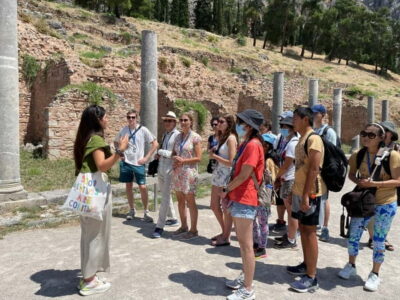
Delphi Guided Trip with Optional Lunch and Entry
Read our review →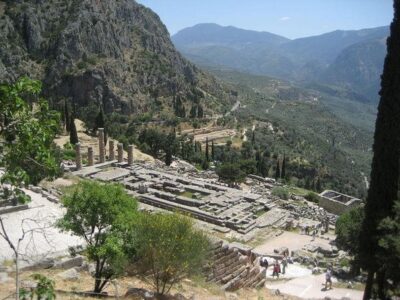
Historical Delphi One Day Tour with Arachova Stop & Expert Guide
Read our review →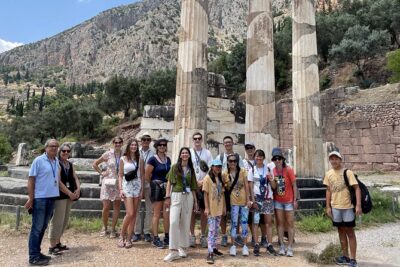
Premium Delphi Day Trip with an Expert Guide, Museum & Lunch
Read our review →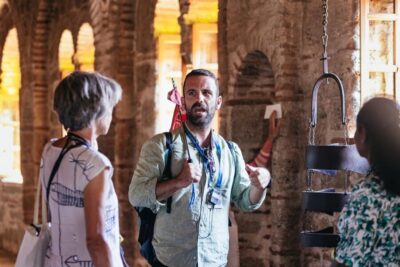
Browse the lists this tour appears in