
Reviewed · 4-DAY EXPERIENCES
From Athens: Explore Ancient Greece 4-Day Tour
The most remarkable part of this four-day tour is its range. In one trip, you move from the perfect acoustics of Epidaurus to the tomb of Agamemnon, the birthplace of the Olympic Games, the sacred slopes of Delphi, and the cliff-top monasteries of Meteora. Few Greek tours pack so much ancient drama into such a short route.
I like the included dinners and breakfasts, which make a busy trip easier to manage, and I like having a guide explain the myths, ruins, and customs as you go. Guides such as Panaiota, Dozia, Christina Stamou, Sofia, Stavros, and Angela have led departures, while careful drivers and comfortable buses add real value. The tradeoff is clear: you cover a huge amount of ground, so some sites may feel rushed, and the bus ride on certain days is long.
In This Review
- Key points to know before booking
- Why this route works so well in four days
- Day 1: Epidaurus, Nafplio, and the tomb of Agamemnon
- Day 2: Olympia, the Olympic flame, and the road to Delphi
- Day 3: Delphi and the mountain road to Kalambaka
- Day 4: Meteora monasteries and the return to Athens
- Guides, buses, hotels, and meals
- Is $742 a fair price?
- Who should book this four-day Greece tour?
- Should you book it?
- FAQ
- How long is the Ancient Greece tour from Athens?
- What sites are included?
- Are hotels included?
- Are meals included?
- Are entrance fees included?
- Which languages are available?
- Is Athens hotel pickup available?
- What should I wear at Meteora?
- Is the tour suitable for wheelchair users?
Key points to know before booking
- Six major ancient sites in four days: Visit Epidaurus, Mycenae, Olympia, Delphi, and Meteora, with stops in Nafplio and Arachova.
- Meals are partly covered: Breakfast and dinner are included, while lunch, drinks, and personal expenses are extra.
- Strong guide element: English and Spanish commentary brings mythology, archaeology, and Greek culture to life.
- Comfortable road travel: The air-conditioned luxury bus includes chargers, according to recent departures, and the journey uses lower-carbon practices.
- Meteora requires modest clothing: Short skirts are not allowed, and long sleeves are requested for female visitors entering the monasteries.
- The pace is active: This is best for people who want a broad look at ancient Greece rather than a slow stay in one town.
Why this route works so well in four days
At $742 per person, this is not a cheap bus outing, but it covers a lot: three nights in three-star or four-star hotels, entrance fees, a tour guide, bus transport, breakfast, and dinner. You are paying for the route, the planning, and the time saved by not arranging several difficult connections yourself.
The route also gives you a useful sense of Greece beyond Athens. The Peloponnese brings ancient palaces and athletic sanctuaries. Central Greece adds Delphi and Meteora, where religion takes over from royal power and sport. You see different eras and settings without having to repack every morning.
The main cost is time on the road. You are not simply walking from one monument to the next. Some days include several hours of driving through mountain country and along the coast. That travel time is part of the experience because the views are often striking, but it can limit the time available inside museums and archaeological grounds.
The bus helps. Recent departures have used comfortable, air-conditioned vehicles with phone chargers, and drivers such as Stelios, Evan, George, Leo, and Theo have been singled out for smooth, careful driving. Food and drink are not allowed on the buses, however, so plan your water and snack stops carefully. One visitor found this restriction difficult during long drives.
A few more Athens days worth a look
- 4-Day Classical Greece Tour: Epidaurus, Mycenae, Olympia, Delphi, Meteora
★ 4.5 · 732 reviews - 4-Day Tour of Mycenae, Epidaurus, Olympia, Delphi & Meteora
★ 4.8 · 168 reviews - 4-Day Greece Highlights Tour: Epidaurus, Mycenae, Olympia, Delphi and Meteora
★ 5.0 · 79 reviews
Day 1: Epidaurus, Nafplio, and the tomb of Agamemnon
Your first morning begins with a drive beside the Corinth Canal. It is a quick but useful introduction to the engineering and geography that separate mainland Greece from the Peloponnese.
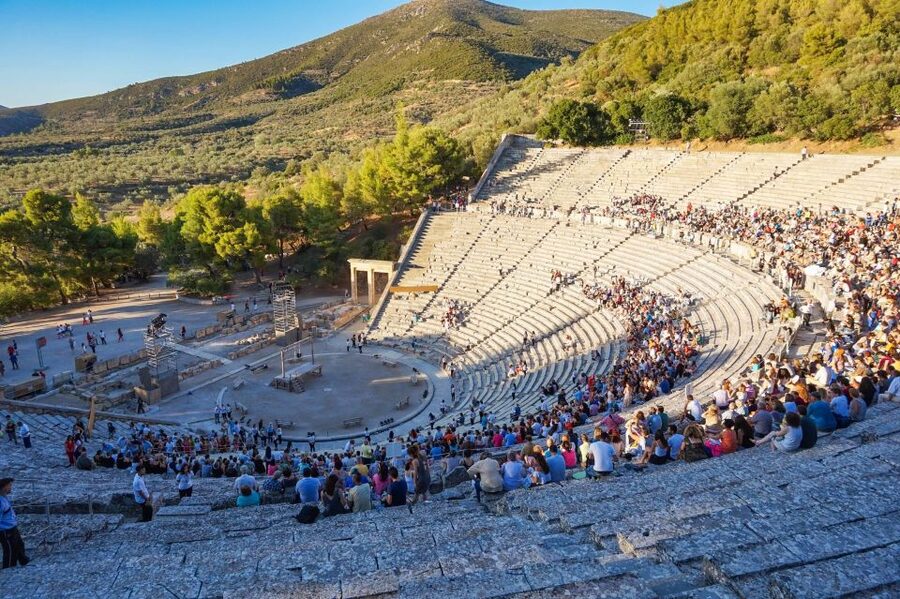
Epidaurus is the first major stop. The ancient theatre is famous for its symmetry and acoustics. Stand near the center and test your voice while someone else listens from the upper seats. This is one of those rare ancient monuments where a simple demonstration helps you understand the place better than a long explanation.
The site is also linked with Asclepius, the son of Apollo and a figure associated with healing. Your guide can help connect the theatre to the wider sanctuary, rather than treating it as an isolated photo stop. Give yourself time to look beyond the stage and seating, since the setting helps explain why people came here for both worship and treatment.
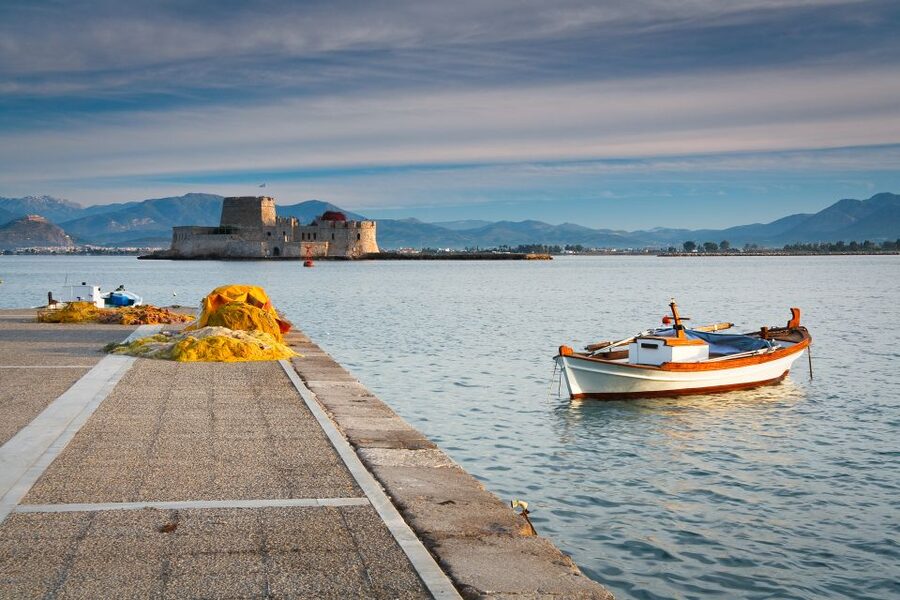
Next comes Nafplio, a seaport town in the Peloponnese. The stop is short, so think of it as a chance to stretch your legs, see a different side of the region, and get a glimpse of Greek town life between archaeological sites. Do not expect a long independent visit.
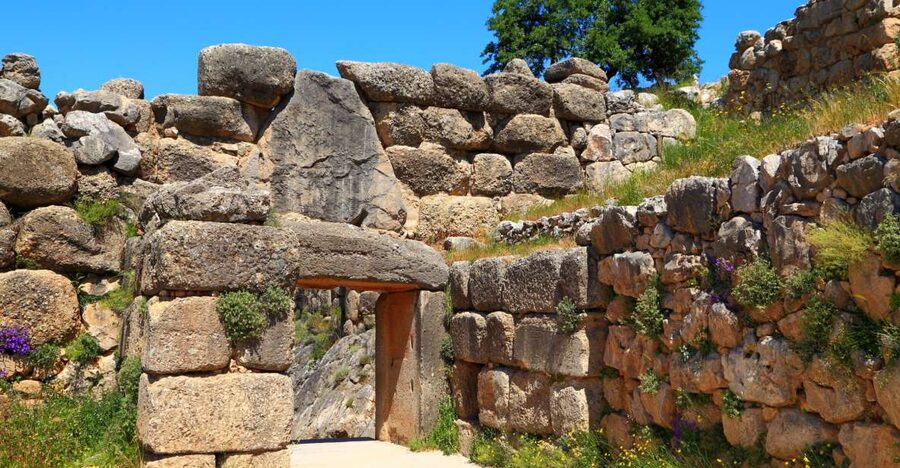
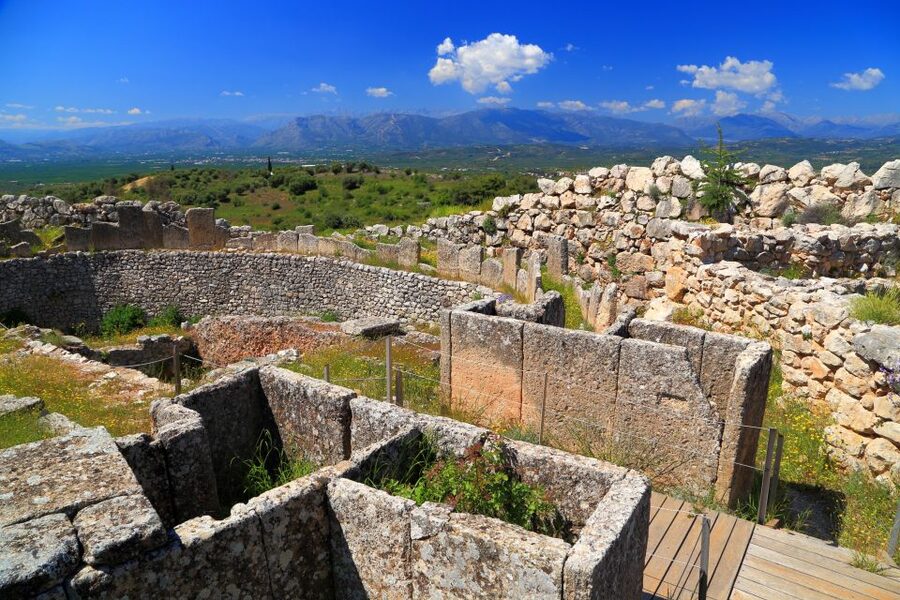
The route then crosses the plain of Argos toward Mycenae. This is one of the most atmospheric stops on the trip. Mycenae was a major center of early Greek civilization, and its position above the plain gives the ruins a powerful sense of place.
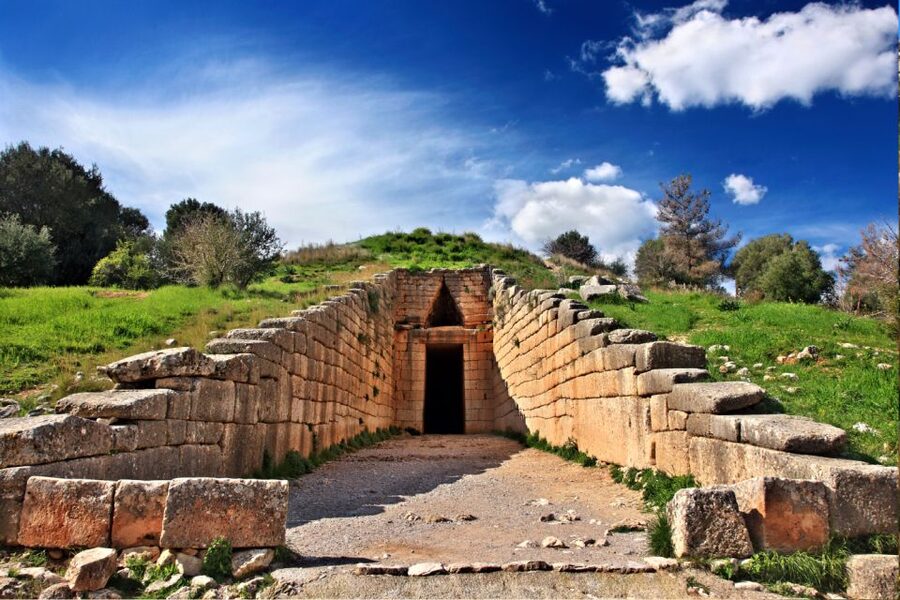
The Tomb of Agamemnon is the famous highlight, though the site offers more than one dramatic structure. Walk through the monumental Lion Gate and picture the fortified palace that once controlled the hill. The story of Agamemnon belongs partly to myth, so a good guide matters here. Sofia, Angela, Christina Stamou, and other guides have been praised for making these links between archaeology, literature, and legend easy to follow.
After Mycenae, you continue toward your overnight stop. The schedule is full, but the order makes sense: theatre, coastal town, Bronze Age citadel, then a longer evening transfer. Hotel locations can vary by selected package and departure, with stays mentioned in places such as Olympia, Lagadia, or Itea.
Day 2: Olympia, the Olympic flame, and the road to Delphi
Olympia is more than an ancient sports ground. It was a sacred center dedicated to Zeus, and the ruins include temples, athletic facilities, and the altar connected with the Olympic flame.
The Temple of Hera and Temple of Zeus help you picture the religious side of the site. The altar is especially useful for understanding that the ancient games were not simply an early version of a modern sporting event. Athletic contests, public honor, worship, and sacrifice were tied together.
You also visit the archaeological museum. This matters because the open-air ruins can be difficult to read without help. Sculptures and objects in the museum give you a clearer idea of the art and ceremonial life associated with the sanctuary.
Try to imagine yourself as an ancient competitor as you walk through the stadium. You will not get a full day here, and the itinerary has a lot still ahead, but the combination of ruins, museum, and stadium creates one of the trip’s strongest historical stops.
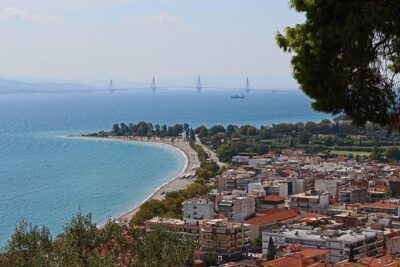
The afternoon route takes you through Patras and across the Rio-Antirrio Bridge. This modern bridge is a welcome change after a morning among ancient stones. You then pass Nafpaktos and follow the coastal road toward Delphi. The views are a major part of this section, so a window seat is worth having if you can choose one.
The day ends near Delphi, with an overnight stay in the area. Some departures have used hotels in Itea, giving you a coastal base rather than a room directly beside the sanctuary. The hotels are generally described as pleasant, with some offering attractive views and evening meals.
Day 3: Delphi and the mountain road to Kalambaka
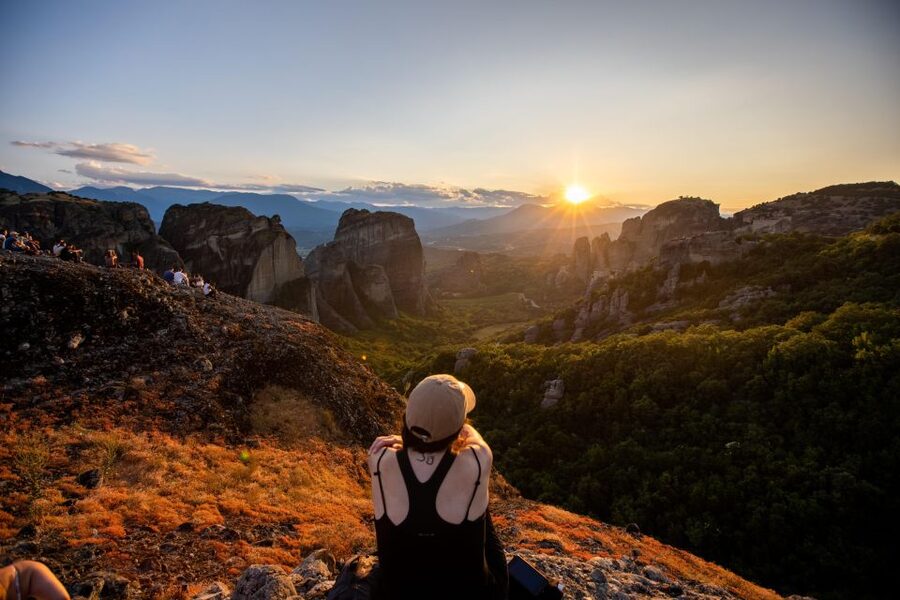
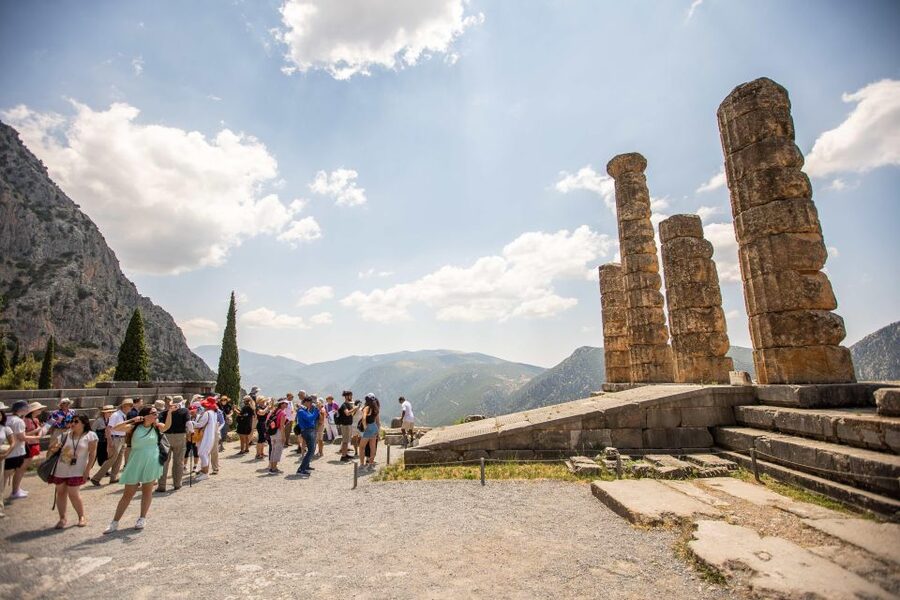
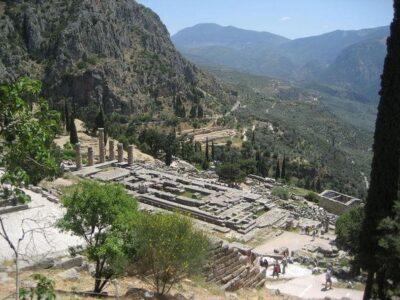
Delphi was known to the ancient Greeks as the center, or navel, of the world. That idea makes sense once you see the sanctuary climbing the mountainside above the valley.
The morning is devoted to Delphi, where temples, treasuries, and the famous theater are arranged along the Sacred Way. The uphill paths and uneven surfaces require comfortable shoes. This is not a good day for flimsy sandals or anyone who needs step-free access.
Your guide is particularly important at Delphi because the remains are beautiful but incomplete. A guide can point out how the sanctuary was organized and use images to show what missing buildings and sculptures may have looked like. Angela, an archaeologist who has led the tour, has used pictures to help visitors connect surviving stones with the original site.
The setting is as important as the ruins. Delphi looks across a wide mountain valley, and the combination of height, light, and ancient religious buildings explains its lasting pull. Take a quiet moment here. The schedule allows a relaxed morning, which is welcome after the first two packed days.
In the afternoon, the coach heads toward Kalambaka. The route changes character again, moving into central Greece and toward the rock formations of Meteora. You spend the night in or near Kalambaka, with hotel options that can include three-star or four-star properties. A recent departure used a three-star selection and found the hotels pleasant, with some pools and good views.
This is also where the trip’s pace may catch up with you. Delphi and Kalambaka are not close neighbors, and the transfer takes time. The payoff is waking near Meteora rather than trying to visit it as a rushed day trip from Athens.
Same city, a completely different century:
- Athens: Acropolis & up to 5 Archaeological Sites Combo Pass
★ 4.4 · 12,619 reviews - Athens: Acropolis Ticket with Optional Audio or Live Guide
★ 4.2 · 11,055 reviews - Athens: Acropolis, Parthenon & Acropolis Museum Guided Tour
★ 4.8 · 9,316 reviews - Athens: Cape Sounion & Poseidon Temple Sunset Half-Day Trip
★ 4.8 · 8,241 reviews
Day 4: Meteora monasteries and the return to Athens
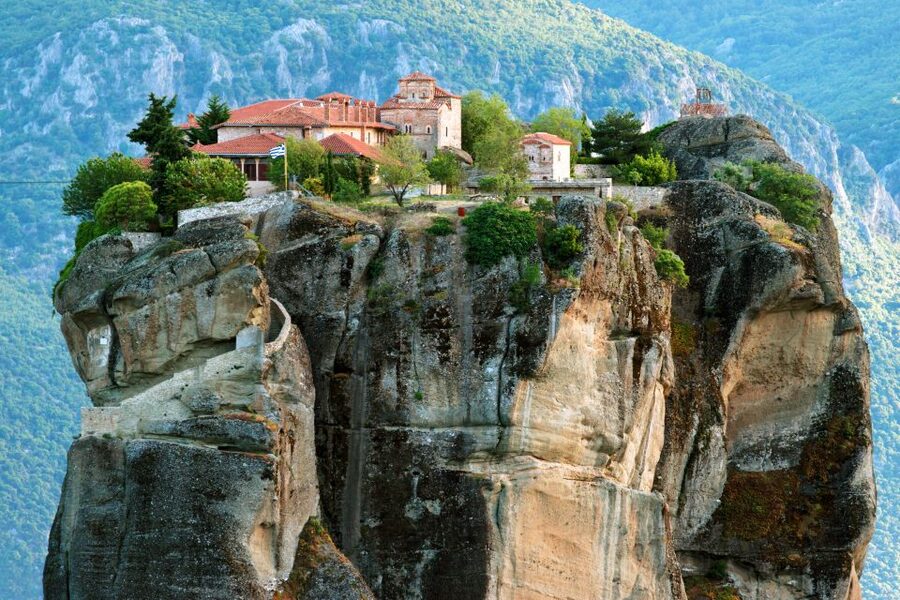
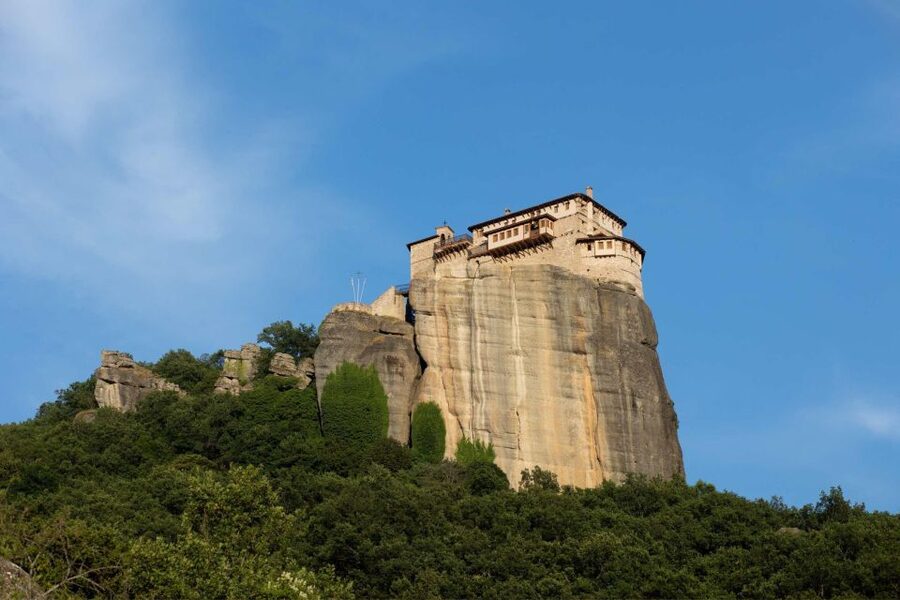
Meteora provides the tour’s most unusual scenery. Eastern Orthodox monasteries sit high on sandstone pillars above Kalambaka, reached by roads and steps that expose broad views of the surrounding country.
The monasteries are still religious places, not simply monuments. Dress accordingly. Shorts are not allowed on the tour, and women are asked to wear long-sleeved tops and avoid short skirts when entering. Modest clothing is the safest choice for everyone, since rules at religious sites can be applied strictly.
You may visit the most important monastery complex in Greece, but the exact experience depends on which buildings are open and how much time the group has. The schedule does not promise a long visit to every monastery. If you have already seen several Orthodox monasteries, you may find the interiors less varied than the dramatic rock setting outside.
The scenery is the real prize here. From the heights, you can see how the monasteries were placed for defense, solitude, and spiritual retreat. The climb and uneven access make Meteora unsuitable for wheelchair users and difficult for anyone with serious mobility limits.
On the way back to Athens, you may stop at a workshop or factory producing Byzantine-style icons. This is optional, so you can treat it as a brief cultural stop rather than a central part of the tour.
The final route passes the monument to Leonidas, the Spartan king associated with the Battle of Thermopylae. It is a fitting last look at the heroic stories that run through the entire journey. You return to Athens in the late afternoon, though exact timing depends on traffic and road conditions.
Guides, buses, hotels, and meals
The strongest part of this experience is the guide service. The best guides do more than recite dates. Dozia has been praised for clear explanations and interesting commentary between stops. Christina Stamou is known for maintaining a good pace, while Stavros has brought both ancient Greece and modern Greek identity into his talks. Panaiota has been described as calm, caring, and ready to help.
Your guide will vary, so do not book based on one person alone. Still, the pattern is clear: this tour works best when you want context, not just transport to ruins.
The luxury air-conditioned bus is a practical advantage. You spend many hours on the road, so climate control and comfortable seats matter. Chargers have been available on some buses. You should also expect a group that may change size during the trip. One departure began with a smaller group and became much larger for the Meteora portion, making it harder to hear and move around.
Hotel quality depends on your chosen three-star or four-star option. The three-star hotels have been described as clean, pleasant, and perfectly serviceable, while some locations offered pools or attractive views. Dinners are included and can be a welcome end to a long day. You pay separately for lunch, drinks, personal costs, and hotel tax.
The hotel tax is paid directly to the property. It is listed as €5 per room per night for three-star hotels and €10 per room per night for four-star hotels. Rooms are arranged as double or triple occupancy. A single room requires a separate booking for one person.
Is $742 a fair price?
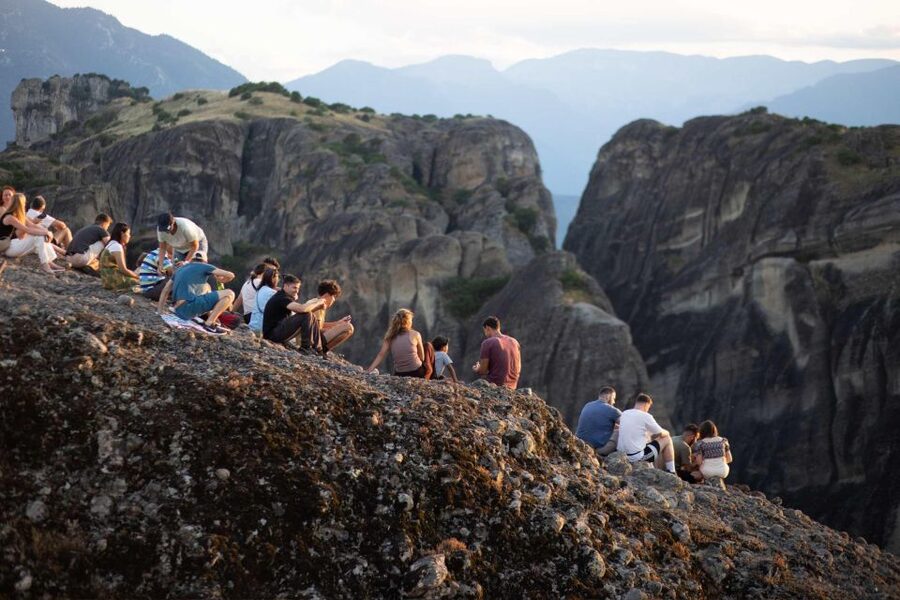
The value depends on how you would otherwise arrange the trip. If you rented a car, booked three nights in different towns, paid entry fees, planned meals, and organized a route between distant sites, the tour’s price could compare well. You also avoid navigating mountain roads and finding parking near major archaeological areas.
The price is less attractive if you prefer long, unstructured visits or already have transport and accommodation arranged. The tour gives you a strong overview, but you surrender some freedom. You cannot decide to stay an extra hour in Delphi or skip a stop because the coach timetable controls the day.
The included dinners and breakfasts improve the deal. One person booked without realizing meals were covered, which shows how easy it is to overlook this detail. Check the hotel category carefully, add the hotel tax, budget for lunches and drinks, and then compare the total with a self-drive plan.
Who should book this four-day Greece tour?
I would choose this tour if you have a serious interest in ancient Greece, Greek mythology, archaeology, or religious architecture. It is also a smart choice if you have only four days outside Athens and want to see the country’s major classical sites without managing the route yourself.
It suits adults and older children who can handle walking, steps, and long bus rides. The trip can work well for someone with a focused interest in mythology, as one family found when an autistic son with a special interest in ancient Greece absorbed the program fully. The guide’s explanations add much more than a basic sightseeing coach ride.
I would hesitate if you need a wheelchair, dislike fixed schedules, or want to spend most of your holiday relaxing. The bus cannot be used for eating or drinking, and the long transfers may test your patience. Meteora can also feel less rewarding if you have already visited many similar monasteries.
Free cancellation is available up to 24 hours before departure, and you can reserve now and pay later. Athens pickup is offered from most centrally located hotels, usually about an hour before departure. You can also meet at the supplier’s office 15 minutes before departure.
Should you book it?
Book this tour if your priority is maximum historical coverage with minimal planning. Epidaurus, Mycenae, Olympia, Delphi, and Meteora are not a neat little cluster, and this route handles the logistics in a sensible way.
Skip it if you want slow mornings, independent meals, or long stays at one site. For the right person, $742 buys a well-supported introduction to the Peloponnese and central Greece, with strong guiding, transport, rooms, and several meals included. The days are busy, but the memories are varied: a voice carrying across an ancient theatre, a Bronze Age gate above the Argos plain, an Olympic stadium, Delphi’s mountain sanctuary, and monasteries perched above Kalambaka.
FAQ
How long is the Ancient Greece tour from Athens?
The tour lasts four days and returns to Athens in the late afternoon of the fourth day.
What sites are included?
The route includes Epidaurus, Nafplio, Mycenae, Olympia, Delphi, Arachova, Meteora, and the monument to Leonidas. It also travels across the Corinth Canal area and the Rio-Antirrio Bridge.
Are hotels included?
Yes. Three-star or four-star hotel accommodation is included, depending on the option selected.
Are meals included?
Breakfast and dinner are included. Lunch, drinks, and personal expenses are not included.
Are entrance fees included?
Yes. Entrance fees are included in the tour price.
Which languages are available?
Live guiding is available in English and Spanish.
Is Athens hotel pickup available?
Complimentary pickup and drop-off are available from most centrally located Athens hotels. Pickup usually takes place about one hour before departure, or you can meet at the supplier’s office 15 minutes before departure.
What should I wear at Meteora?
Shorts are not allowed. Visitors entering the monasteries should wear appropriate clothing, with no short skirts and long-sleeved tops requested for female visitors.
Is the tour suitable for wheelchair users?
No. The tour is not suitable for wheelchair users, particularly because of the uneven and stepped access at archaeological sites and Meteora.
Freshly added Athens trips
- Athens and Ancient Corinth Private from Athens★ 5.0 · 3 reviews
- From Athens: Mycenae and Epidaurus Private Tour★ 4.8 · 3 reviews
- Full day Meteora private tour★ 5.0 · 3 reviews
- Double Shore Dive (certified divers)★ 4.5 · 3 reviews
- Athens Hills: Mythology Treasure Hunt★ 5.0 · 3 reviews
- Sunset & swimming at Cape Sounio, Poseidon temple★ 5.0 · 3 reviews
- Philosophy Experience at Plato’s Academy Park – basic version★ 5.0 · 3 reviews
- Private Acropolis Tour – Ticket Included★ 5.0 · 3 reviews
4-Day Experiences, compared.
4-Day Classical Greece Tour: Epidaurus, Mycenae, Olympia, Delphi, Meteora
Read our review →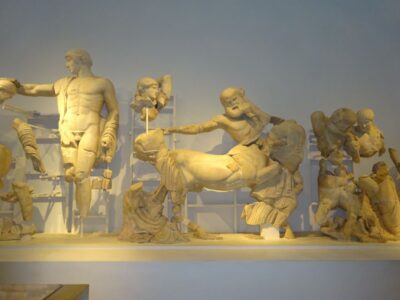
4-Day Tour of Mycenae, Epidaurus, Olympia, Delphi & Meteora
Read our review →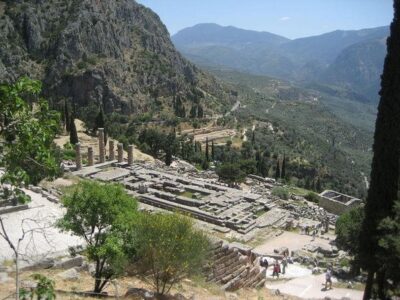
4-Day Greece Highlights Tour: Epidaurus, Mycenae, Olympia, Delphi and Meteora
Read our review →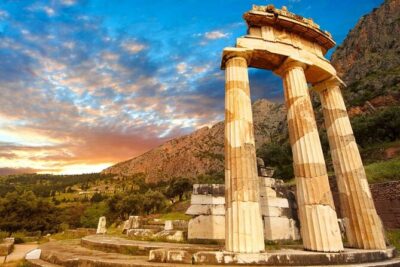
4day Spanish tour in Epidaurus Mycenae Olympia Delphi and Meteora
Read our review →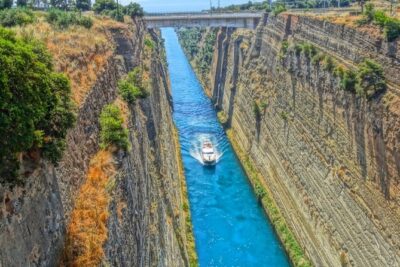
4 Day Private Tour, Mycenae, Nafplio, Olympia, Delphi, Meteora
Read our review →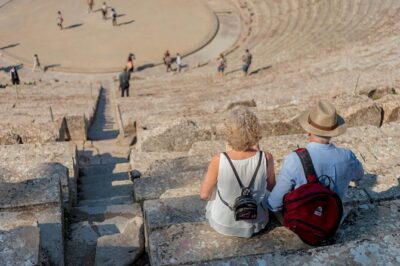
BEST 4-Day CLASSICAL GREECE: Corinth Epidaurus Delphi Meteora
Read our review →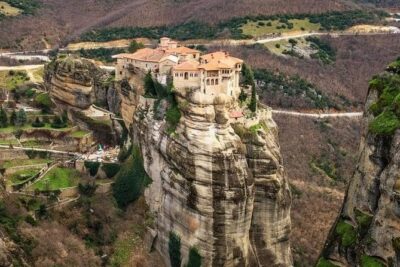
Indulge to the beauty of Greece with the 4 days Classical Greece private tour
Read our review →Browse the lists this tour appears in