
Reviewed · MUSEUMS
Hellenic Motor Museum Entrance Ticket
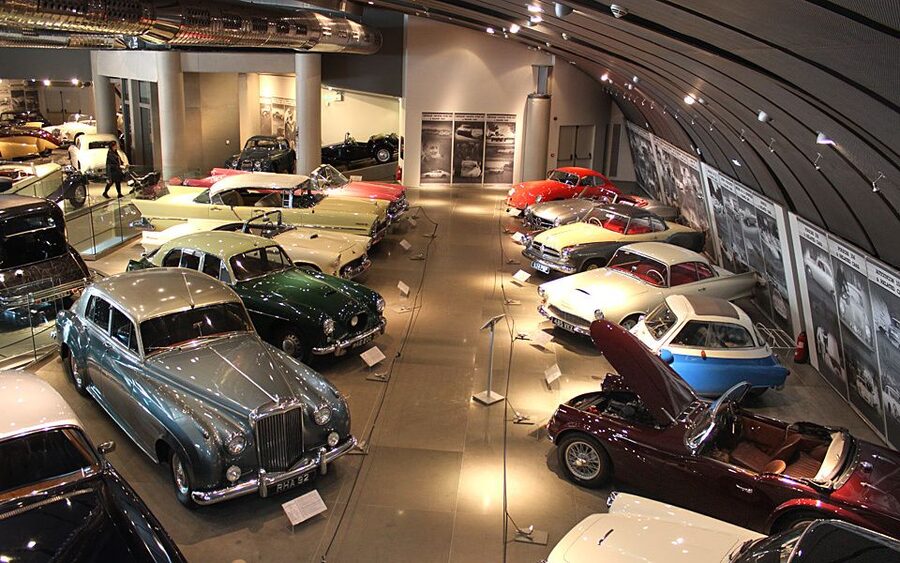
The Hellenic Motor Museum packs more than 110 cars into three floors above Capitol Mall in central Athens. You move from early motoring to famous 20th-century models, with a rotating collection that includes makes no longer in business. The wheel display, stretching from 300 B.C. to the end of the 20th century, gives the visit more depth than a simple row of polished cars.
I like the wide sweep of the collection, and I like the old car workshop, which adds tools, fittings, and atmosphere to the display. At $14, it is an easy-value indoor stop, especially on a hot Athens afternoon. The catch is finding the museum: it occupies the top floor of a building with offices, and outside signs are not especially clear.
In This Review
- Key points before you go
- Finding the museum inside Capitol Mall
- Start with the wheel, not just the car
- Three floors of cars from forgotten and famous makers
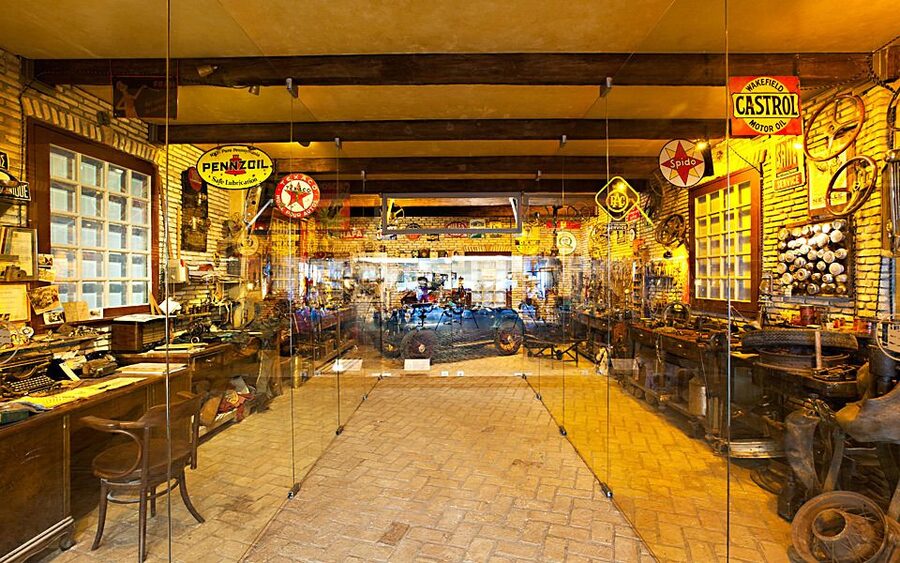
- The old workshop adds grease and character
- What the visit feels like for car enthusiasts
- Why non-car fans can still enjoy it
- How long to allow and how to plan your day
- Is the $14 ticket good value?
- The best time to fit it into an Athens itinerary
- Who should book this experience
- Should you book the Hellenic Motor Museum?
- FAQ
- Where is the Hellenic Motor Museum?
- How much does admission cost?
- How long is the museum ticket valid?
- What are the museum’s opening hours?
- When is the last admission?
- Is an audio guide included?
- Is the Hellenic Motor Museum wheelchair accessible?
- What is not included with the ticket?
Key points before you go
- Three floors of automotive history: See more than 110 vehicles from the 19th and 20th centuries, with 72 exhibits arranged along the spiral ramp.
- Rare and vanished car makers: The rotating collection includes cars from companies that no longer exist, along with classics from familiar brands.
- A wheel display from 300 B.C.: Follow the development of the wheel before reaching the modern automobile.
- A vintage workshop setting: Walk through an old car workshop filled with the sort of features that connect cars with the work of maintaining them.
- A practical Athens break: The museum is indoors, air-conditioned, and easy to fit into a spare hour or two.
- Useful access and language options: The museum is wheelchair accessible, and an English audio guide is included. Staff support is available in English and Greek.
Finding the museum inside Capitol Mall
The museum’s address is Ioulianou 33 to 35 and C’ Septemvriou 74 to 78, Athens. That puts it in the center of the city, but do not expect the entrance to announce itself like the Acropolis Museum.
The Hellenic Motor Museum occupies the uppermost floor of Capitol Mall, a building that also contains offices. You may need a little patience to get your bearings, especially if you arrive from the street and see a regular commercial or office building rather than a grand museum entrance.
This is the one part of the visit that can waste time. Allow a few extra minutes to locate the correct entrance and reach the museum floor. Once you are inside, the layout is much easier to follow.
The museum was created by the Theodore and Joanne Charagionis Foundation in 1977. That background matters because this is a private collection built around a long-running interest in the automobile, not a temporary display assembled for a shopping center.
More Athens museums:
- Athens: Acropolis, Parthenon & Acropolis Museum Guided Tour
★ 4.8 · 9,316 reviews - Athens: Mythology of Delphi, Museum and Arachova Guided Tour
★ 4.6 · 4,008 reviews - Athens: Acropolis, Parthenon & Acropolis Museum Guided Tour
★ 4.8 · 3,579 reviews
Start with the wheel, not just the car
The most unusual part of the museum is the effort to place the automobile in a longer story. As you make your way up the spiral ramp, you can see 72 exhibits dating from 300 B.C. through the end of the 20th century.
That range lets you think about the car as the latest stage in a much older idea. The wheel began as a basic tool for movement, then became part of carts, machinery, transport, and eventually the modern motor vehicle. It is a small but useful change of focus. You are not only looking at stylish bodywork and engines. You are also seeing how a basic invention shaped daily life.
If you have limited time, follow the ramp rather than rushing straight toward the most famous cars. The chronological flow helps you understand why the collection includes such different objects. It also gives children a simple story to follow, since the visit is not based only on reading long technical panels.
Three floors of cars from forgotten and famous makers
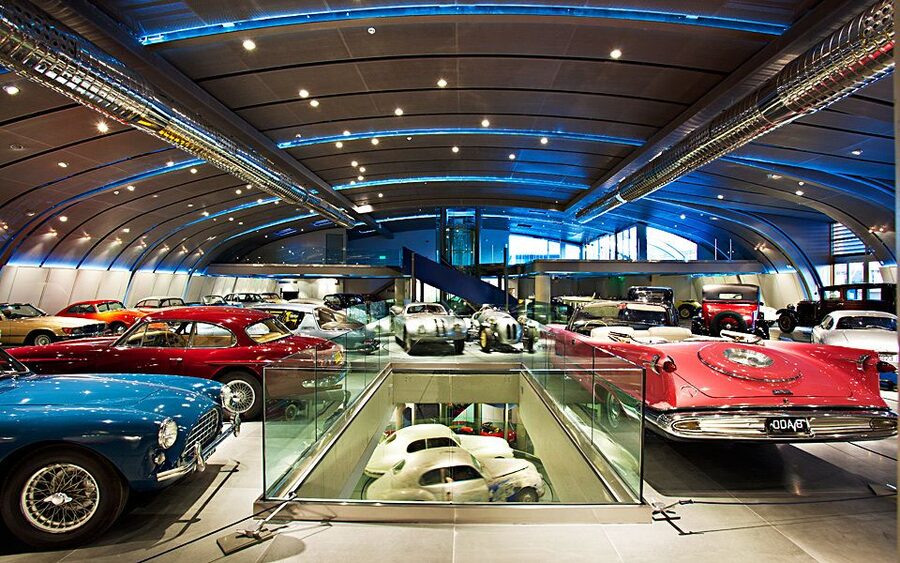
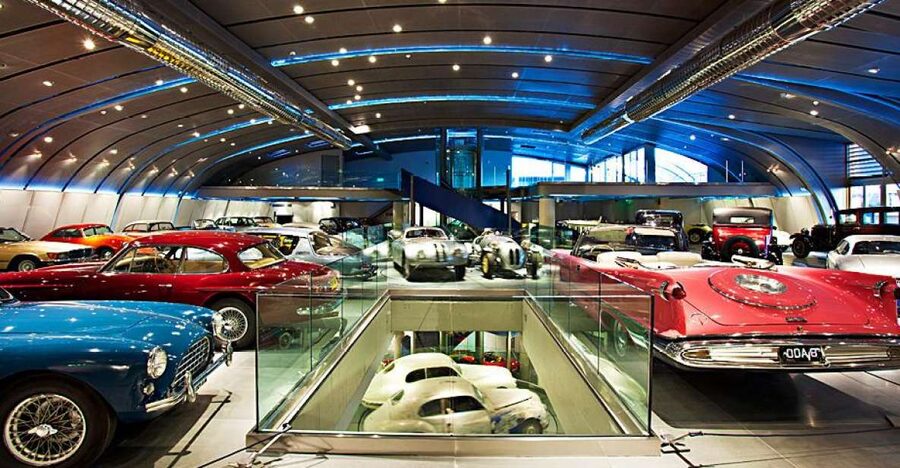
The main collection covers more than 110 unique examples of the global automotive industry. The exact display changes because the collection rotates, so a future visit may not look exactly like the one you see today.
That rotation is good news if you have a strong interest in cars. It also means you should avoid planning your entire visit around one particular model unless the museum has confirmed that it is currently displayed. The collection includes vehicles from companies that have disappeared, which gives the museum a useful sense of automotive change.
You will also see classic models from well-known manufacturers that still operate today. This mix prevents the museum from becoming a narrow parade of only famous luxury cars. The appeal comes from comparing different eras, makers, and design choices.
The cars are neatly arranged and well maintained, with descriptions to help explain what you are seeing. The bright galleries and good lighting make it easy to inspect the paint, shapes, dashboards, and other visible details.
There is one practical limitation. Some cars are placed close together, so you may only be able to view certain vehicles from the front or at an angle. That is not ideal if you want a full inspection of every side, but it does allow the museum to present a large collection within its three-floor footprint.
The old workshop adds grease and character
A display of polished cars can feel a little too clean. The old car workshop helps correct that impression.
Here you walk through a setting filled with the features associated with traditional vehicle repair. It gives you a better sense of the work behind the finished automobile, from maintenance to mechanical care. The workshop is especially useful for children and for anyone who is interested in how cars were handled before modern service centers became so standardized.
The workshop also breaks up the viewing rhythm. After several rows of vehicles, you get a change of setting instead of another identical display case. I would treat it as an important part of the museum rather than a quick side attraction.
The available information does not describe a live repair demonstration, so plan to view the workshop as a historical display. The appeal is in the atmosphere and equipment, not in taking part in mechanical work.
A few more Athens days worth a look
- Athens: Acropolis Ticket with Optional Audio or Live Guide
★ 4.2 · 11,055 reviews - Athens: Acropolis Ticket with Audio Guide
★ 4.0 · 3,575 reviews - Athens All Included: Acropolis and Museum Guided Tour with Ticket
★ 4.5 · 2,673 reviews - Athens: Acropolis Museum Ticket with optional Audio Guide
★ 4.4 · 2,652 reviews
What the visit feels like for car enthusiasts
If you already know your marques, engines, and body styles, you will have plenty to inspect. The museum’s broad collection includes cars from the 19th and 20th centuries, so you can compare early designs with the more recognizable shapes of later classic cars.
The rotating displays and vanished manufacturers are a strong point for serious enthusiasts. A collection that includes companies no longer in business can show how quickly the industry changed and how many once-important names disappeared.
You will find familiar pop-culture touches as well. The collection has included Lightning McQueen and the Flintstones Mobile, which give the visit a lighter note and can help keep younger family members interested. These displays do not replace the historic vehicles, but they add a bit of fun between the more technical exhibits.
One area of expectation deserves care. If your main goal is a large number of Italian classics, the collection may not match your ideal balance. The astonishing Testarossa is a major draw, but the museum is broader than a showcase devoted to Italian design.
Why non-car fans can still enjoy it
You do not need to arrive with a favorite manufacturer in mind. The museum works for people who enjoy design, industrial history, old machinery, or simply unusual indoor attractions.
The cars are visual objects first. Their shapes, colors, size, and detailing make the visit accessible even when you are not interested in engine specifications. The history-of-the-wheel section gives you an additional way into the subject, and the workshop shows the practical side of keeping vehicles on the road.
This is also a good choice when Athens weather becomes tiring. Several people have used it as a break from the heat, and the air conditioning makes that a sensible plan. You can spend an hour or so seeing the main displays, or take longer if you read the descriptions and study the cars closely.
Families should find the subject flexible. Adults can focus on design and history, while children can look for recognizable cars and playful exhibits. The museum is also wheelchair accessible, which makes it a more practical indoor option for many visitors.
How long to allow and how to plan your day
Your ticket is valid for one day, but this is not a full-day guided tour with a fixed sequence or meeting time. You choose when to visit during the museum’s opening hours, subject to availability.
A focused visit can take about an hour or so. Add time if you want to use the English audio guide, read the descriptions, compare models, and spend longer in the workshop. Since the museum has three floors, you should not treat it as a five-minute stop on the way to something else.
The museum opens Monday through Friday from 10:00 a.m. to 5:00 p.m. On Saturday and Sunday, it opens from 11:00 a.m. to 6:00 p.m. Last admission is 30 minutes before closing, so arriving at the final moment will leave you little time.
The museum is closed on January 1, January 6, Easter Sunday, Easter Monday, August 15, and December 25. Check the date before building it into a holiday schedule.
There is no hotel pickup or drop-off, and food and drinks are not included. You are buying admission only, which is perfectly reasonable for a central museum visit, but you should arrange your own transport and refreshments.
Is the $14 ticket good value?
At $14 per person, the ticket is fairly priced for the amount of material on display. You are paying for access to three floors, more than 110 vehicles, the wheel collection, the workshop, and an English audio guide.
The value is strongest if you like cars or need a useful indoor activity in central Athens. The museum is also a good choice for a family because one ticket covers a self-paced visit with enough visual variety to hold attention.
The value is less certain if you have no interest in vehicles and only want to fill a few minutes. You can see the main areas fairly quickly, but the museum works best when you give the collection time and follow its historical progression.
The ticket includes no meal, transfer, or personal guide. That keeps the price simple, but it also means you should not compare it with a fully guided tour. English and Greek hosts or greeters are available, and the English audio guide supplies extra context without forcing you to move at someone else’s pace.
Free cancellation is available up to 24 hours in advance, and you can reserve now while paying later. Those terms are useful if your Athens schedule is still shifting.
The best time to fit it into an Athens itinerary
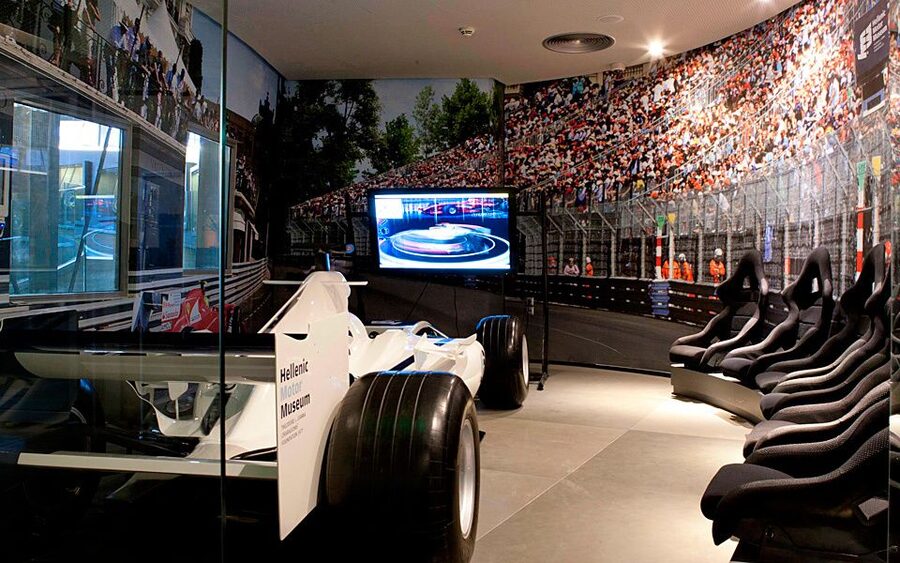
Use the museum as a planned indoor stop rather than an accidental detour. Its central location makes it practical for a morning or afternoon when you want a break from outdoor sightseeing.
Hot weather is a particularly good reason to go. The air-conditioned galleries offer relief without requiring a long commitment, and the collection gives you something more substantial than a simple place to cool down.
A weekend visit gives you the longer 11:00 a.m. to 6:00 p.m. opening window. On a weekday, you have 10:00 a.m. to 5:00 p.m., but remember that the last admission is 30 minutes before closing.
Do not arrive without checking the address details. The museum can be confusing to locate inside the larger building, and poor street signage may slow you down. Once you have found the museum, the indoor route is straightforward.
Who should book this experience
I would recommend it first to automobile enthusiasts, families, and anyone who enjoys industrial design. The rare makes, classic manufacturers, Testarossa, workshop, and historical wheel displays give you plenty to examine.
It also suits couples or friends who want an easy indoor stop with no fixed group schedule. You can move at your own speed, use the audio guide, and leave when you have seen enough.
It is a sensible choice for a mixed-interest group. A dedicated car fan can study the collection, while a less enthusiastic companion can still enjoy the shapes, pop-culture displays, workshop, and air-conditioned setting.
I would be more cautious if your Athens plan is already packed with major archaeological sites and you have no interest in cars. The museum is not a substitute for Athens’ ancient monuments. Its value comes from offering a different side of the city and a clear look at the development of modern transport.
Should you book the Hellenic Motor Museum?
Book it if you want an affordable, well-maintained indoor museum with more than 110 cars and a collection that reaches beyond the usual famous brands. The combination of forgotten manufacturers, classic models, the old workshop, and the wheel display gives the visit more range than its modest price suggests.
The main drawbacks are finding the entrance and the tight spacing around some cars. If you can accept those limits, this is an easy addition to a central Athens day, especially in strong heat or when you need a change from ancient ruins.
For car lovers, the answer is clear: book it. For everyone else, book it when you want a one to two-hour indoor stop with a clear theme, English audio support, and enough visual variety to make the $14 worthwhile.
FAQ
Where is the Hellenic Motor Museum?
The museum is at Ioulianou 33 to 35 and C’ Septemvriou 74 to 78 in Athens, Greece. It is located on the top floor of Capitol Mall in central Athens.
How much does admission cost?
The entrance ticket costs $14 per person.
How long is the museum ticket valid?
The ticket is valid for one day.
What are the museum’s opening hours?
The museum is open Monday through Friday from 10:00 a.m. to 5:00 p.m. It is open Saturday and Sunday from 11:00 a.m. to 6:00 p.m.
When is the last admission?
Last admission is 30 minutes before closing.
Is an audio guide included?
Yes. An English audio guide is included with the entrance ticket.
Is the Hellenic Motor Museum wheelchair accessible?
Yes. The museum is wheelchair accessible.
What is not included with the ticket?
Hotel pickup and drop-off, food, and beverages are not included.
Freshly added Athens trips
- Athens and Ancient Corinth Private from Athens★ 5.0 · 3 reviews
- From Athens: Mycenae and Epidaurus Private Tour★ 4.8 · 3 reviews
- Full day Meteora private tour★ 5.0 · 3 reviews
- Double Shore Dive (certified divers)★ 4.5 · 3 reviews
- Athens Hills: Mythology Treasure Hunt★ 5.0 · 3 reviews
- Sunset & swimming at Cape Sounio, Poseidon temple★ 5.0 · 3 reviews
- Philosophy Experience at Plato’s Academy Park – basic version★ 5.0 · 3 reviews
- Private Acropolis Tour – Ticket Included★ 5.0 · 3 reviews
Museums, compared.

Acropolis, Parthenon & Acropolis Museum Guided Tour
Read our review →
Mythology of Delphi, Museum and Arachova Guided Tour
Read our review →Acropolis, Parthenon & Acropolis Museum Guided Tour
Read our review →
Acropolis monuments & Parthenon Walking Tour with Optional Acropolis Museum
Read our review →
Athens All Included: Acropolis and Museum Guided Tour with Ticket
Read our review →
Acropolis Museum Ticket with optional Audio Guide
Read our review →
Small-Group Delphi, Museum & Arachova Day Trip
Read our review →
Parthenon & Acropolis Museum with Audio or Live Tour Option
Read our review →Browse the lists this tour appears in