
Reviewed · WALKING TOURS
Exarcheia walking tour: The other side of Athens
Exarcheia is where Athens feels less polished, more political, and far more revealing. This 2.5-hour walk takes you from Omonia Square into a neighborhood shaped by students, artists, social movements, war, street art, and present-day debates about urban change. It is a useful counterpoint to the Acropolis and the city’s ancient monuments.
I like the small group limit of eight, which gives you room to ask questions instead of trailing behind a large crowd. I also like the local coffee or tea stop. It gives the tour a human pause and helps you see Exarcheia as a lived-in neighborhood, not simply a backdrop for photographs.
The main consideration is the subject matter. This is a walking tour about modern Greek political and social history, and some stories are dramatic or controversial. You should also expect a moderate amount of walking, with no hotel pickup or drop-off included.
In This Review
- Key points before you book
- Why Exarcheia gives Athens a different voice
- Starting at Omonia Square
- The Polytechnic and the weight of modern Greek history
- Walking through Plateia Exarcheion
- Coffee or tea with a local rhythm
- The Athens Trilogy on Panepistimiou Street
- Ending near the Old Parliament
- What the $48.06 price really covers
- Walking conditions and practical details
- Who should choose this Athens walk?
- Should you book the Exarcheia walking tour?
- FAQ
- How long is the Exarcheia walking tour?
- What time and where does the tour start?
- Where does the tour end?
- How large is the group?
- Is coffee or tea included?
- Is admission to the National History Museum included?
- What happens if the weather is poor?
Key points before you book
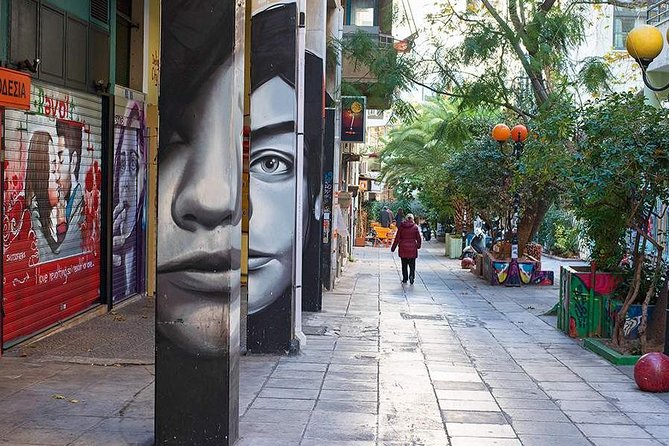
- Exarcheia beyond the postcard: See a side of Athens shaped by student life, protest, cafés, street art, and urban change.
- The Polytechnic is the emotional center: The National Technical University of Athens carries major importance in modern Greek history.
- A real local pause: Coffee or tea at a favorite local place is included in the tour price.
- Small-group access: The tour accepts no more than eight people, allowing time for questions and conversation.
- Five thoughtfully linked stops: The route connects Omonia, Exarcheia, Panepistimiou Street, the Athens Trilogy, and the Old Parliament.
- An excellent modern-history choice: Guide Agathi has been praised for making Greek social and political history clear, personal, and engaging.
Why Exarcheia gives Athens a different voice
Many first visits to Athens focus on antiquity. That makes sense, but it can leave out the city’s modern character. Exarcheia helps fill that gap.
The neighborhood is known for its alternative culture, professional and student population, political activity, street art, cafés, and strong sense of community. It has also faced major changes over time, including debates about development and gentrification. This tour uses the streets themselves to explain those changes.
I like this approach because you are not just given a list of dates. You are shown how public buildings, squares, walls, and cafés connect to the way people understand Athens today. The result should suit you if you want to place modern Greece in context, especially after visiting the ancient sites.
The tour is offered in English and begins at 10:00 a.m. at Omonia Square. Since the group is private and capped at eight people, the experience can feel more like a guided conversation than a standard city walk.
More Athens walking tours:
- Athens: Acropolis and Parthenon Guided Walking Tour
★ 4.6 · 5,882 reviews - Greek Food Walking Tour in Athens
★ 5.0 · 4,740 reviews - Acropolis: Acropolis and Parthenon Guided Walking Tour
★ 4.7 · 3,442 reviews
Starting at Omonia Square
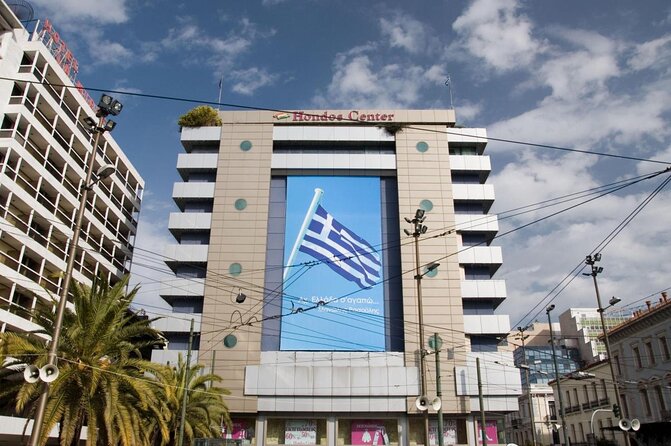
Omonia Square is a practical starting point. It is one of Athens’ oldest and most central squares, and it gives you a clear sense of the city’s busy inner core before the route turns toward Exarcheia.
The opening walk takes about 10 minutes. There is no admission charge, and the short introduction helps place Exarcheia within central Athens rather than treating it as an isolated district.
This first section is brief, but it matters. You begin with the contrast between a major city crossroads and a neighborhood known for its independent spirit. That change in atmosphere is part of the story.
If you are meeting here, allow enough time to find Omonia Square without rushing. The meeting point is listed as Omonoia Square, Athina 104 31, Greece, and public transportation is nearby.
The Polytechnic and the weight of modern Greek history
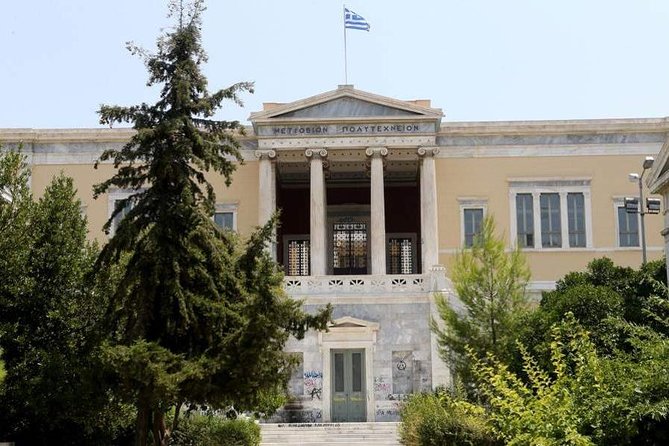
The first major stop is the School of Architecture at the National Technical University of Athens, commonly known as the Polytechnio. You spend about 20 minutes outside the historic building.
This is one of the most important stops on the route. The Polytechnic played a major role in Greece’s modern political story, and its history includes both inspiring and painful chapters. The guide explains why this building has such emotional weight and how it helped shape the country’s recent history.
I especially like the choice to spend time here early in the tour. Without this stop, Exarcheia can look like an interesting neighborhood with unusual walls and cafés. With it, you begin to understand why the area has such a strong political identity.
The stop is outside, so you should not expect a museum visit or an interior tour. Its value comes from the explanation, the building’s setting, and the stories connected to it. If you have little interest in modern politics, this may feel more serious than the usual Athens sightseeing walk. If you want to understand Greece after the ancient world, it is central to the experience.
Walking through Plateia Exarcheion
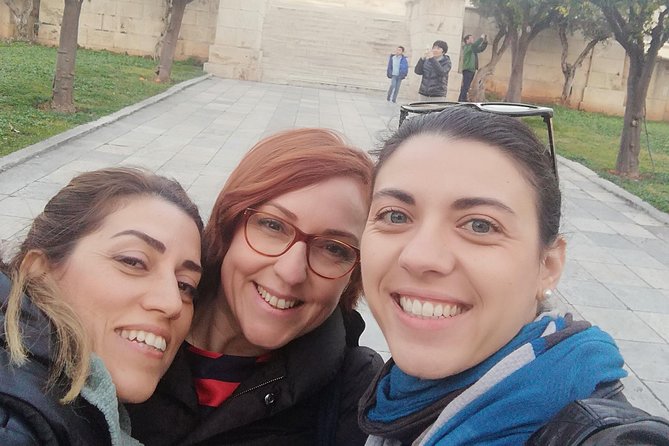
The longest part of the tour takes place around Plateia Exarcheion and the surrounding streets. This section lasts about 70 minutes and is where the walk becomes most personal and street-level.
The guide discusses Exarcheia from several angles:
- Its development from the early 19th century
- Its role during the Second World War
- Its student and professional culture
- More recent political and social history
- Urban development and gentrification
- Street art and neighborhood identity
That range gives the area more depth. You are not simply told that Exarcheia is alternative. You learn why it gained that reputation and how its character has changed.
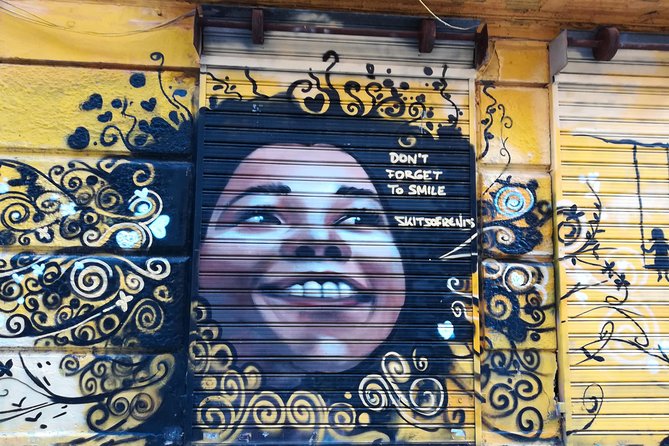
The street art is a natural part of the walk. Instead of treating murals as decoration alone, the guide can connect them to the neighborhood’s politics, humor, anger, and creative life. You will have time to look closely, ask questions, and notice details you could easily miss on your own.
The route also includes a hill with panoramic views of Athens. The supplied details do not name the hill, so you should think of this as a scenic pause rather than a separately advertised landmark. The view gives you a break from the street-level focus and helps you see the city as a whole.
Same city, a completely different century:
- Athens: Acropolis & up to 5 Archaeological Sites Combo Pass
★ 4.4 · 12,619 reviews - Athens: Acropolis Ticket with Optional Audio or Live Guide
★ 4.2 · 11,055 reviews - Athens: Acropolis, Parthenon & Acropolis Museum Guided Tour
★ 4.8 · 9,316 reviews - Athens: Cape Sounion & Poseidon Temple Sunset Half-Day Trip
★ 4.8 · 8,241 reviews
Coffee or tea with a local rhythm
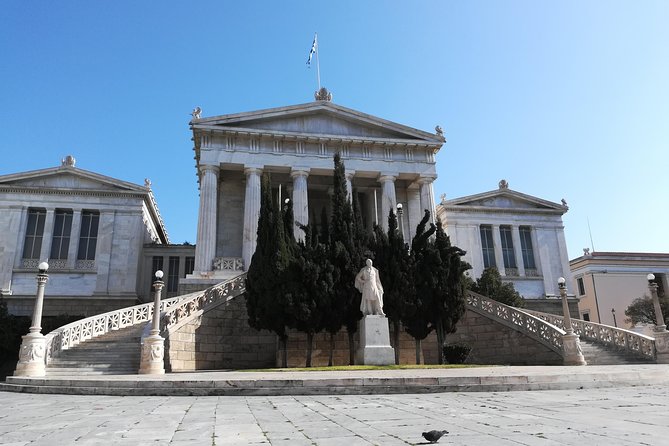
A small coffee or tea break is included during the Exarcheia section. This is one of the tour’s most useful touches.
A café stop changes the pace. You are not walking and absorbing information without pause. Instead, you have time to sit, talk with the guide, and ask about places to eat, drink, or explore later.
The stop is at a local favorite place, but the exact café is not specified in the tour details. That is worth keeping in mind if you have dietary needs or a particular drink in mind. Coffee or tea is included, while other personal purchases are not.
I like this feature because it makes the tour feel less formal. The guide can explain the neighborhood through everyday life, not only through monuments. Feedback specifically praised Agathi for being serious when discussing modern history while still making the walk fun and approachable. That balance is valuable in a subject that could otherwise become heavy.
The Athens Trilogy on Panepistimiou Street
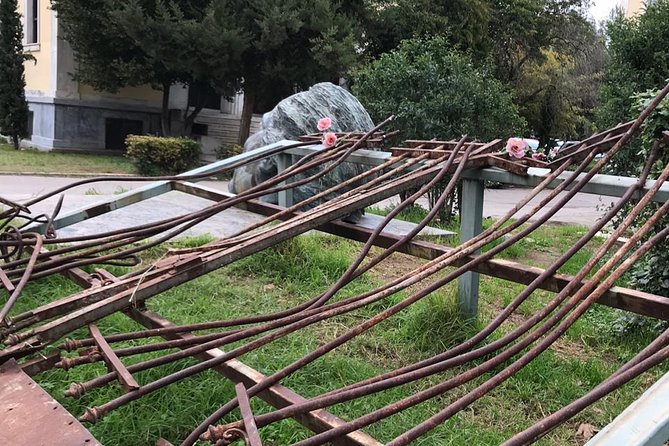
After Exarcheia, the route moves along the well-known Panepistimiou and Stadiou streets. The next section lasts about 35 minutes and focuses on three grand neoclassical buildings:
- The Academy of Athens
- The University of Athens
- The National Library of Greece
Together, these buildings are often called the Trilogy of Athens. You stop outside each one and discuss their history, architectural role, and present-day symbolism.
This section broadens the tour. Exarcheia is associated with protest, independent culture, and street-level politics. The Trilogy represents another vision of Athens, one tied to education, national identity, public institutions, and the city’s formal architectural tradition.
The walk between these areas helps you compare two sides of central Athens without pretending they are unrelated. The buildings are not just attractive façades. Their purpose and symbolism say something about how Greece presented itself as a modern state.
There is no admission charge for these exterior stops. You should not expect access inside the Academy, University, or National Library as part of this experience. The focus is on seeing the buildings from the street and hearing the explanation.
Ending near the Old Parliament

The tour ends near the National History Museum, housed in the Old Parliament building, on Stadiou Street. The final stop lasts about 10 minutes.
The Old Parliament area provides a fitting close because it brings the tour back to national history and public life. The surrounding streets also have cafés and cozy bars, including places associated with a more modern and hippie-leaning Athens.
The ending point is listed as Stadiou, Athina, Greece, in the area of the Old Parliament. This is useful for planning the rest of your day. You can continue exploring central Athens from here, ask the guide for local suggestions, or simply use the nearby transport connections.
The National History Museum itself is not included in the tour. Admission is not part of the price, so treat the building as an exterior stop unless you arrange a separate visit.
What the $48.06 price really covers
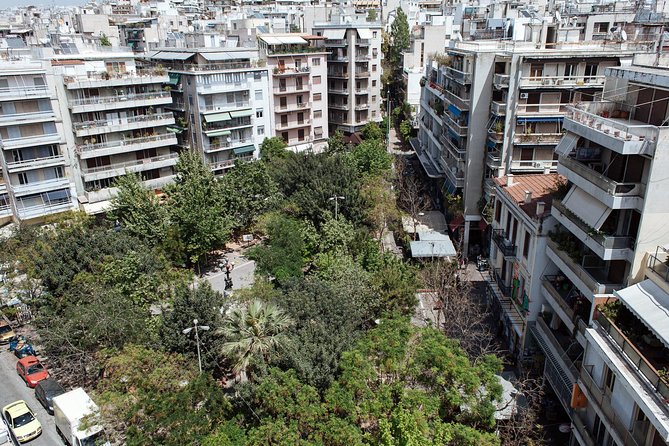
At $48.06 per person, this is not the cheapest way to spend two and a half hours in Athens. Its value depends on how much you want from a guide-led experience.
The price includes a private guide, all listed fees and taxes, coffee or tea, and a group size of no more than eight. It also includes hygiene products such as hand sanitizer and face masks. Private expenses and transportation to or from the start are not included.
For a person interested in Greek social and political history, the price is reasonable because the main benefit is interpretation. You could walk through Exarcheia for free, but you would not automatically understand the Polytechnic, the neighborhood’s wartime role, its political identity, or the arguments around urban change.
The price is less compelling if you mainly want famous sights, ancient monuments, or a quick orientation to Athens. This is a specialized walk. You are paying for a focused subject and a guide who can connect places that might otherwise seem unrelated.
The private format also matters. With eight people or fewer, you should have a better chance to hear the guide clearly and ask about subjects that interest you. If you are traveling alone, the format still applies, and the guide can give you focused attention.
Walking conditions and practical details
You need a moderate level of physical fitness. The tour lasts roughly 2 hours and 30 minutes and includes city walking, time on your feet, and a hill viewpoint. The details do not provide a total distance or a precise elevation change, so you should not assume the route is flat.
Wear comfortable shoes and plan for outdoor conditions. The tour requires good weather. If poor weather forces a cancellation, you will be offered another date or a full refund.
The experience is confirmed at booking and uses a mobile ticket. It is offered in English. Service animals are allowed, and the meeting area is near public transportation.
There is no pickup or drop-off. You must reach Omonia Square yourself and make your own arrangements after the walk ends near the Old Parliament. Free cancellation is available until 24 hours before the start time. A cancellation made less than 24 hours ahead is not refundable, and changes inside that window are not accepted.
Who should choose this Athens walk?
I would choose this tour if you want more than ancient ruins and postcard views. It is particularly well suited to you if you are interested in:
- Modern Greek history
- Student movements and political life
- Street art and alternative neighborhoods
- Gentrification and city development
- Local cafés and everyday Athens
- Small-group guiding
- Architecture beyond the Acropolis
The tour also works well as a way to understand Athens early in your visit. Afterward, other central neighborhoods and public buildings may make more sense.
I would be more cautious if you want a relaxed, purely scenic walk. The political themes are not a side note. They are the heart of the tour. You should also consider the walking requirement and the fact that the route does not include indoor admission to museums or historic buildings.
Should you book the Exarcheia walking tour?
Book it if you want to understand how Athens lives today, not just how it looked in antiquity. The combination of the Polytechnic, Exarcheion Square, street art, a local coffee or tea break, the Athens Trilogy, and the Old Parliament gives you a strong two-and-a-half-hour look at the city’s modern identity.
I would give this tour priority if you have already seen the Acropolis or if you want a more thoughtful first look at Athens. Guide Agathi has been praised for explaining social and political history with care while keeping the walk enjoyable.
Skip it if your time is very short and you only want the major ancient sights. But if you are curious about politics, architecture, local life, and the forces changing Athens, the $48.06 fee buys something you cannot get from a standard monument checklist.
FAQ
How long is the Exarcheia walking tour?
The tour lasts approximately 2 hours and 30 minutes.
What time and where does the tour start?
It starts at 10:00 a.m. at Omonoia Square, Athina 104 31, Greece.
Where does the tour end?
The walk ends on Stadiou Street in the area of the Old Parliament building and the National History Museum.
How large is the group?
The tour has a maximum of eight people.
Is coffee or tea included?
Yes. Coffee and/or tea at a local favorite place is included in the tour price.
Is admission to the National History Museum included?
No. The tour ends near the Old Parliament and National History Museum, but admission is not included.
What happens if the weather is poor?
The experience requires good weather. If it is canceled because of poor weather, you will be offered a different date or a full refund.
Freshly added Athens trips
- Athens and Ancient Corinth Private from Athens★ 5.0 · 3 reviews
- From Athens: Mycenae and Epidaurus Private Tour★ 4.8 · 3 reviews
- Full day Meteora private tour★ 5.0 · 3 reviews
- Double Shore Dive (certified divers)★ 4.5 · 3 reviews
- Athens Hills: Mythology Treasure Hunt★ 5.0 · 3 reviews
- Sunset & swimming at Cape Sounio, Poseidon temple★ 5.0 · 3 reviews
- Philosophy Experience at Plato’s Academy Park – basic version★ 5.0 · 3 reviews
- Private Acropolis Tour – Ticket Included★ 5.0 · 3 reviews
Walking Tours, compared.




Acropolis monuments & Parthenon Walking Tour with Optional Acropolis Museum
Read our review →

Athens Authentic Greek Food Walking Tour (Small Group)
Read our review →
Early Morning Acropolis & Old Athens Guided Walking Tour
Read our review →
Browse the lists this tour appears in