

Reviewed · WALKING TOURS
Athens: Women in Ancient Greece Guided Walking Tour
Ancient Athens is usually told through its male philosophers, generals, and lawmakers. This two-hour walk shifts the focus to women, using places such as the Agora, Pnyx, and Acropolis views to explain daily life, religion, marriage, work, and power. I especially like the links between mythology and real social rules, plus the stories of Sappho, Aspasia, and Agnodice. The main drawback is that archaeological sites are viewed from outside, and the route includes steps and hills.
I also like the conversational style reported for guide Maelle, who asks questions and welcomes discussion instead of simply reciting dates. At $44.04 per person, the tour is a fair buy if you want a focused subject and a fresh way to read Athens, but it is less useful if you are mainly looking for interior access to the Acropolis or Agora.
In This Review
- Key points at a glance
- Why this Athens walk feels different
- Monastiraki begins the story
- Hadrian’s Library and Plaka
- The Gate of Athena Archegetis
- A secret stop and the Ancient Agora
- Pnyx and the question of democracy
- Acropolis views on the way to Filopappou Hill
- The women and myths you will meet
- How much value do you get for $44.04?
- Timing, comfort, and the route
- Who should book this walking tour?
- Should you book Women in Ancient Greece?
- FAQ
- Where does the Women in Ancient Greece tour start?
- How long does the tour last?
- Which languages are available?
- Are Acropolis and archaeological site tickets included?
- Is a private tour available?
- Is the route suitable for wheelchair users?
Key points at a glance
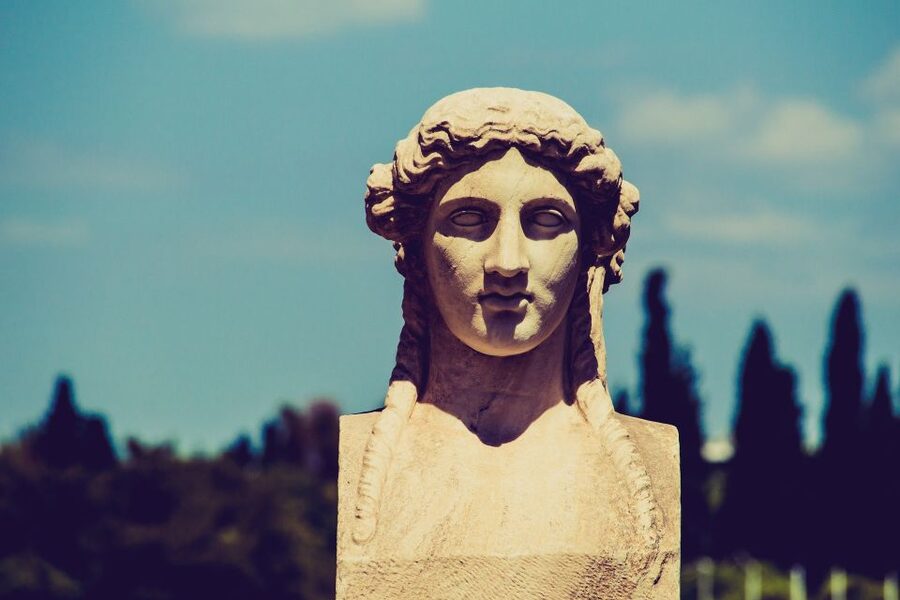
- Women’s daily lives take center stage: Learn about rights, duties, family life, work, religion, and social limits in ancient Athens.
- Mythology gets a practical reading: Athena, Penelope, Demeter, and Pandora help explain how Greek stories shaped ideas about women.
- Familiar sights gain a new purpose: Monastiraki, Hadrian’s Library, the Agora, Pnyx, and Filopappou Hill become settings for women’s stories.
- Sappho, Aspasia, and Agnodice lead the way: The tour follows women who became poets, thinkers, doctors, or influential public figures.
- Expect a discussion, not just a speech: Maelle is praised for inviting questions, connecting ancient society with modern concerns, and adjusting explanations to the group.
- Plan for sun and steps: Bring water, sunscreen, and a hat. The route is not suitable for wheelchair users or people with significant mobility or heart problems.
Why this Athens walk feels different
I like tours that give a familiar city a new question. Here, the question is simple: what did Athens look like to the women who lived there?
That question takes you beyond the usual parade of temples and famous men. You hear about women’s daily routines, family roles, religious duties, and limited public rights. You also hear about women who did not fit the expected mold, including Sappho, Aspasia, and Agnodice.
The tour does not pretend that ancient Greek women all shared one experience. Stories can include different social groups and different kinds of women, from mythological figures to poets, doctors, and women whose lives were shaped by marriage, household work, or religious festivals. That range is one of the strongest reasons to book it.
Guide Maelle receives especially warm praise for her friendly, lively approach. The useful detail for you is that she does more than answer questions. She asks them, too, turning the walk into a conversation. That works well for a subject where the evidence can raise as many questions as it answers.
More Athens walking tours:
- Athens: Acropolis and Parthenon Guided Walking Tour
★ 4.6 · 5,882 reviews - Greek Food Walking Tour in Athens
★ 5.0 · 4,740 reviews - Acropolis: Acropolis and Parthenon Guided Walking Tour
★ 4.7 · 3,442 reviews
Monastiraki begins the story
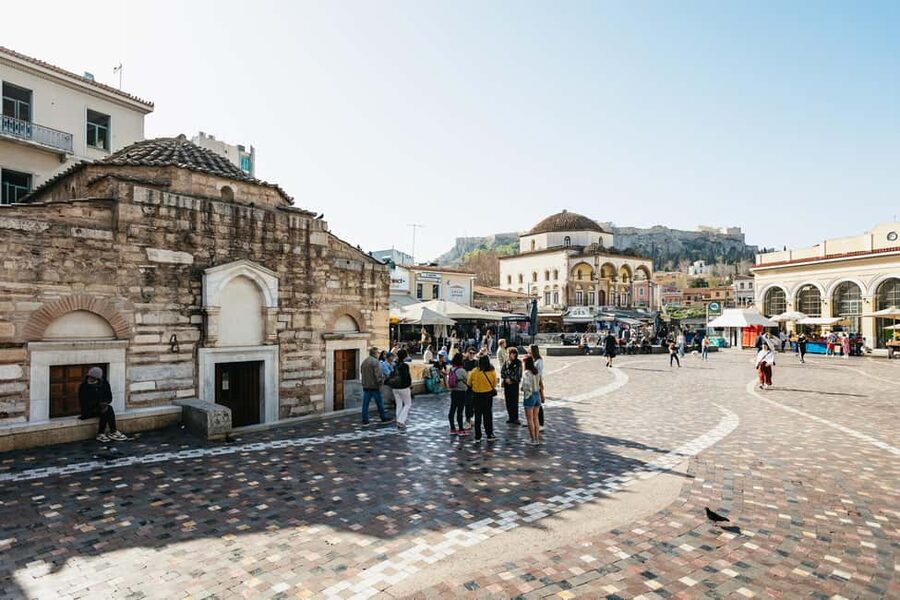
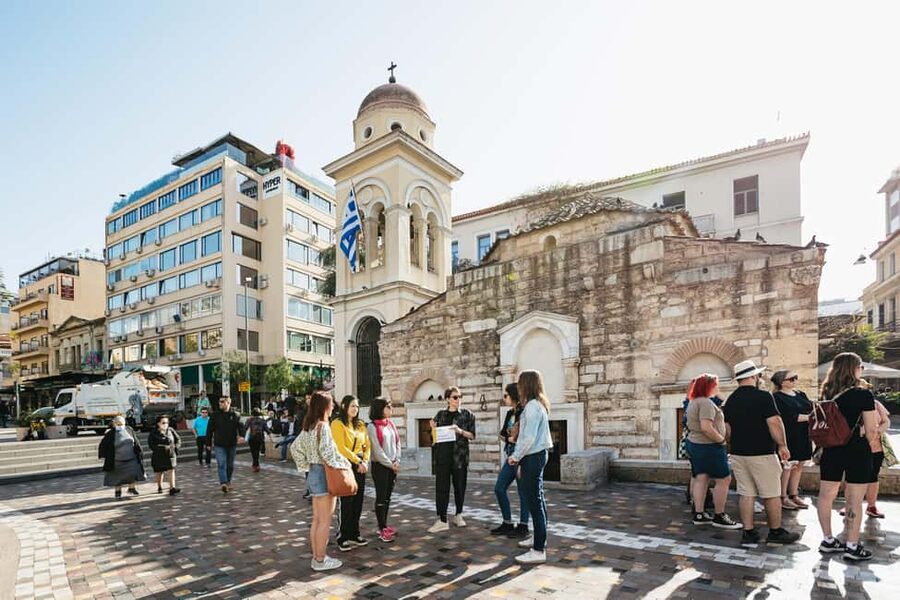
Meet your guide in Monastiraki Square, in front of the Holy Church of the Virgin Mary Pantanassa. Look for the sign reading Women in Ancient Greece. This is a central and easy-to-recognize starting point, but give yourself enough time to find the church within the busy square.
The first short stop is Monastiraki itself. You will spend about five minutes here with a guide, using the modern city as the starting point for an ancient one. The value is not a long architectural lecture. It is the quick change in viewpoint, from the shopping streets and public life of present-day Athens to the women who moved through an older city with very different rules.
The route is short in distance but packed with stops. You should expect frequent pauses rather than one long walk between monuments. Comfortable shoes will help, especially later when the pavement gives way to steps and uphill sections.
Hadrian’s Library and Plaka
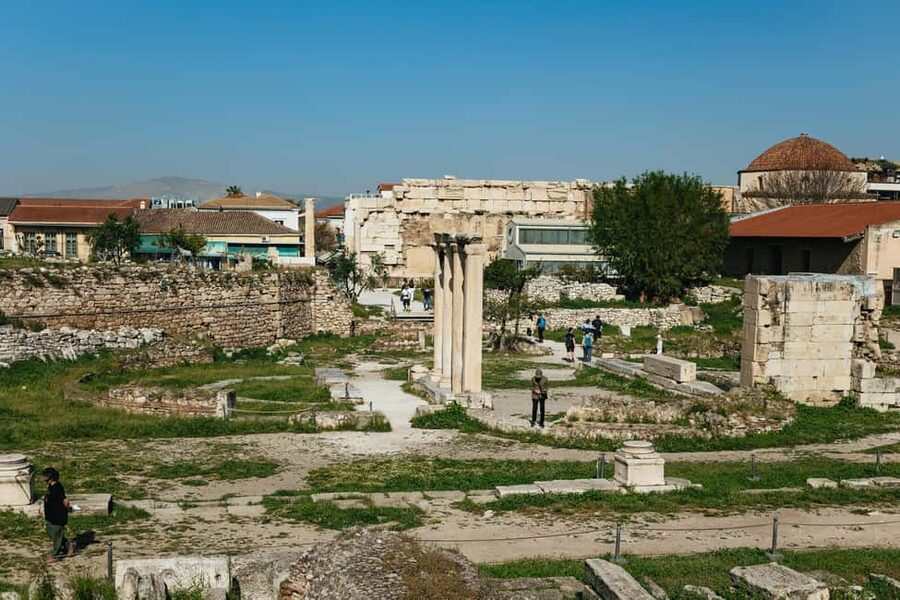
Hadrian’s Library is the next brief sightseeing stop. The tour views the site from the exterior, since entrance tickets are not included. That limitation matters if you are building a full archaeological day, but the outside setting still helps place the story in central Athens.
From there, the walk continues through Plaka. This section lasts about ten minutes and gives the guide room to connect ancient ideas with the streets around you. Plaka is a natural place for that transition because you are walking through a modern neighborhood while discussing women from a society that organized public and private life in sharply different ways.
I would not book this tour expecting a detailed tour of every building along the route. The places are used as stages for the subject. The women’s stories, not the architecture alone, are the main event.
The Gate of Athena Archegetis
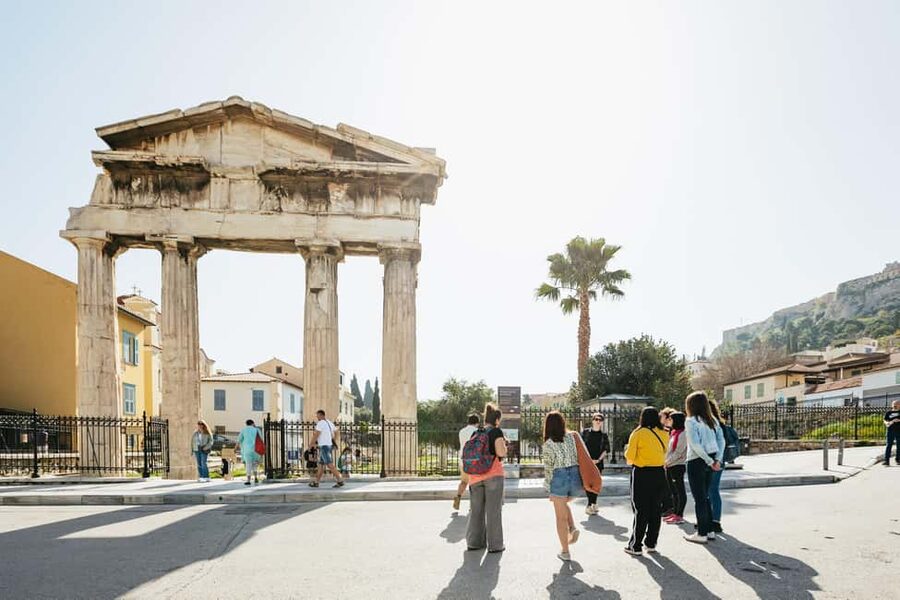
At the Gate of Athena Archegetis, you get about ten minutes of guided sightseeing. Athena is especially important to this tour because she was a powerful goddess in a society where real women had far fewer choices and less public authority.
The guide uses mythology to explore that contrast. Athena, Penelope, Demeter, and Pandora are not treated simply as colorful names from old stories. Their myths help show the qualities ancient Greek society admired, feared, or demanded from women.
This is where the tour’s central idea becomes clear. A goddess could be a warrior, strategist, ruler, or protector, while an ordinary Athenian woman faced strict social expectations. That contrast gives the mythology more weight and makes the stories easier to connect with the physical city.
A few more Athens days worth a look
- Athens: Acropolis Ticket with Optional Audio or Live Guide
★ 4.2 · 11,055 reviews - Athens: Acropolis, Parthenon & Acropolis Museum Guided Tour
★ 4.8 · 9,316 reviews - Athens: Cape Sounio & Poseidon Temple Trip with Audio Guide
★ 4.4 · 4,521 reviews - Athens: Mythology of Delphi, Museum and Arachova Guided Tour
★ 4.6 · 4,008 reviews
A secret stop and the Ancient Agora

The itinerary includes a secret stop, with roughly ten minutes for sightseeing and explanation. Its exact details are not given in advance, which adds a small element of surprise. You should see it as a pause for another women-centered story rather than as a major monument visit.
The Ancient Agora receives another ten-minute guided stop. This is one of the most useful places to discuss who could participate in public life and who could not. The Agora was a central setting for civic, commercial, and social activity, but the tour asks you to consider which women had access to those spaces and what kinds of work or religious roles brought them into public view.
Because you are seeing the site from outside, the experience depends heavily on the guide’s explanation. That is not a criticism. It simply means you should choose this walk for interpretation, not for a full archaeological examination of the Agora.
I find this kind of stop more useful after you have already seen the Acropolis or Agora on your own, because you can compare the standard civic story with the women’s perspective offered here. Still, it can work as an introduction if this is your first serious look at ancient Athens.
Pnyx and the question of democracy
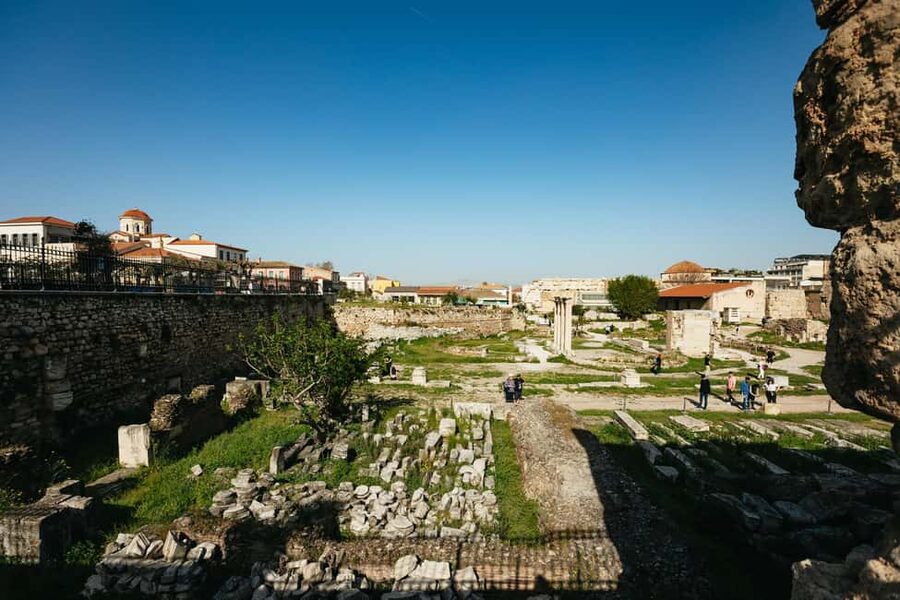
The walk continues to Pnyx, with about fifteen minutes for a guided visit. This is the longest listed stop and one of the most important.
Pnyx is associated with the first democratic votes in Athens. Most visitors hear about democracy as a major Athenian achievement. This tour adds the necessary question: who was included in that democracy?
The answer gives the site its force. The political system celebrated here did not give women the same public voting role as the male citizens who gathered to debate and vote. The walk uses that tension to examine how a society could create an influential form of government while leaving many of its residents outside the political process.
This is also a good place for the tour’s modern connections. The guide may encourage you to think about how societies define citizenship, participation, and minority rights. The aim is not to force a simple comparison between ancient Athens and the present. It is to show how old ideas can continue to shape the questions we ask today.
Acropolis views on the way to Filopappou Hill

After Pnyx, the route includes a viewpoint with about five minutes for scenic views. You will gaze toward the Acropolis, one of Athens’ most memorable sights, but you are not entering the Acropolis on this tour.
That is important when planning your day. You will not receive Acropolis tickets, and the archaeological sites are viewed from outside. If this is your first visit to Athens, I would pair the walk with a separate Acropolis visit, either before or after it, so you get both the major monuments and this more focused interpretation.
The views also provide a useful pause. After discussions of social rules, mythology, and political exclusion, the city opens up in front of you. The setting helps connect the stories to the actual places where ancient Athenians worshiped, met, debated, and watched public life unfold.
The final main stop is Filopappou Hill, where you spend about ten minutes with the guide. The hill gives the tour a scenic finish and adds more uphill walking to the day. It is a pleasant ending for anyone who likes to combine history with city views, but it may be tiring in hot weather or difficult for anyone with mobility limits.
The women and myths you will meet
The tour’s strongest material comes from the people and stories it chooses to foreground.
Sappho represents poetry and intellectual life. Her presence widens the story beyond Athens and reminds you that women’s voices survived in forms other than political speeches or official records.
Aspasia brings questions of influence, education, and public reputation. She is useful for showing how a woman could become important in elite intellectual circles even when the social system did not offer women equal formal power.
Agnodice represents medicine and the challenge to accepted roles. Her story helps the guide explore how women could seek authority in fields normally controlled by men.
The tour also includes the kidnapped Spartan girls and a mysterious women’s festival in Athens. These are the kinds of stories that can make the subject memorable because they move away from the standard list of temples and battles.
Mythology supplies another thread. Athena, Penelope, Demeter, and Pandora each offer a different model of womanhood. Some stories praise loyalty, some warn against curiosity or disorder, and others link women with fertility, family, wisdom, or danger. The guide uses these figures to show that mythology was not separate from social life. It helped people explain what women should be and what happened when they crossed the line.
How much value do you get for $44.04?
The price is $44.04 per person for two hours. I consider that reasonable for a specialist walking tour with a live guide, particularly if you care about social history and want more than the standard Acropolis overview.
You are paying for interpretation, route planning, and a focused subject. The small gift is included, as is the walking tour itself. If you select the private option, you get a private group rather than a shared outing, though the supplied details do not specify the private supplement.
The value is weaker if you measure every tour by the number of monuments entered. Archaeological admission is not included, and the sites are viewed from outside. You will also cover several locations in short ten-minute sections, so this is not a slow architectural study.
For me, the price makes the most sense when you use the tour as a lens for the rest of your Athens visit. After hearing who could vote, work, worship, or speak in public, you will look at the Acropolis and Agora differently. That added context can make your separate site visits more rewarding.
Timing, comfort, and the route
The tour lasts two hours, with starting times available according to the date you choose. A morning departure can be a smart choice in Athens, especially since the route has open areas, steps, and an uphill finish. One particularly useful guide habit noted in the tour information is finding shady places for explanations on hot days, but you should still bring water, sunscreen, and a sun hat.
Wear shoes with good grip. The route includes steps and Filopappou Hill, and it is not suitable for wheelchair users or people with mobility impairments. The activity is also marked as unsuitable for people with heart problems.
The languages offered are English and French. A private group option is available, which may suit families or friends who want more time for questions. Maelle’s question-led style sounds especially useful for a private or small group, but the exact group size is not specified.
There is a small inconsistency in the end-point information. The route lists a drop-off near the kiosk at Rovertou Galli 69, while the meeting details say the activity ends back at the starting point. Confirm the final location when you book, particularly if you have dinner plans or a timed museum visit afterward.
Cancellation is flexible: you can cancel up to 24 hours before the start for a full refund. You can also reserve now and pay later, which helps if your Athens schedule is still changing.
Who should book this walking tour?
I would choose this tour if you have already seen the usual Athens highlights and want a new way to understand them. It is also a strong first-day option for anyone interested in women’s history, mythology, democracy, social rules, or overlooked voices.
It suits curious adults, students, friends on a city break, and families with older children who can manage two hours of walking and discussion. The guide’s conversational approach is a plus if you like asking questions rather than listening silently.
I would be more cautious if you want a broad survey of all ancient Greek history. The subject is deliberately narrow. You will not get a full tour of the Acropolis, a complete account of Athenian architecture, or interior access to the archaeological sites.
Should you book Women in Ancient Greece?
Book it if the idea of seeing Athens through women’s lives sounds more interesting than another standard monument checklist. The combination of mythology, ordinary daily life, democracy, and figures such as Sappho, Aspasia, and Agnodice gives the walk a clear purpose.
Skip it if you need wheelchair access, dislike hills, or want to spend the full two hours inside archaeological sites. For everyone else, the $44.04 cost is justified by the focused subject and the chance to ask better questions about a city you may think you already understand.
FAQ
Where does the Women in Ancient Greece tour start?
Meet your guide in Monastiraki Square, in front of the Holy Church of the Virgin Mary Pantanassa. The guide will hold a sign reading Women in Ancient Greece.
How long does the tour last?
The walking tour lasts two hours. Starting times vary, so check availability for the date you want.
Which languages are available?
The live tour guide is available in English and French.
Are Acropolis and archaeological site tickets included?
No. Tickets are not included, and the archaeological sites are viewed from the exterior during this walk.
Is a private tour available?
Yes. A private group option is available when selected during booking.
Is the route suitable for wheelchair users?
No. The tour includes steps and hill walking and is not suitable for wheelchair users or people with mobility difficulties. It is also marked as unsuitable for people with heart problems.
Freshly added Athens trips
- Athens and Ancient Corinth Private from Athens★ 5.0 · 3 reviews
- From Athens: Mycenae and Epidaurus Private Tour★ 4.8 · 3 reviews
- Full day Meteora private tour★ 5.0 · 3 reviews
- Double Shore Dive (certified divers)★ 4.5 · 3 reviews
- Athens Hills: Mythology Treasure Hunt★ 5.0 · 3 reviews
- Sunset & swimming at Cape Sounio, Poseidon temple★ 5.0 · 3 reviews
- Philosophy Experience at Plato’s Academy Park – basic version★ 5.0 · 3 reviews
- Private Acropolis Tour – Ticket Included★ 5.0 · 3 reviews
Walking Tours, compared.




Acropolis monuments & Parthenon Walking Tour with Optional Acropolis Museum
Read our review →

Athens Authentic Greek Food Walking Tour (Small Group)
Read our review →
Early Morning Acropolis & Old Athens Guided Walking Tour
Read our review →
Browse the lists this tour appears in