
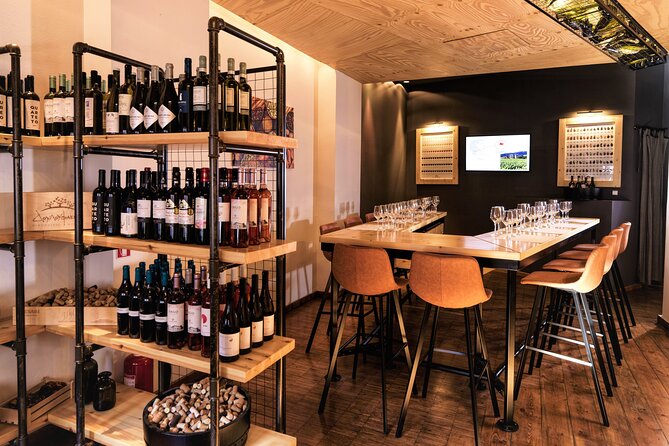
Reviewed · ACROPOLIS TOURS
Athens: Wine Workshop Create your Own Wine under the Acropolis
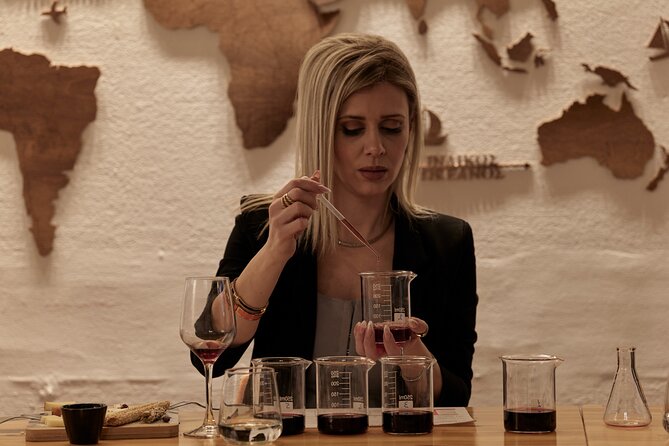
The clever twist here is that you do not simply taste Greek wine, you make a personal blend and take the finished bottle home. A sommelier guides you through five grape varieties, then helps you judge color, aroma, texture, and flavor before you act as your own winemaker.
I like the hands-on finish: designing a label, manually corking the bottle, and sealing it with wax gives the evening a satisfying craft feel. I also like the Greek food pairing, with five artisan cheeses, Kalamata olives, and rusks. The one drawback is that the workshop focuses more on tasting and blending than on the broader story of Greek wine, and one past participant wanted more history and more varieties.
In This Review
- Key points to know
- Making your own Greek blend in Athens
- The five-wine tasting comes first
- Cheese, olives, and the practical side of tasting
- Choosing a blend that fits your taste
- Corking, labeling, and sealing your bottle
- What the two-hour format does well
- Is $83.27 a fair price?
- Who will enjoy this workshop most?
- A few practical points before booking
- Should you book it?
- FAQ
- How long does the Athens wine workshop last?
- Where does the workshop begin and end?
- How many Greek wines will I taste?
- What food is included?
- Do I take a bottle of wine home?
- What is the cancellation policy?
Key points to know
- You blend five Greek wines: Compare each variety before building a cuvée that suits your taste.
- The sommelier shapes the session: Hosts including Iannis, Steph, and Athena have been praised for clear, friendly instruction.
- You leave with your own bottle: Label, cork, and wax seal it yourself.
- Greek pairings are part of the lesson: Five cheeses, Kalamata olives, and whole wheat rusks help show how food changes wine.
- It takes about two hours: The session begins and ends at Tournavitou 9 in Athens.
- The $83.27 price includes the take-home bottle: It also covers tastings, snacks, water, label materials, and the workshop itself.
Making your own Greek blend in Athens
Many Athens wine tastings ask you to sniff, sip, and nod wisely. This one gives you a more useful job: decide what belongs in your own bottle.
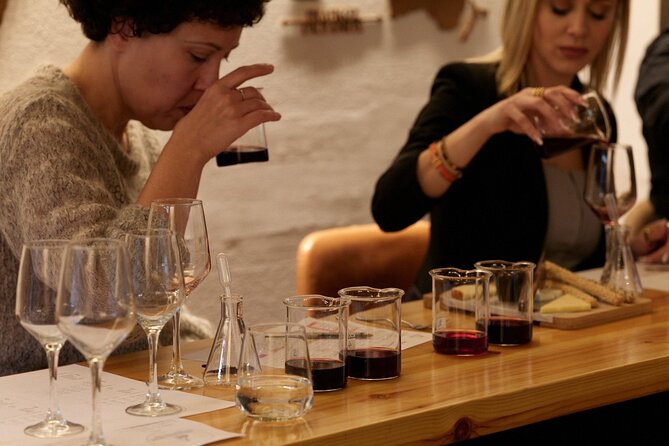
You begin with five Greek wines made from different grape varieties. The point is not to guess the right answer. You taste each wine, study its color, notice its texture, and identify its aromas. Then you consider how the wines might work together in different proportions.
That makes the activity a good choice if wine language usually feels vague or intimidating. Instead of hearing a long lecture about tannins and structure, you use those ideas right away. You can test a blend, adjust it, and taste again. The sommelier stays beside you as a guide, but the final mix reflects your own preferences.
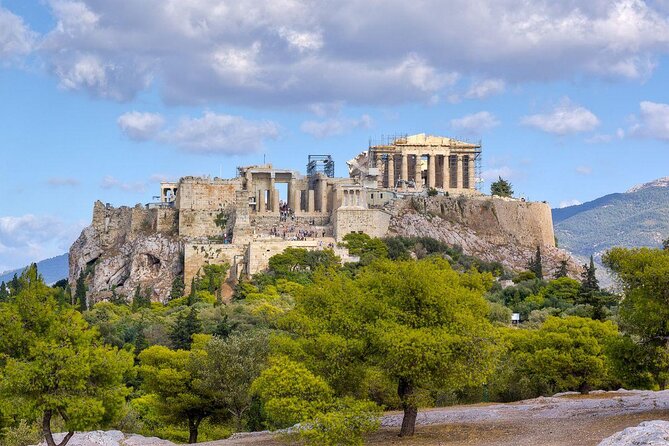
The workshop takes place at Athens Wine Tasting, at Tournavitou 9. The activity is described as being under the Acropolis, but the practical detail that matters most is the meeting address. Check your route carefully before setting out, especially if you are coming from another part of central Athens. Public transportation is nearby, and the experience returns you to the same meeting point.
More Acropolis and Parthenon visits:
- Athens: Acropolis & up to 5 Archaeological Sites Combo Pass
★ 4.4 · 12,619 reviews - Athens: Acropolis Ticket with Optional Audio or Live Guide
★ 4.2 · 11,055 reviews - Athens: Acropolis, Parthenon & Acropolis Museum Guided Tour
★ 4.8 · 9,316 reviews
The five-wine tasting comes first
The opening tasting is the foundation of the whole session. You are given a chance to examine five unusual Greek varieties one by one, rather than being rushed straight into making a blend.
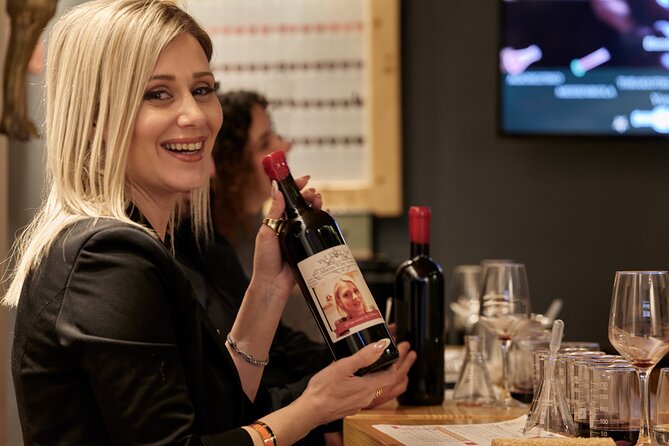
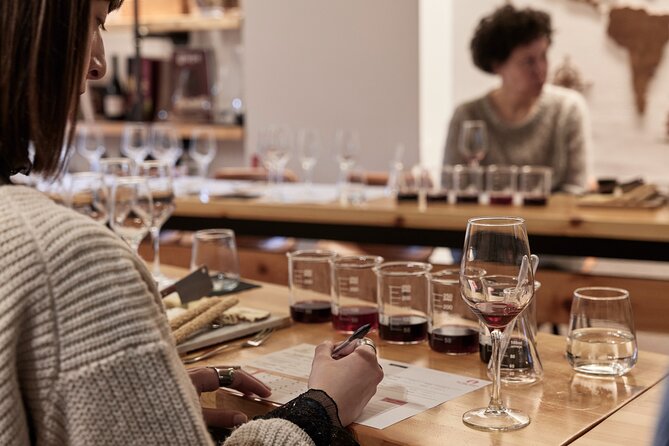
You will look at the wine’s color, smell for different aromas, and feel the texture on your palate. The sommelier explains the character of each wine and gives you a list of the wines, along with a cheat sheet for taking notes. That small detail is useful. By the time you start blending, you have something more solid than a fading memory of the first glass.
The selection also gives you a taste of Greece beyond the familiar international labels found in many wine shops. The emphasis is on Greek grape varieties, including less familiar examples. If you already know a little about wine, you can focus on how the varieties behave in a blend. If you are new to wine, the structure helps you compare rather than simply decide which glass you like best.
The pacing appears to be relaxed enough for questions and conversation. Sessions have been led by Iannis, Steph, and Athena, and the strongest praise has focused on the hosts’ ability to explain wine in a friendly, approachable way. That matters in a tasting workshop. A sommelier who talks over your head can make the activity feel like a class you did not sign up for. Here, the aim is to help you make decisions.
Cheese, olives, and the practical side of tasting
The food is simple, but it has a clear purpose. You receive five Greek artisan cheeses, with one selected to pair with each wine, along with Kalamata olives and whole wheat bread rusks.
This is not a full dinner, so do not book it expecting a substantial meal. Think of it as generous tasting fare. The cheeses give you something to eat between samples and show how a wine changes with salt, fat, and texture. The olives and rusks add familiar Greek flavors without distracting from the main lesson.
I like this pairing because it keeps the experience connected to Greece. You are not only tasting wine in a classroom setting. You are trying it with local foods that you might encounter at a market, taverna, or dinner table during the rest of your stay.
Bottled water is included as well. That is a modest but worthwhile touch during a tasting, particularly when several wines are involved. Gratuities are not included, so plan for that separately if you want to thank the sommelier.
Choosing a blend that fits your taste
The most interesting part begins when you stop tasting the wines separately and start combining them.
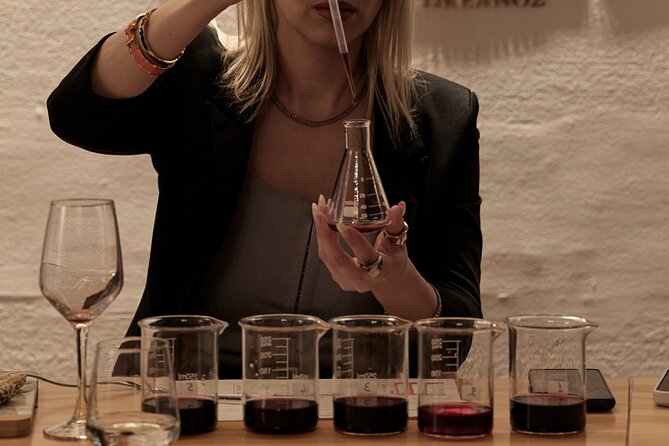
You are encouraged to think like an oenologist, but you do not need technical training. You might prefer a blend with more weight, more freshness, more softness, or a stronger aroma. The sommelier helps you understand what each wine contributes, then you work out the proportions.
This is where the workshop becomes personal. Two people can taste the same five wines and build very different bottles. One person may want a bold, concentrated result. Another may favor a lighter, smoother blend. The activity is designed around that difference rather than trying to produce one official version.
The process can also be harder than it sounds. One person specifically noted that creating the right mix was tough, which is actually part of the fun. You may find that a wine you loved on its own does not improve the blend, or that a modest sample becomes valuable when combined with another variety.
The group size can reach 22 people. That is not a private lesson, so the amount of one-on-one time may depend on the group and the host. Smaller sessions have been described as especially intimate and relaxed, but you should not assume every date will have only a handful of people.
More wine tastings around Athens:
- Athens: Classic Cooking Class with Market Visit and Wine
★ 5.0 · 1,101 reviews - Athens: Food Market Visit and Cooking Class with Wine
★ 4.9 · 1,087 reviews - Athens: Swimming Cruise with Lunch, Wine & Live DJ on Board
★ 4.6 · 1,085 reviews - Best rated Acropolis Wine Tasting
★ 5.0 · 568 reviews
Corking, labeling, and sealing your bottle
Once you have settled on your blend, the workshop turns from tasting into bottle making.
You fill your own bottle, manually cork it, and create a label using the supplied tools. Then you finish it with a traditional wax seal. This final stage gives the experience a physical reward that many tastings lack. You do not leave with only a few tasting notes or a souvenir glass. You take home a bottle marked with your own name, design, or idea.
The label is more than decoration. It gives you a way to remember the blend and the evening. It also makes the bottle a strong gift for someone who enjoys wine, food, or hands-on activities. The experience provider presents it as a gift idea, and that makes sense: the bottle is personal without requiring you to guess someone’s preferred commercial wine.
A practical point is worth keeping in mind. You are responsible for getting the bottle home after the session. The information provided does not specify shipping arrangements or airline packing help, so if you are flying, think ahead about how you will transport it. The bottle is included, but safe transport is your task.
What the two-hour format does well
At about two hours, this is long enough to feel like an activity and short enough to fit into an Athens sightseeing day.
You could schedule it after exploring the Acropolis area, the Plaka, or central Athens, then return to the meeting point. Since no hotel pickup or drop-off is included, allow time to reach Tournavitou 9 on your own. The activity ends where it starts, which makes it easier to plan dinner or another evening stop afterward.
The short format also keeps the session focused. You taste five wines, learn the basic method, make a blend, and finish the bottle without turning the workshop into a full winemaking course. If you want a broad survey of Greek wine regions, vineyard practices, or ancient wine culture, this may feel limited. One past participant wanted more historical background and a larger range of wines.
That limitation is also part of the value. You are paying for participation, not a long academic talk. The useful knowledge is the kind you can apply the next time you open a bottle: how to smell, how to compare texture, how food affects wine, and how blending changes the result.
Is $83.27 a fair price?
At $83.27 per person, this costs more than a basic wine flight, but the comparison is not quite fair.
The price includes five wine samples, Greek cheeses, olives, rusks, bottled water, the sommelier-led lesson, label materials, and a full bottle of your own wine to take away. You also get the small but memorable rituals of corking and wax sealing. If you would otherwise buy a bottle of Greek wine and pay for a separate tasting, the price becomes easier to justify.
The strongest value is for people who enjoy activities with a finished product. You are not simply consuming wine during the session. You are learning a process and leaving with a custom souvenir. That can make the cost reasonable for a couple, a birthday outing, or a gift.
The value is weaker if you are mainly seeking a large number of wines or a detailed regional survey. Five varieties are enough for comparison, but not enough to represent every major Greek wine style. You should book this for the personal blending project, not for the widest possible tasting list.
The activity is recommended by all 77 ratings provided, with a five-star overall score. I would still read that praise in the right way: the workshop’s strongest feature is its warm instruction and hands-on format, not a massive wine selection or formal wine certification.
Who will enjoy this workshop most?
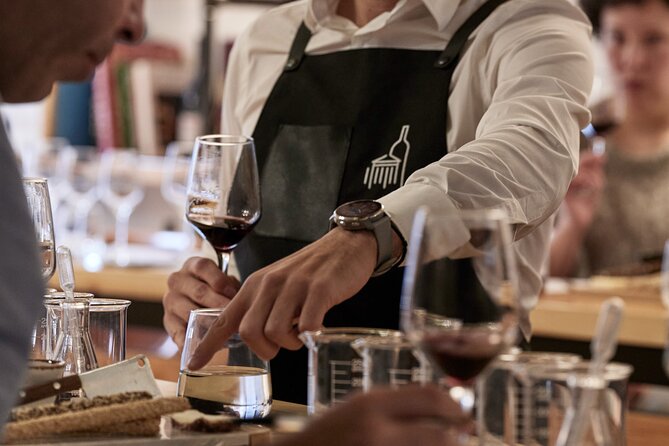
I would recommend it to wine beginners who want a clear introduction without a stiff classroom mood. You can learn the basic vocabulary by using it, and the sommelier helps you make sense of what you are tasting.
It also suits wine drinkers who already know their own preferences and want to test them in a new way. The blending stage gives you room to experiment, and the final label makes the bottle feel like a record of your taste.
Couples and small groups should find plenty to discuss. You can compare your choices, argue over proportions, and see how different personalities produce different blends. The activity is also a good fit for someone who does not drink wine often. One participant who did not consider themselves a wine drinker still found the process enjoyable and learned a great deal.
I would think twice if you dislike tasting several wines in a row, want a full meal, or prefer a quiet private appointment. The maximum group size is 22, and the session is built around shared instruction and conversation.
A few practical points before booking
Confirmation is provided at booking, and the experience is offered in English. It is near public transportation, but there is no hotel pickup or return service. Start from the exact address rather than relying only on a broad map label connected with the Acropolis.
The workshop is booked, on average, 39 days ahead. That does not guarantee every date sells out, but it suggests you should reserve early if your Athens schedule is fixed.
Free cancellation is available up to 24 hours before the start time for a full refund. Changes or cancellations made inside that 24-hour window are not refunded, and the cut-off follows local Athens time.
The setting deserves a practical note. One participant felt the surrounding neighborhood was not the best. That does not tell you everything about the venue or your particular arrival, but it is sensible to check the route, especially if you will be arriving after dark. Use the nearby transport options and make sure you know exactly where Tournavitou 9 is before the appointment.
Should you book it?
Book this workshop if you want a personal Athens souvenir rather than another passive tasting. The five Greek wines, local cheeses, custom label, cork, and wax seal make the two hours feel purposeful. The sommelier’s role is central, and hosts such as Iannis, Steph, and Athena have made the experience friendly for both beginners and experienced wine drinkers.
Skip it if your main goal is a deep study of Greek wine regions, a large number of bottles, or a complete dinner. The selection is focused, and the food is tasting fare.
For most people who like wine, food, and a little creative work, I would consider it a worthwhile Athens evening. You leave with something you made yourself, plus a better sense of how Greek wine can be tasted and blended.
FAQ
How long does the Athens wine workshop last?
The experience lasts approximately two hours.
Where does the workshop begin and end?
It begins at Athens Wine Tasting, Tournavitou 9, Athina 105 53, Greece, and ends back at the same meeting point.
How many Greek wines will I taste?
The workshop includes five different Greek grape varieties for tasting, comparison, and blending.
What food is included?
You receive five Greek artisan cheeses, Kalamata olives, and whole wheat bread rusks, along with bottled water.
Do I take a bottle of wine home?
Yes. You create your own blend, then label, cork, and wax-seal your bottle to take away.
What is the cancellation policy?
You can cancel at least 24 hours before the local start time for a full refund. Cancellations or changes made less than 24 hours before the start time are not refunded.
More Workshops in Athens
- Greek Cooking Class in Athens Including Rooftop Dinner with Acropolis View
★ 5.0 · 826 reviews - Greek Small-Group Athens Cooking Class & Dinner
★ 5.0 · 574 reviews - Athens: Greek Cooking Class & Dinner on a Rooftop
★ 5.0 · 383 reviews - Athens: Greek Cuisine Cooking Class and 3-Course Dinner
★ 4.8 · 270 reviews
Freshly added Athens trips
- Athens and Ancient Corinth Private from Athens★ 5.0 · 3 reviews
- From Athens: Mycenae and Epidaurus Private Tour★ 4.8 · 3 reviews
- Full day Meteora private tour★ 5.0 · 3 reviews
- Double Shore Dive (certified divers)★ 4.5 · 3 reviews
- Athens Hills: Mythology Treasure Hunt★ 5.0 · 3 reviews
- Sunset & swimming at Cape Sounio, Poseidon temple★ 5.0 · 3 reviews
- Philosophy Experience at Plato’s Academy Park – basic version★ 5.0 · 3 reviews
- Corinth Canal, Ancient Corinth, Mycenae, Nafplio & Epidaurus Private Sightseeing★ 5.0 · 3 reviews
Acropolis Tours, compared.

Acropolis & up to 5 Archaeological Sites Combo Pass
Read our review →

Acropolis, Parthenon & Acropolis Museum Guided Tour
Read our review →
Acropolis, Parthenon & Acropolis Museum Guided Tour
Read our review →


Acropolis monuments & Parthenon Walking Tour with Optional Acropolis Museum
Read our review →Browse the lists this tour appears in