
Reviewed · WALKING TOURS
Athens: Timeless Hills Walking Tour & Mount Lycabettus
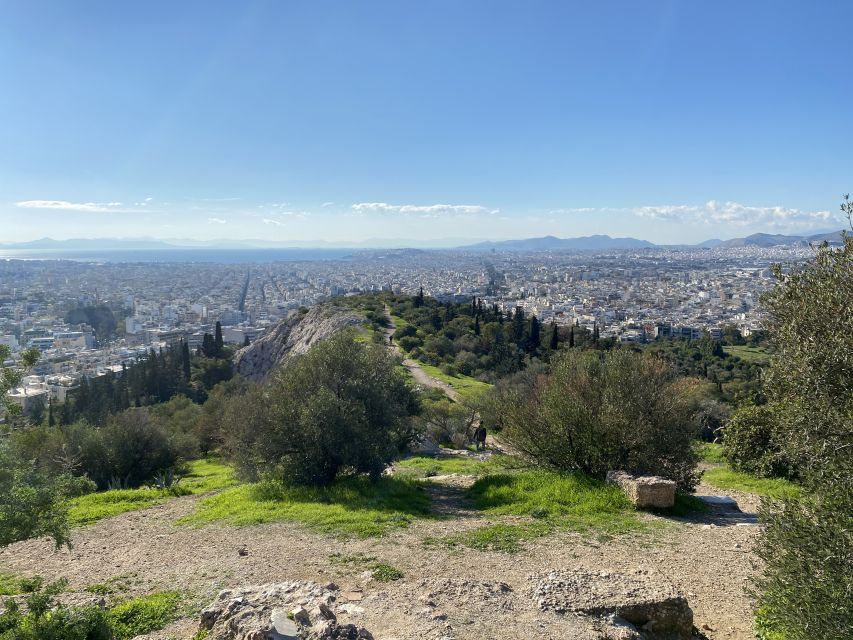
Athens reveals itself best from above, and this tour strings together several of the city’s finest viewpoints in one long walk. You climb the Hill of the Muses, the Hill of the Nymphs, the Pnyx, and finally Mount Lycabettus, with the Acropolis, Parthenon, and city spreading out below.
I like the way the route mixes major sights with smaller discoveries, especially Anafiotika’s island-style lanes and the Pnyx, where Athenian citizens once gathered for public debate. I also like the private format, which gives your guide room to adjust the pace and add stops, as Yiannis did for a changing-of-the-guards view and a small food detour.
The catch is simple: this is an active 7.4-kilometer walk with uphill sections, not an easy city stroll. Four hours can pass quickly, so wear good shoes, carry plenty of water, and think carefully before booking in the hottest part of the day.
In This Review
- Key points to know before you book
- Starting in Koukaki beneath the Acropolis
- The Hill of the Muses and Hill of the Nymphs
- The Pnyx and the roots of public debate
- Areopagus and the Odeon of Herod Atticus
- Anafiotika, Athens’ little island corner
- Temple of Zeus and Hadrian’s Arch
- A walk through the National Gardens
- The final climb to Mount Lycabettus
- What the guide adds to the day
- Is $141 per person good value?
- Who should book this walk?
- My verdict on the Timeless Hills Walking Tour
- FAQ
- Where does the Athens hills walking tour begin?
- Where does the walk finish?
- How long is the tour?
- How far do you walk?
- Is this an easy walking tour?
- What languages are available?
- Is the tour private?
- Are archaeological-site and museum tickets included?
- What is included in the $141 price?
Key points to know before you book
- Mount Lycabettus is the grand finale: The final climb rewards you with broad views over Athens and toward the Acropolis.
- The Pnyx adds meaning beyond the postcard: You visit the place linked with the Assembly of Classical Athens and the beginnings of Athenian democracy.
- Anafiotika feels unlike the rest of central Athens: Its tiny lanes and whitewashed style resemble a miniature Greek island village.
- The route covers about 7.4 kilometers: Expect hills, steps, uneven ground, and a steady amount of walking.
- A private guide makes the route flexible: Guides such as Yiannis, Natalia, and Magda have been praised for energy, humor, patience, and storytelling.
- The price includes a coffee and snack: At $141 per person, the value rests mainly in the private guiding and the amount of Athens covered on foot.
Starting in Koukaki beneath the Acropolis
Your walk begins at Trekking Hellas Athens Base on Parthenonos 12, in Koukaki. This is a useful starting point because you are already close to the Acropolis and its southern hills, rather than spending the first part of the tour crossing the city.
Koukaki gives you an immediate sense of modern Athens: cafes, apartment buildings, local foot traffic, and the steady presence of the Acropolis nearby. From here, the route heads uphill, so the day starts with effort rather than a gentle warm-up.
The tour is advertised as four hours, with the active walking portion described as about three and a half hours. That distinction matters. You are covering a lot of ground, and the time includes stops for views, stories, photos, coffee, and a snack.
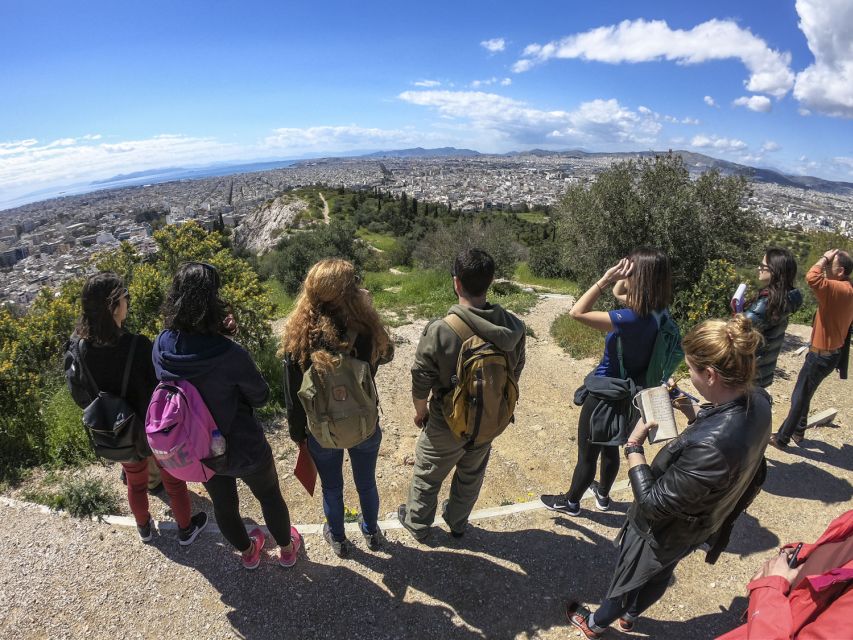
Because this is a private group, your guide can respond to your pace and interests. That does not turn the outing into a leisurely walk, but it can make a major difference if you want more time for photographs or need a short pause on a climb.
More Lycabettus Hill outings:
- Mount Lycabettus Walking Tour in Athens
★ 4.0 · 20 reviews - Acropolis & Lycabettus: Discover Hidden Gems of Athens
★ 4.8 · 4 reviews - Athens Sunset Tour – Acropolis Site & Lycabettus Hill
★ 5.0 · 4 reviews
The Hill of the Muses and Hill of the Nymphs
The first major climb takes you onto the Hill of the Muses, also called Philopappos Hill, and the Hill of the Nymphs. These wooded and rocky slopes give you some of the best early views of the Acropolis.
From these hills, the Parthenon appears in a particularly satisfying setting. You are not looking up from the crowded streets below. Instead, you see the Acropolis across open space, with Athens filling the lower part of the view.
This section is valuable because it gives you geographic bearings. Your guide can point out how the Acropolis relates to the surrounding neighborhoods and hills, helping the city make more sense as the walk continues.
The footing is part of the bargain. A hill walk can include uneven surfaces and uphill stretches, so this is not the place for thin sandals or shoes with poor grip. The route is manageable for an active person, but you should not treat it as a flat sightseeing loop.
The hills also provide a quieter contrast to the city streets. You remain in central Athens, yet the setting changes quickly once you are among the paths and viewpoints. Bring water within easy reach, especially from late spring through summer.
The Pnyx and the roots of public debate
From the hills, the route continues to the Pnyx. This is one of the most meaningful stops because it connects the physical setting of Athens with the city’s political past.
The Pnyx was the meeting place of the Assembly in Classical Athens. Here, citizens gathered to discuss and decide public matters. Your guide explains why this rocky hillside matters, turning what might otherwise seem like an open patch of ground into a key place in the story of Athenian democracy.
I find this stop more rewarding than simply adding another monument to a checklist. The Pnyx asks you to picture people standing outdoors, speaking to one another, and taking part in civic life. The setting also gives you another strong angle toward the Acropolis.
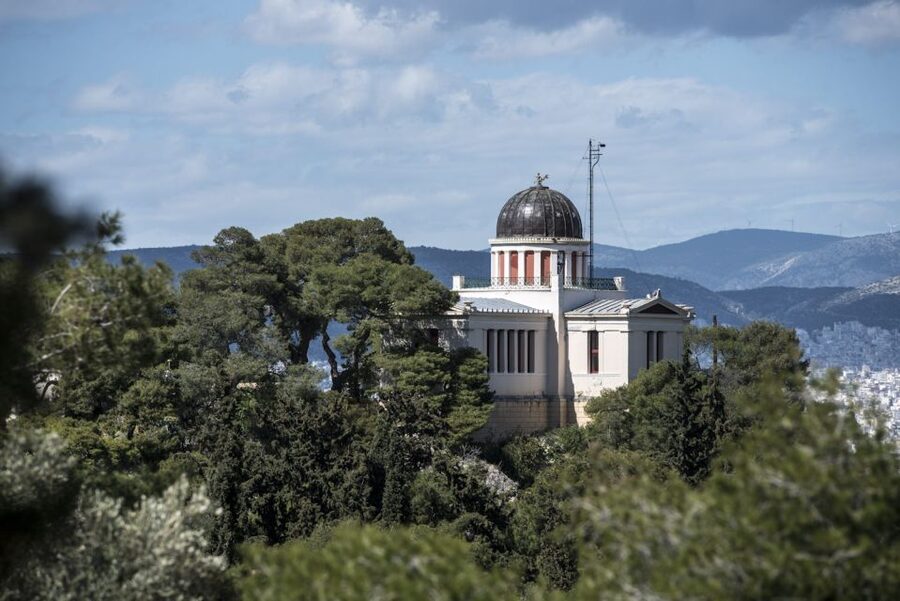
You will also see the National Observatory, a 19th-century building connected with Athens’ modern scientific life. It adds another layer to the route, moving from Classical Athens to the city’s later development without requiring a museum visit.
Keep in mind that admission to archaeological sites and museums is not included. This is an outdoor walking tour with explanations from your guide, not a ticketed archaeological tour or professional museum visit.
Areopagus and the Odeon of Herod Atticus
The walk then reaches the Hill of Areopagus and the area near the Odeon of Herod Atticus. These stops place you close to the Acropolis, but the experience is different from entering the Acropolis itself.
Areopagus is a rocky rise with a strong view over the city and nearby monuments. It is also another point where your guide can connect the scenery with the political and cultural life of ancient Athens.
The Odeon of Herod Atticus is a large ancient theater on the southern slope of the Acropolis. From the route, you get to appreciate its position and scale from outside. Since the tour does not include archaeological-site admission, you should plan a separate Acropolis visit if you want to go inside the monuments or explore the theater more closely.
This is one reason the walking tour works well as an introduction rather than a complete substitute for Athens sightseeing. You see many important places and learn how they fit together, but you do not spend time inside the Acropolis Museum or on a guided visit through the Acropolis complex.
More Athens walking tours:
- Athens: Acropolis and Parthenon Guided Walking Tour
★ 4.6 · 5,882 reviews - Greek Food Walking Tour in Athens
★ 5.0 · 4,740 reviews - Acropolis: Acropolis and Parthenon Guided Walking Tour
★ 4.7 · 3,442 reviews - Acropolis monuments & Parthenon Walking Tour with Optional Acropolis Museum
★ 5.0 · 2,678 reviews
Anafiotika, Athens’ little island corner
Anafiotika is one of the most charming parts of the walk. Tucked beneath the Acropolis, this small district has narrow lanes and a whitewashed, island-like appearance. It feels like a miniature Greek village placed inside the capital.
The neighborhood is associated with builders from Anafi, a Cycladic island, and its style helps explain the name and look of the area. You move through a maze rather than along a grand avenue, which makes this section feel more personal and less like a standard monument stop.
This is also the sort of place where a local guide can make a real difference. A guide who knows the lanes can help you find the right route and point out details you might pass without noticing. Yiannis has been singled out for revealing lesser-known spots around the foot of the Acropolis, and that kind of local knowledge suits Anafiotika especially well.
The narrow paths may not be comfortable for everyone. You should expect uneven walking and some maneuvering through tight spaces. Still, the stop breaks up the climbing and gives you a welcome change from broad viewpoints and formal ancient sites.
The route then moves toward the Acropolis Museum area. You will see the museum’s setting and understand its place in the city, but museum admission and an interior tour are not part of this experience.
Temple of Zeus and Hadrian’s Arch
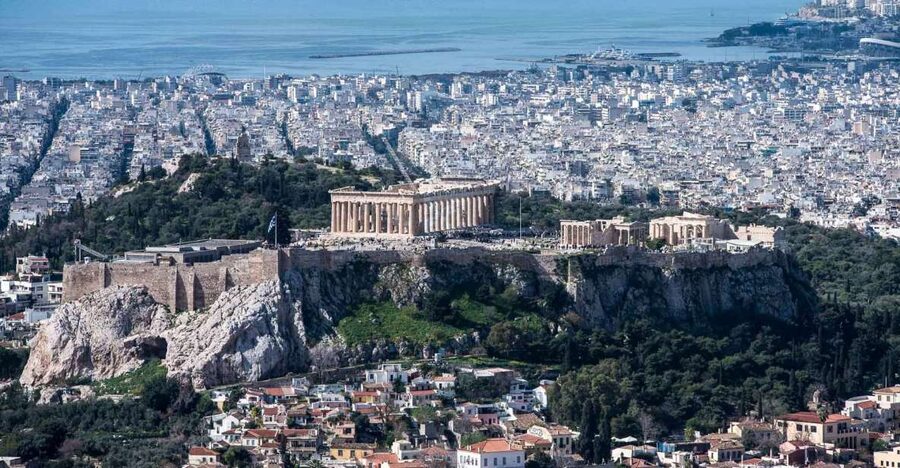
Next comes the Temple of Zeus, one of the largest ancient temples in Athens, followed by Hadrian’s Arch. These sights help show how the city expanded and changed across different periods.
The Temple of Zeus is best understood from its surviving columns and enormous scale. Even in its incomplete state, it gives you a clear sense of the ambition behind the original project. It is an impressive outdoor stop, though again, the tour does not include entry to the archaeological site.
Hadrian’s Arch sits nearby and marks a symbolic transition between the old city and the Roman-era expansion associated with Emperor Hadrian. Your guide can explain how this part of Athens fits into the larger story of the city.
These stops are less about lingering inside one monument and more about building a connected picture as you walk. You see ancient remains, modern streets, civic buildings, and green spaces in one continuous route.
A walk through the National Gardens
The National Gardens offer a welcome change after the stone, slopes, and traffic of central Athens. You walk through this historic park before reaching the Presidential Mansion.
The gardens give you a place to slow down for a little while, although the tour remains active overall. They also help you see a different side of Athens. The city is not only ancient ruins and crowded viewpoints, but also shaded paths and formal public spaces.
The Presidential Mansion adds a modern civic landmark to the route. One especially useful detail from the tour’s guiding style is the chance to see the changing of the guards from a less crowded spot. Yiannis has been praised for knowing such a viewpoint, though exact stops can depend on timing and the guide’s judgment.
That flexibility is one of the better reasons to choose a private group. A fixed large-group route tends to move on schedule. A private guide may be able to pause for a ceremony, a photo, or a quick local food stop when conditions allow.
The final climb to Mount Lycabettus
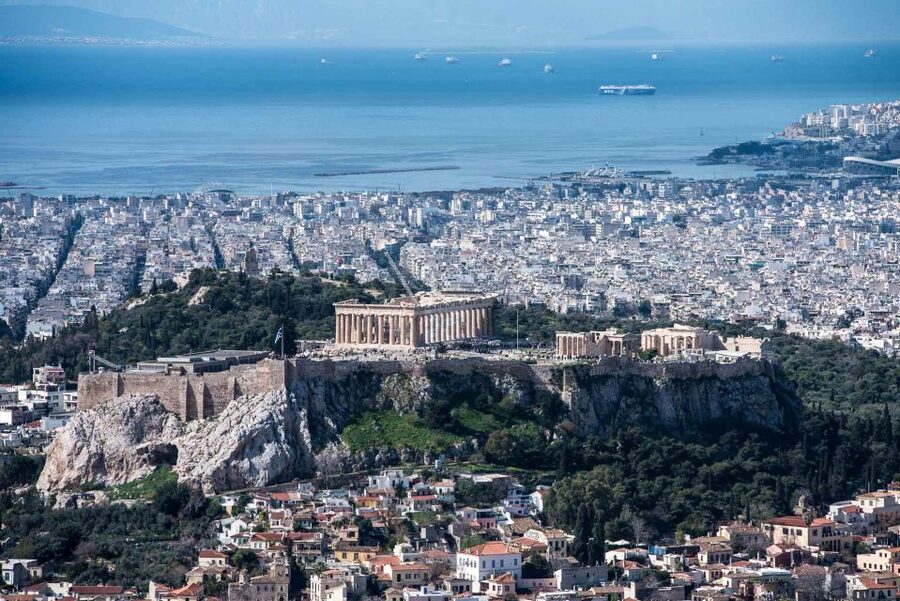
The route’s last major challenge is Mount Lycabettus. You reach it after walking through central Athens and the National Gardens, so your legs have already done plenty of work.
The climb is worth taking seriously. Mount Lycabettus rises above the city and offers a broad panorama that includes the Acropolis, the Parthenon, and much of Athens. The payoff is not just another view, but a sense of how large the capital is beyond the historic center.
The timing also makes this a useful final viewpoint. By this stage, you have seen Athens from several lower hills and urban corners. Lycabettus brings those pieces together from a higher position.
You should not book this tour mainly for the final view while ignoring the effort needed to reach it. The uphill sections are central to the experience. If you enjoy walking and feel comfortable with a sustained half-day outing, the climb adds a strong finish. If you are looking for a low-effort sightseeing trip, you may find this route tiring.
After the summit, the walk goes down through Kolonaki and finishes at Evangelismos Metro Station. Ending at a metro stop makes the final location practical, especially if you plan to continue exploring Athens independently.
What the guide adds to the day
The guide is the main variable that can shape this experience. The tour is available in English or Greek and is run as a private group, so you get direct interaction rather than a large crowd following a flag.
Several guide names connected with the route include Yiannis, Natalia, and Magda. Yiannis is known for bringing energy, patience, photo stops, a food detour, and a quieter place to watch the guards. Natalia has led the route with an upbeat approach and clear historical storytelling, while Magda has been described as energetic, empathetic, and funny.
You should still think of these as examples of the guiding style, not a promise that one particular person will lead your departure. Guide assignment can depend on availability.
The best use of your guide is to ask questions as you go. This route crosses ancient political sites, Roman monuments, modern civic spaces, residential lanes, and major viewpoints. A good conversation helps connect those pieces.
Is $141 per person good value?
At $141 per person, this is not a budget walking tour. The price includes an experienced Trekking Hellas Athens guide, coffee, a snack, and VAT. It does not include admission to archaeological sites or museums.
The value comes from the private format and the amount of ground covered. In four hours, you visit several hills and central landmarks that would take more planning to link on your own. You also avoid spending your time figuring out which path connects Philopappos Hill, Anafiotika, the National Gardens, and Lycabettus.
I think the price makes the most sense for a couple, family, or small private group that values personal guiding and wants a city overview on foot. It is less compelling if you already know Athens well, prefer to visit monuments inside, or mainly want a quick viewpoint without a long walk.
A coffee and snack are useful but should not be the deciding factor. The real purchase is the route design, local orientation, and guide’s ability to add context and adapt the outing.
Who should book this walk?
You are a good match if you enjoy active sightseeing, outdoor history, and panoramic views. The route suits someone who wants to understand Athens spatially, not just visit one monument at a time.
It also works well early in a stay because it introduces Koukaki, the Acropolis area, the city center, Kolonaki, and Evangelismos. After the walk, you will have a better sense of where several major areas sit in relation to one another.
You should reconsider if you have limited walking ability, dislike hills, or want a relaxed pace. The route covers about 4.6 miles and includes uphill parts. Good shoes and plenty of water are essential, especially in warm weather.
Book with free cancellation up to 24 hours before departure if your plans may shift. You can also reserve now and pay later, which gives you some flexibility while organizing an Athens visit.
My verdict on the Timeless Hills Walking Tour
I would book this tour for the views, the route’s range, and the chance to see Athens as a connected city rather than a series of isolated sights. The Pnyx, Anafiotika, and Mount Lycabettus give the walk more character than a standard center-city stroll.
The strongest match is an active first-time visitor who wants a private guide, enjoys stories along the way, and does not mind working for the panorama. If your priority is entering the Acropolis, touring museums, or avoiding strenuous walking, spend your $141 elsewhere.
For everyone in between, ask yourself one practical question: do you want to spend four hours seeing Athens from its hills and streets, or inside its monuments? If the answer is the hills and streets, this is a well-planned and rewarding choice.
FAQ
Where does the Athens hills walking tour begin?
The tour begins at Trekking Hellas Athens Base, Parthenonos 12, Athina 117 42, Greece, in the Koukaki area.
Where does the walk finish?
The walk finishes at Evangelismos Metro Station after passing through the Kolonaki area.
How long is the tour?
The experience lasts four hours. The active walking portion is described as about three and a half hours.
How far do you walk?
The route covers about 7.4 kilometers, or 4.6 miles, including uphill sections.
Is this an easy walking tour?
No. It is an active walking tour with several hills and uphill parts, including the climb toward Mount Lycabettus. Good shoes and plenty of water are recommended.
What languages are available?
The live guide is available in English or Greek.
Is the tour private?
Yes. The experience is offered for a private group.
Are archaeological-site and museum tickets included?
No. Admission to archaeological sites and professional guidance inside sites or museums are not included.
What is included in the $141 price?
The price includes an experienced Trekking Hellas Athens guide, coffee, a snack, and VAT.
Freshly added Athens trips
- Athens and Ancient Corinth Private from Athens★ 5.0 · 3 reviews
- Full day Meteora private tour★ 5.0 · 3 reviews
- Double Shore Dive (certified divers)★ 4.5 · 3 reviews
- From Athens: Mycenae and Epidaurus Private Tour★ 4.8 · 3 reviews
- Athens Hills: Mythology Treasure Hunt★ 5.0 · 3 reviews
- Sunset & swimming at Cape Sounio, Poseidon temple★ 5.0 · 3 reviews
- Philosophy Experience at Plato’s Academy Park – basic version★ 5.0 · 3 reviews
- Private Acropolis Tour – Ticket Included★ 5.0 · 3 reviews
Walking Tours, compared.




Acropolis monuments & Parthenon Walking Tour with Optional Acropolis Museum
Read our review →

Athens Authentic Greek Food Walking Tour (Small Group)
Read our review →
Early Morning Acropolis & Old Athens Guided Walking Tour
Read our review →
Browse the lists this tour appears in