
Reviewed · ACROPOLIS TOURS
Athens: The Acropolis Walking Group Tour with a French Guide
The best reason to take this French-language Acropolis tour is the timing. An afternoon or early evening visit can mean softer light, cooler air, and a fine chance of seeing the city turn gold from the hilltop. One visitor even caught the evening flag ceremony and sunset during the same outing.
I like the way the guide puts the monuments into a clear timeline, from the Theater of Dionysus to the Parthenon. I also like the mix of major sights and smaller stops, including the Healing Temple of Asclepius and the Caryatids. The main drawback is its fixed 1.5-hour length: one guest found the pace too slow, while others may wish for more time at the monuments.
In This Review
- Key points to know before you climb
- Why the late afternoon can be the right time
- Finding the Athens Walks meeting point
- Starting below the Acropolis at the Theater of Dionysus
- The Healing Temple and Odeon of Herodes Atticus
- Entering through the Propylaeum and Temple of Athena Nike
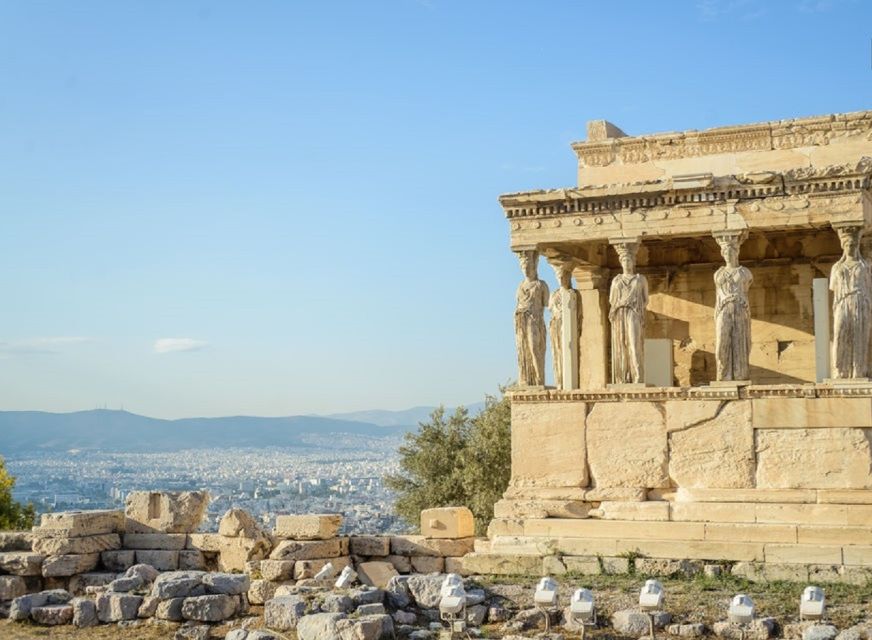
- The Erechtheum and its famous Caryatids
- The Parthenon and the view over modern Athens
- What the 1.5-hour schedule really gives you
- French guidance, storytelling, and the small-group setting
- Is $80 a fair price?
- Who should book this Acropolis tour?
- Final verdict: a strong French-language introduction
- FAQ
- How long does the Acropolis walking tour last?
- What language is the tour conducted in?
- What monuments are included?
- Where is the meeting point?
- Is hotel pickup included?
- Do I need to bring identification?
- Is the tour suitable for wheelchair users?
Key points to know before you climb
- French-speaking archaeologist guide: Expect historical explanations from a licensed guide, with Myrto praised for clear stories, good humor, and useful anecdotes.
- Late-day setting: Afternoon departures may offer less heat and fewer people than morning visits, plus attractive sunset light.
- Major Acropolis monuments: The route includes the Parthenon, Propylaeum, Temple of Athena Nike, Erechtheum, Theater of Dionysus, Asclepius sanctuary, and Odeon of Herodes Atticus.
- Uneven uphill walk: You need comfortable shoes, steady footing, and enough mobility for slippery stone surfaces.
- Ticket details need attention: The advertised price is $80 per person, but check your selected booking option carefully because the entrance fee may need to be bought separately.
- Good French-language value: This suits you best if you want context and interpretation rather than simply walking through the ruins with an audio guide.
Why the late afternoon can be the right time
The Acropolis is exposed, paved in old stone, and reached by an uphill walk. In summer, the heat can make even a short visit tiring, so a later departure is a sensible choice. The tour is described as an afternoon walking visit, with starting times depending on availability.
A 3:30 p.m. departure has been used by some groups, and the site may remain open until 6 p.m. during part of the season. That schedule gives you the chance to see the monuments in changing light without committing to a full evening outing. It also avoids the strongest midday sun, though you should still bring sunscreen, a hat, sunglasses, and light clothing.
The crowd pattern is not fixed. One guide explained that mornings can be busier, especially during the season in question, but conditions change from day to day. The late afternoon is not a guarantee of solitude. Its real benefit is the combination of cooler conditions, lower sun, and the possibility of a sunset view.
There is also a small ceremonial detail to watch for. One guest saw soldiers come to lower the flag at the end of the day and found it a memorable extra. It is not presented as a scheduled part of the tour, so treat it as a possible bonus rather than something to plan your whole visit around.
More Acropolis and Parthenon visits:
- Athens: Acropolis & up to 5 Archaeological Sites Combo Pass
★ 4.4 · 12,619 reviews - Athens: Acropolis Ticket with Optional Audio or Live Guide
★ 4.2 · 11,055 reviews - Athens: Acropolis, Parthenon & Acropolis Museum Guided Tour
★ 4.8 · 9,316 reviews
Finding the Athens Walks meeting point
You check in at the Athens Walks Tour Company office at Porinou 5, postal code 11742, near the Acropolis. The meeting point is in a central area, and the office has been described as easy to find and welcoming.
Give yourself enough time to locate the office before the scheduled start. This is not a hotel pickup tour, so you must make your own way there. Hotel pickup and drop-off are not included.
The check-in point matters because the tour uses an express security check rather than asking you to wait through the standard line. That can save useful time at one of Athens’ busiest archaeological sites. It does not remove the need for an ID, ticket arrangements, or the uphill walk once you enter.
Starting below the Acropolis at the Theater of Dionysus
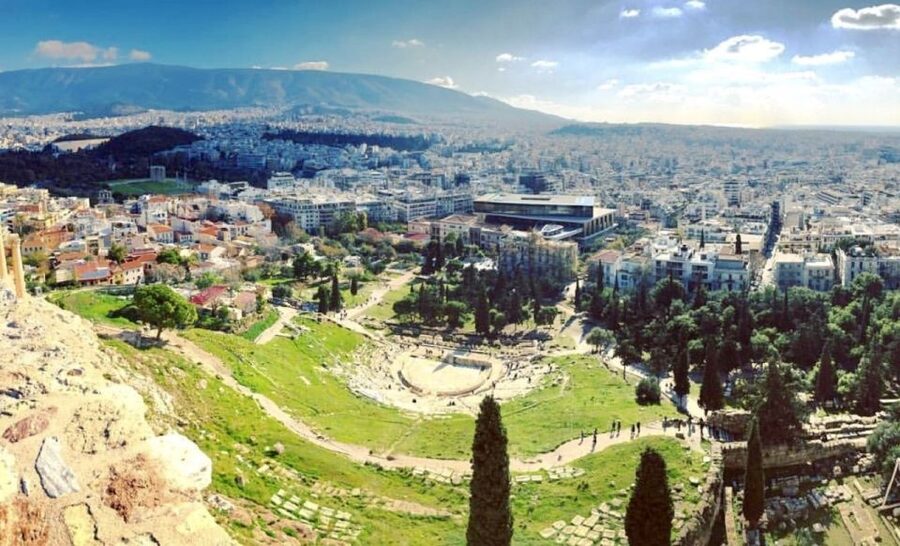
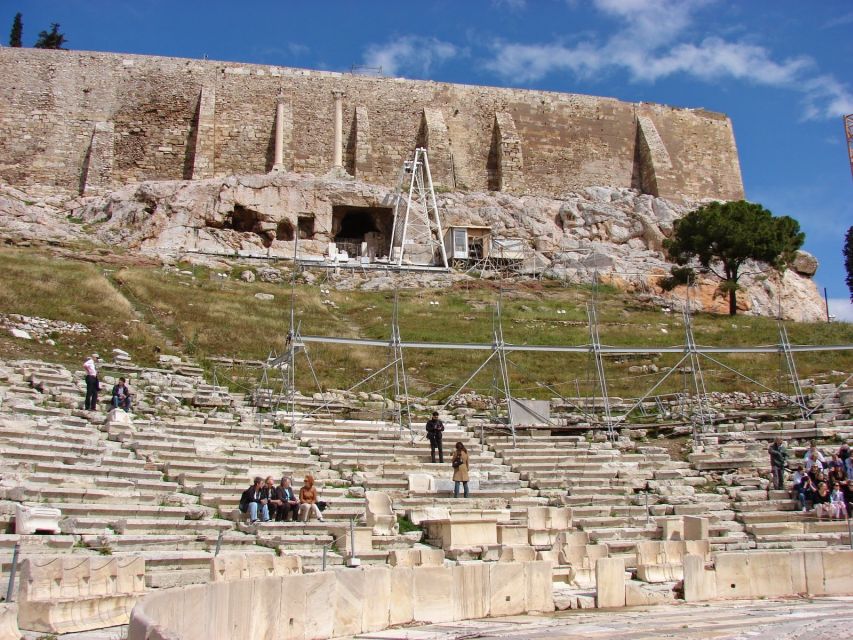
The route begins among the lower monuments of the Acropolis, where you get a useful reminder that this hill was not only a religious center. The Theater of Dionysus is presented as the first theater of human civilization, and it gives the tour a strong opening.
Here, your French-speaking guide can explain how performance, religion, and public life came together in ancient Athens. This early stop also helps you understand the site as a working civic and sacred center, not simply a collection of photogenic stones.
A guide-led explanation is especially helpful at the lower remains because many foundations are difficult to read on their own. A few columns or broken walls may look modest until you learn what each space was used for. The tour’s chronological approach makes the later monuments easier to understand.
The 1.5-hour schedule means you will not have unlimited time to linger. If the guide stops for extended explanations, the walk may feel slow, particularly if you prefer to move quickly from one monument to the next. That tradeoff is part of the experience: you get interpretation, but less free wandering.
The Healing Temple and Odeon of Herodes Atticus
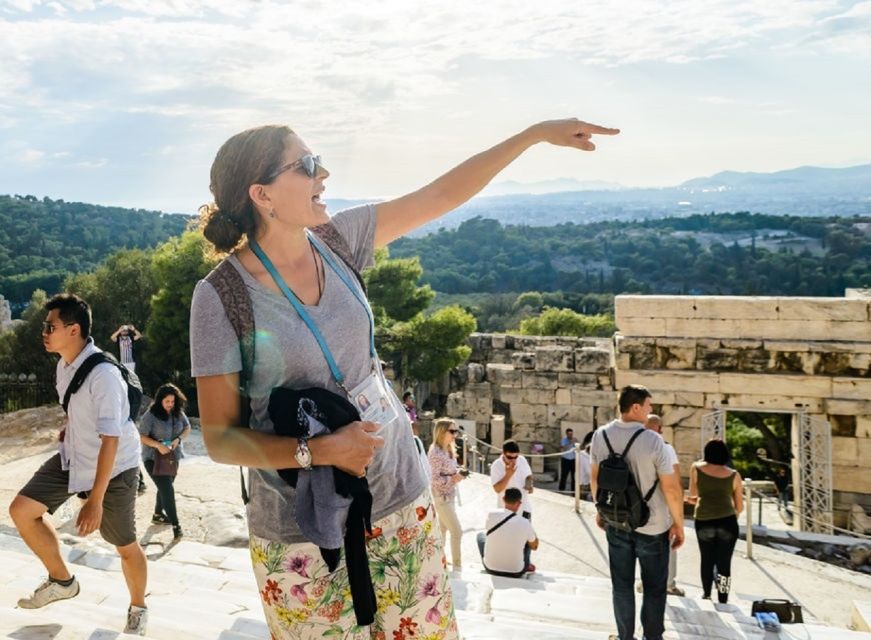
The route continues to the remains of the Healing Temple of Asclepius. This stop adds a different side of ancient life, since the Acropolis was connected not only with worship and political identity but also with hopes for health and recovery.
The Odeon of Herodes Atticus offers another change of mood. Its remains help show how the hill continued to serve public gatherings and performances across different periods. The tour presents more than 2,500 years of use, change, and rebuilding, so you are not looking at one frozen moment in Greek history.
This is where a good guide earns the fee. The stones alone cannot easily explain how the site changed over time. Clear French narration and well-chosen anecdotes can turn separate ruins into a story you can follow.
One guide, Myrto, was especially praised for connecting the site’s past with modern Athens. That kind of link can make the visit feel less like a lesson about distant dates and more like an explanation of how the ancient city still shapes the capital around you.
More Athens walking tours:
- Athens: Acropolis and Parthenon Guided Walking Tour
★ 4.6 · 5,882 reviews - Greek Food Walking Tour in Athens
★ 5.0 · 4,740 reviews - Acropolis: Acropolis and Parthenon Guided Walking Tour
★ 4.7 · 3,442 reviews - Acropolis monuments & Parthenon Walking Tour with Optional Acropolis Museum
★ 5.0 · 2,678 reviews
Entering through the Propylaeum and Temple of Athena Nike
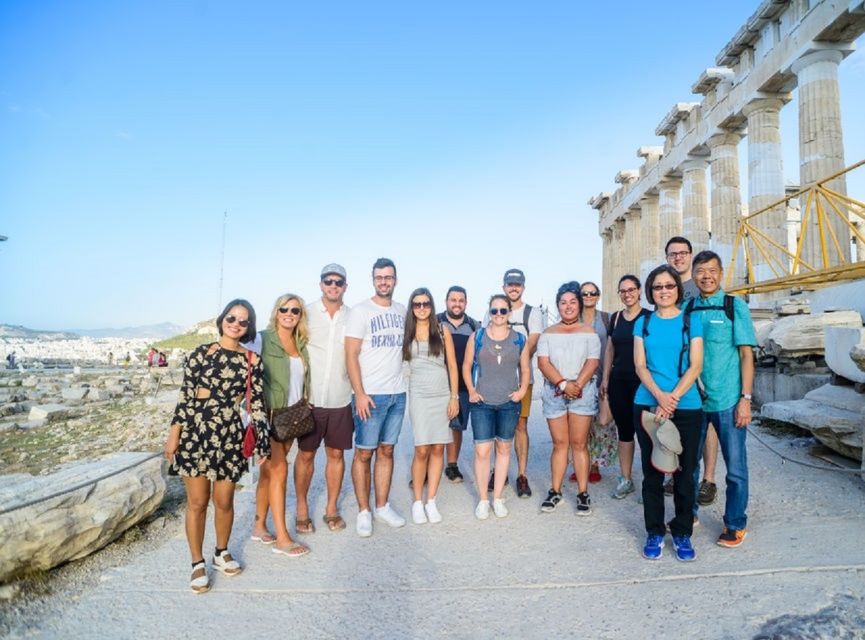
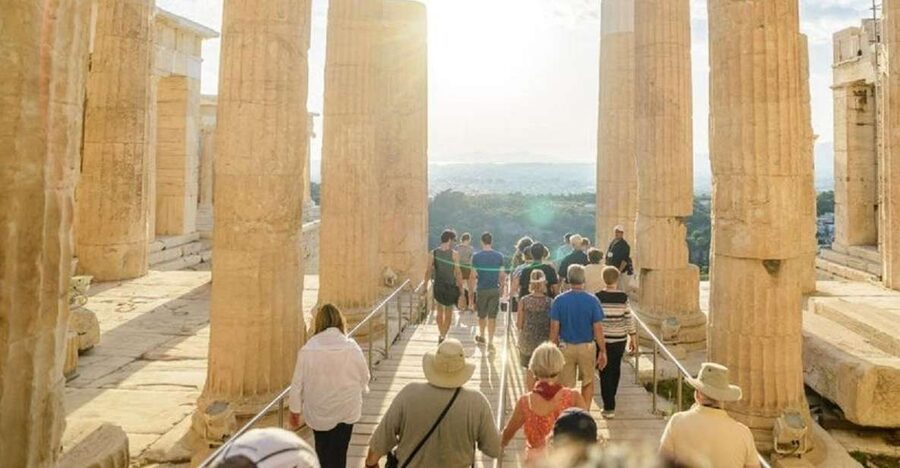
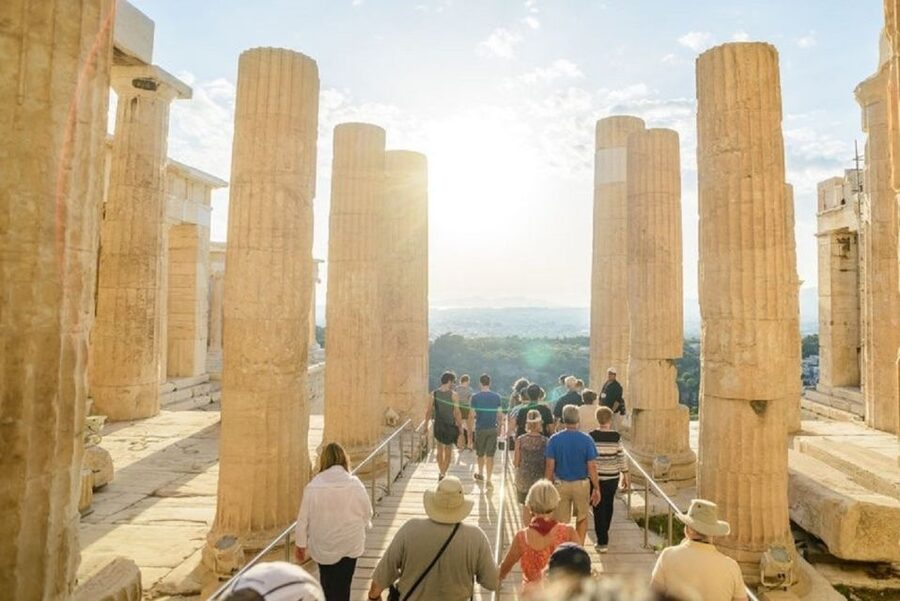
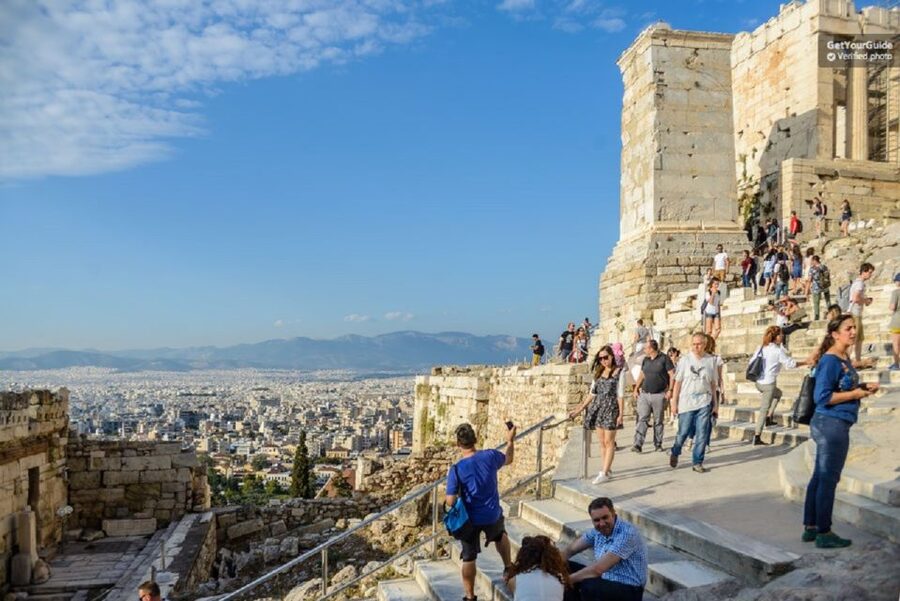
The Propylaeum was the grand gateway to the Acropolis, and walking toward it gives you a sense of the hill’s ceremonial importance. The approach is part of the drama. You are climbing toward the central monuments, with Athens opening out behind and below you.
Near the entrance is the Temple of Athena Nike, known as the Temple of Wingless Victory. The name itself invites a short explanation, and a French-speaking archaeologist can provide the context that a quick photograph cannot.
The climb is not long in tour terms, but it is physically real. You will walk uphill across uneven surfaces that can be slippery. Comfortable shoes are essential, and this is not a good choice if you have serious back problems, limited mobility, or need a wheelchair-accessible route.
Baby strollers are not allowed, and large bags and luggage are also prohibited. Food and drinks cannot be taken into the archaeological area, with water specifically restricted according to the site rules supplied for this activity. Plan to eat before or after, and carry only what you need.
The Erechtheum and its famous Caryatids
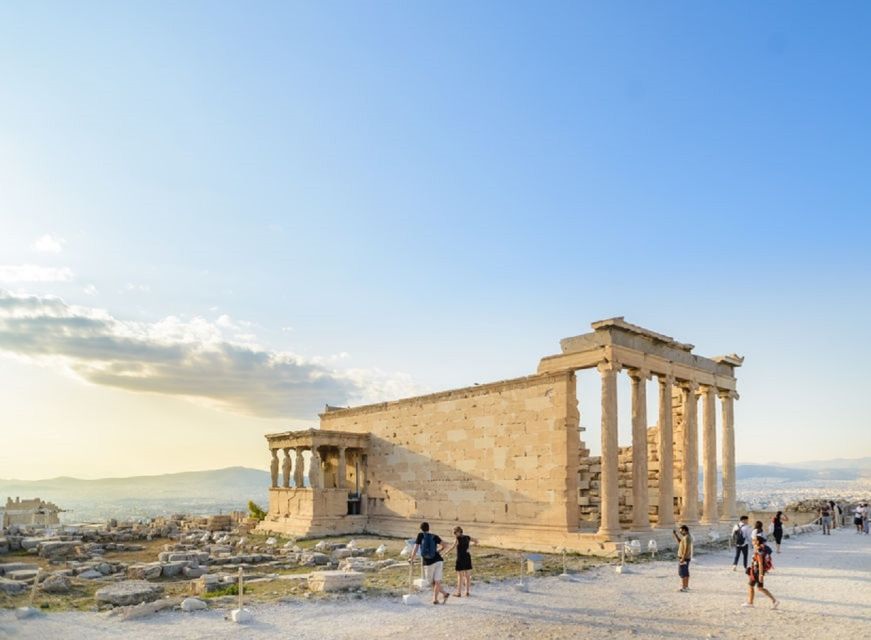
The Erechtheum is one of the most memorable stops because of the Porch of the Caryatids. Instead of ordinary columns, the porch uses sculpted female figures as architectural supports. Their graceful appearance can make the structure seem almost delicate, though the building’s purpose and religious associations were serious.
Your guide can help explain why the Erechtheum differs so much in shape and character from the Parthenon. It is an important stop for understanding that the Acropolis was not built as one simple block of matching temples.
This is also a place where the guide’s position matters. In a group, you may be standing among other people while trying to see the details above you. A live guide can point out what to look for and keep the explanation focused, but you should not expect long quiet periods alone with the Caryatids.
The tour promises an astonishing collection of sculptures, though the exact viewing conditions depend on crowd levels and the movement of the group. Keep your expectations practical: this is a guided overview, not an extended museum visit.
The Parthenon and the view over modern Athens
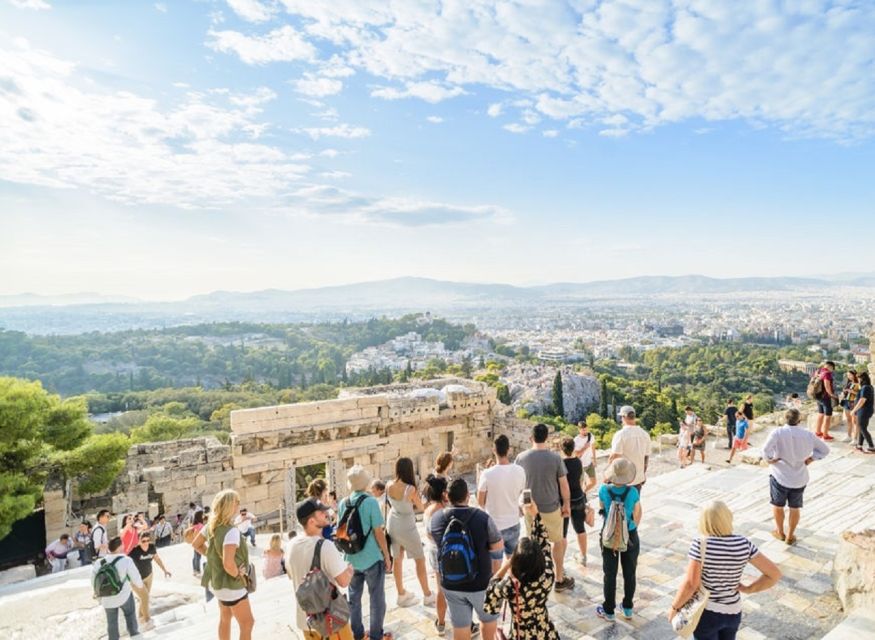
The Parthenon is the high point of the visit, both physically and visually. It is the monument most people picture when they think of ancient Athens, yet seeing it from the Acropolis hill gives it a different scale. The structure is damaged, altered, and partly restored, but its design remains easy to recognize.
The guide explains why the temple mattered and how it fits into the larger story of classical Athens. You will also have the chance to look beyond the ruins toward modern Athens. The city spreads out in every direction, creating the sharp contrast that makes this visit so powerful: ancient stone in the foreground, a living capital behind it.
The views are one of the strongest reasons to choose a late visit. As the sun drops, the stone can take on warmer color, and the city may appear softer and less harsh. The sunset is not guaranteed, since it depends on your date, weather, and exact departure time, but the possibility adds real appeal.
Make sure you leave room in your attention for the view. A tightly packed explanation can make you feel rushed, while a slower guide may give you more time to absorb the setting. The pace has drawn mixed reactions, so this tour is a better fit for you if you prefer a thoughtful walk over a rapid checklist.
What the 1.5-hour schedule really gives you
Ninety minutes is enough to cover the main monuments with a licensed guide, but it is not enough for every corner of the Acropolis. You should think of this as a focused introduction.
The route gives you:
- A guided climb through the main archaeological area
- Historical context at the Theater of Dionysus
- Views of the Healing Temple of Asclepius and Odeon of Herodes Atticus
- The Propylaeum and Temple of Athena Nike
- The Erechtheum and Caryatid porch
- The Parthenon and panoramic views of Athens
The benefit is efficiency. You can see the essential monuments without spending hours trying to work out the site map or interpret fragmentary remains. The limitation is depth. If you want detailed architectural study, long photography stops, or quiet time at each ruin, you may find the schedule tight.
The guide’s pace is important. A slow walk can be welcome in hot weather and on slippery ground, and it gives you more time to follow the French explanation. But if your group moves very slowly, the final Parthenon section may feel compressed. This is one reason to check the starting time and choose the tour with realistic expectations.
French guidance, storytelling, and the small-group setting
The tour is led in French by a licensed tourist guide and archaeologist. That is the main reason to book this particular format. You are not simply being led from one photo stop to another. The guide is there to explain sequence, purpose, and connections among the monuments.
The strongest praise has focused on clear explanations, historical knowledge, good humor, and anecdotes. Myrto was singled out for making links between ancient events and modern life in Athens. Those details can make a short tour feel personal and easy to remember.
The group is described as small, though no maximum size is provided. A smaller group usually makes it easier to hear the guide and stay together, but you should still pay attention if the microphone has problems. One visit had a technical issue with the guide’s microphone, although the explanation remained useful.
Since this is a live French tour, it suits you if you want to ask questions or hear the story in your strongest language. It is less suitable if you want to explore independently or avoid a set pace.
Is $80 a fair price?
At $80 per person, the tour is not the cheapest way to enter the Acropolis. Its value depends on what your selected ticket option includes and how much you want a French-speaking specialist beside you.
The supplied information contains an important ticket warning. The listed inclusions name an Acropolis entry ticket, but the booking notes also say the entrance fee may need to be purchased online unless you choose the option with entrance tickets. Read the final booking choice carefully before paying so you know if the $80 price includes admission or only the guided service.
If admission is included, the price covers the licensed guide plus a convenient express security check. That can be worthwhile for a first visit, especially if you do not want to spend time sorting out the ruins alone.
If admission is not included, add the separate ticket cost to your budget. The tour still offers value through the French commentary and organized route, but the total price becomes more important to compare.
Food and drinks are not included. Since nothing edible is allowed inside the archaeological area and only water is permitted under the stated site rules, have a meal or snack before you arrive.
Who should book this Acropolis tour?
I would choose this tour if you want the major monuments explained in French and prefer a structured visit. It is particularly suitable for first-time visitors who want the Parthenon, Erechtheum, Temple of Athena Nike, and lower sanctuaries covered in one short outing.
It also fits you if heat is a concern. A late departure may be more comfortable than a morning or midday visit, and the sunset possibility is a genuine bonus.
You should think twice if you have back problems, are pregnant, use a wheelchair, or find uphill walking on uneven stone difficult. The route is not suitable for wheelchair users, and the surface may be slippery.
You may also prefer an independent visit if you want to spend a long time photographing the Parthenon or sit quietly at the Caryatids. The guide’s storytelling is the point of the tour, and the group follows the guide’s timing.
Bring your passport or ID card, comfortable shoes, sunglasses, a sun hat, and sunscreen. Anyone under 25 must bring a passport or valid ID showing the date of birth. Those documents matter because reduced entrance fees may depend on age, and the site requires identification.
Final verdict: a strong French-language introduction
Book this tour if you want a clear French explanation, a well-chosen route, and a chance to see Athens from the Acropolis in softer late-day light. The combination of licensed archaeological guidance, major monuments, and possible sunset views makes it a useful first visit.
Before booking, confirm the ticket option and accept the physical demands of the climb. If you do, the $80 price can be reasonable for a focused French tour, especially when express security and professional guidance are included. If your ideal Acropolis visit means lingering for hours, moving at your own pace, or avoiding uneven ground, choose another format.
FAQ
How long does the Acropolis walking tour last?
The tour lasts 1.5 hours.
What language is the tour conducted in?
The live tour guide speaks French.
What monuments are included?
The route includes the Parthenon, Temple of Athena Nike, Propylaeum, Erechtheum, Caryatid porch, Theater of Dionysus, Healing Temple of Asclepius, and Odeon of Herodes Atticus.
Where is the meeting point?
Check in at the Athens Walks Tour Company office at Porinou 5, 11742, near the Acropolis.
Is hotel pickup included?
No. Hotel pickup and drop-off are not included.
Do I need to bring identification?
Yes. Bring a passport or ID card. Anyone under 25 must bring a passport or valid ID showing their birthdate.
Is the tour suitable for wheelchair users?
No. The tour is not suitable for wheelchair users, pregnant women, or people with back problems. You should also be prepared for uphill walking over uneven and sometimes slippery surfaces.
Freshly added Athens trips
- Athens and Ancient Corinth Private from Athens★ 5.0 · 3 reviews
- From Athens: Mycenae and Epidaurus Private Tour★ 4.8 · 3 reviews
- Full day Meteora private tour★ 5.0 · 3 reviews
- Double Shore Dive (certified divers)★ 4.5 · 3 reviews
- Athens Hills: Mythology Treasure Hunt★ 5.0 · 3 reviews
- Sunset & swimming at Cape Sounio, Poseidon temple★ 5.0 · 3 reviews
- Philosophy Experience at Plato’s Academy Park – basic version★ 5.0 · 3 reviews
- Private Acropolis Tour – Ticket Included★ 5.0 · 3 reviews
Acropolis Tours, compared.

Acropolis & up to 5 Archaeological Sites Combo Pass
Read our review →

Acropolis, Parthenon & Acropolis Museum Guided Tour
Read our review →
Acropolis, Parthenon & Acropolis Museum Guided Tour
Read our review →


Acropolis monuments & Parthenon Walking Tour with Optional Acropolis Museum
Read our review →Browse the lists this tour appears in