
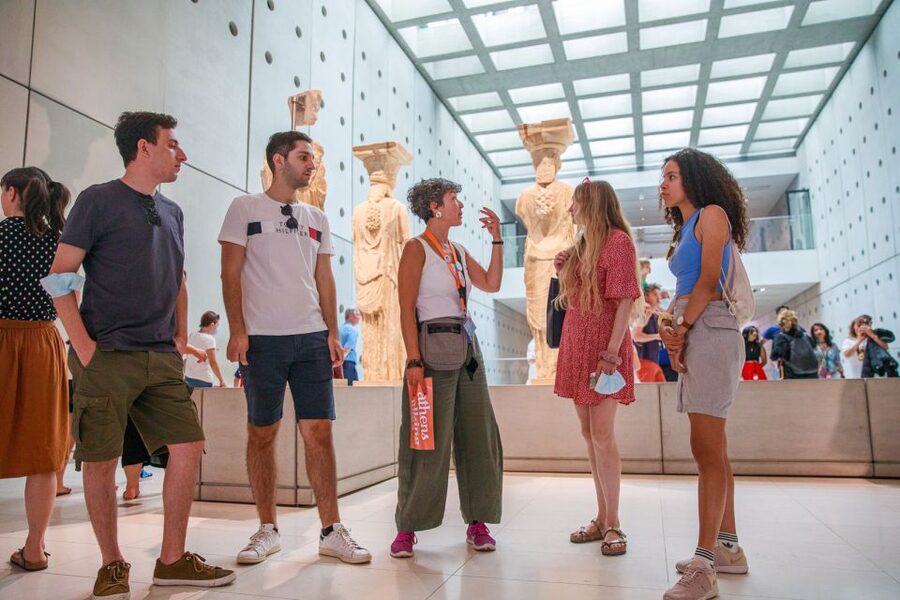
Reviewed · ACROPOLIS MUSEUM TOURS
Athens: The Acropolis Museum Guided Tour
The Acropolis Museum does something few museums can: it lets you look at ancient Athens while the real Acropolis rises beyond the glass. In 75 minutes, a licensed guide leads you from archaic statues and offerings to Athena through a modern building designed by Bernard Tschumi and Michael Photiadis. The glass floors even reveal an ancient Athenian neighborhood below.
I like the clear historical framework and the way a good guide turns separate statues into part of a larger story about religion, art, theater, and civic life. I also like the museum’s natural light, open views, and easy connection to an Acropolis visit. Guides such as Dimitris, Natasha, Niobe, and Annie have been especially praised for bringing the material to life and keeping explanations lively.
The main consideration is time. Seventy-five minutes passes quickly, and the tour can begin late if it follows a longer Acropolis visit. You also pay the museum entrance fee separately, about €20 per adult, so the full cost is higher than the advertised $41 tour price.
In This Review
- Key points to know before booking
- Why the Acropolis Museum deserves its own visit
- Meeting near Hadrian’s Arch
- Entering the modern museum
- The Archaic Gallery and the rise of Athenian sculpture
- Offerings to Athena and the meaning of worship
- The Caryatids and the Acropolis connection
- The Parthenon Gallery and the view outside
- What the 75-minute pace feels like
- Price, tickets, and practical value
- Timing, clothing, and access
- Who will get the most from this tour
- Should you book the Acropolis Museum guided tour?
- FAQ
- Where does the Acropolis Museum guided tour meet?
- How long does the tour last?
- Is museum admission included in the tour price?
- Is the tour conducted in English?
- Can I bring luggage or a large bag?
- Is the tour wheelchair accessible?
Key points to know before booking

- The museum puts the Acropolis in context: You see the objects first, then understand the hilltop ruins with far more meaning.
- The ancient neighborhood is under your feet: Plexiglass and glass floors reveal excavated remains beneath the museum.
- The Caryatids are a major stop: Their sculptural detail makes more sense with a guide explaining their role and history.
- The building is part of the experience: Natural light, transparent floors, and the Parthenon-aligned atrium frame the collection.
- The guide shapes the visit: Dimitris, Natasha, Niobe, Annie, Margherita, and others have led memorable tours, though the exact guide varies.
- Plan for an extra entrance fee: The tour price covers the guide and skip-the-ticket-line service, but not museum admission.
Why the Acropolis Museum deserves its own visit

Many people treat the Acropolis Museum as a quick stop after the hilltop ruins. I think that order misses something important. The museum explains what you are looking at on the Acropolis, including the religious purpose of the buildings, the skill behind the sculpture, and the long sequence of changes that shaped the site.
The museum holds more than 4,000 artifacts connected with the Acropolis and ancient Athens. You will not see every object in a 75-minute tour. That is not a flaw by itself. A focused route can help you avoid wandering past important pieces without knowing why they matter.
The best guides provide a broad outline before stopping at key works. Peter’s tour, for example, was praised for placing different periods of Acropolis history in context. Other guides, including Apollo, Natasha, Niobe, Margherita, and Dimitris, have been singled out for clear explanations, humor, and a strong command of Greek mythology and archaeology.
That human explanation matters here. Museum labels can tell you a date and a name. A guide can explain why an object was made, what it meant to ancient Athenians, and how it relates to the buildings you have seen outside.
More Acropolis Museum visits:
- Athens: Acropolis, Parthenon & Acropolis Museum Guided Tour
★ 4.8 · 9,316 reviews - Athens: Acropolis, Parthenon & Acropolis Museum Guided Tour
★ 4.8 · 3,579 reviews - Acropolis monuments & Parthenon Walking Tour with Optional Acropolis Museum
★ 5.0 · 2,678 reviews
Meeting near Hadrian’s Arch
The meeting point is at 3 Dionysiou Areopagitou Street, by the Lukumades and Pilino stores. It is near the beginning of the pedestrian route running from Hadrian’s Arch and Syngrou Avenue toward the Acropolis.
Look for staff carrying the orange Athens Walking Tours sign. This detail is useful because the meeting point is not simply the museum entrance. Give yourself time to find it, especially if you are arriving by foot through busy central Athens or navigating from another part of the Plaka area.
The location works well if you are already visiting Hadrian’s Arch or walking toward the Acropolis. It is less convenient if you expect to meet directly at the museum. One practical complaint is that the group may need to wait for people coming from an earlier Acropolis tour.
If you booked only the museum portion, you may be added to a group that has already spent time on the Acropolis. This arrangement has caused delays of roughly 30 to 45 minutes on some occasions. A staff member has helped separate museum-only participants and connect them with the ongoing group, but you should not schedule a tight lunch or afternoon activity immediately afterward.
Entering the modern museum

The building deserves your attention before you reach the first statue. Bernard Tschumi and Michael Photiadis designed a structure that combines concrete, glass, and open sightlines. Its shape and orientation create a direct visual relationship with the Parthenon.
The museum is not an old-fashioned dark hall packed with cases. Natural light reaches the Archaic Gallery, while broad windows and the glass atrium keep the Acropolis present throughout the visit. You may be looking at a marble figure indoors and, a moment later, seeing the hill where it once belonged.
This design helps you understand the museum’s purpose. The collection is not isolated from the city. It is tied to the archaeological site outside, and the building keeps reminding you of that connection.
The glass floors are another strong feature. They reveal excavations beneath the museum, including remains from an ancient Athenian neighborhood. The view is not a substitute for an archaeological site visit, but it gives you a quick sense of how many layers of Athens lie below the modern city.
The Archaic Gallery and the rise of Athenian sculpture
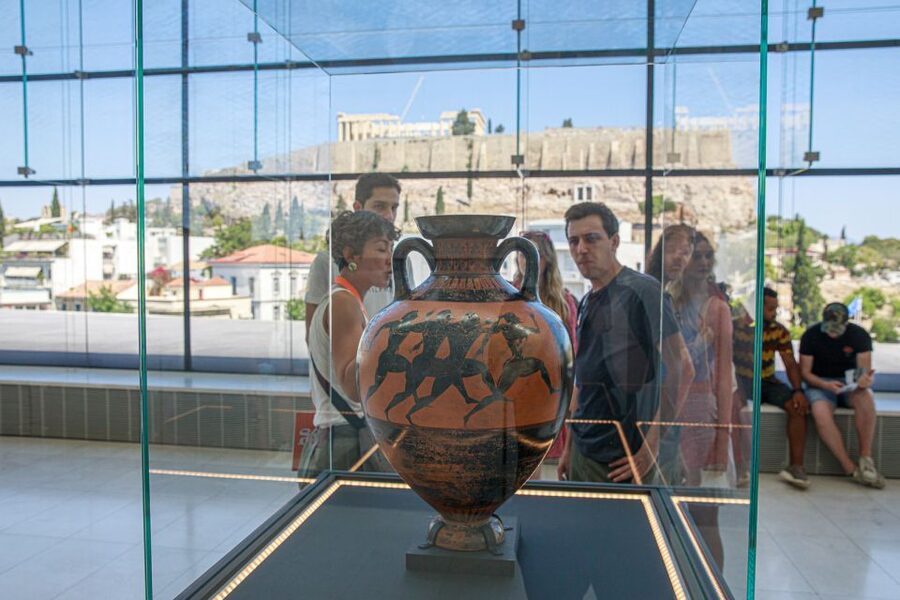
The first-floor Archaic Gallery is one of the most rewarding parts of the tour. It is filled with natural light, which lets you see the surface of the marble, traces of color, and the careful design of the statues.
The gallery helps you follow the development of Greek sculpture before and during the fifth century BC. You may see figures that look familiar from books, but the physical scale and surface detail are different when you are standing beside the originals.
This is where a guide can save you time. A good explanation points out posture, clothing, hair, facial treatment, and signs of changing artistic ideals. Instead of seeing a room full of similar marble figures, you begin to notice how Greek artists moved from rigid forms toward more natural poses and expressive details.
The exact amount of time spent here depends on the guide and the group. One guide was praised for giving enough information without overloading the group. Another was considered too detailed on individual people and less focused on the Acropolis as a whole. If you prefer a brisk overview, say so politely at the beginning. If you enjoy close attention to sculpture, you may wish the tour were longer.
More Acropolis and Parthenon visits:
- Athens: Acropolis & up to 5 Archaeological Sites Combo Pass
★ 4.4 · 12,619 reviews - Athens: Acropolis Ticket with Optional Audio or Live Guide
★ 4.2 · 11,055 reviews - Athens: Acropolis and Parthenon Guided Walking Tour
★ 4.6 · 5,882 reviews - Athens: Acropolis Ticket with Audio Guide
★ 4.0 · 3,575 reviews
Offerings to Athena and the meaning of worship
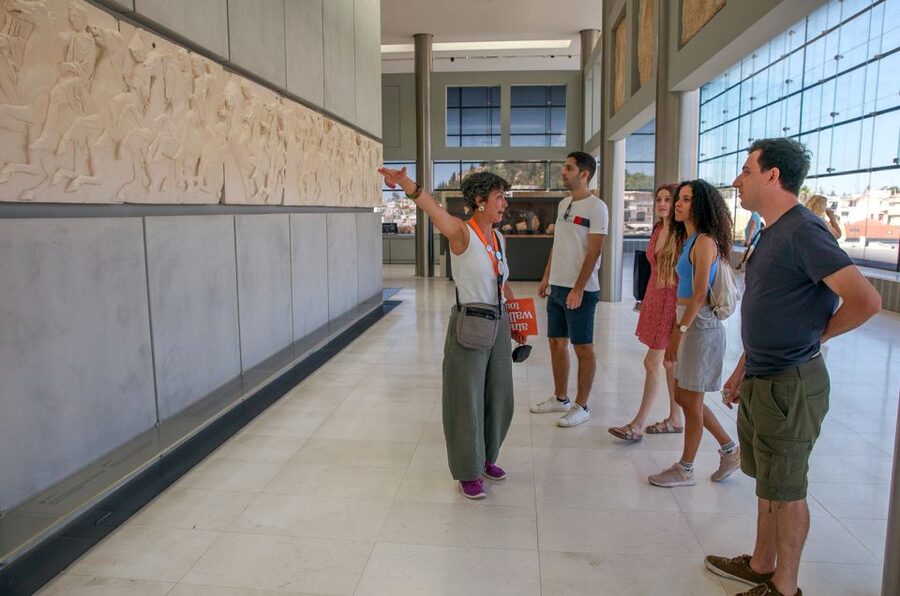
The Acropolis was not only a collection of grand buildings. It was a sacred place, and the museum’s votive offerings help explain that religious role.
Offerings to Athena show how ordinary acts of worship could sit alongside major public monuments. These objects connect the Acropolis to personal hopes, gratitude, and devotion. Your guide can help you see the difference between a decorative object and something placed at the sanctuary for religious reasons.
The stories of Athena and the Acropolis also give the visit a useful human dimension. Ancient mythology was not separate from daily life. It shaped civic identity, festivals, art, and the way Athenians understood their city.
Apollo has been praised for telling Greek mythology and history in a clear, engaging way. That kind of storytelling is particularly useful in this section, where a long list of names can otherwise become hard to follow.
The Caryatids and the Acropolis connection

The Caryatids are among the museum’s most recognizable works. These sculpted female figures once served as architectural supports for the Erechtheion on the Acropolis.
Seeing them indoors allows you to study their clothing, posture, and carved hair without the distance and bright glare of the hilltop. The museum also displays the figures in a way that makes their architectural purpose easier to understand.
This is a good point to compare the museum with the Acropolis itself. On the hill, you see the building in its setting, with Athens spread around it. In the museum, you can examine the sculpture at close range and hear how the parts fit together.
The museum is especially useful if you have already visited the Acropolis but felt you missed the details. It is also a smart first stop. Several guides have emphasized that the museum prepares you for the real site by explaining the people, beliefs, and artistic choices behind the ruins.
The Parthenon Gallery and the view outside
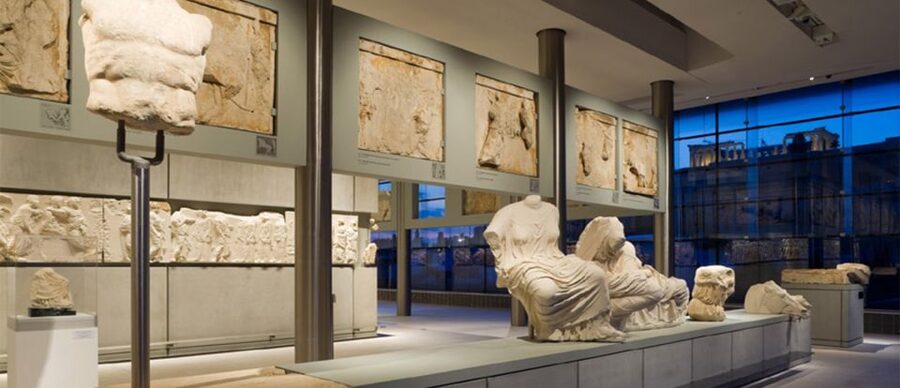
The glass atrium is built in alignment with the Parthenon. This is one of the museum’s most effective design choices because it brings the building outside into the gallery’s visual frame.
The alignment makes the marble sculpture and architectural fragments feel connected to a living place rather than locked away in a display case. You can look toward the Parthenon and then back at the objects associated with it.
The view is also a useful reminder that the Acropolis has changed over time. The museum presents the ancient material while the modern city surrounds the hill. The result is not a perfect reconstruction, but a clear link between the past and present.
A 75-minute guided tour will usually focus on the major highlights rather than every section of the museum. I would not book this expecting a slow, room-by-room study. Think of it as a guided introduction that gives you enough structure to continue exploring afterward if your ticket and schedule allow.
What the 75-minute pace feels like
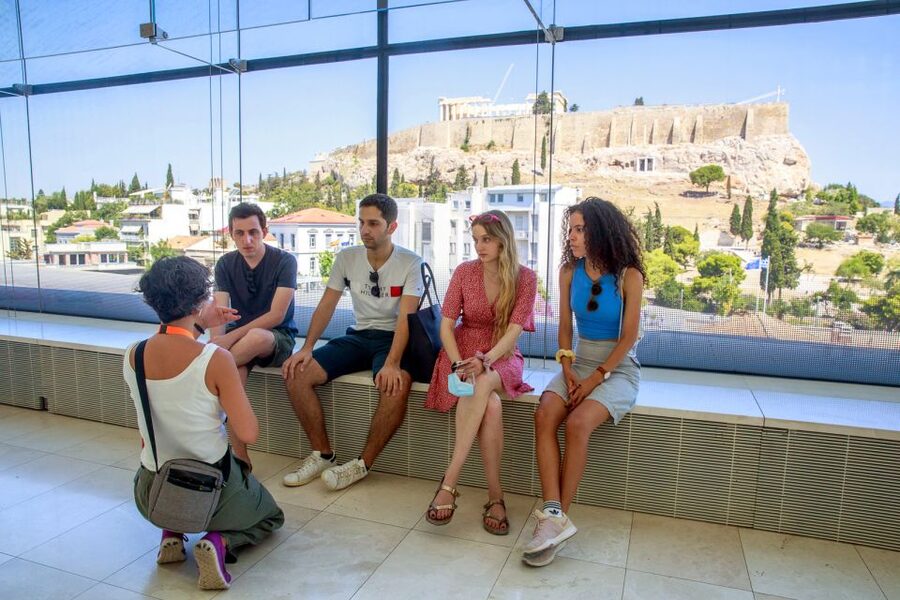
The tour is short enough to fit into a busy Athens day, but long enough to make the museum worthwhile. Guides generally keep moving from one major object or gallery to the next, explaining why each stop matters.
That pace works well for first-time visitors and families. Annie, for instance, involved a seven-year-old in the conversation, which helped keep the child focused. The museum can be difficult for younger children if the explanation stays abstract, so a guide who uses stories and questions makes a real difference.
Large groups are possible. One visitor found the group size disappointing, though the guide managed it by moving on once the main explanation was complete. A big group can make it harder to stand close to an object or ask many questions, so you should expect a structured route rather than a private discussion.
The pace also explains why some people wish the tour lasted longer. The museum itself deserves more than 75 minutes if you want to read labels, compare works, and spend time with the archaeological remains. Still, a short guided route is better than an unfocused visit if your Athens schedule is tight.
Price, tickets, and practical value
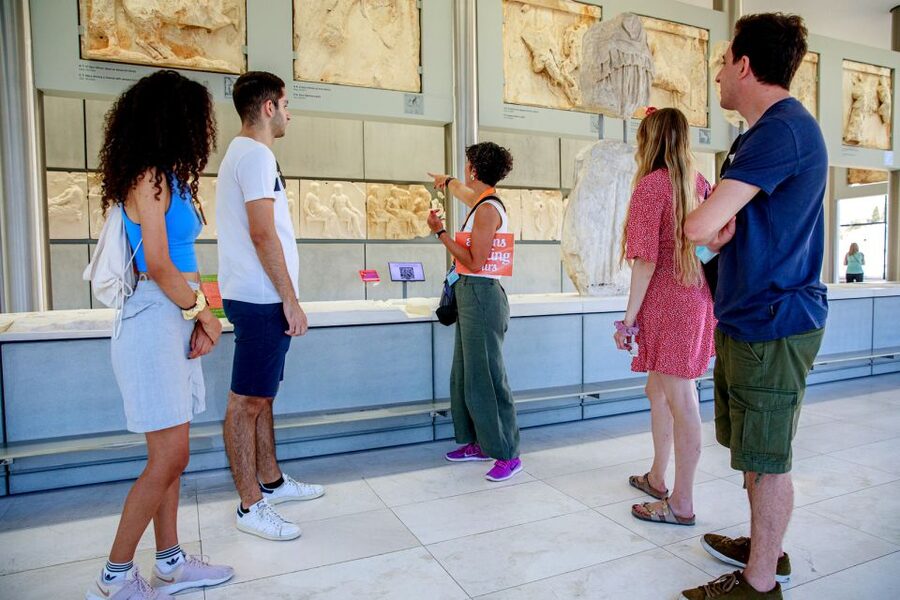
The listed price is $41 per person. Museum admission is not included and costs approximately €20 per adult. The tour does include a local licensed guide and skip-the-ticket-line service, so the real comparison is not with a free self-guided walk. It is with the cost of entering alone and paying for an audio guide or guidebook, if available.
I see the strongest value in the interpretation. The museum’s displays are clear, but the collection covers many centuries and subjects. Without context, you could admire the statues and still miss the larger story. A good guide fills in that gap quickly.
The value is lower if you already have strong archaeological knowledge or prefer to spend hours reading every label at your own speed. You may also find the extra admission cost frustrating because the advertised tour price does not cover entry.
Book with the full amount in mind: $41 for the tour plus about €20 for museum admission. You can reserve now and pay later, and cancellation is free up to 24 hours before the start time. Those terms help if your Athens plans may change.
Timing, clothing, and access
Wear comfortable shoes. The meeting point involves walking through the pedestrian area, and the tour continues on foot inside the museum.
Bring a passport or ID card, as identification may be required. Do not bring luggage or large bags. This is important if you are arriving directly from a hotel checkout or the airport, since the experience does not include hotel pickup, drop-off, or luggage storage.
Tours run in all weather, rain or shine. The museum itself offers shelter, but you still need to reach the meeting point outdoors. In summer, an early morning start can be a smart choice. One August participant specifically found the early tour preferable in the heat, and early timing may also make the walk to the meeting point more comfortable.
The activity is wheelchair accessible. English is the available tour language, and the live guide leads the group in person.
Who will get the most from this tour
I would recommend this tour to a first-time Athens visitor who wants a clear introduction to the Acropolis Museum without spending half a day planning a route. It suits people who enjoy stories, history, sculpture, and architecture but do not want to decode every label alone.
Families can also benefit, especially if you get a guide who includes children in the discussion. The short length helps prevent the museum from becoming tiring, though young children may still need encouragement during the more technical sections.
This is less suitable for a collector of fine details who wants complete freedom to linger. It is also not ideal if you have a strict schedule after the tour, since the start may be delayed when museum participants are joining a longer Acropolis outing.
If you have not yet visited the Acropolis, I would put the museum first when possible. You will recognize the Caryatids, understand the religious purpose of the hill, and see the surviving buildings as part of a larger story. If you already visited the Acropolis, the museum remains worthwhile because it lets you inspect the art close up and adds missing context.
Should you book the Acropolis Museum guided tour?
Book it if you want the museum to make sense quickly and you value a lively English-speaking guide. The building, the glass floors, the votive offerings, the Caryatids, and the Parthenon view give you plenty to see, but the guide is what turns those highlights into a connected visit.
The strongest guides, including Dimitris, Natasha, Niobe, Annie, Margherita, and Apollo, have been praised for humor, clear English, warmth, and strong subject knowledge. The exact guide is not guaranteed, and the experience can suffer if the group begins late or grows too large.
For most first-time visitors, the added explanation is worth the cost. Just budget for the separate €20 entrance fee, arrive early at the Dionysiou Areopagitou meeting point, and avoid placing an important appointment immediately afterward. If you want a quick, well-organized introduction before the Acropolis, this is a sensible choice.
FAQ
Where does the Acropolis Museum guided tour meet?
The meeting point is at 3 Dionysiou Areopagitou Street, beside the Lukumades and Pilino stores. Staff will be holding an orange Athens Walking Tours sign.
How long does the tour last?
The guided museum visit lasts 75 minutes. Starting times vary, so check availability when booking.
Is museum admission included in the tour price?
No. The tour price is $41 per person, while entrance costs approximately €20 per adult and is paid separately.
Is the tour conducted in English?
Yes. The available live tour language is English.
Can I bring luggage or a large bag?
No. Luggage and large bags are not allowed. Bring comfortable shoes and a passport or ID card.
Is the tour wheelchair accessible?
Yes. The activity is listed as wheelchair accessible.
More Athens museums
- Athens: Mythology of Delphi, Museum and Arachova Guided Tour
★ 4.6 · 4,008 reviews - Athens All Included: Acropolis and Museum Guided Tour with Ticket
★ 4.5 · 2,673 reviews - Athens: Acropolis Museum Ticket with optional Audio Guide
★ 4.4 · 2,652 reviews - From Athens: Small-Group Delphi, Museum & Arachova Day Trip
★ 4.8 · 2,476 reviews
Freshly added Athens trips
- Athens and Ancient Corinth Private from Athens★ 5.0 · 3 reviews
- From Athens: Mycenae and Epidaurus Private Tour★ 4.8 · 3 reviews
- Full day Meteora private tour★ 5.0 · 3 reviews
- Double Shore Dive (certified divers)★ 4.5 · 3 reviews
- Sunset & swimming at Cape Sounio, Poseidon temple★ 5.0 · 3 reviews
- Philosophy Experience at Plato’s Academy Park – basic version★ 5.0 · 3 reviews
- Athens Hills: Mythology Treasure Hunt★ 5.0 · 3 reviews
- Private Acropolis Tour – Ticket Included★ 5.0 · 3 reviews
Acropolis Museum Tours, compared.

Acropolis, Parthenon & Acropolis Museum Guided Tour
Read our review →Acropolis, Parthenon & Acropolis Museum Guided Tour
Read our review →
Acropolis monuments & Parthenon Walking Tour with Optional Acropolis Museum
Read our review →
Acropolis Museum Ticket with optional Audio Guide
Read our review →
Parthenon & Acropolis Museum with Audio or Live Tour Option
Read our review →
Acropolis, Parthenon and Acropolis Museum Guided Tour
Read our review →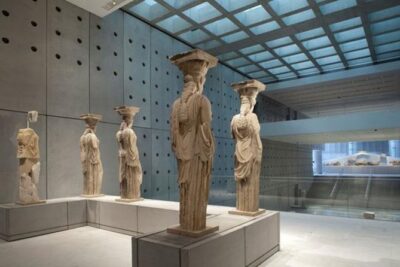

Browse the lists this tour appears in