
Reviewed · ACROPOLIS MUSEUM TOURS
Athens: The Acropolis and Acropolis Museum Tour in Dutch
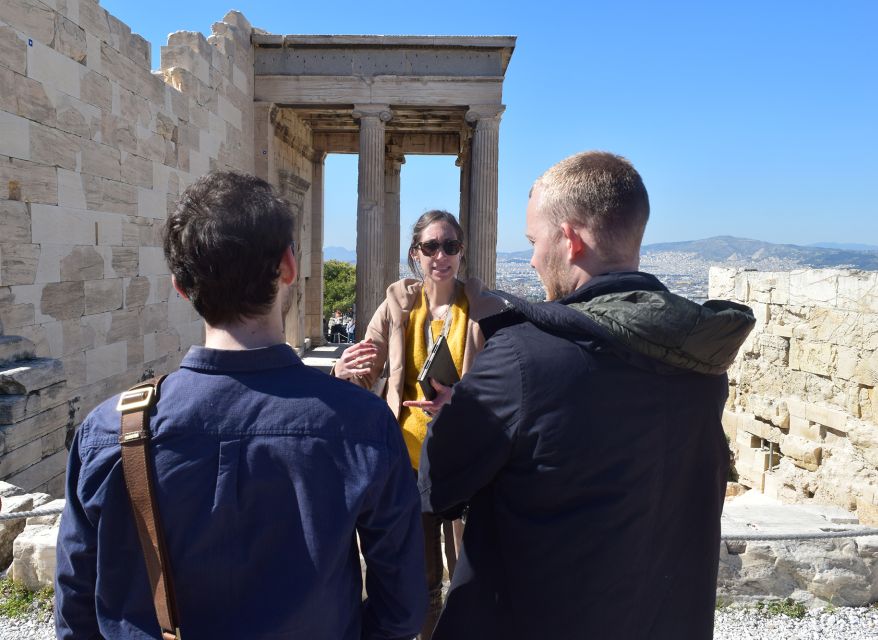
The best part of this three-hour Athens tour is the pairing of the Acropolis with the museum below it. You first see the temples in their hilltop setting, then meet the original sculptures indoors, where details are easier to spot. I like the Dutch guide and the story-led approach, especially the myths about Athens’ founding and the tale of democracy’s classic age. The route also includes the Theatre of Dionysus, the birthplace of ancient Greek theater.
The main caution is the climb. You’ll walk uphill over uneven stone, with no elevator, and the Acropolis can be hot and slippery. Comfortable shoes, water, and a hat are not optional extras here. The tour is not suitable for wheelchair users, people with mobility impairments, or pregnant women.
In This Review
- Key points to know before booking
- Why this Acropolis tour works so well
- Meeting at Acropoli Metro station
- The Theatre of Dionysus begins the story
- Walking past the old clinic and Herodion
- Passing through the Propylaea
- The Temple of Athena Nike and the view from the gateway
- Seeing the Erechtheion and its Caryatids
- The Parthenon, Athens’ great headline
- Why the Acropolis Museum completes the visit
- Dutch guiding and the style of the tour
- Is $152 a fair price?
- Who should book this experience?
- Should you book the Acropolis and Museum Tour in Dutch?
- FAQ
- How long does the Acropolis and Acropolis Museum tour last?
- Where is the meeting point?
- Is the tour conducted in Dutch?
- Are entrance tickets included?
- Is the tour suitable for people with limited mobility?
- What should I bring?
Key points to know before booking

- Two major sights in one route: You visit the Acropolis and Acropolis Museum within a focused three-hour schedule.
- Dutch-language guiding: The tour is conducted in Dutch, with guides such as Jessica available for the experience.
- Theater before temples: You begin at the Theatre of Dionysus, an important stop often rushed past on shorter Acropolis visits.
- Original works indoors: The museum displays authentic sculptures, Parthenon pieces, and the real Caryatids.
- Time for your own photos: You get about 20 minutes of free time near the Parthenon.
- Good access, hard footing: The meeting point is beside Acropoli Metro station, but the hill requires a steady uphill walk.
Why this Acropolis tour works so well
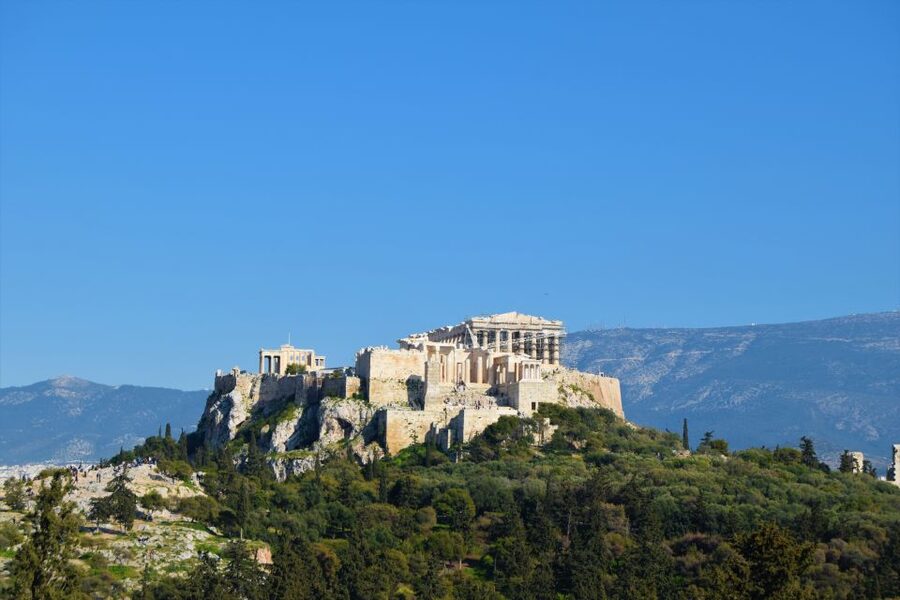
Many first visits to Athens follow the same pattern: climb the Acropolis, take a few photos, and try to remember which temple is which. This tour gives the hill a useful storyline. You hear about the mythological contest for control of the city, the growth of democracy, the birth of theater, and the choices behind the famous buildings.
I especially like the order. The tour starts at the south entrance, where you approach through the Theatre of Dionysus before climbing toward the monuments. That gives you a sense of how the Acropolis relates to the wider city and lets you see a major ancient theater before the crowds and temples take over your attention.
Then comes the museum. This matters because the hilltop monuments are partly ruins, copies, or weathered remains. In the museum, you can examine the original sculpture and architectural details at close range. The two sites answer different questions: the Acropolis shows you where the monuments belonged, while the museum shows you what the art looked like.
More Acropolis Museum visits:
- Athens: Acropolis, Parthenon & Acropolis Museum Guided Tour
★ 4.8 · 9,316 reviews - Athens: Acropolis, Parthenon & Acropolis Museum Guided Tour
★ 4.8 · 3,579 reviews - Acropolis monuments & Parthenon Walking Tour with Optional Acropolis Museum
★ 5.0 · 2,678 reviews
Meeting at Acropoli Metro station
The meeting point is outside Acropoli Metro station at the Makriyianni and Dionysiou Areopagitou exit. This is a practical place to begin because the route to the south entrance takes only about two minutes on foot.
Give yourself time to find the correct exit. Metro stations can have more than one street opening, and this tour specifically uses the Makriyianni and Dionysiou Areopagitou side. Have water with you before you arrive, since food and drinks are not allowed inside the archaeological sites.
The tour includes entry tickets to both the Acropolis and Acropolis Museum, along with ticket pre-booking and a licensed guide. It also includes skip-the-ticket-line access, which is useful when Athens is busy. You still need to arrive on time, since a guided group has a set route and entry schedule.
The Theatre of Dionysus begins the story
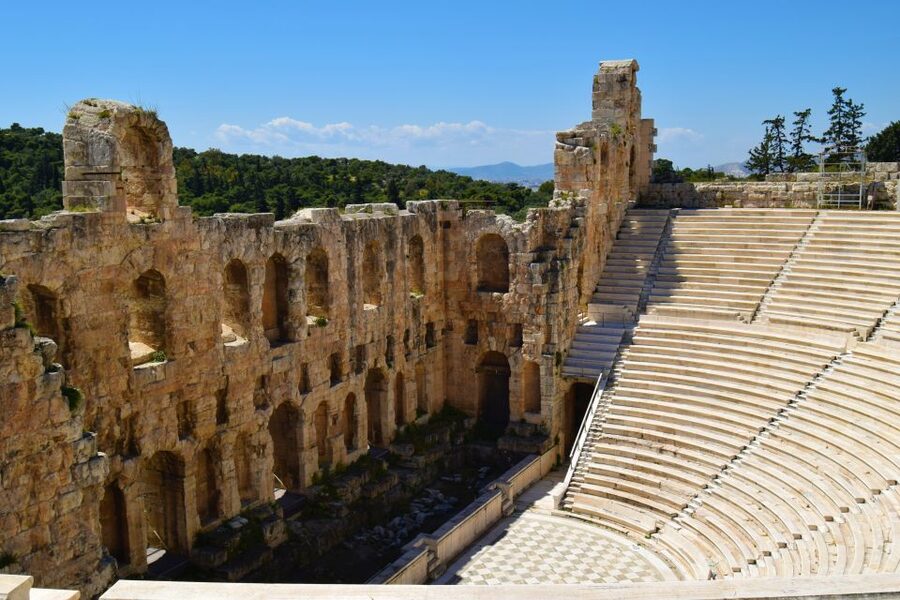
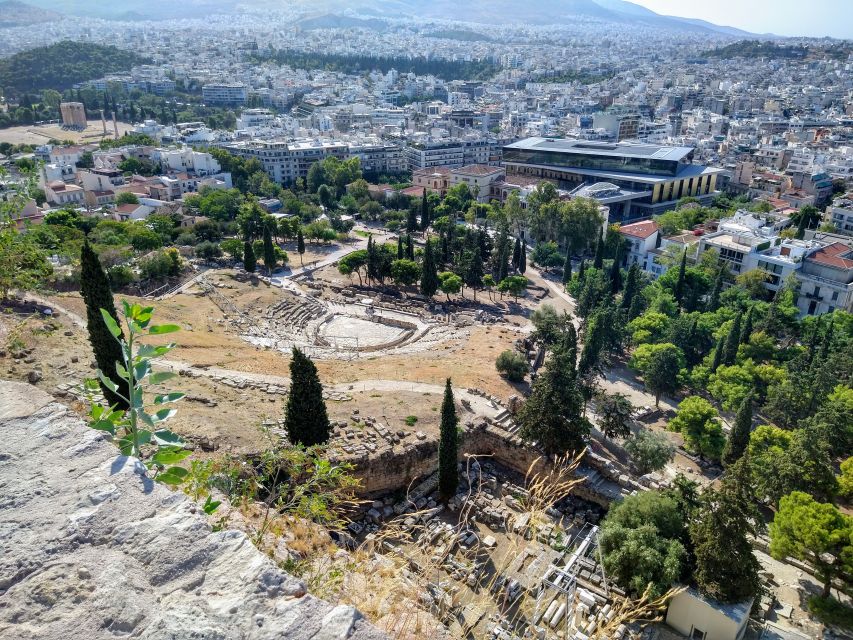
The first major stop is the Theatre of Dionysus, on the southern slope of the Acropolis. This is where the tour connects the stones under your feet with Greek theater, rather than treating the theater as just another ruin on the way up.
Your guide explains the setting through myths and stories, including the role of theater in ancient Athens. That approach is a good fit for this site. A list of dates and building names would not tell you why the theater mattered, but a story about performance, public life, and the city’s gods gives the ruins a human scale.
The theater also sets the tone for the rest of the tour. You are not simply checking off the Parthenon and moving on. You are looking at the Acropolis as a center of religion, civic life, art, and public debate.
Walking past the old clinic and Herodion
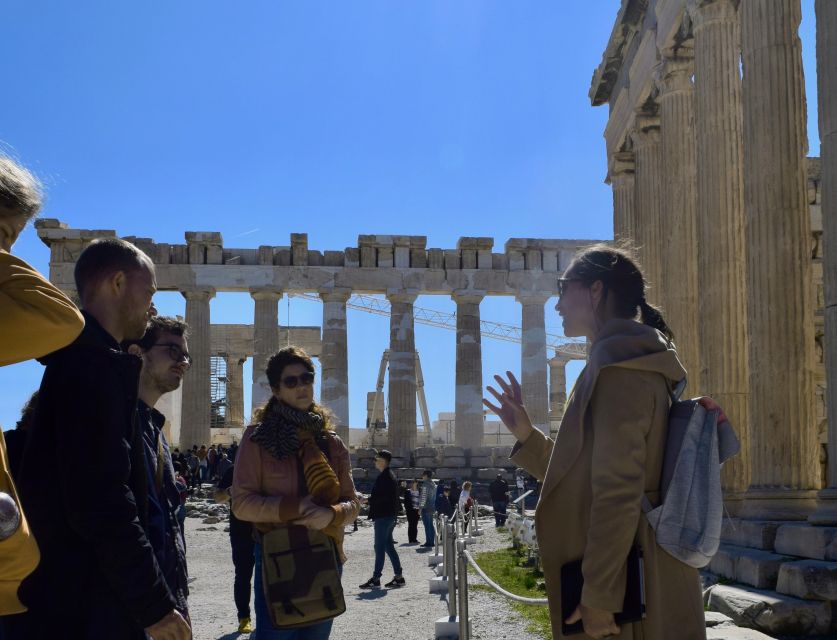
From the theater, you climb the sunny southern slope. The walk passes the ruins of Athens’ first clinic and the Odeon of Herodes Atticus, often called the Herodion.
This section requires attention to the ground. The route is uphill, the surface is uneven, and it may be slippery. If you have trouble with long climbs or unstable footing, this is the point to think carefully about the booking. There is no elevator for this route, and the experience is not designed for limited mobility.
The Herodion adds another layer to the visit. It helps show that the Acropolis area was not used for only one purpose or in only one period. Your guide can place the theater, medical site, temples, and later structures into a broader account of how the hill functioned.
More Acropolis and Parthenon visits:
- Athens: Acropolis & up to 5 Archaeological Sites Combo Pass
★ 4.4 · 12,619 reviews - Athens: Acropolis Ticket with Optional Audio or Live Guide
★ 4.2 · 11,055 reviews - Athens: Acropolis and Parthenon Guided Walking Tour
★ 4.6 · 5,882 reviews - Athens: Acropolis Ticket with Audio Guide
★ 4.0 · 3,575 reviews
Passing through the Propylaea
Near the summit, you pass through the Propylaea, the grand entrance to the Acropolis. It is both a gateway and a preview of the buildings beyond it.
From here, you can see the Parthenon, Erechtheion, and Temple of Athena Nike. This is a valuable pause because the main monuments begin to make sense as a group. Instead of meeting each temple as an isolated object, you see the entrance framing the sacred hill.
The guide explains why the monuments were built and points out the methods used by ancient architects. This is one of the places where a guide adds real value. The buildings may look familiar from photographs, but their proportions, placement, and construction choices are much easier to understand when someone directs your eye.
The Temple of Athena Nike and the view from the gateway
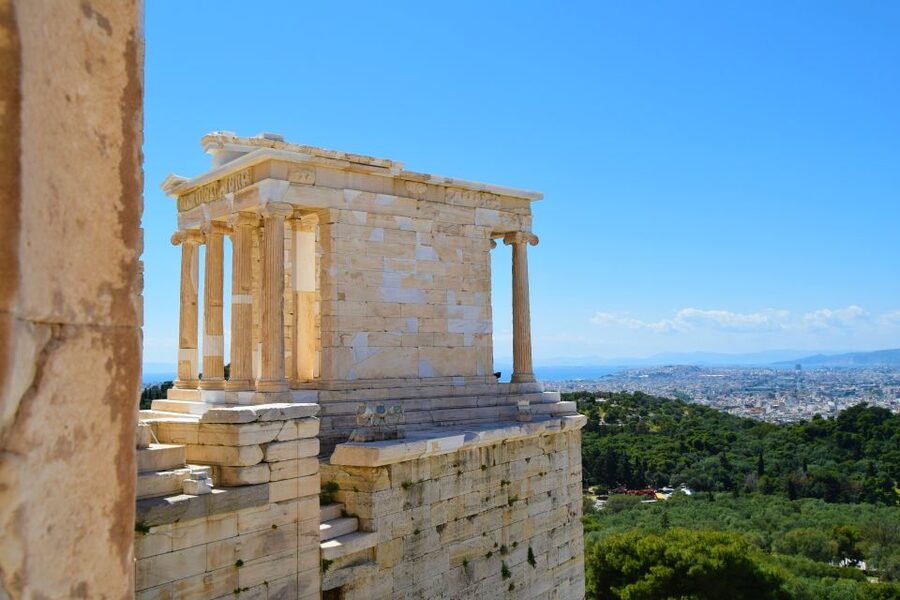
The Temple of Athena Nike is a smaller building than the Parthenon, but its position near the entrance gives it great visual importance. It is dedicated to Athena in her role as a bringer of victory.
You will not spend the whole tour at each structure, so listen closely when the guide moves through the smaller monuments. The Nike Temple can be easy to overlook when the Parthenon dominates the skyline. A Dutch-language explanation helps you catch the story and purpose of the building without having to translate information in your head.
The Propylaea and Nike Temple also offer strong photo angles. Still, the tour’s photo time comes later, so do not feel pressed to stop at every opening in the route. Keep moving with the group and save longer picture-taking for the free-time stop.
Seeing the Erechtheion and its Caryatids
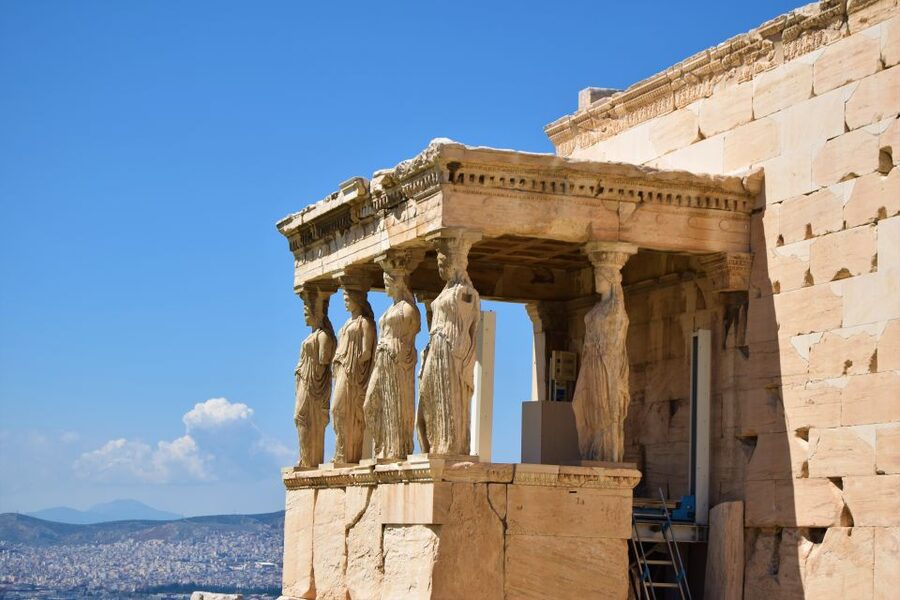
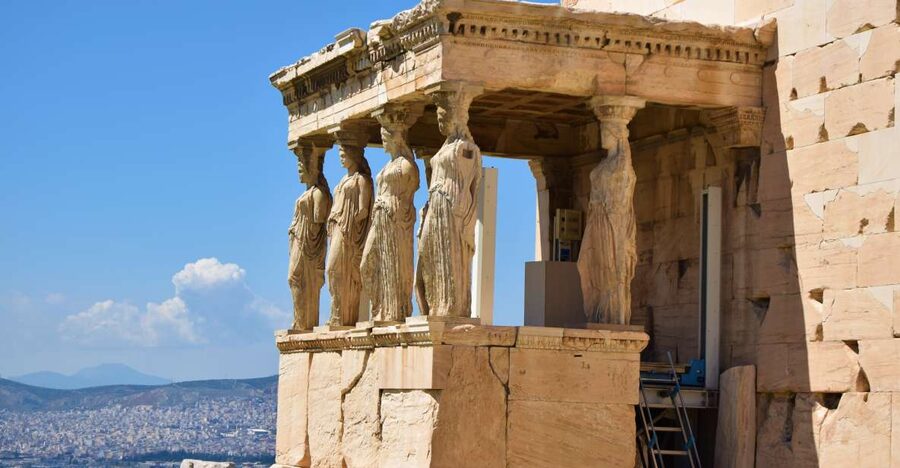
The Erechtheion is one of the most distinctive buildings on the Acropolis. Its design is less regular than the Parthenon, and its famous porch is supported by sculpted female figures known as Caryatids.
The tour points out the building and explains the myths linked to Athens’ struggle for divine patronage. This is where the mythology-first approach works particularly well. The Erechtheion is tied to the competing claims of Athena and Poseidon, and those stories help explain why the site carries so much symbolic weight.
You will later see the original Caryatids in the Acropolis Museum. That contrast is important. On the hill, you see the architectural setting and the famous porch. In the museum, you see the authentic sculpture close up, away from the weather and distance that make small details hard to read outdoors.
The Parthenon, Athens’ great headline
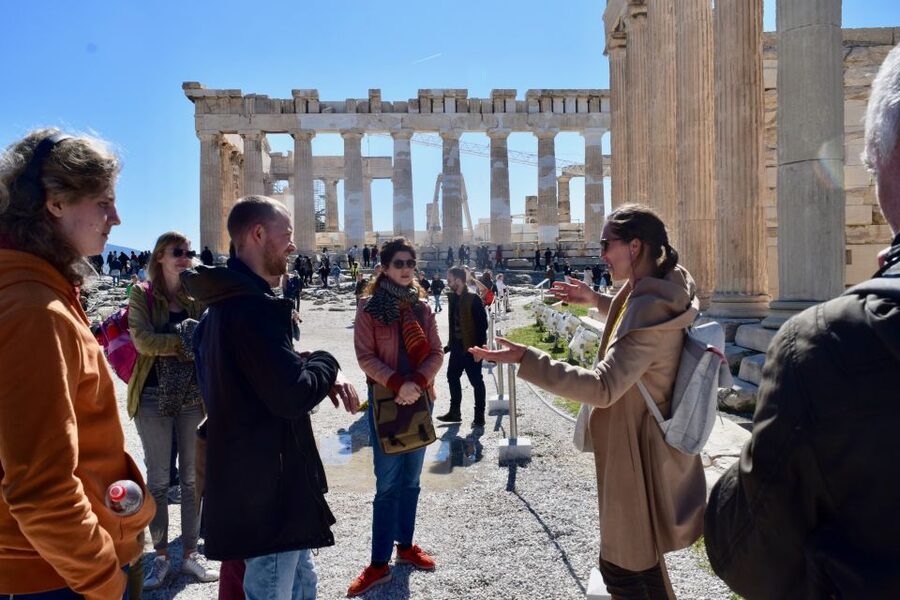
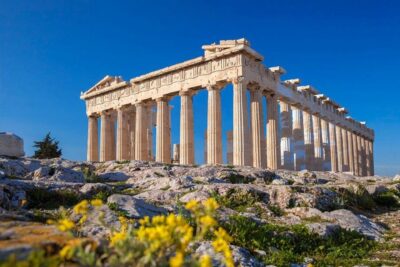
The Parthenon is the major event on the hill, and the tour gives it the attention you would expect. Your guide covers its purpose, the ideas behind its design, and the construction strategies that helped create such a refined building from heavy stone.
The Parthenon is not a complete temple today, and you should not expect an intact ancient interior. Its power comes from the surviving structure, its position above Athens, and the precision still visible in its columns and proportions. A guide helps you look beyond the familiar postcard view.
After the guided visit, you receive about 20 minutes of free time near the Parthenon for photographs. That is enough for a few careful shots and a chance to take in the city views, though it is not a long independent visit. If photography is your main goal, plan your first images quickly and use the free period for the angles you most want.
Sun can be intense on the Acropolis, especially on the exposed southern slope. Bring a hat and water, and wear shoes with a firm sole. Sharp objects, weapons, smoking, food, drinks, and drones are not allowed at the site.
Why the Acropolis Museum completes the visit
The tour ends at the Acropolis Museum, only a short walk from the hill. This is not an afterthought. It is the part that helps you understand what the Acropolis once looked like and why the surviving fragments matter.
Inside, you see original sculptures, Parthenon sculptures, and the authentic Caryatids. The museum setting lets you study faces, folds in stone clothing, carved patterns, and other details that are difficult to see from ground level on the hill.
I like the museum visit because it corrects a common weakness in Acropolis sightseeing. The hilltop ruins can seem stark, especially if you picture ancient Athens as a collection of bare marble walls. The museum brings the artistic side back into view and gives you a fuller picture of the temples.
The guide leads you through the displays rather than leaving you to guess which pieces came from which building. That makes the three-hour format efficient. You get the location, the architecture, and the art in one connected lesson.
The activity ends at the museum, not back at the metro station. This is useful if you want to continue exploring the museum on your own, but it also means you should plan your onward route from there. Hotel pickup and drop-off are not included.
Dutch guiding and the style of the tour
This is a Dutch-language tour, so it makes sense for Dutch speakers who want detailed explanations without having to follow an English guide. The experience focuses on stories, myths, and historical events rather than a plain recital of facts.
The available feedback is especially positive about the guides’ clarity and friendly manner. Jessica is named as a guide who explained the subject in an enjoyable and interesting way. Another Dutch participant praised the clear answers to questions and the small details that are easy to miss without guidance.
That last point is important. The Acropolis rewards a trained eye. The broad view is free, but the meaning behind a worn carving, a temple arrangement, or an architectural trick is not always obvious. If you enjoy asking questions or want the site explained in Dutch, the guide is a major part of the value.
The tour has a perfect score from three ratings, which is encouraging, though the sample is small. I would treat that as a sign of strong early satisfaction, not as a guarantee that every guide or group will feel identical.
Is $152 a fair price?
At $152 per person, this is not a budget walk. The price includes admission to two major Athens sights, a licensed Dutch guide, ticket pre-booking, skip-the-line access, and three hours of guided sightseeing.
The value depends on how you normally visit historic sites. If you would buy both entrance tickets and want explanations in Dutch, the cost is easier to justify. You are paying for the connection between the hill and the museum, not just for transport or access.
It is less appealing if you prefer to move slowly, spend a full day at the museum, or take your own route around the Acropolis. The 20-minute photo period is helpful, but the tour remains a guided introduction rather than an all-day independent visit.
The reserve-now, pay-later option and free cancellation up to 24 hours before the start give you some planning flexibility. Still, check the available start time before booking, since the tour’s duration is fixed at three hours.
Who should book this experience?
I would recommend it to first-time visitors who want the essential ancient Athens sights in a short block of time. It also suits Dutch-speaking families, couples, and anyone who wants mythology and historical storytelling instead of a dry audio guide.
It can work well for a grandparent and grandchild who are studying ancient Greece, provided both can manage the uphill walk. One Dutch participant specifically found the explanations useful for a school presentation, which shows how the tour can turn a famous site into material you can remember and use.
I would be more cautious if you have knee, balance, heart, or mobility concerns. The information provided specifically rules out wheelchair users, people with mobility impairments, and pregnant women. The sunny slope and uneven stones make this a physical visit, even though the tour lasts only three hours.
Should you book the Acropolis and Museum Tour in Dutch?
Book it if you want the Acropolis and original sculptures explained together, especially in Dutch. The route covers the key monuments, gives you a short period for photos, and adds the Theatre of Dionysus, which many quick visits neglect.
Skip it if you want a slow, unstructured day or if the uphill terrain will be uncomfortable. For most able-bodied first-time visitors who value clear stories, a licensed guide, and efficient access to both sites, the $152 price can be reasonable. Bring good shoes, water, and a hat, then meet at the correct Acropoli Metro exit ready for a climb.
FAQ
How long does the Acropolis and Acropolis Museum tour last?
The tour lasts three hours. It includes the Acropolis visit, guided stops at the major monuments, about 20 minutes of free time for photos, and a guided visit to the Acropolis Museum.
Where is the meeting point?
Meet outside Acropoli Metro station at the Makriyianni and Dionysiou Areopagitou exit. The Acropolis entrance is about a two-minute walk from the meeting point.
Is the tour conducted in Dutch?
Yes. The live tour guide speaks Dutch. Guides may include Jessica, who is named in the available tour information.
Are entrance tickets included?
Yes. The price includes entry to both the Acropolis and Acropolis Museum, along with ticket pre-booking administration fees and skip-the-ticket-line access.
Is the tour suitable for people with limited mobility?
No. The route includes an uphill walk over uneven surfaces, and there is no elevator. It is not suitable for pregnant women, wheelchair users, or people with mobility impairments.
What should I bring?
Bring comfortable shoes, a sun hat, and water. Weapons, sharp objects, smoking, food and drinks, and drones are not allowed.
More Athens museums
- Athens: Mythology of Delphi, Museum and Arachova Guided Tour
★ 4.6 · 4,008 reviews - Athens All Included: Acropolis and Museum Guided Tour with Ticket
★ 4.5 · 2,673 reviews - Athens: Acropolis Museum Ticket with optional Audio Guide
★ 4.4 · 2,652 reviews - From Athens: Small-Group Delphi, Museum & Arachova Day Trip
★ 4.8 · 2,476 reviews
Freshly added Athens trips
- Athens and Ancient Corinth Private from Athens★ 5.0 · 3 reviews
- Full day Meteora private tour★ 5.0 · 3 reviews
- Double Shore Dive (certified divers)★ 4.5 · 3 reviews
- From Athens: Mycenae and Epidaurus Private Tour★ 4.8 · 3 reviews
- Athens Hills: Mythology Treasure Hunt★ 5.0 · 3 reviews
- Sunset & swimming at Cape Sounio, Poseidon temple★ 5.0 · 3 reviews
- Philosophy Experience at Plato’s Academy Park – basic version★ 5.0 · 3 reviews
- Private Acropolis Tour – Ticket Included★ 5.0 · 3 reviews
Acropolis Museum Tours, compared.

Acropolis, Parthenon & Acropolis Museum Guided Tour
Read our review →Acropolis, Parthenon & Acropolis Museum Guided Tour
Read our review →
Acropolis monuments & Parthenon Walking Tour with Optional Acropolis Museum
Read our review →
Acropolis Museum Ticket with optional Audio Guide
Read our review →
Parthenon & Acropolis Museum with Audio or Live Tour Option
Read our review →
Acropolis, Parthenon and Acropolis Museum Guided Tour
Read our review →
Browse the lists this tour appears in