
Reviewed · ACROPOLIS TOURS
Athens: Parthenon, Acropolis and Museum Small Group Tour
The best part of this Athens tour is the order: you see the Acropolis and Parthenon first, then meet their original sculpture inside the Acropolis Museum. That turns a pile of marble and weathered columns into a story you can follow.
I like the pre-reserved tickets and the headsets, especially when the hill is crowded. I also like the guides’ strong storytelling. Eva, Vicky, Frosso, Lisa, and others have been praised for making difficult history clear, keeping a good pace, and finding time for photos and questions. The main drawback is physical: you climb the Acropolis on uneven ground, and even a three-hour tour can feel demanding in hot weather.
In This Review
- Key points to know before booking
- Why the Acropolis and Museum pairing works
- Meeting at Makrigianni 7
- Climbing the Acropolis Hill
- The Theatre of Dionysus and ancient performance
- The Odeon and Sanctuary of Asclepius
- Reaching the Parthenon
- Crossing to the Acropolis Museum
- The guides make the difference
- Group size, timing, and crowd control
- Is $57 a good value?
- Who should book this Athens tour?
- FAQ
- Where does the tour meet?
- How long does the tour last?
- Are Acropolis and museum tickets included?
- Can I choose a private tour?
- What languages are offered?
- Is transportation included?
- What should I bring?
- Is the tour accessible for wheelchairs or strollers?
- Should you book it?
Key points to know before booking
- The museum follows the hill: You see the ancient buildings in place, then study original works and the Parthenon frieze indoors.
- Timed entry saves hassle: Your Acropolis admission is reserved, though busy periods can still bring a wait in the skip-the-line queue.
- Guides drive the experience: Eva, Vicky, Frosso, Lisa, Maria, and other licensed guides have earned praise for clear explanations and warm, engaging delivery.
- Small group does not always mean tiny: Some departures have reached about 20 people, so ask about the group size if that matters to you.
- The climb is real: Strollers, wheelchairs, walkers, large bags, sandals, and flip flops are not allowed on this tour.
- Early times are best: An 8:00 a.m. start can mean fewer people and cooler conditions, based on the experience of past departures.
Why the Acropolis and Museum pairing works
You could visit the Acropolis on your own, then wander through the museum without a guide. I would not choose that approach unless you already know Greek archaeology well.
The hill gives you the setting. The museum gives you the details. On the Acropolis, you look at the Parthenon from outside and see the temples among the ruins. In the museum, you get close to sculptures, architectural pieces, and the Parthenon frieze, with the benefit of natural light and a clear view back toward the hill.
That connection matters. The museum is not simply an indoor collection after a famous monument. It helps explain what the Acropolis once looked like, how its buildings were decorated, and which original pieces remain. Glass floors and walkways also reveal excavations below the museum, adding another layer to the site.
The tour lasts about three hours, with roughly one hour on the Acropolis, 30 minutes focused on the Parthenon, and 90 minutes in the museum. That is a useful balance. You get the major outdoor sights without spending the whole morning under the sun, then have enough indoor time for the objects that deserve closer attention.
More Acropolis and Parthenon visits:
- Athens: Acropolis & up to 5 Archaeological Sites Combo Pass
★ 4.4 · 12,619 reviews - Athens: Acropolis Ticket with Optional Audio or Live Guide
★ 4.2 · 11,055 reviews - Athens: Acropolis, Parthenon & Acropolis Museum Guided Tour
★ 4.8 · 9,316 reviews
Meeting at Makrigianni 7
The meeting point is outside Acropolis Metro Station at Makrigianni 7. If you arrive by metro, use the Makrygianni or Dionysiou Areopagitou exit, go up to street level, and look for the guide holding a sign with your names.
Arrive five to ten minutes early. This is not a tour where you can stroll up after the group has left. Acropolis tickets are timed, and they expire within five to ten minutes. The tour departs on schedule because the group has a fixed entry time.
One practical note: the guide is supposed to have a sign, but one departure left a participant briefly unsure of the correct group. To avoid that small burst of Athens anxiety, have the booking name ready and confirm the guide’s details before setting off.
Transport to the meeting point is not included. The metro station is the natural arrival point, but you are responsible for getting there.
Climbing the Acropolis Hill
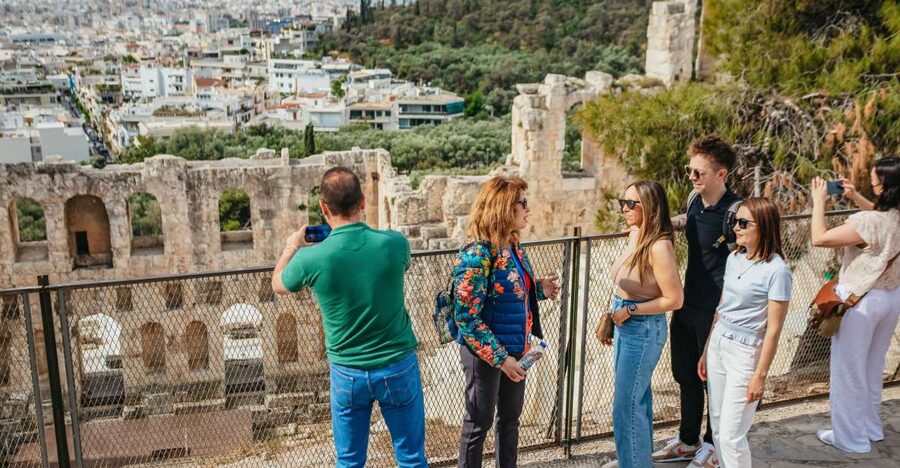
The tour begins by ascending the Acropolis Hill. This is the part to take seriously. You walk over ancient stone and uneven surfaces, and the route includes an uphill climb. There is no wheelchair, walker, or elevator access during the tour.
Wear sturdy shoes and bring water and a sun hat. Sandals and flip flops are not allowed, and large bags and luggage are prohibited. Baby strollers cannot enter the Acropolis site, so families with very young children need a baby pouch instead.
Your guide provides context as you move through the archaeological area. Rather than treating the Parthenon as an isolated photo stop, the tour introduces the monuments around it and explains their place in ancient Athens.
The group may pause for photos, questions, and short rests. That pacing has been a real strength of guides such as Eva, Frosso, and Vicky. Several departures included older people, and the guide kept checking that everyone was together and comfortable. Still, a considerate pace does not remove the climb, especially on a hot afternoon.
The Theatre of Dionysus and ancient performance
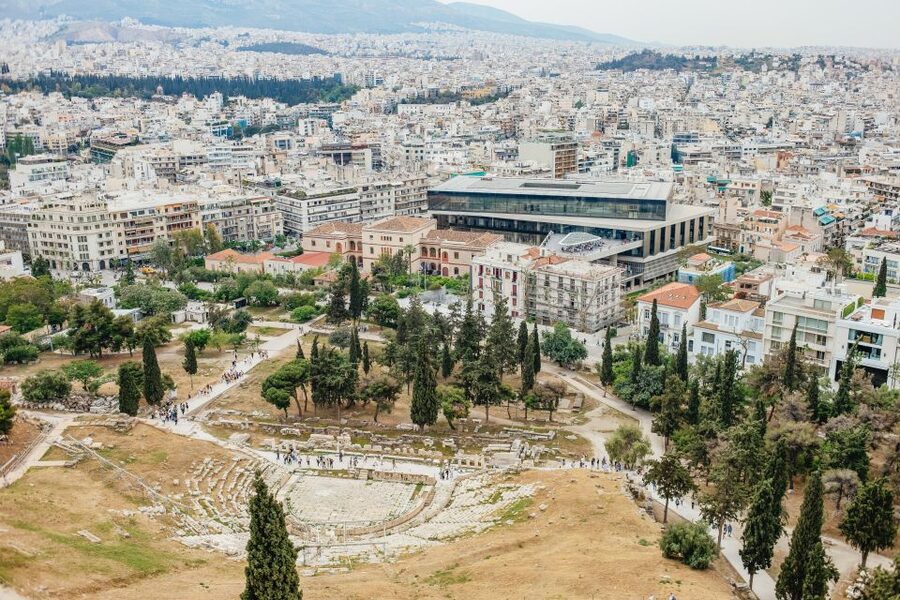
Near the lower part of the Acropolis, you pass the Theatre of Dionysus. It is not a full guided stop in the formal itinerary, but your guide explains its role as the birthplace of major Greek drama and tragedy.
This is a useful early lesson in how ancient Athens worked. The Acropolis was not only a religious center or a collection of grand buildings. It belonged to a city that valued drama, public debate, civic life, and worship.
Because you pass by rather than spend a long period seated in the theatre, the stop remains brief. That helps the tour keep its three-hour schedule, but you may want to return independently if the theatre is a special interest.
More Athens museums:
- Athens: Mythology of Delphi, Museum and Arachova Guided Tour
★ 4.6 · 4,008 reviews - Athens: Acropolis, Parthenon & Acropolis Museum Guided Tour
★ 4.8 · 3,579 reviews - Acropolis monuments & Parthenon Walking Tour with Optional Acropolis Museum
★ 5.0 · 2,678 reviews - Athens All Included: Acropolis and Museum Guided Tour with Ticket
★ 4.5 · 2,673 reviews
The Odeon and Sanctuary of Asclepius
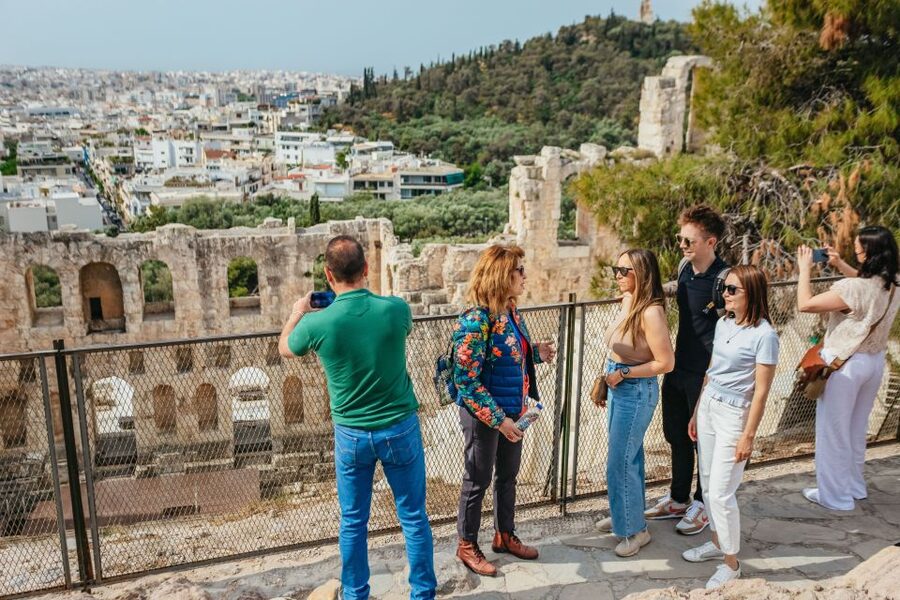
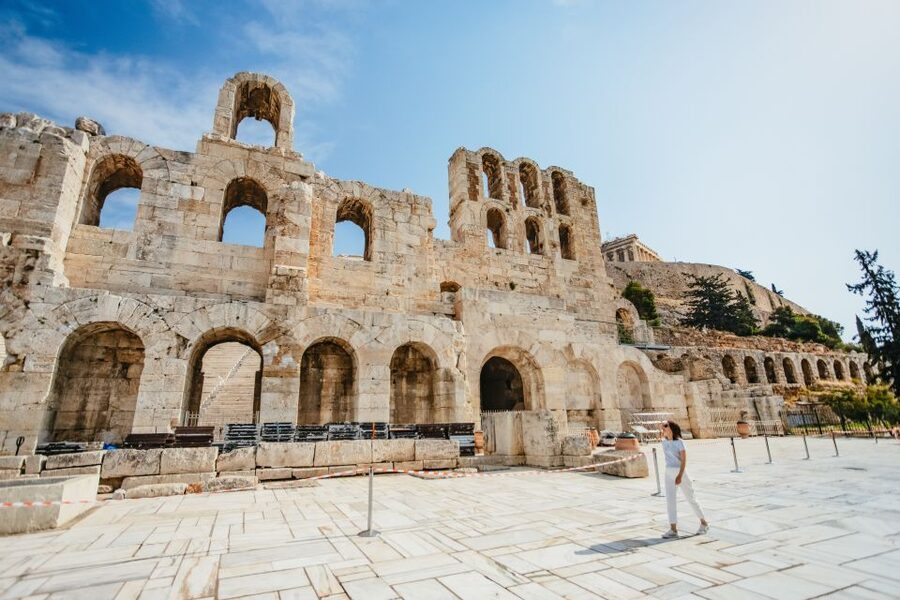
The route also takes in the Odeon of Herodes Atticus and the sanctuary of Asclepius. You encounter these places as part of the walk toward the summit.
The Odeon’s curved structure still helps you picture the performances once held there. The sanctuary of Asclepius introduces another side of Greek life, the search for healing and the worship of Asclepius, the healing god.
These shorter explanations are valuable because they widen the story beyond the Parthenon. The Acropolis is easier to appreciate when you understand that its monuments served different purposes and reflected different parts of public and religious life.
Reaching the Parthenon

At the summit, the Parthenon takes over the view. Your guide spends about 30 minutes on this landmark, discussing its design, meaning, construction, and place in Greek culture and mythology.
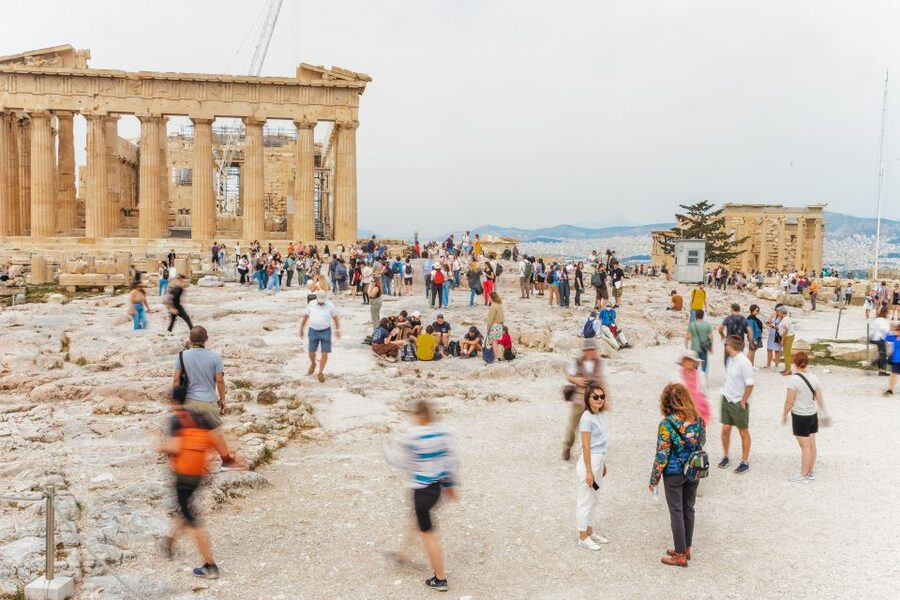
The building is famous for good reason, but it can be hard to read on your own. Much of what you see is fragmentary, and crowds make it difficult to stop in the best places. A guide helps you focus on the details that remain and picture the monument as more than a familiar symbol.
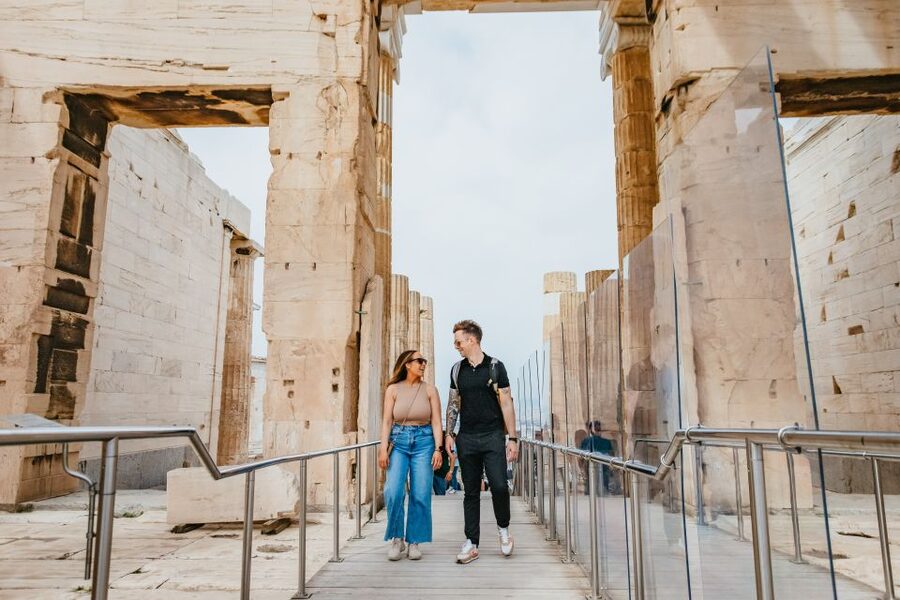
The tour also points out the Propylaea, the monumental entrance to the Acropolis, and the Temple of Athena Nike. You pass these rather than receive a long separate stop at each one. The Propylaea gives the hill a formal gateway, while the Temple of Athena Nike is tied to the city’s devotion to victory and protection.
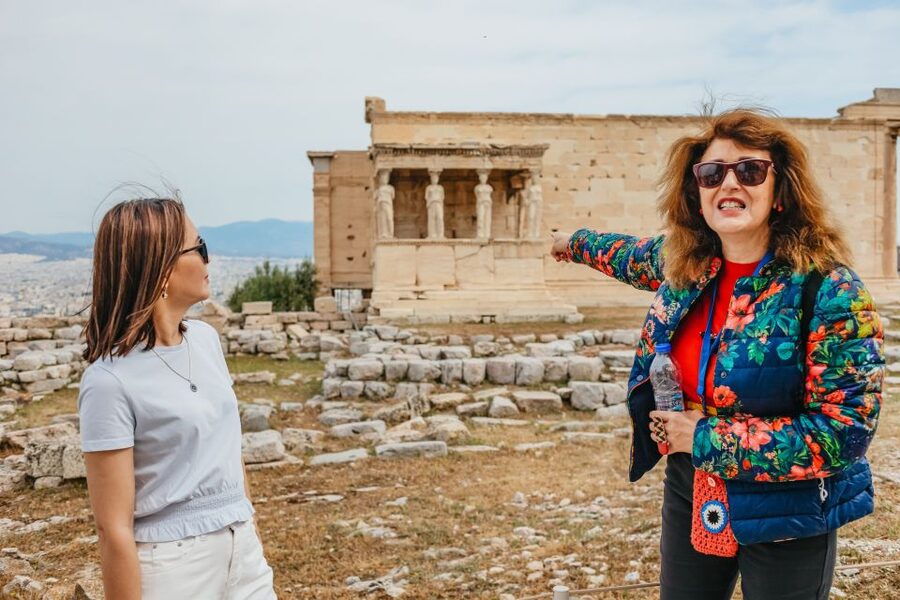
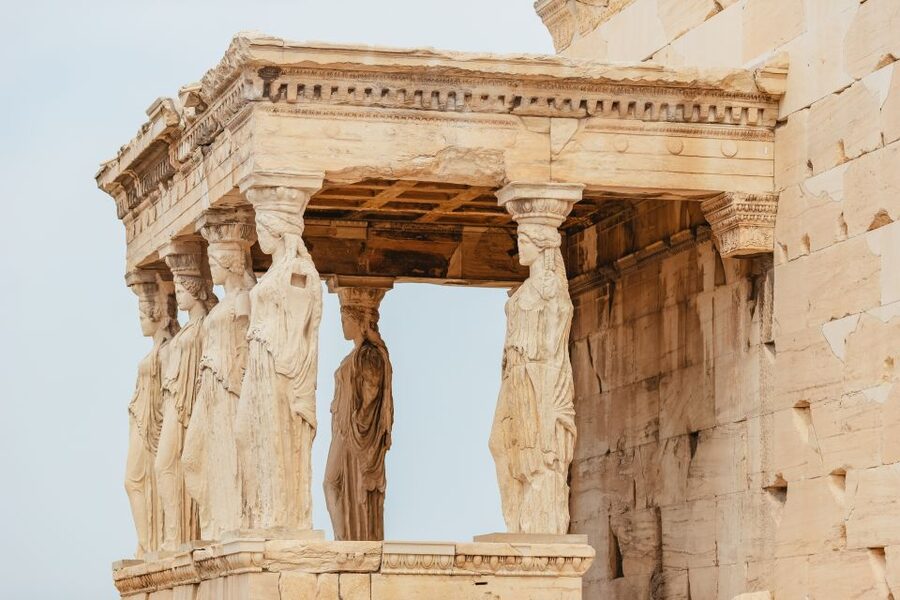
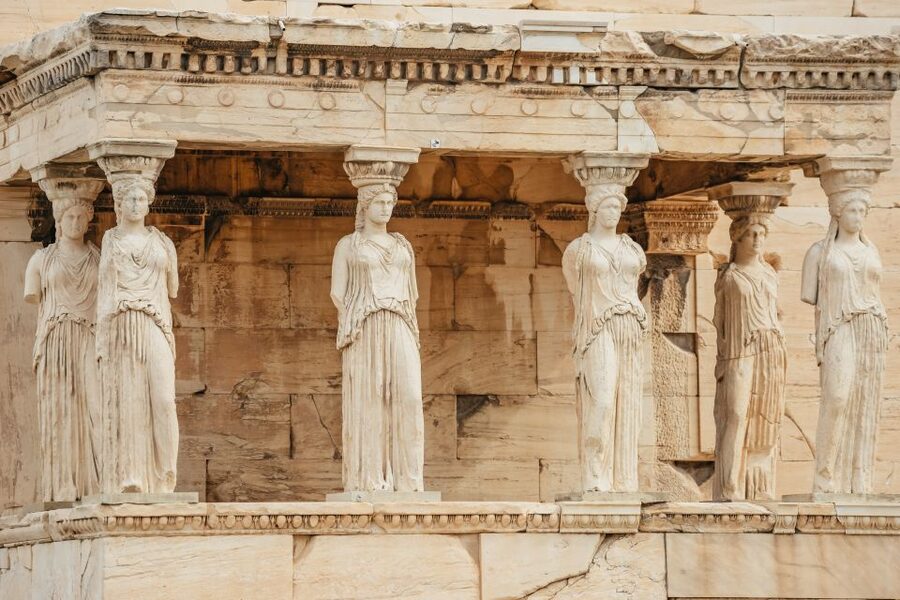
You also see the Erechtheion, one of the most distinctive buildings on the hill. Its unusual design and famous Caryatid figures make it an essential part of the visit. The tour’s short format means you will not study every corner at length, but the guide supplies the background that makes the building memorable.
The views are another major reward. You look across Athens from above, with the city spread below the ancient monuments. Leave room for photographs, but do not let the camera turn the entire summit into a hurried checklist.
Crossing to the Acropolis Museum
After the hill, the tour continues to the Acropolis Museum. The change from exposed stone to a modern, naturally lit building is welcome, especially after a sunny climb.
The museum visit lasts about 90 minutes, which is long enough to make the indoor part more than an afterthought. Your guide explains original works saved from the Acropolis temples and helps you connect them with the buildings you have just seen.
The museum’s design also adds to the visit. Glass floors and walkways reveal archaeological excavations beneath the building. You may find this section especially useful if you want to understand how later layers of Athens sit above its ancient past.
The museum offers a different kind of viewing. On the hill, you stand back and take in architecture. Here, you can examine sculpture and carved architectural pieces at close range. Natural light makes it easier to see the shape and surface of the marble than it is outdoors.
The Parthenon frieze is one of the key moments. Your guide explains the original and extraordinary sections on display, helping you see how the sculpture related to the temple. This is where a good guide earns the fee. Labels can identify an object, but a clear explanation can show you how it fits into the wider story.
One useful warning: the museum admission can feel costly when added to an Athens sightseeing budget. Still, I consider the museum worthwhile, particularly when it is paired with the Acropolis rather than visited as a separate stop.
The guides make the difference
This tour depends heavily on the person holding the headset. The strongest guides bring both subject knowledge and a sense of how to speak to a mixed group.
Eva has been praised for combining Greek history, mythology, architecture, language, philosophy, and daily life in a way that remains easy to follow. Vicky has been singled out for weaving facts into stories and for explaining the museum’s architecture as well as its art. Frosso has been noted for fluent English, humor, and careful group management.
Other guides, including Lisa, Maria, Katerina, and Calliope, have also been praised for clear delivery, warmth, and a good pace. One guide even helped a group with local food suggestions during a separate private-style experience, showing how the right guide can add a personal touch. That detail should not be treated as a guaranteed part of this itinerary, but it reflects the value of a guide who pays attention to people, not just monuments.
The electronic headsets are important. When the Acropolis fills with people, you can be a few steps away from the guide and still hear the explanation. That is much better than standing close, missing the view, or straining to catch every sentence.
There is one small variation in guiding style. One departure included repeated questions to the group, which some people may find engaging and others may find a little awkward. Most people will value the interaction, but a quiet lecture format is not guaranteed.
Group size, timing, and crowd control
The advertised format is a small group, with a private option available. In practice, some groups have been around 20 people, larger than some people expect from the phrase small group.
Twenty is still easier to manage than a large coach tour, especially with headsets and a guide who counts heads at each stop. But it is not the intimate experience of six or eight people. If personal attention is your main goal, choose the private option if available for your date.
Timing matters more than many people expect. The Acropolis is busy even outside the main summer months, and later departures can bring thick crowds. The earliest available slot, including an 8:00 a.m. start when offered, gives you the best chance of a calmer visit and less severe heat.
Pre-reserved tickets help you avoid the regular ticket-buying line. They do not promise an empty entrance. In high season, the skip-the-line ticket-holder queue can also become crowded, and you may still wait.
That distinction is important when you judge the price. You are paying for reserved access, a licensed guide, a planned route, museum admission, and headsets. You are not buying a private Acropolis.
Is $57 a good value?
At $57 per person, this is a sensible choice if you want both major sites with explanations and do not want to organize timed tickets yourself.
The value comes from the pairing. A short Acropolis-only tour might cost less, but you would miss the original works and the museum’s view back toward the hill. Visiting both independently may also require more planning, and you lose the guide who connects the marble fragments, temples, myths, and sculptures.
The price is less attractive if you prefer to move at your own speed, spend several hours sketching one building, or read every museum label without a group schedule. You also need to account for the physical demands of the hill and the possibility that your small group is closer to 20 people.
For most first visits, I think the fee is justified. The guide turns a famous sight into a coherent visit, and the pre-booked admission removes one of the biggest practical headaches in Athens.
Who should book this Athens tour?
Book it if you have three hours, want the major Acropolis sights, and value clear historical and mythological explanations. It suits first-time visitors, couples, families with children over six, and anyone who wants help navigating a crowded archaeological site.
It is also a good fit for people who want the museum included on the same outing. The outdoor and indoor sections reinforce each other, and you avoid spending half a day trying to connect them on your own.
Think carefully before booking if you have limited mobility, heart problems, a pre-existing medical condition, or difficulty walking uphill on uneven ground. The tour is not suitable for wheelchair users, pregnant women, children under six, or people using walkers. Babies can attend only with a pouch rather than a stroller.
FAQ
Where does the tour meet?
Meet outside the Acropolis Metro Station at Makrigianni 7. Use the Makrygianni or Dionysiou Areopagitou exit, go to street level, and look for a guide holding a sign with your names.
How long does the tour last?
The tour lasts three hours. About one hour is spent at the Acropolis, around 30 minutes focuses on the Parthenon, and about 90 minutes is spent in the Acropolis Museum.
Are Acropolis and museum tickets included?
The included option provides pre-reserved tickets for both the Acropolis and the Acropolis Museum. If you book an option without tickets, you must pay the entry fees in exact cash at the meeting point.
Can I choose a private tour?
Yes. A private group option is available, depending on the option you book.
What languages are offered?
Live guided tours are offered in English and German.
Is transportation included?
No. You must make your own way to the meeting point outside the Acropolis Metro Station.
What should I bring?
Bring water and a sun hat. Wear suitable walking shoes, since the tour includes an uphill walk over uneven surfaces.
Is the tour accessible for wheelchairs or strollers?
No. Wheelchairs, walkers, elevator access, and baby strollers are not available during the tour. Baby pouches are recommended instead of strollers, and large bags and luggage are not allowed.
Should you book it?
I would book this tour if you want an efficient first look at Athens’ two essential ancient sights, especially with an early start and a strong English-speaking guide. The best features are the logical Acropolis-to-museum order, reserved admission, headsets, and guides who explain rather than simply point.
Choose the private option if you need a slower pace or more personal attention. Otherwise, the $57 small group tour offers a practical way to see the Parthenon, understand the surrounding monuments, and meet the original art inside the museum without spending your day sorting out the details yourself.
Freshly added Athens trips
- Athens and Ancient Corinth Private from Athens★ 5.0 · 3 reviews
- From Athens: Mycenae and Epidaurus Private Tour★ 4.8 · 3 reviews
- Full day Meteora private tour★ 5.0 · 3 reviews
- Double Shore Dive (certified divers)★ 4.5 · 3 reviews
- Athens Hills: Mythology Treasure Hunt★ 5.0 · 3 reviews
- Sunset & swimming at Cape Sounio, Poseidon temple★ 5.0 · 3 reviews
- Philosophy Experience at Plato’s Academy Park – basic version★ 5.0 · 3 reviews
- Private Acropolis Tour – Ticket Included★ 5.0 · 3 reviews
Acropolis Tours, compared.

Acropolis & up to 5 Archaeological Sites Combo Pass
Read our review →

Acropolis, Parthenon & Acropolis Museum Guided Tour
Read our review →
Acropolis, Parthenon & Acropolis Museum Guided Tour
Read our review →


Acropolis monuments & Parthenon Walking Tour with Optional Acropolis Museum
Read our review →Browse the lists this tour appears in