
Reviewed · MUSEUMS
Athens: Kotsanas Ancient Greek Technology Museum Guided Tour
The cleverest thing about this Athens museum is that it makes ancient technology work in front of you. In a compact one-hour private tour, you can see operating models of the Antikythera calculating mechanism, hydraulic clocks, robots, and mechanical theaters rather than simply reading about them on a wall.
I like the personal guide, who can explain each mechanism at your level, and I like the hands-on displays that make the subject accessible even if you are not an engineer. The main consideration is that the tour is short, the museum focuses on ancient technology rather than the major archaeological sites, and it is not suitable for people with mobility impairments.
In This Review
- Key points to know before you book
- Why this small museum earns a place in Athens
- Meeting your guide near Syntagma
- The first part of the visit: technology you can understand
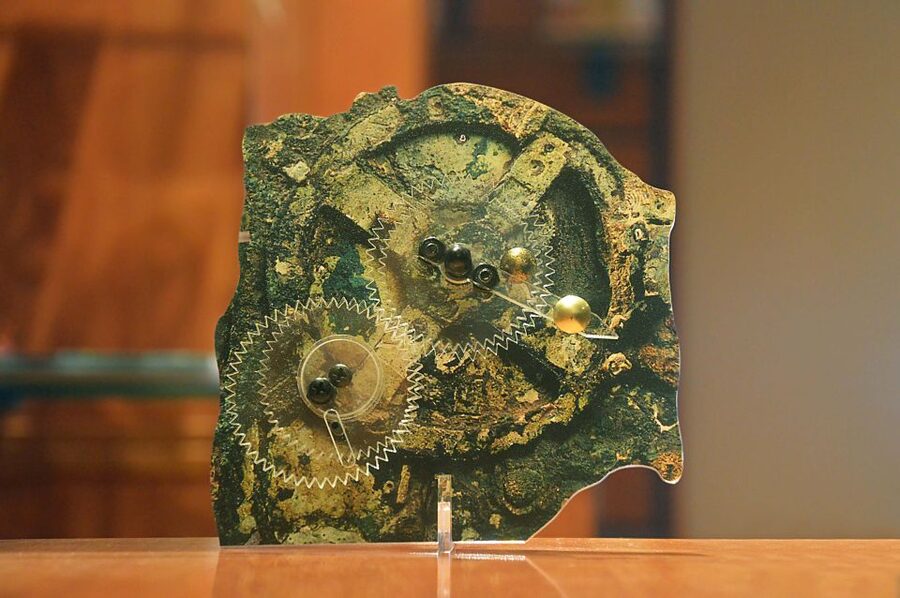
- The Antikythera mechanism and ancient calculation
- Clocks, robots, and mechanical theaters
- What makes the displays feel surprisingly modern
- How the one-hour schedule works
- The value of $54 for a private group
- Who will enjoy this most
- Should you book the Kotsanas Museum tour?
- FAQ
- Where is the Kotsanas Museum tour meeting point?
- How long does the guided tour last?
- Is the tour private?
- What language is the tour in?
- Who leads the tour?
- What is included in the price?
- Are food and drinks allowed?
- Is the tour suitable for people with mobility impairments?
Key points to know before you book
- The Antikythera mechanism takes center stage: See a working model of what is described as the oldest analog computer in the world.
- The tour is private for up to four people: At $54 per group, the cost can be good value for a small family or group of friends.
- Guides explain the machines in English: Your guide may be an engineer, archaeologist, historian, or museologist.
- The exhibits are meant to be used: Many models operate, with videos, animations, diagrams, and explanatory labels supporting the demonstrations.
- You are near Syntagma Square: The museum at Pindarou 6 is about a five-minute walk from Syntagma Metro Station.
- Plan for one focused hour: Your ticket includes the guided visit and free time to look around afterward.
Why this small museum earns a place in Athens
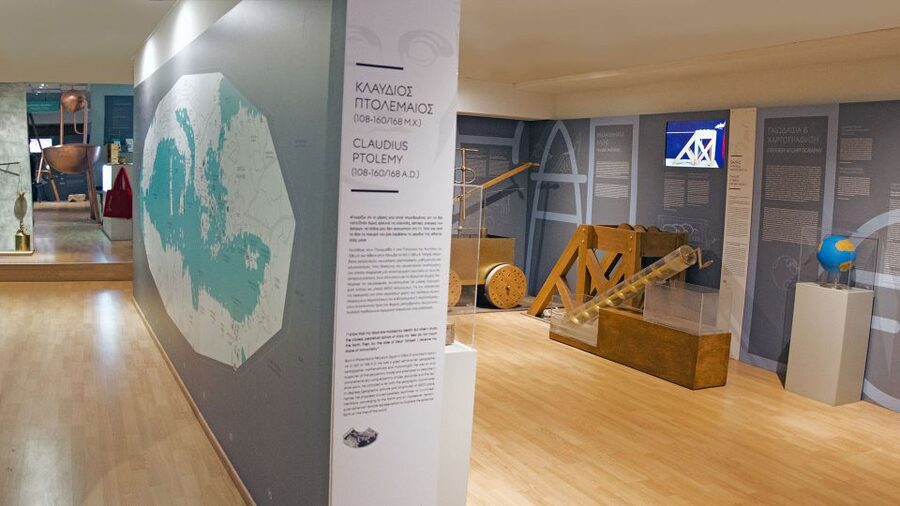
Athens is full of grand temples, marble statues, and famous archaeological sites. The Kotsanas Museum offers a different view of ancient Greece: not the Greece of columns and myths, but the Greece of gears, pulleys, water pressure, astronomy, theater effects, and automated movement.
That change of focus is the museum’s strength. You can look at the Parthenon and think about architecture and religion. Here, you are asked to think about how people solved practical problems with the tools available to them.
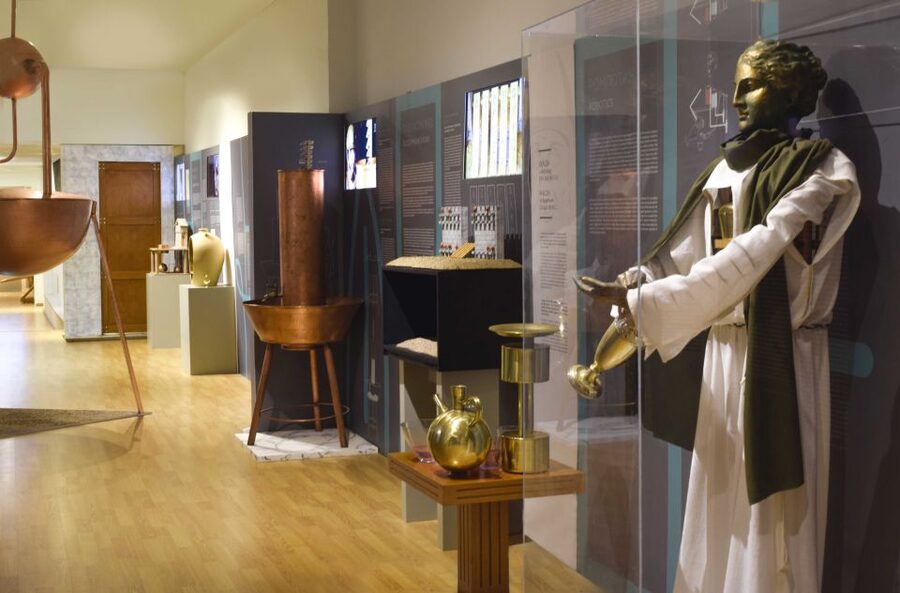
The collection is spread through a 700-square-meter Art Nouveau building in central Athens. The exhibition includes about 300 ancient technology artifacts overall, with approximately 100 selected exhibits in the presentation called The Hi-Tech Inventions of Ancient Greeks. The result is more active than a standard display of objects behind glass.
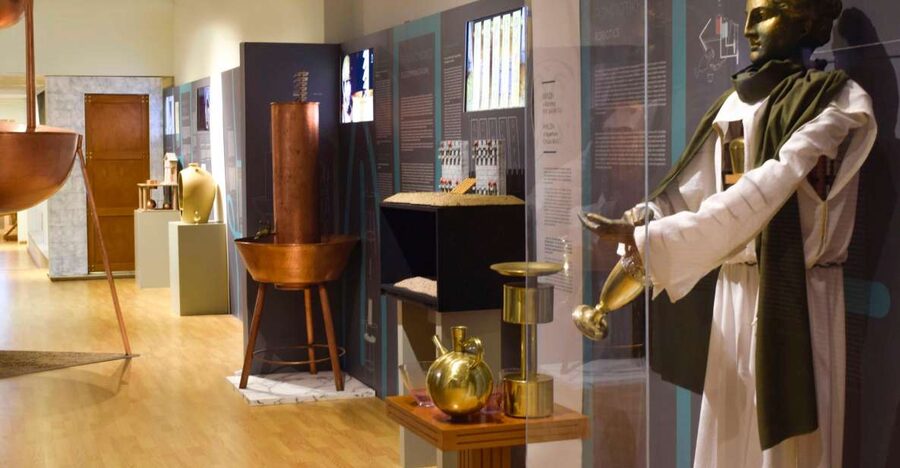
You will see models connected with figures such as Heron, Ktesibios, and Philon. The displays cover automated servants, hydraulic clocks, mechanical theaters, and the Antikythera calculating mechanism. Some exhibits are interactive, and the museum uses large posters, diagrams, photographs, video, animation, and documentaries to show how the machines functioned.
I find this useful because ancient technology can otherwise seem abstract. A label describing a clock is one thing. A model showing water entering a mechanism and driving its movement is much easier to understand.
More Athens museums:
- Athens: Acropolis, Parthenon & Acropolis Museum Guided Tour
★ 4.8 · 9,316 reviews - Athens: Mythology of Delphi, Museum and Arachova Guided Tour
★ 4.6 · 4,008 reviews - Athens: Acropolis, Parthenon & Acropolis Museum Guided Tour
★ 4.8 · 3,579 reviews
Meeting your guide near Syntagma
The meeting point is Pindarou 6, Athina 106 71, about five minutes on foot from Syntagma Metro Station. That makes this a simple addition to a day in central Athens. You do not need a separate hotel transfer, and the activity begins and ends at the museum.
The tour is offered as a private group for up to four people. That matters here. A guide can spend more time on the mechanisms that interest you, answer questions without competing with a large crowd, and adjust the explanation for adults, children, or a mixed group.
The tour is in English. Staff leading the visit may be qualified engineers, archaeologists, historians, or museologists. Guides named in connection with the experience include Vasilis, Irina, and Maria. The exact guide depends on the scheduled visit, but the format is designed around direct explanation rather than a self-guided walk through labels.
I would arrive a little early. The museum is easy to reach, but central Athens streets can take longer to navigate than the map suggests, especially if you are coming from another attraction.
The first part of the visit: technology you can understand
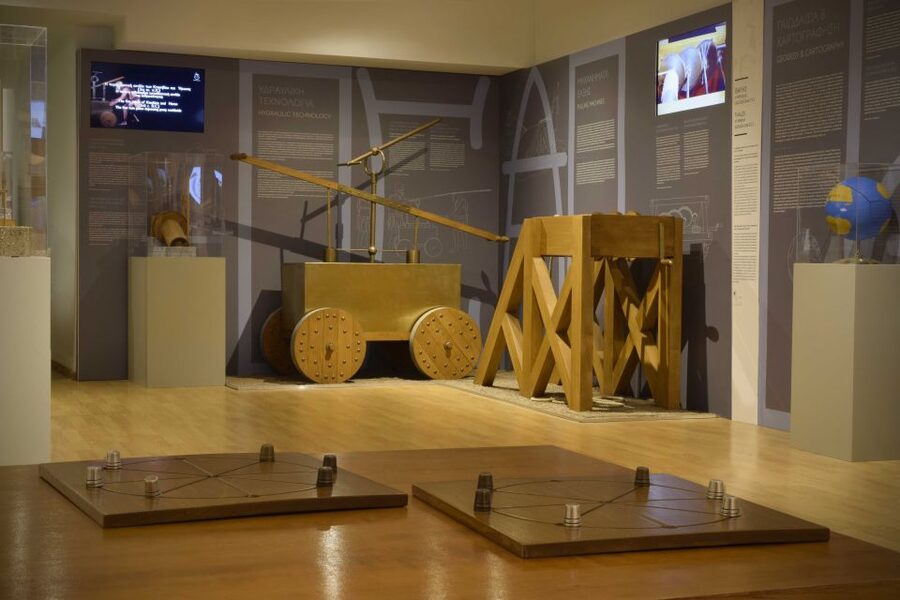
A one-hour visit moves at a good pace, but it is not meant to cover every object in the building in equal detail. The guide introduces the main ideas and demonstrates selected models. You then have free time to explore further.
The biggest benefit of having a guide is that the mechanisms have a story. You learn what problem an invention solved, how its parts moved, and how the ancient maker might have used it. That explanation gives each model a reason to exist.
The museum’s material is presented in Greek and English. Labels and large posters provide context, while diagrams and photographs help you follow the construction of each device. Projecting stations add video and animation, and documentaries show the exhibitor explaining a mechanism in operation.
This mixture works well for different learning styles. If you enjoy technical detail, the diagrams and bibliographical references give you more to examine. If you prefer a clear demonstration, the working models do much of the teaching.
The guide also helps prevent a common problem in science museums: looking at a complicated machine and having no idea where to begin. You can ask a basic question without feeling out of place. That is especially helpful for families, since children may understand a moving model long before they understand a paragraph about its design.
The Antikythera mechanism and ancient calculation
The Antikythera calculating mechanism is one of the main reasons to visit. The museum presents a working model of this famous device, which is described here as the oldest analog computer in the world.
You are not simply seeing an ancient object as a distant relic. The model lets you consider how a mechanism could calculate and display astronomical information through interlocking parts. Even if you do not follow every technical detail, the basic idea is memorable: ancient Greek technology could use carefully arranged mechanical movement to represent cycles in the sky.
The guide is especially valuable at this point. Without an explanation, gears can look impressive but confusing. With a demonstration, you can see why the device is important and how far ancient engineering had moved beyond simple hand tools.
This is one area where the museum offers something different from many archaeological displays. You are encouraged to understand the mechanism as a machine, not just admire it as an artifact.
A few more Athens days worth a look
- Athens: Acropolis Ticket with Optional Audio or Live Guide
★ 4.2 · 11,055 reviews - Athens: Acropolis and Parthenon Guided Walking Tour
★ 4.6 · 5,882 reviews - Athens: Cape Sounio & Poseidon Temple Trip with Audio Guide
★ 4.4 · 4,521 reviews - Athens: Acropolis Ticket with Audio Guide
★ 4.0 · 3,575 reviews
Clocks, robots, and mechanical theaters
The collection also presents ancient timekeeping and automated devices. The hydraulic clock of Ktesibios shows how water could be used to control movement and measure time. Water-powered technology may sound basic at first, but the working model helps you see the precision required to make it reliable.
The displays connected with Heron bring a more theatrical quality to the visit. His automotive-puppet show uses mechanical movement to create a small performance. The museum also presents a robot-servant and what it calls the cinema of Philon.
These exhibits are useful because they connect engineering with everyday entertainment. Ancient technology was not only about warfare, construction, or astronomy. It could also create surprise, motion, visual effects, and stories.
I would pay attention to how the guide explains the difference between a machine that performs a task and a machine designed to imitate life or create wonder. That is one of the most enjoyable ideas in the museum. The mechanisms may be old, but the human fascination with automation feels very familiar.
The word cinema should not lead you to expect a modern movie theater. The reference is to a mechanical presentation or visual effect. The interest is in how movement and sequence were created before modern electrical equipment.
What makes the displays feel surprisingly modern
The museum’s central idea is that ancient Greek inventors developed mechanisms that resemble some early modern technology. You may recognize familiar principles in the use of gears, water, automation, measurement, and controlled motion.
That does not mean the ancient machines were modern devices in disguise. The museum is most useful when it shows the specific ingenuity of the design rather than making a broad claim that everything began in antiquity.
For you, the comparison makes the history easier to grasp. A clock, robot, calculating device, or mechanical show is not just a museum subject. Each one raises questions that still matter today: How do you measure time? How do you make a machine repeat a movement? How do you represent information? How do you make a device respond to a changing condition?
The interactive nature of the exhibits turns those questions into something you can see. Several models can be tried or operated, though the exact demonstrations depend on the guide and the display. That hands-on quality is one reason the museum works particularly well for children and adults who learn by watching a process unfold.
How the one-hour schedule works
The guided portion lasts one hour. In that time, your guide presents selected inventions and explains the mechanisms through demonstrations and visual material. The pace is focused, not leisurely.
After the guided portion, you have free time to explore the museum further. This is important because you may want to return to a model that went by quickly or read the longer labels and references at your own pace.
If you are visiting with children, I would use the guided hour to keep everyone moving and save the free time for the exhibits that catch their attention. If you are an adult with a strong interest in engineering or ancient science, you may want to use the extra time for diagrams, photographs, and bibliographical information.
A single hour is enough to understand the museum’s main themes, but not enough to study every object in depth. If you want a long technical session, this may feel brief. For most sightseeing schedules, though, the short format is an advantage. You can fit it between major Athens sights without giving up half a day.
The value of $54 for a private group
The listed price is $54 per group of up to four people, rather than $54 per person. For four people, that works out to $13.50 each before any booking details or changes in price. For two people, the per-person cost is higher, but the private format still gives you a guide’s full attention.
I consider that reasonable for a central Athens activity that includes museum entry, a one-hour private tour, and time to look around afterward. The value is strongest when you have a small group that wants explanations instead of simply walking through a display.
The price is less attractive if you are mainly looking for a large ancient-art collection or a general introduction to Greek history. This is a specialized museum, and its appeal depends on your interest in machines, invention, and problem-solving.
Food and drinks are not included, and they are not allowed inside. Since the museum is close to central Athens, you can easily plan a meal before or after the visit, but you should not treat the tour as a combined sightseeing and refreshment stop.
The activity also offers free cancellation up to 24 hours before the start time and a reserve-now, pay-later option. Those terms can help if your Athens schedule is still changing.
Who will enjoy this most
I would recommend the tour to families, curious children, engineering fans, history students, and anyone who has already seen the main archaeological sites and wants another angle on ancient Greece.
It is also a strong choice for adults who do not consider themselves technical. The guide-led format keeps the machines from becoming a wall of complicated diagrams. You can ask for a plain explanation, then look more closely if a particular invention catches your interest.
The museum has particular appeal for people who like understanding how things work. If your favorite part of a historic site is the construction method, the water system, the clock, or the tool rather than the statue, this may be one of the better short visits in central Athens.
The main limitation is mobility. The activity is not suitable for people with mobility impairments, so check your own needs before booking. The information provided does not describe a specific accessibility arrangement, so you should contact the museum directly if you need details beyond that notice.
Should you book the Kotsanas Museum tour?
Book it if you want a private, focused look at ancient Greek engineering and prefer working models to silent displays. The Antikythera mechanism, hydraulic clock, robot-servant, and mechanical theater give the visit plenty of memorable material, while the guide makes the technical ideas easier to follow.
I would especially choose this tour for a family or group of up to four. The private price becomes more appealing with four people, and the personal format lets the guide keep children involved while still giving adults useful detail.
Skip it if your Athens time is limited to the Acropolis and the major archaeological museums, or if ancient technology does not interest you. This is a specialized one-hour stop, not a replacement for Athens’ main historical sites.
For the right visitor, though, it adds an excellent question to your trip: what else were the ancient Greeks capable of building? The museum gives you working answers, one gear, valve, and moving part at a time.
FAQ
Where is the Kotsanas Museum tour meeting point?
Meet at Pindarou 6, Athina 106 71, Greece. The museum is about a five-minute walk from Syntagma Metro Station.
How long does the guided tour last?
The private guided tour lasts one hour. You also receive free time to explore the museum afterward.
Is the tour private?
Yes. The activity is offered as a private group experience for up to four people.
What language is the tour in?
The live guided tour is in English. The museum also provides audio-visual material, labels, and exhibition information in Greek and English.
Who leads the tour?
The guide is qualified staff who may be an engineer, archaeologist, historian, or museologist. Guides associated with the experience include Vasilis, Irina, and Maria.
What is included in the price?
Admission to the museum, the one-hour private guided tour, and free time to explore further are included.
Are food and drinks allowed?
No. Food and drinks are not allowed inside the museum, and they are not included in the activity.
Is the tour suitable for people with mobility impairments?
The activity is listed as not suitable for people with mobility impairments. Check with the museum directly if you need more specific accessibility information.
Freshly added Athens trips
- Athens and Ancient Corinth Private from Athens★ 5.0 · 3 reviews
- Full day Meteora private tour★ 5.0 · 3 reviews
- Double Shore Dive (certified divers)★ 4.5 · 3 reviews
- From Athens: Mycenae and Epidaurus Private Tour★ 4.8 · 3 reviews
- Athens Hills: Mythology Treasure Hunt★ 5.0 · 3 reviews
- Sunset & swimming at Cape Sounio, Poseidon temple★ 5.0 · 3 reviews
- Philosophy Experience at Plato’s Academy Park – basic version★ 5.0 · 3 reviews
- Private Acropolis Tour – Ticket Included★ 5.0 · 3 reviews
Museums, compared.

Acropolis, Parthenon & Acropolis Museum Guided Tour
Read our review →
Mythology of Delphi, Museum and Arachova Guided Tour
Read our review →Acropolis, Parthenon & Acropolis Museum Guided Tour
Read our review →
Acropolis monuments & Parthenon Walking Tour with Optional Acropolis Museum
Read our review →
Athens All Included: Acropolis and Museum Guided Tour with Ticket
Read our review →
Acropolis Museum Ticket with optional Audio Guide
Read our review →
Small-Group Delphi, Museum & Arachova Day Trip
Read our review →
Parthenon & Acropolis Museum with Audio or Live Tour Option
Read our review →Browse the lists this tour appears in