
Reviewed · HISTORICAL TOURS
Athens: History of Rebellion Walking Tour
Athens has more to tell you than the usual tale of temples, philosophers, and marble gods. This History of Rebellion Walking Tour follows the city’s struggles against Ottoman rule, fascism, police violence, and social exclusion, ending in Exarchia, the neighborhood most closely linked with modern activism.
I like two things right away. First, the route connects famous places such as Syntagma Square and the Parliament with lesser-known stories. Second, Maelle brings history into the present with discussions of refugees, anarchists, artists, LGBT+ people, and local campaigns for social justice. The main caution is simple: this is a serious political and social tour, not a light sightseeing stroll, and you will walk or stand for most of 2.5 hours.
In This Review
- Key points to know before booking
- Why this Athens tour feels different
- Starting among Ottoman-era stories in Monastiraki
- From the Metropolitan Cathedral to Syntagma Square
- Kolonaki and the Academy of Athens
- Entering Exarchia, Athens’ center of activism
- What Maelle adds to the walk
- Is the $44.04 price good value?
- Practical details that affect your choice
- Who should book this experience?
- My recommendation
- FAQ
- Where does the Athens History of Rebellion Walking Tour start?
- Where does the tour finish?
- How long does the tour last?
- Which languages are available?
- Is this a private tour or a group activity?
- What places are included on the route?
- What should I bring?
- Can I cancel for a refund?
Key points to know before booking
- The route links Monastiraki, Syntagma, and Exarchia, giving familiar Athens landmarks a new meaning.
- Maelle is the named guide praised throughout the feedback, with a warm, personal style and strong command of modern Greek history.
- The focus is the last 200 years, including Ottoman rule, the Greek Revolution, fascism, protest movements, and present-day struggles.
- Exarchia receives the most attention, with discussion of its anarchist, collectivist, artistic, refugee, and LGBT+ communities.
- Small groups make discussion possible, so you can ask questions instead of simply listening to a speech.
- Comfortable shoes, water, a hat, and sunscreen matter, especially during Athens’ hot, bright days.
Why this Athens tour feels different
Many Athens walks point out ancient stones and move on. This one asks how the city became the place you see today, and who had to fight for the right to shape it.
That makes the tour a useful counterpoint to the Acropolis and the Ancient Agora. You still see central Athens, but the subject is not classical glory. It is the city’s modern political life, its conflicts, and the people who challenged authority.
The tour begins in Monastiraki and moves toward Syntagma before continuing through Kolonaki and the Academy area to Exarchia. The route is easy to understand geographically, but the larger journey is from old systems of rule to current questions about freedom, identity, and public space.
Maelle’s approach is a major part of the experience. She explains dates and events, but she also asks questions and invites conversation. That suits you if you like to connect facts with real life. The tour can be funny at times, but it also deals with violence, fascism, police repression, and hardship. It does not smooth away the difficult parts.
More ancient history days in Athens:
- Historical Delphi One Day Tour with Arachova Stop & Expert Guide
★ 4.5 · 1,247 reviews - Historic Athens: Small Group Electric Bike Tour
★ 4.9 · 740 reviews - The History of Athens: Greek Mythology Private Tour
★ 5.0 · 138 reviews
Starting among Ottoman-era stories in Monastiraki
Meet in Monastiraki Square, in front of Pantanassa Church. Look for a guide holding a sign marked Athens City of Rebellion. This is a busy part of central Athens, so allow enough time to find the church and your guide without rushing.
The first section looks back to the period when Athens was under Ottoman rule. Rather than treating the Greek Revolution as a single heroic event, the tour presents resistance as something built through people, pressure, and popular movements.
That opening gives the rest of the walk its frame. You begin with the struggle for national freedom, then move toward later fights over political power and social rights. The subject is not only famous leaders. The emphasis also falls on ordinary Athenians and the collective action that helped push history forward.
The Monastiraki stop itself is brief, around five minutes, so do not expect a long architectural lecture. Its value is as a starting point for the story. The guide uses the setting to transport you back to an Athens shaped by imperial rule and resistance.
From the Metropolitan Cathedral to Syntagma Square
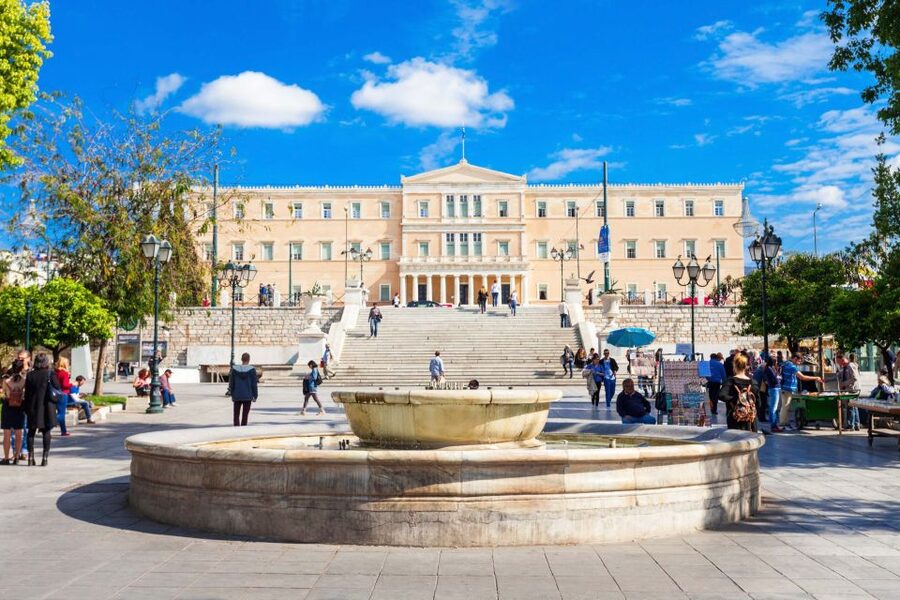
The route passes the Metropolitan Church of Athens before reaching a less obvious stop and then Syntagma Square. These short pauses help keep the walk moving, but they also mean you should expect selected stories rather than a full guidebook treatment of every building.
Syntagma is the political heart of present-day Athens. Here, the tour turns toward mass protest, public demonstrations, and the people who became symbols of resistance. The square is not treated merely as a photo stop in front of the Parliament. You learn why it has repeatedly drawn Athenians who wanted freedom, accountability, or a different future.
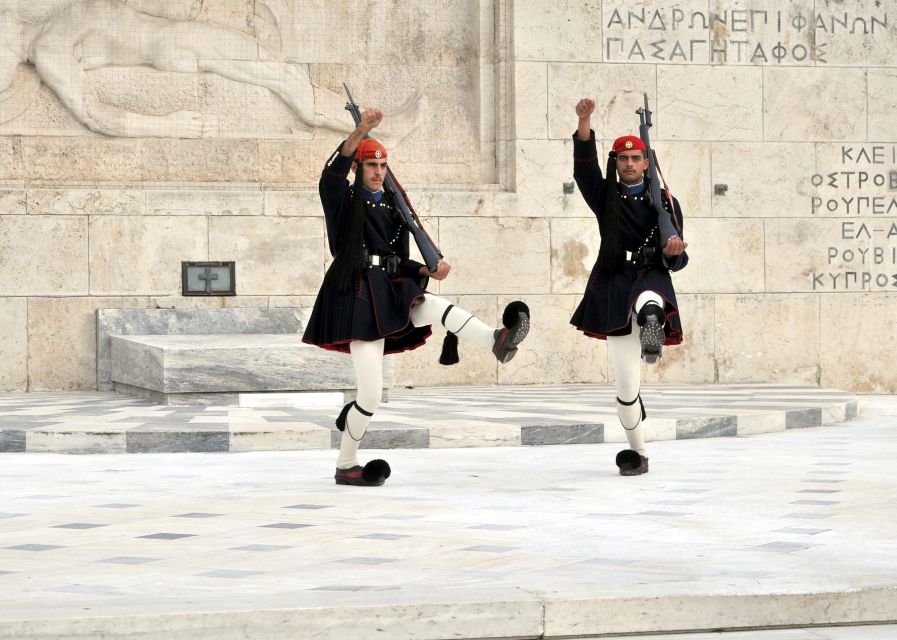
The Hellenic Parliament and the Tomb of the Unknown Soldier add another layer. The Parliament represents formal political authority, while the tomb and its guard ceremony connect national memory with sacrifice. On this tour, those sites become places to discuss who gets remembered, how national stories are built, and how citizens respond when institutions fail them.
The exact stop times are short, often five or ten minutes. That is useful if you want a moving, story-led walk, but less useful if you prefer long periods for photography or detailed architectural study. Bring questions. The value here comes from conversation and context, not from lingering silently at each landmark.
Kolonaki and the Academy of Athens
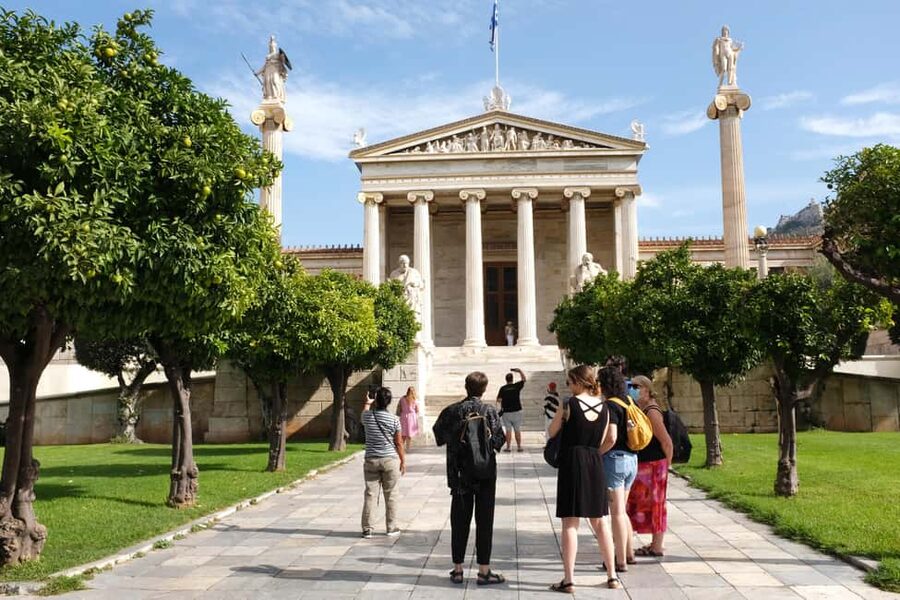
After Syntagma, the route passes through Kolonaki and continues toward the Academy of Athens. This shift in setting helps show that political Athens is not limited to one square or one neighborhood.
Kolonaki is associated with a different side of central Athens than Exarchia. The walk uses the area as part of the transition toward the Academy and the city’s institutions. You may find the contrast useful, especially if you have already seen Athens only through its tourist center.
At the Academy of Athens, the guide continues the discussion of the modern Greek state and the ideas that shaped it. The stop lasts about ten minutes and offers another chance to connect grand public buildings with the political struggles taking place beyond their walls.
This section may feel less immediately dramatic than Exarchia. Still, it helps prevent the tour from presenting rebellion as something that happens only in rough-edged neighborhoods. The route shows power, respectability, public memory, and dissent in the same city.
More Athens walking tours:
- Athens: Acropolis and Parthenon Guided Walking Tour
★ 4.6 · 5,882 reviews - Greek Food Walking Tour in Athens
★ 5.0 · 4,740 reviews - Acropolis: Acropolis and Parthenon Guided Walking Tour
★ 4.7 · 3,442 reviews - Acropolis monuments & Parthenon Walking Tour with Optional Acropolis Museum
★ 5.0 · 2,678 reviews
Entering Exarchia, Athens’ center of activism
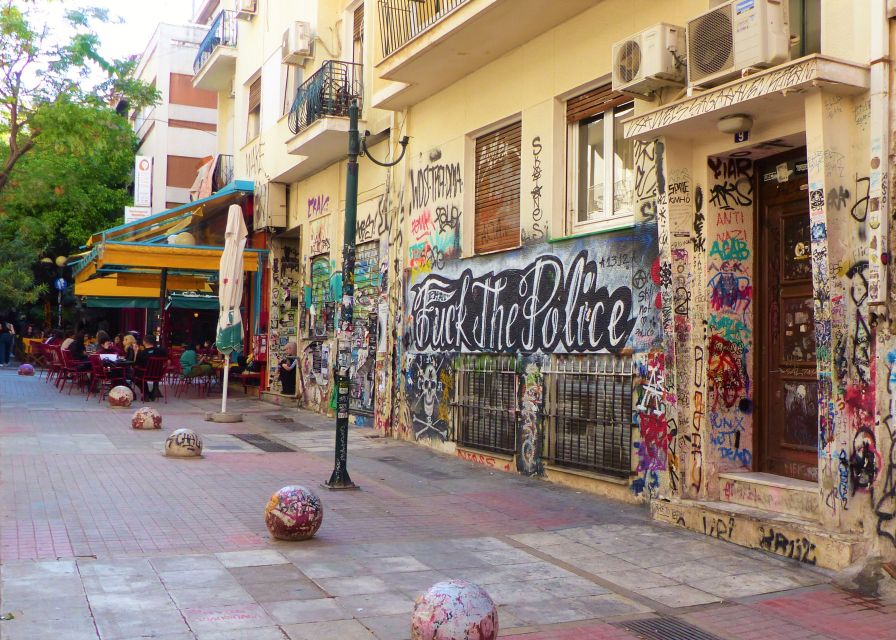
Exarchia is the main event for many people who book this walk. The area is associated with anarchists, refugees, artists, LGBT+ communities, and campaigns against police repression and gentrification. The tour treats the neighborhood as a living community, not as a backdrop for edgy photographs.
That distinction matters. Exarchia is often reduced to a reputation for protest, graffiti, or conflict. Here, you hear about the people and values behind its political identity, including mutual support and collective action. You also get help reading the neighborhood’s public art and symbols.
The experience does not promise a neat answer to every argument surrounding Exarchia. That is a strength. Social movements, policing, housing pressure, and gentrification are complicated subjects. Maelle’s role is to give you a framework and encourage critical thinking rather than hand you a simple tourist version of the area.
Several stops in Exarchia are described as secret or less obvious locations. They are short guided visits of about five to ten minutes. Since exact details are not provided in advance, you should expect the guide to reveal the significance on the day rather than receive a fixed list of photo stops.
The walk then reaches Exarchion Square, where the tour finishes. This is a fitting end because the square represents the neighborhood’s public life and political character. It also leaves you in an area with its own cafes, restaurants, and streets to explore afterward.
What Maelle adds to the walk
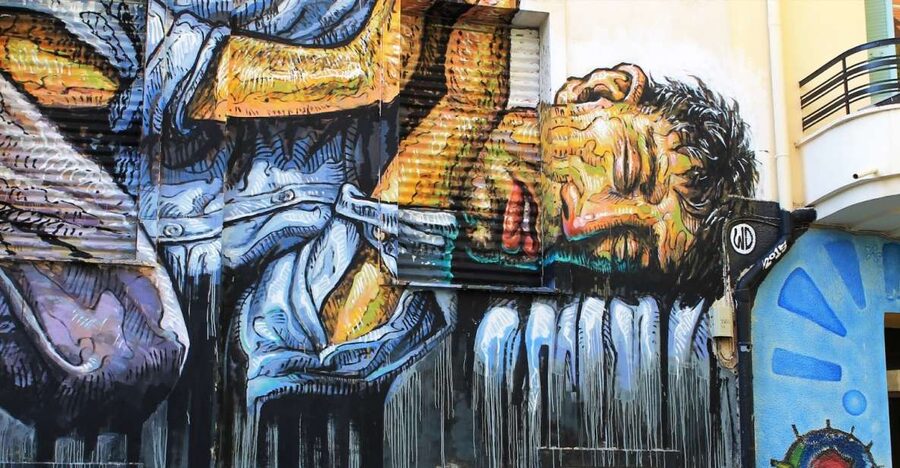
The guide can make or break a history walk, and Maelle’s style is central here. She is described as warm, funny, inclusive, and passionate, with a personal connection to the subject. She explains modern Greek history in clear chronological order, which helps when the tour moves across two centuries of upheaval.
You will hear about politics, culture, society, street art, and daily life, not just battles and governments. That wider view is important. A rebellion is not only a date in a textbook. It can also be a neighborhood defending its character, a group supporting people in need, or a public square becoming a place of protest.
The small-group format makes this more than a one-way lecture. Private and small-group options are available, and the guide’s style appears especially suited to questions and discussion. If your group is small, you can spend more time on the subjects that interest you most.
Maelle also offers practical ideas for the rest of your stay, including places to eat, shop, and visit in Athens and on the Greek islands. Those suggestions are not part of the formal route, but they can be useful if you want to see beyond the best-known tourist stops.
Is the $44.04 price good value?
At $44.04 per person, this is not the cheapest way to walk around central Athens. You can cross Monastiraki and Syntagma on your own for free. The question is what you are paying for.
The fee covers a 2.5-hour guided experience in English or French, with a subject that is not usually covered in standard city tours. You are paying for selection, explanation, and access to a more thoughtful reading of places you might otherwise pass without understanding.
I think the value is strongest if you are interested in modern history, politics, social movements, or local life. It is also a good use of time early in your stay because the guide’s restaurant and sightseeing suggestions may help shape the rest of your visit.
The value is weaker if your main goal is ancient architecture, museum collections, or a relaxed orientation walk. This tour does not replace an Acropolis visit. It adds a different layer to Athens.
Practical details that affect your choice
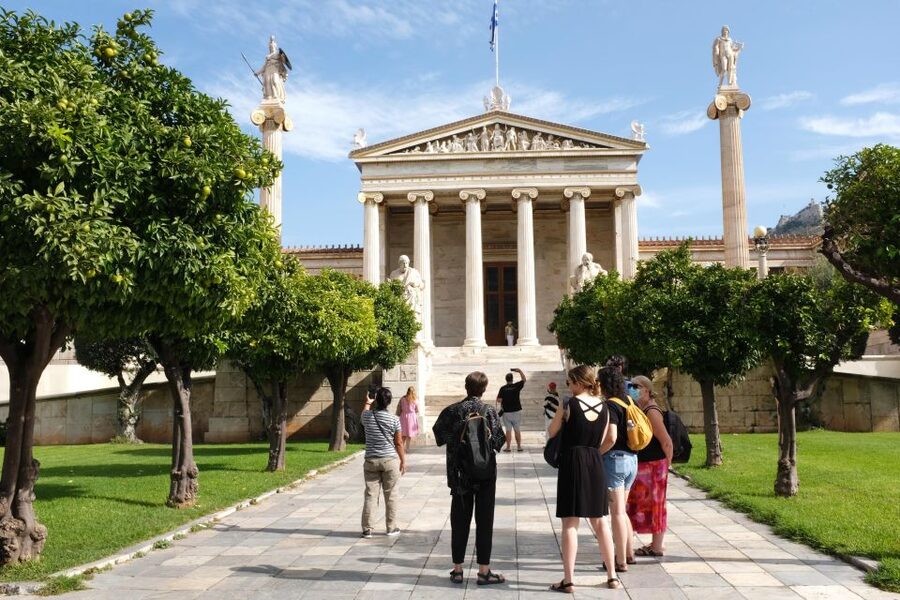
Plan on walking and standing for two to three hours. The advertised duration is 2.5 hours, but the amount of time on your feet matters more than the clock. People with mobility impairments may find the route unsuitable.
Wear comfortable shoes. Add water, sunscreen, and a sun hat, especially in the warmer months. Athens can be unforgiving when you are standing in open squares, and there may not be a convenient break whenever you want one.
The tour runs at different starting times, so check availability for your date. It is offered in English and French. Private or small-group arrangements are available, which may be worth considering if you want a more conversational experience.
The stated route begins at Pl. Monastirakiou 2 and ends at Plateia Exarcheion. The meeting information also says the activity ends back at the meeting point, so confirm the final drop-off details when booking. Either way, allow time afterward rather than scheduling an immediate train, museum entry, or airport transfer.
Cancellation is flexible up to 24 hours before the activity for a full refund, and you can reserve now and pay later. That helps if your Athens plans are still shifting.
Who should book this experience?
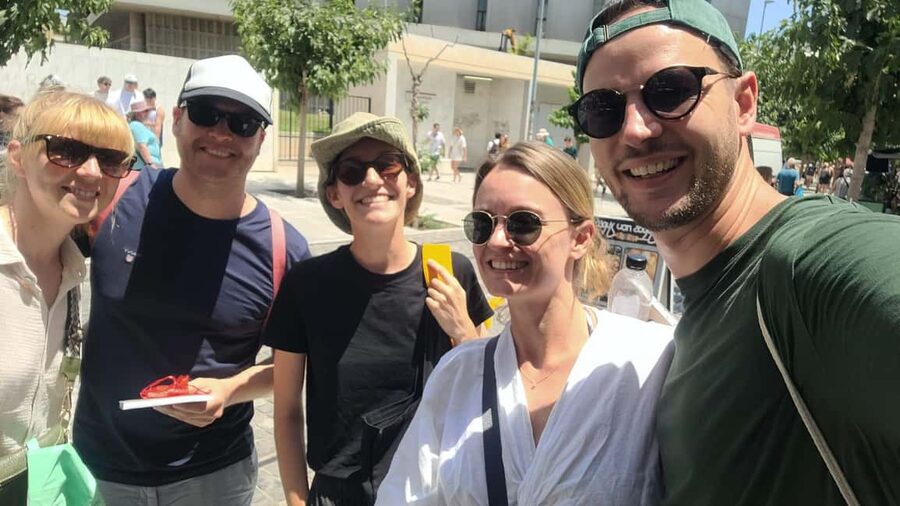
I would choose this walk if you want to understand modern Greece instead of spending every hour with ancient monuments. It is especially well suited to people interested in political history, resistance movements, human rights, social justice, street art, and the way neighborhoods shape identity.
It also works well for repeat visitors. If you have already seen the Acropolis, Plaka, and the major museums, this gives you a different reason to walk through the center.
Families with older teenagers may find the discussions worthwhile, provided everyone is comfortable with serious subjects. The tour is less suited to young children who need frequent breaks or who expect legends about ancient gods.
You should also know your own political expectations. The focus is sympathetic to resistance movements and marginalized communities. The tour does not pretend to be detached from those concerns. If you want a strictly neutral survey with equal time given to every political viewpoint, choose a more conventional history tour.
My recommendation
Book it if you want Athens to make more sense as a modern city, not just an archaeological site. The strongest parts are the link between famous squares and lesser-known events, Maelle’s personal delivery, and the time spent understanding Exarchia as a community rather than a curiosity.
Skip it if you want a gentle sightseeing loop, a focus on ancient Greece, or a walk with little standing. For the right audience, though, this is an unusually useful 2.5 hours. It can give you a clearer sense of why Athens looks, argues, remembers, and protests the way it does.
FAQ
Where does the Athens History of Rebellion Walking Tour start?
The meeting point is in Monastiraki Square, in front of Pantanassa Church. The guide will hold a sign that says Athens City of Rebellion.
Where does the tour finish?
The route information gives Plateia Exarcheion as the finish. The meeting details also state that the activity ends back at the meeting point, so confirm the final arrangement when you book.
How long does the tour last?
The walking tour lasts 2.5 hours. You should expect to walk and stand for most of that time.
Which languages are available?
The tour is available with a live guide in English or French.
Is this a private tour or a group activity?
Private or small-group options are available.
What places are included on the route?
The walk includes Monastiraki, the Metropolitan Church area, Syntagma Square, the Hellenic Parliament, the Tomb of the Unknown Soldier, Kolonaki, the Academy of Athens, Exarchia, and Exarchion Square.
What should I bring?
Bring comfortable shoes, water, sunscreen, and a sun hat.
Can I cancel for a refund?
You can cancel up to 24 hours in advance for a full refund. Reserve now and pay later is also available.
Freshly added Athens trips
- Athens and Ancient Corinth Private from Athens★ 5.0 · 3 reviews
- From Athens: Mycenae and Epidaurus Private Tour★ 4.8 · 3 reviews
- Full day Meteora private tour★ 5.0 · 3 reviews
- Double Shore Dive (certified divers)★ 4.5 · 3 reviews
- Athens Hills: Mythology Treasure Hunt★ 5.0 · 3 reviews
- Sunset & swimming at Cape Sounio, Poseidon temple★ 5.0 · 3 reviews
- Philosophy Experience at Plato’s Academy Park – basic version★ 5.0 · 3 reviews
- Private Acropolis Tour – Ticket Included★ 5.0 · 3 reviews
Historical Tours, compared.
Historical Delphi One Day Tour with Arachova Stop & Expert Guide
Read our review →
Historic Athens: Small Group Electric Bike Tour
Read our review →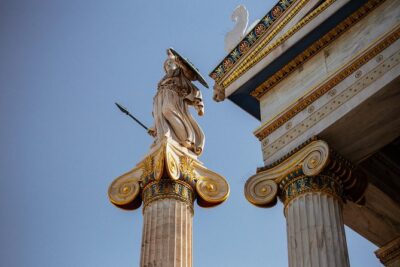
The History of Athens: Greek Mythology Private Tour
Read our review →
Athens Highlights by E-Bike: Small-Group Historic Tour
Read our review →

Half Day Historical Athens City Private Taxi Service Tour
Read our review →Meteora Caves & Monasteries History Day Trip by Train
Read our review →
Half day tour to Acropolis and the must-see historical sites and downtown
Read our review →Browse the lists this tour appears in