
Reviewed · WALKING TOURS
Athens Heart Walking Private Tour
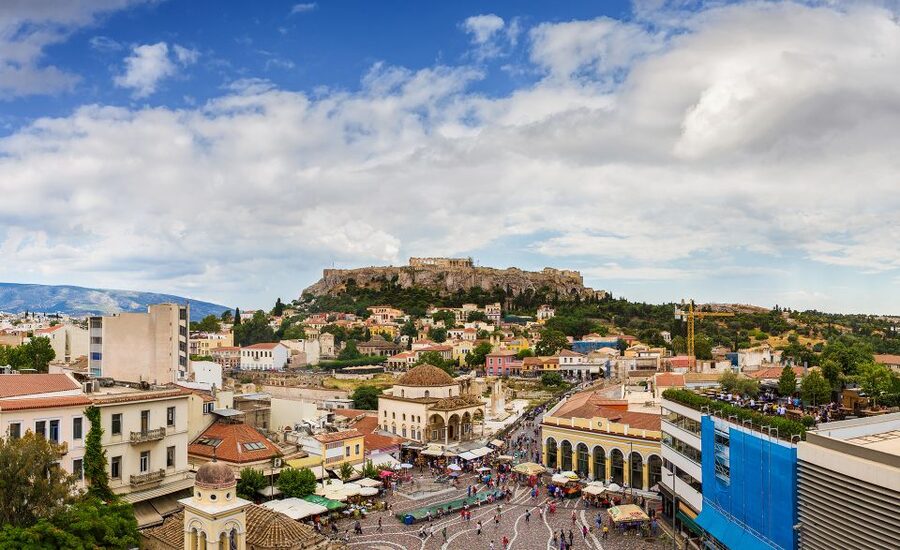
Athens reveals itself best on foot, where an ancient theater, a tiny island-style lane, a Roman monument, and a modern shopping street can all appear within the same morning. This private route covers a remarkable sweep of the city, from the Acropolis Museum and Areopagus to Syntagma Square, the National Garden, and the Panathenaic Stadium.
I like the local Athenian guide and the way the route joins famous sights with Anafiotika, a small neighborhood that feels quite different from the grand monuments around it. I also like the built-in coffee break, which gives you a chance to sit, ask questions, and let four hours of names and stories settle.
The main caution is pace. You cover a lot of ground, and the tour is not suitable for people with mobility impairments. Entrance fees are not included, so this is primarily a guided city walk rather than a ticketed tour inside every site.
In This Review
- Key points to know before you book
- Why this private Athens walk works well
- From the Acropolis Museum to the Odeon of Herodes Atticus
- The Areopagus viewpoint and the Acropolis above you
- Anafiotika and Plaka: Athens with an island feel
- The Roman Agora, Tower of Winds, and Monastiraki
- Metropolitan Cathedral and Ermou Street
- Syntagma Square and the Presidential Guard
- The National Garden and the Presidential Palace
- Panathenaic Stadium and the marble route to Zappeion
- The Temple of Olympian Zeus and Arch of Hadrian
- Price, pace, and what the $149 buys you
- Who should book this Athens route?
- FAQ
- Where does the Athens Heart Walking Private Tour begin?
- How long does the tour last?
- What language is the tour offered in?
- Are entrance fees included?
- Is a drink included?
- Is the tour suitable for people with mobility impairments?
- Should you book the Athens Heart Walking Private Tour?
Key points to know before you book
- A four-hour private route: You walk with your own group and an English-speaking guide rather than joining a large crowd.
- A wide view of Athens: The route connects the Acropolis area, Plaka, Monastiraki, Syntagma, the National Garden, Zappeion, and the Temple of Olympian Zeus.
- Anafiotika adds local character: Its narrow, picturesque lanes offer a welcome change from Athens major archaeological monuments.
- The coffee break is included: One Greek coffee or another traditional refreshment per person is part of the experience.
- Most stops are viewed from outside: Entrance tickets to archaeological sites and other attractions are not included.
- A strong first-day choice: Guides such as John, Bianca, and Dimitrios have been praised for making Athens easy to understand without piling on too much information.
Why this private Athens walk works well

The appeal here is range. In four hours, you get an introduction to ancient Athens, Roman Athens, the Greek capital today, and several places where daily life continues around the monuments. That makes this a useful orientation walk, especially if you are arriving in Athens without a clear sense of how the central districts fit together.
You begin outside the Acropolis Metro station on Makrigianni Street, a practical meeting point near the Acropolis Museum. From there, the route heads toward the Acropolis and then gradually moves east and north through Plaka, Monastiraki, Syntagma, and the National Garden before returning toward the Acropolis Metro station.
Because the group is private, your guide can adjust the conversation to your interests. You can ask about ancient religion, modern Greek politics, food, architecture, or the city itself. The strongest guide comments in the supplied feedback praise John and Bianca for keeping the talk lively and clear. One guest described John as an Athenian raised near the Acropolis Museum, while Bianca was praised for making a first visit to Greece easier to understand.
That personal connection matters in Athens. A guide can point out how the city’s older monuments sit beside ordinary streets, shops, cafés, and metro stations. You are not simply ticking off a list of sights. You are learning how the pieces relate.
More Athens walking tours:
- Athens: Acropolis and Parthenon Guided Walking Tour
★ 4.6 · 5,882 reviews - Greek Food Walking Tour in Athens
★ 5.0 · 4,740 reviews - Acropolis: Acropolis and Parthenon Guided Walking Tour
★ 4.7 · 3,442 reviews
From the Acropolis Museum to the Odeon of Herodes Atticus
The walk begins at Makrigianni 13, outside the Acropolis Metro station. This puts you in the heart of the archaeological zone, with the Acropolis Museum close by and the Acropolis rising above the district.
Your first major stop is the Odeon of Herodes Atticus, a stone theater on the southwest slope of the Acropolis. The route allows about 30 minutes for the walk to this point, giving your guide time to set the scene before the itinerary reaches its more crowded central districts.
The theater is one of those places where location does much of the work. You see a formal ancient structure built into the slope below the Acropolis, yet the surrounding city remains close. It helps you understand that Athens is not an isolated archaeological park. Ancient remains are part of the living capital.
You should not assume the tour includes a performance or interior access. The supplied details say entrance fees are not included, so ask your guide what can be viewed without a ticket on the day.
The Areopagus viewpoint and the Acropolis above you

The next walk takes about 15 minutes and leads to the Areopagus. This rocky viewpoint is especially valuable because it changes your angle on Athens. Instead of looking only at the Acropolis as a monumental object, you see the city spreading below it.
The view is one of the strongest parts of the route. You can look across Athens while the Temple of Athena remains above you on the Acropolis. Your guide can give the setting a human scale, explaining how the hill, the monuments, and the modern city connect.
Wear shoes with a firm grip. Even without adding details not provided by the operator, the instruction to bring comfortable shoes is worth taking seriously because the itinerary includes a long walk and uneven historic areas. This is not a gentle stroll through a flat park.
The Areopagus stop also gives you a natural pause before the route turns into Plaka and Anafiotika. If photography matters to you, this is one of the places where you will want to have your camera ready, although the tour’s value is not limited to taking pictures.
Anafiotika and Plaka: Athens with an island feel
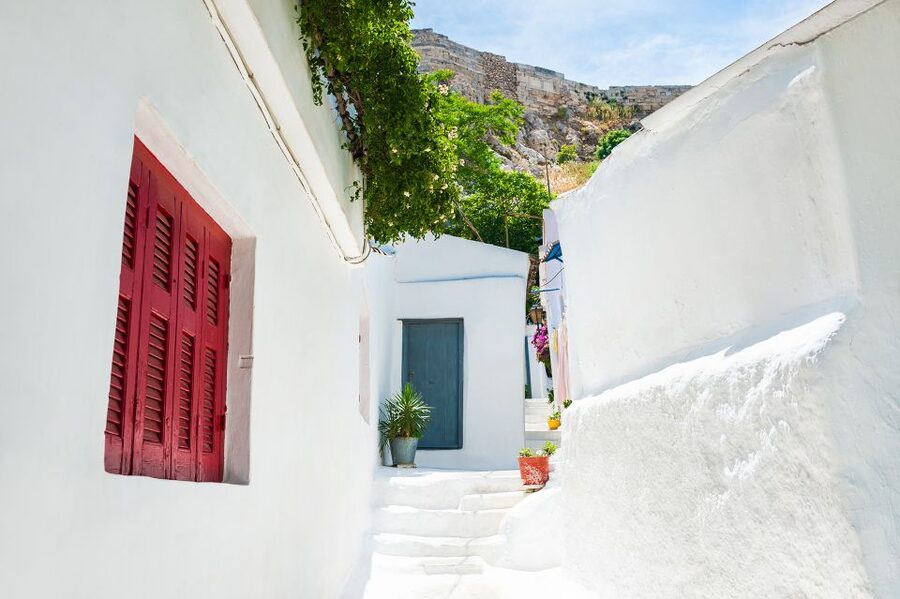
From the Areopagus, you walk into Plaka, with around 30 minutes allowed for this section. Anafiotika is the most distinctive part of it. The neighborhood sits just downhill from the Acropolis and is known for narrow lanes and a small-scale architectural character unlike the broad streets around Syntagma.
The area is described as one of the most folkloric parts of Athens. That is useful shorthand, but the real pleasure comes from contrast. You have just been looking at temples and theaters built for ancient power. Now you move through a compact residential quarter with a much more intimate feel.
Your guide is important here because Anafiotika can be easy to pass through without understanding why it looks different. Ask about its place within historic Plaka and how the neighborhood fits beneath the Acropolis. The supplied information does not promise interior visits or special access, so think of this as a guided walk through the area rather than a formal attraction entry.
This is also a section where the private format helps. In a large group, narrow lanes can feel crowded and rushed. With a private party, you have more room to stop when your guide is explaining a detail or when you want a photograph.
A few more Athens days worth a look
- Best of Athens Half Day Private Tour
★ 5.0 · 3,714 reviews - Athens Full Day Private Tour
★ 5.0 · 2,903 reviews - Athens Airport Private Arrival Transfer with Meet & Greet
★ 4.5 · 1,495 reviews - Athens Airport to Athens Hotels Private Arrival Transfer
★ 5.0 · 947 reviews
The Roman Agora, Tower of Winds, and Monastiraki
The route continues toward the Ancient Roman Agora and the Tower of Winds, then reaches Monastiraki after a walk of about 10 minutes. The Roman Agora adds another historical layer to the day. You have moved from the Acropolis and its classical associations into the Roman period, then onward into a modern district known for its flea market.
The Tower of Winds is a particularly good stop for visitors who enjoy practical ancient architecture. Its name is memorable, and it gives your guide a clear object around which to explain the Roman-era part of Athens. Again, entry fees are not included, so the focus may be on seeing the site and understanding its setting rather than going inside.
Monastiraki brings a sharper change of mood. Its flea market and commercial streets make it one of the city’s most recognizable central areas. You get a sense of Athens as a place where archaeology, shopping, food, and ordinary city movement share the same blocks.
The route then includes a 30-minute break. A Greek coffee, tea, or another traditional refreshment is included for each person, while additional food and drinks are not. This is a small inclusion, but it improves the rhythm of the tour. Four hours on foot can feel long without a chair and a drink.
Metropolitan Cathedral and Ermou Street
After the break, the walk continues to the Athens Metropolitan Cathedral. This shifts the subject from ancient and Roman Athens to the religious and civic identity of the modern capital.
The cathedral is in the central historic area, making it a useful link between Plaka and Syntagma. Your guide can explain the building and its role in the city, though the details provided do not guarantee an interior visit. If seeing the inside matters to you, ask before assuming it is part of the route.
From there, you walk along Ermou Street, Athens most important commercial road. The street takes its name from Hermes, the Greek god associated with commerce. This is a simple detail, but it shows the style of the tour: monuments are not treated as separate boxes. Street names, shopping routes, public squares, and ancient references all become part of the story.
You should expect a city walk, not a quiet heritage trail. Ermou is a working commercial street, and the surrounding center can feel busy. That is useful if you want to understand present-day Athens, less so if you prefer a calm, carefully staged sightseeing experience.
Syntagma Square and the Presidential Guard
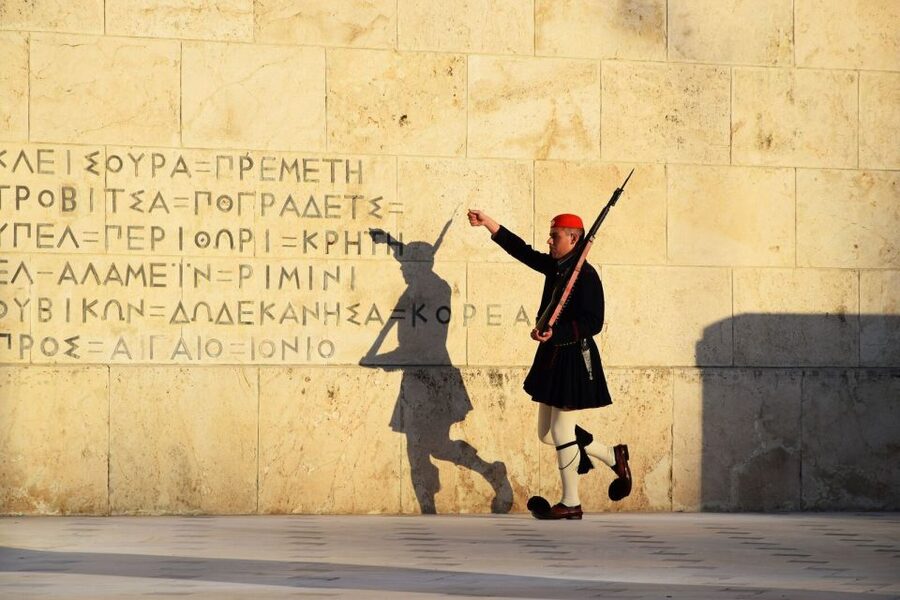
The walk reaches Syntagma Square, the central and best-known square in Athens. In front of the Hellenic Parliament, you watch the Changing of the Presidential Guard, one of the country’s oldest continuing traditions.
Timing matters here. The tour description says you will witness the ceremony, but it does not give a specific start time or promise a full formal change at every departure. Check the available starting time when booking if this is a major reason for choosing the tour.
Syntagma is also a good place to connect history with modern Greece. The Parliament, the square, Ermou Street, and the metro all occupy the same central zone. The route then passes through the underground archaeological exhibition at Syntagma Metro station, an unusual feature that shows how construction in Athens can uncover earlier layers of the city.
This is one of the more useful stops for first-time visitors because it explains Athens as a city that keeps building on top of its past. You do not need to be an archaeology specialist to appreciate the point.
The National Garden and the Presidential Palace
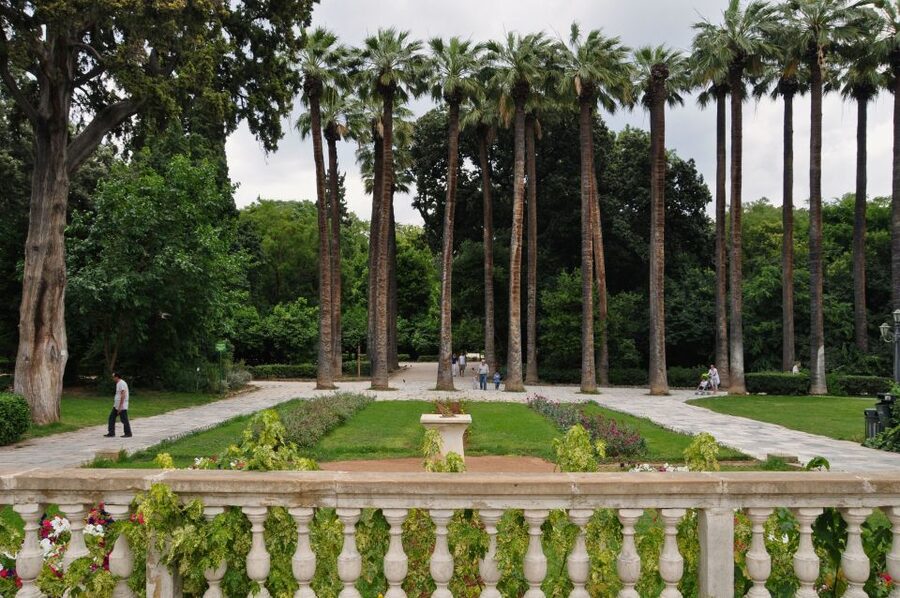
From Syntagma, you walk into the National Garden for roughly 30 minutes. This is the tour’s green pause, a place to slow down after the hard surfaces and traffic of central Athens.
The supplied details say you can relax with your family and feed the animals on display. That makes this section especially suitable for a mixed-age private group. It is not just another monument stop. You get time to breathe, talk with your guide, and give children a change of pace.
The itinerary also passes in front of the Presidential Palace. This keeps the walk connected to the institutions of modern Greece, following the route from Parliament to the palace and then toward the Panathenaic Stadium.
Do not expect the National Garden to replace a full nature visit. It is one segment of a busy urban walking route. Its value is the contrast it provides and the chance to rest, not a long stay in a large park.
Panathenaic Stadium and the marble route to Zappeion
The Panathenaic Stadium, also called the Kallimarmaron, comes next after about 30 minutes of walking. It is described as the biggest stadium in the world built exclusively from marble, and its pale horseshoe form makes it one of the most striking structures on the route.
The stadium gives the tour a clear bridge between ancient Greece and modern national identity. It is not simply another old building. Your guide can help you understand why a stadium matters in Athens and how it fits with the city’s modern public spaces.
Entrance fees are not included, so you should treat the stop as an exterior visit unless you separately arrange admission. That is an important value point. If you want to spend time inside each archaeological site, this tour alone will not cover that plan.
After the stadium, the route reaches the Zappeion Megaron. The building and its grounds provide another change of architectural mood, with formal spaces that work well as a transition toward the Temple of Olympian Zeus. The tour allows about 30 minutes for each walking section, so the overall pace remains steady rather than leisurely.
The Temple of Olympian Zeus and Arch of Hadrian
Near the end, you see the Temple of Olympian Zeus and the Arch of Hadrian before heading back to the Acropolis Metro station. The temple is presented as the largest temple in ancient Greece, a fitting final ancient monument after the Acropolis, Roman Agora, and Panathenaic Stadium.
The scale of the Temple of Olympian Zeus is the point. Even if you only view it from outside, the columns communicate ambition on a grand scale. The Arch of Hadrian adds a later Roman marker beside the temple area, giving your guide one last chance to show how different eras overlap in Athens.
The route then returns to Makrigianni 13, near the Acropolis Metro station. The stated itinerary includes a final walk of about 30 minutes from the Arch of Hadrian. Since the day begins and ends in the Acropolis area, you can combine this tour with other plans nearby, but avoid scheduling a timed ticket immediately afterward unless you leave plenty of room.
Price, pace, and what the $149 buys you
At $149 per person, this is not a budget walking tour. The value depends on how much you want a private guide to connect the sights and how many people are in your group. A private four-hour route can be worthwhile for a family or small party that prefers to ask questions and move at its own pace.
The price includes the guide, taxes and fees, and one Greek coffee or traditional refreshment per person. It does not include entry to archaeological sites, other food or drinks, or personal purchases. Those exclusions mean you should budget separately if you want to enter the Acropolis, Roman Agora, Panathenaic Stadium, or Temple of Olympian Zeus.
I see this as an orientation and context tour. It gives you a broad map of central Athens and helps you decide which places deserve a longer return visit. It is less suitable if your main goal is extended interior time at a single monument.
The private format is the main reason to pay more. Guide quality will shape the experience, and the feedback is strong overall, with a 4.8 rating from four reviews. John was praised for humor and for explaining Athens from ancient times to the present without overloading the group. Bianca was praised for making a first visit to Greece easy to follow. Dimitrios received particularly warm praise for guiding a family in Italian and for making four hours pass quickly.
There is one clear warning in the feedback: a Spanish-language booking received a poor assessment because the guide did not speak Spanish well and did not explain the history effectively. The listed tour language is English, so you should not book this experience expecting Spanish. An Italian guide was available in one past booking, but language availability should be confirmed before you pay.
Who should book this Athens route?
I would choose this tour for a first visit, especially on your first day in Athens. It gives you orientation, major landmarks, a coffee pause, and a local guide who can help you sort out what deserves more time later.
It also suits families and small private groups. The National Garden offers a break from monuments, and the private setting makes it easier to adjust questions and conversation to different ages.
You should be comfortable walking for four hours and wearing supportive shoes. The route includes hills, historic surfaces, and many transitions between districts. If you have a mobility impairment, this experience is not suitable according to the supplied information.
History fans may find the tour too broad if they want detailed interior study. Since entry fees are not included, you will get more from it if you see the walk as a city overview rather than your only Acropolis visit.
FAQ
Where does the Athens Heart Walking Private Tour begin?
The meeting point is outside the Acropolis Metro station on Makrigianni Street, at Makrigianni 13.
How long does the tour last?
The walking tour lasts four hours and ends back near the Acropolis Metro station.
What language is the tour offered in?
The listed tour language is English. A past booking used an Italian-speaking guide, but you should confirm language availability before booking if you need a language other than English.
Are entrance fees included?
No. Entry fees to archaeological sites and other points of interest are not included.
Is a drink included?
Yes. Each person receives a Greek coffee or another traditional refreshment. Other food and drinks are not included.
Is the tour suitable for people with mobility impairments?
No. The activity is listed as unsuitable for people with mobility impairments. Comfortable shoes are recommended for everyone.
Should you book the Athens Heart Walking Private Tour?
Book it if you want a big-picture introduction to central Athens with a private guide, a sensible coffee break, and a mix of famous monuments and less formal city corners. The route is especially useful early in your stay, when you want to understand where the Acropolis, Plaka, Monastiraki, Syntagma, and the National Garden sit in relation to one another.
Skip it if you want a slow, ticket-focused tour of the Acropolis and other interiors, or if four hours of walking is too much. At $149 per person, the tour earns its price through private attention and local storytelling, not through included admissions. For an active first day with a good English-speaking guide, it is a practical way to get your Athens bearings.
Freshly added Athens trips
- Athens and Ancient Corinth Private from Athens★ 5.0 · 3 reviews
- From Athens: Mycenae and Epidaurus Private Tour★ 4.8 · 3 reviews
- Full day Meteora private tour★ 5.0 · 3 reviews
- Double Shore Dive (certified divers)★ 4.5 · 3 reviews
- Athens Hills: Mythology Treasure Hunt★ 5.0 · 3 reviews
- Sunset & swimming at Cape Sounio, Poseidon temple★ 5.0 · 3 reviews
- Philosophy Experience at Plato’s Academy Park – basic version★ 5.0 · 3 reviews
- Private Acropolis Tour – Ticket Included★ 5.0 · 3 reviews
Walking Tours, compared.




Acropolis monuments & Parthenon Walking Tour with Optional Acropolis Museum
Read our review →

Athens Authentic Greek Food Walking Tour (Small Group)
Read our review →
Early Morning Acropolis & Old Athens Guided Walking Tour
Read our review →
Browse the lists this tour appears in