
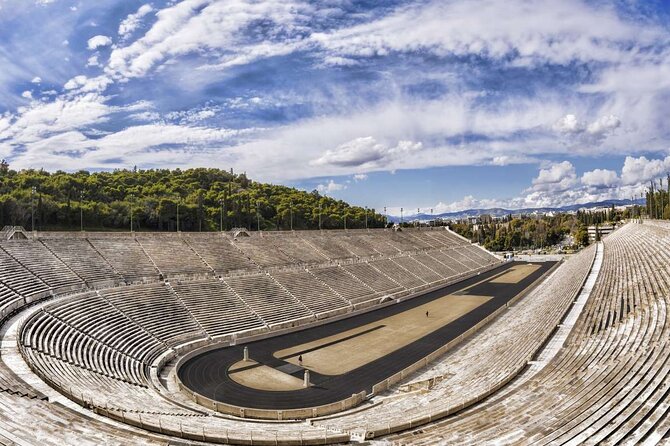
Reviewed · ACROPOLIS TOURS
Athens Half-Day Tour: Acropolis, Parthenon & All Major Landmarks
Athens packs thousands of years into a surprisingly compact city center, and this private half-day tour helps you cover the main sights without wrestling with buses, taxis, or the midday heat. You’ll see the Acropolis and Parthenon, then move through Plaka, Syntagma Square, the Panathenaic Stadium, Hadrian’s Arch, and the city’s grand neoclassical landmarks.
I like the door-to-door pickup and the freedom to explore each site at your own pace. I also like the local touch: drivers such as Panos, Stavros, Petros, and George add history, current Greek life, lunch suggestions, and practical help along the way. The key drawback is important: your driver is not a licensed guide and cannot accompany you inside the archaeological sites.
In This Review
- Key points to know before booking
- What the five-hour Athens tour really offers
- Starting at the Acropolis and Parthenon
- Plaka brings the ancient city down to street level
- Hadrian’s Arch and the Roman side of Athens
- The Panathenaic Stadium and the Olympic story
- Syntagma Square, Parliament, and the Evzones
- The Athenian Trilogy: Academy, University, and Library
- A quick look at Dromeas and Lycabettus Hill
- Choosing the Acropolis Museum or Ancient Agora
- Price, tickets, and the value of private transport
- What the drivers do well, and what they cannot do
- Who should book this Athens half-day tour?
- Should you book it?
- FAQ
- Is this a private tour?
- Is hotel pickup and drop-off included?
- Are Acropolis tickets included?
- Can I add the Acropolis Museum?
- Can I visit the Ancient Agora instead?
- Does the driver enter the archaeological sites with me?
- What is included in the vehicle service?
- How far in advance can I cancel?
Key points to know before booking

- Private transport makes a hot Athens day easier: Your group rides in an air-conditioned vehicle with bottled water, WiFi, and hotel pickup and drop-off.
- The Acropolis is the main event: You get transportation and background, but the €30 Acropolis admission is extra and you explore the site independently.
- Expect a driver-host, not an indoor guide: Your driver explains the city between stops and gives advice at each location, then waits while you visit.
- You can cover a lot in five hours: The route links ancient monuments, modern Athens, Syntagma Square, the Trilogy, Plaka, and city viewpoints.
- Optional museum or Agora time changes the focus: Choose the Acropolis Museum or Ancient Agora option if you want one hour inside either site.
- This works especially well for first-time visitors and short stays: It is also a sensible choice for families, small groups, and anyone trying to limit walking in the heat.
What the five-hour Athens tour really offers
The title promises all the major landmarks, and the route comes close to delivering that in a short window. You are not signing up for a slow, lecture-heavy archaeological tour. You are hiring a private vehicle and an English-speaking driver who knows Athens well, gives context on the way, and gets you close to each stop.
That distinction matters. At the Acropolis, Parthenon, Acropolis Museum, and Ancient Agora, the driver cannot enter as your licensed guide. You will receive explanations before or around the visit, then walk through the site on your own. For some people, that is ideal. You can pause for photos, move at your own speed, and avoid being tied to a large group. If you want detailed commentary beside every column and statue, book a licensed guide separately or choose another tour format.
The private setup is a real advantage. Only your party participates, and pickup is available from any location, with the address supplied at booking. Drivers arrive about five minutes early. Several vehicles have comfortable seating, including a van with facing bucket seats, and the private arrangement can make a family or small group much more relaxed than a coach excursion.
More Acropolis and Parthenon visits:
- Athens: Acropolis & up to 5 Archaeological Sites Combo Pass
★ 4.4 · 12,619 reviews - Athens: Acropolis Ticket with Optional Audio or Live Guide
★ 4.2 · 11,055 reviews - Athens: Acropolis, Parthenon & Acropolis Museum Guided Tour
★ 4.8 · 9,316 reviews
Starting at the Acropolis and Parthenon

The Acropolis deserves the most time and energy you can give it. This rocky citadel rises above Athens with the Parthenon at its center, and the approach brings together the Propylaea entrance, the Temple of Athena Nike, and the Erechtheion. The site’s symmetry and Doric columns show why the fifth century BCE is often treated as the high point of Classical Greek architecture.
The planned stop is listed as about 30 minutes for the Acropolis and another 30 minutes for the Parthenon. Treat those figures as a rough outline, not a generous visit. You will need to walk uphill, pass through the entrance, and allow time for crowds and photos. The included vehicle gets you to the area, but it cannot shorten the line or replace the admission ticket.
The Acropolis ticket costs €30 per person and is not included in the tour price. You are advised to pre-order tickets through hhticket.gr a few days before arrival. That is worth doing, since the Acropolis is the one stop where queues and heat can eat into a five-hour schedule.
At the Parthenon, look beyond the size of the temple. It was built between 447 and 432 BCE for Athena, Athens’ patron goddess, and once held a huge statue of Athena Parthenos. Its Pentelic marble has weathered war, damage, and reconstruction, but the remaining columns and sculpted details still give you a strong sense of the building’s original ambition.
The views are part of the experience. From the hill, modern Athens spreads in every direction, creating a lively contrast between apartment blocks, busy streets, and ancient stone. Wear shoes with good grip and expect uneven ground. This is not a site for a rushed stroll in flimsy sandals.
Plaka brings the ancient city down to street level
After the Acropolis, Plaka gives you a change of pace. The historic neighborhood sits below the hill, with narrow lanes, neoclassical buildings, tavernas, cafés, and small shops. You might find ancient fragments tucked beside ordinary city life, which is one reason Plaka feels more rewarding when you have time to wander rather than simply take a photograph from the vehicle.
The driver can point out places and help you orient yourself, but the precise amount of walking time depends on the day’s traffic, your Acropolis visit, and the pace of your group. If lunch matters to you, say so early. Drivers such as Stavros and Nick have offered useful restaurant suggestions, and local advice can save you from settling for the first menu aimed at passing sightseers.
The itinerary also includes references to Alexander the Great and the Marathon story. These are not clearly listed as separate admission stops, so think of them as historical themes woven into the drive and city commentary. Alexander, the Macedonian king taught by Aristotle, created an empire that spread Greek culture across a huge part of the ancient world. The story of Pheidippides running from Marathon to Athens gave the modern marathon its name and fits neatly with the city’s athletic past.
Hadrian’s Arch and the Roman side of Athens

Hadrian’s Arch takes only about 10 minutes, but it neatly explains how Athens grew beyond its Classical Greek core. Built in 131 AD, the marble gateway marked a symbolic boundary between the old city associated with Theseus and the newer Roman section linked to Emperor Hadrian.
Look for the inscriptions on opposite sides. One credits Theseus, the city’s legendary founder, while the other honors Hadrian. The Corinthian columns and clean symmetry show how Greek and Roman design met in Athens. You do not need a long visit here, and admission is free. It is an efficient photo stop with useful historical context.
A few more Athens days worth a look
- Athens: Cape Sounion & Poseidon Temple Sunset Half-Day Trip
★ 4.8 · 8,241 reviews - Cape Sounion and Temple of Poseidon Half-Day Small-Group Tour from Athens
★ 4.5 · 3,205 reviews - Athens Half-Day Sightseeing Tour with Tickets of Acropolis
★ 4.0 · 1,402 reviews - From Athens: Temple of Poseidon & Cape Sounion Half-Day Tour
★ 4.2 · 833 reviews
The Panathenaic Stadium and the Olympic story
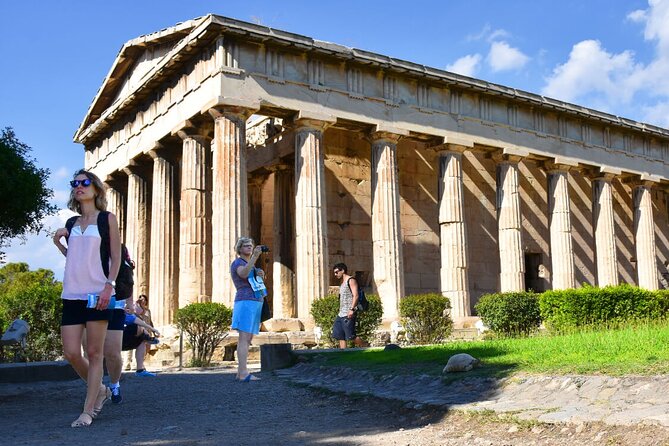
The Panathenaic Stadium, or Kallimarmaro, is one of Athens’ most memorable sights. It is built entirely of white marble in a horseshoe shape, a striking setting for the ancient Panathenaic Games and the revival of the modern Olympics in 1896.
The stadium began in the fourth century BCE and was rebuilt in the second century CE. Its scale is easy to appreciate from outside, but entering gives you a clearer sense of the seating bowl and running track. The tour allows about 15 minutes here, and admission is extra, so decide in advance if you want to go inside or simply see it from the vehicle and entrance area.
I find this stop especially useful for families. The physical shape of the stadium makes the ancient sporting world easier to grasp than a field of scattered ruins. It also connects ancient Athens with the modern Olympic movement in a direct, visual way.
Syntagma Square, Parliament, and the Evzones

Syntagma Square is the political heart of modern Athens. The former royal palace, built in 1843, now houses the Hellenic Parliament. Across the front, the Tomb of the Unknown Soldier honors Greek service members killed in war, with the Evzones in traditional dress guarding the monument.
The tour allows about 15 minutes for Parliament and another 15 minutes for the tomb. That may be enough for a quick look, but the changing of the guard ceremony has its own schedule and may not line up perfectly with your visit. Ask your driver what is possible that day rather than assuming you will see the full ceremony.
The guards’ precise movements, traditional uniforms, and formal duty add a human element to the square. This is not just another neoclassical facade. It is a working center of Greek government and national memory, set among busy streets and ordinary city life.
The Athenian Trilogy: Academy, University, and Library
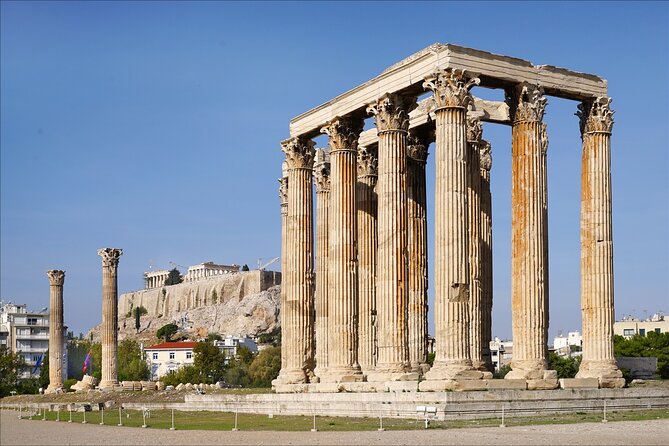
The Academy of Athens, National and Kapodistrian University of Athens, and National Library of Greece form the city’s famous neoclassical trilogy. Each receives roughly 10 minutes, usually as exterior viewing and photo stops.
The Academy, founded in 1926, takes its inspiration from Plato’s ancient school and houses research in science, humanities, and the arts. Its facade includes statues of Athena and Apollo. The University, founded in 1837, is Greece’s oldest and largest, while its historic building is one of the clearest examples of Athens’ grand nineteenth-century style.
The National Library, founded in 1832, was designed by Theophil Hansen and holds manuscripts, rare books, historical documents, and digital archives. These stops are not substitutes for museum visits, but they help you see Athens as a modern capital of education and public life, not only an ancient ruin site.
A quick look at Dromeas and Lycabettus Hill
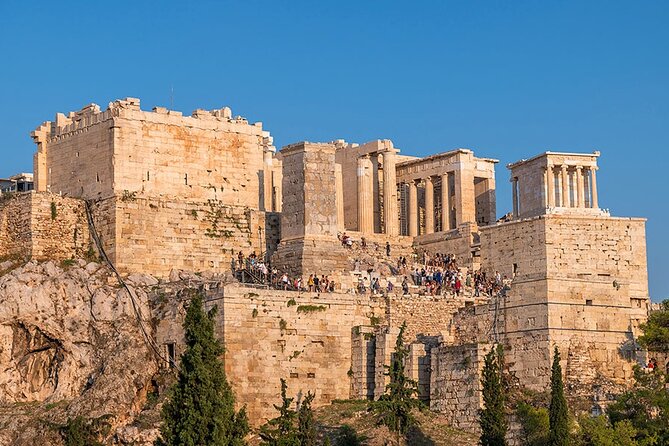
Dromeas, also called The Runner, is a 12-meter sculpture made from layered glass and iron. Created by Costas Varotsos in 1994, it suggests speed and movement, a modern companion to the ancient story of the Marathon run. The stop is brief, so you will likely see it as part of the city drive rather than spend long studying the sculpture.
Lycabettus Hill offers one of Athens’ best broad views. The hill rises about 300 meters above the city and is topped by the Chapel of St. George. The itinerary allows about 10 minutes, which is enough for a viewpoint stop but not a full climb. If you want the summit walk or sunset experience, you would need more time than this half-day schedule usually permits.
The hill is also a useful way to understand Athens’ shape. From above, the Acropolis, dense central neighborhoods, surrounding mountains, and distant sea come together in one glance. Ask the driver about the exact viewing point and timing, since this stop is more flexible than the ticketed sites.
Choosing the Acropolis Museum or Ancient Agora
The basic route focuses on outdoor landmarks. You can instead select an option adding either the Acropolis Museum or the Ancient Agora for about one hour. Both choices are worthwhile, but they serve different interests.
The Acropolis Museum is the stronger pick if you want to understand what you saw on the hill. Opened in 2009, it holds more than 4,000 objects from the Archaic, Classical, and Roman periods. The Parthenon Gallery has glass walls facing the temple, and the original Caryatids from the Erechtheion are major highlights.
The museum also displays ancient remains beneath sections of glass flooring. It brings sculpture, friezes, and daily life into a clear indoor setting, which can be a welcome break from the sun. Admission is €20 and is not included.
The Ancient Agora is the better choice if you are drawn to civic life and the beginnings of democracy. This was the city’s main public center from the sixth century BCE, with political buildings, temples, shops, and open meeting spaces. Socrates walked and argued here, while the Stoa of Attalos housed commercial and social activity.
The Temple of Hephaestus and reconstructed Stoa of Attalos give the Agora a strong visual payoff. Admission is €20, also extra. Since the standard tour lasts about five hours, adding a full indoor stop means some quick exterior visits may be shortened. Confirm the timing when you book.
Price, tickets, and the value of private transport
The listed price is $145.12 per person. That is not a bargain sightseeing bus, but the value improves as your group gets larger because you receive a private vehicle, pickup and drop-off, bottled water, WiFi, and a driver focused only on your party.
You must add admission costs to your budget. The Acropolis ticket is €30 per person. The Acropolis Museum costs €20, and the Ancient Agora costs €20 if you choose one of those options. The base tour does not include any attraction entrance fees.
For a family or group of friends, private transport can be worth the extra cost because you avoid organizing separate taxis between widely scattered sights. You also get a cool vehicle during the hottest part of the day and can text the driver when you are ready to leave a stop. Several drivers have adjusted timing for groups, sometimes for an additional fee, but you should agree on that before changing the plan.
Airport pickup costs extra. Hotel, apartment, port, and other location details are required during booking. A phone with WhatsApp is useful for communicating with the driver, especially when you finish at a site earlier or later than planned.
What the drivers do well, and what they cannot do
The strongest part of this experience is the driver-host. Panos is described as warm, funny, careful about water, shade, and family comfort, and good at explaining sites to children. Stavros is praised for clear English, punctual driving, city knowledge, and restaurant tips. Petros is noted for communication, a comfortable van, help with luggage, and watching belongings left in the vehicle while you visit a site.
Those details matter more than a polished speech. Athens traffic can be tiring, and a calm driver who knows where to stop is a major help. The ability to get close to entrances also reduces unnecessary walking, especially in hot weather.
Still, keep your expectations straight. The driver has deep knowledge of Athens history but is not licensed to accompany you inside archaeological sites or museums. You will not receive a continuous guided walk through the Parthenon or a room-by-room museum explanation. The format gives you independence, but it puts more responsibility on you to read signs, use an audio guide if available, or arrange a licensed guide separately.
Who should book this Athens half-day tour?
I would choose this for a first day in Athens, a short port visit, a family with children, or anyone who wants the city’s major sights without a large group. It is also a good fit if heat, luggage, or limited mobility makes long stretches of walking and public transport less appealing.
You will get the most from it if you are comfortable with short visits and independent sightseeing. If the Acropolis is your main goal, protect enough time for the hill and consider the museum option. If you care most about ancient civic life, choose the Agora instead.
The tour is less suitable if you want a formal archaeologist or licensed guide beside you at every site. It is also not the right choice if you expect every location listed to receive a long stop. A five-hour route covering this much of Athens is necessarily selective.
Free cancellation is available up to 24 hours before the start time. Changes or cancellations inside that window are not accepted for a refund. Child seats and booster seats are available, service animals are allowed, and most people can participate, but comfortable shoes remain essential.
Should you book it?
Book this tour if you want an efficient, private introduction to Athens with a helpful local driver, strong air-conditioning, and the freedom to explore on your own. Panos, Stavros, Petros, and the other named drivers have earned praise for punctuality, clear English, humor, historical context, and thoughtful care.
Before paying, add the ticket costs, decide between the Acropolis Museum and Ancient Agora, and accept that the driver will not enter the sites with you. With those limits understood, this is a practical way to see a remarkable amount of Athens in half a day, especially when the sun is fierce and your time is short.
FAQ
Is this a private tour?
Yes. Only your group participates, and private transportation is provided.
Is hotel pickup and drop-off included?
Yes. Pickup and drop-off are included from any location, provided you submit the correct hotel, apartment, ship, or other location details. Airport pickup costs extra.
Are Acropolis tickets included?
No. The Acropolis entrance fee is listed as €30 per person and must be paid separately.
Can I add the Acropolis Museum?
Yes. Select the Athens plus Acropolis Museum five-hour option. The museum visit is planned for about one hour, and admission costs €20 per person.
Can I visit the Ancient Agora instead?
Yes. Select the Athens plus Ancient Agora five-hour option. The visit is planned for about one hour, and admission costs €20 per person.
Does the driver enter the archaeological sites with me?
No. The driver has strong knowledge of Athens history but is not licensed to accompany you inside the Acropolis, museums, or other sights.
What is included in the vehicle service?
The tour includes an air-conditioned vehicle, WiFi, private transportation, bottled water, an English-speaking driver, and hotel pickup and drop-off.
How far in advance can I cancel?
You can cancel for a full refund up to 24 hours before the experience start time. Cancellations or changes made less than 24 hours in advance are not refunded or accepted.
Freshly added Athens trips
- Athens and Ancient Corinth Private from Athens★ 5.0 · 3 reviews
- From Athens: Mycenae and Epidaurus Private Tour★ 4.8 · 3 reviews
- Full day Meteora private tour★ 5.0 · 3 reviews
- Double Shore Dive (certified divers)★ 4.5 · 3 reviews
- Athens Hills: Mythology Treasure Hunt★ 5.0 · 3 reviews
- Sunset & swimming at Cape Sounio, Poseidon temple★ 5.0 · 3 reviews
- Philosophy Experience at Plato’s Academy Park – basic version★ 5.0 · 3 reviews
- Private Acropolis Tour – Ticket Included★ 5.0 · 3 reviews
Acropolis Tours, compared.

Acropolis & up to 5 Archaeological Sites Combo Pass
Read our review →

Acropolis, Parthenon & Acropolis Museum Guided Tour
Read our review →
Acropolis, Parthenon & Acropolis Museum Guided Tour
Read our review →


Acropolis monuments & Parthenon Walking Tour with Optional Acropolis Museum
Read our review →Browse the lists this tour appears in