
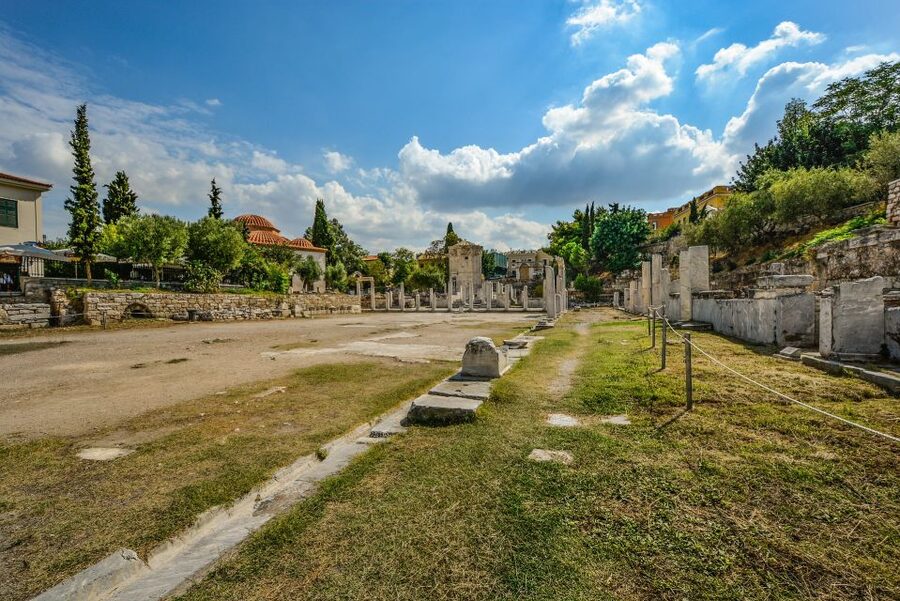
Reviewed · WALKING TOURS
Athens: Guided Mythological Walking Tour & Creation Stories
Athens makes more sense when you follow its myths. This two-hour Spanish walking tour links the city to Athena, Poseidon, and Theseus, showing how old stories still appear in names, decorations, and everyday ideas.
I like the clear focus on mythology and ancient culture, rather than a broad city overview. I also like the small-group format and the chance to learn from a heritage interpreter, with guides such as Juan Pablo and Pablo praised for warm, interactive storytelling. The main consideration is simple: the tour is in Spanish only, and it offers a walking introduction rather than entry into major archaeological sites.
In This Review
- Key points at a glance
- Why mythology is a smart way to see Athens
- Meeting at the Academy and starting the walk
- Athena, Poseidon, and the city’s founding story
- Theseus and the heroic side of Athens
- Gods in buildings, streets, and daily ideas
- What the guide adds to the experience
- Spanish language and who will get the most from it
- Is $28 a fair price for two hours?
- How to prepare for the two-hour walk
- Final call: should you book it?
- FAQ
- Where does the tour meet?
- How long does the walking tour last?
- What language is the tour in?
- How much does the activity cost?
- Is a guide included?
- Is this a small-group tour?
- Which Greek mythology figures are covered?
- What parts of Greek culture does the tour discuss?
- Can I reserve now and pay later?
- What is the cancellation policy?
Key points at a glance
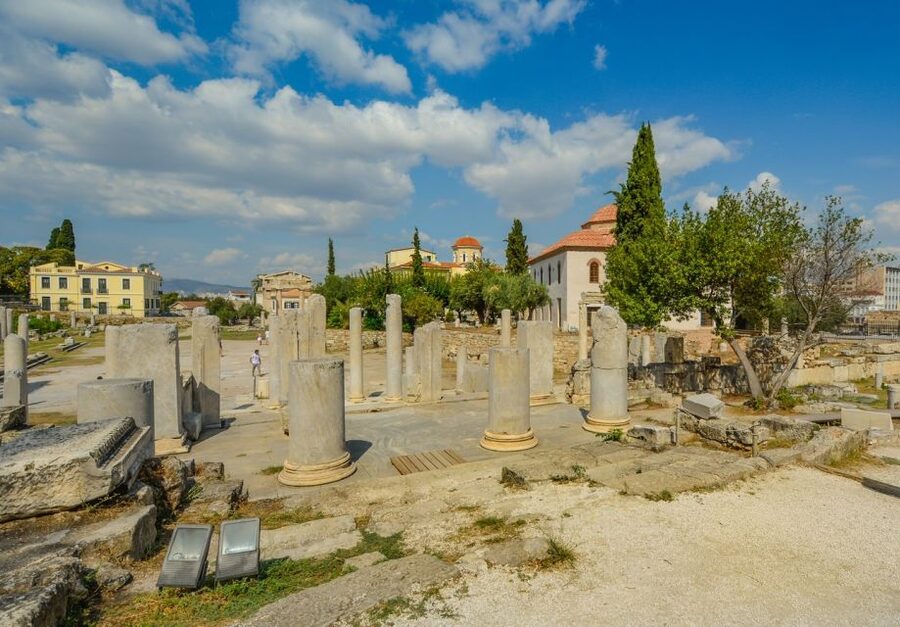
- Meet at the Academy: The tour begins on the stairs in front of the Academy, an easy central landmark.
- Follow Athena’s Athens: Learn why the city is tied so closely to Athena and how Poseidon fits into the story.
- Bring Theseus into the picture: See how this hero became linked with Athens and its identity.
- Look for mythology in plain sight: Your guide points out gods in building decoration and traces myth-inspired names through the city.
- Go beyond famous characters: The walk explains how religion shaped commerce, love, daily life, concepts, and expressions.
- Spanish, small-group format: The experience suits Spanish-speaking visitors who prefer conversation and live interpretation.
Why mythology is a smart way to see Athens
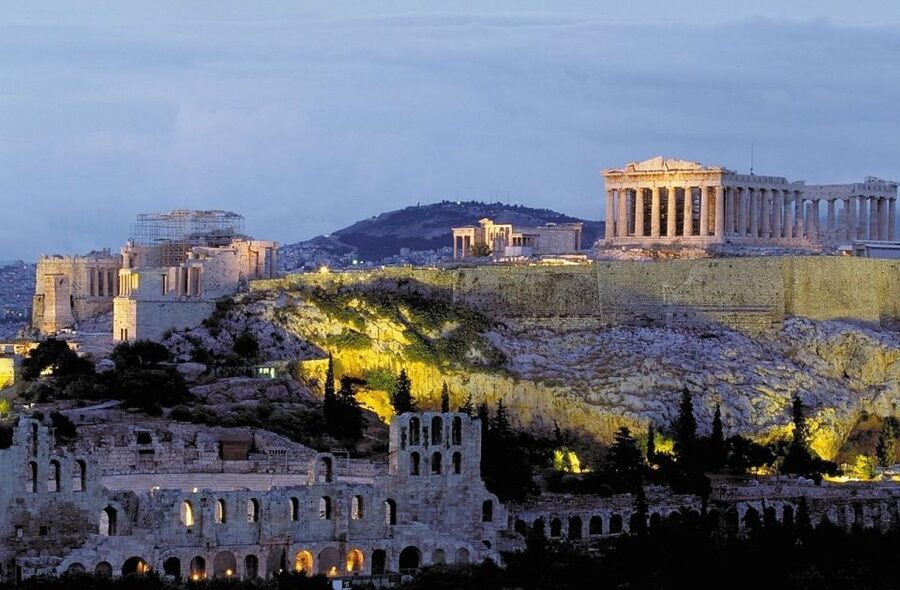
You can walk through central Athens and see grand buildings, old streets, and ancient remains without knowing why certain names or symbols keep appearing. Myth gives those details a storyline.
This tour begins with the magical world of Greek mythology, but its purpose is not only to retell childhood tales. It connects the gods to the way Ancient Greek society worked. Religion touched commerce, romance, public life, and ordinary choices. That makes the subject more useful than a simple list of gods and monsters.
I like this approach because you get cultural context while moving through the city. Athena is not treated as a distant figure from a schoolbook. She becomes part of Athens itself. Poseidon brings a rival claim to the city, while Theseus adds the heroic thread that links a legendary figure to the city’s past.
The format also helps if you are visiting Athens early in your trip. A guide can give you a set of stories to carry into later sightseeing. When you notice an owl, a god, a hero, or a mythological name afterward, you will have a better sense of what it means.
More Athens walking tours:
- Athens: Acropolis and Parthenon Guided Walking Tour
★ 4.6 · 5,882 reviews - Greek Food Walking Tour in Athens
★ 5.0 · 4,740 reviews - Acropolis: Acropolis and Parthenon Guided Walking Tour
★ 4.7 · 3,442 reviews
Meeting at the Academy and starting the walk
The meeting point is the stairs in front of the Academy. You should allow a little extra time to identify the correct place, especially if you are new to central Athens. The instructions do not name a café, shop, or other secondary marker, so the Academy stairs are the key detail to keep in mind.
Starting here gives the tour a formal setting and places you in one of the city’s important central areas from the first minute. The walk then moves through some of the capital’s beautiful and ancient places, with the guide interpreting what you see through myth.
This is not a coach tour. You travel on foot and hear the story as the city unfolds around you. At two hours, the length is long enough to build a connected narrative but short enough to fit beside other Athens plans. I would place it on a morning or afternoon when you want structure without giving up most of the day.
Athena, Poseidon, and the city’s founding story
The central tale concerns Athena and Poseidon, two powerful gods connected with the claim to Athens. Your guide brings you closer to the legend of Athena and explains why she became inseparable from the city’s identity.
Poseidon gives the story a useful tension. Greek myths rarely present the world as neat and simple, and this contest shows how a city could explain its name, patronage, and place in the world through divine action.
The value here is not just knowing who won. The story helps you understand why Athena appears so often in the cultural memory of Athens. It also gives you a way to read the city symbolically. You are not simply looking at old decoration or hearing an unusual street name. You are seeing how myth helped people explain their home.
The supplied details do not set out every stop or identify a precise monument connected to the contest. That is worth noting. You should expect interpretation along the route, not a guaranteed stop at a specific temple or archaeological site unless the operator confirms it separately.
Theseus and the heroic side of Athens
The tour also follows the connection between Theseus and Athens. Theseus is one of the major heroes of Greek mythology, and his story gives the walk a human scale. The gods shape the city, but a hero helps explain how Athenians imagined courage, identity, and belonging.
Your guide explains why Theseus has been tied to the history of Athens forever. This part should appeal to anyone who likes myth as storytelling, since Theseus brings action and adventure into a subject that can otherwise feel heavy with names.
I find this pairing useful. Athena represents the city’s divine identity, Poseidon adds rivalry and power, and Theseus gives the story a heroic figure. Together, they create a clearer picture of how Athens used myth to speak about itself.
Do not expect a full biography of every Olympian or a complete account of every Theseus legend. Two hours calls for selection. The guide’s job is to choose stories that connect directly with Athens and the places around you.
A few more Athens days worth a look
- Athens: Acropolis Ticket with Optional Audio or Live Guide
★ 4.2 · 11,055 reviews - Athens: Acropolis, Parthenon & Acropolis Museum Guided Tour
★ 4.8 · 9,316 reviews - Athens: Cape Sounio & Poseidon Temple Trip with Audio Guide
★ 4.4 · 4,521 reviews - Athens: Mythology of Delphi, Museum and Arachova Guided Tour
★ 4.6 · 4,008 reviews
Gods in buildings, streets, and daily ideas
One of the most appealing parts of the experience is the promise to spot traces of Olympus outside a museum. The gods have left marks on building decoration and on street names, so the tour asks you to look up, look around, and pay attention to details you might otherwise pass without a thought.
That is a good reason to take the walk in person rather than simply read a mythology guide before your trip. The city becomes part of the lesson. A symbol on a façade or a name on a street can act as a small clue, and the interpreter explains how it relates to the larger story.
The walk also reaches beyond visual symbols. Greek religion shaped ideas about trade, love affairs, and other parts of life. Some concepts and expressions have reached the modern world, so the guide helps connect ancient beliefs with language and habits that still feel familiar.
The supplied information does not list exact streets, buildings, or expressions. I would treat the route as a guided discovery rather than a checklist. If you want to photograph a particular monument or see one named mythological site, ask about the route when booking.
What the guide adds to the experience
The tour includes a heritage interpreter rather than an audio guide or printed route. That matters because mythology works best when you can ask questions, compare versions, and get a story explained in plain language.
The strongest feedback focuses on the guide’s energy, clarity, and ability to make the walk interactive. Juan Pablo is specifically praised for being prepared, friendly, funny, and passionate about mythology and Athens. Another experience names Pablo and describes a guide who clearly enjoys the work.
Names can change by date, so I would not book on the assumption that one particular person will lead your departure. Still, the named praise gives you a useful picture of the intended style: informed but conversational, with room for interaction rather than a dry speech delivered while everyone stares at the pavement.
A small group should support that style. The exact group limit is not provided, so you should not expect a guaranteed number. The small-group promise does suggest a more personal experience than a large crowd, especially for questions about confusing family trees and competing myths.
Spanish language and who will get the most from it
This is a Spanish-language tour. The live guide, accompanying heritage interpreter, and activity information all identify Spanish as the language, so you should be comfortable following two hours of spoken explanation in Spanish.
For Spanish-speaking visitors, that can be a major advantage. Mythology includes unfamiliar names, complicated relationships, and several versions of the same tale. Hearing those stories in the language in which you think and ask questions may make the material easier to follow.
The tour fits several kinds of visitors:
- You enjoy mythology but want to connect it to a real city.
- You are visiting Athens and want a focused introduction before tackling more ancient sites.
- You prefer a walking tour with a live guide instead of an app.
- You like history explained through stories, symbols, and local identity.
- You want a short activity that leaves room for other plans.
It is less suitable if you need an English tour, want detailed archaeological measurements, or expect guaranteed access inside major monuments. The experience is about interpretation in the city, not a substitute for a full archaeological tour.
Is $28 a fair price for two hours?
At $28 per person, the tour sits in the affordable range for a live, specialist walking experience. The real value depends on how much you want mythology to shape your time in Athens.
If you already know the major stories and only want to take photographs, you may find the price less compelling. But if you want a guide to connect Athena, Poseidon, Theseus, religion, architecture, and city names, two hours of focused explanation can be a good use of money.
The price includes the accompanying heritage interpreter and the Spanish tour. It does not indicate admission tickets, meals, transport, or entry to a particular archaeological site. That is not necessarily a problem, since the activity is presented as a walking tour, but you should budget separately for any attractions you visit before or after.
The booking terms also reduce some planning risk. You can reserve now and pay later, and cancellation is free up to 24 hours in advance for a full refund. Starting times vary, so you need to check availability for your date.
How to prepare for the two-hour walk
Wear comfortable shoes and bring water, especially in warm weather. The information provided does not describe the route’s exact distance, terrain, or shade, so it is sensible to prepare for ordinary city walking rather than assume a gentle stroll.
Arrive at the Academy stairs with enough time to find the meeting point. Since the tour depends on a live guide and a set departure, rushing in from another appointment could make the beginning stressful.
I would also brush up on the basic names before you go: Athena, Poseidon, Theseus, and the Olympian gods. You do not need to be an expert. A little familiarity will help you follow the links between characters when the guide moves from one story to the next.
Most important, keep your eyes open between explanations. The point is not only to listen. You are being asked to notice mythology in decorations, names, and the character of central Athens.
Final call: should you book it?
Book this tour if you want Athens explained through stories and symbols, and if Spanish is your preferred tour language. At $28, it offers a focused two-hour introduction with a live heritage interpreter, a small-group setting, and a clear link between mythology and the city around you.
I would especially recommend it near the start of an Athens stay. The stories can give shape to later sightseeing, even though the walk itself does not promise entry to specific archaeological sites.
Skip it if you need English, want a precise monument-by-monument itinerary, or are looking for a long archaeological lecture. For the right audience, though, this is an appealing way to meet the gods of Olympus on their own ground, with Athena’s city providing the backdrop.
FAQ
Where does the tour meet?
The meeting point is on the stairs in front of the Academy.
How long does the walking tour last?
The tour lasts two hours.
What language is the tour in?
The live tour is conducted in Spanish.
How much does the activity cost?
The listed price is $28 per person.
Is a guide included?
Yes. The experience includes an accompanying heritage interpreter and a live Spanish-speaking guide.
Is this a small-group tour?
Yes. Small groups are listed as a feature of the experience, although the exact group size is not provided.
Which Greek mythology figures are covered?
The tour focuses on Athena, Poseidon, and Theseus, while also exploring the wider world of the Olympian gods.
What parts of Greek culture does the tour discuss?
It explains how religion affected Ancient Greek life, including commerce, love affairs, concepts, and expressions that have reached the modern day.
Can I reserve now and pay later?
Yes. The activity allows you to reserve your place and pay later.
What is the cancellation policy?
You can cancel up to 24 hours in advance for a full refund.
Freshly added Athens trips
- Athens and Ancient Corinth Private from Athens★ 5.0 · 3 reviews
- From Athens: Mycenae and Epidaurus Private Tour★ 4.8 · 3 reviews
- Full day Meteora private tour★ 5.0 · 3 reviews
- Double Shore Dive (certified divers)★ 4.5 · 3 reviews
- Athens Hills: Mythology Treasure Hunt★ 5.0 · 3 reviews
- Sunset & swimming at Cape Sounio, Poseidon temple★ 5.0 · 3 reviews
- Philosophy Experience at Plato’s Academy Park – basic version★ 5.0 · 3 reviews
- Private Acropolis Tour – Ticket Included★ 5.0 · 3 reviews
Walking Tours, compared.




Acropolis monuments & Parthenon Walking Tour with Optional Acropolis Museum
Read our review →

Athens Authentic Greek Food Walking Tour (Small Group)
Read our review →
Early Morning Acropolis & Old Athens Guided Walking Tour
Read our review →
Browse the lists this tour appears in