
Reviewed · ACROPOLIS TOURS
Athens: Acropolis Visit and City Night Tour
The clever idea here is the split between ancient Athens in the afternoon and modern Athens after dark. You begin near the Acropolis metro station, enter from the quieter southeast side, then meet again at the National Library for a walking tour through neoclassical Athens, Syntagma Square, the Panathenaic Stadium, and Monastiraki.
I like the less crowded Acropolis approach and the chance to see Athens change character as daylight fades. I also like the guide-led storytelling, especially when a guide uses visual reconstructions to show what the ruined temples once looked like. The main catch is simple: the $53 price does not include your Acropolis ticket, and five hours of walking can be tiring.
In This Review
- Key points to know before booking
- Why this five-hour Athens plan works
- Entering the Acropolis from the southeast side
- The Parthenon, Propylaea, and the meaning behind the ruins
- Theatre of Dionysus and the Caryatids
- Propylaea, Odeon of Herodes Atticus, and free time
- From the National Library to Syntagma Square
- Zappeion and the Panathenaic Stadium
- Hadrian’s Arch, the Temple of Zeus, and the city’s older layers
- The Metropolitan Cathedral and Little Mitropolis
- Monastiraki and the final Acropolis view
- What the $53 price really covers
- Who should book this experience
- Should you book it?
- FAQ
- How long does the Athens Acropolis and night tour last?
- What language is the tour conducted in?
- Is the Acropolis entrance ticket included?
- Where is the afternoon meeting point?
- Where does the evening tour begin?
- What Acropolis ticket time is needed in low season?
- What Acropolis ticket times are needed in high season?
- Can I stay at the Acropolis after the guided portion?
- Is the experience suitable for wheelchair users?
Key points to know before booking
- The Acropolis visit begins at the southeast side, helping you avoid the busiest main entrance.
- You must buy your Acropolis ticket separately, ideally online before the tour.
- The tour is conducted in Spanish, with guides such as Bárbara and Juan receiving especially warm praise for clear explanations and friendly service.
- The evening route covers major central sights, including the National Library, Syntagma Square, Panathenaic Stadium, Hadrian’s Arch, and Monastiraki.
- The final stop is near the Greek Agora, with views toward the illuminated Acropolis.
- The $53 fee covers the guide, not site admission, so budget for the separate archaeological ticket.
Why this five-hour Athens plan works
Athens can feel scattered when you first arrive. The Acropolis rises above the city, the neoclassical center stretches east and north, and important Roman and modern Greek sights sit between them. This experience gives you a useful first look at all of it without asking you to plan several separate walks.
The day has two distinct parts. The first is a focused archaeological visit. The second is a broad city stroll that connects ancient monuments with 19th-century buildings, modern institutions, and lively public squares.
I like that change of pace. At the Acropolis, you stop often for explanation and interpretation. At night, the tour becomes more of a moving overview. You see the city’s major landmarks, learn where they fit on the map, and finish with the Acropolis lit above you.
You should expect a walking-heavy outing rather than a bus tour. The supplied details do not promise transportation between stops, and the evening route is described as a city tour on foot. Wear firm, comfortable shoes with good grip. High heels are not allowed, and the uneven stone at the Acropolis makes sensible footwear even more important.
More Acropolis and Parthenon visits:
- Athens: Acropolis & up to 5 Archaeological Sites Combo Pass
★ 4.4 · 12,619 reviews - Athens: Acropolis Ticket with Optional Audio or Live Guide
★ 4.2 · 11,055 reviews - Athens: Acropolis, Parthenon & Acropolis Museum Guided Tour
★ 4.8 · 9,316 reviews
Entering the Acropolis from the southeast side
The afternoon meeting point is outside Acropolis metro station, ten minutes before departure. From there, the guide leads the group toward the southeast entrance rather than the main entrance, which is usually more crowded.
This is one of the most useful choices in the plan. The Acropolis is not a quick photo stop. The approach, the steps, and the monuments all take time. Starting from a less congested side can make the first part calmer, though you should not read this as a promise of an empty archaeological site.
You need your own Acropolis admission ticket before the activity begins. The tour fee does not cover it. In the low season, a 3 p.m. tour requires a 3 p.m. to 4 p.m. ticket slot. In high season, the listed tour times require matching windows: 5 p.m. to 6 p.m. for a 5 p.m. tour, and 6 p.m. to 7 p.m. for a 5:45 p.m. tour.
If online tickets are unavailable, the instructions advise going to the South Entrance ticket office about 30 minutes early. After buying the ticket, the meeting point is less than two minutes away. I would not leave this to chance on the day, since ticket lines and timed entry can create needless stress.
The Parthenon, Propylaea, and the meaning behind the ruins
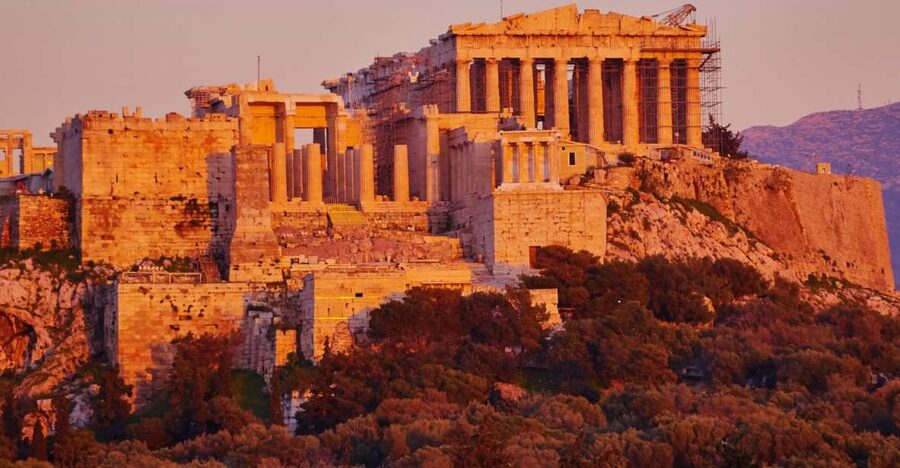
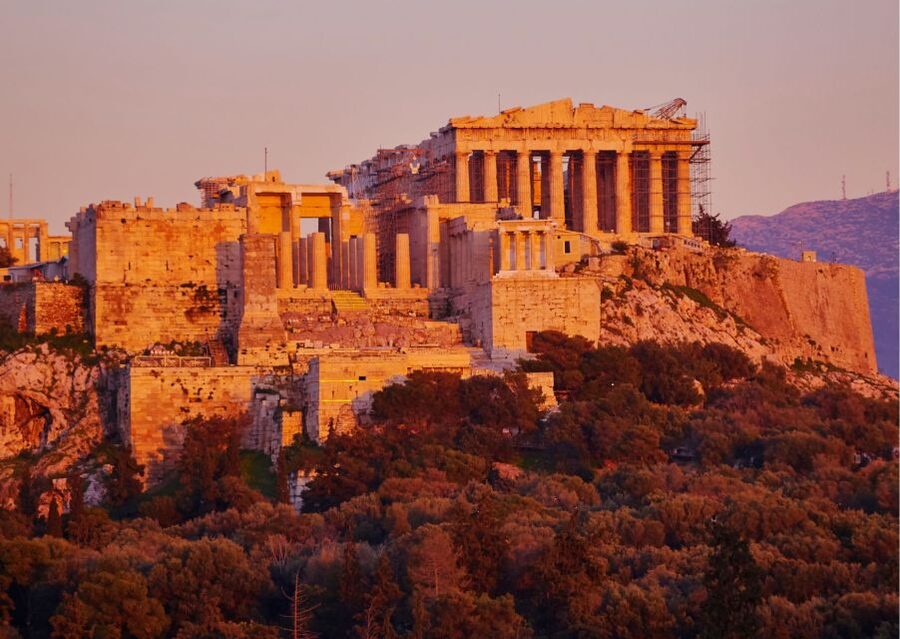
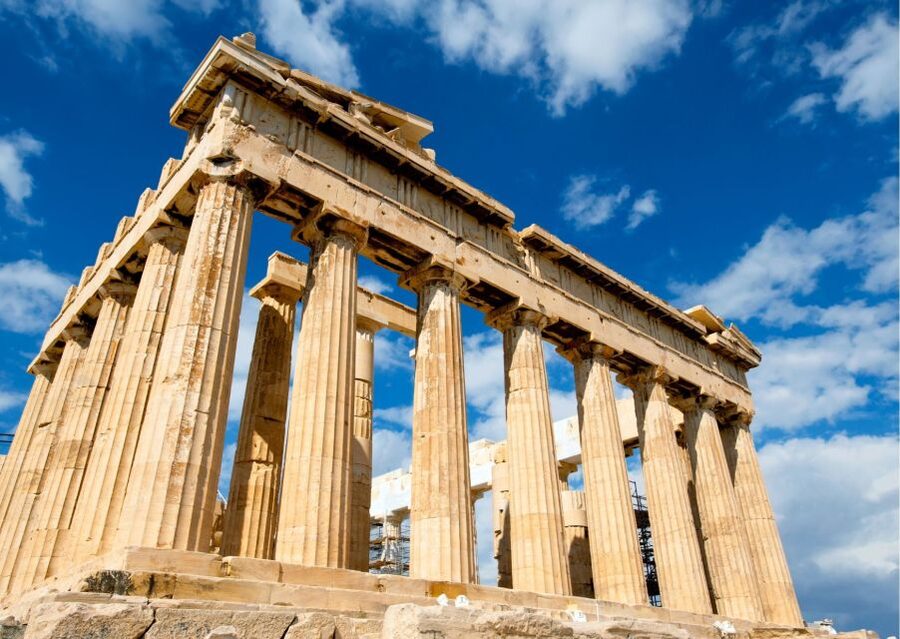
The guide begins the Acropolis visit with the monuments dedicated to Athena, the city’s patron goddess. The Parthenon is the obvious star, but the visit is stronger when you understand how the whole hill worked as a sacred and ceremonial place.
The Propylaea, the monumental gateway, gives the approach a formal sense of arrival. You do not simply wander into a collection of stones. You pass through a grand entrance designed to frame the sacred summit.
At the Parthenon, your guide explains the myths and religious ideas connected with Athena. The building’s familiar outline can seem almost too well known from photographs, so commentary matters here. A strong guide helps you look beyond the columns and notice the design, purpose, and missing pieces.
Recent guide feedback gives you two names to watch for: Bárbara and Juan. Bárbara has been praised for using a folder of visual simulations to help the group picture the Acropolis as it may have appeared in ancient times. Juan has been praised for combining strong knowledge of Athens with a well-planned route. Guides can vary, but these details show the sort of explanation this tour aims to provide.
Theatre of Dionysus and the Caryatids
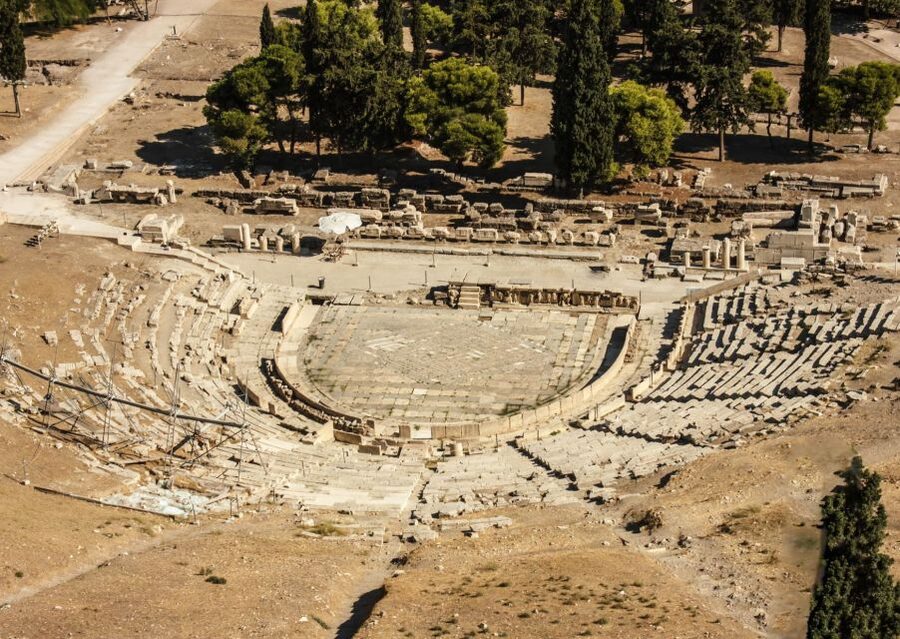
Below the Acropolis, the Theatre of Dionysus helps connect the site with performance and public life. It could seat about 17,000 spectators and hosted festivals honoring Dionysus, the Greek god associated with theater and celebration.
This stop adds scale. The Acropolis is often treated as a temple complex alone, but the theater reminds you that ancient Athens was also a city of audiences, drama, ritual, and civic gatherings. Your guide uses Greek myths to give the ruins a human setting.
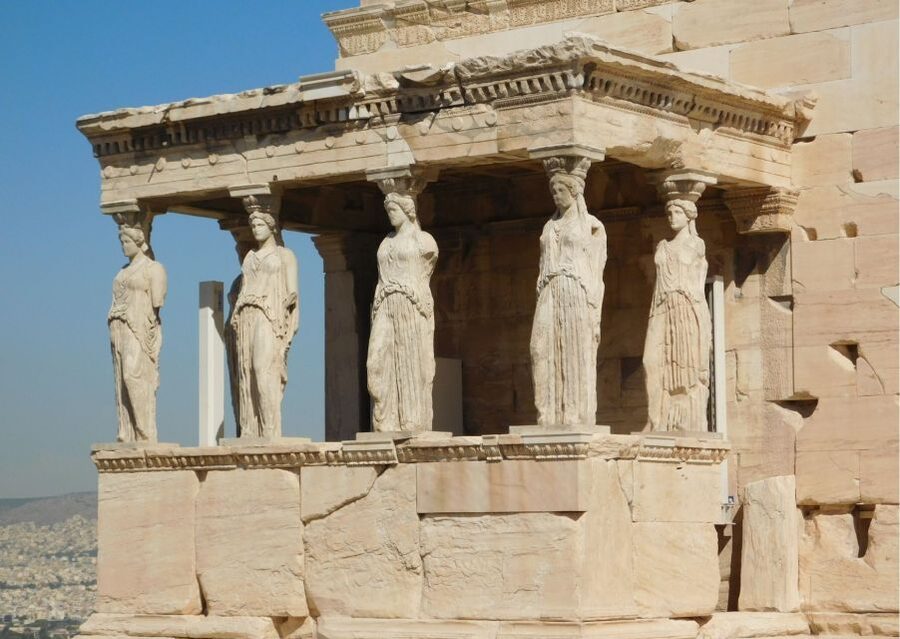
The Erechtheion offers a different kind of appeal. Its name connects it with Erechtheus, a figure from Athenian myth, and its Caryatids are among the most recognizable carvings on the hill. These sculpted female figures support the porch in place of ordinary columns.
You should expect crowds around the Caryatids, since they are a favorite photograph point. The guide’s explanation is useful because it turns a quick picture into a closer look at the carving and the architectural idea behind it.
You also see the Temple of Athena Nike, the smallest temple mentioned on the route. Its size makes it easy to overlook, but it is a good reminder that the Acropolis held several sacred buildings, not only the Parthenon.
More Athens evenings and sunsets:
- Athens: Cape Sounion & Poseidon Temple Sunset Half-Day Trip
★ 4.8 · 8,241 reviews - Athens: Cape Sounion & Temple of Poseidon Sunset Experience
★ 4.3 · 857 reviews - Athens Evening Food Tour
★ 5.0 · 766 reviews - Enjoy Cape Sounio Private Majestic Sunset With Seaside Dinner
★ 5.0 · 613 reviews
Propylaea, Odeon of Herodes Atticus, and free time
The Odeon of Herodes Atticus is another major stop. The theater sits on the southern slope of the Acropolis and is known for its striking stone structure and performance setting.
The route also includes time after the guided visit for you to remain at the site and explore at your own pace. That is a welcome feature. A guide can point out the important elements, but you may want a few quiet minutes to look back across Athens, study the hilltop buildings, or take photographs without trying to keep up with commentary.
The exact amount of free time is not stated, so do not plan on a long independent visit. Treat it as a useful bonus, not a separate self-guided Acropolis tour.
The afternoon timing is another advantage. The experience is designed for a later visit, when the strongest daytime heat and some of the early crowds may have eased. Conditions vary by season and day, so the site will not necessarily feel quiet. Still, a later start can be more comfortable than a rushed morning visit.
From the National Library to Syntagma Square
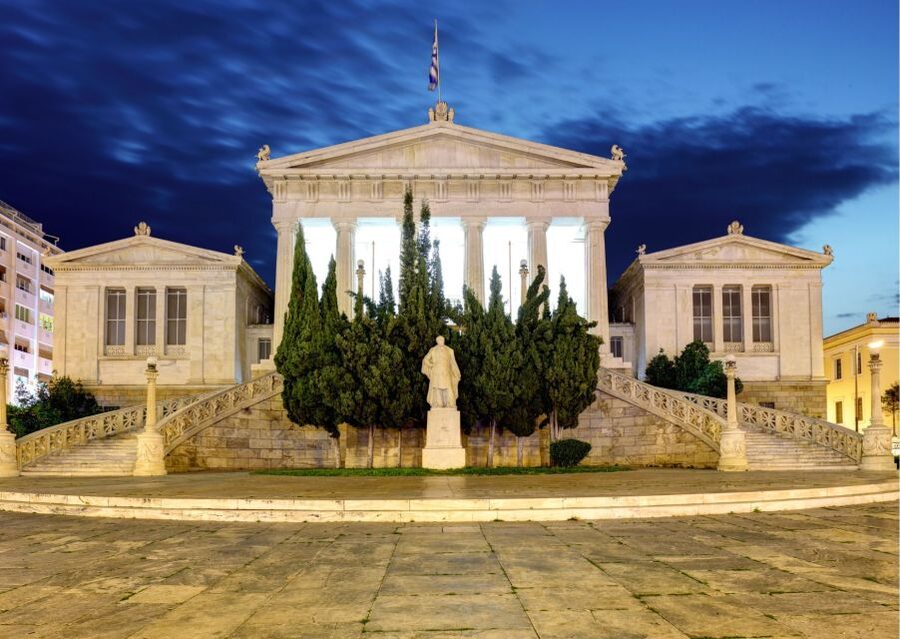
The evening portion begins at the National Library of Greece on Panepistimiou Street. Meet there for the second part, not at the Acropolis. This matters because the two meeting points are separate and you need to allow enough time to get from one part of central Athens to the other.
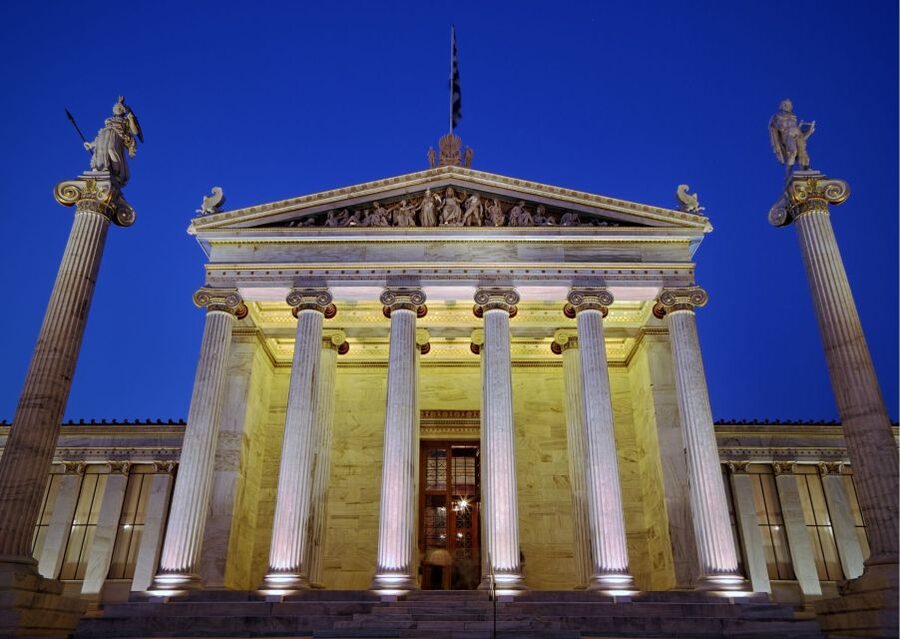
The National Library forms one part of Athens’ grand neoclassical trilogy. The University and the Academy of Athens complete the group. Together, these buildings show a different chapter of the city, one tied to the formation of modern Greece and its public institutions.
I like this transition from ancient Athens to 19th-century architecture. It keeps the city from being reduced to one archaeological hill. You see how later Greeks looked back to classical forms while building a modern capital.
The walk continues to Syntagma Square, the main square in front of the Greek Parliament. Here you stop to see the presidential guard. The setting gives you a practical introduction to modern Greek civic life, and it is also a good point for the guide to explain how the historic center is organized.
The itinerary is not a dedicated guard ceremony tour, so do not assume a full formal changing-of-the-guard presentation. The stated stop is to see the presidential guard at Parliament.
Zappeion and the Panathenaic Stadium

The next section leads through the National Gardens to the Zappeion, described as an old Olympic village. This provides a quieter change from the open civic space of Syntagma Square and adds another link between ancient athletic tradition and modern Greece.
The Panathenaic Stadium is one of the most memorable sights on the route. Built entirely of marble, it is associated with the first Olympic Games of the modern era. Seeing it after the Acropolis gives you a clear sense of how Athens has repeatedly used its ancient past to shape its modern identity.
The itinerary specifies a visit to the stadium, but it does not state that admission is included or that you enter the seating area. Ask your guide on the day what access is planned. Even from the outside, the stadium is easy to understand as a huge bowl built for public sport, but going inside would make the stop more substantial.
This part of the walk can be tiring. You have already spent time on the Acropolis, and the evening tour continues through several districts. If you want to enjoy the commentary rather than count your steps, pace yourself during the first visit and use the free time sensibly.
Hadrian’s Arch, the Temple of Zeus, and the city’s older layers
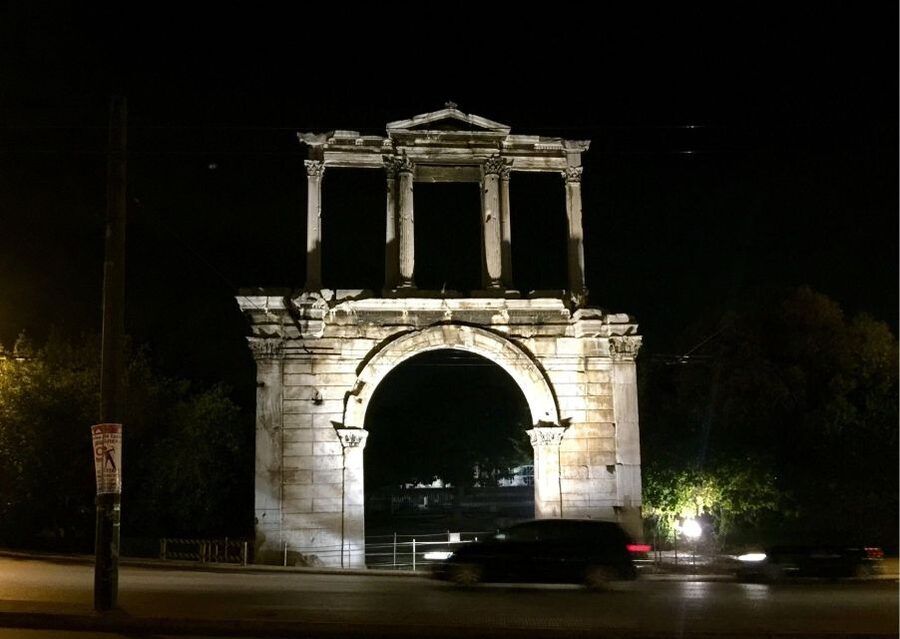
After the stadium, the tour turns back toward Roman Athens. Hadrian’s Arch marks a symbolic boundary between the older city associated with Theseus and the expanded city linked with the Roman emperor Hadrian.
Nearby, the Temple of Zeus recalls the huge scale of ancient religious building projects. The remaining columns are impressive, but the real value of this stop comes from understanding how much space the original temple occupied and how it related to the surrounding city.
These are good evening stops because the monuments become part of the city rather than isolated archaeological exhibits. You see them in relation to roads, buildings, and daily Athens. If the lighting is favorable, the ruins have a different mood after dark, though the amount of illumination can vary.
The Metropolitan Cathedral and Little Mitropolis
The route then reaches the great Metropolitan Cathedral and the smaller Little Mitropolis. These buildings shift the story again, from classical antiquity and Roman rule to the religious architecture of later Athens.
The contrast is useful. In a single evening, you move past ancient columns, neoclassical institutions, modern government buildings, and Christian churches. That range helps you read Athens as a living capital, not simply an open-air museum.
The itinerary gives only the names of these stops, so expect an exterior-focused city walk unless the guide tells you otherwise. The value is in seeing them as part of the historic center and in learning how the streets connect.
Monastiraki and the final Acropolis view
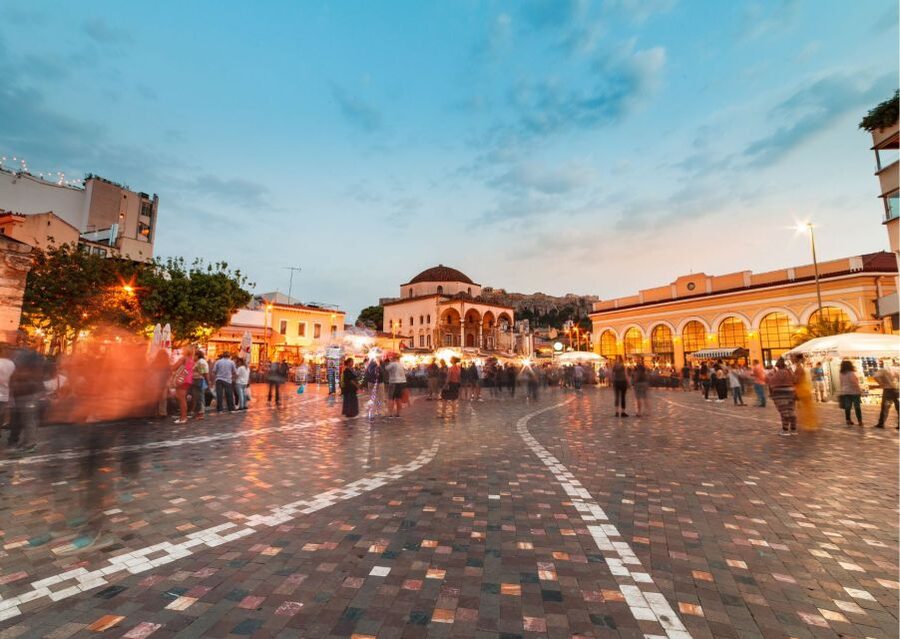
The tour ends at Monastiraki Square and the Greek Agora, with impressive views toward the Acropolis. This is a fitting finish. You have spent the afternoon on the hill, then spend the evening looking back at it from below as the city lights come on.
Monastiraki is a practical place to end because it is one of the best-known central areas in Athens. You can continue exploring on your own after the tour, though no onward plans are included in the activity.
The final view is not just a pretty ending. It ties the two halves together. Earlier, your guide explained the temples from close range. Now you see the Acropolis as part of Athens, rising over the streets and squares of the modern city.
What the $53 price really covers
At $53 per person, this is a reasonable price for five hours of guided sightseeing, provided you want a Spanish-language tour and plan to visit both the Acropolis and central Athens in one outing.
The price is less attractive if you add the separate Acropolis admission and prefer to explore slowly on your own. You are paying for a guide, a planned route, historical context, and help with the complicated timing of the archaeological site. You are not paying for the Acropolis ticket, food, transportation, or a private experience.
The strongest value comes from the range of sights. One afternoon and evening covers the Parthenon, Propylaea, Theatre of Dionysus, Erechtheion, Caryatids, Temple of Athena Nike, Odeon of Herodes Atticus, National Library, University, Academy, Parliament, Zappeion, Panathenaic Stadium, Hadrian’s Arch, Temple of Zeus, cathedral area, and Monastiraki.
That is a lot. The tradeoff is depth. You will receive a guided introduction rather than a slow study of every monument. If you want long stops and extensive time for photography, a private Acropolis visit followed by a separate city walk may suit you better.
Who should book this experience
I would choose this for a first visit to Athens, especially if you want a clear introduction in Spanish and prefer not to organize several meeting points yourself.
It suits you if you enjoy walking, want ancient and modern sights in the same day, and like a guide to explain myths and historical connections. It is also useful if you have limited time and want a broad sense of the capital.
I would think twice if you use a wheelchair, since the activity is not suitable for wheelchair users. Baby strollers and baby carriages are also not allowed. Food and drinks are not allowed on the activity, and high-heeled shoes are prohibited.
The five-hour length requires stamina. You should also confirm the starting time and ticket window before booking, since the correct Acropolis time slot changes with the season.
Should you book it?
Book this tour if you want a Spanish-language overview of Athens that combines a serious Acropolis visit with a wide-ranging evening walk. The southeast entrance, the visual explanations used by guides such as Bárbara, and the final view from Monastiraki make the plan especially appealing.
Skip it if you want a relaxed archaeological visit, dislike group walking, or do not want to arrange your own Acropolis ticket. For most first-time visitors who value context and efficient sightseeing, the $53 guide fee is fair, but remember to add admission and prepare for a full afternoon and evening on foot.
FAQ
How long does the Athens Acropolis and night tour last?
The experience lasts five hours.
What language is the tour conducted in?
The live tour guide speaks Spanish.
Is the Acropolis entrance ticket included?
No. You must buy the Acropolis archaeological site ticket separately before the activity starts.
Where is the afternoon meeting point?
Meet at Acropolis metro station ten minutes before the afternoon tour begins.
Where does the evening tour begin?
The evening portion begins at the National Library of Greece, at Panepistimiou 32, Athens 106 79.
What Acropolis ticket time is needed in low season?
For a 3 p.m. tour in low season, you need a ticket for the 3 p.m. to 4 p.m. time slot.
What Acropolis ticket times are needed in high season?
For a 5 p.m. tour, use the 5 p.m. to 6 p.m. slot. For a 5:45 p.m. tour, use the 6 p.m. to 7 p.m. slot.
Can I stay at the Acropolis after the guided portion?
Yes. After the guided visit, you have free time to remain longer and explore the archaeological site at your own pace.
Is the experience suitable for wheelchair users?
No. The activity is not suitable for wheelchair users. Baby strollers and baby carriages are also not allowed.
Freshly added Athens trips
- Athens and Ancient Corinth Private from Athens★ 5.0 · 3 reviews
- From Athens: Mycenae and Epidaurus Private Tour★ 4.8 · 3 reviews
- Full day Meteora private tour★ 5.0 · 3 reviews
- Double Shore Dive (certified divers)★ 4.5 · 3 reviews
- Athens Hills: Mythology Treasure Hunt★ 5.0 · 3 reviews
- Sunset & swimming at Cape Sounio, Poseidon temple★ 5.0 · 3 reviews
- Philosophy Experience at Plato’s Academy Park – basic version★ 5.0 · 3 reviews
- Private Acropolis Tour – Ticket Included★ 5.0 · 3 reviews
Acropolis Tours, compared.

Acropolis & up to 5 Archaeological Sites Combo Pass
Read our review →

Acropolis, Parthenon & Acropolis Museum Guided Tour
Read our review →
Acropolis, Parthenon & Acropolis Museum Guided Tour
Read our review →


Acropolis monuments & Parthenon Walking Tour with Optional Acropolis Museum
Read our review →Browse the lists this tour appears in