
Reviewed · ACROPOLIS MUSEUM TOURS
Athens: Acropolis, Parthenon & Acropolis Museum Guided Tour
The best reason to take this tour is simple: the Acropolis makes far more sense when someone explains what you are looking at. A licensed guide connects the Parthenon, Erechtheion, Temple of Athena Nike, and ancient theaters to the beliefs and daily life of Athens, rather than leaving you with a pile of marble and a camera roll. I especially like the story-driven approach and the choice to add the Acropolis Museum, where the surviving art gets proper attention.
The main drawback is the price structure. At $70 per person, you are paying for the guide, while Acropolis admission costs another €30 and the museum adds €10 to €20. That can still be good value, particularly for families or first-time visitors, but you need to budget for the tickets and book them carefully.
In This Review
- Key points at a glance
- Why a guide changes the Acropolis
- Starting below the summit at the Theater of Dionysus
- Climbing past the Propylaea and Temple of Athena Nike
- The Erechtheion and the famous Caryatids
- Standing before the Parthenon
- The Acropolis Museum puts the fragments in context
- What the $70 price really buys
- Meeting point, languages, and practical details
- Who will get the most from this tour
- Should you book it?
- FAQ
- How much does the tour cost?
- Are Acropolis tickets included?
- How much does the Acropolis Museum ticket cost?
- How long does the tour last?
- Where is the meeting point?
- How early should I arrive?
- Which languages are available?
- Does the tour include hotel pickup and drop-off?
- Are children or students eligible for reduced admission?
- Is the tour suitable for wheelchair users?
Key points at a glance
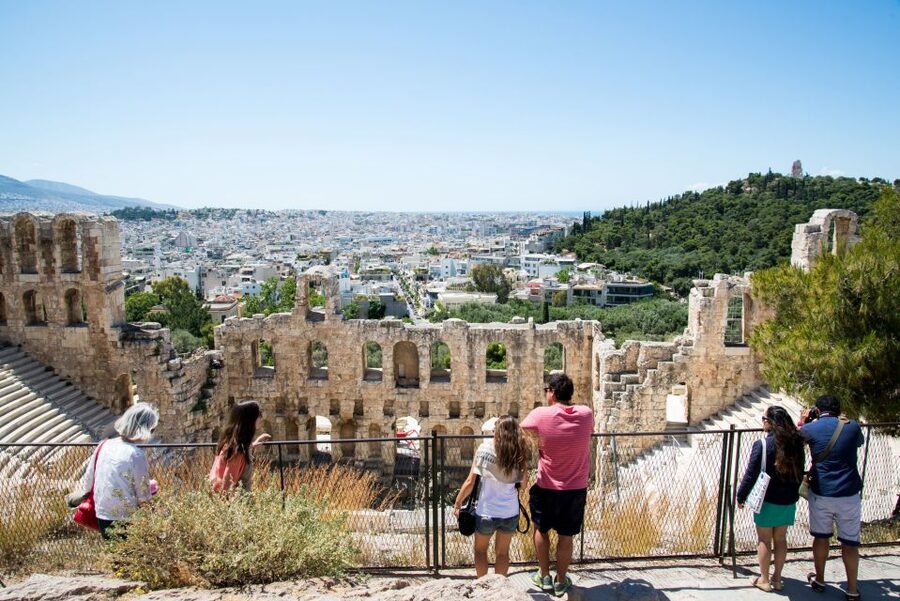
- See the Acropolis in a logical sequence: The route includes the Theater of Dionysus, Temple of Asclepius, Odeon of Herodes Atticus, Propylaea, Temple of Athena Nike, Erechtheion, and Parthenon.
- Guides bring strong personal style: Past guide names include Elizabeth, Alina, Anna, Hermes, Sophia, Rosa, Mariza, and Thanasis. The most praised qualities are clear storytelling, humor, patience, and the ability to answer questions.
- The museum option adds essential context: The Acropolis Museum puts sculptures and architectural fragments in a modern setting, making the hilltop ruins easier to understand.
- Expect a real uphill walk: The climb is manageable for many visitors, but the stone surfaces and heat make good shoes, water, a hat, and sunscreen important.
- Ticket costs are separate: Acropolis admission is listed at €30, and museum admission at €10 to €20. Reduced and free rates depend on age, student status, and passport eligibility.
- The meeting point is central: Check in at the Athens Walks office at Porinou 5, near the Acropolis area, at least 15 minutes before departure.
Why a guide changes the Acropolis
You can certainly walk onto the Acropolis alone and be impressed. The Parthenon needs no sales pitch. Its columns, broken sculptures, and position above Athens do the work.
But the site is not arranged like a museum with a label beside every object. Several monuments share the hill, and each was built for a different purpose. A guide gives you the order and connections that are easy to miss on your own. You learn why the gateway mattered, why Athena Nike was worshipped, why the Erechtheion was unusual, and why the Parthenon was more than a large temple.
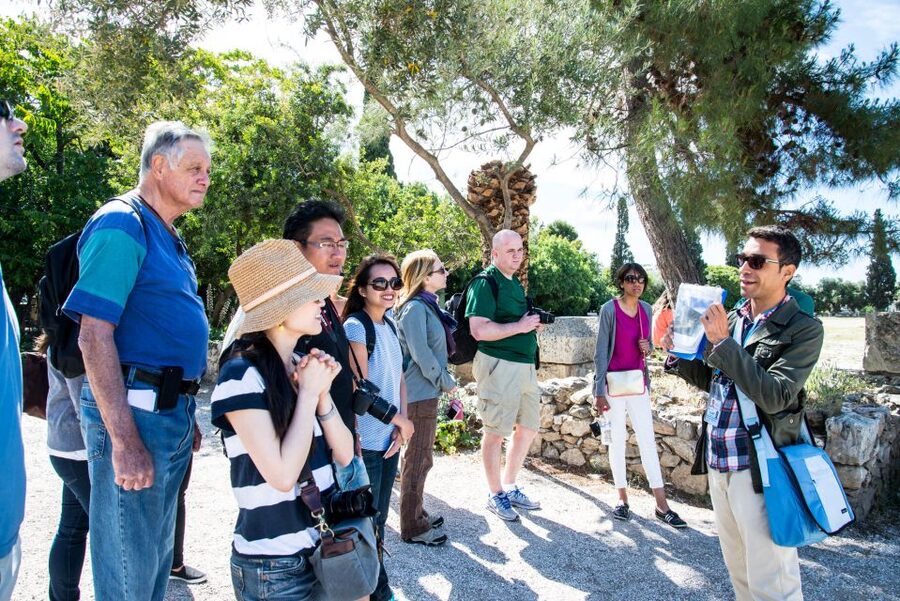
The strongest part of this experience is the human explanation. Guides such as Hermes and Thanasis were praised for combining history, mythology, architecture, philosophy, and modern Greek culture. That mix suits the Acropolis well. Ancient Athens was not just a collection of buildings. It was a city debating gods, politics, art, citizenship, war, and the proper shape of public life.
The guides also appear to adjust their pace instead of delivering a fixed speech at full speed. Families with young children have had guides explain Greek mythology in an accessible way, while other groups received more detailed discussion of architecture and classical thought. If you have questions, a live guide gives you somewhere useful to take them.
More Acropolis Museum visits:
- Athens: Acropolis, Parthenon & Acropolis Museum Guided Tour
★ 4.8 · 9,316 reviews - Athens: Acropolis, Parthenon & Acropolis Museum Guided Tour
★ 4.8 · 3,579 reviews - Acropolis monuments & Parthenon Walking Tour with Optional Acropolis Museum
★ 5.0 · 2,678 reviews
Starting below the summit at the Theater of Dionysus
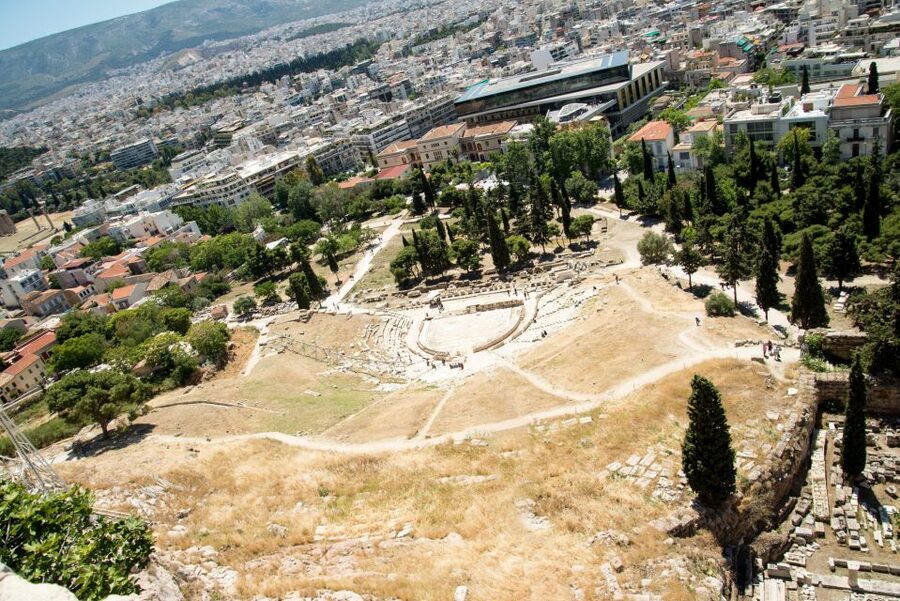
The walk begins around the southern slope of the Acropolis, where the Theater of Dionysus introduces Athens as a place of public performance and civic gathering. It is often easier to understand the hill from here than from the top, because you can see how the monuments rise above the city in stages.
This theater is important not simply because it is old, but because it helps explain the public culture of ancient Athens. Drama was tied to festivals, religious life, and the city itself. A guide can turn the semicircular seating and open performance area into a place where ancient audiences watched stories about gods, kings, family duty, and moral choice.
Nearby, the tour also refers to the Temple of Asclepius, connected with healing, and the Odeon of Herodes Atticus. The Odeon is a reminder that the Acropolis precinct continued to be used and reshaped long after the classical period. These stops broaden the visit beyond the familiar Parthenon photograph.
I like this beginning because it gives the tour a gradual rhythm. You are not immediately asked to absorb every famous structure at once. Instead, the guide uses the lower monuments to establish how religion, theater, music, and public life worked together.
Climbing past the Propylaea and Temple of Athena Nike
The approach to the Acropolis is part of the experience. The route rises, the views open, and the gateway of the Propylaea comes into sight. This was not a plain entrance but a grand architectural threshold, designed to make arrival feel important.
The climb is not extreme for most people, but the route is uneven and exposed. Past visitors have appreciated guides who stopped regularly to explain the setting and allow a breather. That matters in Athens, especially in summer, when the heat can make a short uphill walk feel much longer.
The Temple of Athena Nike sits near the entrance. Its name refers to Athena as wingless victory, a small but memorable detail that helps you remember the building. A guide can also show how this compact temple differs from the larger structures farther inside.
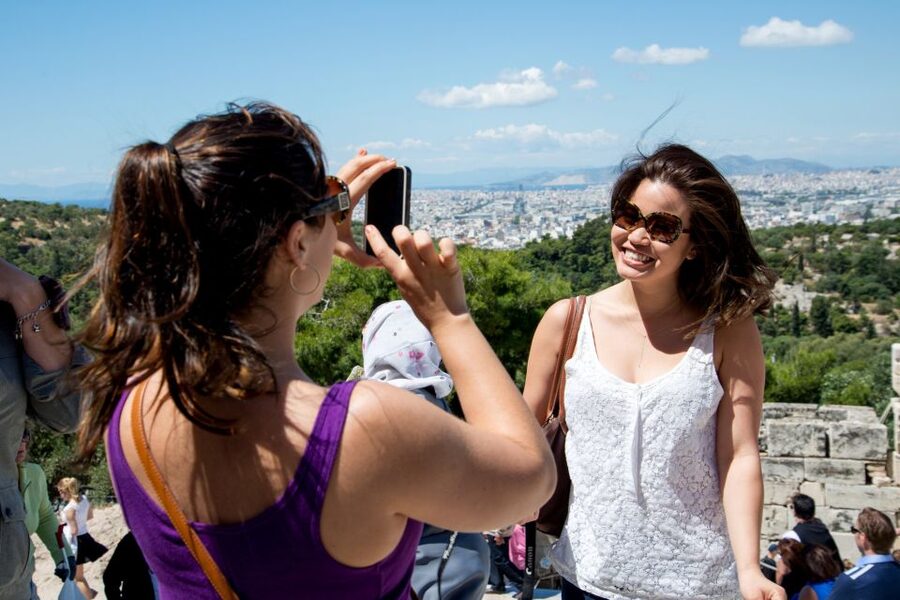
At the Propylaea, pause for photographs, but do not spend the entire visit looking through your phone. The views over Athens are one of the pleasures of the tour, and your guide can point out how the ancient sanctuary relates to the modern city below. The contrast is part of the magic: a living capital surrounds a hill shaped by more than two millennia of change.
The Erechtheion and the famous Caryatids
The Erechtheion is often the monument that surprises people most. Its design is less symmetrical than the Parthenon, and its multiple porches reflect a complicated sacred setting. The building was associated with several ancient traditions and figures, including Athena and Poseidon.
The Porch of the Caryatids draws the crowds. These sculpted female figures serve as architectural supports, combining the role of a column with the appearance of a human body. The originals are protected, and what you see on the Acropolis is part of a larger story about preservation and the removal of ancient sculpture.
This is a good place to listen closely to your guide. Without explanation, the Caryatids can become five attractive figures competing for space in a busy photograph. With context, you begin to notice their posture, clothing, arrangement, and role within the building.
The Erechtheion also helps correct the common idea that ancient Greek temples were all neat, identical boxes. The site was layered, symbolic, and sometimes awkward. That complexity makes the Acropolis more interesting than a simple parade of columns.
More Acropolis and Parthenon visits:
- Athens: Acropolis & up to 5 Archaeological Sites Combo Pass
★ 4.4 · 12,619 reviews - Athens: Acropolis Ticket with Optional Audio or Live Guide
★ 4.2 · 11,055 reviews - Athens: Acropolis and Parthenon Guided Walking Tour
★ 4.6 · 5,882 reviews - Athens: Acropolis Ticket with Audio Guide
★ 4.0 · 3,575 reviews
Standing before the Parthenon
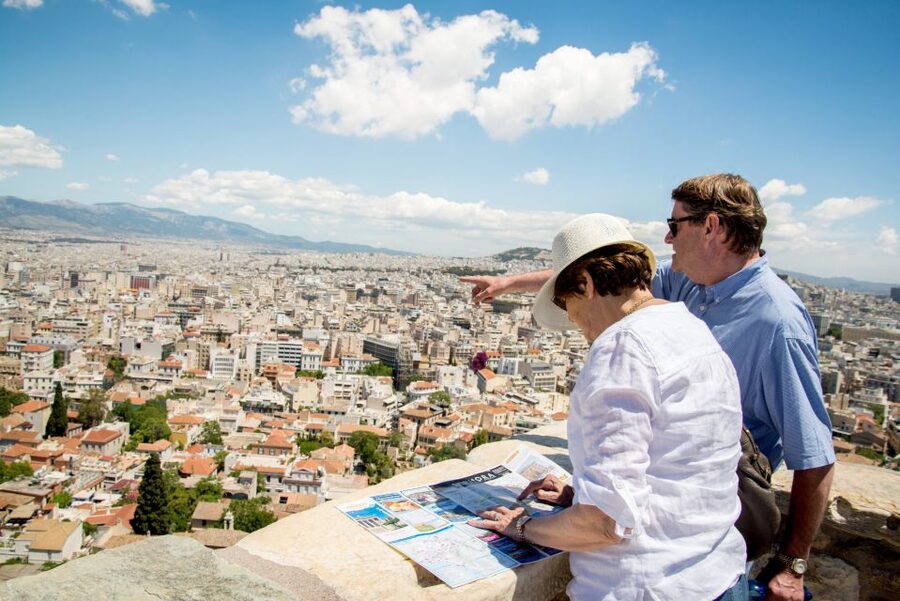
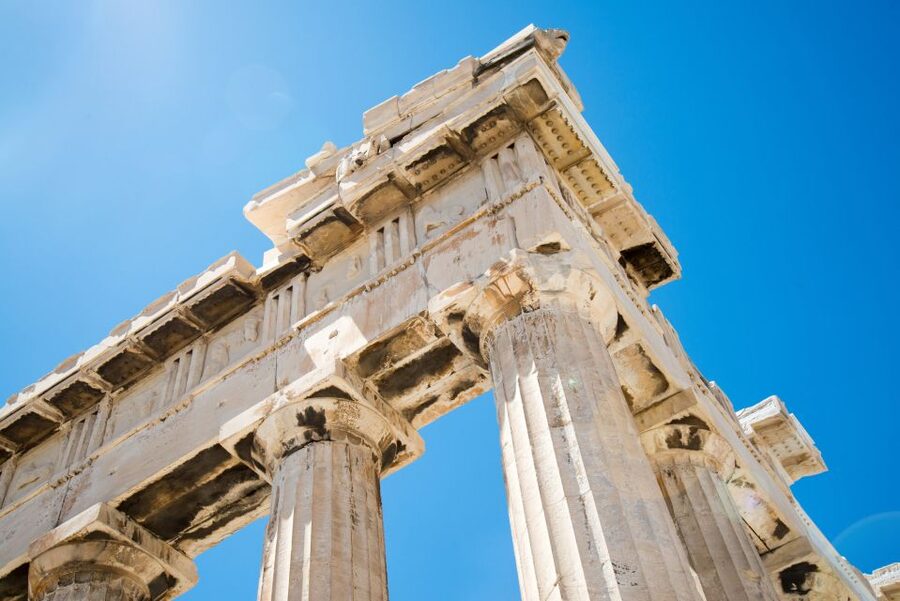
The Parthenon is the emotional center of the tour. Even with scaffolding, crowds, and restoration work, its scale and position are powerful. The building was dedicated to Athena, the city’s patron deity, and its architecture became one of the most influential models in the Western world.
A guide is useful here because the Parthenon can be visually overwhelming. You may hear about its columns, sculpture, friezes, and changing use over time, but it is difficult to know where to look first. The guide can break the building into manageable pieces and explain how the structure originally communicated power and devotion.
You should also expect a more complicated story than the idealized image of a perfect white temple. The monument has endured religious conversion, conflict, damage, removal of sculptures, and centuries of exposure. What remains is extraordinary, but the missing pieces are part of its story too.
This stop is also where a private or small-group format can feel worthwhile. A guide can pause for your questions, help with photos, and adjust the explanation to your interests. Several families particularly valued guides who kept children involved instead of treating them as silent luggage.
The total duration is listed as two to four hours. A shorter visit may focus on the Acropolis itself. The longer version is more likely to include the museum and allow time for questions, although the exact schedule depends on the option and starting time you choose.
The Acropolis Museum puts the fragments in context
The museum option is the strongest addition to the hilltop walk. The Acropolis gives you the setting and architecture. The museum gives you a closer look at sculptures, objects, and surviving fragments in a controlled indoor space.
That change of setting matters. On the hill, you are often looking upward, across barriers, or through a crowd. In the museum, the art is displayed at eye level and arranged in galleries that help you follow the development of ancient Athenian art. The modern building and state-of-the-art galleries provide a sharper setting for details that are easy to miss outdoors.
A museum guide can also explain what is original, what is a later copy, and what has been moved for protection. This is especially valuable at the Caryatids and with sculptural decoration linked to the Parthenon. One guide, Katerina, was praised for arranging the museum in a clear historical sequence, which is exactly the kind of structure many first-time visitors need.
The museum should not be treated as a quick add-on. If you care about ancient art, it may be the part you remember most clearly because you can study faces, clothing, poses, and carving at close range. If your group includes tired children, though, the combined Acropolis and museum option may feel long. Guides have adjusted plans for young children and extreme heat in the past, but you should still choose your timing with your group’s energy in mind.
On Mondays, the museum closes at 4 p.m. The tour changes its plan that day and visits the Acropolis monuments and Ancient Agora instead. Check the schedule before booking if the museum is your priority.
What the $70 price really buys
The advertised price is $70 per person, but it does not include admission. The Acropolis ticket is listed at €30 per person, and the Acropolis Museum ticket costs €10 to €20. Pickup, drop-off, and food are not included either.
That makes this a guide-first purchase, not an all-inclusive sightseeing package. You are paying for explanation, pacing, navigation, and the chance to ask questions. The value rises if you have only one day in Athens, are visiting with children, or want the museum explained rather than simply entered.
The value is less clear if you already know classical Greek history, prefer wandering alone, or are watching every euro. The hilltop monuments are free to admire from many viewpoints around Athens, but entry is required to see them properly, and the site can be confusing without preparation.
The tour advertises skip-the-ticket-line access, but the admission fee still applies. Follow the instruction to book entrance tickets through the official Acropolis ticket website before the tour, and confirm exactly how your selected option handles entry. Some past guides had tickets ready for their groups, while the current information specifically says entrance tickets are not included. Do not assume the guide fee covers them.
Free and reduced admission can change the calculation. People under 18 are listed as free, and EU passport holders under 25 are also listed as free. Students and visitors under 18 should bring a passport or ID card to prove eligibility.
Meeting point, languages, and practical details
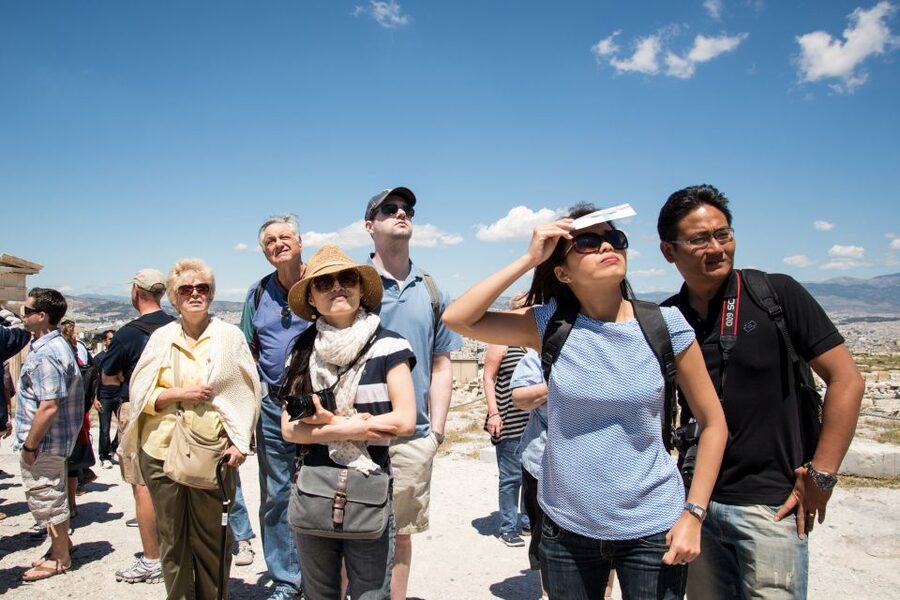
Meet at the Athens Walks office at Porinou 5, 11742. The office is on the ground floor. Arrive at least 15 minutes early, since only one person from your group needs to check in indoors while the rest can wait nearby.
The company provides hearing devices and assigns you to your group. That is a useful detail on a busy archaeological site, where wind, crowds, and open spaces can make a guide hard to hear.
Tours are offered in English, Italian, German, French, and Spanish. If language is important to your experience, select it at booking rather than hoping it will be available on the day. Past guides have been praised for clear German, French, and English, along with engaging delivery in the other languages.
Wear shoes with a firm sole. Bring water, sunglasses, a sun hat, and sunscreen. Large bags and luggage are not allowed, and pets and smoking are not permitted. There is no hotel pickup or drop-off, so plan your route to and from Porinou Street yourself.
The experience is not suitable for wheelchair users. Even visitors who walk comfortably should expect stone surfaces, steps, and an exposed uphill route. If someone in your party uses crutches or has limited mobility, contact the provider before booking. A past guide, Rosa, arranged a wheelchair and altered the route for a guest on crutches, but that kind of accommodation should not be assumed.
Who will get the most from this tour
I would choose this tour for a first visit to Athens, especially if the Acropolis is one of the main reasons for your trip. The guide helps you spend your limited time on the hill with a clear sense of what matters.
It also suits families. Several guides, including Anna, Margherita, Mariza, Christina, and Maria, were praised for keeping children and teenagers involved. Mythology gives younger visitors a way into the monuments, while flexible pacing helps when attention begins to fade.
History lovers may prefer the private-group option. A private guide can usually respond more directly to your interests, and past private groups valued the extra discussion and slower pace. The private format costs more in total, so compare the group size and final price before deciding.
Independent visitors who enjoy reading signs and moving alone may not need the guide. You will still need to manage tickets and timing, but the Acropolis is possible without a tour. The main question is not can you visit alone, but how much interpretation you want while standing among the ruins.
Should you book it?
Book this experience if you want the Acropolis to feel like a connected story rather than a series of famous names. The most consistent strengths are the guides’ command of mythology and history, their patience with families, and their willingness to answer questions or slow down on the climb.
Add the museum if you want to understand the sculpture and architectural details. Skip that option only if your schedule is tight, your group tires quickly, or the museum’s Monday closing time creates a problem.
Before paying, add the separate entrance costs, verify the language and date, reserve the official tickets, and arrive early at Porinou 5. At $70 plus admission, it is not the cheapest way onto the Acropolis. For many first-time visitors, though, a good guide turns an impressive visit into a genuinely understandable one.
FAQ
How much does the tour cost?
The tour costs $70 per person. Acropolis and Acropolis Museum entrance tickets are separate costs.
Are Acropolis tickets included?
No. Acropolis admission is listed at €30 per person. The information also advises booking tickets through the official Acropolis ticket website before the tour.
How much does the Acropolis Museum ticket cost?
Museum admission is listed at €10 to €20 per person, depending on the applicable ticket category.
How long does the tour last?
The duration is listed as two to four hours. Check the available starting times and selected option when booking.
Where is the meeting point?
Meet at the Athens Walks ground-floor office at Porinou 5, 11742, in Athens.
How early should I arrive?
Arrive at least 15 minutes before the scheduled departure. Only one person from your group needs to check in inside the office.
Which languages are available?
Live guided tours are available in English, Italian, German, French, and Spanish.
Does the tour include hotel pickup and drop-off?
No. Pickup and drop-off are not included.
Are children or students eligible for reduced admission?
People under 18 are listed as receiving free access. EU passport holders under 25 are also listed as free. Students and visitors under 18 should bring a passport or ID card to confirm eligibility.
Is the tour suitable for wheelchair users?
No. The experience is listed as unsuitable for wheelchair users. Comfortable shoes are recommended because the route is a walking tour over the Acropolis area.
More Athens museums
- Athens: Mythology of Delphi, Museum and Arachova Guided Tour
★ 4.6 · 4,008 reviews - Athens All Included: Acropolis and Museum Guided Tour with Ticket
★ 4.5 · 2,673 reviews - Athens: Acropolis Museum Ticket with optional Audio Guide
★ 4.4 · 2,652 reviews - From Athens: Small-Group Delphi, Museum & Arachova Day Trip
★ 4.8 · 2,476 reviews
Freshly added Athens trips
- Athens and Ancient Corinth Private from Athens★ 5.0 · 3 reviews
- From Athens: Mycenae and Epidaurus Private Tour★ 4.8 · 3 reviews
- Full day Meteora private tour★ 5.0 · 3 reviews
- Double Shore Dive (certified divers)★ 4.5 · 3 reviews
- Athens Hills: Mythology Treasure Hunt★ 5.0 · 3 reviews
- Sunset & swimming at Cape Sounio, Poseidon temple★ 5.0 · 3 reviews
- Philosophy Experience at Plato’s Academy Park – basic version★ 5.0 · 3 reviews
- Private Acropolis Tour – Ticket Included★ 5.0 · 3 reviews
Acropolis Museum Tours, compared.

Acropolis, Parthenon & Acropolis Museum Guided Tour
Read our review →Acropolis, Parthenon & Acropolis Museum Guided Tour
Read our review →
Acropolis monuments & Parthenon Walking Tour with Optional Acropolis Museum
Read our review →
Acropolis Museum Ticket with optional Audio Guide
Read our review →
Parthenon & Acropolis Museum with Audio or Live Tour Option
Read our review →
Acropolis, Parthenon and Acropolis Museum Guided Tour
Read our review →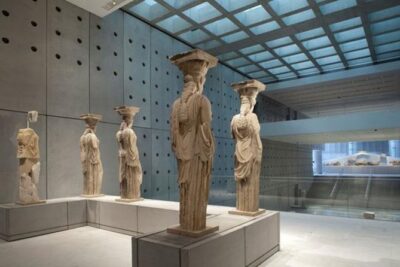

Browse the lists this tour appears in